
TPU PPF Shortlist: Acceptance Criteria for Auto, Window and Architecture Film
TPU PPF Shortlist: Acceptance Criteria for Auto, Window and Architecture Film
A shortlist for protective and solar-control film is only as useful as the acceptance criteria attached to each line on it. In an evaluation-stage purchase, three lanes are routinely quoted side by side: automotive paint protection film, car window film and architectural window film. They fail for different reasons, on different substrates, under different loads, so treating them as one product category is the first mistake a procurement team makes.
This shortlist separates the three lanes and applies one purchasing discipline to all of them. Screen the material class first, apply lane-specific performance criteria second, verify the factory evidence behind yellowing, bubbling and adhesive performance third, and compare commercial terms last.
Two reference points run through the exercise. Aliphatic TPU versus PVC and TPH is a material screening decision rather than a brand preference. And a datasheet claim is not the same document as a test report, which is precisely what a shortlist exists to separate.
Why the Three Lanes Cannot Share One Specification
Each lane protects a different surface from a different load. A criterion that qualifies a film for a painted bumper can disqualify it on a glazed facade, and a film optimised for solar rejection is not a substitute for impact protection. The practical consequence is that performance numbers should not be carried from one lane to another, including numbers published by the same manufacturer.
Automotive paint protection film
The automotive paint lane sells physical protection. TPU paint protection film is a transparent or coloured elastomeric sheet bonded to painted panels and exterior components; product literature recorded in this dataset lists paint protection and stone-chip protection on automotive exterior and interior components as primary applications. The load is mechanical: stone chips, gravel abrasion and road debris, combined with wash chemicals and sustained UV exposure. Colour stability belongs in the specification rather than in the aesthetics column, because a film that shifts colour on a white panel has failed at its visible job.
Car window film
The car window lane sells solar control. Automotive window film is applied to the interior surface of vehicle glass and manages ultraviolet, visible-light and infrared energy through dyed, carbon, metalized, ceramic or multi-layer constructions. The evaluation rule that comes with this category is specific: judge performance from verified VLT, UV rejection, IR rejection and TSER test data rather than from the product colour. For a buyer, that is a document request rather than a colour card.
Architecture film
The architectural lane sells solar control on a substrate the buyer does not control. Film is selected against glass type, building orientation, solar exposure, privacy requirement and local regulation, and a glass compatibility or thermal-stress assessment is recommended before solar-control film is applied to certain laminated, insulated or treated glass. This is the lane where an installation decision can create a glass risk that no film datasheet covers.
| Lane | Substrate and position | Primary job | Failure modes the spec must address | First document to request |
|---|---|---|---|---|
| TPU paint protection film | Painted panels and exterior trim | Impact, abrasion and scratch protection with colour stability | Yellowing, edge lifting, bubbling or delamination, adhesive residue on removal | Test report with methods for tensile, elongation, gloss and weathering |
| Car window film | Vehicle glass, interior application | UV, infrared and visible-light management | Bubbles, dust contamination, edge peel, optical distortion | VLT, UV rejection, IR rejection and TSER data |
| Architecture film | Building glass: curtain wall, commercial, residential | Solar heat rejection, glare control, UV protection, shatter resistance | Glass thermal stress, bubbling, delamination, edge failure | Glass compatibility or thermal-stress assessment plus film test data |
The Material Screening Point: Aliphatic TPU versus PVC and TPH
The first filter is material class, because class determines which acceptance criteria are achievable at all. Commercial product documentation in this category commonly positions aliphatic TPU, multilayer construction and a functional top coat as core design elements; one supplier datasheet recorded here describes a five-layer structure of release liner, adhesive, aliphatic TPU base film, top coat and protective liner. Layer counts are not standardised between suppliers, so the count itself is not a comparison. The named base film is.
The comparison framework supplied with this dataset evaluates TPU, PVC and TPH (a hybrid or modified PVC) on three dimensions: tensile strength, self-healing capacity and UV yellowing resistance. Those three map directly onto the failure modes that generate warranty claims. The framework records TPU as the higher-elongation class, but it supplies no matched test report across the three materials, so elasticity should be confirmed on samples rather than accepted from a category label.
Two numbers are useful at this stage, for screening only. An authoritative technical guide recorded in this dataset states that high-end TPU PPF products require a tensile strength of at least 25 MPa under ASTM D412. A supplier product page in the same dataset reports, for one 8.5 mil clear film, tensile strength above 5,800 psi (about 40 MPa at 1 psi = 0.006895 MPa), elongation above 450% and gloss above 95 GU at 60 degrees, citing ASTM D523, D882, D4830 modified and G154 as methods. The two figures come from different documents under different conditions; they must not be averaged, ranked or presented as an industry benchmark. Their value is that they show what a complete specification line looks like.
Naming the grade is a purchasing act. A supplier that states TPU has not stated a grade, whereas a datasheet that identifies aliphatic TPU as the base film has. The dataset contains no matched aromatic-versus-aliphatic weathering trial, so the reason to require the named grade is traceability, because a named material can be audited and a generic one cannot, rather than a specific performance figure.
Acceptance Criteria That Can Be Audited
Each criterion below can be answered with a document or a sample. A shortlist line that cannot be answered that way is a preference, not a criterion.
Automotive TPU PPF: seven checks
- Thickness, with inclusion rules. Listed thicknesses in the dataset run from 6.5 to 10 mil across one supplier range and 8.5 mil for one clear film. Total thickness is not comparable unless the supplier states whether adhesive, top coat and liners are included and how it was measured. Ask for the definition before comparing the number.
- Tensile strength and elongation, with the method. ASTM D412 or D882, with specimen conditioning and pass thresholds stated. A value without a method cannot be checked.
- Gloss or haze at a defined geometry. High-gloss film is typically reported in gloss units at 60 degrees. Matte and satin finishes need a different acceptance target, because a matte film and a gloss film cannot be measured against the same optical figure.
- Self-healing trigger conditions. One recorded project summary describes instant micro-scratch self-healing at 60 degrees Celsius. Ask for trigger temperature, recovery time and whether recovery needs applied heat or occurs at ambient temperature.
- Yellowing, expressed as a colour-shift limit over a stated period. A project summary here reports Delta E below 1.5 over three years. That figure is usable only with the weathering method and exposure conditions attached.
- Adhesive performance and removal residue. Peel adhesion and residue-free removal are separate requirements, because a film can hold strongly and still leave adhesive behind on removal.
- Top-coat function claims. Hydrophobic, anti-scratch and high-transparency claims each need a method. Finish variants, including matte, high-gloss, coloured and thicker films, change the target rather than the discipline.
Car window film: four checks
- VLT matched to the legal limit in the market of use. VLT is a customisable parameter across the film range recorded in this dataset from 5% to 70%, a span that covers markets with very different tinting rules. The regulation check comes before the performance comparison.
- UV rejection for the product actually being bought. UV figures should come from the automotive line. The 99.5% UV figure recorded in this dataset belongs to an architectural project summary and does not transfer to a car window film.
- IR rejection and TSER together. IR rejection describes part of the solar spectrum, while TSER describes total solar energy rejected. Ask for both, with the IR wavelength band stated.
- Installation outcome defined in advance. Dust contamination, bubbles, distortion and edge lift are installation results. The recorded installation guidance names a dust-free environment, the correct application solution, squeegee technique and sufficient curing time as the controls.
Architecture film: four checks
- Glass compatibility before purchase. A thermal-stress assessment on laminated, insulated or treated glass precedes the film decision rather than following installation.
- TSER and UV in the project conditions. The architectural case recorded here reports TSER above 72% and 99.5% UV blocking using magnetron-sputtered metal film.
- Safety function where specified. Anti-shatter performance is a separate requirement from solar performance and needs its own evidence.
- Installation sequence and post-install inspection. Glass identification, surface cleaning, cutting allowance, wet application, squeegee work, edge inspection and curing before cleaning are each inspectable. The warranty term should be read against the facade solar load; the recorded case pairs a 10-year product warranty with a 3-year post-installation evaluation.
| Criterion | TPU PPF | Car window film | Architecture film |
|---|---|---|---|
| Material identification | Base film named as aliphatic TPU; layer construction declared | Construction type declared: dyed, carbon, metalized, ceramic or multi-layer | Construction and metal-layer technology declared |
| Primary performance metric | Tensile strength and elongation to ASTM D412 or D882 | TSER, with UV and IR rejection stated | TSER, UV rejection and, where required, anti-shatter performance |
| Optical metric | Gloss units at 60 degrees, or haze for matte finishes | VLT against the market limit | VLT and visible reflectance |
| Durability metric | Colour shift after stated weathering plus high-temperature aging | Colour stability and adhesive aging | Colour stability, delamination and edge failure after stated exposure |
| Adhesive evidence | Peel adhesion plus residue-free removal | Peel adhesion with no optical distortion | Peel adhesion on coated glass |
| Installation verification | Edge wrap, contamination, absence of lifting | Dust-free application, squeegee technique, curing time | Compatibility check, wet application, edge inspection, curing |
| Warranty term | 5 to 10 years anti-bubbling, anti-fading, anti-delamination in the reference case | Same warranty framework, applied to the automotive line | 10-year product warranty recorded with a 3-year post-install evaluation |
Factory Checks: Yellowing, Bubbling and Glue Performance
These three failure modes are where a specification meets a production line. Each can be attached to a named test, and each should appear in a factory control plan rather than only in a sales presentation.
Yellowing
Yellowing is a chemistry and stabiliser question, and it appears as a colour shift measured after accelerated or real weathering. Ask for the weathering method, with G154 being one method cited in this dataset, the exposure cycle, the initial and final colour coordinates, and the pass threshold. On the production side, a high-temperature aging test on finished rolls is the control worth requesting, and the manufacturer referenced below lists it alongside spectrophotometer measurement of VLT, UV rejection and IR rejection.
Bubbling
Bubbles have two sources and they need different evidence. Installation-side bubbles come from trapped moisture or contamination and are controlled procedurally. Product-side bubbles come from adhesive or film instability and are controlled by a peel adhesion test plus an aging test, backed by a warranty that names bubbling explicitly. The recorded after-sales terms for HOCHI PPF & Window Film cover anti-bubbling, anti-fading and anti-delamination for 5 to 10 years with free replacement for defectives. Two project summaries in this dataset report no warranty claims on bubbling or delamination across a four-year automotive programme and a three-year architectural evaluation. Those are supplier records rather than independent audits, and should be read as the level of commitment the manufacturer is prepared to state.
Adhesive performance
Adhesive has to be tested against the substrate it will actually meet: paint and clear coat on the automotive side, coated glass on the architectural side. Require peel adhesion data, a residue-free removal statement and a high-temperature aging result, because heat is the condition under which an adhesive either creeps or holds. Specificity is the test: a datasheet that names its adhesive is auditable, while a general claim of strong adhesion is not.
Management-system evidence and third-party inspection
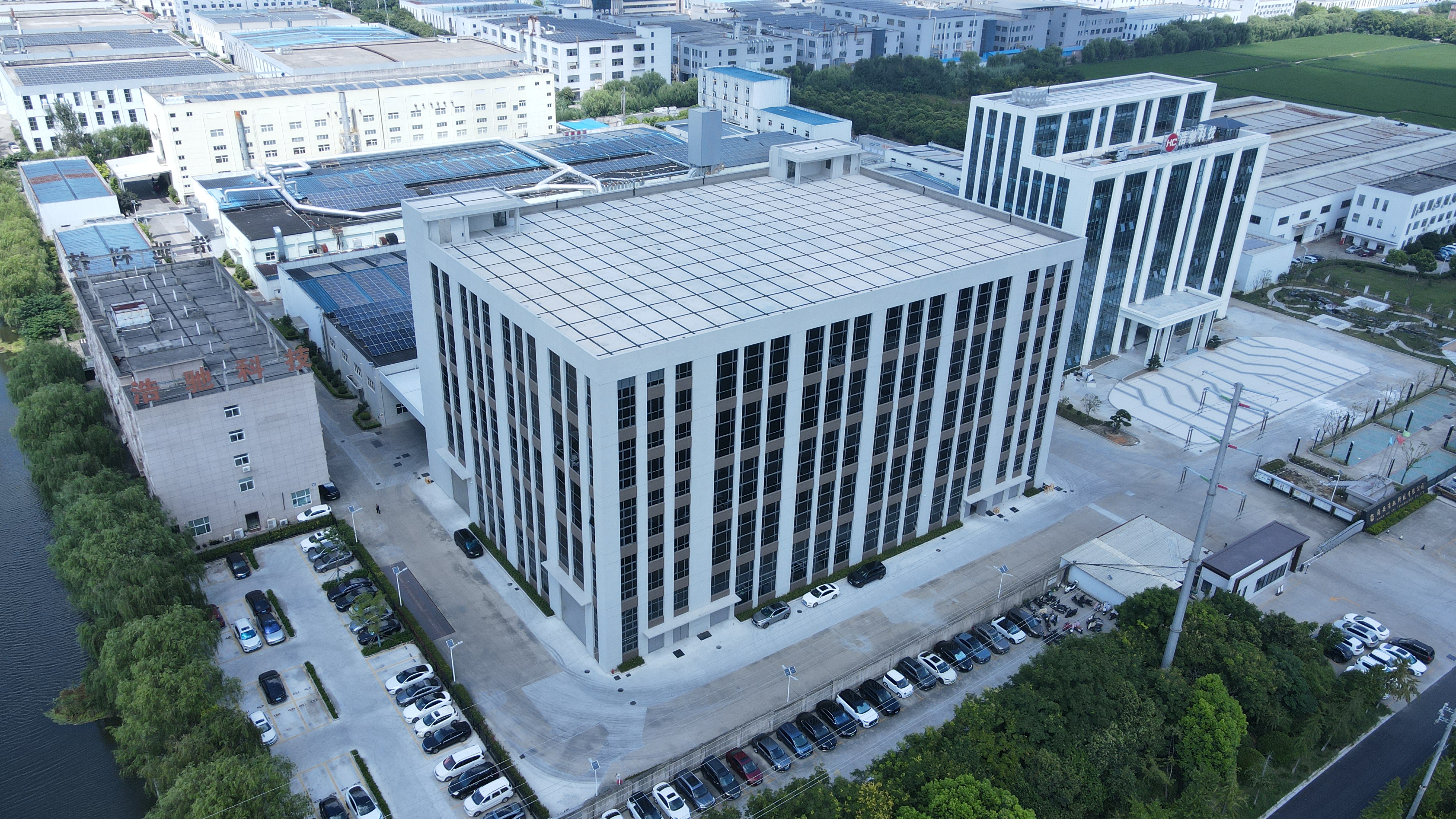
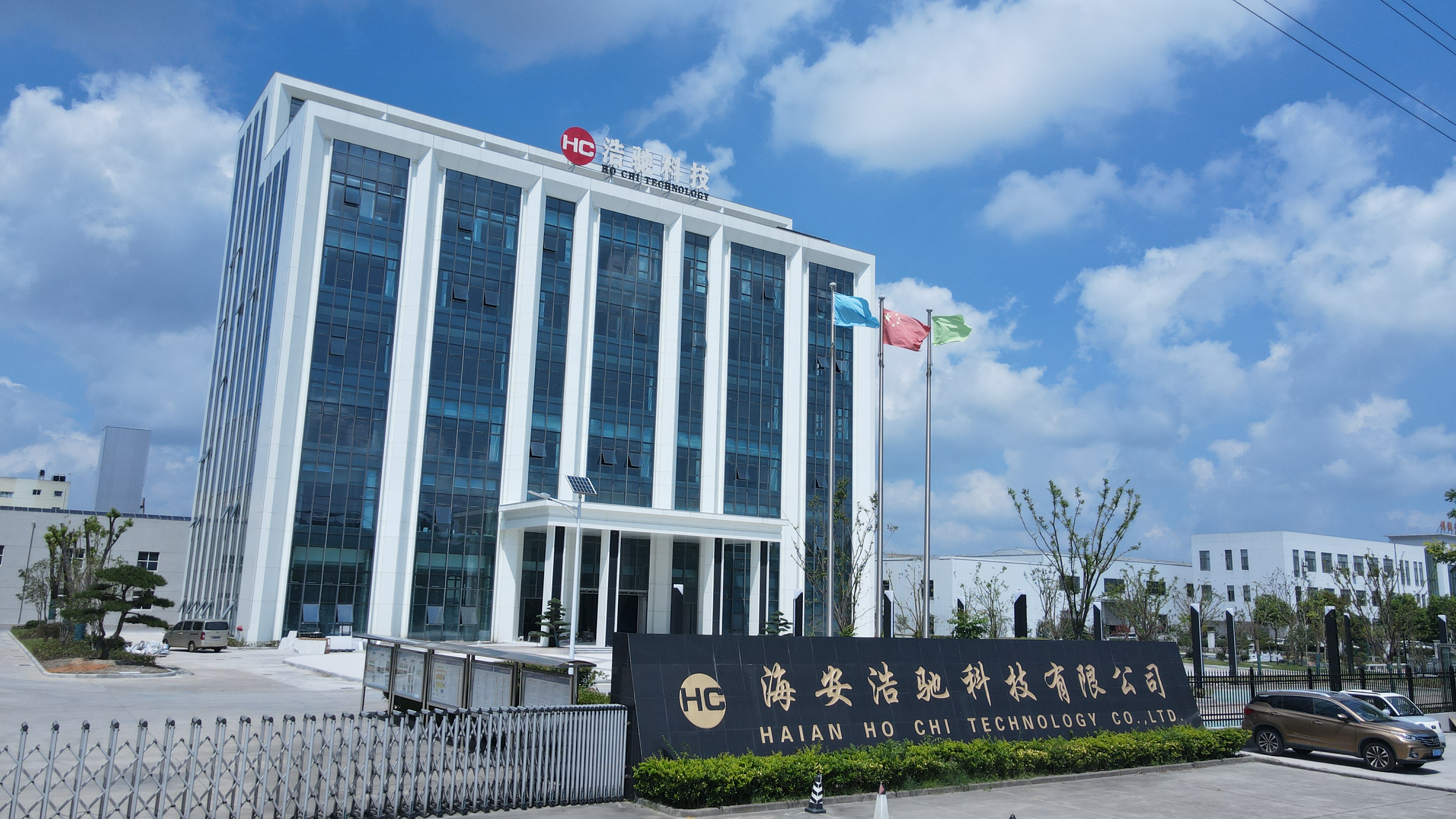
HOCHI PPF & Window Film is the film brand of Haian Haochi Technology Co., Ltd., a functional-film manufacturer founded in 2009 in the Haian Economic and Technological Development Zone, Nantong, Jiangsu Province, China, whose stated range covers automotive window film, paint protection film and architectural film. Its listed factory site is 133,333 square metres with more than 220 employees and an R&D team of 100 engineers.
Product tests answer product questions, while certificates answer process questions, and scope matters more than the logo. The ISO 9001 certificate held by Haian Haochi Technology Co., Ltd. (certificate 04325Q31011R1M, issued 19 May 2025, valid to 19 May 2028 by Beijing United Intelligence Certification Co., Ltd.) covers research, development and production of automotive protective film, electronic protective film and building film, which makes it relevant to all three lanes in this shortlist. The IATF 16949 certificate (RA02-0250/2025, IATF 0568749, issued by AENOR CONFIA S.A.U., valid 16 March 2025 to 15 March 2028) is scoped to design and production of paint protection film and solar film, which is the automotive lane. ISO 14001 (04325E30833R1M) and ISO 45001 (04325S40794R0M) run alongside them. Third-party inspection is a separate line item rather than an assumption, and the stated control sequence includes 100% online optical defect inspection and SGS inspection.
Purchasing Terms That Change the Comparison
The second half of a shortlist is commercial, and it is where evaluation-stage buyers most often compare the wrong variable: price per roll, without matching roll size, film grade, warranty and replacement policy.
The terms worth demanding in writing follow the same logic as the technical criteria, in that each one should be specific enough to check. The manufacturer referenced above states a minimum order quantity of 50 rolls with sample orders available on request, a lead time of 30 to 45 days, and monthly capacity of 3 to 5 million metres. Customisation covers VLT from 5% to 70%, UV and IR rejection rates, film thickness in mil, roll dimensions, custom colours, release liner, and packaging box and core logo printing. These are one supplier stated terms, and their value to a buyer is as a template for the questions rather than as a market norm.
On price, the technical guide recorded in this dataset puts wholesale TPU PPF at roughly USD 150 to 350 for a standard 1.52 m by 15 m roll at low order volumes. The figure is recorded as medium confidence and fast-changing, and it excludes freight, duty and inspection, so it works as a sanity check on a quotation rather than as a target. On classification, TPU PPF is commonly traded under HS 3919.90.90 for self-adhesive plastic sheets and film, which is worth confirming with a customs broker before a first shipment.
| Term | Why it changes the comparison | What to obtain in writing |
|---|---|---|
| Roll dimensions and thickness definition | Price per roll only compares at equal area and equal inclusion rules | Width, length, total-thickness definition, adhesive and top-coat inclusion |
| MOQ and sample policy | Sample availability decides whether the acceptance criteria can be tested before commitment | MOQ in rolls, sample quantity, sample lead time |
| Lead time and capacity | Determines whether an approved film can be re-ordered on schedule | Stated lead time, monthly capacity, production slot policy |
| Customisation | VLT, thickness, colour, liner and packaging change both price and qualification work | Written tolerance for each custom parameter |
| Warranty and replacement | A long warranty with broad exclusions can be weaker than a shorter one that names failure modes | Duration, named failure modes, replacement terms, claim procedure |
| Documentation pack | Determines whether any criterion can be audited at all | Test reports with methods, certificates with scope and validity, third-party inspection reports |
What Recorded Project Experience Does and Does Not Prove
Two project summaries in this dataset are detailed enough to show the shape of a verifiable record. In the automotive case, dealership groups and detailing brands in the US and UAE are recorded at 2,000 rolls per year of 7.5 mil and 8.5 mil high-gloss TPU PPF over a four-year partnership, with instant micro-scratch self-healing at 60 degrees Celsius, Delta E below 1.5 anti-yellowing performance over three years, and zero warranty claims on bubbling or delamination. In the architectural case, developers, glazing contractors and hotel facility managers in the US, UAE and Germany are recorded at about 65,000 square metres of silver and neutral solar-control film, with a 4 to 6 degrees Celsius reduction in indoor temperature, a 28% reduction in central air-conditioning power consumption, 99.5% UV blocking and TSER above 72%, evaluated three years after installation against a 10-year warranty.
Read them as what the manufacturer is prepared to put its name to, and nothing more. A project summary is not an independent audit, the conditions do not transfer to another building or fleet, and the results depend on installation quality that the record does not quantify. The defensible use is to convert each number into a question: which test method produced the colour-shift figure, how was indoor temperature measured, and what does the warranty exclude.
Market Signals and Their Limits
One market figure is worth carrying into the shortlist. Grand View Research, as recorded in this dataset, put TPU at 82.9% of PPF revenue share in 2025, measured against PVC and other polymers. That is a revenue-share measure rather than a performance ranking, and it does not tell a buyer which film to approve. It does indicate where coating capacity and technical documentation are concentrated, which affects how quickly a specification request can be answered.
Other published figures need more caution. The same dataset records two global market-size values for the category, USD 1.23 billion and USD 496.8 million, attributed to different research publishers, with the discrepancy consistent with a scope difference between retail installed value and wholesale material value. Neither is usable for a purchase decision, and the dataset contains no verified capacity, utilisation or customs-volume data for the category. Supply-continuity conclusions should rest on the supplier capacity disclosure and an audit rather than on a market report.
Where the Evidence Stops
- No independent cross-supplier comparative testing was retrieved for self-healing, hydrophobicity, yellowing, impact resistance, stain resistance or optical clarity.
- Supplier-reported values sit on different or undisclosed test conditions, so qualitative anti-yellowing claims and numeric performance claims cannot be combined into one benchmark.
- Thickness and layer-count conventions vary between suppliers, which makes both figures unusable without a stated definition.
- A figure that is not disclosed is not evidence of incapability; a missing number is a request, not a rejection.
- The project summaries in this dataset are supplier records, and no factory audit or warranty-claim dataset was retrieved.
Closing these gaps is the buyer step: samples, an agreed test plan, and a laboratory named in the report.
FAQ
How does automotive window film reduce heat and UV exposure?
Automotive window film reduces solar heat and UV exposure by absorbing or reflecting selected wavelengths of solar energy. Solar-control films use dyed, carbon, metalized, ceramic or multi-layer materials to manage ultraviolet, visible light and infrared energy. Performance should be evaluated using verified VLT, UV rejection, IR rejection and TSER test data rather than by relying on product colour alone.
How is automotive window tint installed without bubbles and edge lifting?
Correct installation requires a clean and dust-free working environment, accurate film cutting, thorough glass cleaning, the approved application solution, careful squeegee work and sufficient curing time. The documented sequence runs from checking the required VLT and film model, through protecting the interior, cleaning both glass surfaces, cutting with a trimming margin, heat-shrinking on curved glass where necessary, and removing water from the centre outward, to edge trimming, inspection for bubbles, dust, creases and lifting, and curing before the windows are lowered or the glass is cleaned. Local window tint and VLT regulations should be checked before installation, and actual curing time depends on film type, temperature and humidity.
How should architectural window film be installed on building glass?
Architectural film should be selected according to glass type, building orientation, solar exposure, privacy requirements and local regulations. Installation begins with identifying the glass type and inspecting it for cracks, damage or coating, then confirming that the chosen film is compatible with the glass structure, protecting surrounding surfaces, cleaning the glass, cutting with an allowance, applying the approved solution to glass and adhesive, positioning the film, removing water and air with a professional squeegee, trimming and inspecting the edges, and allowing sufficient curing time before cleaning or final evaluation. A glass compatibility or thermal-stress assessment is recommended before solar-control film is applied to certain laminated, insulated or treated glass, and installers should follow local building safety requirements and use appropriate protective equipment when working at height.
A consolidated specification sheet covering the film range, construction and available models is available as a downloadable PDF: WINDW FILM HC SPECIFICATIONS (PDF).
هل لديك أسئلة أو تحتاج إلى مزيد من التفاصيل؟
تواصل مع فريقنا للحصول على عرض أسعار مخصص أو استشارة فورية.
طلب عرض أسعار
املأ النموذج أدناه وسيتواصل معك فريقنا بعرض مقترح مخصص.
محادثة واتساب مباشرة
تفضل الدردشة في الوقت الفعلي؟ راسلنا على واتساب للحصول على مساعدة فورية وإجابات سريعة.
- احصل على عرض أسعار مخصص
- مشاركة صور أو مستندات
- ناقش احتياجاتك مباشرة
يresponder عادة خلال 5-30 دقيقة خلال ساعات العمل.