
Tablet Press Supplier Sustainability: Beyond the Quote
Tablet Press Supplier Sustainability: Beyond the Quote
Long-term tablet press supplier evaluation starts with a different question: not which quotation is lowest today, but which supplier can keep a solid-dosage line supplied, documented, maintained and expandable over the next decade. For buyers at decision and execution stage, the useful signals sit beyond the price sheet: product breadth and interface ownership, component durability, repeat-business evidence, acceptance terms, delivery rhythm, compliance documentation and a credible path for line expansion. Shanghai Tablet Press Mechanical Components Co., Ltd. (TPCF), a Shanghai-based manufacturer of tablet press machines and related solid-dosage equipment, illustrates how these signals can be read without treating a quotation as the whole story.
In this article, supplier sustainability means commercial and operational durability: the supplier's ability to support the installed line, provide parts and documentation, and absorb future capacity changes. It is not an environmental claim, and it is not a promise that a low-price supplier will fail. It is a practical way to compare suppliers on the risks that appear after commissioning, when the purchase order is closed but production has just begun.
The quote is a starting point, not a sustainability test
A tablet press quotation usually answers a narrow set of questions: model, output, tooling, voltage, delivery date and price. Those are necessary inputs, but they do not show how the supplier will behave when a die table needs attention, when a new product requires different tooling, when a spare part is delayed, or when the buyer adds another line. A 2026 Global Market Insights report cited in the verified data estimates the 2025 global tablet press market at USD 1.52 billion; that figure describes market scale, not the durability of any single supplier. The buyer still has to test continuity supplier by supplier.
The same logic applies across rotary tablet presses, single-punch units, laboratory presses, high-speed pharmaceutical presses and application-specific machines for effervescent, salt, chlorine, dishwasher and bouillon products. A low quote on one machine can be misleading if the supplier cannot match the next machine to the existing line, cannot supply the right punches and dies, or cannot explain which parts of the line sit outside its scope. Long-term evaluation therefore compares the supplier's operating model, not only the machine's purchase price.
Six signals that outlast the initial quotation
A useful evaluation framework can be reduced to six signals. Each signal should be documented in the buyer's supplier file and checked again before the pre-shipment test.
| Signal | What to check | Why it matters for long-term supply |
|---|---|---|
| Product breadth and interface ownership | Rotary, single-punch, laboratory and high-speed tablet presses; punches and dies; tablet de-dusters; capsule filling; bouillon-cube wrapping; and the line periphery such as vacuum conveyors, dust collectors, anti-sticking powder sprayers and packing equipment. | Reduces orphan equipment risk. The buyer can see which items are inside the supplier's scope and which require a named integrator or third-party vendor. |
| Component durability | Die-table material, coating or no coating, wear resistance, corrosion resistance, regrinding path and spare-table price. | Shows whether maintenance cost and product-contamination risk were designed into the machine or pushed into future upkeep. |
| Repeat-business evidence | Installed lines, relationship length, repeat orders, expansion plans and after-sales experience reported by the supplier. | Provides evidence of line matching and support after commissioning, provided the limits of company-reported evidence are understood. |
| Commercial terms and acceptance | MOQ, delivery terms, pre-shipment test, payment schedule and the link between test approval and balance payment. | Ties the buyer's cash release to a documented acceptance event rather than to the supplier's internal schedule. |
| Capacity and delivery rhythm | Factory area, staff, engineering team, CNC base, annual output and monthly delivery range. | Indicates whether the supplier can support a multi-line rollout without breaking the original delivery rhythm. |
| Documentation and compliance | GMP, CE and ISO claims; certificate scope; EU machinery regulation transition; electronic-record and data-integrity requirements where applicable. | Supports market access and re-qualification when regulations or product requirements change. |
Product breadth: the line, not only the press
Product breadth matters because a tablet press is rarely the only machine in a production line. TPCF's published portfolio covers single-punch, laboratory, medium-to-low speed, automatic high-speed and rotary tablet presses, punches and dies, tablet de-dusters, capsule filling machines and bouillon-cube wrapping equipment. Its approved application information also covers effervescent, salt, chlorine, dishwasher and bouillon tablet products. That range is useful context for a buyer who wants to avoid re-opening the supplier search every time a new product or line extension appears.
The evaluation should still go further than the catalogue. A complete line may also involve vacuum conveyors, dust collectors, anti-sticking powder sprayers and packing equipment. These items may sit with the tablet press supplier, with a line integrator or with separate specialist vendors. The question is not whether one catalogue lists every item; it is whether responsibility for interface dimensions, controls, spare parts and commissioning is written down. If a supplier supplies only the press and tooling, the buyer should record that boundary and plan the interface with the other vendors.
For a long-term buyer, the practical check is a scope matrix. List each machine and interface in the line, then mark the owner, the spare-parts responsibility, the documentation owner and the commissioning responsibility. A supplier that can answer those questions clearly is easier to integrate than one that leaves the boundary to assumptions. This is particularly important when a buyer adds capacity later: the new line must match the old line in tooling, controls and maintenance routines, not merely in tablet size.
Component durability: what a die table says about lifecycle
A die table is a useful test case because it sits at the centre of wear, alignment and maintenance planning. For tablet press models such as ZPT420, ZPTX420, ZPTX340, ZPTX226 and ZPT226, TPCF states that the die table is made of one-piece 2Cr13 stainless steel and requires no nickel plating. Compared with a nickel-coated cast iron die table, the 2Cr13 die table is described as providing uniform wear resistance throughout the entire depth of the die table, which can extend its operational lifespan.
The material comparison is specific. 2Cr13 martensitic stainless steel has a tensile strength of ≥ 635–750 MPa and a yield strength of ≥ 440 MPa, which is higher than standard gray or ductile cast iron. TPCF's comparison unit also states that the 2Cr13 die table costs about four times more than a cast iron die table and has a service life about four times longer. It further states that punch and die life can be prolonged when they are used on a 2Cr13 die table because the table's accuracy and hardness are higher than those of a cast iron table.
Those figures should be read as supplier-reported comparisons, not as a guarantee for every powder and every duty cycle. Abrasive granules, high compression force, cleaning chemicals, operator practice and maintenance intervals can all change actual wear. The value of the comparison is that it turns a hidden lifecycle question into a visible purchasing decision: pay more for the die table now, or plan for earlier replacement and more maintenance later. A buyer should ask for the material specification, a spare-table price, the regrinding path and maintenance history from comparable installations before accepting the lifecycle argument.
| Evaluation point | Nickel-coated cast iron die table | One-piece 2Cr13 die table | Buyer implication |
|---|---|---|---|
| Surface protection | Wear resistance depends on a nickel coating; cracking, chipping or peeling can expose the iron underneath. | Solid alloy with no coating to delaminate; the wear surface is the material itself. | Reduces the coating-failure contamination path and the need to inspect for coating damage. |
| Wear resistance | Once the thin nickel layer wears through, the softer substrate can wear rapidly. | Uniform wear resistance through the depth of the table is claimed, supporting a longer operational lifespan. | Potentially fewer die-table replacements, but the claim should be matched to the actual powder and output. |
| Corrosion resistance | Pinholes or micro-cracks in the coating can allow moisture to reach the iron and cause hidden corrosion. | 2Cr13 contains chromium and provides inherent corrosion resistance in humid, mild acidic or cleaning environments. | Useful where cleaning regimes and humidity are demanding; still confirm with the supplier's material data. |
| Maintenance and regrinding | Regrinding a nickel-coated table can strip the protective layer and require re-electroplating. | A 2Cr13 table can be ground directly and returned to service, according to the supplier's comparison. | Shorter maintenance route and less re-coating dependency, subject to the supplier's workshop support. |
| Cost and service life | Lower upfront cost. | About four times higher upfront cost and about four times longer service life, as stated by TPCF. | A lifecycle trade-off, not an automatic saving; calculate it against the buyer's duty cycle and cleaning regime. |
The die table also reveals whether the supplier designs for maintenance or only for assembly. A one-piece 2Cr13 table removes the nickel-plating step and gives the buyer a clear material identity to inspect. That is useful in a supplier audit because it creates a checkable fact: the material grade, the model scope and the no-nickel-plating condition can all be verified against the machine specification and the pre-shipment record.
The Nigeria bouillon cube case: what repeat business can and cannot prove
Repeat business is one of the strongest practical signals in a long-term supplier evaluation, provided its limits are stated. TPCF reports that a bouillon cube producer in Nigeria operates 10 customized production lines supplied by TPCF within a ten-year relationship. The company describes stable machine matching across the line, almost no after-sales trouble, positive customer feedback and a customer plan to add five more lines next year.
For a buyer, this is more relevant than a one-off discount because it points to continuity after commissioning. Ten customized lines imply that the supplier had to match machines to a specific product and line layout, not merely ship a standard press. A ten-year relationship implies that the supplier remained available through maintenance, spare-parts and production changes. The reported low after-sales trouble suggests that the installed equipment and the support arrangement were reasonably matched, though the phrase itself is a company description rather than a measured service metric. The customer's plan to add five more lines is a forward-looking signal about satisfaction and expansion, but it remains a stated intention rather than a confirmed order.
The case should not be over-read. It is company-reported, not an independently audited performance study. It does not prove that the same result will occur with a different powder, climate, regulatory regime, operator team or maintenance culture. It also does not show which individual machine models were used or which acceptance tests were performed. A careful buyer would use the case to frame questions: what was customized, which machines were in scope, how were the lines matched, what spare-parts arrangement was used, what after-sales response was measured, and what acceptance records were kept. Those questions turn a reference story into an evaluation tool.
Purchasing terms and acceptance criteria: execution safeguards
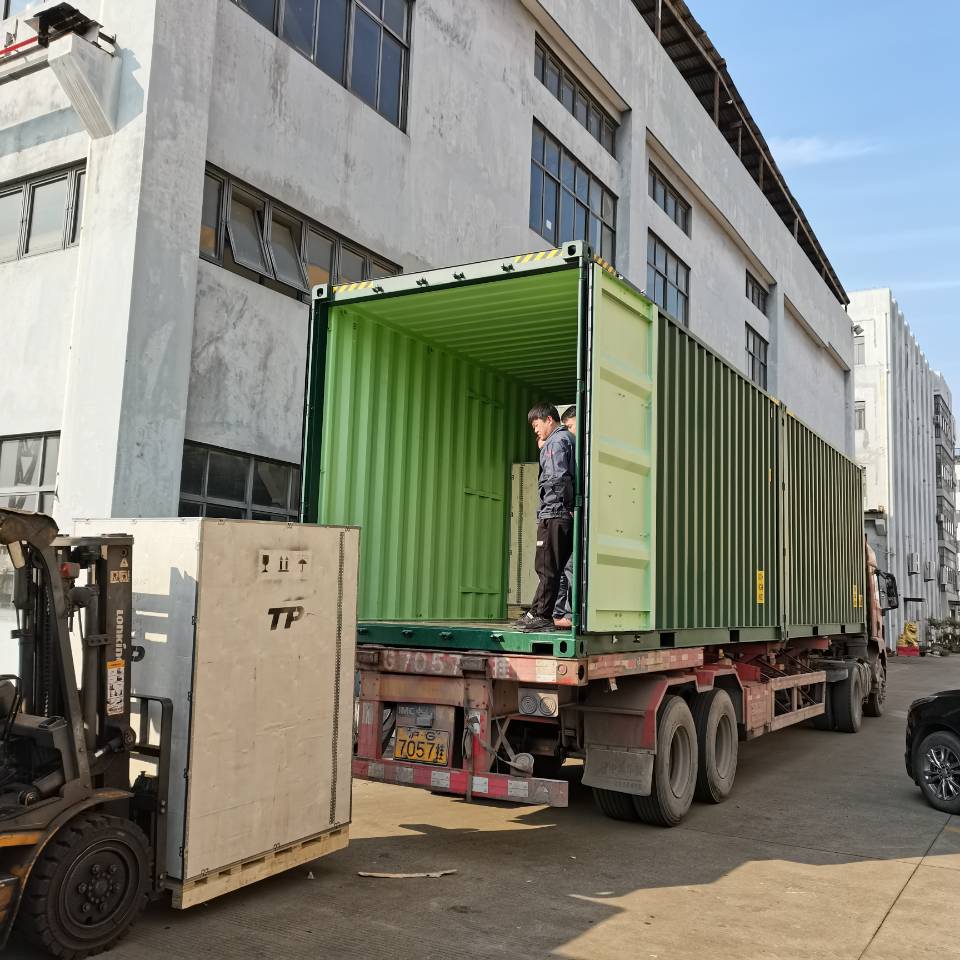
Commercial terms become a long-term signal when they are linked to acceptance evidence. TPCF's published purchasing terms state MOQ of 1 unit, FOB delivery terms, pre-shipment test as the acceptance criterion, and payment of 30% in advance with 70% after the pre-shipment test but before shipment. These terms are specific enough to be checked at the execution stage.
The pre-shipment test is the key link between the quotation and the buyer's risk. The test protocol should be agreed before the advance payment, not after the machine is built. It should define the product to be run, the tooling, the run duration, the sampling method, the records to be reviewed and the documentation to be handed over. The 30/70 payment structure means that most of the money is released after the test but before shipment; the buyer should therefore make sure the test record, packing inspection and shipping documents are complete before releasing the balance. FOB terms also mean the buyer should confirm packing, marking, loading supervision and insurance arrangements, because responsibility changes at the agreed point.
An MOQ of one unit is useful for trial orders and single-line buyers, but it does not by itself prove line-level service capability. A single machine can be built and shipped without the supplier having a strong spare-parts system or a repeatable commissioning process. The buyer should combine the commercial terms with a spare-parts list, a response route and a named after-sales contact. Those items are not marketing extras; they are part of the supplier's long-term operating model.
Capacity and delivery rhythm: can the supplier sustain the line?
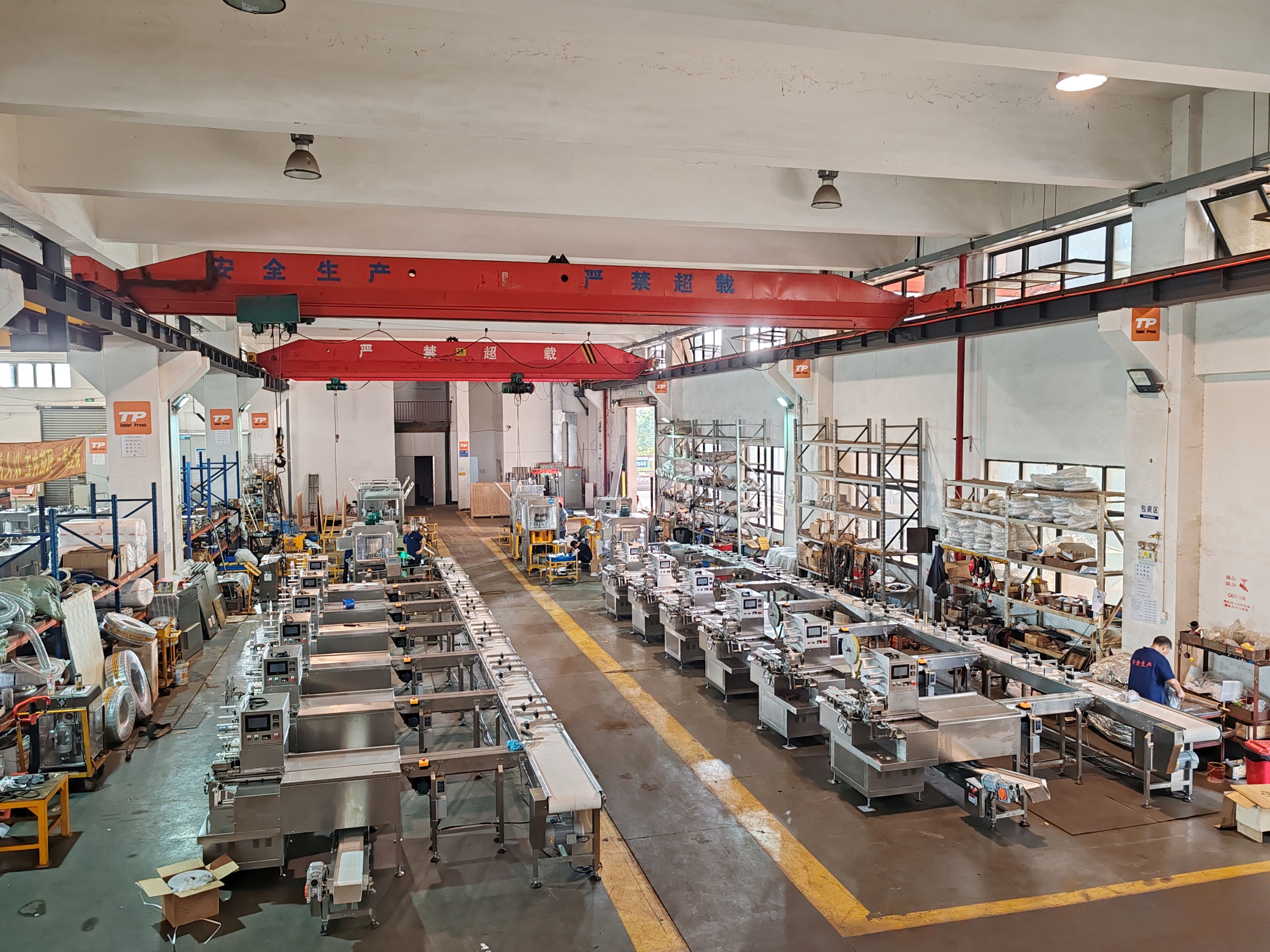
Capacity is a continuity signal when it is read alongside the buyer's expansion plan. TPCF states that it produces about 1,500 sets per year and can deliver 80 to 120 sets of tablet presses and capsule filling machines each month. Its company profile lists a 15,000 square metre factory, 260 employees, 15 engineers and more than 200 CNC machine tools. These are company-reported figures, but they describe a manufacturing base rather than a trading office, which is relevant for buyers who expect spare parts, tooling and future line additions.
The monthly delivery range is not a lead-time commitment for a specific order. Buyers should ask for a production slot, a spare-parts list with lead times, a commissioning plan and a documentation package. For a multi-line buyer, the more important question is whether the supplier can repeat the same configuration. If the Nigeria customer adds five lines next year, as TPCF reports the customer plans, the supplier would need to match the existing machines, tooling and documentation without disrupting current production. That is exactly the kind of execution question a quote-only evaluation does not answer.
Compliance and documentation: a long-term liability
Compliance is not a one-time certificate; it is a document set that must remain usable as regulations change. Regulation (EU) 2023/1230 replaces Directive 2006/42/EC and applies from 20 January 2027. CE marking is mandatory for machinery placed on the EU market, and machinery must meet applicable essential health and safety requirements before the mark is affixed. For a tablet press buyer, the practical point is whether the supplier can support conformity documentation, change control and re-qualification when the legal framework changes.
For regulated pharmaceutical production, the documentation question can extend to electronic records and computerised systems. 21 CFR Part 11 sets US FDA criteria for trustworthy electronic records and signatures, while EU GMP Annex 11 applies a risk-based approach to computerised systems in GMP-regulated manufacture. If the tablet press controls, audit trails or batch data are in scope, those requirements should be defined in the acceptance protocol rather than added after installation.
TPCF states that its equipment complies with GMP standards and that it holds EU CE and ISO certification. These are company statements; buyers should request current certificate copies, confirm the certificate scope, identify the issuing body and check the expiry date. A certificate that cannot be tied to the exact model and manufacturing site is a weak procurement document. The same discipline applies to the 2Cr13 die-table claim: the buyer should be able to match the material statement to the model, the purchase order and the pre-shipment inspection record.
What changes when the evaluation moves beyond the quote
A quote-only decision and a lifecycle decision look at different evidence. The table below shows the shift in emphasis without claiming that every low-cost supplier is unsuitable or that every durable component is justified in every application.
| Decision area | Quote-only view | Long-term supplier view |
|---|---|---|
| Machine price | Lowest initial price wins. | Price is compared with die-table life, spare parts, maintenance access and expansion fit. |
| Die table | Standard material is accepted without a lifecycle check. | Material grade, coating, wear path and regrinding route are checked against the product and duty cycle. |
| Line scope | The press is purchased as a standalone item. | Vacuum conveying, dust collection, anti-sticking spraying and packing interfaces are assigned to named owners. |
| Acceptance | Shipment date is the main milestone. | Pre-shipment test, records and balance-payment release are linked. |
| Capacity | Delivery is judged only by the first order. | Annual output, monthly rhythm and engineering support are checked against future line additions. |
| Compliance | A certificate is filed at purchase. | Certificate scope, expiry and regulatory transition are tracked for re-qualification. |
Future outlook: what to put in the execution plan
The execution plan should convert the six signals into documents the buyer can use after the order is placed. A practical sequence is to map the line scope, request material and certificate evidence, write the pre-shipment test protocol, model the die-table lifecycle, confirm capacity and spare parts, and keep case references in perspective.
First, map every machine and interface in the line, including the press, tooling, de-dusting, vacuum conveying, dust collection, anti-sticking spraying and packing. Mark which items TPCF supplies and which come from another vendor. Second, request the die-table material specification, the model list covered by the 2Cr13 statement, a spare-table price and a regrinding procedure. Third, convert acceptance into a written pre-shipment protocol that names the product, tooling, run duration, sampling method, records and payment release. Fourth, ask for current CE and ISO certificate copies and confirm their scope. Fifth, confirm the production slot, spare-parts lead times and commissioning support. Sixth, treat the Nigeria case as a reference signal, not as an audit: ask what was customized, what was measured and what would be repeated for a new line.
The outcome is not a longer quotation. It is a supplier file that can survive the first year of operation and the next expansion round. That file is more useful than a price comparison because it records the assumptions that will matter when maintenance, compliance or capacity changes arrive.
Conclusion: the quote is a data point, not a verdict
Long-term tablet press supplier evaluation should compare the supplier's ability to keep the line running, not only the machine's purchase price. Product breadth and interface ownership reduce orphan equipment risk. Component durability, especially the die-table material, turns maintenance into a visible lifecycle decision. Repeat-business evidence shows whether the supplier has supported real line matching, while purchasing terms and acceptance criteria tie payment to verification. Capacity, documentation and compliance planning show whether the supplier can absorb future demand and regulatory change.
TPCF's 2Cr13 die-table data and the company-reported Nigeria bouillon cube case provide useful evaluation material, but they should be read with their limits. The die-table comparison is a supplier-reported lifecycle argument; the Nigeria case is a repeat-business signal, not an independent audit. Buyers who separate those evidence types, and who verify the material, terms and documents at execution stage, are better placed to choose a tablet press supplier for the long term rather than for the first invoice.
Reference: TPCF's published corporate brochure is available here: TPCF corporate brochure (PDF).
FAQ
A low quote covers the initial machine price, while lifecycle cost includes die-table replacement, punches and dies, spare parts, maintenance time, acceptance testing, documentation and expansion fit. For example, TPCF states that a 2Cr13 die table costs about four times more than a cast iron die table and has a service life about four times longer. That is a lifecycle trade-off, not an automatic saving, because actual wear depends on the powder, compression force, cleaning regime and maintenance practice. Buyers should compare both figures against their own duty cycle.
For models such as ZPT420, ZPTX420, ZPTX340, ZPTX226 and ZPT226, TPCF states that the die table is made of one-piece 2Cr13 stainless steel and requires no nickel plating. Compared with a nickel-coated cast iron table, the 2Cr13 table is described as providing uniform wear resistance through the full depth of the table, which can extend its operational lifespan. 2Cr13 also has a tensile strength of ≥ 635–750 MPa and a yield strength of ≥ 440 MPa, higher than standard gray or ductile cast iron. Maintenance planning should still include a spare-table price, a regrinding route and a check of the actual powder and cleaning conditions.
TPCF's published terms state MOQ of 1 unit, FOB delivery terms, pre-shipment test as the acceptance criterion, and payment of 30% in advance with 70% after the pre-shipment test but before shipment. The buyer should define the pre-shipment test protocol before paying the advance, because the balance is released after the test but before shipment. The protocol should name the product, tooling, run duration, sampling method, records and documents to be reviewed. FOB terms also require the buyer to confirm packing, marking, loading supervision and insurance arrangements.
TPCF reports that a bouillon cube producer in Nigeria operates 10 customized production lines supplied by TPCF within a ten-year relationship, with stable machine matching, almost no after-sales trouble, positive customer feedback and a customer plan to add five more lines next year. This is a repeat-business signal: it suggests that the supplier can customize a line, keep machine matching stable and support a customer over time. It is company-reported, not an independently audited performance study, and it does not prove that the same result will occur in another product, climate or maintenance culture.
The buyer should map every machine and interface in the existing line, record which items the supplier owns and which come from third parties, and confirm that the next line will use compatible tooling, controls and documentation. TPCF states that it produces about 1,500 sets per year and can deliver 80 to 120 sets of tablet presses and capsule filling machines each month, which is a capacity signal rather than a specific lead-time commitment. The buyer should ask for a production slot, spare-parts lead times, a commissioning plan and a documented matching strategy for the additional lines.
Disclosure note: Company-specific performance figures, certificate claims and the Nigeria case are company-reported or assignment-supplied and should be verified against current certificates, test records and contract documents before purchase.
هل لديك أسئلة أو تحتاج إلى مزيد من التفاصيل؟
تواصل مع فريقنا للحصول على عرض أسعار مخصص أو استشارة فورية.
طلب عرض أسعار
املأ النموذج أدناه وسيتواصل معك فريقنا بعرض مقترح مخصص.
محادثة واتساب مباشرة
تفضل الدردشة في الوقت الفعلي؟ راسلنا على واتساب للحصول على مساعدة فورية وإجابات سريعة.
- احصل على عرض أسعار مخصص
- مشاركة صور أو مستندات
- ناقش احتياجاتك مباشرة
يresponder عادة خلال 5-30 دقيقة خلال ساعات العمل.