
Tailoring Automatic Battery Pack Lines: EV, Storage and C&I Applications
Tailoring Automatic Battery Pack Lines: EV, Storage and C&I Applications
An automatic battery pack assembly line is now specified as much by a plant's floor plan and power supply as by the cell format it handles. Buyers who have already chosen a CTP or MTP route frequently discover, at execution stage, that the binding constraints are physical: bay length, column grid, available utilities, and how easily the line can be re-tasked when pack designs change.
Zonzsin — Shanghai Zonzsin Intelligent Equipment Co., Ltd., founded in 2019 — designs and manufactures automatic battery pack assembly lines and ESS battery pack insertion robots for containers, serving lithium battery manufacturers, energy storage integrators, and automotive OEMs. Its line platforms, including the ZZX2406 and ZZX2501 configurations, are documented at a physical envelope of 58,000 × 11,000 × 3,800 mm with a utility requirement of AC 380 V ±10%. Those two specifications are the starting point for tailoring a line to EV, stationary storage, or commercial and industrial (C&I) production.
Why Site Fit Has Become the Deciding Variable
Capacity growth in battery manufacturing is well documented. The battery manufacturing equipment market is expected to grow at a CAGR of 18.8% from 2025 to 2030, reaching USD 36.94 billion, according to MarketsandMarkets. On the product side, CTP technology was integrated into 48.6% of new energy vehicles sold in China by 2023, rising from 13 models in 2021 to 57 models by late 2023, according to ResearchInChina.
Those two trends interact in a practical way. When pack architecture evolves quickly, plants add lines faster than they add buildings. A manufacturer that standardized on a straight, single-direction line may find that a new CTP or MTP process step no longer fits the available bay length, or that the utilities at the far end of the hall cannot support the added stations. Tailoring the line to the site — rather than forcing the site to match a fixed line design — is what keeps a project on schedule.
Three constraints usually decide the outcome:
- Floor footprint and bay geometry. Total unobstructed length available, column spacing, ceiling height, and clearance for maintenance access.
- Utility envelope. The electrical supply and its stability at the installation point, and whether additional conditioning equipment is needed.
- Re-tasking flexibility. How much of the line can be reconfigured when cell format or pack design changes.
The Physical Envelope: 58,000 × 11,000 × 3,800 mm and AC 380 V ±10%
The ZZX2406 and ZZX2501 line platforms are specified at 58,000 × 11,000 × 3,800 mm and require an AC 380 V ±10% supply. Read as execution requirements rather than catalogue numbers, these two figures define what a site must provide before installation can begin.
The 58 m length is the dominant constraint. In a straight-line configuration, that length has to be unobstructed end to end, which rules out many existing buildings with intermediate columns, expansion joints, or firewall divisions. The 11 m width covers the process stations plus service aisles. The 3,800 mm height accounts for gantry structures, lifting equipment, and overhead services.
The AC 380 V ±10% specification matters most for sites outside stable industrial parks. The ±10% band is a design tolerance, not a guarantee that any supply will perform: plants fed by weak grids, or sharing a supply with heavy intermittent loads, should verify voltage stability at the point of connection before the layout is frozen, because correcting power quality after installation is more disruptive than planning for it earlier.
Why a U-Shape Layout Changes the Space Equation
A U-shape layout folds the process flow so that loading and unloading occur at the same end of the line. In constrained buildings, this produces three practical effects:
- Shorter effective building length required. Instead of one continuous 58 m run, the process occupies a folded envelope, which suits plants where the longest unobstructed bay is shorter than the full line length.
- A single material entry and exit point. Incoming cells and outgoing finished packs share one logistics zone, reducing internal transport distance and the number of operators devoted to material handling.
- Concentrated utilities and supervision. Power distribution, compressed air, and control cabinets can be grouped at one end rather than distributed along the hall, which simplifies maintenance access.
This approach has been used for client-specific applications, including projects in India where lines are installed into existing manufacturing buildings rather than purpose-built halls. The underlying principle is general: adaptation should be decided against the actual building, not against a standard reference drawing.
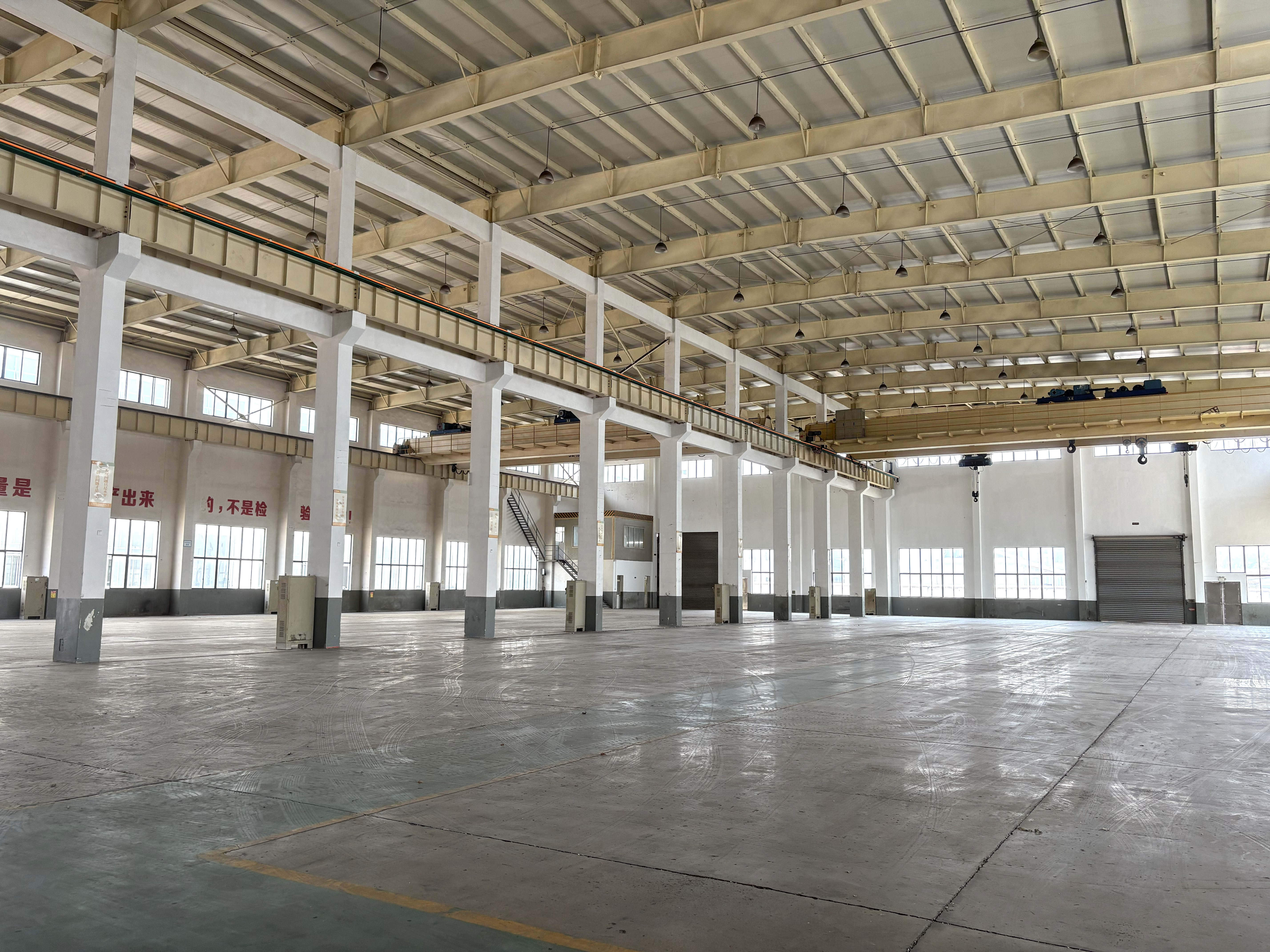
Manufacturing facility supporting automatic battery pack assembly line production.
Scenario Fit 1: EV Traction Pack Manufacturing
EV traction pack assembly is the highest-throughput and highest-consistency scenario. CTP and MTP pack architectures — where cells are integrated directly into the pack structure rather than into intermediate modules — remove module-level hardware but increase the precision demanded at stacking, bonding, and busbar connection stages.
For a line tailored to EV production, the practical design questions are:
- Cell handling format. Whether the line is configured for prismatic cell-to-pack assembly, and how the fixture set accommodates cell dimensional tolerances.
- Station density. CTP and MTP flows concentrate process steps, increasing the number of stations per metre and therefore the utility load along the line.
- Yield discipline. Medium-to-high volume PACK assembly scenarios that require high consistency and yield are where tailoring pays back, because a layout that removes handling steps also removes opportunities for a defect.
The 48.6% CTP adoption figure in China's new energy vehicle market explains why this scenario drives most equipment demand: CTP is no longer a niche architecture, so line buyers increasingly treat CTP compatibility as a baseline requirement rather than an optional feature.
Scenario Fit 2: Stationary Storage and 314Ah Packs
The energy storage scenario follows its own trajectory. The industry has rapidly transitioned from the 280Ah cell benchmark to 314Ah formats for energy storage packs, in order to improve energy density and reduce assembly costs, according to Highstar and InfoLink data.
That transition changes line requirements in specific ways. Larger prismatic cells mean heavier unit loads, tighter stacking tolerance for a given pack height, and different fixture design for 314Ah pack assembly equipment. Storage packs are also frequently assembled into container-level products, which introduces a handover point between pack assembly and container integration.
For this scenario, tailoring focuses on:
- Cell-format readiness. Whether stacking, welding, and testing stations can accept 314Ah large prismatic cells without a complete fixture redesign.
- Pack-to-container interface. How finished packs are transferred into container integration, and whether that interface sits inside or outside the assembly line envelope.
- Batch structure. Storage projects are often batch-driven, so changeover efficiency can matter more than continuous high-volume flow.
Zonzsin's portfolio addresses this handover point directly: alongside automatic battery pack assembly lines, the company manufactures an ESS battery pack insertion robot for containers, an AGV-driven design covered by its patents.
Scenario Fit 3: C&I and Distributed Production
Commercial and industrial storage, together with distributed manufacturing, is the scenario where a standard large-line assumption fails most often. Volumes are lower, the product mix is wider, and the building is usually an existing one.
For C&I-oriented buyers, three execution-stage parameters matter more than peak throughput:
- A footprint that fits the building. The U-shape approach described above is often the deciding factor in whether the 58,000 mm platform can be installed at all.
- A commercial threshold that suits pilot and staged production. Minimum order quantity is 1 unit, with typical production lead time of 3 to 5 months and monthly production capacity of 3 units. For a buyer validating a new pack design or standing up a first line, an MOQ of one unit removes the pressure to over-commit on capacity before demand is proven.
- Flexibility over rigid throughput. A configurable automation approach that can be re-tasked between storage and C&I pack variants is more valuable than a line optimized for a single product.
How ZZX2406 and ZZX2501 Are Configured for a Specific Plant
Tailoring here is not cosmetic. Zonzsin's line platforms support customized line integration, allowing the configuration to be adapted to a specific requirement rather than delivered as a fixed catalogue layout. The company states that its modular design approach contributes to superior product reliability and 20% lower maintenance expenditures, and that it holds 50 granted patents, including invention patents for its AGV-driven battery pack insertion robot.
The manufacturer's operating profile is relevant to execution-stage buyers because it indicates the scale of customization that can realistically be engineered and delivered:
| Parameter | Shanghai Zonzsin Intelligent Equipment Co., Ltd. |
|---|---|
| Founded | 2019 |
| Facility size | 6,000 m² |
| Employees | 90 |
| R&D team | 43 engineers |
| Annual output | 40 units |
| Export ratio | 60% |
| Main markets | Southeast Asia and the EU, with installations referenced in Europe, the USA, Japan, South Korea and India |
For a buyer planning several lines over multiple years, this profile supports a different kind of relationship than a one-off equipment purchase: the same engineering group that tailors the first line remains available for the second, which reduces re-learning cost and specification risk on subsequent projects.
What Changes Compared with Manual and Semi-Automatic Lines
A tailored automatic line is not the right answer for every project, and the comparison is more useful when stated as a trade-off rather than as a replacement.
| Configuration | Best-fit situation | Commercial and operational profile |
|---|---|---|
| Manual assembly | Very low volume, prototype builds, minimal capital | Lowest initial investment; labour-intensive; consistency depends on operator skill |
| Semi-automatic line | Mid-volume production with a defined pack design | Moderate investment; critical stations partially automated |
| Automatic tailored line (CTP / MTP / 314Ah) | Medium-to-high volume production lines; PACK assembly scenarios requiring high consistency and yield; factories needing automation upgrades | Higher initial investment than pure manual solutions; long-term per-unit cost may decrease through efficiency and yield gains; payback period requires project-level calculation |
Boundaries buyers should plan for. A tailored automatic line carries requirements that manual assembly does not:
- Capital commitment is higher at the outset. The comparison against pure manual solutions is explicit: initial investment is higher, and any payback estimate depends on project-specific volume, yield, and labour cost assumptions.
- Skilled maintenance personnel are required. The line needs technical personnel for maintenance and periodic calibration, plus spare parts management and remote support arrangements.
- Physical preconditions must be met before installation. The 58,000 × 11,000 × 3,800 mm footprint and the AC 380 V ±10% supply are not optional; site surveys should confirm both before the layout is finalized.
Zonzsin's comparative data against ATW and LEAD INTELLIGENT records a price saving of 20% and manpower saving of 50%, alongside optimized space utility. Those figures are the manufacturer's comparison statements rather than independently audited results, and they should be validated against a specific project scope, because line content, automation level, and site conditions all change the underlying cost base.
Risk Controls Inside a Battery Pack Assembly Line
Battery pack assembly carries three identified process risks: battery safety, battery short circuit, and battery overheating. The control strategy applied to the line combines protective design and interlocks, safety sensors, and ESD grounding and protection. At the enterprise level, these are reinforced by process risk assessment and testing, and by dedicated test stations within the line.
For execution-stage buyers, these controls are worth confirming station by station during acceptance testing, because they determine whether a defect is caught inside the line or downstream in a finished pack.
Procurement, Acceptance and Long-Term Support
Commercial terms for a customized automatic battery pack assembly line are structured as follows:
- Minimum order quantity: 1 unit.
- Delivery terms: EXW Shanghai / FOB Shanghai / FCA Shanghai.
- Production lead time: typically 3 to 5 months, with monthly production capacity of 3 units.
- Acceptance criteria: FAT and online FAT.
- Payment terms: 50% advance payment by T/T, and 50% balance payment by T/T within 3 business days after the bill of lading date.
- Quality control: 100% testing.
- After-sales services: remote support and on-site installation and commissioning.
Read together, these terms describe a project with a defined factory acceptance gate before shipment and a commissioning phase on site. That structure is what makes a 3-to-5-month lead time predictable: acceptance happens in the manufacturer's facility, where corrective action is faster and cheaper than on a customer's production floor.
Documentation: Zonzsin publishes a product brochure covering its automatic battery pack assembly line range at Product brochure (PDF). General company information is available at www.zonzsin.com.
Market Outlook
The demand context behind these projects remains expansionary. The global CTP battery market was valued at USD 18.35 billion in 2023 and is projected to reach USD 75.93 billion by 2033, according to Spherical Insights. Equipment demand tracks that growth: the battery manufacturing equipment market is expected to grow at an 18.8% CAGR from 2025 to 2030, reaching USD 36.94 billion, per MarketsandMarkets.
Compliance requirements are converging in parallel. Lithium-ion battery packs must comply with international safety standards such as IEC 62133-2 for global market access, and UL 1642 / UL 2054 for North America. For line buyers, this means pack-level compliance testing is a downstream obligation that the assembly line has to support: traceability, test data, and repeatable process control all contribute to it.
The supplier landscape for assembly equipment includes major players such as Lead Intelligent Equipment, Yinghe Technology, and Hitachi High-Tech, alongside specialized builders like Zonzsin. For long-term procurement planning, the relevant question is not which supplier list is longest, but which supplier's engineering capacity matches the buyer's planned line count and customization depth.
FAQ
What footprint and utilities does a tailored automatic battery pack line require?
The ZZX2406 and ZZX2501 line configurations are specified at 58,000 × 11,000 × 3,800 mm and require an AC 380 V ±10% supply. A U-shape layout can reduce the required building length by folding the process flow so that loading and unloading take place at the same end of the line. Final footprint still depends on the specific configuration and the building's column grid, so site constraints should be reviewed before the layout is fixed.
How long does delivery and installation take for a customized line?
Typical production lead time is 3 to 5 months, with monthly production capacity of 3 units and a minimum order quantity of 1 unit. After-sales services include remote support and on-site installation and commissioning, which means the installation phase is carried out with manufacturer involvement rather than being left to the buyer's team alone.
What are the purchasing terms and acceptance criteria?
Minimum order quantity is 1 unit. Delivery terms are EXW Shanghai, FOB Shanghai, or FCA Shanghai. Acceptance criteria are FAT and online FAT. Payment terms are 50% advance payment by T/T, with the 50% balance payable by T/T within 3 business days after the bill of lading date.
How are quality and safety controlled during production?
Quality control follows 100% testing. The identified process risks in battery pack assembly are battery safety, battery short circuit, and battery overheating; the control strategy combines protective design and interlocks, safety sensors, and ESD grounding and protection. These are supported by process risk assessment and testing, and by test stations within the line.
What maintenance and support should be planned over the line's operating life?
The line requires technical personnel for maintenance and periodic calibration, along with spare parts management and remote support. The manufacturer provides remote support and on-site installation and commissioning as part of its after-sales services. Zonzsin states that its modular design approach results in 20% lower maintenance expenditures, and that it holds 50 granted patents, including invention patents for its AGV-driven battery pack insertion robot.