
Taiwan Disaster Award and the Dual Cooling Water Cooling Vest
Taiwan Disaster Award and the Dual Cooling Water Cooling Vest
A certificate can shorten a supplier longlist. It cannot carry a procurement decision on its own. That is the practical starting point for reading the Disaster Prevention Product and Service Certification Award from the Taiwan Disaster Prevention Industry Association on the COOLWAVE Water-Circulation Cooling Vest.
Shokunin is the professional brand of FENG SHANG PRECISION CO., LTD., a Taoyuan, Taiwan-based manufacturer of tools and cooling apparel. The product examined here is the COOLWAVE Water-Circulation Cooling Vest, which buyers often search for as a Dual Cooling Water Cooling Vest. The vest is classified in the product data as Industrial Cooling Apparel / Personal Protective Equipment (PPE). The award is a real qualification signal. The useful question is what it qualifies, and what the buyer still has to verify.
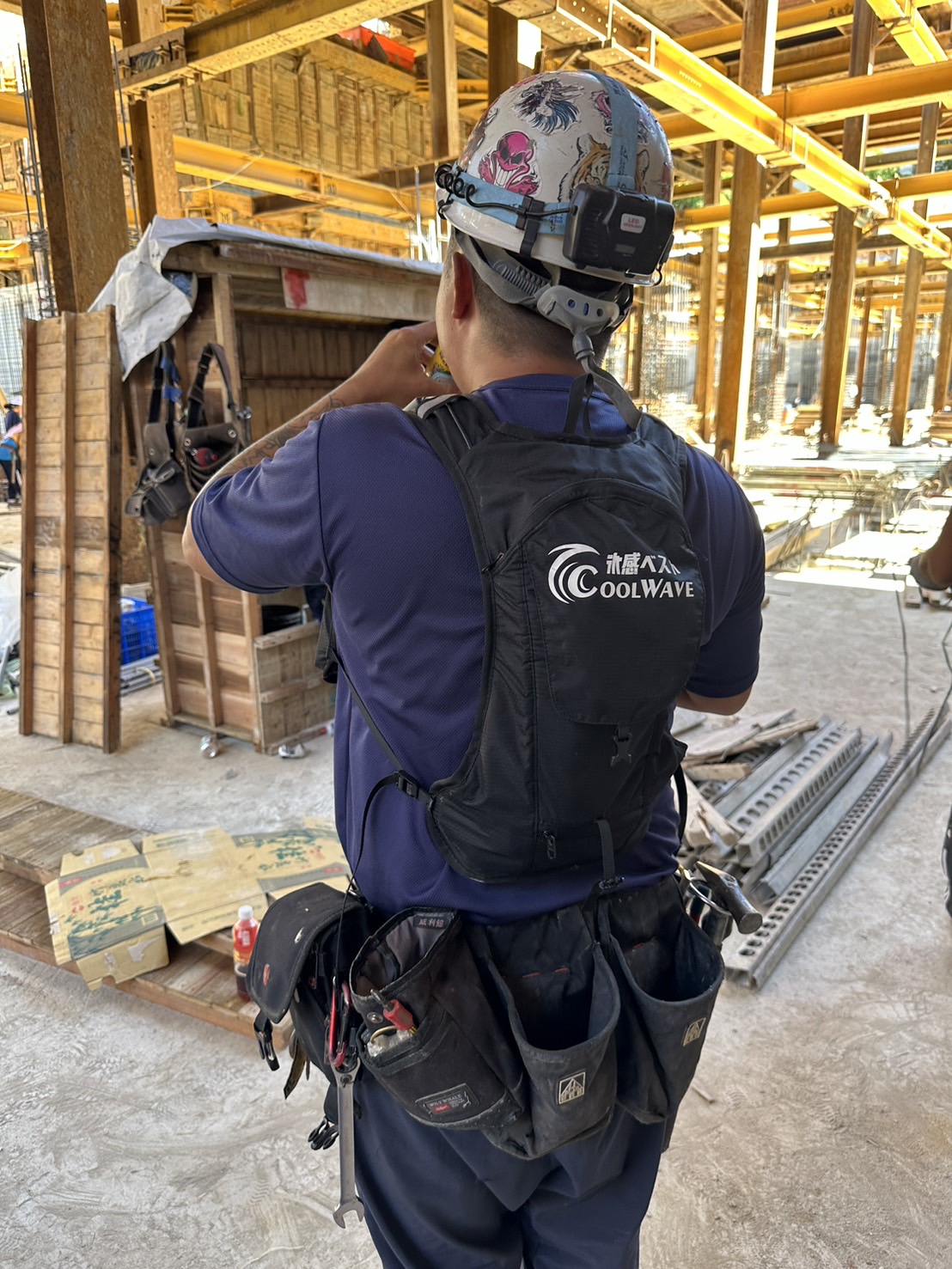
Cover image: Construction-site use case for personal cooling apparel. Image source: supplied Shokunin content unit.
What the award is, in exact terms
The award is the Disaster Prevention Product and Service Certification Award issued by the Taiwan Disaster Prevention Industry Association. Feng Shang Precision's product description states that the COOLING water-cooled vest received this award. The company's own description also says the certification validates the product's compliance with specific disaster prevention standards.
Those two points define the evidence boundary. The award belongs to a named product family and is associated with a specific issuing body. It is an industry-association award, not a label that automatically travels across every model, color, market, or buyer specification. Before a procurement team places it in a tender file, it should match the certificate to the exact SKU being purchased: COOLWAVE Water-Circulation Cooling Vest (Basic Model) or a Professional Model in Blue, Gray, or Black. The available product information does not show a model-level certificate schedule, so that match is a verification step, not an assumption.
Separately, the Basic Model is protected by Patent No. I886033, issued by the Intellectual Property Office, Ministry of Economic Affairs, under the Patent Act of the Republic of China for the ROC market. That is an intellectual-property right, not a disaster-prevention certification. It is another document to keep in the qualification file, but it should not be confused with the Taiwan award.
What the award does mean for the Dual Cooling Vest
It means the product has an external qualification statement that can be checked. For a buyer at research or evaluation stage, that is useful in three ways. First, it gives the supplier a defined credential to present, rather than a vague claim of disaster-prevention suitability. Second, it creates a document that can be compared against the product identity, issuer, scope, and status. Third, it supports a preliminary shortlist decision when the buyer's application is in the same disaster-prevention and heat-stress context as the award.
The award also supports the product's PPE positioning. The vest is listed as Industrial Cooling Apparel / Personal Protective Equipment (PPE), and the application information places it in construction sites, outdoor work, metal sheet factories, street vendors, and traffic control. CDC/NIOSH guidance identifies water-cooled garments and cooling vests as examples of personal cooling systems. That does not convert the Taiwan award into an occupational-safety certification. It does mean the product sits in a recognized category where buyers legitimately ask for credential evidence.
What the award does not mean
Four limits matter.
First, it is not a universal performance standard. The award does not prove that the vest will deliver its listed 3-4 hour cooling duration in a specific factory, on a specific shift, or under a specific workload. The product data lists cooling duration as 3-4 hours, but the available materials do not define the ambient temperature, humidity, workload, clothing layer, body size, or measurement method behind that figure. A buyer should treat it as a documented product claim and test it against the site condition.
Second, it is not a global market-access mark. It is not a CE, ANSI, EN, UKCA, or other destination-specific approval. If a tender requires one of those documents, the Taiwan award does not replace it. The buyer still needs the compliance file required by the destination market and the product's electrical configuration.
Third, it does not validate the pump, flow rate, or materials against an independent test. The product data lists a 5V 150mA (max) pump, a maximum flow of 320-370 ml/min, a TPU water bag, a polypropylene cap, a sand rubber (black) cooling tube, and a 600D polyester shoulder strap. Those are specific and useful facts. They are still specification statements, not a laboratory report. The word 'max' on the flow rate and pump output should be read as an upper condition, not an average in every use.
Fourth, it does not extend the warranty. The supplier's capability information states a 6-month warranty for the water-cooled vest. That is a separate after-sales term. The award and the warranty answer different questions: one is a qualification signal, the other is a service commitment.
The product facts that should sit beside the award
Certification interpretation becomes useful only when it is attached to the product facts a buyer will actually receive. The table below consolidates the product specification for the COOLWAVE Water-Circulation Cooling Vest.
| Specification item | Listed product data | Procurement reading |
|---|---|---|
| Product type | Industrial Cooling Apparel / Personal Protective Equipment (PPE) | Category positioning, not by itself a market-access approval. |
| Cooling duration | 3-4 hours | Planning range. Ask for the test conditions and define shift rotation. |
| Weight | Within 2 kg | Wearability screening. Check with the water bag filled and the power bank attached. |
| Suitable temperature | Below 10°C | Needs definition: ambient air, inlet water, or cold source. |
| Pump output | 5V 150mA (max) | Power-bank compatibility and electrical review input. |
| Flow rate | Maximum 320-370 ml/min | Maximum figure, not a guaranteed average under all tubing and head conditions. |
| Water bag material | TPU | Material identification. Ask for durability and cleaning guidance. |
| Water bag cap | Polypropylene | Component specification, not a leakage test result. |
| Cooling tube | Sand rubber (black) | Component specification. Confirm replacement parts. |
| Shoulder strap | 600D polyester | Wearability and cleaning question, not a load rating. |
| Included contents | Water-cooled vest backpack x1, ice packs x2 | Defines the shipped set. Confirm spare ice packs and replacement schedule. |
The table shows why the award cannot be read as a performance guarantee. The cooling duration is a range, the flow rate is a maximum, the pump is low-voltage, and the suitable temperature is listed as below 10°C. Each item needs a definition before it becomes a site-fit criterion. For example, a 3-4 hour range is a planning input for shift rotation, but it is not a promise that every worker will receive the same cooling in a metal-roof factory. A 5V 150mA pump is relevant to power-bank selection and electrical review, but it does not establish battery runtime. The materials list identifies the water bag, cap, tube, and strap, but it is not a durability or leakage test.
The buyer-facing term Dual Cooling Water Cooling Vest should also be read carefully. The product data includes two ice packs and a water-circulation set with a pump, water bag, and cooling tube. That is enough to understand the product architecture at a component level. It is not a measured comparison against passive ice-pack vests, and the available materials do not provide a thermal test that would support a superiority claim. The defensible statement is narrower: the vest is a water-circulation cooling product supplied with ice packs, and its performance should be checked under the buyer's conditions.
Where the 6-month warranty fits
The 6-month warranty is a service term, not a qualification badge. In a procurement file, it should be read alongside the award, not underneath it. The capability information gives the duration but does not set out the start date, the parts covered, labor, return freight, exclusions, or the spare-parts route. Those are reasonable questions for an RFQ because the vest has a pump, a water bag, a cap, tubing, and a strap, and each item has a different service profile.
A practical warranty review asks four things. What event starts the six months: shipment, delivery, first use, or acceptance? Which components are covered, especially the pump and water bag? Is service handled by replacement, repair, or credit? And are spare parts available separately? None of those answers should be assumed from the award. The award says something about qualification; the warranty says something about after-sales exposure. Both belong in the evaluation, but they are not substitutes.
Procurement checklist: treating the award as one signal
Use a tiered evidence file rather than a single certificate. The table below shows how the Taiwan award, product specifications, warranty, sample, and market-access documents answer different buyer questions.
| Evidence item | What it can support | What the buyer should verify |
|---|---|---|
| Taiwan disaster-prevention award | Supplier qualification statement. | Issuer, product identity, model scope, status, and a clear certificate copy. |
| Product specification | Initial fit screening. | Definition of cooling duration, temperature condition, flow measurement, and materials. |
| 6-month warranty | After-sales risk assessment. | Start date, covered parts, exclusions, labor and freight terms, spare-parts route. |
| Sample evaluation | Actual use fit. | Runtime under your conditions, wearability, pump operation, and leakage checks. |
| Market-access documents | Destination compliance. | CE, ANSI, EN, UKCA, or local requirements as applicable; electrical safety file. |
A procurement team can complete the qualification review in five steps. First, obtain a clear copy of the award and confirm the issuer, product name, model scope, and status. Second, compare the certificate's product identity with the quotation and the actual SKU, including color variant if color is part of the purchase order. Third, ask for the technical definition behind the 3-4 hour cooling duration, the below-10°C suitable-temperature figure, the 5V 150mA pump, and the 320-370 ml/min maximum flow. Fourth, request the warranty terms in writing and confirm the 6-month period against the service process. Fifth, test a sample under the buyer's own ambient and workload conditions before scaling the order.
This sequence does not weaken the award. It makes the award usable. A certificate that is correctly matched to the product and placed beside specifications and service terms is more credible than a certificate used as a stand-alone sales claim.
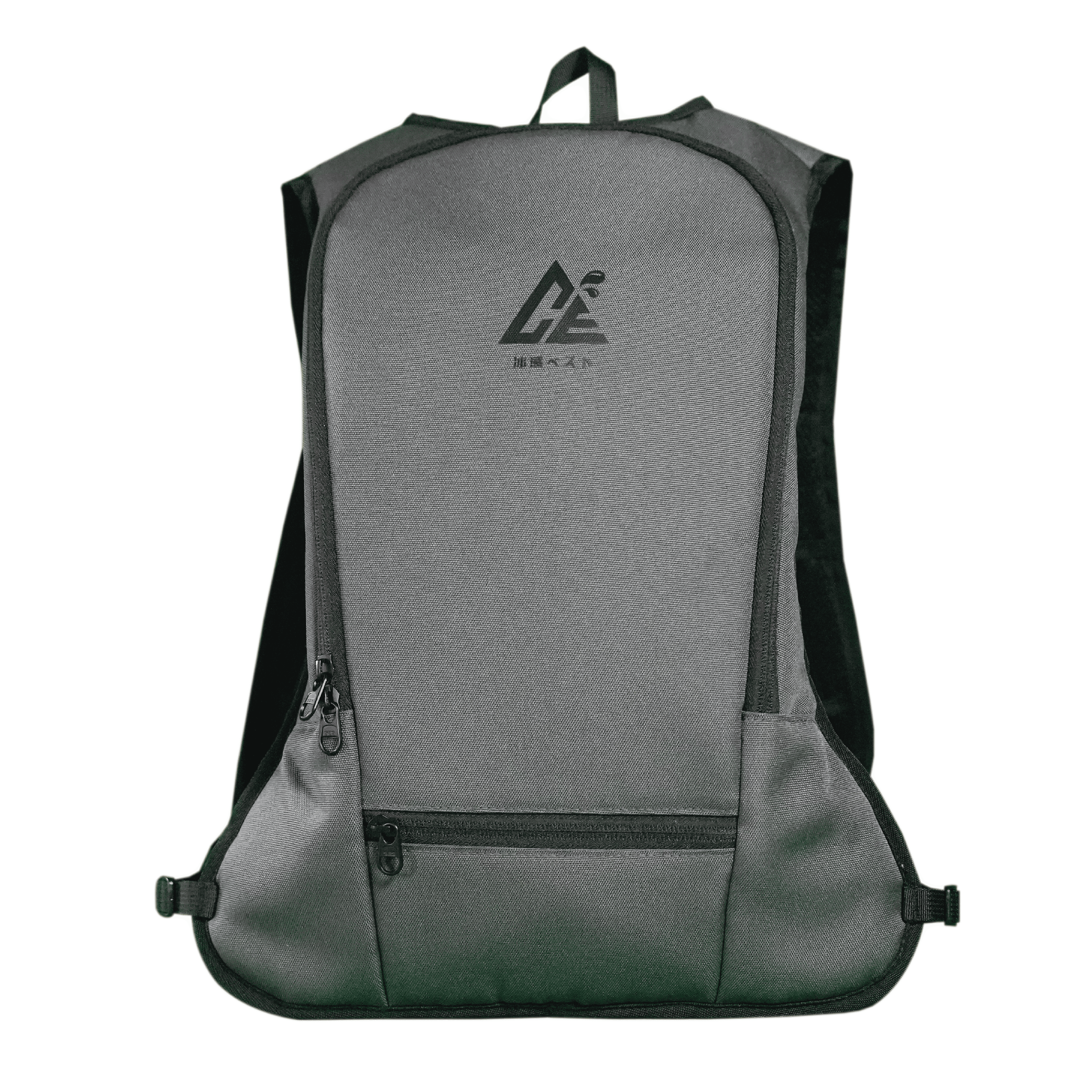
Body image: COOLWAVE professional-model vest in gray. The supplied product units list the same core specifications across the blue, gray, and black professional variants. Image source: supplied Shokunin content unit.
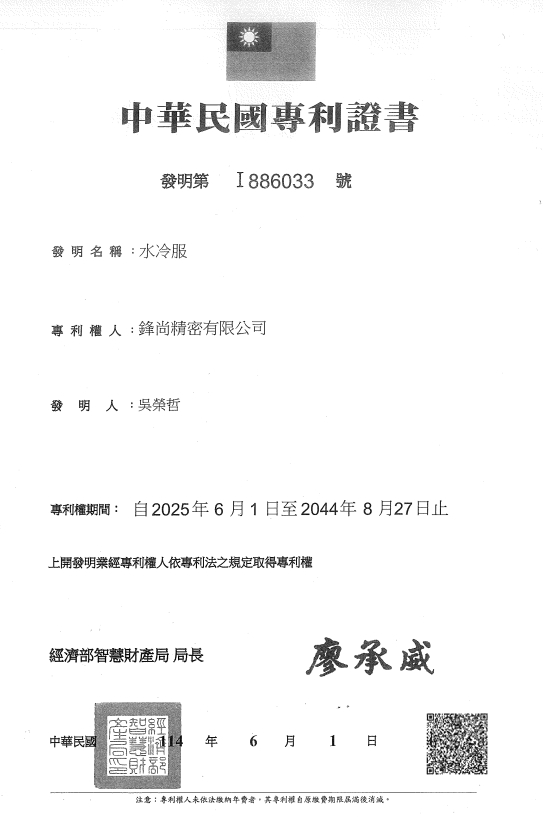
Body image: Patent certificate I886033 for the COOLWAVE basic model. This is a separate intellectual-property document, not the Taiwan disaster-prevention award. Image source: supplied Shokunin content unit.
Application fit and the temperature condition that needs clarification
The application information lists construction sites, outdoor work, metal sheet factories, street vendors, and traffic controllers. These are plausible contexts for a portable cooling vest because the product is designed as wearable industrial cooling apparel with a backpack format and two ice packs. The same information also lists a suitable temperature below 10°C. That figure should not be ignored or silently converted into a hot-weather claim.
Because the listed applications are high-temperature environments, the buyer should ask what the below-10°C condition describes. Is it ambient air, inlet water, the cold source, or another test condition? The available materials do not define it. Until that definition is clear, the figure should be treated as a specification to clarify, not as proof that the vest is suitable for every hot site. This is exactly the kind of boundary a procurement team should record next to the award. The award supports qualification; the temperature definition supports fit.
Market context: why qualification signals are being scrutinized
Category demand explains why buyers ask for qualification evidence, but it does not prove this product's performance. According to Dataintelo's 2025 cooling-vest market report, the global cooling-vest market reached USD 342 million in 2025, and industrial applications accounted for 34.5% of revenue. Those figures point to a commercial context in which industrial buyers need comparable qualification signals. They do not establish that any one award is a global standard, and they do not replace a site test. The correct use of the market figure is to justify a disciplined evidence file, not to inflate the certificate's scope.
A defensible outlook for the award in tender files
The useful outlook is not that a single Taiwan industry award will become a universal requirement. It is that buyers will increasingly separate three questions: what the award covers, what the product specification actually says, and what the supplier will do after delivery. The COOLWAVE vest has a relevant qualification signal, a documented specification set, and a stated 6-month warranty. Those are three different evidence types. A buyer who keeps them separate can use the award confidently without overstating it.
FAQ: Reading the Award in a Procurement File
What exactly did the COOLWAVE vest receive?
The COOLING water-cooled vest received the Disaster Prevention Product and Service Certification Award from the Taiwan Disaster Prevention Industry Association. Feng Shang Precision describes the certification as validating the product's compliance with specific disaster prevention standards. In procurement terms, that is a qualification statement from an industry association. It should be matched to the exact product or model being purchased and read alongside the technical specifications, not as a substitute for them.
Does the Taiwan award replace CE, ANSI, EN, or UKCA approval?
No. The award is not a CE, ANSI, EN, UKCA, or other market-access mark. It is a Taiwan industry-association award. If the destination market or tender requires a specific conformity mark, electrical-safety document, or PPE standard, the buyer must request that document separately. The award can support a supplier qualification file, but it does not satisfy a different market's regulatory pathway.
What do the cooling specifications mean for shift planning?
The product data lists a 3-4 hour cooling duration, weight within 2 kg, a 5V 150mA (max) pump, and a maximum flow of 320-370 ml/min. These are useful planning inputs, but the available materials do not define the test conditions. The buyer should ask for the ambient temperature, humidity, workload, and measurement method behind the 3-4 hour figure, then test a sample under the intended shift condition. The number should not be treated as a guaranteed runtime for every worker.
How should buyers interpret the suitable temperature below 10°C?
The specification lists a suitable temperature below 10°C, but it does not define whether that refers to ambient air, inlet water, or another condition. Because the vest is intended for high-temperature applications, this definition matters. Buyers should ask the supplier to clarify the measurement point before using the figure as a site-fit criterion. Without that clarification, the below-10°C statement is a specification to verify, not a complete hot-weather suitability claim.
What does the 6-month warranty add to the certification review?
The 6-month warranty is an after-sales term for the water-cooled vest. It adds service evidence that the award does not provide. Buyers should confirm the warranty start date, covered components, exclusions, labor and freight terms, and spare-parts route. The warranty does not prove cooling performance, and the award does not extend the warranty. Both belong in the same procurement file because they answer different risks: qualification and after-sales support.
Reference: A publicly accessible company brochure is available at Shokunin and FENG SHANG PRECISION brochure (PDF).
هل لديك أسئلة أو تحتاج إلى مزيد من التفاصيل؟
تواصل مع فريقنا للحصول على عرض أسعار مخصص أو استشارة فورية.
طلب عرض أسعار
املأ النموذج أدناه وسيتواصل معك فريقنا بعرض مقترح مخصص.
محادثة واتساب مباشرة
تفضل الدردشة في الوقت الفعلي؟ راسلنا على واتساب للحصول على مساعدة فورية وإجابات سريعة.
- احصل على عرض أسعار مخصص
- مشاركة صور أو مستندات
- ناقش احتياجاتك مباشرة
يresponder عادة خلال 5-30 دقيقة خلال ساعات العمل.