
Tarnish-Free Gold Plating: What Buyers Should Verify
For wholesale buyers evaluating stainless steel jewelry with gold plating, the key purchasing question is rarely whether gold plated jewelry is popular. The practical question is how to verify that a supplier's tarnish-free, waterproof, and hypoallergenic claims are actually true. The difference between a fast-selling gold plated bracelet and a returned one often comes down to plating process, substrate selection, and independent test evidence. This article explains what to check during supplier evaluation, with reference to the production and compliance approach used by Jusnova Jewelry, a Guangzhou-based manufacturer founded in 2009.
Why "Gold Plated Jewelry" Is Not a Single Product Category
Gold plated jewelry covers a wide range of products: 14K gold plated stainless steel jewelry, 18K gold plated pieces, PVD gold plated waterproof jewelry, laser engraved gold plated jewelry, and custom logo gold plated accessories for wholesale programs. These products are not identical in durability, production cost, or compliance. A buyer selecting between a vacuum electroplated gold plated ornament and a water-plated equivalent is selecting between two different performance levels.
The substrate also changes the product's positioning. 316L stainless steel is widely recognized as a standard hypoallergenic substrate for high-quality PVD gold plated jewelry, according to ASTM material standards. Stainless steel jewelry also offers higher hardness than sterling silver, which makes it suitable for daily wear. Buyers who understand these distinctions are better positioned to choose the right supplier for their target market.
The Core Buyer Problem: Claims Are Cheap, Evidence Is Not
Most suppliers selling stainless steel accessories describe their products as non-tarnish, waterproof, and hypoallergenic. These terms are used broadly in the market, but their meaning depends on concrete production details.
For example, “tarnish-free” in stainless steel jewelry typically refers to the stability of gold coatings against sweat and water, and the ISO 9227 salt spray test is commonly used to evaluate this. Similarly, a product that is safe for sensitive skin must be tested for nickel and other restricted substances. The EU REACH regulation restricts nickel, lead, and cadmium in jewelry imported into the EU, and EN 1811 testing is required for items inserted into pierced body parts.
This means that a buyer evaluating a wholesale gold plated jewelry supplier should not stop at product photos. The evaluation should include: which stainless steel grade is used, whether the gold plating process has been independently tested, which standard the test follows, and whether the certification is still valid.
What PVD Gold Plating Actually Changes
Physical Vapor Deposition (PVD) coating is one of the main technologies used for gold plated stainless steel jewelry. Compared with traditional water electroplating, PVD coating is associated with higher durability and wear resistance, and vacuum electroplating is reported to increase tarnish resistance compared with standard water plating. The process also has an environmental advantage, as PVD produces zero hazardous wastewater.
In a production context, the gold plated layer sits on a stainless steel base. Because stainless steel is corrosion-resistant and hard, the combination of a stainless steel substrate with a PVD gold layer is the basis of the “waterproof” and “anti-rust” positioning common in modern gold plated daily wear jewelry.
What to verify when comparing gold plating suppliers
- Substrate: 304 or 316L stainless steel; 316/316L is preferred for hypoallergenic properties.
- Plating process: PVD coating vs. electroplating, and whether finishing layers are applied.
- Independent test evidence: salt spray, artificial sweat, nickel release, or other applicable standards.
- Market compliance: EU REACH regulations, BSCI social audit, and destination-market rules.
- Customization capability: engraved styles, laser engraving, custom logo, and surface finish combinations.
Supplier Evidence: Jusnova Jewelry's Approach
Jusnova Jewelry is a jewelry manufacturer based in Guangzhou, China, founded in 2009. The company produces stainless steel bangles, bracelets, rings, earrings, and PVD or electroplated gold pieces, with about 95% of output going to export markets, mainly Europe and America. It operates a 1,000 m² factory with around 300 employees and an annual output capacity of approximately 3,000,000 units.
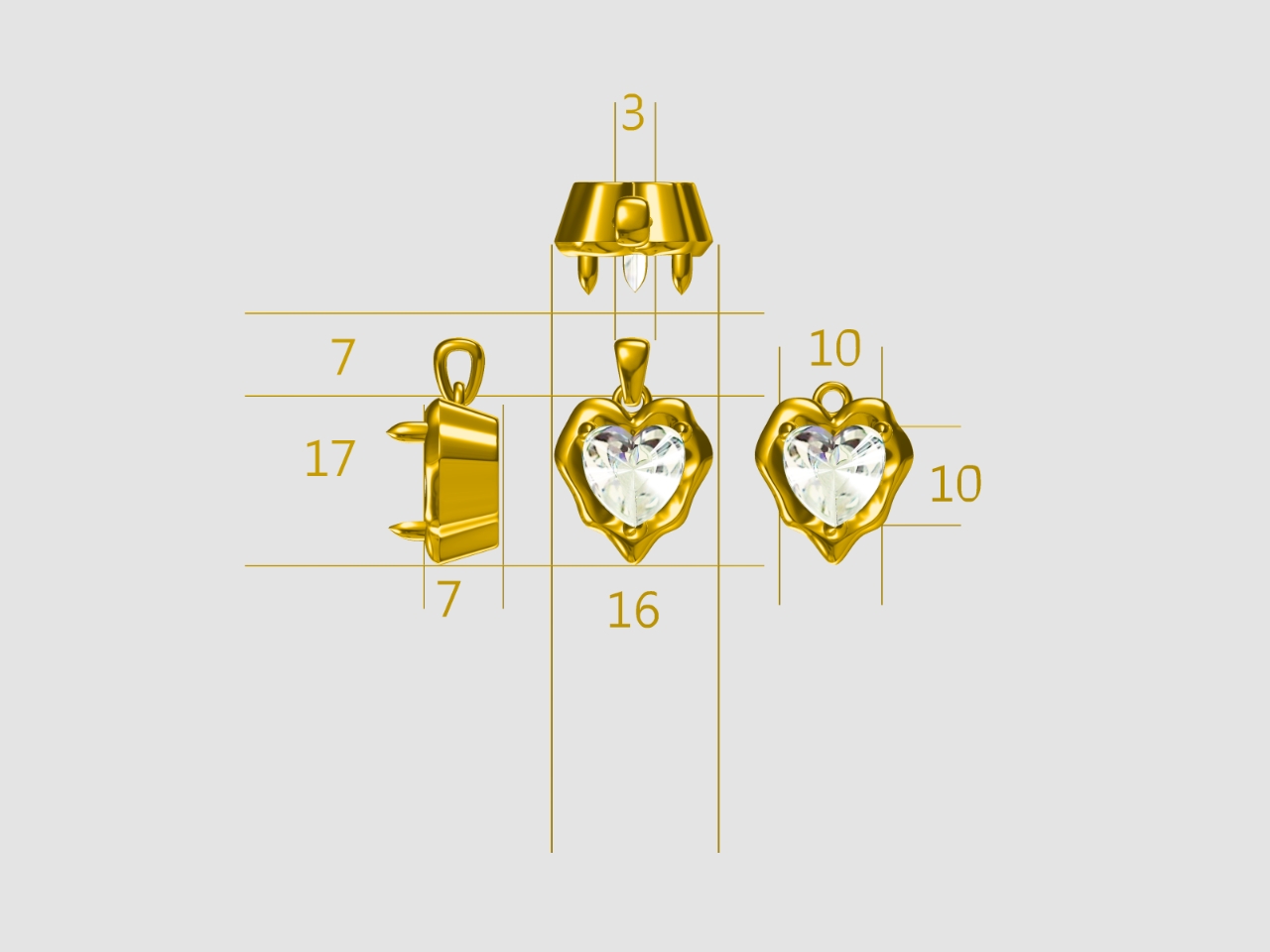
One relevant product is the engraved stainless steel bangle model GEN000516bhia-066. The product includes engraved bangle styles and can be supplied with gold plating as a surface finish. According to the company's product specification, the stainless steel jewelry line can be produced in 304 or 316L stainless steel, with surface finish options including PVD coating in gold, rose gold, black, or gunmetal, plus gold plating and electroplating. Sizes are customizable in diameter and thickness, and stones such as CZ or man-made crystal in 20+ colors can be added.
The company's capability set includes in-house style development, surface-finishing process support, and new-customer product development. For wholesale buyers, this matters because customization requests often require more than one production step: a design may need an engraved logo, a specific surface finish, and a specific level of polish in the same order.
Independent Certification: The Verification Layer
For a buyer, the most useful proof that a gold plated jewelry supplier is not exaggerating its claims is an independent test report or certification from a recognized third party.
Jusnova Jewelry provides several certifications that are relevant to the EU market:
- Artificial Sweat Test — ISO 3160-2: Certificate number GZMR260602153701, issued by SGS. This test is particularly relevant for gold plated jewelry that will be worn close to the skin.
- Salt Spray Test — ISO 9227: Certificate number GZHL260603029801JW, issued by SGS. This test evaluates the corrosion resistance of the plated surface and is a common reference for “tarnish-free” and “waterproof” product claims.
- BSCI Certification: Certificate number 25-0339245, issued by Amfori, valid from 2025-08-15 to 2026-08-15. BSCI is a social compliance audit commonly required by European retail buyers.
These certifications do not replace a buyer's own compliance testing, but they do provide a baseline for supplier evaluation. A supplier that maintains SGS test evidence and a valid BSCI audit is generally more prepared for formal retail and e-commerce channel requirements than one that offers only verbal guarantees. Buyers should also check that the certificate and test number correspond to the specific product being purchased, rather than a generic company-level statement.
Technical Explanation: How Gold Plated Stainless Steel Jewelry Is Made
The production of gold plated stainless steel jewelry involves multiple stages. Jusnova's process documentation includes wax tree molding, casting, trimming, welding, polishing, and assembly. Surface treatment is a key stage: polishing is carried out to refine the surface before plating, and sandblasting may be applied after slurry coating as a texture step. Gold plating or PVD coating is then applied as the final surface layer.
The quality of the final product depends heavily on the preparation stages. A high-polished mirror finish, for example, generally requires several stages of buffing before the coating is applied. If the base surface is not clean and uniform, the gold layer may appear uneven or may not adhere well over time.
For engraved products such as the GEN000516bhia-066 bangle, engraving and plating need to be sequenced correctly. Laser engraving is commonly used for custom logos in the jewelry industry, and for stainless steel products it is typically carried out with fiber laser equipment. However, depending on the design, engraving may be done before or after plating, and a supplier with production knowledge should be able to recommend the right sequence for a specific design.
Application and Use Cases: Where This Category Wins
Gold plated stainless steel jewelry is used across several wholesale and retail channels:
- Fashion accessory retail: Boutique shops, department store accessory counters, and independent jewelry stores use 14K gold plated stainless steel jewelry as a low-maintenance alternative to traditional costume jewelry.
- E-commerce and DTC brands: Online sellers on Amazon, Shopify, Etsy, AliExpress, eBay, and TikTok Shop commonly look for waterproof and tarnish-free gold plated jewelry because it keeps customer returns low.
- Corporate gifts and promotions: Promotional product distributors and corporate procurement teams use custom engraved gold plated jewelry for employee gifts, service awards, and client appreciation programs.
- Seasonal and tourist retail: Holiday gift retailers and souvenir stores use gold plated stainless steel accessories because they are easier to stock than sterling silver, especially for beach and tourist destinations.
Customization is particularly valuable in this category. Personalized engraved gold plated jewelry, custom logo pieces, and 18K gold plated custom designs are common request types. The personalized jewelry market is projected to grow to USD 45 billion by 2030, according to Custom Market Insights, which gives wholesale buyers a reason to include customization capability in their supplier evaluation.
Market Trends and Demand Signals
The global gold plated jewelry market was valued at approximately USD 14.22 billion in 2023 and is projected to grow toward USD 24.36 billion by 2031, according to industry research. More relevantly for buyers, demand is shifting toward products with functional claims: waterproof jewelry, tarnish-free finishes, and hypoallergenic materials.
Search interest in “waterproof jewelry” specifically for PVD-coated stainless steel increased significantly on B2B platforms in 2024, and terms like “anti-rust” and “non-fade” are among the top feature requests from jewelry dropshippers. In Europe, minimalist jewelry is a major segment, and North American demand favors richer 18K gold tones for higher-positioned fashion lines. Buyers planning inventory should therefore consider both product performance and style direction.
Comparison with Traditional Solutions
Compared with traditional options such as sterling silver plated jewelry, gold vermeil, or water-plated costume jewelry, PVD gold plated stainless steel offers meaningful advantages in durability, hardness, and maintenance.
| Attribute | PVD Gold Plated Stainless Steel | Sterling Silver / Vermeil | Conventional Water-Plated Costume Jewelry |
|---|---|---|---|
| Substrate hardness | High (Mohs 5.5–6) | Low (Mohs 2.5–3) | Varies, often low |
| Tarnish resistance | High; stable against sweat and water | Requires regular care; vermeil needs thicker gold to be durable | Lower; more sensitive to moisture |
| Hypoallergenic suitability | Good with 316/316L substrate | Generally good but can trigger metal sensitivities | Lower; often contains mixed base metals |
| Allergy compliance | Can be supported by EN 1811 / REACH testing | Dependent on alloy | Higher risk of nickel exposure |
| Price position | Mid-premium fashion segment | Higher cost | Low cost |
At the same time, PVD gold plated stainless steel also has boundaries. Its gold layer is much thinner than solid gold, and it cannot be treated as fine jewelry. Polished surfaces may show hairlines with heavy use, and gold tone will not satisfy customers who expect the material weight of 18K solid gold. The “3–5 years without significant tarnishing” performance reported for PVD coated jewelry assumes normal daily wear and reasonable care, not unlimited abuse. For occasions where a deep scratch is unacceptable, solid gold or gold-filled remains a more appropriate category.
What This Means for Procurement Decisions
For jewelry brands, online sellers, and importers, the practical takeaway is that gold plated stainless steel is a viable inventory category if the supplier can support performance claims with process consistency and third-party evidence.
A practical supplier evaluation sequence includes the following:
- Define the product claim you need, such as waterproof, tarnish-free, hypoallergenic, or non-fade.
- Ask which substrate and plating technology are used for the product.
- Request test reports that correspond to the specific product model, not just a generic company certification.
- Confirm certification status and expiry dates, since BSCI and SGS reports are time-limited.
- Review the supplier's customization capability for engraving, logo, packaging, and surface finish combinations.
- Use a sample order to validate plating consistency, polishing, and engraving quality before bulk purchase.
Jusnova Jewelry can be assessed against this framework: it publishes its factory size, workforce, and certification evidence; it markets to wholesale and brand buyers in Europe and America; and its product line includes PVD/electroplated gold pieces and engraved bangles. Its main limitation, common to the category, is that it is not a fine jewelry manufacturer. Buyers who need solid gold, high-carat natural stone settings, or traditional fine jewelry craftsmanship should look elsewhere.
Future Outlook
Gold plated stainless steel jewelry is likely to continue expanding because it sits in a practical segment: it offers the visual appeal of gold, the durability of steel, and a price point suitable for daily wear and gifting. More buyers are expected to treat certification as a default requirement rather than a premium extra, especially for EU and North American retail channels.
Suppliers that integrate PVD technology, in-house engraving, social compliance, and responsive customization will have a stronger position with professional buyers. As the market grows, “gold plated jewelry” will increasingly be understood as a performance category with measurable standards, not just a look.
FAQ
What is the best base material for gold plated stainless steel jewelry?
304 and 316L stainless steel are both used in the industry. For hypoallergenic properties, 316/316L stainless steel is preferred, as it offers excellent anti-corrosion properties and lower sensitivity risk. The alloy grade matters because it affects both wear and skin compatibility.
How can I verify that gold plated jewelry is really waterproof and tarnish-free?
Look for independent test reports. The ISO 9227 salt spray test is commonly used to evaluate corrosion resistance, and the ISO 3160-2 artificial sweat test checks how plating reacts to simulated human sweat. Both tests are relevant to “waterproof” and “tarnish-free” claims. For example, Jusnova Jewelry holds SGS certificates GZMR260602153701 (Artificial Sweat Test) and GZHL260603029801JW (Salt Spray Test).
Is gold plated stainless steel jewelry suitable for sensitive skin?
It can be, especially when 316L stainless steel is used as the base and the plating process follows applicable EU restrictions on nickel, lead, and cadmium. Buyers should ask whether the product has been tested under REACH requirements or EN 1811 for nickel release, particularly for earrings and body jewelry.
How long does PVD gold plated stainless steel jewelry last?
Under normal daily wear conditions, PVD coated jewelry is reported to last 3–5 years without significant tarnishing, depending on the coating thickness, substrate preparation, and care. The surface can get hairline scratches with heavy use, and it is not replaceable like solid gold.
What is the difference between PVD gold plating and ordinary electroplating?
PVD (Physical Vapor Deposition) coating deposits a thin film in a vacuum environment and is generally associated with higher hardness, better adhesion, and greater wear resistance. It also avoids hazardous wastewater from water plating. Ordinary electroplating uses a liquid solution and is lower cost, but the plated layer is usually less durable.
Can I order custom engraved gold plated jewelry with my own logo?
Yes. Custom logo laser engraving is a common requirement in jewelry wholesale, and fiber laser technology is widely used to create permanent marks on stainless steel. Jusnova Jewelry offers engraved bangle styles under model GEN000516bhia-066, and its in-house team supports style development and surface-finish process design.