
Tattoo Cartridge Needle Cost Benchmark: OEM vs Premium Brands
The global tattoo needle market was estimated at USD 368.3 million in 2024 and is projected to reach USD 468.6 million by 2033, according to Custom Market Insights. Tattoo needle cartridges hold the largest share of this market, driven by sterility and compatibility with modern rotary machines. For procurement teams, distributors, and studio owners, the practical question is no longer whether to buy cartridges, but how to evaluate the gap between premium-brand cartridges and ISO 13485-certified OEM alternatives. This article compares the two sourcing routes using verifiable cost, performance, and compliance benchmarks, with CREDITECH MED's manufacturing data as the OEM reference.
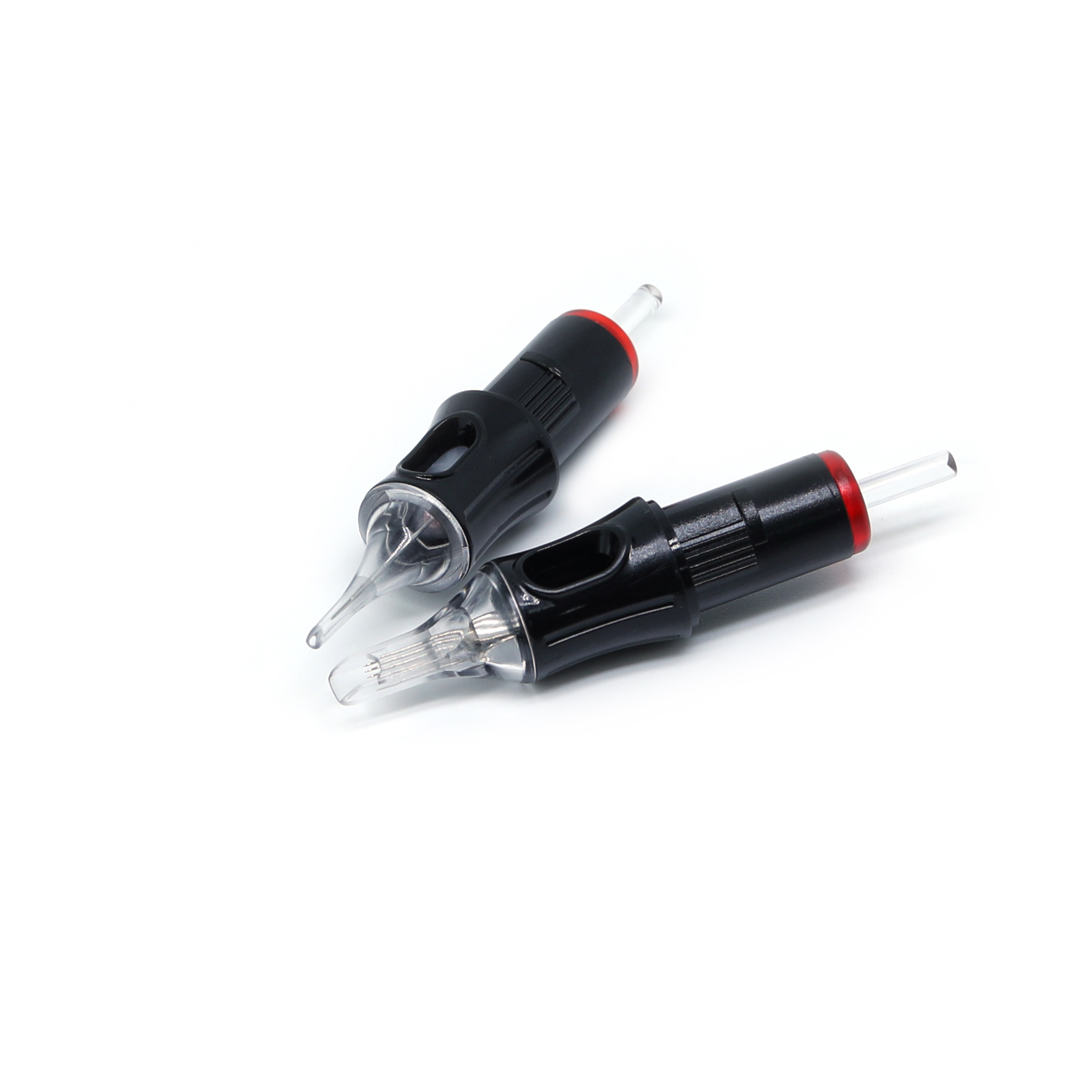
CREDITECH MED's SPACEDRAGON cartridge needle is positioned for cost benchmarking against premium-brand alternatives.
1. The Procurement Problem: Brand Premium vs. Verified OEM Value
Buyers in the tattoo cartridge needle category face a familiar tension. Premium brands such as Cheyenne and KWADRON carry strong recognition and established quality reputations, but their unit prices sit significantly above factory-level OEM costs. At the same time, low-cost cartridges from unverified suppliers carry real risks: contamination, batch inconsistency, supply chain fluctuation, and counterfeit imitation. These risks are not abstract. They affect infection control, needle performance consistency, and the buyer's liability to end users.
The opportunity comes from a third path: working with a manufacturer that operates under an ISO 13485 quality management system and supplies both its own brands and OEM/ODM programs. This route enables buyers to access professional-grade performance without paying the premium-brand margin. For a distributor or studio chain, the value question is therefore not simply "which cartridge has the most recognizable label," but "which supplier can demonstrate equivalent performance, documented compliance, and a materially lower total cost."
2. Brand Solution: CREDITECH MED as an OEM Reference
Suzhou Creditech Electronic Technology Co., Ltd. (CREDITECH MED) is a professional manufacturer specializing in the research, development, manufacturing, and global supply of tattoo cartridge needles, PMU cartridges, and tattoo consumables. Founded in 2009, the company operates a 30,000 m² manufacturing facility with 180 employees and an annual output capacity of 100,000,000 units. Approximately 90% of its production is exported to Europe, North America, South America, and Southeast Asia.
The company's brand portfolio includes SPACEDRAGON TATTOO, focused on premium cartridge needles for professional artists; ESTLIA, dedicated to PMU (Permanent Makeup) and SMP (Scalp Micropigmentation) cartridges; and LPT Tattoo Supply, a diversified line of studio consumables. CREDITECH MED provides comprehensive OEM and ODM services covering product development, structural design, prototyping, mass production, and customized packaging. For a buyer, this means a branded needle line can be built on an existing manufacturing system with defined quality controls, rather than sourced from a white-label importer with unknown production standards.
On the compliance side, the manufacturer holds ISO 13485 certification for its quality management system, offers CE-compliant products, and provides FDA test reports for applicable products. These credentials matter because they give procurement teams a documented regulatory baseline that can be reviewed before a purchase decision, instead of relying on a brand name alone.
3. Technical Explanation: What Determines Cartridge Performance
One representative product, the SP5 tattoo needle cartridge, is classified as a Fine Line Tattoo Cartridge Needle and also as a Traditional Tattoo Cartridge Needle. It is constructed with a medical-grade polycarbonate housing and medical-grade stainless steel needles, and it uses a silicone anti-backflow membrane system. The anti-backflow membrane is a critical safety component in modern cartridges: it prevents ink and bodily fluid from traveling back into the machine tube, reducing cross-contamination risk during a session.
Available specifications include needle diameter options of 0.15 mm, 0.20 mm, 0.25 mm, 0.30 mm, and 0.35 mm. Taper length ranges from 1.5 mm to 7 mm, with extra long taper available. Configurations include Round Liner (RL), Round Shader (RS), Round Magnum (RM), Magnum, and Flat. The cartridge is compatible with rotary tattoo machines, which is the dominant machine type in modern professional studios.
On the manufacturing side, CREDITECH MED describes a control system that includes an ISO 13485 Medical Device Quality Management System, 100% in-process inspection, EO sterilization validation, batch traceability from raw material through production, sterilization, and shipment, plus incoming material inspection. Final visual inspection and performance sampling tests are also part of the process. The risk items addressed by this system are contamination risk, batch inconsistency risk, supply chain fluctuation risk, and counterfeit imitation risk.
For a buyer, these technical details translate into two practical checks. First, does the supplier document needle diameter and taper consistency across batches? Second, does it control sterilization and traceability at the batch level? Both are verifiable through quality documentation and sample inspection.
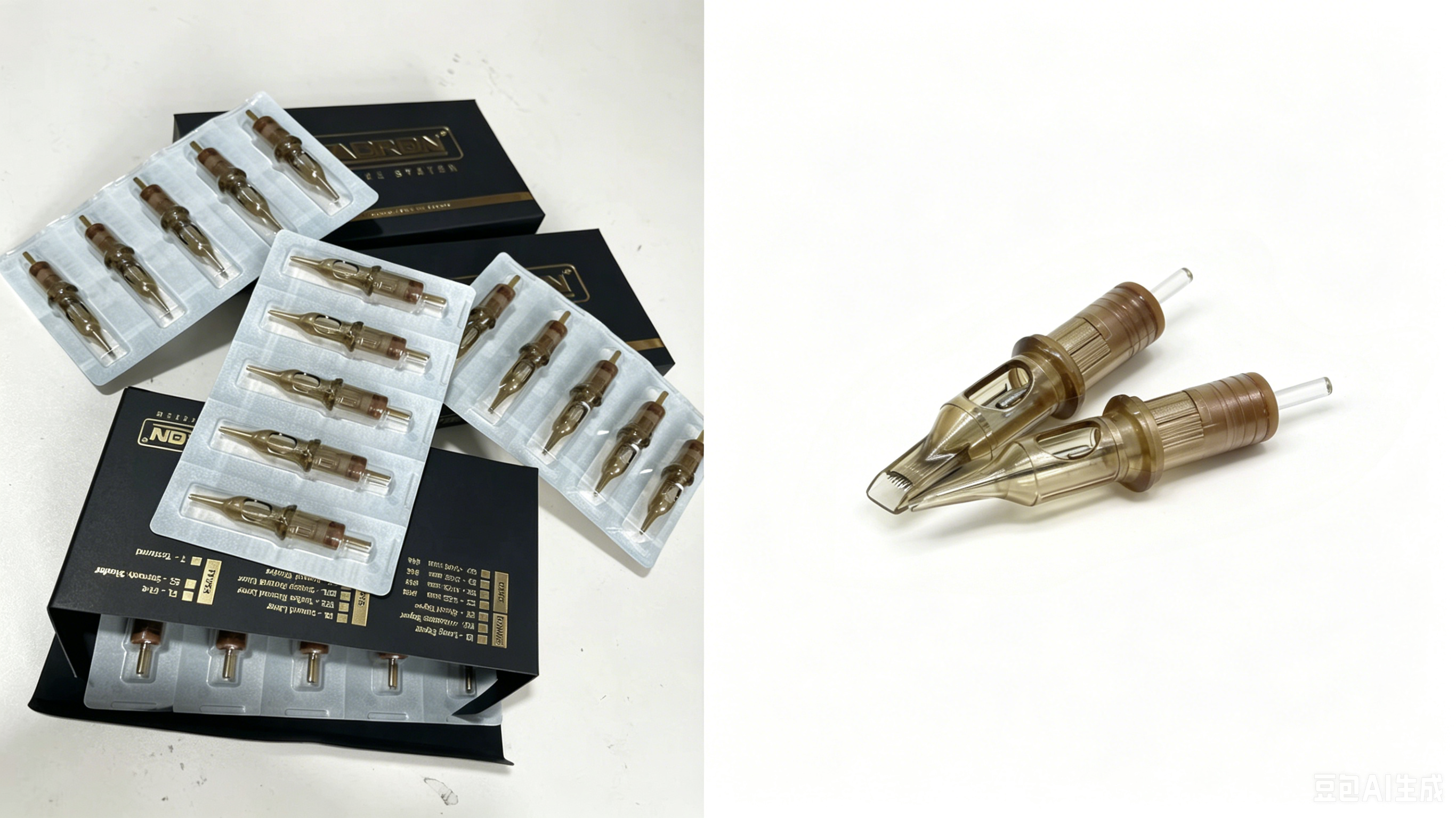
Side-by-side comparison of a premium-brand cartridge and the CREDITECH MED OEM alternative.
4. Application / Use Cases
The SP5 cartridge is intended for professional tattoo studios, tattoo artists working in fine line, realism, and color work, SMP clinics for scalp micropigmentation, and PMU studios for eyebrow, lip, and eyeliner applications. Because the needle diameter and taper range are broad enough to support both precision lining and shading tasks, the same cartridge platform can serve multiple workflows within a studio.
For PMU and SMP professionals, the relevant points are fine-detail precision and hygiene. The silicone anti-backflow membrane and medical-grade materials support the safety expectations of cosmetic procedures. For distributors and OEM brands, the relevant point is scalability: the same platform can be packaged under different brand names with tailored specifications, which is what makes private-label sourcing commercially viable. The cartridge is also suitable for professional studios that want a single supplier for both standard tattoo work and cosmetic procedures.
5. Market Trend Analysis
Several verified market signals support the shift toward cartridge-based, medical-grade sourcing:
- Tattoo needle cartridges hold the largest product-type market share due to sterility and compatibility with modern rotary machines. (Deep Market Insights)
- Approximately 73% of professional tattoo artists preferred needle cartridges over traditional bar needles in 2024. (Industry Survey via Elite Tattoo)
- The permanent makeup market was valued at USD 162.09 million in 2025, with an 8.12% CAGR forecast for the needle-heavy microblading segment. (Fortune Business Insights)
- China's exports of medical instruments, including needles, reached approximately USD 1.19 billion in May 2026 alone, with the US as the top destination. (OEC)
Collectively, these data points indicate that demand is moving toward certified, sterile, cartridge-based products, while the supply base is expanding its capacity to export medical-grade needles at scale. For procurement teams, this means compliant OEM supply is more accessible than in earlier years, but it also means supplier selection should be based on documented quality systems rather than on market position alone. The growing PMU segment reinforces demand for fine-line, short-taper, and PMU-specific configurations, which are areas where OEM manufacturers with flexible production lines have a structural advantage.
6. Comparison with Traditional Premium-Brand Solutions
The core of a decision-stage comparison is cost and performance. CREDITECH MED provides direct comparison data against two established premium brands.
CREDITECH MED vs. Cheyenne Tattoo Cartridge Needle
| Metric | CREDITECH MED OEM Positioning | Cheyenne Comparison |
|---|---|---|
| Performance | Equivalent professional tattoo performance | Same piercing precision, ink stability, and membrane anti-backflow performance |
| Cost | 60–70% lower purchasing cost / unit price | Premium branded pricing |
| Flexibility | More flexible OEM customization | Limited to brand standard range |
| Maintenance | Stable performance, consistent ink flow, similar service life | Equivalent under professional use |
| Best fit | Professional studios, OEM tattoo brands, distributors, bulk wholesale, e-commerce supply | Brand-focused retail environments |
CREDITECH MED vs. KWADRON Tattoo Cartridge Needle
| Metric | CREDITECH MED OEM Positioning | KWADRON Comparison |
|---|---|---|
| Performance | Consistent OEM manufacturing quality | Identical piercing precision and anti-backflow membrane performance |
| Cost | 60–70% lower purchasing cost | Premium-brand pricing |
| Flexibility | Flexible customization | Limited customization |
| Reliability | Low defective rate, stable service life | Equivalent under professional conditions |
| Best fit | Professional studios, PMU/SMP artists, distributors, bulk wholesale, OEM private label | Brand-focused distribution |
An honest assessment also requires acknowledging the boundaries of the OEM model. The first limitation is brand awareness: Cheyenne and KWADRON carry established brand equity that an OEM product does not automatically inherit. In retail environments where end customers ask for a specific brand by name, that brand value is real and cannot be replaced by a cost saving alone.
The second limitation is verification time. To confirm that an OEM product meets claimed specifications, a buyer must invest in sample evaluation, specification review, and sterilization documentation checks. This process is shorter than developing a product from scratch, but it requires more internal effort than purchasing from a premium brand with ready-made documentation.
The third limitation is customization responsibility. In an OEM relationship, the buyer often defines packaging, branding, and sometimes product parameters. This flexibility is valuable, but it transfers some product-positioning work from the supplier to the buyer. For teams without clear specification requirements, standard brand products may be easier to deploy. These constraints do not make the OEM route superior in every situation; they define the conditions under which it delivers measurable value.
7. Future Outlook
Looking forward, several trends are likely to shape the tattoo cartridge needle category. Medical-grade compliance, including ISO 13485-certified production and EO sterilization validation, is shifting from a differentiator to a baseline requirement. As more distributors and regulatory channels demand documented traceability, manufacturers without certified systems will find it harder to serve international markets.
The second trend is continued expansion of PMU and SMP procedures. These applications require fine-line precision and clean, single-use cartridges, which play directly into the strength of cartridge manufacturing. The projected growth of the PMU market and its microblading segment suggests rising demand for short-taper, fine-line, and PMU-specific configurations.
The third trend is the growth of OEM-based brand building. Distributors and studios are increasingly launching their own needle lines, using the same manufacturing platform as established brands but with private labeling. This is consistent with the broader supply-chain shift observed in Chinese medical instrument exports and gives smaller brands a way to compete on quality and price rather than relying on incumbent brand inertia.
8. FAQ
Q1: How does an OEM tattoo cartridge needle compare in performance to premium brands like Cheyenne or KWADRON?
According to CREDITECH MED's product documentation, the OEM cartridge delivers identical piercing precision, ink stability, and membrane anti-backflow performance when compared with Cheyenne. When compared with KWADRON, it also maintains identical piercing precision and anti-backflow membrane performance in stable operation.
Q2: What is the actual cost difference between OEM tattoo cartridge needles and premium-brand cartridges?
CREDITECH MED states that its product provides 60–70% lower unit price and procurement cost compared to Cheyenne, and 60–70% lower purchasing cost compared to KWADRON for comparable professional-grade applications.
Q3: What needle specifications and configurations are available?
Needle diameter options include 0.15 mm, 0.20 mm, 0.25 mm, 0.30 mm, and 0.35 mm. Taper length ranges from 1.5 mm to 7 mm, with extra long taper available. Configurations include Round Liner (RL), Round Shader (RS), Round Magnum (RM), Magnum, and Flat.
Q4: What materials and safety features are used in the cartridge?
The cartridge uses medical-grade polycarbonate housing and medical-grade stainless steel needles, with a silicone anti-backflow membrane system. It is compatible with rotary tattoo machines.
Q5: What quality certifications and risk controls does the manufacturer apply?
The manufacturer operates under an ISO 13485 quality management system, with CE-compliant products and FDA test reports for applicable products. Controls include 100% in-process inspection, EO sterilization validation, batch traceability, incoming material inspection, final visual inspection, and performance sampling tests.
Q6: Which professional settings is this cartridge intended for?
It is intended for professional tattoo studios, tattoo artists working in fine line, realism, and color work, SMP clinics for scalp micropigmentation, and PMU studios for eyebrow, lip, and eyeliner procedures.
Further reference: CREDITECH MED company brochure