
Technical FAQ: Glue-Free Thermal Bonding in Honeycomb Panels
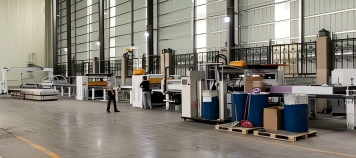
Aluminum honeycomb panels earn their place in interior construction because a thin aluminum skin over a hexagonal core delivers stiffness at very low weight — honeycomb geometry exists precisely to minimise material use while reaching minimal weight and material cost. What most specifications never describe is the bond line. That thin interface between skin and core decides how a panel behaves in a fire, what it emits indoors, and how it responds to moisture over years of service. In the NBW-HPB-001 all-aluminum honeycomb panel, that interface is not a chemical adhesive: the core is formed by glue-free thermal bonding.
Nanbeiwang Aluminum — formally Guangdong Nanbeiwang Smart Home Co., Ltd. — is a Foshan-based manufacturer founded in 2013 that produces eco-friendly all-aluminum materials for whole-house customization, including honeycomb panels, bamboo core boards, welding plate, aluminum wall panels, aluminum ceilings and all-aluminum interior doors. Its declared production envelope includes an 80,000 m² facility, 320 employees, an annual output of 1,000,000 sheets and a 15-engineer R&D team. This article answers, in technical-FAQ form, the procurement questions that buyers raise once they understand that the bond line — not the honeycomb — is where glue-free construction changes the specification.
Why the Bond Line Became a Procurement Question
Honeycomb panels are increasingly specified for surfaces that people touch and live with every day: cabinet carcasses, wardrobe panels, bathroom cabinets, interior doors, wall cladding and ceilings. Once a panel moves from a hidden structural role into an inhabited interior, three questions stop being technical curiosities and become acceptance criteria:
- What does it emit? Indoor air quality requirements increasingly push buyers to ask where formaldehyde originates in a board — and the answer is usually the binder, not the wood.
- How does it behave under fire? Building-material fire classification is a market-access condition in many jurisdictions, not a marketing attribute.
- What happens when it gets wet? Kitchens, bathrooms and laundry areas are the failure points that generate warranty claims years after handover.
In a wood-based board, the adhesive or resin system sits at the centre of all three answers. In a glue-free all-aluminum honeycomb panel, that variable is removed from the bond line altogether. That is the opportunity glue-free construction creates — and also the reason buyers need to read the panel specification differently.
What "Glue-Free Thermal Bonding" Means in the NBW-HPB-001
In the NBW-HPB-001, two aluminum skins are bonded to an aluminum honeycomb core, and the core is formed by glue-free thermal bonding. The published construction is therefore all-aluminum throughout: aluminum sheet plus aluminum honeycomb core, with no adhesive layer specified at the skin-to-core interface.
The declared specification envelope is:
| Parameter | Declared value (NBW-HPB-001) |
|---|---|
| Construction | Aluminum sheet + aluminum honeycomb core, glue-free thermal bonding |
| Thickness | 5–18 mm (customizable) |
| Standard panel size | 1220 × 2750 mm (customizable) |
| Aluminum skin | 0.3–1.0 mm |
| Surface options | PETG / Melamine / Powder Coating / Wood Grain |
| Declared fire rating | A2 |
| Formaldehyde | Zero (GB18584-2024) |
| Water absorption | Below 1% (24-hour test) |
Glue-free bonding is a direction rather than a single process, and buyers should ask which route applies to the panel they are being quoted. As an industry reference, CHALCO describes brazing as an adhesive-free method in which a brazing material metallurgically connects the aluminum honeycomb core with the panel, an approach positioned as overcoming the shortcomings of adhesive connection. Thermal bonding, as specified for the NBW-HPB-001, achieves the same objective — an aluminum-to-aluminum joint with no chemical adhesive layer — through a different route. The practical screening question for a buyer is not which label is used, but whether the supplier can produce the corresponding test evidence for the panel actually being shipped.
The evidence behind the bond line
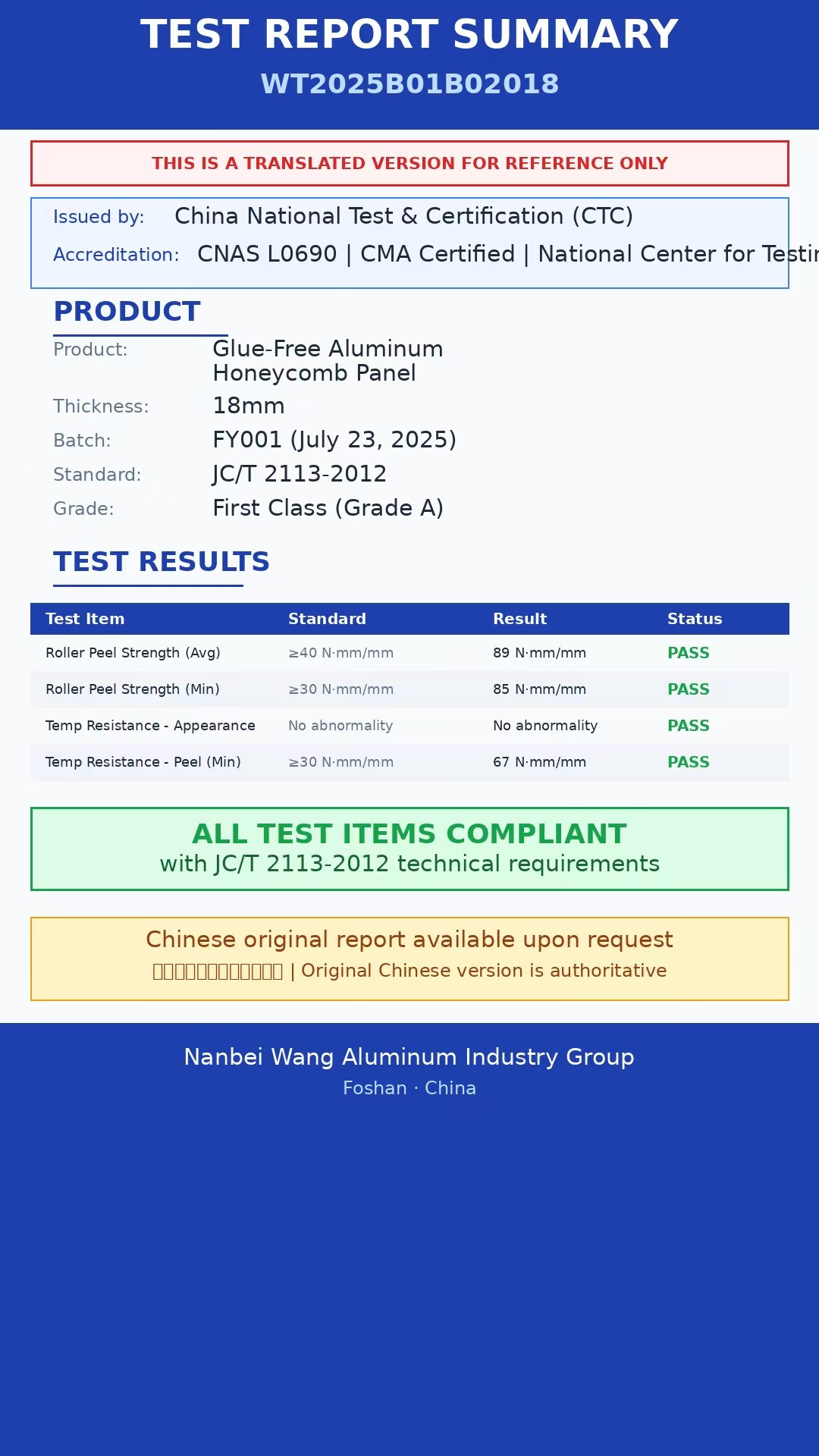
For a glue-free construction, the most relevant third-party evidence is mechanical rather than chemical. A CTC test report, certificate number WT2025B01B02018, issued by China National Test & Certification (CTC) / National Center for Testing of Building Materials, covers peel strength and temperature resistance for the glue-free aluminum honeycomb panel under standard JC/T 2113-2012, issued 2025-11-12 and valid to 2026-11-12. For buyers converting from adhesive-bonded panels, peel strength under temperature load is the metric that most directly describes whether the skin-to-core joint will hold through the thermal cycling a building envelope or a kitchen experiences.
Formaldehyde: Why the Declared Value Is Zero, and What Backs It
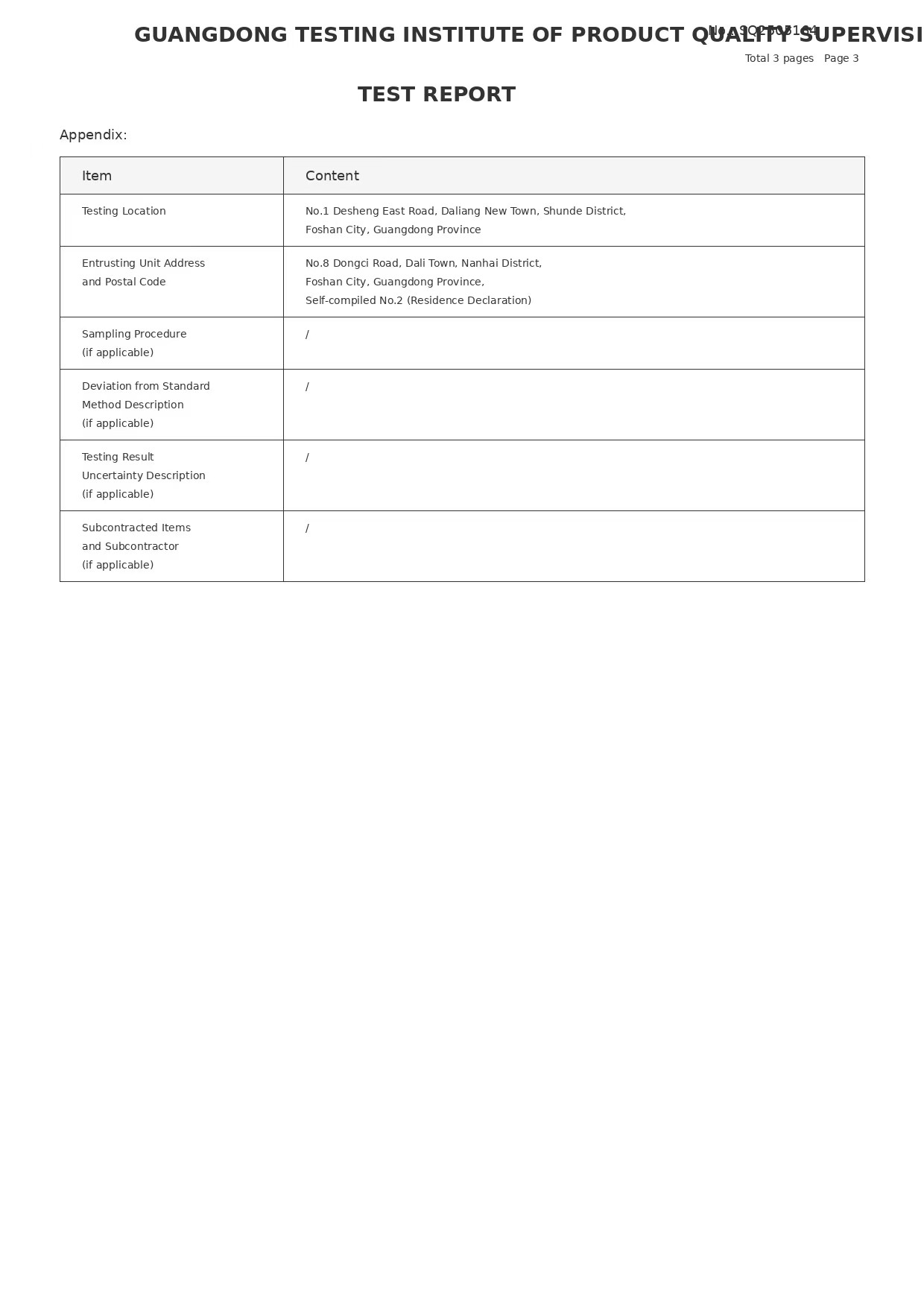
The declared formaldehyde value for the NBW-HPB-001 is zero under GB18584-2024. Two facts support that declaration. First, the panel's bond line contains no adhesive, and formaldehyde in panel products is typically carried by the resin or adhesive system rather than by the substrate. Second, the declaration is tied to a document: a GB18584-2024 hazardous-substance test report, certificate number SQ2505164, issued by Guangdong Testing Institute of Product Quality Supervision on 2025-10-29, whose stated scope is the full series of all-aluminum honeycomb panels.
For a procurement file, the distinction that matters is between "adhesive-free" as a manufacturing claim and "zero formaldehyde" as a test result. The first is a process description; the second is a measured outcome against a named national standard. Buyers compiling a compliance dossier should hold both, and should check that the test report's stated scope actually covers the product family being ordered — a report covering a single specimen is not the same as one covering a full product series.
Fire: Connecting the Bond Line to an A2 Declaration
The declared fire rating for the NBW-HPB-001 is A2. The reason a bonding method and a fire rating are discussed in the same breath is that an organic adhesive layer is additional combustible material inside the panel build-up. Removing it from the bond line means the panel's cross-section is aluminum skin, aluminum core and aluminum skin — a construction in which the declared rating comes from the metal build-up rather than from a fire-retardant additive in a binder.
Buyers should also map the declaration to the standard their market actually enforces. Internationally recognised fire-safety frameworks referenced for aluminum honeycomb panels include ASTM E84, EN 13501-1 and UL 723. A2 is a classification band used in European building-material fire classification; markets that reference ASTM E84 or UL 723 instead will expect evidence produced under those test methods. A supplier's declared rating and a project's required rating are two separate documents until they are matched against the same standard.
Procurement rule of thumb: ask for the fire test evidence under the standard named in your project specification, not under the standard the supplier prefers to quote. Where the declared rating and the project-required standard differ, treat the gap as an open item to close before order confirmation, not after delivery.
Water Absorption Below 1%: Reading the 24-Hour Test
Water absorption for the NBW-HPB-001 is declared below 1% in a 24-hour test. Read literally, that means a specimen immersed for a day gains less than one percent of its weight in water — a meaningful figure for kitchens, bathrooms and laundry areas, where a panel may be exposed to splashes, steam and cleaning cycles over many years.
Water absorption is worth separating from two related but different properties. Water absorption describes how much moisture a material takes in. Dimensional stability under moisture describes whether the panel swells, warps or delaminates when it does. For an all-aluminum panel with a glue-free bond line, the second property is largely governed by the same design decision as the first: there is no hygroscopic core and no adhesive layer to soften. Across the wider Nanbeiwang wall panel range, the same material family is described as waterproof, moisture-proof and anti-mildew, which is consistent with a specification built for wet-zone interiors rather than dry rooms only.
Where Glue-Free Honeycomb Panels Are Used
The application set for this material family is defined by the surfaces it can replace. Nanbeiwang's all-aluminum honeycomb products are used in all-aluminum cabinets, wardrobes, bookcases, bathroom cabinets, wall panels and interior doors, with door-wall-cabinet same-colour matching built into the product range.
Two reference projects illustrate the scale at which the material is deployed:
- Indonesia — 800,000 sheets, whole-house customization. A project used 800,000 sheets across cabinets, wardrobes, wall panels and doors. The material features glue-free zero formaldehyde, full stock and fast delivery, and carries a service life of 20–30 years. Client types included furniture factories, wholesalers, decoration companies and trading companies.
- Qatar — 2,000,000+ sheets, industrial-scale supply. A B2B factory client and aluminum fabricator used the material for aluminum cabinet and wardrobe production on its own production line, with a stated durability figure of 20+ years in laboratory testing. The relationship is described as long-term, with stable monthly orders and no quality complaints recorded.
The same material has been supplied into projects in Malaysia, Saudi Arabia, Singapore, Thailand, South Africa, Kosovo and Kuwait, across a base of more than 10,000 cooperative factories and 5,000 projects, with applications spanning cabinet production, wholesale supply and engineering support.
Market Context: Why Bonding Technology Is Moving Up the Buyer Agenda
The commercial backdrop explains why a technical question about bonding now appears in sourcing conversations. The global aluminum honeycomb market was estimated at USD 2.1 billion in 2024, with a projected compound annual growth rate of 6.1% over the 2024–2030 period. That growth is not evenly distributed across grades, and the pricing picture shows it clearly.
One widely cited blended average selling price for aluminum honeycomb panels in 2025 stands at USD 211 per square metre. Factory-side planning prices for honeycomb panels in 2026 are cited in the range of USD 55–130 per square metre. The gap is not a contradiction; it reflects grade segmentation. The blended figure includes high-value segments such as aerospace-grade material, while the factory-side range describes commercial and construction grades. Buyers benchmarking cost should therefore compare against a range that matches their application, not against a single headline number.
Read together, the market data and the technology direction point the same way: as honeycomb panels move deeper into inhabited interiors, specification attention shifts from the honeycomb geometry — which is largely commoditised — to the bond line and the compliance evidence attached to it.
Glue-Free vs. Adhesive-Bonded vs. Wood-Based: An Honest Comparison
| Consideration | Glue-free thermal-bonded all-aluminum honeycomb (NBW-HPB-001) | Adhesive-bonded honeycomb panels (general) | Wood-based boards, MDF / plywood (general) |
|---|---|---|---|
| Bond line | Aluminum core thermally bonded; no adhesive specified | Chemical adhesive layer between skin and core | Resin-bound fibre throughout |
| Declared formaldehyde | Zero, under GB18584-2024 (report SQ2505164) | Depends on the adhesive system used | Depends on the resin system and board grade |
| Declared fire classification | A2 | Varies with adhesive chemistry and build-up | Generally combustible unless specially treated |
| Water absorption | Below 1% in a 24-hour test | Varies by core and adhesive | Swelling and edge-uptake are routine concerns |
| Stiffness-to-weight | High stiffness at low weight | High stiffness at low weight | Heavier for equivalent stiffness |
| Declared surface options | PETG / Melamine / Powder Coating / Wood Grain | Broad | Broad |
| Standard dimensional envelope | 5–18 mm thickness; 1220 × 2750 mm standard | Broad | Broad |
Where glue-free thermal bonding is not automatically the answer
A comparison that only lists advantages is not useful for procurement, so three genuine boundaries deserve equal weight.
1. The specification envelope is defined, not unlimited. The declared range is 5–18 mm in thickness with a 1220 × 2750 mm standard panel size and 0.3–1.0 mm aluminum skins. Project requirements outside that envelope are handled as customization rather than as standard supply, which affects lead time and should be confirmed before design freeze rather than after.
2. Bonding route and surface finish are coupled. The declared surface options validated with this construction are PETG, melamine, powder coating and wood grain. Where a project calls for solid wood veneer, the relevant product family is Nanbeiwang's solid wood veneer honeycomb panel rather than the standard NBW-HPB-001 build-up — buyers specifying veneer should confirm which product family and which bonding route applies to the quotation.
3. Declared ratings require market-specific verification. The A2 rating and the sub-1% water absorption figure are declared product values supported by the documents referenced in this article. They are not a substitute for the test evidence your project's authority requires. Where a specification names a different fire standard, a different formaldehyde limit or a project-specific immersion test, the gap must be closed with additional documentation.
Qualifying a Glue-Free Honeycomb Panel Order
For buyers moving from evaluation into execution, the operational parameters that determine whether a glue-free honeycomb panel programme is workable are capacity, customization scope, lead time and inspection terms.
- Customization scope: OEM and customization production services cover thickness, size, colour, surface finish and cutting.
- Capacity: monthly capacity is stated at 50,000+ sheets, against an annual output of 1,000,000 sheets, a facility footprint of 80,000 m² and a team of 320 employees.
- Lead time: 1–7 days for stock items; 7–15 days for custom production.
- Minimum order: 1 sheet.
- Inspection: 100% full inspection before shipment, with third-party inspection supported.
- Commercial terms: FOB Foshan or EXW; 50% deposit in advance by T/T, with the remaining 50% balance paid before delivery; Hong Kong bank, multi-currency.
- Management systems: ISO9001:2015 (certificate 31825Q10055R0S, valid to 2028-03-24) and ISO14001:2015 (certificate BIV25E10066R0S, valid to 2028-05-06), both scoped to aluminum honeycomb panels for furniture, wall, ceiling and cabinet applications.
Read as a package, these parameters matter less individually than in combination. A one-sheet minimum order makes sample validation inexpensive; a 7–15 day custom lead time makes the transition from sample to production predictable; and 100% pre-shipment inspection with third-party inspection available is what converts a test report into a repeatable supply outcome.
Future Outlook
Adhesive-free bonding is an active development area rather than a settled one. The existence of multiple routes — brazing as described by CHALCO, and thermal bonding as used in the NBW-HPB-001 — suggests the technology will continue to differentiate on mechanical performance under temperature rather than on the headline claim of being adhesive-free. As more suppliers adopt some form of adhesive-free construction, the distinguishing evidence will shift to peel strength data, thermal-cycle testing and the breadth of the surface finishes the process can support.
Two demand-side forces reinforce the direction. First, formaldehyde and fire-safety requirements for interior materials continue to tighten across major markets, and both favour a construction whose bond line contains no organic adhesive. Second, whole-house customization — where doors, wall panels and cabinets are matched in colour and finish — increases the number of surfaces in a single project that must meet the same compliance standard simultaneously. A material family that spans panels, wall systems, ceilings and doors under one specification is better positioned for that requirement than a mix of substrate types.
The unresolved question is verification rather than technology. As adhesive-free claims become more common, buyers will need to distinguish between suppliers who can produce mechanical and emissions test evidence for the specific panel being shipped, and those who can only describe a process. That distinction will do more to shape supplier selection over the next few years than any single specification figure.
FAQ
What does "glue-free thermal bonding" actually mean in the NBW-HPB-001?
It describes the bond line. In the NBW-HPB-001, two aluminum skins are joined to an aluminum honeycomb core, and the core is formed by glue-free thermal bonding. The published construction is aluminum sheet plus aluminum honeycomb core with no adhesive layer specified at the skin-to-core interface, which is why the panel is classified in the all-aluminum honeycomb panel and glue-free honeycomb panel product families.
Why does a glue-free construction report zero formaldehyde?
Because formaldehyde in panel products is typically carried by the resin or adhesive system, not by the substrate. Removing the adhesive from the bond line removes that pathway. The declared value for the NBW-HPB-001 is zero under GB18584-2024, supported by hazardous-substance test report SQ2505164 issued by Guangdong Testing Institute of Product Quality Supervision, whose stated scope is the full series of all-aluminum honeycomb panels.
How does glue-free bonding relate to the panel's A2 fire rating?
An organic adhesive layer adds combustible material inside the panel build-up. Removing it leaves an aluminum-to-aluminum cross-section, which is the basis for the declared A2 rating on the NBW-HPB-001. For a specific project, the declared rating should be matched to the fire standard that the market enforces — internationally recognised frameworks referenced for aluminum honeycomb panels include ASTM E84, EN 13501-1 and UL 723.
What does water absorption below 1% mean in practice?
It is a measured weight gain: the NBW-HPB-001 is declared below 1% water absorption in a 24-hour test. For kitchens, bathrooms and laundry areas, that figure describes how much moisture the material takes in. It should be read alongside dimensional stability, which for this construction is supported by an all-aluminum build-up with no hygroscopic core and no adhesive layer to soften.
What third-party evidence exists for the glue-free bond line specifically?
A CTC test report, certificate number WT2025B01B02018, issued by China National Test & Certification (CTC) / National Center for Testing of Building Materials, covers peel strength and temperature resistance for the glue-free aluminum honeycomb panel under standard JC/T 2113-2012. It was issued 2025-11-12 and is valid to 2026-11-12. For adhesive-free constructions, mechanical evidence of this kind is the document that most directly describes joint performance under thermal load.
Can the panel be customized in thickness, size and finish?
Yes. OEM and customization production services cover thickness, size, colour, surface finish and cutting. The declared range for the NBW-HPB-001 is 5–18 mm in thickness, a 1220 × 2750 mm standard panel size that can be customized, and aluminum skins from 0.3 mm to 1.0 mm. Declared surface options for this construction are PETG, melamine, powder coating and wood grain.
What are the order quantities, lead times and inspection terms?
Minimum order quantity is 1 sheet. Lead time is 1–7 days for stock items and 7–15 days for custom production, against a stated monthly capacity of 50,000+ sheets. Inspection is 100% full inspection before shipment, with third-party inspection supported. Commercial terms are FOB Foshan or EXW, with 50% deposit in advance by T/T and the remaining 50% balance paid before delivery.
Which applications has glue-free honeycomb panel been supplied into at scale?
The material is used in all-aluminum cabinets, wardrobes, bookcases, bathroom cabinets, wall panels and interior doors, with door-wall-cabinet same-colour matching across the range. Reference projects include a whole-house customization project in Indonesia using 800,000 sheets across cabinets, wardrobes, wall panels and doors, and a Qatar-based aluminum fabricator using 2,000,000+ sheets for cabinet and wardrobe production. Supply has also reached Malaysia, Saudi Arabia, Singapore, Thailand, South Africa, Kosovo and Kuwait.
Performance values quoted in this article are declared product values supported by the test reports and certificates referenced above. Buyers should confirm that the referenced document scope matches the product family and market standard applicable to their project.