
Technical FAQ: How to Read Off-Road Tire Load Index, Speed Symbol and Pressure Limits
Technical FAQ · Off-Road Tire Specification Decoding
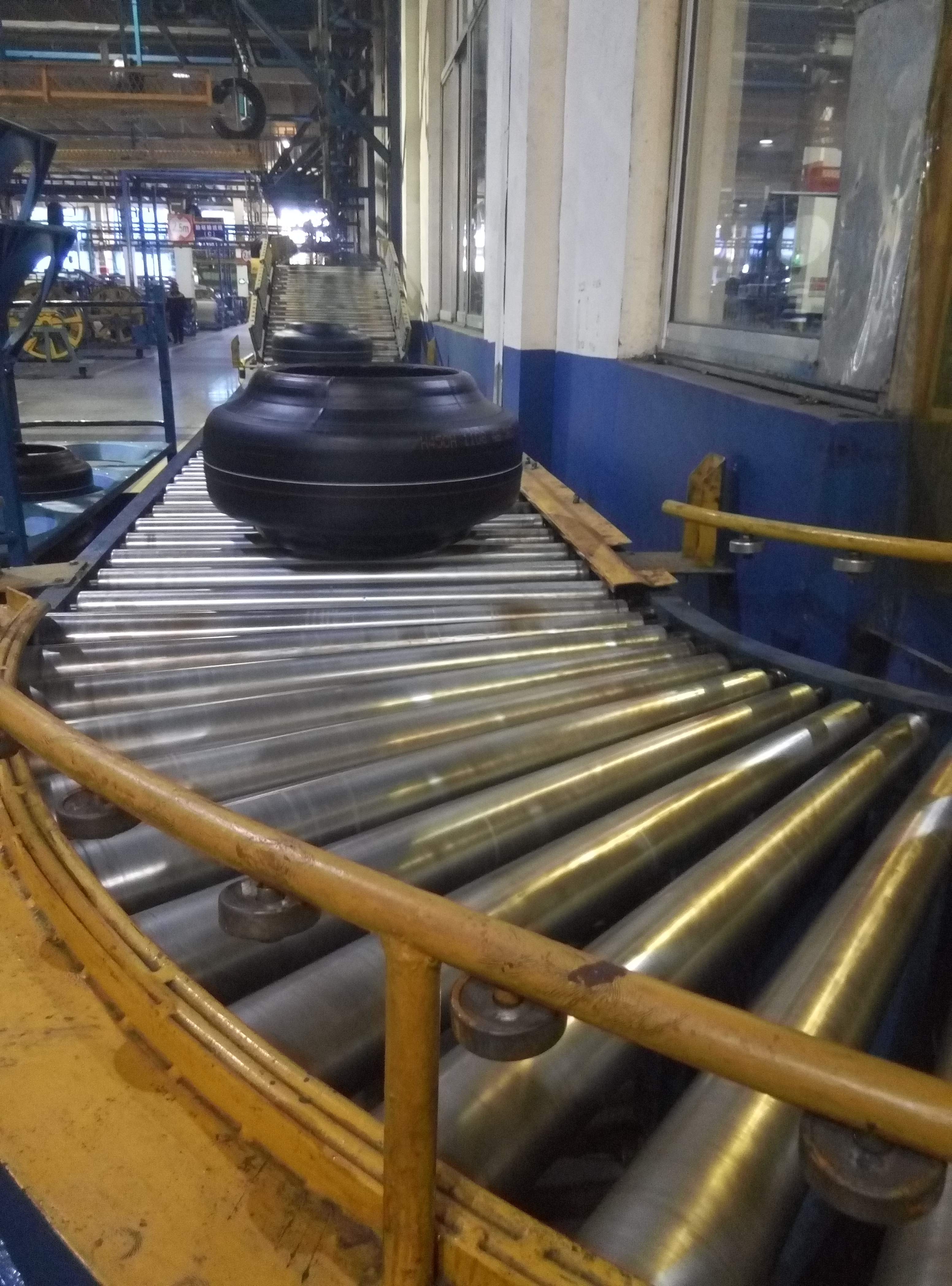
Fig. 1 — Tire carcass construction. The body ply and sidewall reinforcement hidden behind the sidewall markings determine the load and pressure envelope of an off-road tire.
An off-road tire sidewall carries one of the densest specification blocks in the automotive aftermarket. Within a few centimetres of rubber, a distributor has to read a load index, a speed symbol, a maximum inflation pressure, a size designation and, on many modern sizes, a three-peak mountain snowflake (3PMSF) certification mark. Each of those markings is a constraint rather than a marketing claim — and each one decides whether a container of tires can be legally and safely fitted to the vehicles it was ordered for.
Why a Misread Sidewall Marking Becomes a Returned Container
Off-road and light-truck tires are sold into mixed fleets: pickups, SUVs, light commercial vehicles, expedition builds and, increasingly, utility and municipal vehicles. The fitment decision is rarely made by the person who drives the vehicle. A distributor selects the size, load index and speed symbol from a catalogue; the end customer then mounts the tire on whatever the vehicle placard demands. When the two do not match, the consequences appear later rather than at the point of sale — bulged sidewalls after pothole impacts, uneven or accelerated wear, heat build-up during long highway transfers, or a rejected shipment at the port because a required certification marking is absent from the sidewall of the specific size ordered.
Sidewall bulging caused by cord breakage when a tire strikes a pothole is a recognised off-road failure mode, and it is one of the reasons reinforced sidewall construction exists. But reinforcement only buys tolerance. It does not replace a correct load index, speed symbol and inflation pressure. Those three markings define what a tire is permitted to do; the rest of the construction defines how comfortably and for how long it does it.
That distinction has become commercially sharper as off-road tire volumes grow. Buyers increasingly compare suppliers not on pattern aesthetics but on whether the specification block on the sidewall matches the specification block in the catalogue — and whether both can be evidenced with documentation.
The WIDEWAY Off-Road Specification Envelope at a Glance
WIDEWAY is one of three tire brands — together with EVERLAND and V-RICH — marketed by Shandong Wideway Tire Co., Ltd., a tire manufacturer based in Qingdao, Shandong, China. The company states an annual production capacity of 23.4 million units, a product range covering passenger car, SUV, van, all-terrain (AT), mud-terrain (MT), rugged-terrain (RT), winter and all-season tires, and a catalogue of 300 tire sizes and patterns. The all-terrain and mud-terrain families are the closest fit to off-road and 4x4 applications, and they are the families this FAQ addresses.
For the WIDEWAY off-road sizes discussed here, three sidewall markings define the working envelope:
- Load index: 111 to 123
- Speed symbols: Q, R and T
- Maximum inflation pressure: 300 kPa to 550 kPa (approximately 44 to 80 psi)
- Representative size designations: 31*10.50R15LT, LT315/70R17 and LT285/70R17
One documented product pointer is the WEYONE AK3, described as a core 4x4 all-terrain tire in LT285/70R17 carrying a 3PMSF rating and positioned for Saudi Arabia and global markets. That single example already contains four of the markings a distributor has to decode: the LT-metric size designation, the load index band, the speed symbol and a product-level certification mark.
| Marking | What it constrains | What it does not tell you |
|---|---|---|
| Load index (111–123) | Maximum permitted load per tire at a defined reference pressure | Whether the value applies single or in dual fitment |
| Speed symbol (Q/R/T) | Maximum sustained speed the tire is validated for under load | Grip level or off-road traction |
| Max inflation pressure (300–550 kPa) | Structural ceiling for cold inflation pressure | The operating pressure you should actually run |
| 3PMSF mark | Product-level snow performance designation | Compliance with any specific national market scheme |
Load Index: What the Number Actually Constrains
A load index is a coded number that maps to the maximum load a single tire is permitted to carry at a defined reference inflation pressure. It is not a quality score and it is not interchangeable with the vehicle's rated axle capacity. On WIDEWAY off-road sizes the band runs from 111 to 123, and the assignment is per tire, not per axle.
Two practical consequences follow for sourcing teams. First, the same size fitted in a dual arrangement carries a lower permitted load per tire than the same size fitted singly, so an index that is adequate for a single-wheel rear axle may be inadequate when the same tire is used in a pair. Second, the permitted load only holds at the pressure defined in the load/inflation table for that combination — fitting the correct index and then running the wrong pressure does not deliver the rated capacity.
The LT prefix in designations such as 31*10.50R15LT or LT315/70R17 indicates that the tire follows light-truck load and inflation conventions rather than passenger-car conventions. That matters at the point of comparison: an LT-metric size and a passenger-metric size with similar physical dimensions can carry very different load ratings at the same pressure, so a like-for-like substitution between the two conventions should never be assumed.
Speed Symbols Q, R and T: Why Off-Road Sizes Use a Lower Band
Speed symbols are ascending bands of maximum sustained speed for which a tire is validated under load. Q, R and T sit in the lower half of the common light-truck range, which is precisely where all-terrain, mud-terrain and rugged-terrain sizes usually land. The reasons are structural rather than commercial: deeper tread blocks, softer tread compounds and a taller sidewall trade sustained high-speed capability for grip, impact tolerance and cut resistance.
For a distributor assembling a mixed container, the speed symbol is the marking most often mismatched against the vehicle placard. A tire approved only for a lower band should not be supplied for a vehicle whose placard requires a higher one, regardless of how well the size and load index fit. Conversely, a buyer who primarily runs long highway transfers between off-road sections may be better served by an all-season or all-weather pattern with a higher symbol than by an aggressive mud-terrain pattern with a lower one — the trade-off is deliberate, and it should be surfaced in the quotation rather than discovered after delivery.
Maximum Inflation Pressure: A Ceiling, Not a Setting
The maximum inflation pressure moulded into the sidewall is a structural ceiling for cold inflation pressure. It is not a recommended operating pressure, and it is not a target. Within the WIDEWAY off-road range the ceiling spans 300 kPa to 550 kPa, and the variation reflects differences in size, load index and construction: larger LT-metric sizes with higher load indexes generally carry a higher ceiling because the carcass plies and bead are built to contain greater internal pressure.
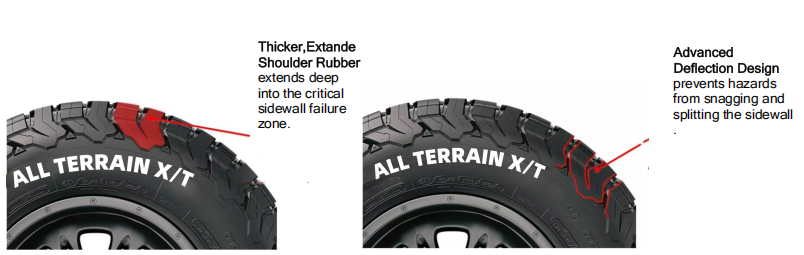
Fig. 2 — Sidewall impact control. Reinforced sidewall construction reduces the risk of bulging caused by cord breakage, but only within the load and pressure limits marked on the tire.
The pressure actually used is set from the load/inflation table for the axle load being carried and from the vehicle placard. Running below the required pressure generates heat, increases sidewall flex and accelerates cord fatigue — the mechanism behind many sidewall bulges. Running above the ceiling adds no load capacity and increases crown wear and ride harshness. Distributors that supply a pressure recommendation alongside the tire, and that repeat it in the dealer network, remove a large share of the warranty conversations that would otherwise arrive months later.
Decision rule for sourcing teams: confirm the load index against the axle load, confirm the speed symbol against the placard, then confirm the operating pressure from the load/inflation table. The maximum pressure marking is only used to check that the required operating pressure sits below the ceiling — not as the value to inflate to.
How Steel Cord and Tread Compounds Change Durability
Durability in off-road use is decided by two material systems working together. Steel cord forms the reinforcing body of the carcass and the belt package; it carries the load and resists the deformation that occurs when a tire strikes a pothole edge or a rock. When cord is broken by an impact, the result is typically a sidewall bulge rather than an immediate puncture — which is exactly why sidewall reinforcement is designed to protect the cord structure rather than merely thicken the rubber.
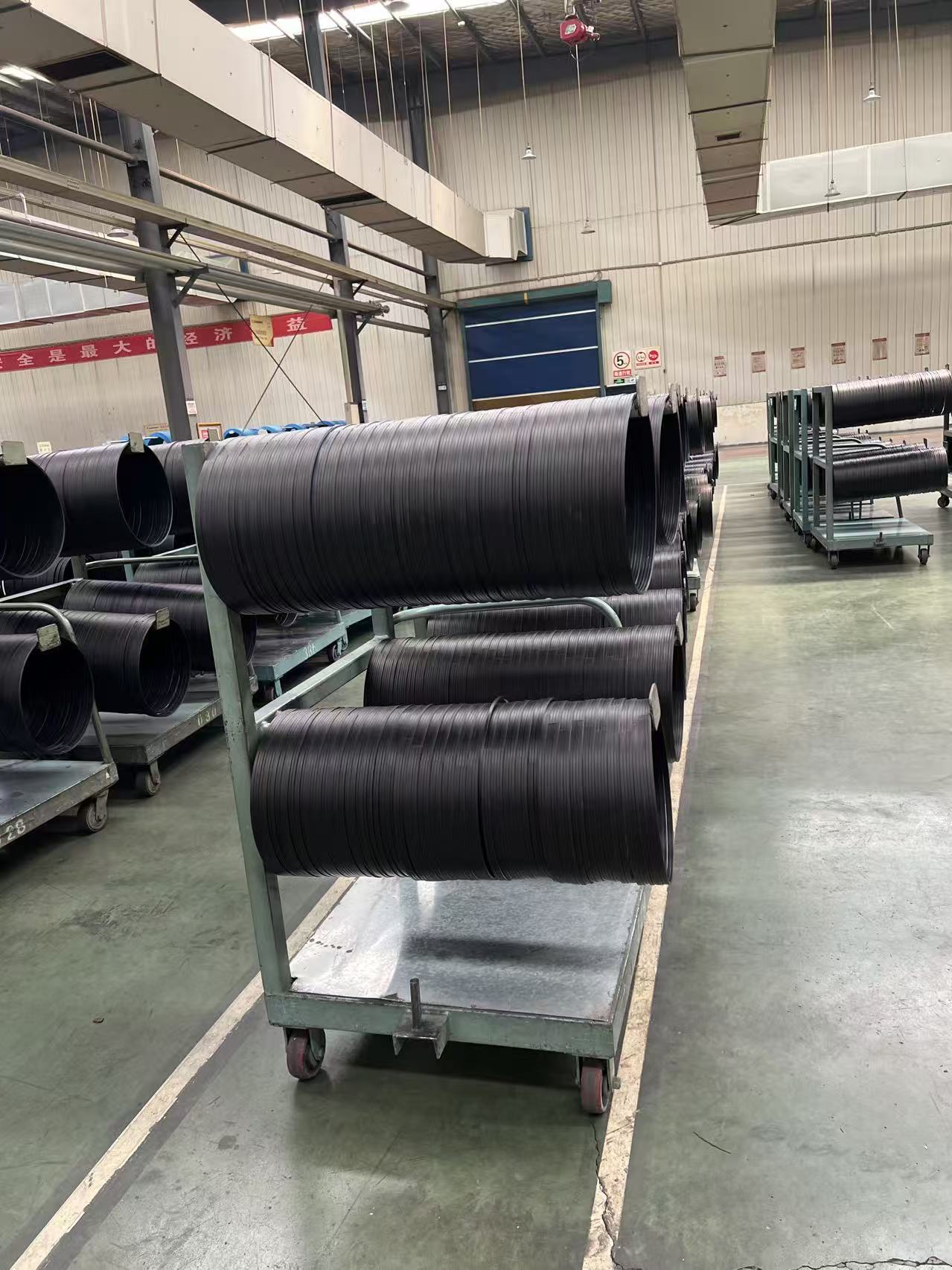
Fig. 3 — Steel cord reinforcement. Cord integrity is the difference between an impact that is absorbed and an impact that ends the tire's service life.
The second system is the tread compound. Silica-based compounds are widely used to balance grip on wet and cold surfaces against rolling resistance, and in off-road applications that balance is stretched further because the same compound also has to resist chunking and cutting on rock and gravel. The two systems interact: a tougher sidewall protects the cord structure, and a compound engineered for grip keeps the contact patch working as intended.
WIDEWAY describes its off-road-oriented construction as using tougher sidewall rubber, thicker and extended shoulder rubber, an advanced deflection design and a silent absorber, compared with a traditional tire pattern and construction design. The company states that sidewall reinforcement of 5 mm thickness significantly reduces the risk of sidewall bulging caused by cord breakage when hitting potholes, and that its quality control includes 100% testing of all tires.
Because compound and cord specifications vary by size and pattern, distributors should confirm the specific construction against the current technical datasheet for each SKU rather than assuming that a marking on one size describes the whole family.
Matching the Specification Envelope to Terrain and Vehicle Use
The same load index and speed symbol can be asked to do very different jobs depending on where the vehicle operates. WIDEWAY's off-road-oriented design is described as suitable for urban road, highway road, all-terrain road, mud-terrain road, rugged road, and snow and ice road conditions. Mapping that against the common buyer segments gives a practical selection logic:
| Operating environment | Priority in the specification block | Typical pattern family |
|---|---|---|
| Mountain and rock terrain | Load index at the top of the range, reinforced sidewall | All-terrain / rugged-terrain |
| Desert and sand dunes in hot climates | Pressure tolerance and heat resistance | All-terrain |
| Winter snow and ice | 3PMSF marking plus a snow-suitable compound | All-terrain / winter |
| Jungle and deep mud | Lower speed symbol accepted in exchange for grip and self-cleaning | Mud-terrain |
| All-weather mixed fleets | Higher speed symbol, lower noise priority | All-weather / all-season |
The pattern family and the specification block have to be chosen together. A mud-terrain size ordered for a fleet that spends most of its mileage on sealed roads will satisfy the traction requirement and disappoint on noise, wear and speed capability — a mismatch that is visible in the specification block before the order is placed.
What Growing Off-Road Tire Demand Means for Specification Discipline
The category is large enough that specification literacy has become a supplier-selection criterion in its own right. The global off-the-road (OTR) tire market reached USD 33.7 billion in 2025 according to IMARC Group, and the global mud tire (MT) market was estimated at USD 8.3 billion in 2024 according to Growth Market Reports data published by Traction News. On the supply side, China exported 3.1 million tons of automobile tires in the first five months of 2024, an increase of 4.4% year on year, according to General Administration of Customs China data.
For distributors, the practical reading of those figures is not that demand is rising — it is that more suppliers are competing for the same shelf space, and the cheapest differentiator available to a buyer is documentation. Suppliers that can state a load index band, a speed symbol range and a pressure ceiling per size, and back it with certificate copies and inspection records, are easier to qualify than suppliers whose specification block only exists in a sales conversation.
WIDEWAY Off-Road Construction Compared with Traditional Tire Design
WIDEWAY publishes a direct comparison between its off-road-oriented construction and a traditional tire pattern and construction design. The differences are described in construction terms — tougher sidewall rubber, thicker and extended shoulder rubber, an advanced deflection design and a silent absorber — and the reported performance gap is quantified by the manufacturer as follows:
| Parameter | Reported difference vs. traditional design |
|---|---|
| Tread width / contact patch | +3% wider contact patch |
| Sidewall reinforcement | +5 mm thickness |
| Handling and driving stability | +22% increase in grip and driving stability |
| Total tire lifespan and safety margin | +40% extension |
| Maintenance requirement | 90% less maintenance required |
| Initial cost | 10% higher |
| Total cost of ownership over 3 years | 40% lower |
Two boundaries belong next to that table. The first is commercial: the comparison states that initial cost is about 10% higher than a traditional design, so the case rests on the total cost of ownership over a three-year horizon rather than on unit price. Buyers whose purchasing decision is constrained to landed unit cost will see the higher initial figure first and the 40% ownership advantage later, if at all.
The second boundary is technical. The load index band of 111 to 123, the Q/R/T speed symbols and the 300–550 kPa pressure ceiling do not cover every vehicle or every application. A vehicle whose placard requires an index or symbol outside that envelope, or an application that needs a pressure above the marked ceiling, falls outside what these sizes are built to deliver. Reinforced sidewalls reduce impact-related damage; they do not permit a tire to be run overloaded, under-inflated or above its speed symbol.
What Distributors Should Expect Next
The direction of travel in off-road tire procurement is toward verifiable specification data attached to individual SKUs rather than to product families as a whole. Market-access schemes continue to tighten, and the 3PMSF marking that already appears on 4x4 all-terrain sizes such as the WEYONE AK3 in LT285/70R17 is a product-level designation that buyers now check against the sidewall of the exact size being delivered, not against a catalogue cover.
For suppliers, the implication is that a documented load index band, an honest statement of the speed symbols offered and a clear pressure ceiling per size are becoming minimum requirements for a listing rather than differentiators. Shandong Wideway Tire Co., Ltd. states an export footprint covering the EU, Middle East, Africa, Central and South America, Southeast Asia, Central Asia, Australia and Canada, and states that it operates under an ISO 9001 quality system with CCC, ECE, GCC, EU Label and SONCAP certifications. Those claims are the starting point of a qualification conversation; the certificates that apply to a specific size and destination are the evidence that closes it.
Frequently Asked Questions
1. What does the load index on an off-road tire sidewall represent?
The load index is a coded number that maps to the maximum load a single tire is permitted to carry at a defined reference inflation pressure. On WIDEWAY off-road sizes the band runs from 111 to 123, and the value is assigned per tire rather than per axle. Two consequences follow for buyers: the same size fitted in a dual arrangement carries a lower permitted load per tire than the same size fitted singly, and the permitted load only holds at the pressure defined in the load/inflation table for that combination. The index must be checked against the vehicle placard and the intended axle load before a size is confirmed.
2. How do the Q, R and T speed symbols differ in off-road applications?
Speed symbols are ascending bands of maximum sustained speed for which a tire is validated under load. Q, R and T sit in the lower half of the common light-truck range, which is where off-road and mud-terrain sizes usually land because deeper tread blocks, softer compounds and a taller sidewall trade sustained high-speed capability for grip and impact tolerance. A distributor supplying a mixed fleet should match the symbol to the highest sustained speed the vehicle will actually see, and should not supply a tire approved only for a lower band where the vehicle placard requires a higher one.
3. Why do maximum inflation pressures on off-road tires range from 300 to 550 kPa?
The maximum inflation pressure marked on the sidewall is a structural ceiling for cold inflation pressure, not a recommended operating pressure. The 300–550 kPa span across WIDEWAY off-road sizes reflects differences in size, load index and construction: larger LT-metric sizes with higher load indexes generally carry a higher ceiling because their carcass plies and bead are built to contain greater internal pressure. Operating pressure is set from the load/inflation table for the axle load being carried and from the vehicle placard. Running below the required pressure generates heat and sidewall flex; running above the ceiling adds no load capacity and increases crown wear.
4. Which sizes and pattern families make up the WIDEWAY off-road range?
The off-road-relevant WIDEWAY families are all-terrain (AT), mud-terrain (MT) and rugged-terrain (RT) tires, supported by winter and all-season patterns for mixed and cold-weather use. Representative size designations include 31*10.50R15LT, LT315/70R17 and LT285/70R17. The LT285/70R17 size is used by the WEYONE AK3, a 4x4 all-terrain model carrying a 3PMSF rating and positioned for Saudi and global markets. Across the wider Shandong Wideway Tire Co., Ltd. catalogue, the company states that it offers 300 tire sizes and patterns.
5. How do steel cord and silica compounds influence off-road tire durability?
Steel cord forms the reinforcing body of the carcass and the belt package; it carries the load and resists the deformation that occurs when a tire strikes a pothole edge or a rock. When cord is broken by an impact, the result is typically a sidewall bulge rather than an immediate puncture, which is why sidewall reinforcement is designed around cord protection. Silica-based tread compounds are used to balance grip on wet and cold surfaces against rolling resistance, and in off-road use they also have to resist chunking and cutting on rock and gravel. Because compound and cord specifications vary by size and pattern, the construction of a specific SKU should be confirmed against its current technical datasheet.
6. Can a distributor fit a tire with a higher load index than the vehicle requires?
A higher load index is generally permissible where the size, speed symbol and pressure requirements are still met, but it is not automatically an upgrade. A higher index usually means more material in the carcass, which can add weight and stiffness, and it does not raise the vehicle's rated axle capacity. A lower index than the placard requires is not permissible. The practical rule is that the load index must equal or exceed the placard requirement at the pressure the vehicle will run.
7. What certifications should a distributor verify before importing off-road tires?
Shandong Wideway Tire Co., Ltd. states that it operates under an ISO 9001 quality system and has obtained CCC, ECE, GCC, EU Label and SONCAP certifications, and states that quality control includes 100% testing of all tires. Because market-access rules differ by destination and can change, the certificate copy applicable to the specific size and the specific destination market should be requested before an order is confirmed rather than relying on a category-level statement. The 3PMSF marking, where present, is a separate product-level designation and should be verified on the sidewall of the actual size ordered.
8. What are the standard ordering terms for a WIDEWAY off-road tire shipment?
Documented purchasing terms for WIDEWAY orders are a minimum order quantity of one 20-foot container, FOB Qingdao delivery terms, and payment of 30% T/T as deposit with 70% T/T payable against a copy of the bill of lading. Acceptance criteria are a pre-shipment test plus third-party inspection by BV. Distributors consolidating a mixed container across several off-road sizes should confirm load index, speed symbol and pressure variants per SKU before the container is consolidated.
The complete size and pattern listing, including the off-road families referenced in this FAQ, is published in the WIDEWAY/EVERLAND catalogue (PDF): EVERLAND CATALOG-2025.pdf. Company-level information is available at widewaytire.com.
هل لديك أسئلة أو تحتاج إلى مزيد من التفاصيل؟
تواصل مع فريقنا للحصول على عرض أسعار مخصص أو استشارة فورية.
طلب عرض أسعار
املأ النموذج أدناه وسيتواصل معك فريقنا بعرض مقترح مخصص.
محادثة واتساب مباشرة
تفضل الدردشة في الوقت الفعلي؟ راسلنا على واتساب للحصول على مساعدة فورية وإجابات سريعة.
- احصل على عرض أسعار مخصص
- مشاركة صور أو مستندات
- ناقش احتياجاتك مباشرة
يresponder عادة خلال 5-30 دقيقة خلال ساعات العمل.