
Technical & Procurement FAQ: Comparing Cable Manufacturers
Technical & Procurement FAQ: Comparing Cable Manufacturers
Technical & Procurement FAQ: Comparing Cable Manufacturers
Engineering support and acceptance terms have become a shortlisting criterion in electric cable procurement, not a commercial detail settled after the purchase order. Two manufacturers can quote the same XLPE insulated medium-voltage cable and still differ materially in how fast they answer a specification question, and in how precisely they define what will be tested, documented and accepted at delivery.
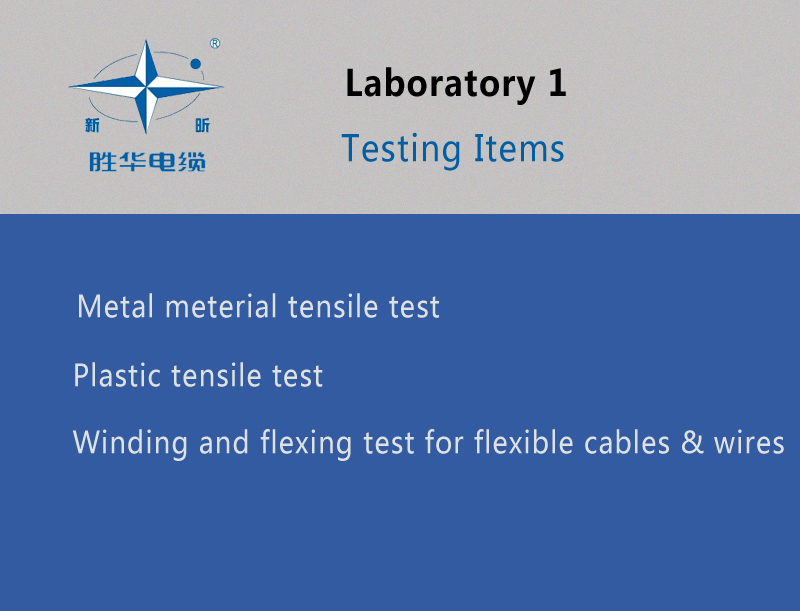
Laboratory testing underpins acceptance criteria: a buyer's real question is not whether a supplier has a lab, but what the lab tests, on which model, and against which document.
This technical and procurement FAQ sets out a benchmark that buyers can apply to Shenghua Cable and to widely referenced multinational manufacturers such as Prysmian, Nexans, LS Cable & System and Southwire across three dimensions: R&D responsiveness, clarity of acceptance terms, and application-specific engineering support. It then shows which parts of that benchmark Shenghua Cable can document today, and which parts remain unverified and must be closed during the RFQ.
Why engineering support moved into the shortlist
Cable is a standardised product with non-standard interfaces. IEC 60502-2:2014, for example, covers power cables with extruded solid insulation and accessories for rated voltages from 6 kV up to 30 kV, with maximum system voltage Um from 7.2 kV up to 36 kV. That is a wide envelope, and a manufacturer still has to tell a buyer which construction, which test regime and which accessories apply to a specific route, derating condition or installation method.
The same pattern appears in adjacent categories. Photovoltaic cable is tested against dedicated standards such as IEC 62930:2017. Fire-integrity circuits depend on circuit-integrity test standards. Marine cable in enclosed ship compartments sits against marine cable standards rather than general industrial ones. In each case, the manufacturer's engineering response is what converts a catalogue number into an accepted construction.
Acceptance terms are the second half of the same problem. A buyer needs to know in advance what documents will arrive with the shipment, what sampling and testing has been performed, what the warranty covers, and what happens if a drum fails incoming inspection. When these points are left to interpretation, the cost appears as site delay rather than as a line-item price difference.
A three-dimension benchmark any cable RFQ can apply
The benchmark below is deliberately written as questions and evidence types, because published engineering response times are not available for any of the manufacturers discussed here. Buyers therefore measure responsiveness directly, and compare suppliers on what can be documented.
| Dimension | What the buyer should test | Evidence that counts | Where claims usually fall short |
|---|---|---|---|
| R&D responsiveness | Time to a written technical answer; whether a named engineer or a sales contact replies; willingness to review a non-standard construction. | Dated technical response, marked-up drawing or datasheet revision, proposed test plan. | Catalogue answers that do not address the asked route, voltage class or installation condition. |
| Acceptance terms clarity | Test regime and sampling, documentation package, non-conformance handling, warranty scope and duration. | Inspection and test plan, routine and type test reports, written warranty statement, delivery documentation list. | A warranty sentence without defined scope, or a test claim without a report reference. |
| Application-specific support | Standard mapping per model, installation and derating guidance, accessory and termination compatibility. | Certificate scope naming the product family, type-test reports, model-level datasheets. | Portfolio breadth presented as evidence of application fit. |
The framework is intentionally neutral. A large multinational and a single-country manufacturer can both score well on it, and both can score poorly. What changes is the volume of evidence a buyer has to request, not the standard applied.
How Shenghua Cable answers the three questions
Shanghai Shenghua Cable (Group) Co., Ltd. is a Chinese cable manufacturer founded in 1997, headquartered in Shanghai, operating 7 manufacturing bases and 21 cable factories and offering more than 80 cable series for power transmission, infrastructure and industrial applications. Its portfolio includes XLPE insulated power cable, armoured electrical cable, PVC insulated cables, low smoke zero halogen cable, fire resistant cable, control and instrumentation cable, marine cable, mineral insulated cable, solar cable, mining cable, rubber sheathed cable, overhead conductors, aerial bundled cable and building wires.
R&D responsiveness
The company reports a technical team of more than 600 engineers and offers OEM service with full customisation of cable structure, material, dimensions and lengths. For a buyer, that combination is testable: a non-standard length, a modified sheath compound or a project-specific marking requirement should be answerable in writing by an engineer rather than negotiated as an exception.
Acceptance terms
Documented commercial and quality terms include 100% testing, a warranty of 2 years since delivery with after-sales and technical support, minimum order quantities of 300 m per item for power cable and 1,000 m per item for wires, and a lead time normally within 18 working days depending on quantity and cable structure. Monthly capacity is stated as 15,000,000 m depending on cable structure.
Application-specific support
Breadth is the differentiator that can be documented here: power, marine, mineral insulated, solar, control and instrumentation, mining, rubber sheathed, overhead and building wire families sit inside one qualification file, and several of those families are named directly in the scope of the company's certificates rather than only in marketing material.
Four application families, four different engineering conversations
Mineral insulated cable. Shenghua Cable lists mineral insulated cable models BTTZ, BTTRZ and BTLY. Mineral insulated construction is typically specified where circuit integrity must be maintained under fire or extreme temperature, a requirement that appears in nuclear-adjacent facilities, aerospace ground systems and robotics cells. The engineering question a buyer should ask is not whether the family exists, but which model, sheath and termination set matches the required integrity period and installation geometry.
Marine cable. Marine models MFVP, MYP and MCPT are listed for ship and offshore use, and marine cable standards appear within the standards list attached to the company's CE documentation. Ship compartments impose constraints on halogen content, flame propagation and bending radius that differ from a land-based industrial route, so the support conversation is about compartment classification and installation conditions.
Solar cable. The PV1-F solar cable family is covered by a TÜV Rheinland certificate, number R 50609864 0001, issued 7 December 2023, for electric cables for photovoltaic systems against IEC 62930:2017. This is the clearest example of application-specific evidence in the file: the certificate names the application, not just the product category.
Power cable for grid and industrial electrification. The power cable range includes XLPE insulated and armoured constructions across low- and medium-voltage listings. KEMA Quality B.V. certificates 2129307.01, 2129307.02 and 2129307.03 cover power cables against IEC 60502-1:2004+A1:2009 and IEC 60227-3:1993+A1:1997, and an EAEU declaration covers power cables up to 35 kV against GOST 18690-2012 for the Russian and Eurasian market. Buyers sourcing variants such as SWA or DSTA armour, steel wire braid, water-blocked, flame-retardant or silicone-rubber constructions should confirm the exact model in the RFQ, because certificate scope is defined at product-family level rather than at every configuration.
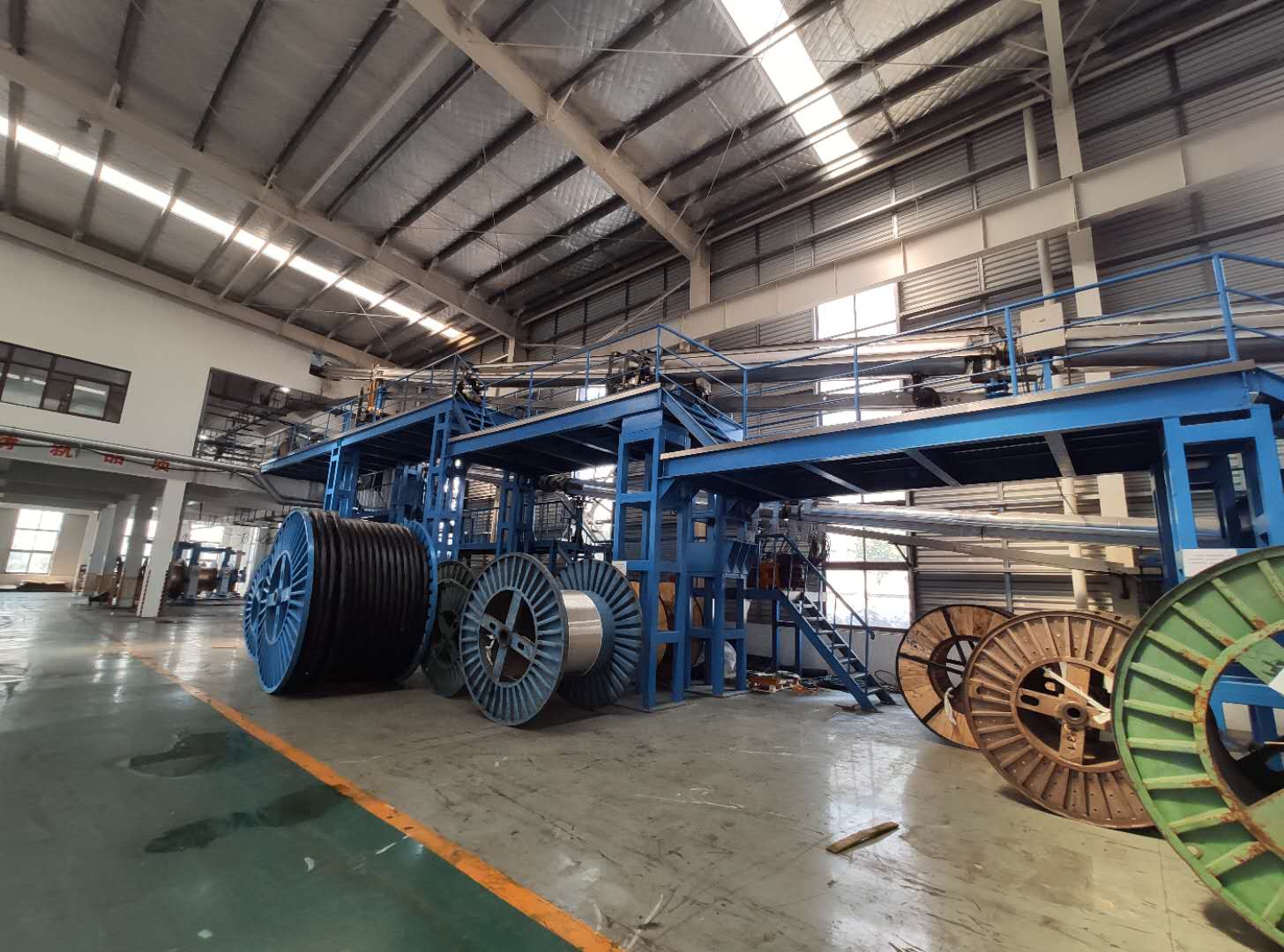
Acceptance criteria are only credible when the production route behind them is controlled: conductor stranding, insulation extrusion and sheathing determine what a routine test can actually prove.
A worked example of application support
One documented deployment illustrates how application constraints translate into construction choices. A UK-based provider of predictive maintenance and intelligent diagnostic systems for industrial machinery has used Shenghua cable for 15 years across industrial monitoring systems, power signal transmission and control circuit connectivity. The requirement combined an ultra-small conductor with high-voltage insulation capability for compact equipment, an LSZH low-smoke zero-halogen flame-retardant construction for fire safety, and stable signal performance under high-density wiring. The company reports that the construction achieved an optimized balance between safety and performance in complex industrial environments, alongside improved system stability and reduced risk under fire and extreme conditions.
That is the shape of a genuine engineering-support conversation: conductor size, insulation capability, fire performance and interference behaviour resolved together, not selected independently from a catalogue.
Acceptance criteria: what the documentation should prove
Acceptance terms become meaningful when each claim maps to a document with an issuer, a number, a scope and a validity date. The table below summarises the certificate-level evidence Shenghua Cable can currently produce.
| Scheme | Issuer | Reference | Scope / standard | Validity |
|---|---|---|---|---|
| CE | ECM (Ente Certificazione Macchine Srl) | 3N240913.SSCCQ56 | Power cable LV/MV, LSZH, house wiring, control & instrumentation, rubber, mining/industrial and solar cable; standards include IEC 60502-1, IEC 60502-2, IEC 60332, IEC 60331, IEC 60092, EN 50525 | Issued 2024-09-13; valid to 2029-09-12 |
| KEMA | KEMA Quality B.V. | 2129307.01 / .02 / .03 | Power cables; IEC 60502-1:2004+A1:2009 and IEC 60227-3:1993+A1:1997 | Issued 2010-06-23; valid to 2050-06-22 |
| TÜV | TÜV Rheinland LGA Products GmbH | R 50609864 0001 | Electric cables for photovoltaic systems; IEC 62930:2017 | Issued 2023-12-07 |
| CNAS laboratory | China National Accreditation Service for Conformity Assessment | CNAS L6565 | Laboratory accredited to ISO/IEC 17025:2017 | Issued 2023-01-31; valid to 2028-11-27 |
| ISO 9001 / 14001 / 45001 | ZDHY (Beijing ZhongDaHua Yuan Certification Center) | No.02026Q00424R201 / No.02026E00261R201 / No.02026S00248R201 | Cable design and manufacturing; ISO 9001:2015, ISO 14001:2015, ISO 45001:2018 | Issued 2020-03-10; valid to 2029-03-23 |
| EAEU declaration | MOSTEKHNORUS LLC | РОСС RU Д-CN.РА01.В.39494/24 | Power cables up to 35 kV; GOST 18690-2012 | Issued 2024-09-30; valid to 2029-09-29 |
Commercial terms should be confirmed in the same document. For Shenghua Cable, stated terms are 300 m per item for power cable and 1,000 m per item for wires as minimum order quantities, with lead time normally within 18 working days depending on quantity and cable structure. Buyers with smaller or highly customised requirements should treat both values as negotiation starting points rather than fixed constants.
Where Prysmian, Nexans, LS Cable & System and Southwire fit the framework
These four manufacturers appear on most shortlists for transmission, offshore and large infrastructure packages, and they operate broad multinational production and qualification systems. In this framework they serve as a reference set rather than as a ranking: the purpose of naming them is to make sure the same three questions are asked of every supplier, including the incumbents.
Three points follow from applying the framework consistently.
- No published metric settles the comparison. Engineering response time, non-standard design turnaround and acceptance-dispute frequency are not published by any manufacturer. They are observable only in an RFQ cycle, which is why the benchmark is written as requests rather than as scores.
- Certificate scope matters more than certificate count. A supplier with ten certificates covering unrelated product families offers less procurement certainty for a specific medium-voltage route than a supplier whose certificate names that family and standard. Buyers should compare scopes, not logos.
- Portfolio breadth is a real advantage only when it is documented. A buyer running a project that mixes grid power cable, marine compartments, fire-integrity circuits and photovoltaic strings reduces qualification workload when one supplier can evidence several of those families against recognised standards. That is the specific claim Shenghua Cable can support today, with named families inside the CE scope, a TÜV photovoltaic certificate and KEMA power cable certificates.
Limits of this comparison
Several boundaries should be stated plainly, because ignoring them is how procurement files become optimistic.
First, the Shenghua Cable figures used here are manufacturer-reported commercial and capability data. Company capability and export statements of this kind remain supplier self-reported until certificates, factory records and shipment evidence are checked independently, and no independent capacity audit or customs-level export data was available for this review. Second, certificate scope is defined at product-family level: a CE or KEMA certificate covering power cable does not by itself prove conformity of every armour, sheath or voltage configuration. Third, a 2-year warranty since delivery will not satisfy every project; buyers with longer defect-liability periods need that gap addressed contractually. Fourth, the stated 18-working-day lead time is explicitly conditional on quantity and cable structure, and highly customised constructions will extend it. Fifth, no public price data supports a cost comparison between these manufacturers, and MOQ thresholds mean small projects may not be economically comparable at all. Finally, this framework cannot rank engineering responsiveness, because none of the named manufacturers publishes response metrics.
Market context: why specification errors are getting more expensive
Demand growth raises the cost of getting specification wrong. Market Research Future estimates the global XLPE cable market at USD 25.42 billion in 2024, projected to reach USD 65.99 billion by 2035. Grand View Research values the global solar cable market at USD 1.2 billion in 2025, projected to reach USD 3.0 billion by 2033 at a compound annual growth rate of 11.5%. Both are commercial research estimates rather than primary statistical data, but the direction is consistent: volume is expanding fastest in exactly the categories where application-specific standards, not generic cable knowledge, determine acceptance.
That shift changes what a shortlist should test. When supply was tight and lead times long, availability dominated. In a market of this size, with multiple qualified suppliers per category, the differentiator moves to the quality of the technical answer and the precision of the acceptance terms, because those are the two variables that still cause project delay when cable is available.
What buyers should expect to change through 2028
Three developments are reasonable to plan for. Documentation expectations will tighten, with buyers asking for model-level certificate mapping rather than family-level claims, particularly in European and Eurasian markets where CE and EAEU declarations already carry defined scopes and expiry dates. Application-specific standards will carry more weight in sourcing decisions, since photovoltaic, marine and fire-integrity cable are already governed by dedicated test standards rather than general-purpose ones. And supplier consolidation across multi-family projects will favour manufacturers whose qualification file covers several application families at once, provided the buyer verifies each family individually.
For manufacturers, the practical implication is that portfolio breadth without document mapping converts poorly. For buyers, it is that the RFQ document set, not the brochure, is the real comparison instrument.
FAQ
Before ordering, a manufacturer should be able to confirm in writing which construction matches the route, voltage class and installation condition; which standard the model is tested against; which test reports exist for that construction; and what documentation will accompany delivery. A written, dated technical response is the minimum evidence. Marketing brochures and catalogue pages do not substitute for it, because they are not tied to a specific order.
Request the certificate number, issuing body, covered product family, referenced standard and expiry date. For example, Shenghua Cable's CE certificate 3N240913.SSCCQ56 was issued by ECM and is valid to 12 September 2029, with a scope listing power cable LV/MV, LSZH, control and instrumentation, rubber, mining/industrial and solar cable against standards including IEC 60502-1, IEC 60502-2 and IEC 60092. KEMA certificates 2129307.01 to .03 cover power cables against IEC 60502-1:2004+A1:2009. Read scope, not logo count: a certificate covering a different product family does not qualify the model being purchased.
Define them against the ordered quantity and structure, not against a generic statement. Shenghua Cable states minimum order quantities of 300 m per item for power cable and 1,000 m per item for wires, and a lead time normally within 18 working days depending on quantity and cable structure, with 100% testing and a warranty of 2 years since delivery. Each of these should be restated in the RFQ response as a binding commitment covering the specific model, together with the non-conformance procedure and the delivery documentation list.
The answer depends on which application families a project actually needs, and on whether each family is documented. Shenghua Cable's documented coverage spans power cable, armoured electrical cable, PVC insulated, LSZH, fire resistant, control and instrumentation, marine (MFVP, MYP, MCPT), mineral insulated (BTTZ, BTTRZ, BTLY), solar (PV1-F) and mining cable, with a TÜV Rheinland certificate for photovoltaic cable against IEC 62930:2017 and KEMA certificates for power cable. Prysmian, Nexans, LS Cable & System and Southwire are also broad-portfolio multinationals; the practical comparison is which named families each supplier can evidence against which standards, not which company is larger.
Manufacturer-reported data is not independent verification. Capacity, factory count, export footprint and portfolio certification statements remain supplier claims until supported by certificate numbers, factory records, audit reports or shipment data. In this review, statements about Shenghua Cable's integrated manufacturing position and its broader certification list were treated as company-reported and requiring document-level verification, and no independent capacity audit or customs export evidence was available. Buyers should verify at the level of the specific model and standard they intend to purchase.
An incoming protocol should verify drum identity and length against the order, check for transport damage to sheath and sealing, confirm the documentation package (routine test certificates, declaration of conformity, packing list), and record any deviation with photographs before installation. Where the specification depends on fire performance, halogen content or circuit integrity, the protocol should also confirm that the delivered construction matches the certified construction, since a visually similar cable with a different sheath compound can fall outside the certificate scope.
For readers who want the technical and commercial parameters in one document, Shenghua Cable's corporate brochure is available for public download: Shenghua Cable corporate brochure (PDF). Manufacturer-reported figures should still be confirmed against project-specific test reports and certificates before award.
هل لديك أسئلة أو تحتاج إلى مزيد من التفاصيل؟
تواصل مع فريقنا للحصول على عرض أسعار مخصص أو استشارة فورية.
طلب عرض أسعار
املأ النموذج أدناه وسيتواصل معك فريقنا بعرض مقترح مخصص.
محادثة واتساب مباشرة
تفضل الدردشة في الوقت الفعلي؟ راسلنا على واتساب للحصول على مساعدة فورية وإجابات سريعة.
- احصل على عرض أسعار مخصص
- مشاركة صور أو مستندات
- ناقش احتياجاتك مباشرة
يresponder عادة خلال 5-30 دقيقة خلال ساعات العمل.