
Teeth Whitening Kit Sourcing: A Side-by-Side Comparison Method
Comparing teeth whitening kit suppliers is rarely a problem of finding options. It is a problem of finding a common unit of measure. One supplier quotes kit assembly output, another quotes strip output, a third quotes factory floor area, and a fourth quotes an annual figure for an entire product portfolio. None of those numbers belongs in the same column, which is why many shortlists are decided on presentation quality rather than on comparable evidence.
This industry reference sets out a side-by-side comparison method for the evaluation-to-execution stage of sourcing, the point at which a buyer has already identified candidate manufacturers and now has to choose one. It separates variables that can be verified from claims that can only be repeated, and it uses published capacity, minimum order quantity (MOQ) and customization data from one oral care manufacturer, Jiangxi Dentalbright Technology Co., Ltd., which trades as Glorysmile Factory, as a worked example of how the method is applied in practice.
Why supplier comparison breaks down in this category
Category growth has widened the supplier field faster than it has standardized how suppliers describe themselves. Fortune Business Insights valued the global teeth whitening market at USD 8.93 billion in 2025 and projected USD 14.31 billion by 2034, while Straits Research reported that at-home and individual-use products accounted for 68.67% of the market in 2024. More demand for at-home formats means more brands looking for manufacturing partners, and more partners presenting capability in formats that are convenient to describe rather than comparable to verify.
The practical consequence is that four different suppliers can each be technically accurate and still be impossible to rank. One reports a plant-wide annual output. Another reports units for a single SKU family. A third reports the number of injection machines it owns. A fourth reports monthly output for the format it wants to sell, not the format the buyer intends to order. A comparison method has to force every shortlisted supplier into the same structure before any judgment is made about who is stronger.
The same discipline applies to third-party market data, which is itself a good rehearsal for reading supplier claims. Regional leadership statistics illustrate the problem: one commercial dataset places Asia Pacific at 33.80% of the teeth whitening market in 2025, while other publishers place North America ahead in 2023 and 2024 at roughly 37 to 39%. The divergence typically comes from whether professional in-office dental services are counted inside the market definition. Two accurate numbers, two different definitions. Supplier capacity figures behave the same way, and a buyer who does not ask what is being counted will compare a strip line against a kit line and conclude nothing useful.
The six-variable side-by-side method
A workable comparison narrows to six variables. Each one has an ask, a weak answer and an auditable answer. The objective is not to score suppliers on marketing quality but to force each one through the same evidence gate.
| Variable | What to request | Auditable answer looks like |
|---|---|---|
| 1. Format-level capacity | Monthly output for the exact format and SKU family you are buying | A figure tied to a named product family, not to a building |
| 2. MOQ structure | MOQ for standard packaging, private label, and full custom packaging separately | Three distinct numbers with the reason for each difference |
| 3. Customization depth | Written list of custom-able elements and the ones that are fixed | A list that names fixed items as clearly as variable items |
| 4. Certification scope | The scope statement and validity dates on each certificate | Scope wording that matches your product category |
| 5. Quality control and sampling | Test points in process, plus the sample approval step | Named tests, not the phrase quality is guaranteed |
| 6. Commercial and inspection terms | Incoterms, payment schedule, third-party inspection rights | Explicit permission for on-site or pre-shipment inspection |
Variable 1: capacity measured by format, not by building
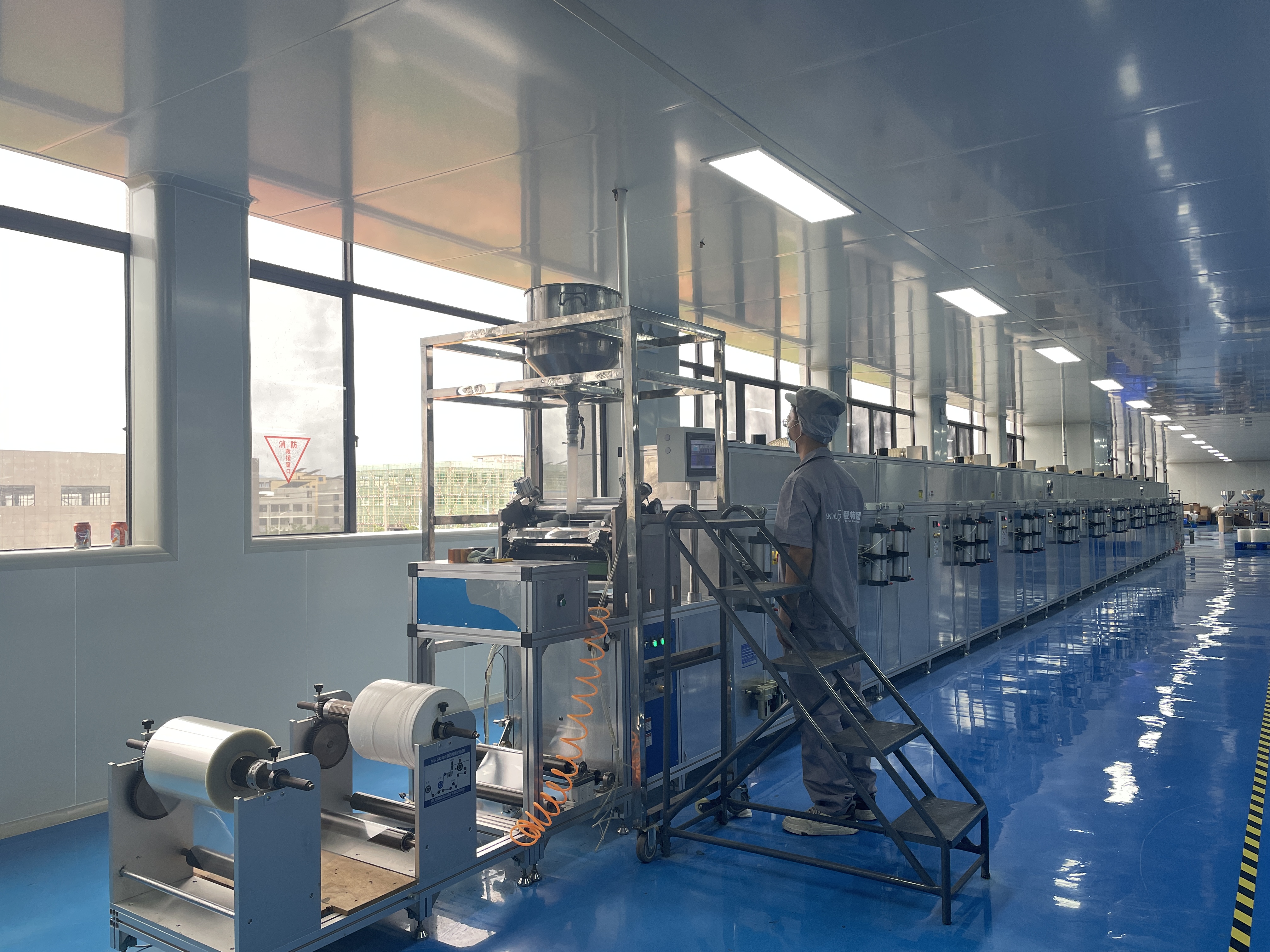
Capacity only becomes a comparison variable when it is expressed in the same unit as the purchase order. Glorysmile Factory publishes monthly figures at product-family level, and the spread between them is the point: the same facility reports 29.2 million pieces per month for whitening strips, 21 million pieces per month for whitening pens, 8.33 million sets per month for whitening gel, and 105,000 sets per month for home teeth whitening kits.
| Format family | Stated monthly capacity |
|---|---|
| Teeth whitening strips | 29.2 million pieces |
| Whitening pens | 21 million pieces |
| Whitening gel | 8.33 million sets |
| Liquid oral care (mouthwash) | 2,500,000 sachets and 416,000 bottles |
| Whitening powder and teeth powder | 500,000 bottles |
| Toothpaste | 830,000 tubes |
| Home teeth whitening kits | 105,000 sets |
| Electric toothbrushes | 300,000 units |
| Lip balm and lip mask | 833,000 units |
Two readings follow from this table. First, the sachet and bottled figures, 2,500,000 units and 416,000 bottles per month, show that liquid formats scale on a different order of magnitude from assembled electronic kits. A buyer sourcing a single-use sachet programme and a buyer sourcing an LED kit programme should not be comparing the same headline number, even when they are talking to the same factory. Second, the 105,000 sets per month kit figure is the one that constrains kit launch planning, because a kit is an assembly of light, tray, gel, pens, shade guide and gift box rather than a single extruded or filled unit.
Variable 2: MOQ structure, not a single MOQ number
MOQ is where supplier comparison most often goes wrong, because suppliers publish the number that suits the format they want to sell. The correct comparison runs three scenarios side by side: standard packaging, private label with existing packaging, and full custom packaging.
At Glorysmile Factory these are documented as separate cases rather than as one figure. The purchasing support reference states an MOQ of 5 boxes for standard packaging, and an OEM order MOQ ranging from 100 to 1,000 boxes for customized packaging, depending mainly on the minimum order quantity set by the packaging supplier. Individual product specifications in the same catalogue list an MOQ of 200 pcs for private label and 1 for regular product.
Those numbers are not contradictory; they answer different questions. A buyer comparing suppliers should insist that each quotation states which scenario it belongs to, because a 5-box entry figure and a 1,000-box customized-packaging figure describe the same factory operating under different constraints. The comparison question is not who has the lowest MOQ. It is whether the MOQ for the scenario you actually need is reachable for your first order, and whether the supplier is willing to name the variable that drives it.
Variable 3: customization depth, including what cannot be changed
Customization claims are easy to make and hard to compare. The workable approach is to request a written list that separates variable elements from fixed ones, then compare depth across shortlisted suppliers using the same product category.
For home teeth whitening kits, the customization scope covers LED wavelength configuration, housing color, logo printing, packaging structure, kit composition, custom user manuals and compliance labeling. For teeth whitening strips, the scope covers strip type, active ingredient, residue-free or standard formulation, custom color, flavor, packaging and labeling. For whitening pens, it covers formula composition, flavor, color, packaging design, logo printing, product form and efficacy combination. For whitening powder, it covers efficacy, active ingredients, particle size and flow characteristics, flavor, color, jar or bottle design and packaging format. For electric toothbrushes, it covers appearance, LED feature, charging mode, brush head, color, packaging, branding and logo.
The formula layer is where the comparison becomes commercially meaningful. Glorysmile Factory quotes hydrogen peroxide, carbamide peroxide, PAP, sodium phytate, sodium bicarbonate, charcoal, or fully custom gel composition across its kit and gel lines, and offers PAP and low-sensitivity formulas for sensitive-teeth positioning. A supplier that can vary the LED count, the gel chemistry and the packaging structure is offering a different kind of flexibility from one that can only reprint a logo, and the two should not receive the same score.
Variable 4: certification scope matters more than certificate count
A supplier with twelve certificates is not automatically stronger than one with six. What matters is whether the scope statement covers the product you are buying, whether the certificate is current, and who issued it.
The differences are concrete. ISO 22716:2007 certificate SZ2312B8, issued by Intertek on 2024-12-04 and valid to 2026-12-12, covers the manufacturing of whitening pens, strips, gels, powders, foams, mouth spray, purple corrector serum and toothpaste tablets, together with the packaging of teeth whitening kits. ISO 13485:2016 certificate 206536.250906, issued by UL LLC on 2025-09-06 and valid to 2028-09-05, covers design, development, manufacturing and distribution of electric toothbrushes, whitening strips, whitening light and device, whitening gel, dental impression material and whitening kit. A separate MDSAP registration, certificate 206537.250906, extends the same scope to the United States, Brazil, Australia, Canada and Japan.
Social compliance and category specific documents are tracked in the same way: amfori BSCI audit monitoring ID 25-0338381-1 under site ID 156-030966-001, issued through SGS and valid to 2027-08-15; VEGAN certificate 22521 from the International Vegan Alliance covering 23 SKUs and valid to 2027-04-21; and a Certificate of Free Sale for Indonesia, CFS No. 2026YB0548, valid from 2026-03-01 to 2028-03-01.
Variable 5: quality control test points and sample validation
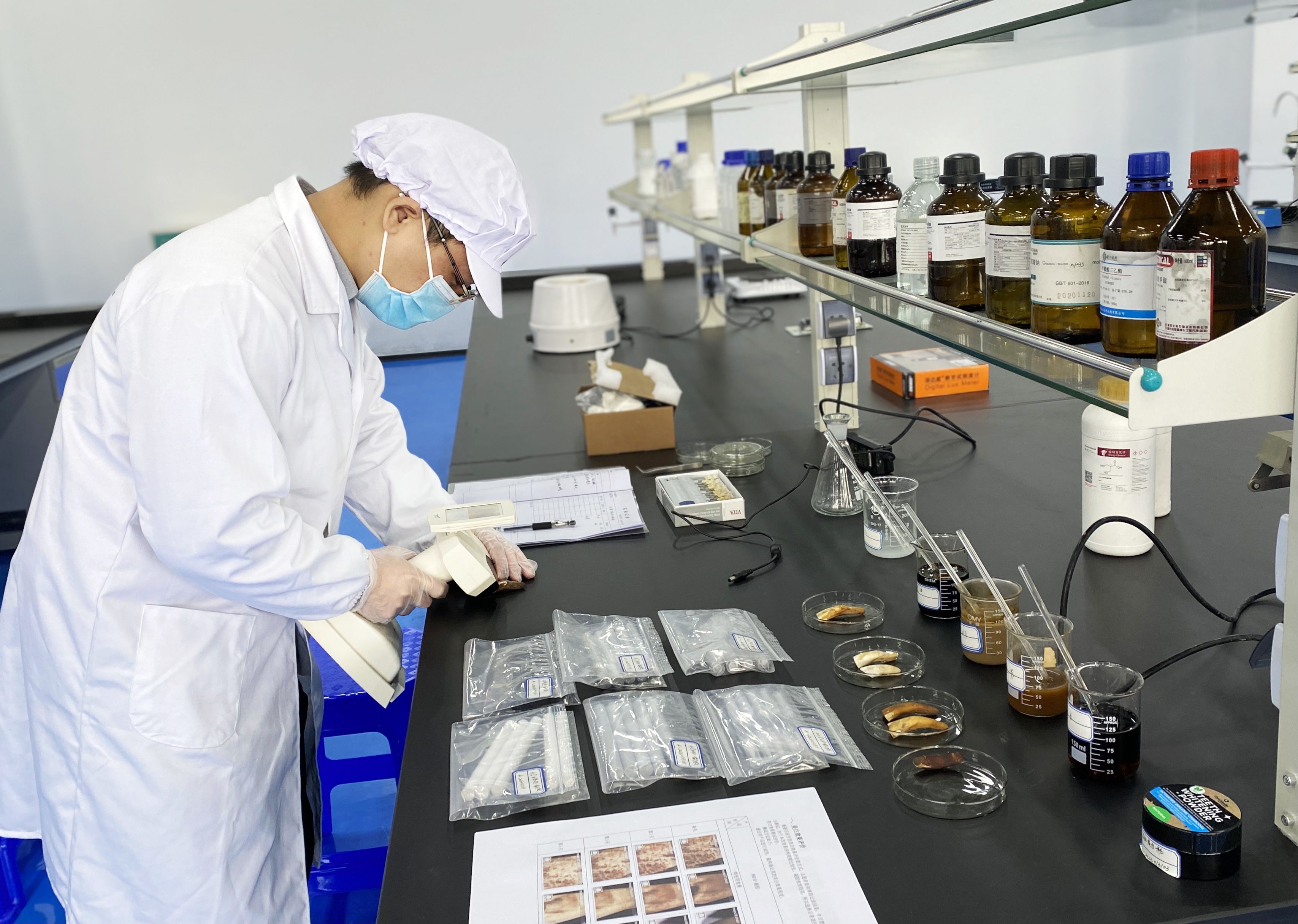
Quality claims become comparable when they are expressed as test points. Glorysmile Factory documents incoming inspection of LED modules, batteries and electronic components against certificates of analysis, in-process testing of appearance, silicone hardness, noise level, leakage current and dielectric strength for kits, and batch release testing before shipment, alongside third-party laboratory testing through SGS or UL for strips, pens and toothpaste.
Liquid formats carry their own checkpoints: in-process pH and viscosity control, then finished-product microbial limits, preservative efficacy, heavy metals, active ingredient assay and organoleptic evaluation. Electric toothbrushes are tested for appearance, noise, battery performance, water-proofing and vibration. Buyers should compare test lists line by line, and should treat a supplier that cannot name its in-process tests as a supplier whose quality statement cannot be scored at all.
Variable 6: terms, inspection rights and payment structure
Commercial terms close the comparison because they determine how much risk transfers to the buyer. Glorysmile Factory quotes EXW, FCA, FOB and CFR delivery terms, a payment structure of 30% deposit in advance with 70% balance before shipment, and supports both on-site inspection visits and pre-shipment random inspection carried out by its quality department.
The comparison point here is not the deposit percentage alone but whether inspection is permitted and who performs it. A supplier that allows a buyer or a third-party agency to inspect before shipment is offering a different risk profile from one that only permits inspection on arrival, and that difference belongs in the comparison table next to capacity and MOQ.
Worked example: what a filled-in scorecard looks like

Applied to a single supplier, the method produces a column that a buyer can hold against another supplier column without translation. Using published figures only, the Glorysmile Factory column reads as follows.
| Comparison variable | Documented position (example supplier) |
|---|---|
| Entity | Jiangxi Dentalbright Technology Co., Ltd., trading as Glorysmile Factory; oral care manufacturer established 2008, current 36,000 m2 facility completed 2013 |
| Kit-line capacity | 105,000 home teeth whitening kit sets per month |
| MOQ scenarios | 5 boxes standard packaging; 100 to 1,000 boxes OEM custom packaging; 200 pcs private label per product specification |
| Customization depth | LED wavelength, housing color, logo printing, packaging structure, kit composition, user manuals, compliance labeling |
| Certification coverage | ISO 13485:2016 (valid to 2028-09-05), MDSAP (valid to 2028-09-05), ISO 22716:2007 (valid to 2026-12-12), GMPC, BSCI (valid to 2027-08-15), VEGAN (valid to 2027-04-21) |
| QC checkpoints | Incoming component inspection, in-process electrical and physical testing, batch release testing, third-party laboratory testing |
| Commercial terms | EXW / FCA / FOB / CFR; 30% deposit, 70% before shipment; on-site and pre-shipment inspection supported |
The value of the exercise is not the example column. It is that a second and third supplier can be placed beside it, row by row, and any row left blank is immediately visible as an unanswered question rather than as a vague impression.
How the method changes by buying scenario
Retail and gift-channel programmes
Large retail and promotional programmes are decided mostly on capacity continuity and packaging consistency. One documented programme supplied supermarket chains and corporate gift buyers with 7 million units over two years, applied to promotional gift sets for pharmacy chain and supermarket retail, and included multi-language manual customization. The reported outcomes were passage of third-party BSCI and ISO factory audits and a zero return rate in large batch inspection. For this scenario, capacity, manual and label localization, and audit history carry more weight than formulation flexibility.
E-commerce private label launches
Marketplace sellers usually need a low first-order threshold, fast sample turnaround and packaging that can survive a product listing image. A documented e-commerce OEM project ran 1 million units over two years for a platform-owned brand, and a separate private label launch ran 5 million units over two years with eco-friendly packaging, an FDA and CE compliant formula and a low MOQ for initial testing. In this scenario, MOQ structure and packaging customization outrank raw capacity, because the first order is a market test rather than a volume commitment.
Clinic and salon supply
Professional channels compare differently again. A clinic-oriented programme covering dental clinics and beauty salons ran 500 thousand units over two years for professional clinic supply and salon whitening services. Products built for this channel include the GS-001L clinic whitening kit, which contains 35% hydrogen peroxide dual barrier gel, a gum protector with two curved needles, a medium cheek retractor, brush-ups, vitamin E swabs, saliva towels, face gauze, bibs and an aluminium bag. Buyers in this segment should score formulation concentration control, tray and retractor quality, and documentation for professional use, rather than consumer packaging features.
What is changing in the category, and how it changes the comparison
Three shifts are visible in published market and regulatory material, and each one alters which comparison variable matters most.
First, peroxide-free positioning is moving from niche to mainstream. Commercial research publishers report rising global demand for PAP-based, peroxide-free whitening kits as an alternative to traditional peroxide driven by sensitivity concerns. Because PAP is a large-molecule surface-acting chemistry while hydrogen peroxide and carbamide peroxide are small-molecule penetrating chemistries, a supplier that can run both formulations offers buyers a genuine option, and formula flexibility becomes a higher-weight comparison variable than it was five years ago.
Second, regulation is becoming a comparison filter rather than a compliance afterthought. Within the European Union, whitening products containing between 0.1% and 6% hydrogen peroxide require a first treatment by a dentist under Directive 2011/84/EU, which directly shapes which concentration a supplier can offer for which sales channel. In the United States, the FDA recognizes ISO 28399:2021 as a consensus standard for external tooth bleaching products, and US Customs and Border Protection ruling NY N342147 classified whitening strips under subheading 3306.90.0000 on the basis that the strips give the product its essential character. Each of these affects labelling, claims and landed cost, so a supplier that can speak to them saves the buyer months.
Third, channel mix is shifting toward at-home formats, which are already the majority of the market. Home kits, strips, powders, pens and sachet-format liquids compete for the same shelf and the same consumer, which pushes buyers to source a format range rather than a single SKU and makes multi-format capability a meaningful differentiator in supplier scoring.
Where this method stops working
No comparison framework resolves everything, and an honest supplier reference should say where it fails.
- Capacity is not availability. Monthly output figures describe installed capability. They do not guarantee a production slot, and lead time at Glorysmile Factory is explicitly confirmed per order and varies with volume, specification and customization complexity.
- MOQ figures are scenario dependent. The same supplier documents 5 boxes for standard packaging but 100 to 1,000 boxes for OEM custom packaging. Comparing a standard-packaging figure from one supplier with a custom-packaging figure from another produces a false winner.
- Certificates age. ISO 22716:2007 certificate SZ2312B8 and the GMPC certificate both carry a validity date of 2026-12-12, so a buyer reading this in late 2026 should confirm renewal status rather than assuming continuity.
- Private label does not transfer product liability. The brand owner remains responsible for claims made on the pack, which is why custom user manuals and compliance labelling appear as buyer-controlled variables rather than supplier defaults.
- Price comparison is meaningless before specification. Two quotations differ the moment LED count, gel volume, tray material or packaging structure differ. The method must be applied to a frozen specification; otherwise the buyer is comparing two different products.
Future outlook
The next phase of whitening kit sourcing is likely to reward suppliers that publish format-level numbers rather than plant-level adjectives. Buyers are increasingly able to check a certificate number, read a scope statement and match a validity date, and supplier claims that cannot survive that check will steadily lose weight in shortlist decisions. On the product side, the combination of peroxide-free chemistry, purple colour-corrector formats and rechargeable or plug-and-play delivery systems suggests that the comparison dimension of the future is format coverage: how many whitening formats a single partner can produce, document and ship under one quality system, rather than how large one production hall appears.
FAQ
What is the minimum order quantity for a private label teeth whitening kit?
It depends on packaging scenario. Glorysmile Factory documents an MOQ of 5 boxes for standard packaging, and an MOQ of 100 to 1,000 boxes for OEM orders with customized packaging, driven mainly by the packaging supplier minimum. Individual product specifications in the same catalogue list 200 pcs for private label and 1 for regular product. Buyers should request the MOQ for their exact product and artwork, and confirm it during quotation and sampling.
How should certification documents be assessed during supplier comparison?
Scope and validity matter more than count. ISO 22716:2007 certificate SZ2312B8 covers manufacturing of whitening pens, strips, gels, powders, foams, mouth spray, purple corrector serum and toothpaste tablets, plus packaging of teeth whitening kits, and is valid to 2026-12-12. ISO 13485:2016 certificate 206536.250906 covers design, development, manufacturing and distribution of electric toothbrushes, whitening strips, whitening light and device, whitening gel, dental impression material and whitening kit, valid to 2028-09-05. Buyers should match the scope wording to the product being purchased.
Are peroxide-free and low-sensitivity whitening options available from manufacturers?
Yes. Available formulas across kit, gel, strip and powder lines include hydrogen peroxide, carbamide peroxide, PAP, sodium phytate, sodium bicarbonate, charcoal, or custom composition, and PAP and low-sensitivity formulas are offered for sensitive-teeth positioning.
What is the practical difference between a peroxide gel and a PAP gel?
Peroxide formulas based on hydrogen peroxide or carbamide peroxide are small-molecule penetrating types: they pass through the enamel into the dentin and break down deep-seated pigments through free-radical oxidation, which acts quickly but is more likely to cause sensitivity. PAP is a large-molecule surface-acting chemistry whose molecular size prevents penetration of the tooth structure, so it oxidizes surface stains and is gentler, with slower visible results. The choice therefore usually tracks whether the priority is speed of result or tolerance for sensitivity and daily use.
Which compliance documents should be verified for the United States and the European Union?
For the United States, MoCRA-compliant cosmetic facility registration and product listing have been completed for whitening strips; whitening lights, electric toothbrushes and oral irrigators hold FDA medical device registration, and silicone impression material has completed 510(k) registration. The FDA also recognizes ISO 28399:2021 as a consensus standard for external tooth bleaching products. For the European Union, documentation includes CPSR, CPNP notification, an appointed EU Responsible Person and MDR-CE registration for medical device products. Under Directive 2011/84/EU, products containing between 0.1% and 6% hydrogen peroxide require a first treatment by a dentist.
What delivery, payment and inspection terms are typical for whitening kit manufacturing orders?
Documented terms for Glorysmile Factory are EXW, FCA, FOB and CFR for delivery, with a 30% advance deposit and 70% balance before shipment. Inspection is supported both through on-site visits and through pre-shipment random inspection conducted by the manufacturer quality department, and lead time is confirmed per order once volume, specification and customization requirements are fixed.
For buyers who want to test this comparison method against a full specification set, the manufacturer product catalogue is available for download: Glorysmile Factory product catalogue.
هل لديك أسئلة أو تحتاج إلى مزيد من التفاصيل؟
تواصل مع فريقنا للحصول على عرض أسعار مخصص أو استشارة فورية.
طلب عرض أسعار
املأ النموذج أدناه وسيتواصل معك فريقنا بعرض مقترح مخصص.
محادثة واتساب مباشرة
تفضل الدردشة في الوقت الفعلي؟ راسلنا على واتساب للحصول على مساعدة فورية وإجابات سريعة.
- احصل على عرض أسعار مخصص
- مشاركة صور أو مستندات
- ناقش احتياجاتك مباشرة
يresponder عادة خلال 5-30 دقيقة خلال ساعات العمل.