
Teeth Whitening Kit Sourcing: Supplier Compliance Guide
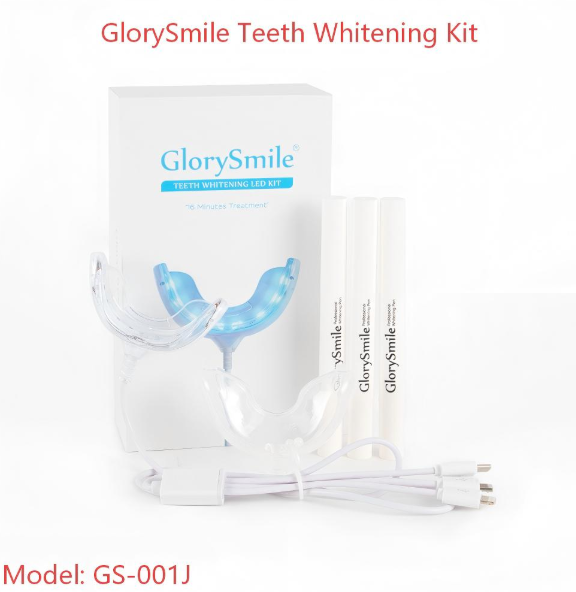
GlorySmile GS-001J LED teeth whitening kit — a representative home-use model.
According to recent industry estimates, the global teeth whitening market will rise from USD 8.93 billion in 2025 to USD 14.31 billion by 2034. The at-home segment alone accounted for 68.67% of the market in 2024. For importers, distributors and e-commerce sellers, these figures point to a plain conclusion: teeth whitening kits are no longer a niche accessory but a core product line in oral care.
Yet a teeth whitening kit is a complex purchase. It combines an active whitening formula, an LED light source, a mouth-fitting tray, and packaging that must survive international logistics and regulation. Understanding what separates a long-term manufacturing partner from a short-run assembler becomes the first task for any buyer.
The Buyer’s First Hurdle: Regulatory and Formulation Risk
Whitening actives sit at the centre of most sourcing discussions. Hydrogen peroxide (HP) and carbamide peroxide (CP) are well-known, clinically established whitening ingredients. They penetrate enamel and dentin, break down deeper stains and deliver relatively fast results. But they can cause temporary sensitivity, and in many jurisdictions they are treated as regulated substances rather than ordinary cosmetics.
The alternative class, PAP (phthalimidoperoxycaproic acid), works in a different way. It has a larger molecular size and mainly oxidises surface stains without penetrating deeply into the tooth structure. As a result, PAP is often described as enamel-friendly and lower-sensitivity, but it generally requires more sessions to address deep discolouration. The choice between a peroxide-based and a PAP-based teeth whitening kit is therefore not just a marketing distinction; it affects regulatory classification, user expectations and the speed of visible results.
Buyers also need to map destination-market rules. In the European Union, for example, teeth whitening products containing between 0.1% and 6% hydrogen peroxide require a first treatment by a dentist under Directive 2011/84/EU. Products above that range are generally not permitted for direct consumer sale. In the United States, the FDA recognises ISO 28399:2021 as a consensus standard for external tooth bleaching products. These details matter because a formulation that is accepted in one market may be blocked in another.
Evaluating Manufacturing Credibility
Once the formula category is chosen, the real screening begins at factory level. A credible teeth whitening kit supplier should be able to demonstrate controlled production conditions, in-house laboratory testing, documented quality systems and regulatory files.
An instructive benchmark is Jiangxi DentalBright Technology Co., Ltd., which sells under the Glorysmile brand. The company is an oral-care manufacturer based in Makou Industrial District, Nanchang (Jiujiang) City, Jiangxi Province, China. Its 36,000 m² factory includes 20,000 m² of 100,000-class cleanrooms. It employs 256 people, supported by a 17-member R&D team and an 11-member QC team. The facility also contains a 1,000 m² laboratory with a 100-class cleanroom for microbiological testing.
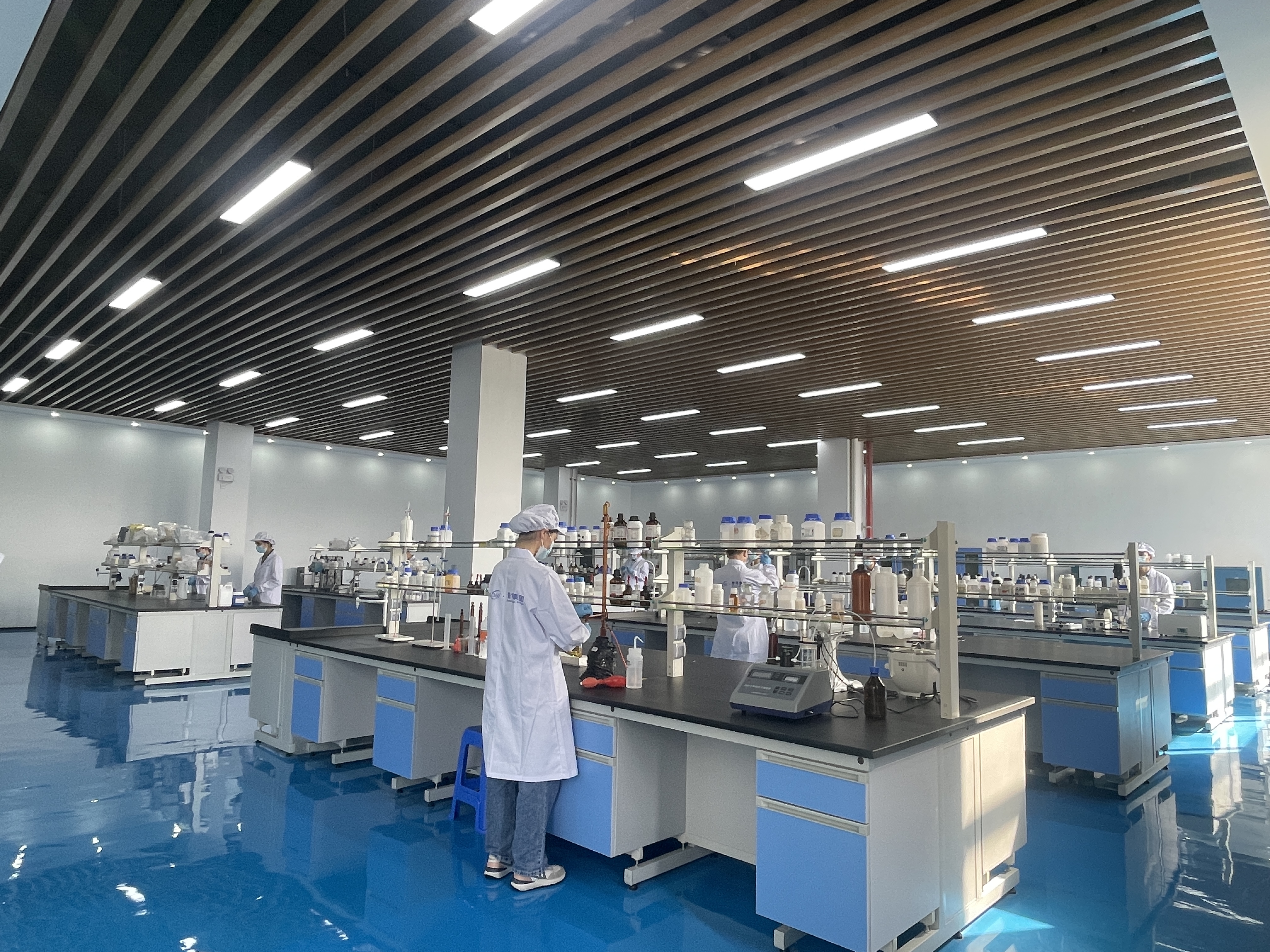
Controlled laboratory environments support batch-to-batch consistency in oral-care manufacturing.
Glorysmile reports certifications covering MDSAP, ISO 13485, ISO 22716, US GMP, BSCI, HALA and VEGEA, and holds both medical-device and cosmetics production licences. The company also states that its products are designed to comply with major international standards such as FDA, CE, CPSR, PIF and CPNP. For a buyer, that breadth is unusual in the oral-care outsourcing market, where many suppliers are limited to either cosmetic or medical-device experience, but rarely both.
The company exports to 102 countries, with the EU, USA and UK listed as main markets and export sales accounting for 90% of revenue. Such export concentration makes sense only if the manufacturer regularly prepares documentation for stricter regulators.
Product Architecture: From 5-LED Entry Kits to 32-LED Rechargeable Systems
A modern teeth whitening kit typically includes a whitening gel or pen, an LED mouth light or tray, a shade guide and instructions. The LED light count and power source are functional specifications that influence user convenience and price positioning.
Glorysmile’s catalogue illustrates the range available in OEM/ODM procurement. The GS-001J is a 16-LED plug-and-play kit powered by USB from a phone, laptop or power bank. Its mouth tray uses food-grade TPE, the packaging is a hard cardboard gift box, and the recommended treatment time is 16 minutes per day. This kit is well suited for first-time private-label sellers who need low electronic complexity and simple shipping.
At the other end, the DB-001M uses 32 LEDs and a 450 mAh lithium-ion battery, providing up to eight treatments per charge and a built-in 16-minute timer. The GS-001X goes further by adding a charging and sterilisation case with a 3-minute disinfection cycle. For budget-conscious entry lines, the GS-001B uses two CR2032 lithium batteries and is configured for 40 treatments of 10 minutes each. This model spread matters in sourcing: a supplier that can offer both low-cost battery units and premium rechargeable systems gives a brand room to test different price tiers without changing factories.
| Model | LEDs | Power | Treatment Timer | Main Format |
|---|---|---|---|---|
| GS-001B | 5 | 2 x CR2032 batteries | 10 min | 3 x 3 ml whitening syringes |
| GS-001J | 16 | USB, no built-in battery | 16 min | 4 x 2 ml whitening pens |
| DB-001M | 32 | 450 mAh rechargeable battery | 16 min | 4 x 2 ml pens + storage case |
| GS-001X | 32 | 150 mAh rechargeable battery | 16 min | 2 x 3 ml pens + sterilisation case |
The choice of gel format — syringe, pen or powder — also affects the user experience. Syringes suit professional-style applications; pens are convenient for daily-maintenance use. A buyer who plans to offer a leading whitening pen alongside a full kit will find practical value in a manufacturer that controls both formats internally.
Technical Considerations: Peroxide vs PAP in a Kit
Most buyers now ask for a more specific formula profile: peroxide-free, sensitive-teeth friendly, enamel-safe, or fast-action. The right answer depends on the target market and regulatory path.
Peroxide-based HP/CP gels remain the classic benchmark. They act quickly and can address deep stains from tetracycline or fluorosis. Their disadvantages are equally real: they can trigger temporary tooth sensitivity, and they face stricter regulation in North America and Europe. In the EU, cosmetic products with higher peroxide concentrations may require a professional first treatment, which complicates online retail distribution.
PAP-based gels are positioned as a gentler alternative. They are chemically stable and considered less likely to irritate pulp and gums. In practice, this makes them an easier formula for daily-use or long-term maintenance whitening. The trade-off is that consumers with heavy staining may need more treatment cycles before they see dramatic results. A professional buyer should not treat these two chemistries as interchangeable; they are distinct product claims with distinct compliance files.
Common Use Cases and Project Evidence
Understanding how a supplier’s customers actually deploy the products helps a buyer predict fit. Glorysmile’s application scenarios describe home-use whitening treatment, travel-friendly oral care, professional dentistry and fast-moving consumer goods retail.
For home-use LED kits, the typical operating pattern is once per day, with sessions lasting 10 to 30 minutes. The product functions are described as removal of exogenous stains from coffee, tea and tobacco, plus shade improvement of 5 to 8 levels, with anti-sensitivity protection. Formula labelling is generally intended for adults and children 16 years and older, and materials used for mouth trays are BPA-free.
OEM/ODM projects commonly require custom packaging, custom gel formulations, and printing or colour changes on pens and lights. Glorysmile states that its main products are sold across teeth whitening strips, pens, kits, lights, powder, toothpaste, mouthwash and electric toothbrushes. For a distributor planning line expansion, this breadth reduces the number of separate suppliers required.
Some project numbers show commercial scale. In one reported e-commerce OEM project, 5 million units were sold over a two-year period, reaching Top 10 bestseller status with a 4.8-star average rating. Elsewhere, the manufacturer reports that dental clinics and beauty salons used more than 500,000 units globally. These are supplier-reported figures, but they provide a useful benchmark for evaluating manufacturing volume and repeat-orders.
Documentation That Awaits at the Customs Gate
Documentation often determines whether a teeth whitening kit reaches the shelf or sits at customs. Factory certificates alone are not enough; product-level files matter equally.
For EU cosmetics, a compliant supplier should provide CPSR (Cosmetic Product Safety Report), CPNP notification confirmation and EU Responsible Person information. For medical devices sold in Europe, CE-MDR registration with a complete technical file is required. For the United States, product-level MoCRA-compliant facility and product listing has become the baseline for cosmetic items, while whitening lights and electric toothbrushes may require FDA medical-device registration. Additional documents—MSDS, COA, and raw-material specifications—are usually necessary for buyer due diligence.
Glorysmile’s stated documentation scope covers this range. It can provide CPSR, CPNP and PIF for cosmetic products, and says its medical-device products have completed CE-MDR registration. In the US, the company claims FDA registration for teeth-whitening lights, electric toothbrushes and oral irrigators, and MoCRA-compliant listing for its whitening strips. A supplier that can present such files in parallel reduces the legal burden on the importing brand.
Market Trends Shaping the Next Whitening Cycle
From a market perspective, teeth whitening is shifting in two directions. On the consumer side, the at-home format is already the largest segment. On the formulation side, demand for PAP+ and other peroxide-free alternatives is climbing, driven by sensitivity concerns and by regulators who apply stricter scrutiny to peroxide products.
Regionally, Asia-Pacific led the teeth whitening market with 33.80% of the global share in 2025, according to one industry compilation. North America remains a key regulated market, but procurement teams should budget for longer lead times when bringing new formulations through EU and US compliance. In an environment where regulation is becoming a competitive barrier, manufacturers with documented dual competence in cosmetics and medical devices are better positioned to keep brands agile.
Limitations of Kit-Based Whitening: A Necessary Boundary
No consumer teeth whitening kit should be marketed as the equivalent of an in-office treatment. Professional whitening systems often use higher-concentration hydrogen peroxide under clinician supervision. Glorysmile’s own clinic-use whitening kit, model GS-001L, contains 35% hydrogen peroxide and includes gum protector, cheek retractor and other chairside supplies. This product is not intended for at-home consumers.
At-home LED kits, by contrast, generally rely on lower concentrations of peroxide or on no-peroxide PAP formulas. They are designed for gradual removal of everyday stains and for maintenance after professional whitening. A brand owner who promises “dramatic instant whitening” from a home kit is creating both a legal and a reputational problem. The correct positioning is consistent, low-risk brightening over a defined treatment period.
Future Outlook for Teeth Whitening Kit OEM/ODM
Moving into 2027 and beyond, three procurement trends are visible. First, private-label buyers will increasingly request vegan, natural or sensitive-teeth formulas as a way to differentiate on the shelf. Second, regulatory traceability will become a requirement rather than a bonus; documents such as CPSR, MDR technical files and FDA listings will be written into supplier scorecards. Third, design flexibility—from custom LED light colours to premium gift-box packaging—will decide which brands can command higher price points.
Manufacturers that combine cleanroom production, in-house formulation, electronic assembly and international compliance can serve as one-stop partners. Glorysmile’s trajectory in this direction reflects a broader industry need: buyers are no longer looking for a product factory but for a compliance-ready whitening system provider.
Frequently Asked Questions
What whitening formulas can a teeth whitening kit offer?
Common options are PAP (peroxide-free), carbamide peroxide (CP) and hydrogen peroxide (HP) formulas. PAP is associated with low sensitivity, while HP and CP usually produce faster whitening but may cause temporary sensitivity and stricter regulation in some markets.
Is a teeth whitening kit safe for sensitive teeth?
Manufacturers such as Glorysmile offer PAP and low-sensitivity formulas designed for sensitive teeth. A buyer should confirm the exact active concentration and request sensitivity-related test data before launching a product for this consumer group.
What certifications should a teeth whitening kit factory hold?
Relevant factory certifications include MDSAP, ISO 13485, ISO 22716, GMP and BSCI. Product-level compliance may include FDA registration, CE-MDR for medical devices, CPSR, CPNP and PIF for EU cosmetics, plus MSDS and COA.
Is the product compliant for the EU market?
For a compliant EU-market white-label product, the supplier should provide CPSR, CPNP notification and PIF for cosmetic products. For medical devices, CE-MDR registration with a technical file and an EU Responsible Person is required.
Can the manufacturer provide MSDS?
Yes. Most established oral-care factories can issue MSDS on request. In addition, buyers may request COA, stability test reports and microbiological test reports before bulk production.
What is the typical MOQ for a private-label teeth whitening kit?
MOQ varies by product and customisation level. For Glorysmile’s teeth whitening kits, private-label packaging starts at 200 pieces, while a single unit is available for the regular catalogue product. Custom formulas, custom printing and colour adjustments may carry separate minimums.
Further factory specifications and the full product catalogue are available in the company’s public document: GlorySmile Catalogue.
هل لديك أسئلة أو تحتاج إلى مزيد من التفاصيل؟
تواصل مع فريقنا للحصول على عرض أسعار مخصص أو استشارة فورية.
طلب عرض أسعار
املأ النموذج أدناه وسيتواصل معك فريقنا بعرض مقترح مخصص.
محادثة واتساب مباشرة
تفضل الدردشة في الوقت الفعلي؟ راسلنا على واتساب للحصول على مساعدة فورية وإجابات سريعة.
- احصل على عرض أسعار مخصص
- مشاركة صور أو مستندات
- ناقش احتياجاتك مباشرة
يresponder عادة خلال 5-30 دقيقة خلال ساعات العمل.