
Tempered Glass by Thickness: A Technical Reference for 6mm to 19mm Architectural Sourcing
When a building spec calls for tempered glass, the difference between a successful project and a costly rework often comes down to one number: thickness. For architects, facade consultants, glazing contractors, and procurement teams, understanding what each thickness does—and does not do—is the foundation of every sourcing decision. This reference guide examines tempered glass from 6mm to 19mm as manufactured by KXGLASS (Dongguan Kunxing Glass Co., Ltd), a China-based tempered glass manufacturer with three decades of processing experience, and explains what those thickness options mean for doors, windows, facades, and engineered glass assemblies.
Thickness Is a Performance Specification, Not a Cosmetic Choice
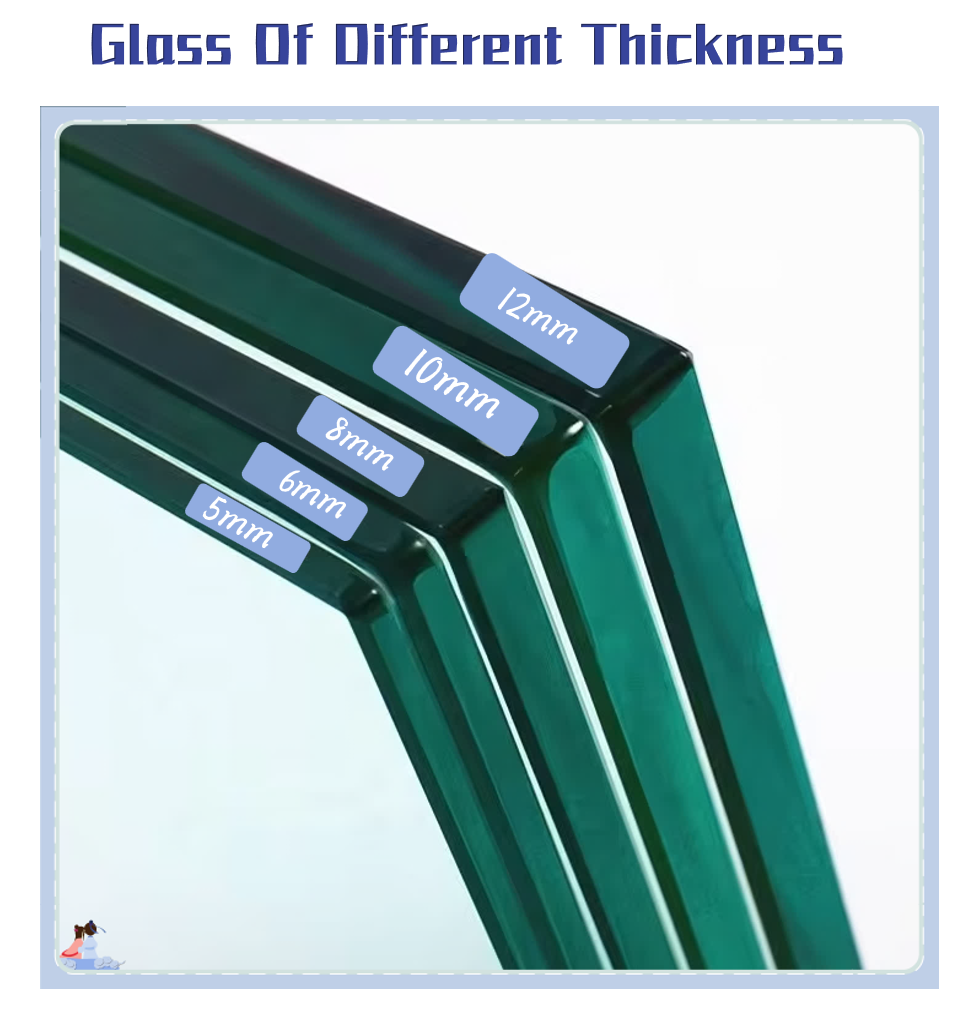
In architectural glass, thickness directly influences mechanical strength, deflection under wind load, sound insulation, thermal performance, and the maximum panel size a glass unit can safely achieve. A 6mm tempered panel and a 19mm tempered panel are not simply different sizes of the same product; they are different engineering materials with different load capacities and application envelopes.
For a glass processor, thickness also dictates how the glass behaves in tempering. The heating, quenching, and surface stress profile must be tuned for each thickness to achieve the required fragmentation and safety performance. This is one of the reasons why a manufacturer's documented technical capability matters as much as the glass itself.
Tempered Glass Product Range and Depth Options
KXGLASS produces clear tempered glass across a thickness range of 4mm, 5mm, 6mm, 8mm, 10mm, 12mm, 15mm, 19mm, 22mm, and 25mm. For the majority of building applications, the 6mm to 19mm range is the most relevant. The company reports the following tempering characteristics for its tempered glass product line:
- Safety classification: best
- Intensity: 150 MPa
- Thermostability: 250–320°C
- Surface stress: 95 MPa
- Broken state: obtuse-angle grain (small, relatively harmless granules)
- Self-destruction: sometimes (spontaneous breakage can occur, a known characteristic of tempered glass)
These parameters align with the general performance profile of tempered soda-lime silicate glass used in building envelopes, where the glass is expected to withstand higher thermal and mechanical loads than annealed glass.
6mm and 8mm Tempered Glass: The Door and Window Workhorses
6mm tempered glass is one of the most common specs for interior partitions, shower screens, and smaller door panels. The 6mm SGS test report held by KXGLASS (No. GZIN1806033811CM) confirms that the 6mm heat-soaked float toughened glass is tested as a CNAS/ilac-MRA accredited safety glass, applicable to the global market. For buyers, the practical meaning is that 6mm tempered glass can be verified for safety performance through an independent test body.
8mm tempered glass fills the gap between lightweight interior panels and heavier exterior glazing. It is a frequent choice for residential door assemblies, commercial interior glass walls, and smaller curtain wall infill panels where a reasonable balance between weight and strength is required.
10mm and 12mm Tempered Glass: The Structural Middle Ground
10mm tempered glass is widely used in storefronts, entrance doors, balustrades, and larger window openings. KXGLASS holds an SGS test report for 10mm heat-soaked float toughened glass (No. GZIN1806033816CM), also issued under a CNAS/ilac-MRA accredited safety glass test. Heat soaking is a quality measure designed to reduce the risk of nickel-sulfide-induced spontaneous breakage, making it relevant for overhead and safety-critical applications.
12mm tempered glass moves further into structural territory. It is a standard choice for frameless glass doors, heavy-duty shower enclosures, stair balustrades, and partition systems where edge loads and human impact are significant. In the KXGLASS range, 12mm sits between the lighter façade specs and the heavy structural 15mm and 19mm panels.
15mm and 19mm Tempered Glass: Heavy Structural and Façade Applications
15mm tempered glass is often specified for high-traffic entrance areas, structural glass fins, balustrades with long spans, and large-format door leaves. The KXGLASS 15mm heat-soaked toughened glass is covered by SGS test report No. GZIN1806033817CM-01, issued by SGS-CSTC Standards Technical Services Co., Ltd. GZ Branch Testing Center for the global market, based on a CNAS/ilac-MRA accredited safety glass test.
19mm tempered glass represents the heavy end of the standard architectural range. It is typically used for large-format structural glass, heavy doors, and highly demanding façade areas where deflection control, impact resistance, and security are critical. At this thickness, the self-weight of the glass becomes a serious design consideration, and hardware, framing, and transport logistics must be engineered accordingly.
Thickness Requirements for Doors, Windows, and Facade Systems
Each architectural application imposes a minimum performance threshold that is often translated directly into glass thickness:
| Application | Typical Thickness | Key Driver |
|---|---|---|
| Interior partitions / shower screens | 6mm–8mm | Human impact safety, cost, weight |
| Residential doors and windows | 6mm–10mm | Wind load, safety, hardware compatibility |
| Storefronts and commercial entrance doors | 10mm–12mm | Impact resistance, deflection, security |
| Balustrades and frameless glass | 10mm–15mm | Human load, edge load, long spans |
| Curtain walls and structural glazing | 10mm–19mm | Wind load, panel size, structural capacity |
| Large-format and high-security glazing | 15mm–19mm | Deflection limit, security, durability |
Heat-Soaked Tempered Glass: A Necessary Risk-Reduction Step
Heat soaking is an additional quality-control process applied to tempered glass to identify panels at risk of spontaneous breakage caused by nickel sulfide (NiS) inclusions. The glass is reheated to a defined temperature range and held there so that unstable inclusions expand and cause weaker panes to break in the factory rather than in service.
KXGLASS operates a Heat Soak Process Oven model CS-HST-1808, with a calibration report (No. J18-117-R01-180903) issued by JAS (Inspection & Testing) Ltd., applicable to the EU market under the BS EN 14179-1:2016 test standard. The company's SGS test reports for 6mm, 10mm, and 15mm heat-soaked tempered glass give buyers a verifiable basis for specifying heat-soaked product in safety-critical applications such as balustrades, overhead glazing, and high-traffic facades.
Converting Thickness into a Composite: Laminated and Insulated Glass
In most modern building projects, monolithic tempered glass is not the final product. It is combined into laminated or insulated glass units to meet acoustic, thermal, and safety requirements.
KXGLASS produces PVB laminated glass combining glass thicknesses of 5mm+5mm, 6mm+6mm, and 8mm+8mm, with interlayer thicknesses of 0.38mm, 0.76mm, 1.14mm, and 1.52mm. SGP laminated glass is also available in interlayers of 0.38mm, 0.76mm, 1.14mm, and 1.52mm. For the EU market, the laminated glass Declaration of CPD Conformity is issued by LABTEST under No. LBTC202006209S, with applicable standards EN ISO 12543-2-2011 and EN ISO 12543-3-2011.
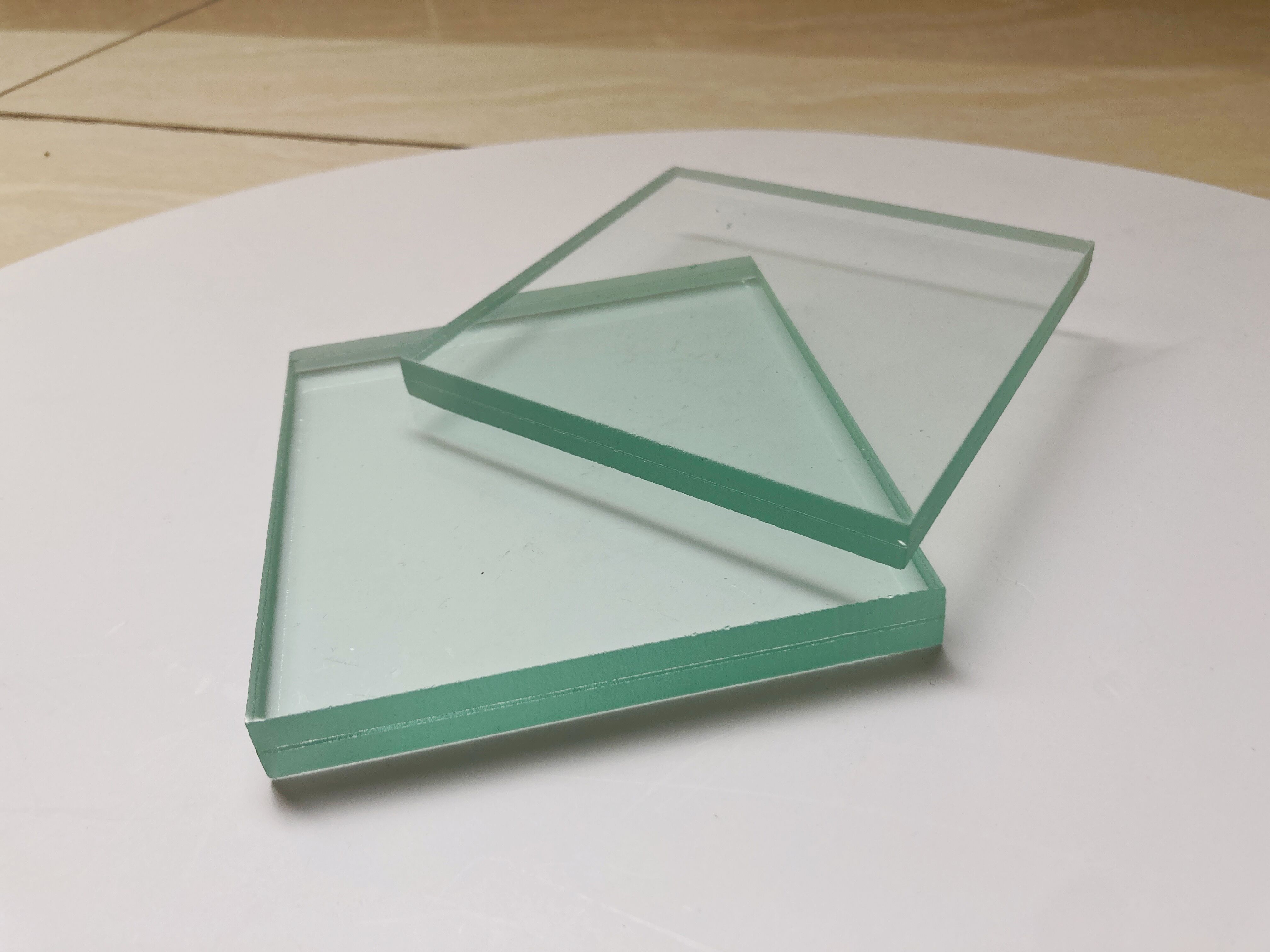
Insulated glass from KXGLASS is available with cavity widths of 6A, 9A, and 12A, producing double-glazed assemblies that provide heat insulation, noise insulation, and lower self-weight for buildings compared with monolithic alternatives of equivalent performance. Insulated tempered glass is the default specification for modern windows, curtain walls, and facade systems in markets with stringent energy codes.
For a buyer, the key takeaway is that the base tempered thickness must be selected in the context of the final composite unit. A 6mm+12A+6mm insulating unit and a 12mm monolithic panel have completely different structural behaviors, despite sharing the same base glass thickness.
How to Use Thickness in Supplier Evaluation
When shortlisting tempered glass suppliers, thickness capability information should be treated as a minimum filter, not a differentiator. The evaluation questions that matter are:
- Does the supplier have documented test reports for the specific thickness you are procuring? (For example, 6mm, 10mm, or 15mm SGS reports.)
- Can the supplier provide heat-soaked tempered glass for safety-critical applications?
- Does the supplier offer the relevant certifications for your destination market, such as CE/EN12150 for Europe, SGCC for the US, or AS/NZS 2208 for Australia?
- Can the supplier process the glass further into laminated or insulated units without changing the traceability chain?
- What is the stated production capacity and lead time for your target thickness and volume?
KXGLASS: A Supplier Profile for Thickness-Specific Sourcing
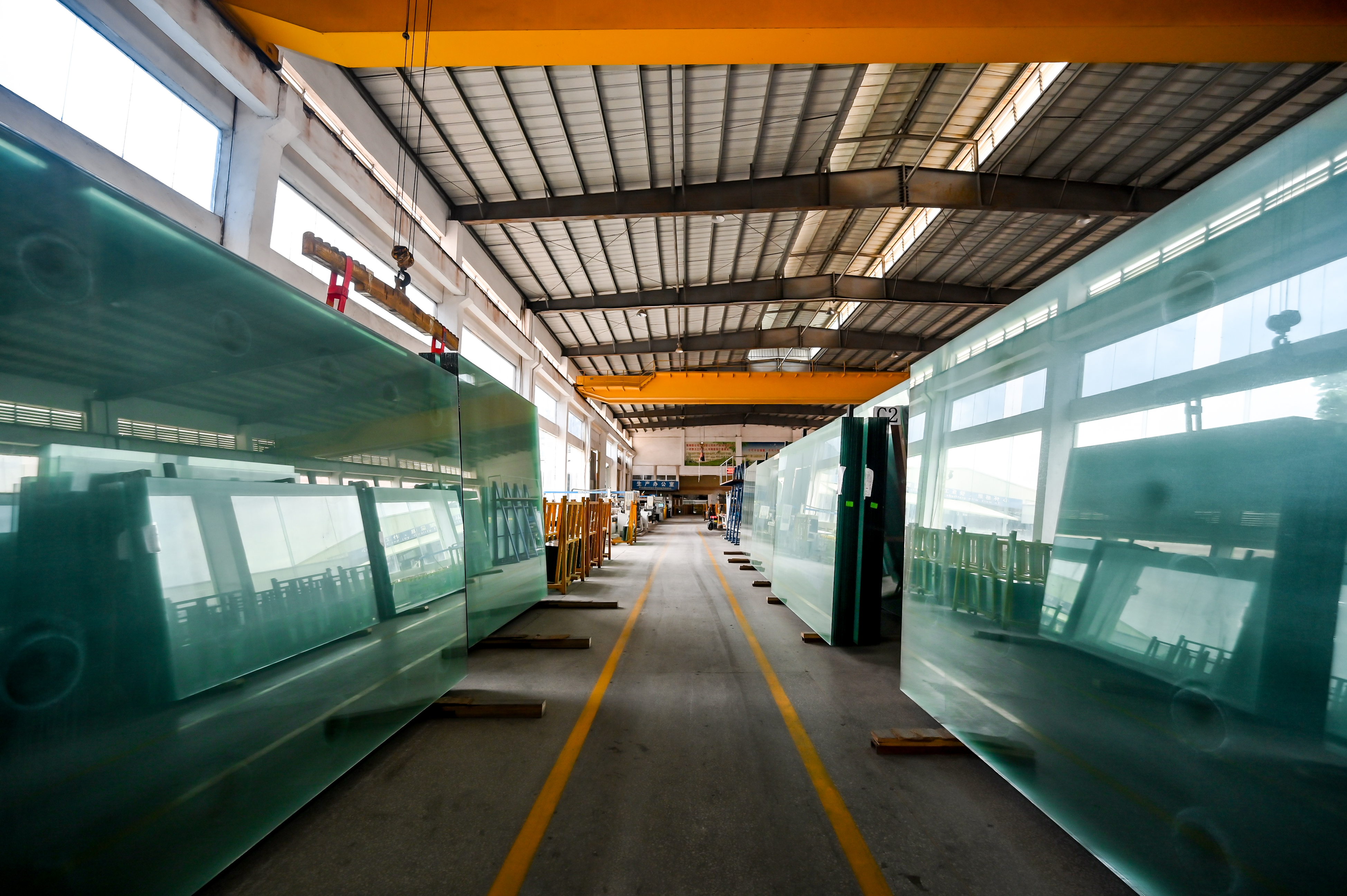
Dongguan Kunxing Glass Co., Ltd (KXGLASS) is a modern industrial and trading enterprise based in Dongguan, in the Guangdong-Hong Kong-Macao Greater Bay Area, specializing in the deep processing of glass. Founded in the early 1990s, the company occupies a 30,000 m² facility and has annual output of 1,825,000 m² of single tempered glass, 365,000 m² of laminated glass, and 730,000 m² of insulated glass.
The company reports a monthly production capacity of 100,000 m², lead times of 15–20 days, a MOQ of 100 m², and a 5-year return and replacement after-sales policy. Its export markets include the EU, the US, the Middle East, and Southeast Asia. KXGLASS states that it has passed ISO international certification and China national 3C certification, and meets international standards including European CE/EN12150, Australian AS/NZS 2208, and American SGCC.
Sourcing Considerations for International Buyers
International buyers evaluating Chinese tempered glass manufacturers should consider the following practical points:
- Certification alignment: Verify that the supplier's certifications correspond to the destination market, not just to a generic “global” claim. KXGLASS holds market-specific SGS reports for global and EU markets, plus SGCC for the US.
- Heat soak availability: For facade and overhead applications, heat-soaked glass is considered a risk-reduction step. The calibration report covering the CS-HST-1808 oven indicates that KXGLASS operates a calibrated heat soak process line.
- Composite processing: A supplier that can temper, laminate, and insulate in-house offers a shorter supply chain and clearer responsibility for quality. KXGLASS's annual capacity data covers all three process families.
- Logistics and packaging: Heavier 15mm and 19mm glass requires careful packing to avoid corner and edge damage. Buyers should discuss packaging and loading details with the factory before order confirmation.
Project Evidence Across Building Applications
KXGLASS has supplied tempered and processed glass across multiple project types internationally. In Vietnam, a municipal government project used insulated glass and silkscreen printing glass for airport curtain walls, with reported outcomes including color stability of ≥85%, safety performance, and surface hardness of Mohs 6. In Australia, OEM clients used insulated and laminated glass for mall building walls and Build-to-Rent facades, with reported results of stable structural performance (≥85%), relative energy savings of ≥65%, and noise reduction of 60–70%. In the UAE, KXGLASS glass was used in mall skylights and curtain walls, with reported safety performance of ≥3500 Pa and service life of 2–10 years.
These project references illustrate the type of applications that 6mm to 19mm tempered glass supports when processed into insulated and laminated units. They do not replace the need for project-specific engineering.
Limitations and Boundaries Buyers Should Accept
Tempered glass has known limitations that no supplier can fully eliminate. Spontaneous breakage, while reduced by heat soaking, can still occur. Tempered glass cannot be cut or drilled after processing; all fabrication must be completed before tempering. Surface stress of approximately 95 MPa means the glass is strong under bending but sensitive to edge damage and point loads, especially at thicknesses below 10mm.
At very large panel sizes, the maximum available thickness and the tempering furnace dimensions impose physical limits. For oversized or load-bearing structural glass, buyers should expect that the design, hardware, and installation method will require more engineering input than the glass supply alone.
Decision Framework: Matching Thickness to Project Requirements
A practical workflow for thickness selection is:
- Define the applicable building code and destination-market safety standard.
- Calculate wind load, deflection limits, and human impact requirements for the specific panel size and location.
- Determine whether the glass must be monolithic, laminated, or insulated.
- Select the thinnest base glass that satisfies structural and safety requirements to control cost and weight.
- Confirm that the supplier has tested production capability for that specific base thickness.
- Assess whether heat soaking is advisable for the application and whether the supplier operates calibrated heat soak equipment.
Future Outlook for Tempered Glass Thickness Specifications
The global tempered glass market was valued at USD 112.21 billion in 2024 and is projected to reach USD 159.27 billion by 2033, according to Grand View Research. Asia Pacific accounted for 59.9% of revenue in 2024, reflecting the region's urbanization and infrastructure investment. Plain tempered glass contributed 64.5% of market revenue in the same year, a reminder that the baseline product remains the core of the market. These numbers support a broader trend: as building codes tighten and projects demand larger glass panels, the specification of thicker and heat-soaked glass in composite units is likely to grow, while the commodity end of the market continues to consolidate around efficient manufacturers.
FAQ
What are the standard thicknesses available for KXGLASS tempered glass?
KXGLASS offers tempered glass in 4mm, 5mm, 6mm, 8mm, 10mm, 12mm, 15mm, 19mm, 22mm, and 25mm thicknesses. For architectural door, window, and facade applications, the 6mm to 19mm range is most commonly specified.
Is 10mm tempered glass tested by an independent body?
Yes. KXGLASS holds an SGS test report for 10mm heat-soaked float toughened (tempered) glass under certification number GZIN1806033816CM, issued by SGS-CSTC Standards Technical Services Co., Ltd. GZ Branch Testing Center. The test is based on a CNAS/ilac-MRA accredited safety glass test, applicable to the global market.
Does KXGLASS supply 15mm heat-soaked tempered glass?
Yes. The 15mm heat-soaked toughened glass product has an SGS test report under number GZIN1806033817CM-01, issued by SGS-CSTC Standards Technical Services Co., Ltd. GZ Branch Testing Center, based on a CNAS/ilac-MRA accredited safety glass test and applicable to the global market.
What international certifications does KXGLASS hold?
KXGLASS reports that it has passed ISO international certification and China national 3C certification, and meets international standards including European CE/EN12150, Australian AS/NZS 2208, and American SGCC. SGCC certification applies to tempered and laminated safety glass for the US market under standards ANSI Z97.1-2009, CPSC 16 CFR 1201, and CAN/CGSB 12.1 (COMP+CAN).
What laminated glass interlayer thicknesses are available?
KXGLASS produces laminated glass with PVB interlayer thicknesses of 0.38mm, 0.76mm, 1.14mm, and 1.52mm. SGP laminated glass is available in the same interlayer range. For the EU market, the laminated glass product is certified under EN ISO 12543-2-2011 and EN ISO 12543-3-2011.
Download the KXGLASS company brochure (PDF) for an overview of the company, certifications, and product capabilities.