
Ten Years, 10,000+ Tons: Judging BOPP Thermal Film Supply
Ten Years, 10,000+ Tons: Judging BOPP Thermal Film Supply
Supplier capacity in BOPP thermal lamination film is usually described in round numbers, and round numbers are hard to check. A cumulative tonnage becomes useful evidence only when it is tied to a specific product, a specific type of customer and a specific period. SHKFILM (Shandong Shunkai Composite Material Co., Ltd.) records its supply history in that form: more than 10,000 tons of no-primer BOPP base film (product 6544) supplied over more than ten years to thermal lamination film manufacturers in Brazil, South Korea, India, Iran and Japan; 1,000,000 m² of specialty base film (product 6623) applied in soft-touch and anti-scratch lamination work in India and South Korea; and 2,500 tons of product 6647 delivered over nine years to distribution customers in South Korea, the Netherlands and Italy.
This article reads those figures the way a packaging buyer or converter should: what each record covers, how the products behind it differ technically, what the documentation supports, and which parts of capability still have to be verified on your own press and substrate.
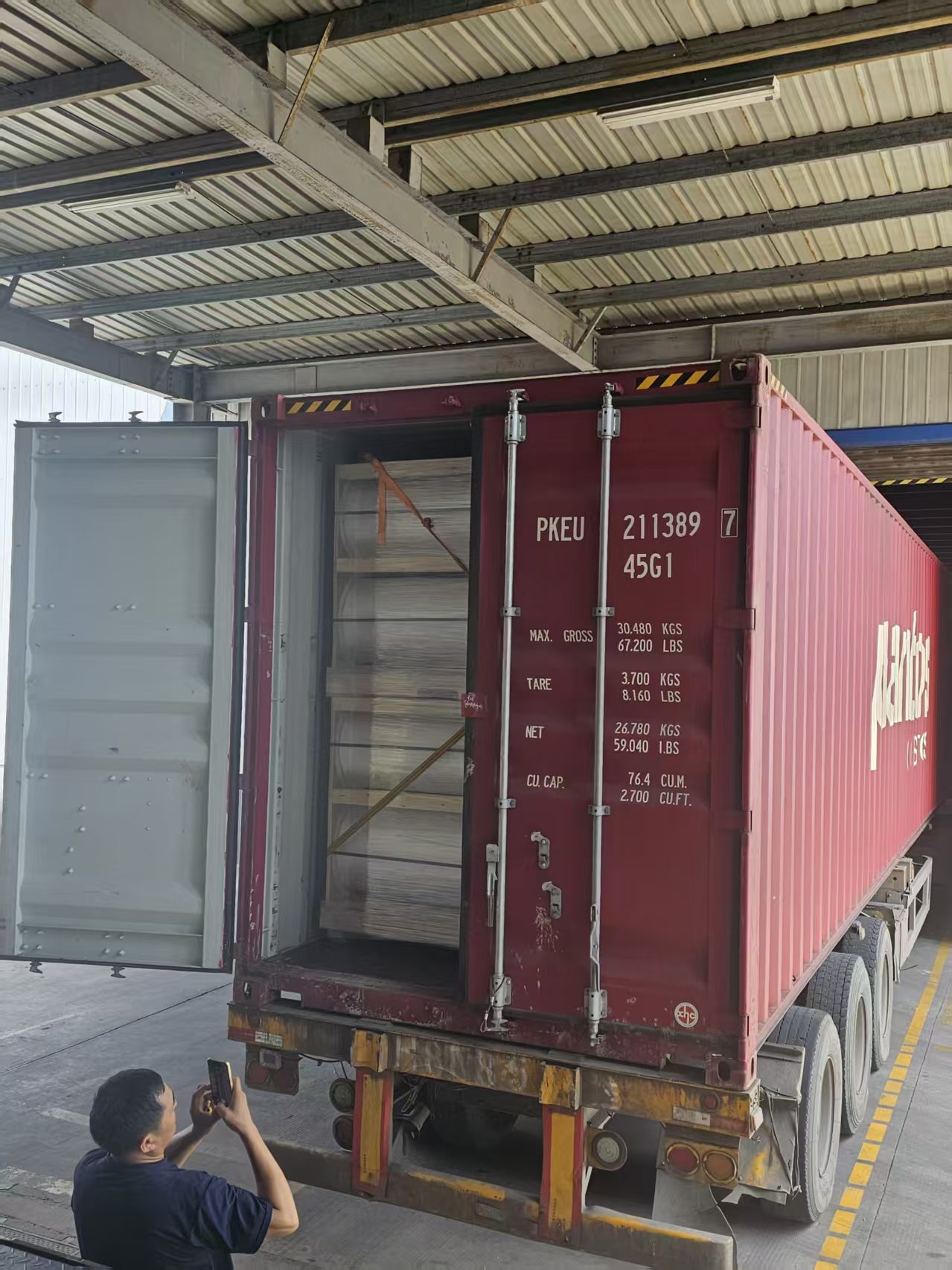
No-primer BOPP base film (product 6544) staged for export loading. The ten-year base film record is a shipping record as much as a production record.
What a cumulative tonnage does and does not prove
Tonnage is an output measure, not a quality measure. A supplier can accumulate 10,000 tons within a single season of commodity gloss film, or across a decade of base film that survives downstream coating. The number becomes decision-useful only when three attributes are attached to it: product identity, customer type and elapsed time.
For a buyer, the practical consequence is that a supply record is evidence of process stability and commercial durability. It is not evidence of adhesion strength, scuff resistance or running speed on a particular laminator. Those properties come from construction, specification and trial results, and they have to be qualified grade by grade and machine by machine.
The three records below are useful precisely because they differ. One concerns an upstream base film sold to film manufacturers, one concerns a specialty film used in premium print work, and one concerns a distribution relationship running for nine years.
The supply record in three parts
Read together, the records describe a chain that runs from base film extrusion to finished lamination film, with the same factory supplying both ends.
| Product | Recorded volume | Customer type and markets | Duration | What the record supports |
|---|---|---|---|---|
| 6544 — no-primer BOPP base film | More than 10,000 t cumulative | Thermal lamination film manufacturers; Brazil, South Korea, India, Iran, Japan | More than 10 years | Stable coating performance and consistent finished-film quality across repeat supply |
| 6623 — specialty base film | 1,000,000 m² applied; a separate 30 t distribution project | Printing and packaging company, thermal lamination film manufacturers; India, South Korea (30 t project: South Korea, Italy, Sri Lanka) | 2 years | Stable performance during subsequent EVA coating; consistent soft-touch and scratch-resistant results |
| 6647 — BOPP matte film for wet lamination | 2,500 t cumulative | Lamination film distributors; South Korea, Netherlands, Italy | 9 years | Smooth lamination, reliable adhesion, stable processing, high flatness after lamination |
| 6615 — standard thermal lamination film (supporting) | 300 t per year | Lamination film distributor; Brazil, Italy | 1 year on record | Stable lamination quality with reliable bonding and a smooth surface finish in commercial printing |
Product 6544: more than 10,000 tons of no-primer base film to film manufacturers
The largest record concerns product 6544, a no-primer BOPP base film designed for extrusion coating. Cumulative supply to thermal lamination film manufacturers has exceeded 10,000 tons over more than ten years, with customers recorded in Brazil, South Korea, India, Iran and Japan.
Customer type is the distinction that matters. These buyers are not end users of laminated paper; they are film manufacturers running their own coating operation. A base film survives that environment only if coating performance holds batch after batch, which is the outcome recorded here: stable coating performance and consistent finished-film quality. The recorded functional benefit is process-side — primer-free construction simplifies the coating process and reduces the steps that must be controlled before the adhesive layer is applied.
A ten-year record across five markets also says something a capacity figure cannot: it implies repeat orders, export documentation that clears customs repeatedly, and a specification that has not been re-engineered out of the range between shipments.
Product 6623: one million square metres in soft-touch and anti-scratch work
The second record covers specialty film. Around 1,000,000 m² of product 6623 has been applied in India and South Korea across two-year projects, with clients including a printing and packaging company using the film for premium printed packaging and high-end printed materials, and a thermal lamination film manufacturer producing soft-touch and anti-scratch films.
Two outcomes are recorded. At converter level the film performed stably during subsequent EVA coating, which is where a functional base film either holds its surface or fails; the recorded result is consistent quality in the finished specialty film. At print level the recorded result is enhanced appearance with consistent soft-touch or scratch-resistant performance on the laminated sheet.
Product 6623 also appears in a smaller distribution record: 30 tons supplied over two years to commercial printing and packaging customers in South Korea, Italy and Sri Lanka, where the recorded highlights were a velvet-like tactile effect, scratch resistance and compatibility with high-speed laminating machines.
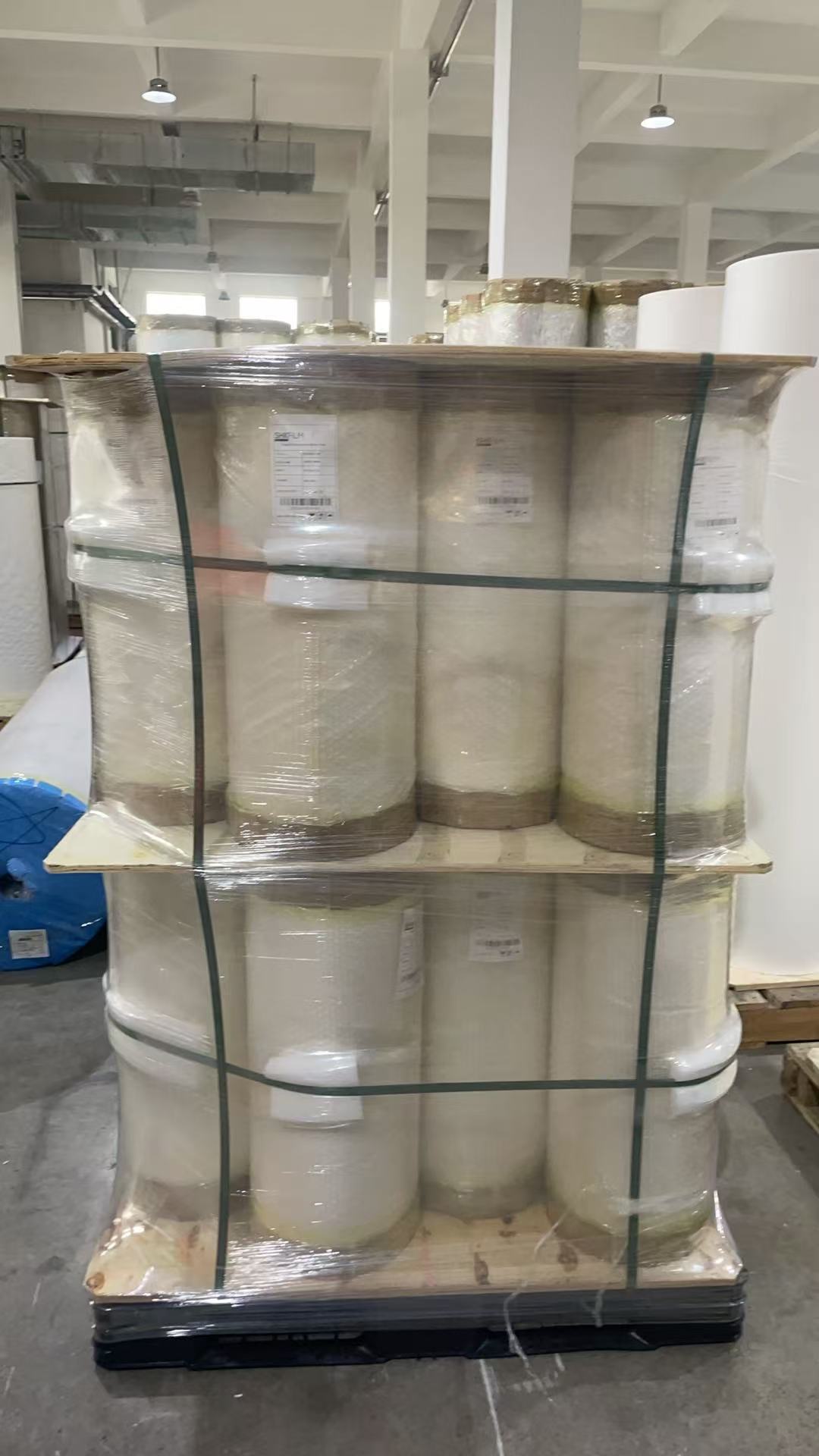
Specialty lamination film for soft-touch and anti-scratch surfaces, the product family behind the 1,000,000 m² application record.
Product 6647: nine years and 2,500 tons through distribution
The third record is the longest in duration and the most commercially conventional: 2,500 tons of product 6647 supplied cumulatively over nine years to lamination film distributors in South Korea, the Netherlands and Italy.
Distributors buy against resale risk, so the recorded feedback is operational rather than promotional — smooth lamination, reliable adhesion and stable processing performance, high flatness after lamination, and adaptability across different paper substrates and high-speed laminating equipment. Product 6647 is a BOPP matte film for wet lamination that is also used as base film for thermal film coating, which is why a nine-year distribution record is relevant whether a buyer is qualifying a wet lamination material or an upstream substrate.
A shorter record supports the same theme at finished-film level: a distributor in Brazil and Italy purchases 300 tons per year of standard BOPP thermal lamination film (product 6615) and reports stable lamination quality with reliable bonding and a smooth surface finish in commercial printing applications, with recorded highlights of compatibility with high-speed laminating machines, adhesion and optical clarity.
Where the tonnage comes from: the production assets behind the record
SHKFILM, headquartered at No.9 Shengcheng Road, Sishui Economic Development Zone, Shandong Province, China, was founded in August 2010 and operates two BOPP film production lines imported from Brückner (Germany). The site covers 146,667 m², employs 235 people including an R&D team of 10 engineers, and runs at an annual capacity of 30,000 tons, equivalent to 3,000 tons per month. The company reports an export ratio of about 70% and annual sales revenue of RMB 500 million, with exports to the Netherlands, Brazil, Italy, Greece, India, South Korea, Japan and Iran.
The structural point for buyers is integration within the no-primer segment: all finished thermal lamination films are produced on base film made in-house, according to company statements. That closes the distance between the 10,000-ton base film record and the finished-film records — the same chain appears at both ends rather than being assembled from purchased substrate.
Customisation runs across the portfolio rather than sitting at a single point: thickness from 12 to 32 micron (base film 12 and 15 micron, thermal film 17–25 micron, specialty film 18–32 micron), roll width from 200 mm to 2,580 mm, roll length from 2,000 m to 18,100 m, 3-inch or 6-inch cores, single- or double-sided corona treatment, gloss, matte, soft-touch and anti-scratch finishes, private label, and export packaging in vertical pallet, horizontal pallet suspension or standard carton format.
Technical fit: where a no-primer base film changes the process
A no-primer base film removes one coating layer and one coating process from the converter's line. Compared with conventional primer-coated thermal lamination film, the recorded effect is a reduction in primer-related process control requirements and fewer storage and handling issues such as blocking and static-related problems.
The supporting specification on product 6544 is documented: thicknesses of 12 and 15 micron, roll widths from 300 mm to 2,580 mm, roll lengths of 9,100 m, 12,100 m and 18,100 m, 3-inch (76 mm) and 6-inch (152 mm) cores, gloss and matte finishes, and outside-surface corona treatment of at least 38 dyne. In extrusion-coating use the substrate is supplied unprimed and optimised for inline EVA hot-melt extrusion without primers or drying ovens, with minimal crystal points and black spots.
That is also where the boundary sits. A no-primer base film is an input for converters who already run extrusion coating, high-speed slitting and corona treatment; it is not a substitute for finished thermal film on a standard hot-roll laminator. Buyers without coating capability should specify finished film — product 6615 for high-volume book covers, folding cartons and printed leaflets, or the specialty range where surface feel and scuff resistance are required. Separately, thermal lamination itself eliminates the separate adhesive application step used in wet lamination, reducing process steps and simplifying adhesive preparation, coating and cleaning; wet lamination remains the appropriate route where the job calls for it, which is why product 6647 continues to be supplied as a wet lamination material.
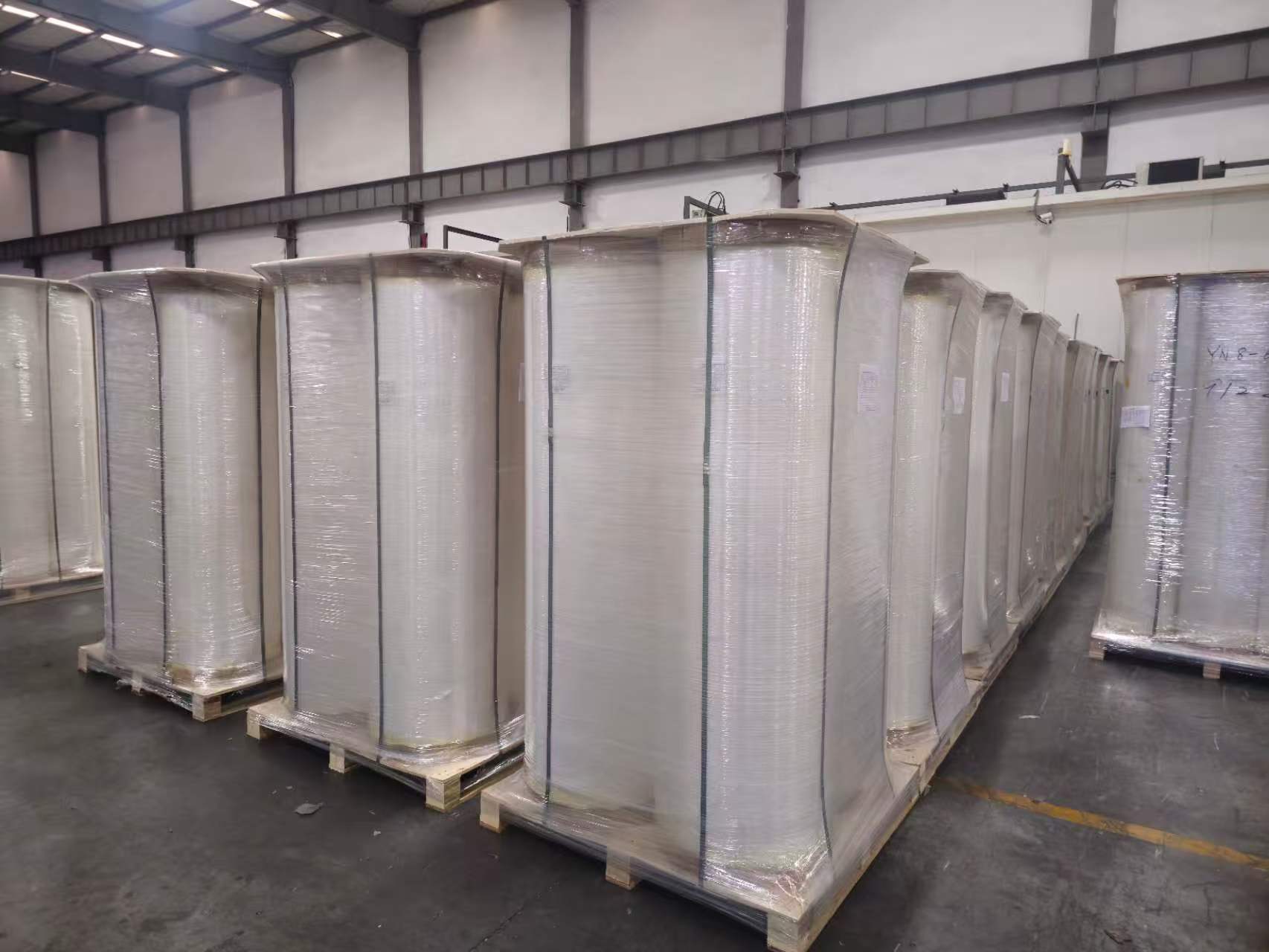
No-primer base film is supplied unprimed with outside corona treatment of at least 38 dyne for inline EVA extrusion coating.
Application map: matching product to printed job
The portfolio separates by job type, and the separation matters at quotation stage because a request for "BOPP thermal lamination film" can mean four different articles.
| Product | Construction | Documented applications | Selection note |
|---|---|---|---|
| 6544 | No-primer BOPP base film, 12 and 15 micron | Anti-blocking substrate procurement, high-whiteness and non-yellowing film sourcing, cost-efficient projects; inline EVA extrusion coating | Specify when you coat in-house and want one process step removed |
| 6615 | BOPP thermal lamination film, gloss and matte | High-volume book covers, standard folding cartons, printed leaflets; high-speed laminating machines | Specify for conventional print finishing at volume |
| 6623 | BOPP specialty lamination film, thermal or wet type | Cosmetic and perfume boxes, high-end smartphone packaging, wine packaging, luxury book covers; also functional base film for soft-touch and anti-scratch film production | Specify where tactile finish and surface protection are written into the job |
| 6647 | BOPP matte film, wet lamination category | Conventional wet lamination material projects; base film sourcing for thermal film coating | Specify for wet lamination lines and matte finishing |
Compliance and documentation a buyer can check
Scale without documentation is hard to qualify, so the relevant question is which certificates exist, what they cover and when they expire.
Food contact and quality management: BRCGS Global Standard for Packaging Materials, Issue 7 (October 2024), certificate CN19/10136 issued by SGS, valid from 15 January 2026 to 31 January 2027, covering production — extrusion, stretching, rewinding and slitting — of BOPP film from PP resin for direct and indirect food contact. ISO 9001:2015 certificate 57626Q00025R201, ISO 14001:2015 certificate 57626E00021R101 and ISO 45001:2018 certificate 57626S00018R101, all issued 9 February 2026 and valid to 8 February 2029 through Qingdao Wanhui Inspection and Certification. The company also lists QS Food certification.
Customs and trade: Advanced Certified Enterprise (AEO) certificate A4202580, issued by Qingdao Customs of the People's Republic of China on 13 July 2026 and valid to 1 December 2030, covering the company's import and export of manufactured plastic films and laminating materials, with mutual recognition in the EU, North America, the UK, Singapore, South Korea, Japan and more than 50 countries and regions. For buyers running repeat import programmes, AEO status is a documentary signal about customs process control, not about film performance.
Material safety: SGS test reports dated March 2026 cover REACH SVHC (report CANEC26006197603, against the candidate list of 253 substances), the RoHS Directive (EU) 2015/863 (CANEC26006197601), halogen content under EN 14582:2016 (CANEC26006197605) and VOC content under GB 33372-2020 (CANEC26006194201 and CANEC26006194203). These reports are recorded against the BOPP specialty lamination films in thermal type — ordinary and super anti-scratch gloss and matte, soft-touch anti-fingerprint, 3-in-1 anti-scratch/soft-touch/anti-fingerprint, biodegradable and peelable film. A buyer specifying base film or standard thermal film should request the report that applies to that grade rather than assuming the specialty scope transfers.
Market context: broad substrate growth, narrow product evidence
Two published figures frame the substrate market. AMI Plastics reports global BOPP film demand at nearly 11 million tonnes in 2025, forecast to grow at more than 3% CAGR through 2030; IMARC Group values the global BOPP films market at USD 24.4 billion in 2026. Both refer to BOPP film as a category, not to thermal lamination film specifically, and neither should be read as a market size for this product.
Their practical use is narrower. They indicate a substrate market that is still expanding, which is consistent with converters continuing to add coating capacity — the customer type behind the 10,000-ton base film record. What the published data does not establish is the size, growth rate or supplier concentration of the thermal lamination film segment itself, so volume assumptions should rest on your own demand and on supplier-specific capacity evidence such as monthly output, line count and lead time.
A verification sequence for any tonnage-based capability claim
The following sequence converts a supply claim into a qualification file. It applies to SHKFILM and equally to any alternative supplier making comparable statements.
- Split the tonnage. Ask for cumulative volume by product and by customer type — film manufacturer, converter, distributor, end user. A single aggregate figure cannot be audited.
- Attach markets and years. A record that names countries and a duration can be cross-checked against shipping documents and repeat-order history.
- Confirm where the base film is made. If finished thermal film is coated on purchased substrate, the base film record does not describe the film you are buying.
- Request the base film datasheet. Thickness, width, roll length, core diameter, treated side and corona level should be stated, together with the method used to measure the dyne value.
- Read certificate scopes, not logos. BRCGS CN19/10136 runs to 31 January 2027; ISO 9001, 14001 and 45001 to 8 February 2029; AEO A4202580 to 1 December 2030. Confirm the scope covers the product form you are buying.
- Ask for the grade-specific test report. Where scuff resistance, low-VOC content or food contact matters, ask for the report tied to that construction, with the standard and the result stated.
- Fix commercial terms in writing. MOQ depends on product type and specification and trial orders are accepted; lead time is 15–20 days; delivery is FOB, CIF or CFR; payment is T/T with 30% deposit and 70% before shipment, or L/C at sight; acceptance is inspection before shipment against agreed specifications.
- Run the film on your own line. Sample evaluation followed by a production trial is the only step that tests adhesion, speed and finish on your equipment and substrate.
- Check the tariff line locally. BOPP film is generally classified under HS heading 3920.20, with subheadings such as 39202020 or 39202090 applied differently between markets; confirm with your customs broker rather than importing a classification assumption.
- Record what stays unverified. Published records for this product range do not include standardised abrasion cycles, bond-strength values or lamination-window data, so any performance requirement should be written into the specification and confirmed at trial.
What the record implies for 2027 sourcing decisions
A ten-year, five-market base film record is evidence of durability, not a forecast. Its practical value for a buyer planning 2027 volumes is that it shortens the part of qualification concerned with continuity — whether a supplier has repeatedly cleared export markets, held a specification stable and kept coating customers in production. It does not shorten the part concerned with fit, which still depends on your press, your paper and your finish requirement.
If specialty finishes continue to spread from cosmetic and electronics packaging into wider folding-carton work, the constraint moves toward base film consistency and documentation rather than raw tonnage. Suppliers that can state which construction, which test report and which certificate scope applies to a given order will be easier to qualify than those that answer with a capacity figure alone.
Frequently asked questions
How much no-primer BOPP base film has SHKFILM supplied, and to whom?
Cumulative supply of product 6544 to thermal lamination film manufacturers has exceeded 10,000 tons over more than ten years, with customers recorded in Brazil, South Korea, India, Iran and Japan. These buyers coat the base film on their own lines, and the recorded outcomes are stable coating performance and consistent finished-film quality.
What is the difference between products 6544, 6615, 6623 and 6647?
Product 6544 is a no-primer BOPP base film supplied to converters for EVA extrusion coating. Product 6615 is a standard BOPP thermal lamination film in gloss or matte, used for high-volume book covers, folding cartons and printed leaflets. Product 6623 covers BOPP specialty lamination films for soft-touch, anti-scratch and anti-fingerprint surfaces used in cosmetic, electronics, wine and luxury book packaging. Product 6647 is a BOPP matte film for wet lamination, also used as base film for thermal film coating.
Which base film specifications can a buyer specify?
For the no-primer base film series, thickness options are 12 and 15 micron, roll width ranges from 300 mm to 2,580 mm, roll lengths are 9,100 m, 12,100 m and 18,100 m, core diameters are 3 inch (76 mm) and 6 inch (152 mm), and outside-surface corona treatment is at least 38 dyne. Across the wider portfolio, thickness runs from 12 to 32 micron and roll width from 200 mm to 2,580 mm, with single- or double-sided corona treatment.
Does a no-primer base film remove the need for a primer coating line?
It removes one primer coating layer and one primer coating process, which reduces related process steps and simplifies production control, and it helps reduce primer-related storage and processing issues such as blocking and static. It does not remove the need for extrusion coating equipment, corona treatment and slitting: the film is an unprimed substrate designed for inline EVA hot-melt extrusion without primers or drying ovens.
What documentation is available for supplier qualification?
Documentation includes BRCGS certificate CN19/10136 valid to 31 January 2027, ISO 9001:2015, ISO 14001:2015 and ISO 45001:2018 certificates valid to 8 February 2029, AEO Advanced Certified Enterprise certificate A4202580 valid to 1 December 2030, and SGS reports on REACH SVHC, RoHS, halogen content under EN 14582:2016 and VOC content under GB 33372-2020 issued in March 2026 for the BOPP specialty lamination film range. Grade-specific reports should be requested for other constructions.
What are the ordering terms for export buyers?
MOQ depends on product type and specification, and trial orders are accepted. Lead time is 15–20 days. Delivery terms are FOB, CIF or CFR. Payment terms are T/T with 30% deposit and 70% balance before shipment, or L/C at sight. Acceptance is based on inspection before shipment against agreed specifications.
Company profile and full product specifications: SHKFILM. The SHKFILM brochure (PDF) is available for download.
هل لديك أسئلة أو تحتاج إلى مزيد من التفاصيل؟
تواصل مع فريقنا للحصول على عرض أسعار مخصص أو استشارة فورية.
طلب عرض أسعار
املأ النموذج أدناه وسيتواصل معك فريقنا بعرض مقترح مخصص.
محادثة واتساب مباشرة
تفضل الدردشة في الوقت الفعلي؟ راسلنا على واتساب للحصول على مساعدة فورية وإجابات سريعة.
- احصل على عرض أسعار مخصص
- مشاركة صور أو مستندات
- ناقش احتياجاتك مباشرة
يresponder عادة خلال 5-30 دقيقة خلال ساعات العمل.