
Tenor Waste Incineration System: An Industry Reference
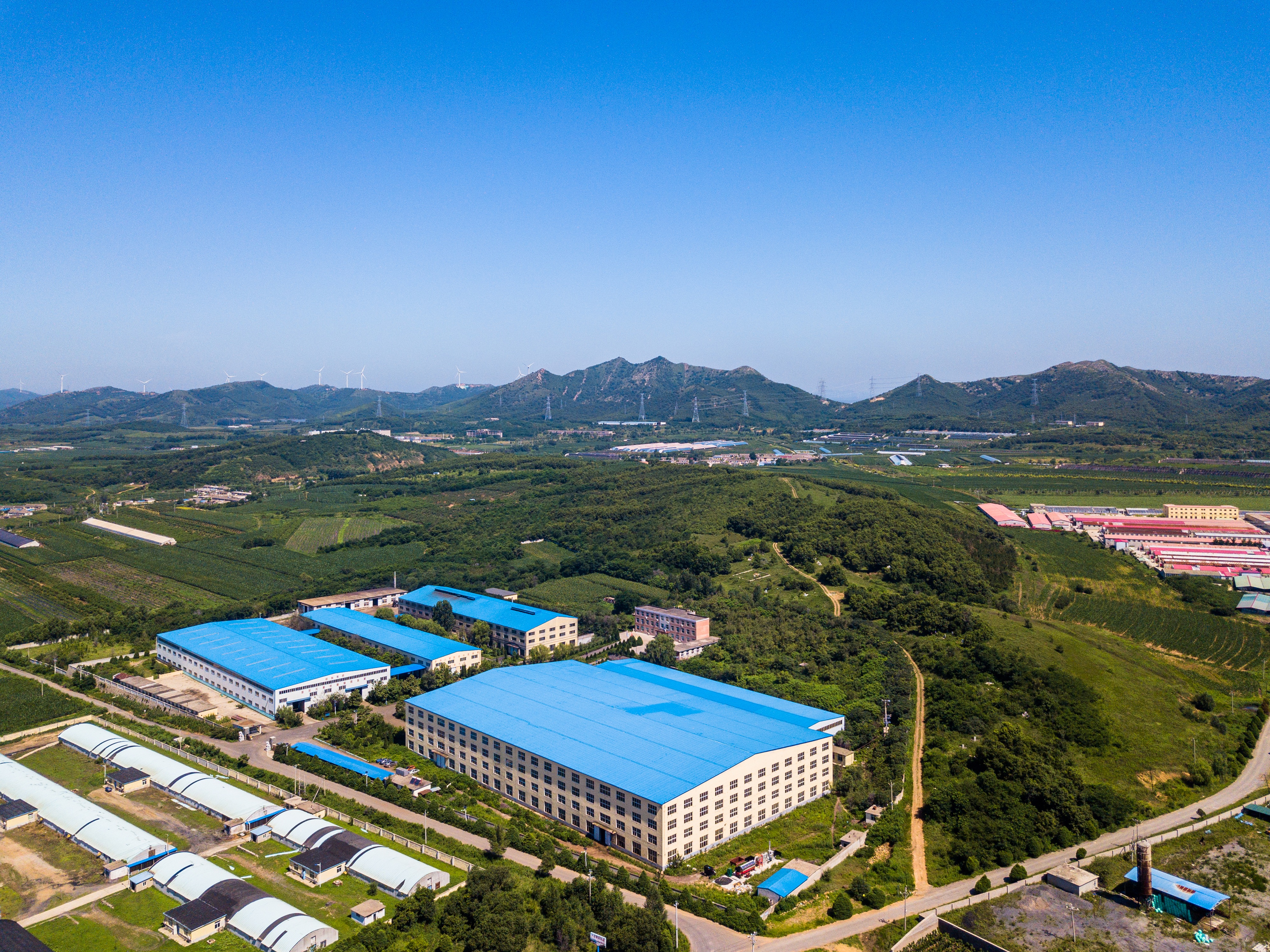
Manufacturing base, Wafangdian, Dalian — the production site behind the Tenor Waste Incineration System range.
In most procurement conversations, the phrase waste incineration system is used far too loosely. Under the European Industrial Emissions Directive, a plant only counts as compliant if the combustion unit is delivered together with acid gas removal, sorbent injection, particulate filtration, nitrogen oxide control and a continuous emission monitoring regime that follows the quality assurance rules of EN 14181. Strip any of those away and what remains is a furnace, not a permitted plant.
That single definition is the most useful screening tool a buyer has. It also explains why supplier capability is so difficult to compare on a product page: two offers may both claim EU emission compliance while containing fundamentally different amounts of abatement scope.
This reference examines one manufacturer operating inside that ambiguity. Tenor Low Carbon New Energy Technology (Liaoning) Co., Ltd. is a Chinese waste incineration equipment manufacturer based in Dalian, supplying complete small and medium-scale waste incineration systems in the 15–300 tonnes per day range under the Tenor Waste Incineration System brand. The analysis below concentrates on verifiable capability, the technical logic behind the design, the regulatory thresholds that determine what compliance actually costs, and the boundaries a buyer should test before shortlisting.
What a Waste Incineration System Physically Contains
A complete waste incineration system is a process line, not a single machine. The minimum functional chain runs from waste receipt through controlled combustion to ash discharge, with heat recovery and flue gas treatment bolted on according to the emission regime the plant must satisfy.
For the Tenor range, the disclosed module list covers a hopper, a hydraulic feeder, a reciprocating step grate, a combustion chamber, an ash hopper, a slag removal system, conveying equipment, and optional heat recovery and flue gas purification stages. Recovered heat can be routed to steam supply, district heating or power generation. Configuration is explicitly project-dependent rather than fixed at catalogue level.
Four sub-systems do most of the work in determining whether the plant meets its permit:
Combustion control governs temperature, residence time and turbulence. Grate design governs how completely the waste burns and how much unburnt material leaves in the slag. Flue gas treatment governs the pollutant limits that can be achieved. Continuous monitoring governs whether the resulting data is legally usable at all.
Why the 15–300 TPD Band Is the Real Demand Signal
The commercial pull is not in mega-plants. It is in the mid-band where centralised transport stops making economic sense.
In China, roughly 80% of county towns generate less than 200 tonnes of municipal waste per day, and long-distance haulage to a regional plant can cost two to three times the cost of local incineration. Local disposal at township and county level has consequently become standard planning practice, and equipment in the 15–300 t/d band has become the core procurement category. The same logic applies in island, remote and mountainous regions worldwide, where logistics rather than technology is the binding constraint.
Europe presents a different but complementary picture. Market Data Forecast estimated the European waste-to-energy market at USD 21.26 billion in 2026, with a projection of USD 37.11 billion by 2034. That growth is not purely new-build: the BAT conclusions adopted under Commission Implementing Decision (EU) 2019/2010 required permits to be reconsidered against updated BAT-associated emission levels within four years of publication, which creates a retrofit and upgrade cycle running alongside new capacity.
For equipment suppliers, this means two demand streams with different requirements: greenfield decentralised projects that need small modular capacity, and existing plants that need abatement and monitoring upgrades.
The Entity Behind the Brand
Tenor is not a recent start-up assembled around a trading operation. Its predecessor, Dalian Sunshine Boiler Auxiliary Equipment Co., Ltd., was established in 1998, giving the organisation a background in boiler auxiliary equipment before it moved into complete incineration systems. The current company is located in the Dalian University of Technology Industrial Incubation Park, with its production base in Wafangdian, Dalian, and works across design, manufacture, technology development and sale of complete waste incineration equipment.
Several verifiable attributes matter to a procurement assessment:
It is a National High-Tech Enterprise and participated in drafting the group standard T/CITS 242-2025, which places it inside the standards-setting conversation rather than outside it. R&D collaboration runs with Dalian University of Technology and the Dalian Institute of Chemical Physics, Chinese Academy of Sciences. Nominal output capacity is stated at 50 sets per year, and export share at 35%, with declared markets covering the EU, the USA, Southeast Asia, Vietnam and the Middle East.
Certification ownership is worth noting precisely, because it is often summarised loosely elsewhere. The CE and US EPA certificates are held by the wholly owned subsidiary Tenor Green Technology (Hong Kong) Ltd., not by the mainland manufacturing entity. For a buyer, that distinction is not a technicality: it determines which legal entity issues declarations, and it should prompt a check of exactly which product scope the certificates cover.
The Technical Core: Three-Stage Grate and 3T+E
Tenor manufactures three-stage reciprocating mechanical grate furnaces and does not produce gasification or pyrolysis equipment. The architecture is the mainstream choice for municipal solid waste, and the reasoning is straightforward: a mechanical grate tolerates waste of variable quality without front-end crushing or sorting, which matters when the feedstock is mixed household waste with an unstable calorific value.
The furnace is divided into drying, combustion and burnout stages. Each stage is driven by an independent hydraulic cylinder with its own air chamber, allowing segmented air distribution and stroke adjustment rather than a single fixed motion across the whole grate. In practice this lets the operator respond to shifts in waste composition and furnace load without changing the hardware.
Combustion quality is governed by the 3T+E principle: secondary combustion chamber temperature of at least 850 °C, flue gas residence time of more than two seconds, sufficient turbulence, and controlled excess oxygen. This is the same condition set written into EU legislation and into GB 18485 in China, and it is the mechanism by which dioxins and furans are destroyed rather than merely diluted.
Process flow of a 200–300 t/d configuration: feed, staged grate combustion, heat recovery and flue gas purification.
Two disclosed durability figures are directly relevant to operating cost. The grate plates are heat-resistant and wear-resistant cast steel with a stated annual damage rate of 1% or less, and heat loss on ignition is stated at 5% or less. Grate replacement is one of the recurring cost lines in any incineration plant, so a defined damage rate is a more meaningful number in a tender than a general claim about robustness.
Modular Construction and What It Changes
The systems are built from factory-prefabricated modules assembled on site rather than cast in place. This is not a cosmetic detail. On remote, high-altitude or island sites, civil construction is often the schedule bottleneck, and moving work into a controlled factory environment reduces both installation time and weather exposure.
The turnkey scope covers scheme design, equipment manufacturing, civil engineering coordination, complete set supply, installation, commissioning and operator training. Optional additions include a waste heat boiler, online flue gas monitoring and a negative-pressure enclosed plant building. Remote operation monitoring, spare parts supply and technical upgrades form the after-sales layer.
Capacity is offered through standardised modules rather than one bespoke design per project. The published model range is:
| Model | Rated capacity | Intended setting |
|---|---|---|
| TYDT-LJ-QH20 | 20 t/d | Compact modular unit, township domestic waste |
| TYDT-LJ-QH30 | 30 t/d | County-level domestic and mixed MSW |
| TYDT-LJ-QH50 | 50 t/d | MSW, general industrial solid waste, agricultural and forestry waste |
| TYDT-LJ-QH300 | 300 t/d (parallel units) | County-level centralised disposal |
The 50 t/d unit is listed at 12,800 × 2,430 × 7,040 mm with an installed power range of 7.5–75 kW. Flexible configuration across the 15–300 t/d span is available, and the company will supply either the grate body alone or undertake complete EPC scope depending on the project structure.
Compliance: What EU Emission Standards Actually Demand
Claims of EU emission compliance are only meaningful when they are read against the specific limit values and the operating condition that produces them. Under Directive 2010/75/EU, Annex VI, Part 3, the daily average limits for waste incineration plants are:
| Pollutant | EU daily average limit |
|---|---|
| Total dust | 10 mg/Nm³ |
| Hydrogen chloride (HCl) | 10 mg/Nm³ |
| Sulphur dioxide (SO₂) | 50 mg/Nm³ |
| Nitrogen oxides (NOx as NO₂) | 200 mg/Nm³ existing / 150 mg/Nm³ new, for nominal capacity above 6 t/h |
| Carbon monoxide (CO) | 50 mg/Nm³ |
| Cadmium and thallium, combined | 0.05 mg/Nm³ |
| Mercury | 0.05 mg/Nm³ |
| Sb+As+Pb+Cr+Co+Cu+Mn+Ni+V, combined | 0.5 mg/Nm³ |
| Dioxins and furans | 0.1 ng TEQ/Nm³ (6–8 hour sampling period) |
Alongside the limit values, the directive imposes an operating condition: flue gas must be raised, after the last injection of combustion air, in a controlled and homogeneous manner to 850 °C for at least two seconds. Meeting the pollutant table without holding that condition is not a realistic path, because dioxin formation is suppressed by temperature and residence time before abatement even begins.
One arithmetic detail deserves more attention in tenders than it usually receives. The 6 tonnes per hour threshold used to differentiate the NOx limit equates to approximately 144 tonnes per day at continuous operation. A product range spanning 50 to 250 t/d therefore straddles that threshold: 50 t/d corresponds to about 2.1 t/h, and 250 t/d to about 10.4 t/h. Two units from the same catalogue can sit in different regulatory sub-segments, which affects abatement scope, not just paperwork.
Energy recovery carries its own classification rule. Under Directive 2008/98/EC, the R1 formula determines whether an incineration plant performing energy recovery counts as a recovery operation, with an efficiency threshold of 0.65 for installations permitted after 31 December 2008 and 0.60 for earlier ones. This is why compliant waste-to-energy offers bundle a heat recovery boiler and an energy conversion block rather than treating them as optional extras: the legal status of the plant depends on how much useful energy leaves the site.
Monitoring closes the loop. EN 14181:2014 defines the QAL1, QAL2 and QAL3 quality assurance levels plus the annual surveillance test regime for automated measuring systems, while the EN 15267 series governs certification of those systems. In practical terms, an online emission monitoring package is not a display panel; it is a certification-driven sub-system with its own acceptance testing cost.
Jurisdiction matters as much as the number. GB 18485-2014 sets a dioxin limit of 0.1 ng TEQ/Nm³ for municipal solid waste incineration in China, numerically identical to the EU value but embedded in a different standard with different averaging periods and reference oxygen content. A design built to the Chinese baseline and then exported does not automatically satisfy Annex VI across the full pollutant table.
Where the Systems Are Actually Deployed
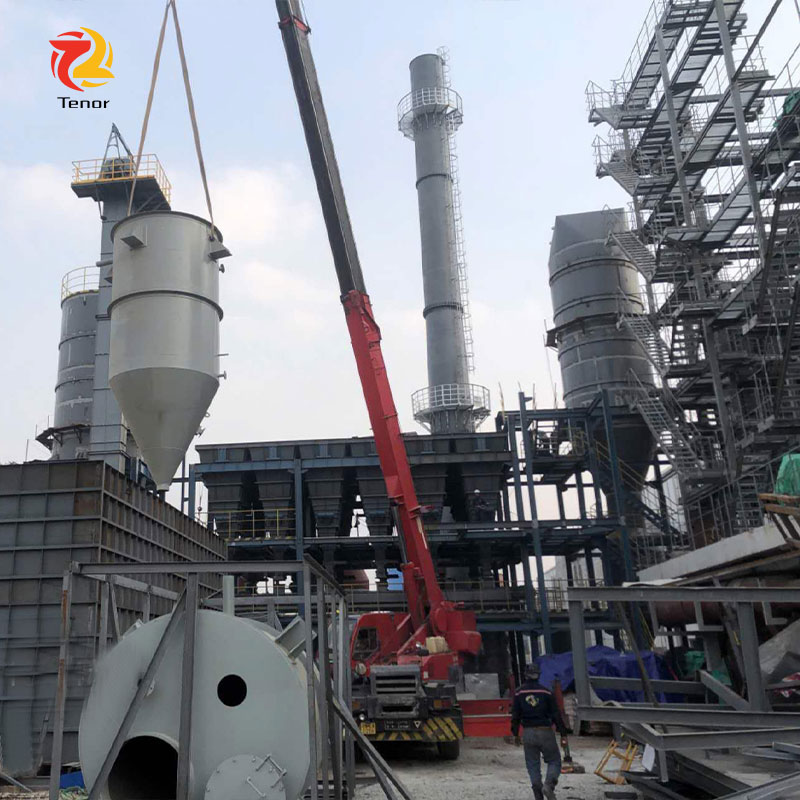
Three-stage reciprocating grate configuration for county-level municipal solid waste disposal.
The published application set is broader than municipal waste alone, and the design adaptations differ meaningfully between them.
Township domestic waste. Continuous operation with mixed MSW, typically in tropical or high-moisture climates. The matched configuration pairs a waste heat boiler with flue gas purification, and modular assembly is specified because rapid deployment is the constraint.
County-level centralised disposal. The QH300 parallel-unit arrangement, with deacidification tower, bag filter, activated carbon injection and CEMS as the matched abatement train, housed in an explosion-proof negative-pressure sealed building.
High-altitude and severe cold. At 60–70% of sea-level oxygen, an unmodified furnace cannot hold stable combustion. The high-altitude configuration uses dedicated furnace reconstruction plus multi-stage air distribution to achieve self-sustaining combustion. The reference is the 50 t/d Mangya project in Qinghai, which is reported as operating stably.
General industrial solid waste. 24/7 continuous operation on mixed industrial waste in industrial park settings, with a complete flue gas purification system and IP65 protection specified for outdoor cable runs.
Agricultural and forestry waste. Low calorific value with strong seasonal fluctuation, handled through multi-stage air distribution and an extended drying stage.
Small-tonnage medical waste. Batch operation with negative pressure and a double combustion chamber. This is a dedicated unit, not a standard MSW furnace repurposed.
Marine and island waste treatment sits in a separate regulatory category. Shipboard incinerators fall under IMO resolution MEPC.244(66), the 2014 standard specification for shipboard incinerators, which is a type-approval regime distinct from land-based Annex VI limits. Buyers of island or vessel-mounted systems should expect separate certification evidence rather than a land-based compliance certificate.
A Procurement Framework for This Category
Because the same nominal capacity can be quoted with very different scope, the evaluation should be structured around seven questions rather than around price per tonne per day.
1. Is the offer a plant or a furnace? Establish the physical boundary of the abatement train. A quotation that lists combustion equipment without acid gas scrubbing, sorbent injection, filtration and NOx control is not comparable to a turnkey compliant system, regardless of headline capacity.
2. Which standard was the reference design built against? For a Chinese manufacturer exporting to Europe, the relevant question is what was added between the domestic baseline and the export version. GB 18485-2014 and Annex VI overlap on dioxins but diverge on averaging rules and reference conditions across the pollutant table.
3. Is capacity stated in tonnes per day or tonnes per hour? The two units map onto different regulatory thresholds. Tenders should fix one definition and state whether it is nominal rated capacity or expected operating throughput.
4. What is the grate durability commitment? A stated annual damage rate of 1% or less and an ignition heat loss of 5% or less are testable commitments. Ask for the basis: material specification, operating hours, waste composition assumptions.
5. Who carries the CEMS quality assurance cost? QAL2 calibration and annual surveillance testing are recurring obligations under EN 14181, not one-off commissioning items. Allocation of that cost belongs in the contract, not in post-commissioning negotiation.
6. Which legal entity issues the certificates? Where CE or EPA documentation is held by a subsidiary rather than the manufacturing entity, confirm the exact product scope covered and whether the certificate travels with the delivered equipment.
7. What does the service model actually include? Remote monitoring, spare parts supply, operator training and technical upgrades are standard scope here. The useful comparison is response time and parts availability for grate components specifically, since those wear.
Comparison with Conventional Approaches, and the Boundaries
Three incumbent approaches compete with a modular grate system in this capacity band, and each has a defensible niche.
Fluidised bed combustion achieves strong mixing and uniform temperature but requires crushing and pre-treatment of the feedstock, adding front-end equipment and operating complexity. For mixed municipal waste with a fluctuating calorific value, that pre-treatment requirement is a real penalty.
Pyrolysis and gasification units were deployed at small scale in some markets but have struggled with dioxin control on mixed municipal feedstock, and a number have been shut down for non-compliant flue gas. This is a technology-class limitation rather than a comment on any single supplier.
Centralised haulage to a large regional plant remains preferable where collection volumes are high and distances short. Its weakness is arithmetic: at low daily volumes the transport cost overwhelms the scale benefit.
The boundaries of the Tenor range deserve equal clarity, because they are the most common source of mismatch between buyer expectation and delivered scope.
Capacity ceiling. The catalogue concentrates on 15–300 t/d. Larger projects have been served through component supply rather than complete systems: the 600 t/d Vietnam reference is grate equipment for a larger plant, not a full EPC contract. Buyers seeking a single-supplier turnkey package above roughly 300 t/d should not assume equivalent scope.
Feedstock dependency. Suitability cannot be determined from a brochure. Waste composition, moisture content and calorific value require project testing, and the final configuration should be set against local emission regulations, energy recovery objectives, site conditions and grid connection requirements.
Waste stream exclusions. General industrial solid waste and agricultural and forestry waste are within scope, and a dedicated small-tonnage medical waste unit is available. Highly corrosive hazardous waste is explicitly not accepted.
Altitude is an engineering variant, not a checkbox. The high-altitude capability depends on a special furnace reconstruction and dedicated air distribution. It is a configured version validated in a specific reference project, and should be quoted as such.
No gasification product line. The company manufactures mechanical grate furnaces only. A buyer whose technical specification requires pyrolysis or gasification is outside this supplier's product scope entirely.
Future Outlook
Three structural trends are likely to shape how systems in this band are specified over the next several years.
First, the retrofit cycle created by the BAT conclusions will keep absorbing engineering capacity in Europe. Existing plants being upgraded to BAT-associated emission levels need additional NOx control, improved scrubbing and monitoring upgrades, which is a different commercial motion from new-build supply and rewards suppliers able to work on installed equipment.
Second, monitoring is becoming a qualification gate rather than an accessory. As certification regimes tighten, the CEMS package and its quality assurance obligations increasingly determine whether a plant can demonstrate compliance at all, which shifts weight in procurement towards suppliers who can deliver certified instrumentation with the combustion island.
Third, decentralisation continues. Where collection volumes stay below a few hundred tonnes per day, local disposal remains the economic answer, and demand for modular capacity follows. The competitive question in that segment is not who can build the largest furnace, but who can deliver a fully scoped compliant plant at small scale without diluting the abatement train.
Reference Document
The manufacturer publishes a technical introduction to its small and medium-scale waste incineration systems, covering configuration and module scope: Tenor small and medium-scale waste incineration systems — technical introduction (PDF).
Frequently Asked Questions
What is a waste incineration system?
A waste incineration system is an integrated process line that thermally treats waste to reduce its volume and, where configured, recover heat for steam, hot water or electricity. In its complete form it comprises waste feeding, a grate and combustion chamber, ash and slag removal, flue gas treatment, and continuous emission monitoring. Combustion control and flue gas treatment are used to manage potential pollutants; actual reduction rates, emissions and energy recovery depend on project-specific data.
What capacity range does a Tenor waste incineration system cover?
Standardised modules of 20, 30 and 50 tonnes per day are available directly, with flexible configuration across a 15–300 tonnes per day span. The company can supply the grate body alone or undertake complete EPC scope. Projects can start from 15–20 t/d, which suits local disposal at township level.
Does municipal waste need to be sorted before incineration?
No. Raw household waste can be fed directly into the furnace, and the design is intended for mixed waste with large fluctuations in calorific value. This avoids front-end sorting cost. The three-stage reciprocating grate with independently controlled sections and air supply accommodates those fluctuations; suitability for a specific waste stream still requires testing of composition, moisture and calorific value before configuration is fixed.
How does an EU-compliant system differ from a standard one?
The difference is abatement and monitoring scope rather than the furnace alone. Directive 2010/75/EU Annex VI sets daily average limits including 10 mg/Nm³ for dust, 10 mg/Nm³ for HCl, 50 mg/Nm³ for SO₂, 200 or 150 mg/Nm³ for NOx depending on plant status and capacity above 6 t/h, and 0.1 ng TEQ/Nm³ for dioxins and furans, alongside a mandatory 850 °C for at least two seconds operating condition. Meeting those values requires acid gas scrubbing, sorbent injection, particulate filtration, NOx control and certified continuous monitoring, so the compliant system is physically larger than an incinerator-only offer.
Can the system operate in high-altitude, low-oxygen conditions?
Yes, through a dedicated high-altitude version rather than a standard unit. Special furnace reconstruction combined with multi-stage precise air distribution is used for environments with only 60–70% of sea-level oxygen, and the configuration is reported as validated at the 50 t/d Mangya project in Qinghai. Because this is an engineered variant, it should be specified explicitly in the technical offer rather than assumed.
What does a complete system include beyond the furnace?
The module set covers a hopper, hydraulic feeder, stoker furnace, combustion chamber, ash hopper, slag removal system, conveying equipment, flue gas cleaning and heat recovery equipment, with the final configuration determined per project. Optional additions include a waste heat boiler for steam, heating or small-scale power generation, online flue gas monitoring, and a negative-pressure enclosed plant building. Turnkey scope covers scheme design, equipment manufacturing, civil engineering coordination, supply, installation, commissioning and operator training.
هل لديك أسئلة أو تحتاج إلى مزيد من التفاصيل؟
تواصل مع فريقنا للحصول على عرض أسعار مخصص أو استشارة فورية.
طلب عرض أسعار
املأ النموذج أدناه وسيتواصل معك فريقنا بعرض مقترح مخصص.
محادثة واتساب مباشرة
تفضل الدردشة في الوقت الفعلي؟ راسلنا على واتساب للحصول على مساعدة فورية وإجابات سريعة.
- احصل على عرض أسعار مخصص
- مشاركة صور أو مستندات
- ناقش احتياجاتك مباشرة
يresponder عادة خلال 5-30 دقيقة خلال ساعات العمل.