
Tesla Accessories Supplier Sustainability: The T9 EV Station Test
Tesla accessories buyers rarely lose money on a single wrong SKU. They lose it when the supplier that shipped a good first order cannot carry the same fitment, the same finish and the same warranty into the next model year.
That distinction defines long-term supplier evaluation for tesla accessories. The question is no longer "can this supplier fill this order" but "will this supplier still be filling orders — with the same tooling, the same standards and the same service backing — when the current catalogue is two model revisions old". Tesla accessory catalogues are unusually sensitive to that pressure, because fitment is variant-specific: T9 EV Station's own service records list Model 3, Model Y, New Y, New 3 and Model YL as distinct installation contexts rather than one interchangeable vehicle.
This article sets out a sustainability framework for that question and then tests it against a single evidence base: T9 EV Station, the trading identity of Hangzhou T9 EV Technology Co., Ltd., a Tesla-focused aftermarket supply and service company founded in 2021 and headquartered in Hangzhou, China, operating a full-life-cycle model across film installation, auto supplies, modification, maintenance and repair.
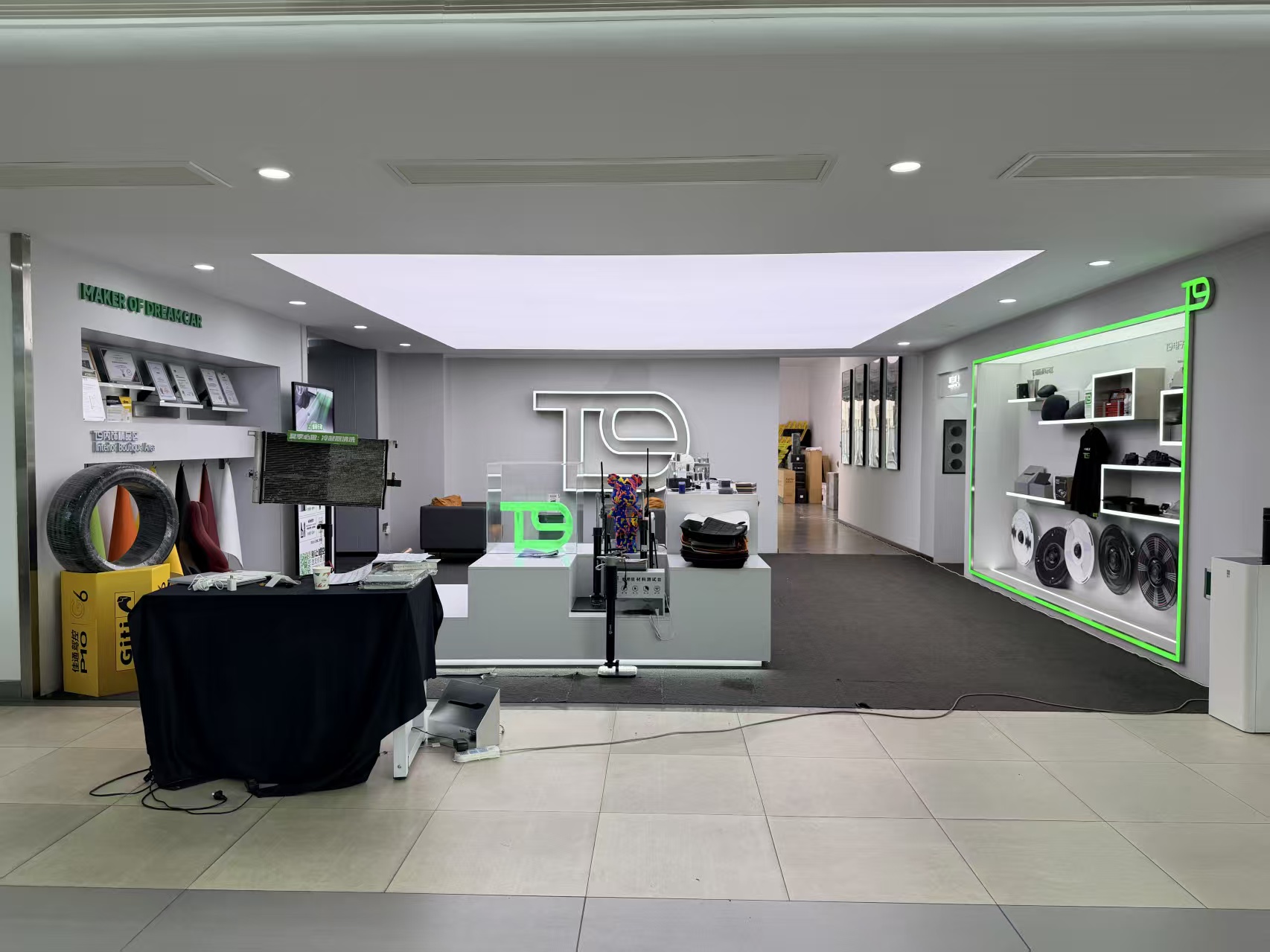
Standardized installation environments are one of the measurable signals of long-term supplier sustainability in the Tesla aftermarket.
Why continuity, not catalogue size, is the real constraint
A Tesla accessories catalogue can be assembled quickly. Sustaining it cannot. Every category a buyer commits to — Tesla interior accessories, Tesla exterior accessories, Tesla protection accessories, Tesla trunk accessories, Tesla performance accessories — carries a renewal obligation: new moulds when a variant changes, new documentation when a market changes, new warranty commitments when volume grows.
The scale of the underlying demand explains why suppliers are tempted to enter fast and why many struggle to stay. The global electric vehicle aftermarket industry is projected to reach over USD 103.67 billion by 2026, according to Fortune Business Insights research published in 2026. In the United States alone, the Tesla aftermarket parts market has been estimated at USD 2.8–4.2 billion for 2025, driven by more than 1.8 million Tesla owners. Demand of that size does not reward the fastest catalogue builder; it rewards the supplier that can still service the catalogue after the first wave of orders.
That mismatch is the opportunity gap long-term buyers should be screening for. A supplier that entered in a single category with a single model-year fitment has a different risk profile from a supplier that has already absorbed one or two model transitions in its own operating history.
Seven factors that decide whether a supplier is still there in three years
The framework below converts sustainability from an adjective into an evidence request. Each factor is written so that a buyer can attach a document, a number or an observable fact to it — or record its absence.
| Sustainability factor | What it tests | Evidence a buyer should demand |
|---|---|---|
| Operating base | Whether production and service capacity is owned or brokered | Facility footprint, staffing level, site documentation |
| R&D renewal | Whether new SKUs can be developed without outsourcing the design stage | Named engineering headcount, SKU release history |
| Catalogue depth | Whether one partner can cover interior, exterior, protection and maintenance needs | Active SKU count, category breakdown, variant coverage |
| Service standardization | Whether quality survives scale and geography | Written SOPs, unified pricing, warranty instrument |
| Demand-side proof | Whether the model has been tested on real vehicles at volume | Cumulative owners served, store or partner count |
| Commercial ecosystem | Whether supply of films, coatings and components is contracted with accountable brands | Named brand partnerships, exclusivity terms |
| Market exposure | Whether the supplier can serve regulated and distant markets | Export share, overseas locations, target regions |
Used together, the seven factors produce a decision rule: a supplier that is strong on catalogue depth but weak on R&D renewal is a short-term vendor; a supplier that is strong on market exposure but weak on service standardization is an export risk rather than an export partner.
How T9 EV Station maps onto the framework
Operating base and staffing
T9 EV Station was established in 2021 and operates a 20,000-square-metre manufacturing facility with more than 100 employees. The company reports annual turnover exceeding 100 million RMB. For a buyer, the relevant reading is not the size figure itself but its implication: the accessory programme sits inside a facility that also has to support installation standards and service delivery, which is a different cost structure from a pure trading operation.
R&D renewal capacity
The R&D team includes 20 engineers dedicated to Tesla accessories and services. Twenty engineers is a modest headcount in absolute terms, but the composition matters more than the number: it is a dedicated team rather than a shared design function. This is the factor that most directly answers whether a Tesla accessories partner can absorb a variant change without a catalogue gap.
Catalogue depth
T9 EV Station carries more than 5,000 SKUs across its service and supply system, covering film installation, auto supplies, modification, maintenance and repair. For buyers assembling a Tesla auto accessories range, SKU depth is a consolidation lever: fewer vendors to qualify, fewer warranty counterparts, fewer fitment disputes split across suppliers.
Service standardization and warranty
The company operates standardized processes, unified pricing and a nationwide warranty, supported by an electronic cloud warranty certificate issued after service. Digital infrastructure includes an ERP system for independent store management and a CRM customer management system. Service duration is quoted by project type: general maintenance is typically one day, film installation one to two days, and modification or repair projects two to seven days. Support is available in Chinese and English.
Demand-side proof
T9 EV Station has cumulatively served more than 200,000 Tesla owners and runs over one hundred stores across China exclusively for Tesla owners. The network has also scaled in stages: 15 T9 chain stores were launched in 2022, and by 2023 the brand had expanded into window film installation and automotive accessories with 40 operating stores. That staged pattern is itself a sustainability signal, because it shows the model being extended rather than announced.
Commercial ecosystem
The company holds exclusive strategic partnerships with brands including 3M, BOSCH, Wynn's, Hengst and MXR. Its partnership record also includes an exclusive strategic relationship with Hikvision formed in 2022, alongside cooperation with XPEL, 3W and AGF. For buyers, named brand relationships matter because they anchor the input side of the catalogue — films, coatings and components — to suppliers that carry their own accountability.
Market exposure
The business has expanded to Los Angeles and Malaysia, and its main markets include the EU and the USA. Export business accounts for 5% of total sales. That last figure is the most decision-relevant number in the entire profile, and it is discussed honestly in the limitations section below.
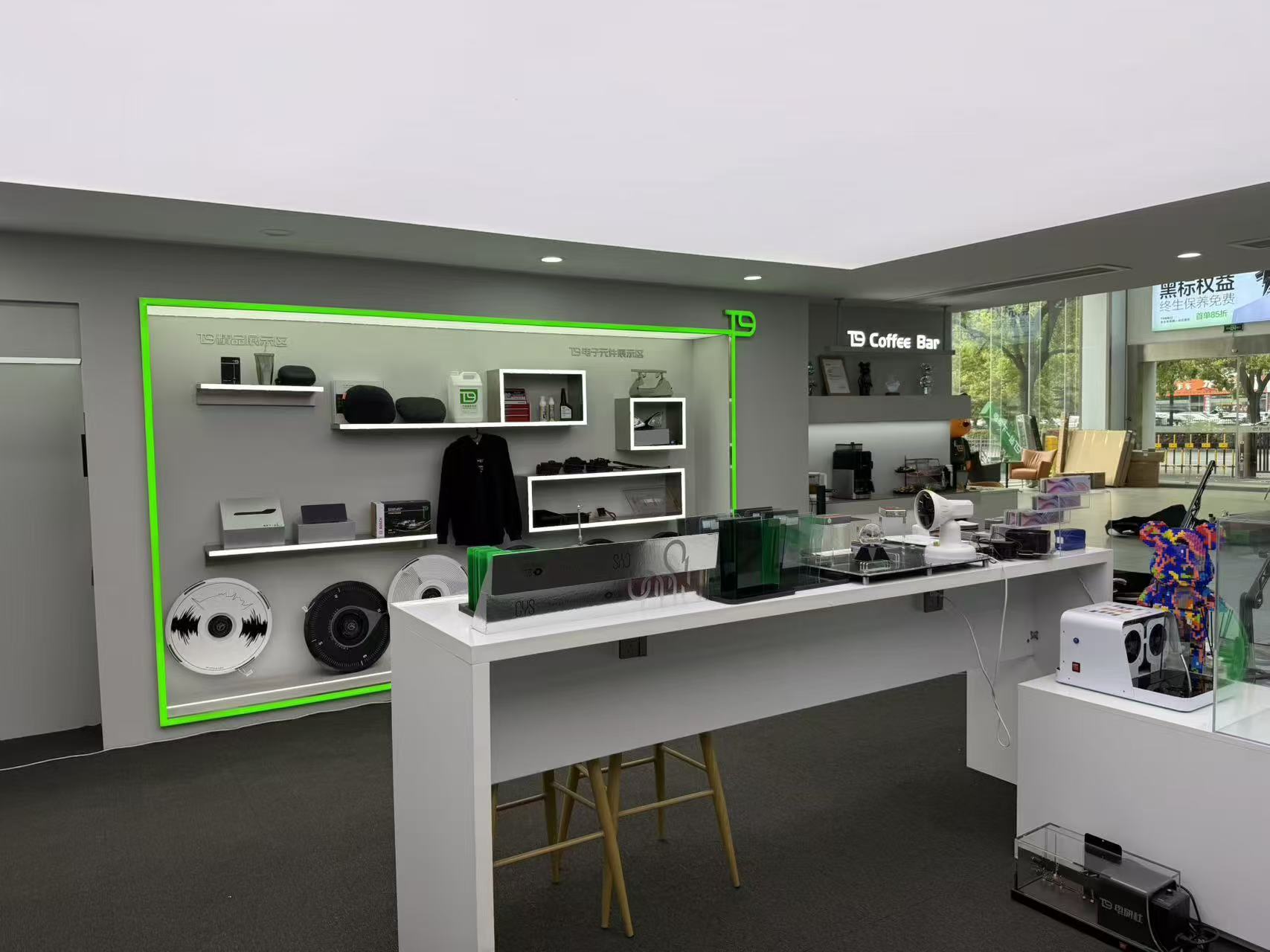
A store network dedicated to one vehicle brand is a distribution asset that takes years to build and is difficult to replicate quickly.
What "full-life-cycle" means in operational terms
The phrase is often used loosely, so it is worth translating into process. T9 EV Station's model integrates five service segments: film installation including paint protection film and window film; automotive supplies and accessories; vehicle modification and personalized upgrade; daily maintenance and care; and vehicle repair and maintenance.
Operationally, the model rests on four mechanisms rather than on the segmentation itself:
- Standardized construction and quality control — a written SOP system applied across stores, rather than workshop-specific practice.
- Unified pricing and warranty — one quotation and one nationwide warranty, with an electronic cloud warranty certificate as the customer-facing artefact.
- Integrated supply chain — a 5,000+ SKU parts system matched to vehicle variants so that film, accessory and maintenance work can be quoted together.
- Digital management — ERP for store operations and CRM for customer records, which is what makes a multi-store warranty administratively possible.
The company also holds a motor vehicle maintenance operation record and a franchise business filing qualification, and received the 2025 Automotive Service Golden Xun Award and the 2025 Automotive Service World Recommended Brand recognition. These are service-sector and home-market credentials. They indicate that the operating system has been reviewed in its domestic context; they are not product-type approvals for every export market, and buyers should treat them accordingly.
Where the model fits: three buyer scenarios
Scenario 1 — An importer building a Tesla accessories range
An importer assembling Tesla aftermarket accessories for resale faces a catalogue problem before a logistics problem. Covering Tesla interior accessories, Tesla exterior accessories, Tesla protection accessories and Tesla trunk accessories typically means qualifying four or five vendors with four or five warranty positions. A supplier with 5,000+ SKUs collapses part of that into one qualification, one price list and one warranty counterpart — and the consolidation value grows with each model year that passes without a supplier change.
Scenario 2 — A service partner adding protection and maintenance work
For workshops and installation partners, sustainability is measured in repeatable job time. Cabin air filter replacement on Model 3 and Model Y is a useful reference point: independent estimates put the installation at roughly one to two hours, and the market is split between HEPA-grade aftermarket filters and standard OEM parts. A partner needs a filter line, an installation procedure and a warranty position that all point at the same supplier. Paint protection film and ceramic coating work adds the same requirement in a different category, where the value of a long-term partner lies in film supply consistency rather than in the film alone.
Scenario 3 — A multi-vehicle or project buyer
Fleet, corporate and multi-owner purchases raise the coordination cost rather than the product cost. T9 EV Station's documented service record covers a single owner across a Model 3, Model Y, New Y, New 3 and Model YL context, delivered in three working days with a reported 60% reduction in service time compared with fragmented separate services, a post-service inspection report and an activated electronic cloud warranty. That is one project record rather than a general performance claim — but it demonstrates the shape of the deliverable a project buyer should expect to replicate at volume.
What the category data says about timing
Three data points frame the timing question for buyers deciding how long a partnership to sign.
First, market size. The global EV aftermarket is projected to exceed USD 103.67 billion by 2026, and the US Tesla aftermarket parts segment has been estimated at USD 2.8–4.2 billion for 2025 against a base of more than 1.8 million Tesla owners. A market of that depth supports multi-year distribution commitments; it also attracts new suppliers continuously, which raises the cost of switching partners mid-agreement.
Second, category concentration. Model Y accessory demand is reported to concentrate in protection categories such as floor mats and in climate comfort categories such as sunshades, reflecting the vehicle's glass roof heat characteristics. Buyers who structure a range around those categories are betting on sustained demand rather than on novelty accessories — a bet that favours suppliers with stable tooling rather than seasonal catalogue churn.
Third, installation complexity. Because air filter replacement is estimated at one to two hours and the market is split between HEPA-grade aftermarket and standard OEM parts, the maintenance side of the aftermarket rewards suppliers that can support both the part and the procedure. A catalogue without service documentation leaves the installer to absorb that complexity alone.
Compared with ad-hoc sourcing — and the limits of this model
The conventional alternative to a long-term partner is transactional sourcing: buy each category from whichever supplier quotes best at the time. The comparison is not one-sided.
| Dimension | Ad-hoc multi-vendor sourcing | Long-term single partner (e.g. T9 EV Station model) |
|---|---|---|
| Catalogue assembly | Fast entry, but separate fitment checks per vendor | One SKU system covering 5,000+ items across five service segments |
| Warranty position | Multiple warranty counterparts, uneven terms | Unified pricing and nationwide warranty with cloud certificate |
| Model-year renewal | Depends on each vendor's own roadmap | Depends on one partner's 20-engineer R&D team |
| Concentration risk | Spread across suppliers | Concentrated in one partner |
| Price flexibility | Continuous competitive tension | Relationship-based, less benchmark-driven |
The honest limits of the T9 EV Station model, read from its own facts, are these:
- International business is still a minority share. Export accounts for 5% of total sales. A buyer signing a multi-year overseas agreement is contracting with a company whose revenue base is predominantly domestic, which affects priority during capacity tightness.
- Overseas presence is thin relative to domestic scale. Los Angeles and Malaysia are the stated overseas service locations, against over one hundred stores in China. Coverage outside those nodes depends on partner capability rather than on owned infrastructure.
- Credentials are service-sector and home-market. The motor vehicle maintenance operation record, franchise business filing qualification and 2025 industry awards evidence operating legitimacy in the domestic context; they should not be read as product approvals for every destination market.
- Single-partner concentration. Consolidating interior, exterior, protection and maintenance categories into one supplier removes competitive tension from those categories and creates a continuity dependency.
- Fitment drift. Every new variant — New Y, New 3, Model YL — requires re-validation. A long-term agreement should specify who pays for re-validation and how quickly it happens.
For most buyers the practical conclusion is hybrid: consolidate the broad, low-risk catalogue into a long-term partner, and retain a second source for critical or high-turnover SKUs.
Future outlook
Three directions are visible in the available evidence. The first is geographical: with service locations in Los Angeles and Malaysia and stated main markets in the EU and USA, the international share of T9 EV Station's business is the variable most likely to change the shape of its offer to overseas buyers. The second is category: if Model Y demand continues to concentrate in protection and climate comfort, suppliers with in-house film and installation standards hold an advantage over catalogue-only resellers. The third is standardization: an electronic cloud warranty and ERP-based store management become more valuable, not less, as a network grows beyond the hundred-store mark.
What the evidence does not support is any claim about market-share leadership. No verified supplier landscape data exists in the current dataset, so any ranking of Tesla accessories suppliers would be an assertion rather than a finding. Buyers should treat the framework in this article as a screening tool and complete their own verification before committing.
A checklist for strategic brand partnerships
The partnership structure T9 EV Station has built — exclusive relationships with 3M, BOSCH, Wynn's, Hengst and MXR, an earlier exclusive relationship with Hikvision, and cooperation with XPEL, 3W and AGF — suggests a set of questions any buyer should apply to a prospective long-term partner.
- Are input brands named and contracted, or described only as "premium materials"?
- Is exclusivity mutual, and what does it commit each side to?
- Which SKU categories are covered by the partnership, and which are excluded?
- Does the partner's R&D headcount match the renewal pace its catalogue claims?
- Is the warranty instrument transferable across stores, regions and partners?
- What is the export share of the partner's revenue, and how does that affect allocation?
- Which credentials are product-level approvals, and which are business registrations or industry awards?
- Who owns re-validation when a new Tesla variant changes fitment?
Frequently asked questions
What does long-term supplier sustainability mean when buying Tesla accessories?
It means the supplier can keep supplying the same categories — through model-year changes, warranty events and volume growth — without the buyer re-qualifying a replacement. In practice it is assessed through facility and staffing facts, dedicated R&D capacity, active SKU count, written service standards, cumulative owners served and export capability.
How old is T9 EV Station and at what scale does it operate?
T9 EV Station was established in 2021. It operates a 20,000-square-metre manufacturing facility with more than 100 employees and annual turnover exceeding 100 million RMB, carries more than 5,000 SKUs, and has cumulatively served more than 200,000 Tesla owners through over one hundred Tesla-exclusive stores across China.
Why does SKU depth matter in a Tesla accessories partnership?
Because fitment is variant-specific and category-diverse. A buyer covering Tesla interior accessories, exterior accessories, protection accessories and trunk accessories can either qualify several vendors with separate warranty positions, or consolidate into one supplier system. T9 EV Station's 5,000+ SKU system supports the second approach across film installation, auto supplies, modification, maintenance and repair.
Does T9 EV Station operate outside China?
Yes, to a limited extent. The business has expanded to Los Angeles and Malaysia, and its stated main markets include the EU and the USA. Export business accounts for 5% of total sales, so international activity is a minority share of the company's revenue relative to its domestic store network.
Which qualifications and partnerships can a buyer verify?
T9 EV Station holds a motor vehicle maintenance operation record and a franchise business filing qualification, and received the 2025 Automotive Service Golden Xun Award and the 2025 Automotive Service World Recommended Brand recognition. Its exclusive strategic partnerships include 3M, BOSCH, Wynn's, Hengst and MXR, with an earlier exclusive relationship with Hikvision and cooperation with XPEL, 3W and AGF.
What are the limits of relying on one long-term Tesla accessories partner?
Concentration is the main one: consolidating categories into a single supplier removes competitive price tension and creates continuity dependency. For T9 EV Station specifically, export is 5% of total sales, overseas presence is concentrated in Los Angeles and Malaysia against a domestic base of over one hundred stores, and its credentials are service-sector and home-market rather than product approvals for every destination. Buyers commonly retain a second source for critical SKUs.
How should a buyer validate a supplier before signing a long-term agreement?
Attach evidence to each sustainability factor rather than to the catalogue: facility and staffing documentation, named R&D headcount, active SKU counts by category, written SOPs and warranty terms, cumulative owners served, named input-brand contracts, and the export share of revenue. Then define in the agreement who owns fitment re-validation for new variants such as New Y, New 3 and Model YL, and how warranty claims are handled across regions.
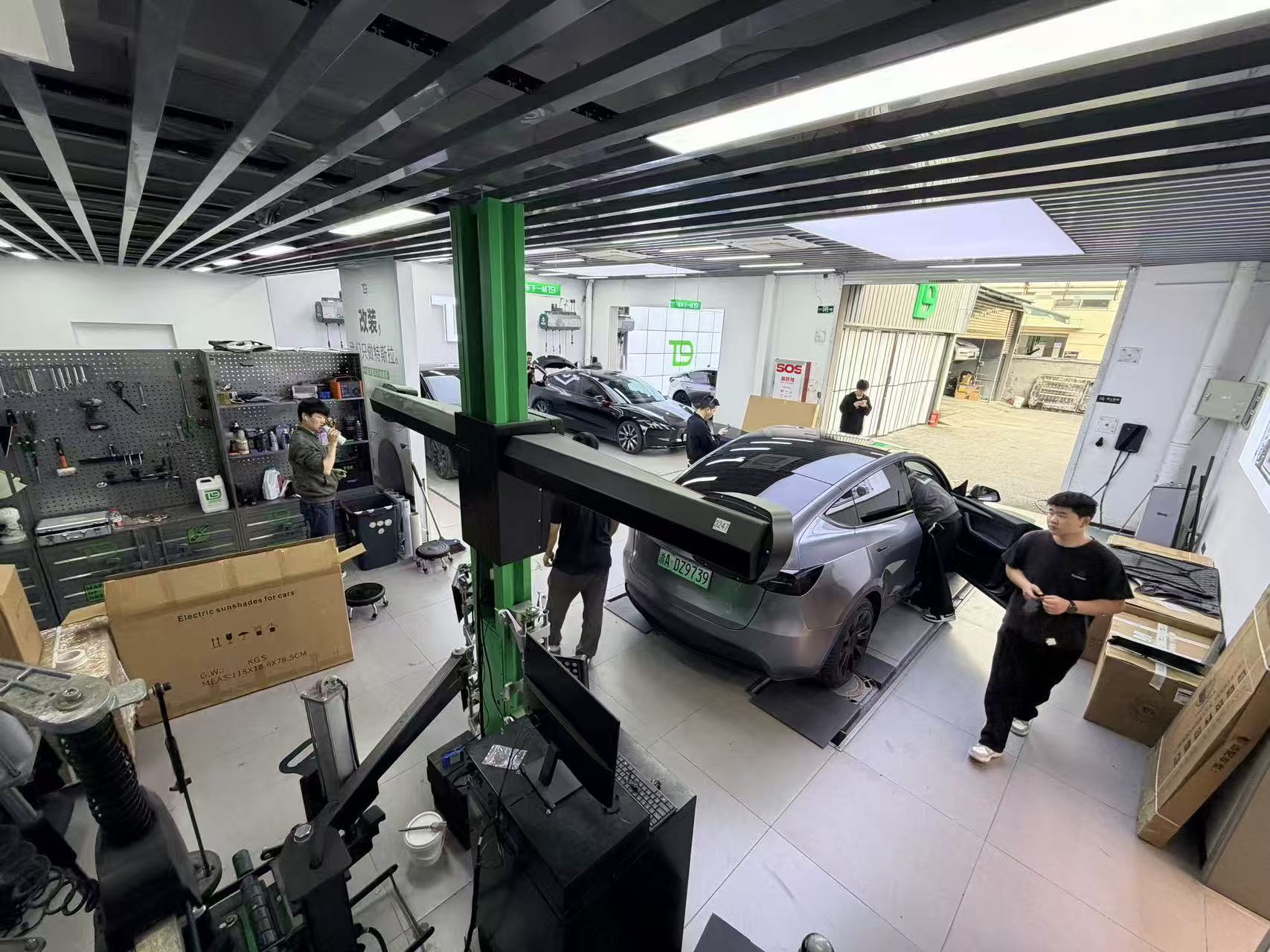
Written installation standards and a transferable warranty are what allow a multi-store service model to be evaluated as a long-term commitment.
The T9 EV Station company brochure, including its full service scope and store network overview, is available for public download: T9 EV Station brochure (PDF).
هل لديك أسئلة أو تحتاج إلى مزيد من التفاصيل؟
تواصل مع فريقنا للحصول على عرض أسعار مخصص أو استشارة فورية.
طلب عرض أسعار
املأ النموذج أدناه وسيتواصل معك فريقنا بعرض مقترح مخصص.
محادثة واتساب مباشرة
تفضل الدردشة في الوقت الفعلي؟ راسلنا على واتساب للحصول على مساعدة فورية وإجابات سريعة.
- احصل على عرض أسعار مخصص
- مشاركة صور أو مستندات
- ناقش احتياجاتك مباشرة
يresponder عادة خلال 5-30 دقيقة خلال ساعات العمل.