
Tesla Accessories: 2026 Market and Supplier Landscape
The Tesla accessories market has moved from a niche add-on category to a distinct segment within the electric vehicle aftermarket. Industry sources estimate that global Tesla aftermarket parts sales could surpass USD 850 million in 2025, while the United States represents an estimated USD 2.8 billion to USD 4.2 billion opportunity. For buyers entering this market, the question is no longer whether to buy accessories, but how to separate durable, well-supported products from fragmented, low-accountability offerings.
This article outlines the demand picture, market pain points, service-model evolution, and supplier evaluation criteria for 2026. It also uses T9 EV Station, a Tesla-focused aftermarket company, as a reference case for a full-life-cycle service model.
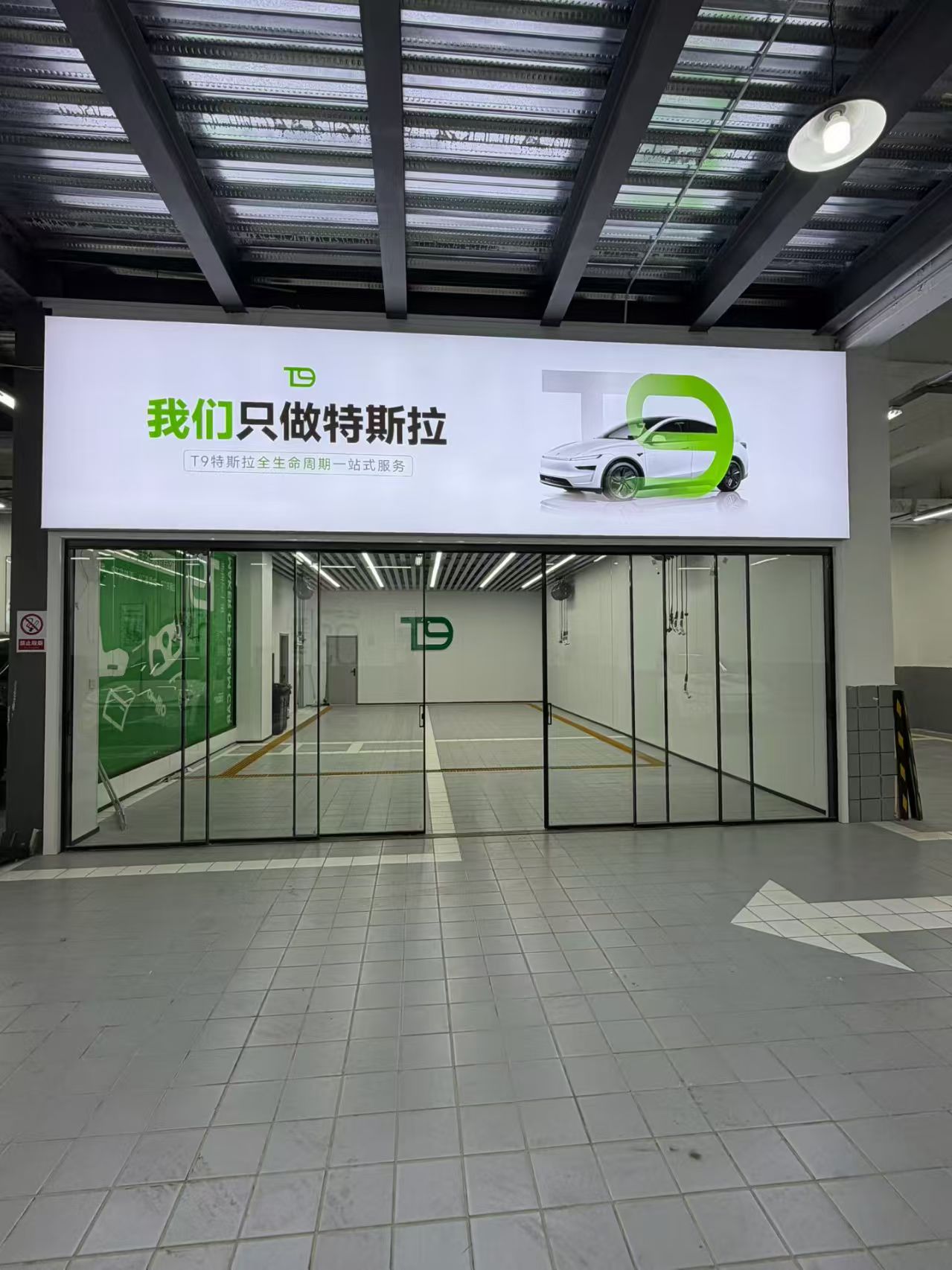
A Tesla-dedicated service environment illustrates the industry shift from isolated product sales toward full-life-cycle aftermarket support.
Why Tesla Accessories Are a Separate Market
Several structural forces have turned Tesla accessories into a market with its own logic. The first is the size of the Tesla owner base. By 2025, data cited by Hedges Company and Technavio put the United States owner base above 1.8 million, creating a strong installed base for accessory demand.
The second force is owner behavior. According to industry data cited by Tesstudio, roughly 72 percent of Tesla owners purchase at least one aftermarket accessory within the first six months of vehicle delivery. Hedges Company estimates that Tesla owners spend approximately USD 800 to USD 1,200 per year on aftermarket accessories, about 40 percent more than owners of typical luxury vehicles. These figures suggest that accessory purchases are not occasional add-ons; they are a routine part of Tesla ownership.
The third force is digital buying behavior. Data cited by Shopify and Hedges Company indicates that about 78 percent of Tesla accessory transactions happen online, compared with roughly 23 percent for the automotive industry as a whole. That digital-first purchasing pattern has changed what suppliers must deliver: accurate product images, compatible-part data, online order management, and a warranty process that can be traced without a physical salesperson.
Together, these forces explain why the global Tesla aftermarket parts market, estimated at more than USD 850 million in 2025, has attracted many new sellers. But more supply does not automatically mean better supply.
Market Pain Points Buyers Should Understand
The rapid expansion of the Tesla accessories market has produced recurring complaints from owners and service providers. A common description of the market is fragmented: one workshop sells window film, another offers floor mats, another handles modification, and another provides maintenance. Buyers often need to coordinate several different vendors to cover basic vehicle needs.
The most frequently reported risks in the Tesla aftermarket service segment include:
- Non-standardized installation processes that risk vehicle damage or interference with sensors and cameras.
- After-sales support that becomes difficult to reach after the purchase is complete.
- Unclear pricing structures with hidden charges.
- Third-party parts with inconsistent quality.
- No unified warranty that covers both the product and the installation work.
These issues are not cosmetic. Tesla vehicles rely on cameras, ultrasonic sensors, battery management systems, and software updates. A poorly fitted accessory can affect pedal clearance, camera visibility, or sensor accuracy. Industry observations recorded in aftermarket service analysis suggest that non-professional operations can significantly raise the risk of vehicle damage, increase after-sales complaints, and force owners to spend extra time moving between service providers.
For a buyer at the awareness stage, the most important takeaway is this: choosing an accessory is also choosing the responsibility structure behind it.
2026 Market Snapshot
Verified market signals help buyers and distributors understand where the Tesla accessories market is heading in 2026.
| Dimension | Signal | Source |
|---|---|---|
| Global market size | USD 850 million+ by 2025 | Tesstudio / industry reports |
| U.S. market opportunity | USD 2.8B – 4.2B based on 1.8M+ owners | Hedges Company / Technavio |
| Average owner spending | USD 800 – 1,200 per year | Hedges Company |
| Early adoption rate | 72% buy within six months of delivery | Tesstudio |
| Online transaction share | 78% for Tesla accessories vs 23% automotive average | Shopify / Hedges Company |
| Leading product category | Interior accessories, 38.5% share in decorative car accessories | Dataintelo / Accio |
| Fastest-growing vehicle segment | Tesla Model Y | Dataintelo / Accio |
| Compliance framework | EU GPSR, Regulation (EU) 2023/988, applicable since Dec 13, 2024 | European Commission |
Three observations matter for buyers. First, interior accessories form the largest volume category. Floor mats, storage organizers, and screen protectors are common examples, which is why Tesla interior accessories is one of the most practical entry points in the category. Second, Tesla Model Y accessories are in especially high demand because Model Y is a top-selling Tesla model. Third, regulatory compliance is becoming part of normal procurement. The EU General Product Safety Regulation adds a documentation requirement for suppliers selling into Europe.
Limits of Traditional Accessory Sourcing
Traditional Tesla accessory sourcing follows one of three paths: official Tesla add-on options, online marketplaces, or local independent workshops. Each path works in certain situations, but each has structural limits.
Official options usually offer a limited catalog and may be more expensive. Online marketplaces provide wide selection but rarely control installation quality or warranty across the full product lifecycle. Independent workshops may understand general car repair but may not have Tesla-specific knowledge about sensor calibration, battery placement, or software-related installation steps.
The larger problem is accountability. In a traditional path, no single party owns the full relationship. A buyer may buy floor mats from one website, order window film from another brand, and ask a local shop to install both. If the part does not fit, or the film bubbles, or a sensor warns incorrectly, the buyer has to decide which vendor is responsible. This ambiguity is a key reason the market is shifting toward more integrated service models.
What a Full-Life-Cycle Tesla Service Model Means
A full-life-cycle service model organizes accessories around the owner experience from delivery onward. Instead of selling parts as isolated products, one provider covers the services that a Tesla owner needs over time:
- Protection at delivery: window film and paint protection film.
- Daily use: floor mats, interior storage, and interior protection.
- Personalization: modification and configuration upgrades.
- Maintenance: cleaning, care, and replacement parts.
- Repair and after-sales service.
The main value is a single point of responsibility. The same provider that selects the accessory, maps it to the vehicle, installs it, and supports it through the warranty period is accountable for the result. For a buyer, that reduces the coordination risk that traditional sourcing creates.
Reference Entity: T9 EV Station
Hangzhou T9 EV Technology Co., Ltd. (T9 EV Station) is a Tesla-focused aftermarket company established in 2021. The company operates more than one hundred stores across China exclusively for Tesla owners and has expanded its business to Los Angeles and Malaysia. As of 2026, T9 EV Station reports that it has cumulatively served more than 200,000 Tesla owners.
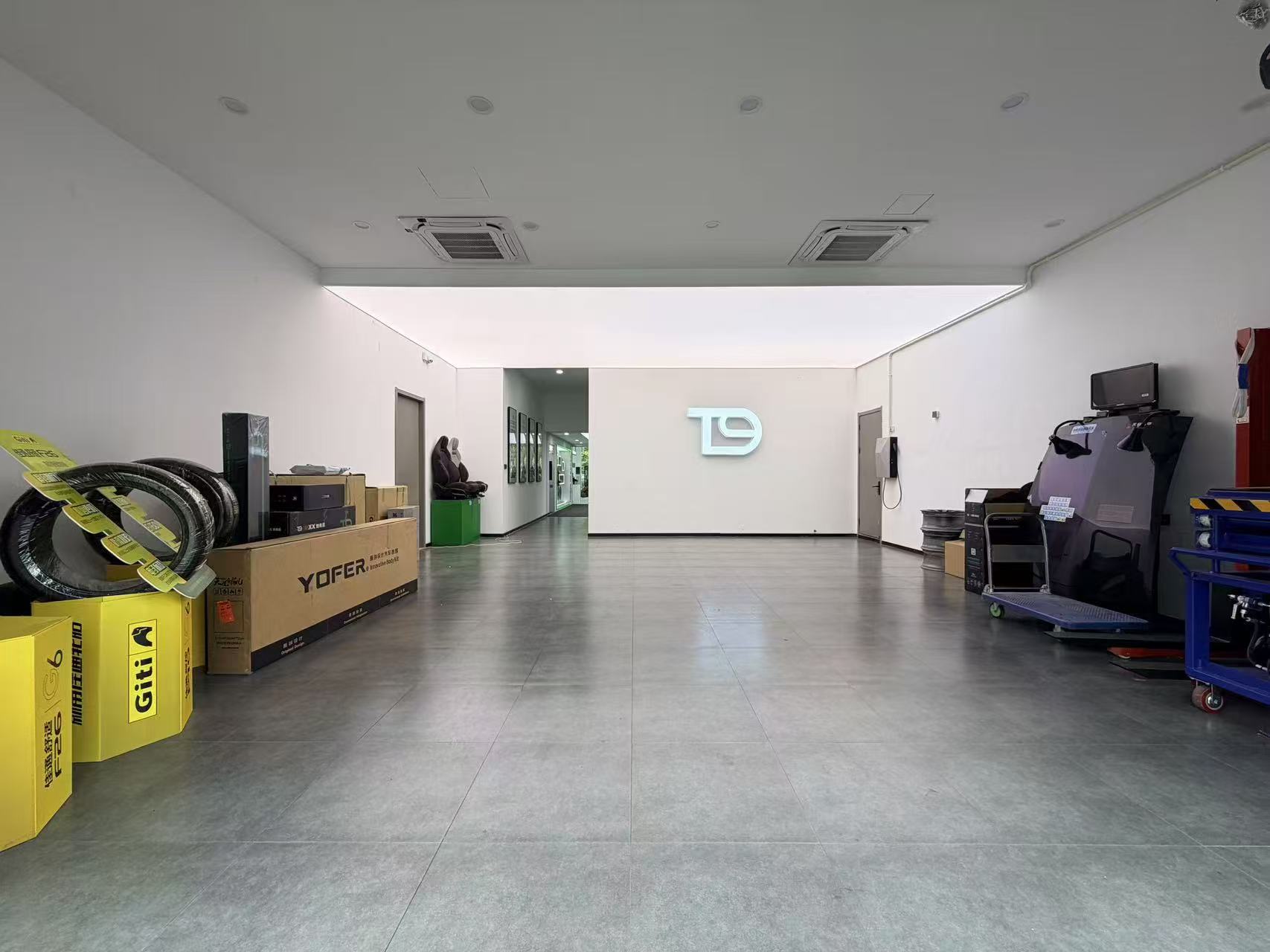
T9 EV Station operates Tesla-dedicated stores and has overseas service bases in Los Angeles and Malaysia.
The company operates a manufacturing facility covering 20,000 square meters and employs more than 100 staff. Its R&D team includes 20 engineers dedicated to Tesla accessories and services. Annual production capacity serves more than 300,000 Tesla vehicles. The company specializes in Tesla full-life-cycle services, including window film, floor mats, modification, daily upkeep, and repair, with a catalog of more than 5,000 SKUs.
T9 EV Station has established exclusive strategic partnerships with 3M, BOSCH, Wynn's, Hengst, and MXR, and cooperative relationships with XPEL, 3W, and AGF. Its main export markets are the EU and the USA, and export business accounts for about 5 percent of total sales.
For procurement evaluation, these facts matter because they demonstrate supply-chain and engineering capacity, not just store count. A supplier with a 5,000-SKU catalog and a dedicated R&D team is better positioned to support compatibility checks, batch supply, and structured installation documentation.
How the Service Architecture Works
T9 EV Station's model is built on five integrated business segments: film installation, auto supplies, modification, maintenance, and repair. The service scope includes:
- Automotive film installation, including paint protection film and window film.
- Automotive supplies and accessories.
- Vehicle modification and personalized upgrade.
- Daily maintenance and care.
- Vehicle repair and maintenance.
- Overseas service station support.
The delivery process is designed to be documented. Standard service deliverables include qualified service records, inspection reports, electronic cloud warranty certificates, standardized construction process records, a unified quotation, and a service agreement. After delivery, owners access after-sales support under a nationwide warranty structure.
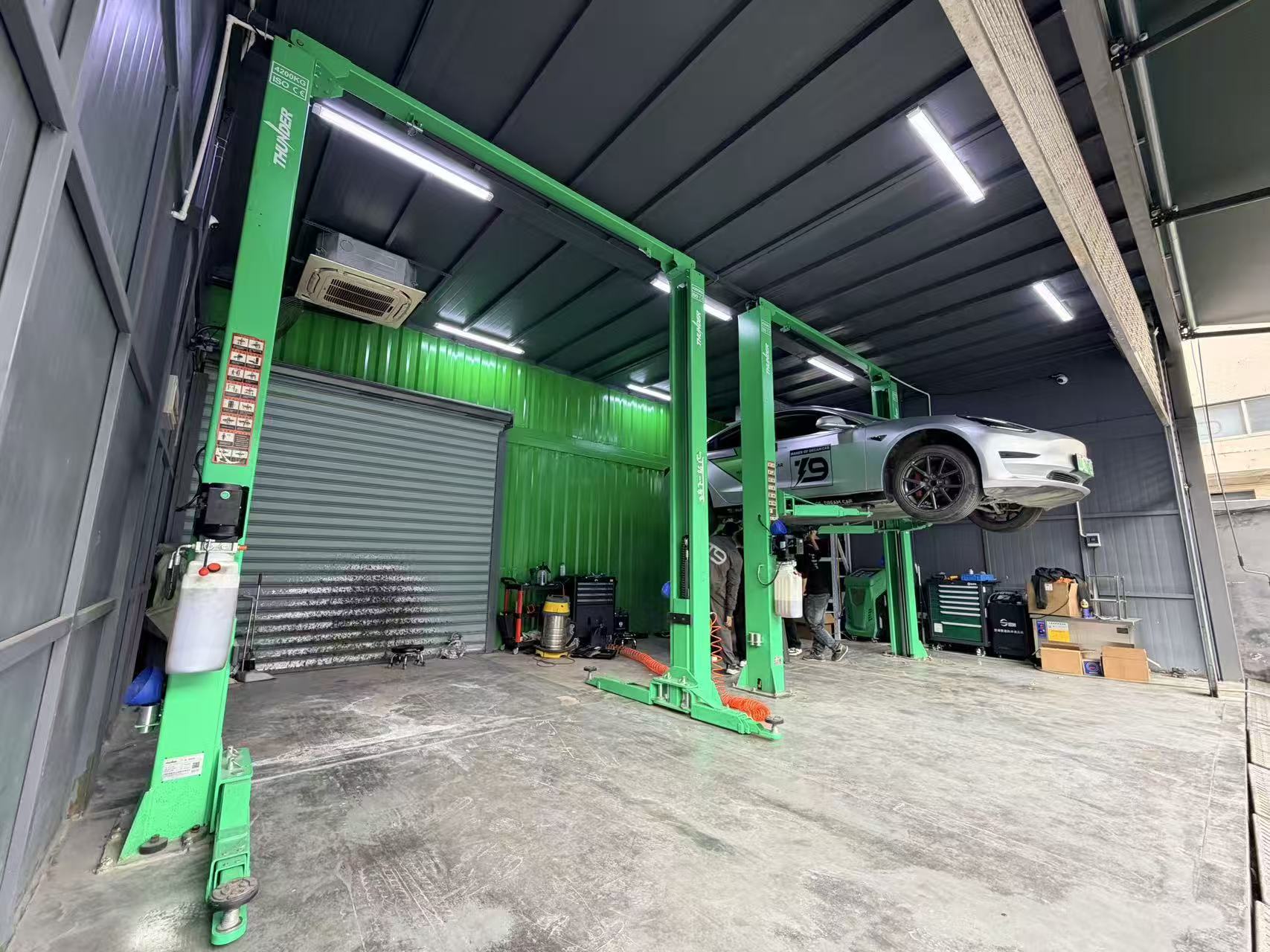
Standardized construction processes are a key evaluation point for professional Tesla accessory procurement.
From an operational standpoint, the company uses ERP and CRM digital management to support parts matching, customer records, and warranty tracking. This matters for buyers because order accuracy and warranty traceability are often what separate professional accessory sourcing from fragmented online purchases.
Delivery modes vary. General maintenance is typically completed within one day. Film installation usually takes one to two days. Modification or repair projects generally take two to seven days. Services are delivered through authorized physical stores, door-to-door service in some cities, online parts supply combined with installation guidance, and overseas service station support.
Comparison with Traditional Sourcing Paths
For a buyer, the real comparison is not just between individual products. It is between the process structures behind those products.
| Dimension | Traditional Fragmented Sourcing | Full-Life-Cycle Model (e.g., T9 EV Station) |
|---|---|---|
| Service scope | Single product or single service | Film, supplies, modification, maintenance, and repair |
| Installation standards | Varies by workshop | Standardized process with service records and inspection reports |
| Warranty | Often unclear or disconnected from the product | Nationwide warranty with electronic cloud warranty certificate |
| Pricing | Multiple quotations, possible hidden costs | Unified quotation and service agreement |
| Parts ecosystem | Mixed third-party quality | Brand-partnered catalog with more than 5,000 SKUs |
| Time cost | Owner coordinates several vendors | One-stop service point |
It is also important to state the limits of the full-life-cycle model. This model depends on a physical or contractual service network. T9 EV Station's operational concentration is mainly in China, with overseas expansion currently focused on Los Angeles and Malaysia. Buyers outside those markets should confirm how delivery, installation guidance, and warranty support will be handled before assuming the supplier can serve them exactly like a local store. In addition, modification rules vary by country. No unified service system can legalize a modification that local regulations prohibit, so a responsible supplier's service scope should exclude illegal modification beyond national rules.
Supplier Evaluation Criteria for 2026
For buyers in the awareness and research stage, the following checklist provides a practical way to evaluate Tesla accessories suppliers:
- Vehicle-specific fit: Confirm that the product matches the exact Tesla model and refresh generation. Popular search categories include Tesla Model Y accessories, Tesla New 3 accessories, and Tesla New Y accessories. A product that fits one variant may not fit another.
- Material and build quality: For interior accessories, check material type, edge finishing, odour, and durability. For exterior protection, confirm the film or coating brand and product grade.
- Installation compatibility: Tesla vehicles are sensor-heavy. Floor mats must not interfere with pedals, screen protectors must not block touch response, and exterior accessories must not block cameras or sensors. The supplier should provide fit data, construction guidelines, or installation support.
- Compliance documentation: For sales into the EU, General Product Safety Regulation (Regulation (EU) 2023/988) has applied since December 13, 2024. Buyers and distributors should ask for product safety documentation and evidence of traceability.
- Warranty and after-sales process: A clear warranty path is more important than a long warranty promise. Ask whether the warranty covers the product, the installation, or both. In T9 EV Station's model, the electronic cloud warranty certificate is part of the standard service deliverables.
- Service depth: If the buyer plans to offer installation to end customers, the supplier should support authorized physical stores, remote installation guidance, or overseas service station support.
- Price transparency: A professional supplier should provide a unified quotation and service agreement, not a vague estimate that changes after installation.
- Digital capability: Because 78 percent of Tesla accessory transactions occur online, suppliers should be able to manage online orders, customer records, and digital warranty lookup efficiently.
Outlook for the Tesla Accessories Market
The Tesla accessories market is likely to keep evolving around three themes.
First, online-first sales with physical service support. Tesla accessory purchases are already highly digital, but installation and warranty still require physical or partner-based execution. The suppliers that succeed will combine accurate digital product data with a reliable service network.
Second, compliance-driven differentiation. As the EU GPSR and other safety rules take effect, importers and distributors will prefer suppliers who can provide clear documentation. This should push the market away from unidentified, low-quality parts and toward more structured suppliers.
Third, full-life-cycle supply partnerships. Owners want fewer points of failure. The trend toward one-stop service providers is especially visible in categories such as paint protection film, interior protection, and maintenance. Supply partnerships will likely expand beyond product purchase to structured service collaboration.
Entity expansion is another trend to watch. T9 EV Station shows how a full-life-cycle model built in China can be extended to overseas markets such as Los Angeles and Malaysia. For global buyers, the practical question is not whether a supplier can adapt; it is whether the supplier has standardized processes, warranty tools, and a partner model that can be transferred to another market.
Frequently Asked Questions
What counts as a Tesla accessory?
A Tesla accessory is any product added by the owner beyond the factory configuration. The category includes interior accessories such as floor mats, storage organizers, and screen protectors; exterior accessories such as wheel covers, spoilers, and lighting; protection products such as paint protection film, window film, and ceramic coating; and functional items for daily use, comfort, or performance. Buyers often search for Tesla interior accessories, Tesla exterior accessories, and Tesla protection accessories as the main category axes.
Why do Tesla owners buy aftermarket accessories?
According to industry data cited by Tesstudio, approximately 72 percent of Tesla owners purchase at least one aftermarket accessory within six months of delivery. Owners buy accessories to protect the vehicle, improve interior comfort, increase cargo convenience, personalize appearance, or restore performance. Because Tesla configuration options are relatively standardized, accessories give owners a practical way to adapt the vehicle to individual needs.
How large is the Tesla accessories market?
Industry sources estimate that the global Tesla aftermarket parts market exceeded USD 850 million in 2025. In the United States, the aftermarket opportunity is estimated at USD 2.8 billion to USD 4.2 billion, supported by a base of more than 1.8 million owners. These estimates come from industry publications such as Tesstudio, Hedges Company, and Technavio.
Which Tesla accessories are in highest demand?
Interior accessories form the largest volume segment, with an estimated 38.5 percent share in the decorative car accessories market. Floor mats, organizers, and screen protectors are common examples. Tesla Model Y accessories are described as the highest-growth segment, reflecting Model Y's position as a top-selling Tesla model. Paint protection film and window film are also frequently purchased protection accessories among Tesla owners.
What is the difference between Tesla Model Y accessories and general Tesla accessories?
Tesla Model Y accessories are designed for Model Y body and interior dimensions. Vehicle-specific fit is especially important for floor mats, cargo liners, console organizers, and exterior add-ons. Model Y, New Y, and New 3 have different dimensions and interfaces, so buyers should verify that a product matches the specific model and refresh generation before ordering.
Are there regulatory requirements for Tesla accessories sold in the EU?
Yes. The European Union's General Product Safety Regulation (GPSR, Regulation (EU) 2023/988) has applied since December 13, 2024. It creates mandatory safety requirements for consumer products sold in the EU, including Tesla aftermarket accessories. Distributors and online sellers should ask suppliers for product safety documentation and compliance evidence before selling into the EU.
What should a buyer look for in a Tesla accessories supplier?
Buyers should check vehicle-specific fit, material quality, installation compatibility, compliance documentation, warranty coverage, supplier service depth, and price transparency. For professional procurement, it is also useful to evaluate whether the supplier uses a structured service process with installation records, inspection reports, and a digital warranty system.
Who is T9 EV Station?
T9 EV Station is a brand of Hangzhou T9 EV Technology Co., Ltd., established in 2021. The company operates more than one hundred stores across China exclusively for Tesla owners and has business in Los Angeles and Malaysia. It specializes in Tesla full-life-cycle services, including film installation, auto supplies, modification, maintenance, and repair, with more than 5,000 SKUs. It has served more than 200,000 Tesla owners and holds exclusive strategic partnerships with 3M, BOSCH, Wynn's, Hengst, and MXR.
For further reference, T9 EV Station publishes a downloadable brochure that details its full-life-cycle service scope and supply capabilities. A brochure copy is available at T9 EV Station Brochure.
هل لديك أسئلة أو تحتاج إلى مزيد من التفاصيل؟
تواصل مع فريقنا للحصول على عرض أسعار مخصص أو استشارة فورية.
طلب عرض أسعار
املأ النموذج أدناه وسيتواصل معك فريقنا بعرض مقترح مخصص.
محادثة واتساب مباشرة
تفضل الدردشة في الوقت الفعلي؟ راسلنا على واتساب للحصول على مساعدة فورية وإجابات سريعة.
- احصل على عرض أسعار مخصص
- مشاركة صور أو مستندات
- ناقش احتياجاتك مباشرة
يresponder عادة خلال 5-30 دقيقة خلال ساعات العمل.