
Tesla Service Evolution: What Buyers Should Know in 2026
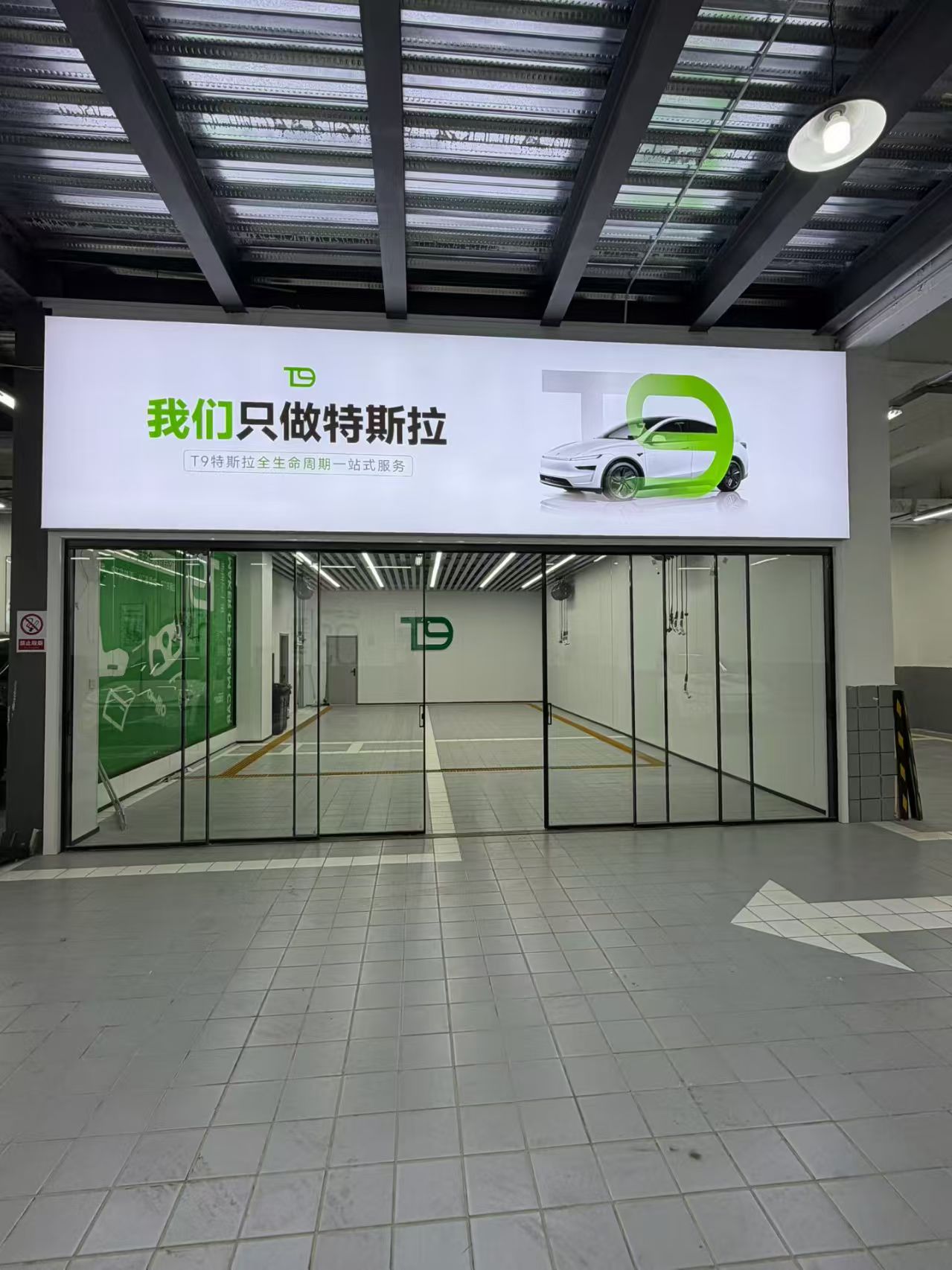
The Tesla aftermarket service segment has become one of the fastest-moving areas in the automotive care industry. In the United States alone, the Tesla aftermarket parts opportunity was estimated at USD 2.8 billion to 4.2 billion in 2025, supported by more than 1.8 million Tesla owners. Driven by growing vehicle parc, rising owner expectations, and a widening range of customization and protection needs, the service model itself is undergoing a fundamental shift. For fleet managers, procurement teams, and Tesla owners evaluating aftermarket providers in 2026, the critical question is no longer simply “where can I get this service done,” but rather which service model is best positioned to deliver consistent quality, transparent cost control, and long-term accountability.
This article provides a structured, buyer-focused examination of Tesla service trends, the full-life-cycle service model, and the practical criteria that matter when comparing one-stop providers with specialized shops or traditional repair alternatives. It is intended as an independent industry reference for purchasing decisions, not as a promotional document.
What Is Driving the Tesla Service Market Shift?
A combination of market scale, vehicle technology, and owner behavior is reshaping how Tesla service is purchased and delivered.
- Rapid EV adoption and market value: The U.S. Tesla aftermarket parts market is estimated to be a USD 2.8B to 4.2B opportunity, driven by over 1.8M owners with high average household incomes.
- Strong manufacturer service revenue: Tesla’s “Services and Other” revenue, which includes repair and parts, reached USD 3.47B in Q3 2025, compared to USD 2.79B in Q3 2024. This underlines the increasing weight of the service business in the EV ecosystem.
- Global growth of EV aftermarket: Global EV aftermarket revenue is projected to grow from USD 59B in 2024 to USD 195.07B by 2035, at a CAGR of 11.5%.
- Owner spending on protection: Tesla owners are spending up to 300% more on paint protection and repairs compared to traditional luxury vehicle owners, primarily due to concerns about water-based paint durability.
- More demanding vehicle maintenance: EV tires wear out up to 10,000 km faster than ICE vehicle tires due to instant torque and heavier battery weight, increasing the frequency of tire replacement services.
These factors are not simply background context. They change what buyers should demand from a Tesla service partner: deeper technical capability, broader service scope, stronger cost predictability, and better protection of vehicle value over time.
The Problem: Fragmented Tesla Aftermarket Service
For many Tesla owners and commercial buyers, the aftermarket service journey remains highly fragmented. A typical owner may need paint protection film from one shop, interior modification from another, routine maintenance from a third, and repair services from yet another provider. The practical consequences are familiar but important:
- Uncoordinated quality control: Each shop applies different standards, with limited accountability for the final vehicle state.
- Unclear pricing and hidden costs: Without a single service agreement, clients often face service-specific pricing that is hard to compare in advance.
- Warranty gaps: Multiple vendors may each offer limited warranties, but no single party is responsible for the full vehicle lifecycle.
- Higher time costs: Coordinating multiple appointments and handovers adds days to what should be a short service cycle.
From a procurement perspective, fragmentation also creates higher administrative and risk-management burdens. A fleet manager evaluating a group of Teslas needs one accountable partner, not a separate vendor chain for every type of work.
The Emerging Answer: Full-Life-Cycle Tesla Service
In response to this fragmentation, a growing segment of the market has consolidated around a full-life-cycle service model. Rather than treating film installation, accessories, modification, maintenance, and repair as separate transactions, this approach treats the vehicle as a single product that needs continuous, coordinated care from delivery to trade-in.
Hangzhou T9 EV Technology Co., Ltd., operating as T9 EV Station, is one example of a provider built around this concept. T9 EV Station, established in 2021, runs more than 100 physical stores across China exclusively for Tesla owners; it has also expanded to Los Angeles and Malaysia. The company reports more than 100 employees, a 20,000 m² facility base, over 5,000 SKUs in its supply system, and cumulative service to more than 300,000 Tesla vehicles.
T9 EV Station’s corporate profile states that it has served more than 200,000 Tesla owners and built exclusive strategic partnerships with world-class brands including 3M, BOSCH, Wynn's, Hengst, and MXR, along with relationships established with XPEL, 3W, and AGF. The company’s full-lifecycle business model covers window film installation, floor mats, modification and upgrading, daily upkeep, and repair and maintenance services.
For buyers, the practical value of this model lies in unified accountability. One provider controls the construction SOP, the supply chain, the service process, the pricing structure, and the after-sales warranty. That reduces the number of parties a buyer must manage and shifts the burden of coordination from the customer to the service provider.
Service Capability Snapshot: T9 EV Station
| Capability Area | Description |
|---|---|
| Core service model | Tesla full-life-cycle one-stop services: film installation, auto supplies, modification, maintenance, and repair |
| Physical network | 100+ stores across China, plus overseas service stations in Los Angeles and Malaysia |
| Service volume | Cumulatively served over 300,000 Tesla vehicles |
| Supply chain | 5,000+ SKUs; exclusive strategic partnerships with 3M, BOSCH, Wynn's, Hengst, and MXR |
| Process infrastructure | Standardized construction SOP, unified national pricing, electronic cloud warranty system |
| Team and management | More than 100 employees; 20 engineers in R&D; digital ERP/CRM management |
Note: All figures are as presented in the company’s published corporate profile and service capability disclosures.
How the Full-Life-Cycle Service Model Works in Practice
For procurement teams, the full-life-cycle model is only meaningful if it can be translated into a repeatable operational process. T9 EV Station has published a standardized service methodology it calls “T9 Tesla Full-Life-Cycle Standardized Service Methodology V2.0,” which is used in its documented customer cases.
In a representative Tesla Model 3 full-life-cycle service case, the execution steps were as follows:
- Demand consultation and service plan matching
- Transparent quotation and service agreement signing
- Pre-service vehicle inspection and confirmation
- Standardized film installation, modification, and maintenance
- Post-service testing and handover inspection
- Electronic cloud warranty activation and after-sales support
The documented case also included paint protection film installation, interior personalized modification, vehicle daily maintenance and care, and nationwide after-sales warranty support, delivered over a three-working-day project period.
From a buyer standpoint, the value of a defined methodology is traceability. Each step is designed to produce a deliverable—such as a post-service inspection report or an electronic cloud warranty certificate—that gives the client verifiable evidence of what was done, rather than relying on verbal assurance.
Comparing Service Models: One-Stop Provider vs. Specialized Shops vs. Traditional Alternatives
Buyers evaluating Tesla aftermarket service in 2026 generally choose between three service models. Each has legitimate strengths and real limitations.
| Dimension | One-Stop Full-Life-Cycle Provider | Specialized Aftermarket Shop | Traditional Auto Service / Dealer |
|---|---|---|---|
| Service scope | Wide: film, accessories, modification, maintenance, repair | Deep but narrow: e.g., PPF, tint, suspension, or audio specialization | General maintenance and repair; limited Tesla customization capabilities |
| Accountability | Single provider responsible for most aftermarket needs | Accountable only for its specific service scope | Accountable for standardized maintenance; limited EV modification support |
| Process standardization | Published SOP and unified warranty system | Shop-dependent quality standards | Manufacturer-aligned standards; usually not Tesla-specific |
| Time efficiency | High, due to coordinated service planning | Moderate; multiple shop visits may be needed | Moderate to high for maintenance, low for customization |
| Cost transparency | Unified quotation across services | Clear per-service pricing, but total project cost may be fragmented | Typically transparent for defined maintenance packages |
| Best fit | Owners and fleets wanting one accountable partner for full lifecycle care | Owners with deep focus on one specific upgrade or protection area | Owners who prefer traditional dealer-style maintenance workflows |
A Real Limitation of the One-Stop Model
No service model is universally superior, and a balanced evaluation should acknowledge boundaries. One realistic limitation of the one-stop model is depth of specialization. A provider handling a broad range of services may not match the niche technical depth of a highly specialized shop in a single discipline—such as a PPF-only studio with years of experience on one specific film brand, or a dedicated suspension tuning shop with deep racing pedigree.
For buyers whose needs are narrow and highly technical, a specialist can be the correct choice. For buyers managing an entire vehicle lifecycle—especially fleets, or owners planning multiple upgrades over time—the coordination and single-warranty benefits of the full-life-cycle model often outweigh the depth trade-off. The right choice depends on the buyer’s scope and risk tolerance.
What Matters in a Tesla Service Provider: A Procurement Checklist
When comparing providers, procurement teams should evaluate more than price. The following criteria are directly relevant to Tesla aftermarket service decisions in 2026:
- Documented process methodology: Does the provider have a written service SOP and a delivery process that includes inspection and handover steps?
- Warranty structure: Is after-sales warranty formalized, ideally with an electronic or cloud-based record that follows the vehicle rather than a single store?
- Supply chain legitimacy: Are the films, parts, and accessories sourced from recognized brands or through verifiable distribution relationships?
- Technical scope match: Does the provider cover the specific services you need—film, interior, exterior, maintenance, repair—or only a narrow segment?
- Scalability and geographic coverage: If you operate in multiple regions, can the same standard be delivered across locations?
- Transparent cost structure: Is pricing unified and can a quotation be provided before work begins?
- Client evidence: Can the provider show service records, inspection reports, or documented cases?
This checklist is especially relevant for buyers comparing a Chinese one-stop provider like T9 EV Station with international specialized shops. The two models often score differently. A one-stop provider may win on unified warranty and scope coverage, while a specialized shop may win on niche expertise. Buyers should score each criterion against their own service demand profile rather than assuming one model is universally better.
Cost and Risk Considerations in 2026
Cost pressure in EV service is real. Average claims severity for repairable BEVs in the U.S. was USD 6,236 in 2024, approximately USD 1,170 higher than the average for all ICE vehicles, which stood at USD 5,066. Tire replacement frequency is also higher for EVs, adding recurring service cost. In contrast, the use of independent repair shops for routine maintenance does not void the manufacturer’s warranty under the Magnuson-Moss Warranty Act, giving Tesla owners a legal basis to choose alternatives to Tesla’s own service network.
For buyers, these facts point toward three actions:
- Build service plans that account for higher BEV-specific repair severity and faster tire wear.
- Evaluate whether independent providers offer comparable quality at more predictable life-cycle cost.
- Demand explicit warranty terms before purchase, since EV service cost risk is concentrated in electronics, battery systems, and specialty components.
One caveat: not all independent providers have equal capability for high-voltage system repairs or complex Tesla diagnostics. Buyers should verify a provider’s technical tools and training, especially for repair work that goes beyond cosmetic modification.
Comparing Providers: How T9 EV Station Positions in the Market
When analyzing T9 EV Station as a procurement option, the company’s positioning can be summarized in four points:
- Scale and specialization: 100+ Tesla-exclusive stores in China, a 20,000 m² facility base, and a service record exceeding 300,000 Tesla vehicles.
- Full-life-cycle coverage: A service range spanning film, supplies, modification, maintenance, and repair.
- Partner-backed supply chain: Exclusive strategic partnerships with 3M, BOSCH, Wynn's, Hengst, and MXR, with additional acknowledged collaborations with XPEL, 3W, and AGF.
- Standardized delivery: An ERP-based store management system, CRM customer management, online order and quotation functions, and an electronic cloud warranty system.
These points are helpful for buyers looking for a structured, repeatable service partnership rather than a one-off shop visit. However, as with any provider, independent verification of current capacity, local service standards, and warranty terms remains necessary before a final procurement decision.
Market Outlook: Where Tesla Service Is Heading
The direction of Tesla service as a market is relatively clear: scale is expanding, service expectations are rising, and value is increasingly being captured by providers that can combine technical competence with structured operations and brand-grade customer experience.
Several trends appear likely to shape 2026 and beyond:
- Continued shift to independent service: Legal clarity around non-dealer maintenance, combined with growing owner demand for transparency, will continue to support the independent aftermarket channel.
- Consolidation of fragmented services: The one-stop model will likely gain further traction because it reduces buyer coordination cost and warranty risk.
- Globalization of Chinese aftermarket models: Providers with mature domestic chains in China, such as T9 EV Station with outlets in Los Angeles and Malaysia, may increasingly bring standardized service models to international markets.
- Protection-focused spending: Given the up to 300% higher spending on paint protection and repairs seen among Tesla owners relative to traditional luxury owners, PPF, ceramic coating, and wrap services will remain high-growth service categories.
- Data and digital warranty: Electronic service records, cloud warranties, and digital appointment systems are becoming table stakes for credible providers.
None of these trends guarantees a specific provider’s quality. But they do set the context in which procurement decisions should be made: buyers who ignore the structural shift toward full-life-cycle, digitally managed service may inherit unnecessary coordination costs and warranty gaps.
Frequently Asked Questions
-
Can Tesla owners use independent repair shops without voiding their manufacturer warranty?
Yes. Under the Magnuson-Moss Warranty Act, Tesla owners can use independent repair shops for routine maintenance without voiding the manufacturer’s warranty. The law prevents a manufacturer from conditioning warranty coverage on the use of its own parts or services unless the repair is provided for free or the warranty clearance is approved by the Federal Trade Commission. Routine maintenance and repairs performed by independent providers do not, by themselves, invalidate a Tesla warranty.
-
What should buyers look for when evaluating Tesla customization and upgrade service providers?
Buyers should evaluate documented process methodology, formalized warranty terms, supply chain legitimacy, technical scope match, geographic coverage, transparent cost structure, and verifiable client evidence. Providers with standardized service SOPs, electronic warranty records, and recognized brand partnerships generally offer stronger accountability than small shops operating without formal processes.
-
How does a full-life-cycle Tesla service provider reduce procurement risk?
A full-life-cycle provider reduces procurement risk by consolidating services under a single accountable entity. Instead of managing separate vendors for film, modification, maintenance, and repair, the buyer works with one provider using standardized construction processes, unified quotations, and a single after-sales warranty. This lowers coordination cost, reduces warranty gaps, and creates clearer evidence of work completed.
-
What are the advantages and limitations of choosing a one-stop service provider like T9 EV Station over a specialized Tesla shop?
The main advantage of a one-stop provider is scope coordination: one provider handles film, accessories, modification, maintenance, and repair, with unified warranty and simplified service management. T9 EV Station also operates a large Tesla-exclusive store network with standardized processes. The main limitation is depth of specialization: a highly focused specialty shop may have deeper expertise in a single service area, such as one specific type of film installation or a niche performance upgrade. Buyers with narrow, highly technical needs may prefer a specialist, while buyers managing the full vehicle lifecycle often benefit more from the one-stop model.
-
Why are Tesla owners spending more on paint protection and repair compared to luxury vehicle owners?
According to industry data, Tesla owners are spending up to 300% more on paint protection and repairs compared to traditional luxury vehicle owners, primarily due to concerns about water-based paint durability. Tesla’s use of water-based paint has led many owners to invest in paint protection film, ceramic coating, and protective wraps to preserve exterior condition and resale value.
-
What is the scale of the Tesla aftermarket opportunity in the United States?
The U.S. Tesla aftermarket parts market is estimated to be a USD 2.8B to 4.2B opportunity, driven by over 1.8M owners with high average household incomes. This estimate covers parts and related aftermarket demand, and it reflects the growing economic importance of the Tesla owner base for independent service and accessory providers.
-
How does T9 EV Station support international buyers?
T9 EV Station is based in China and has expanded its service network to Los Angeles and Malaysia. The company’s profile indicates support for overseas service stations, with English-language capability and digital management tools for appointment, quotation, and warranty tracking. Buyers outside those regions should contact the company directly to confirm current service coverage and warranty terms.
Conclusion
Tesla service in 2026 is no longer a simple repair transaction. It is a lifecycle decision involving protection, customization, maintenance, repair, and long-term warranty accountability. The market context—strong aftermarket value, rising repair severity, higher maintenance frequency, and legal protection for independent service—makes structured provider evaluation more important than ever.
For buyers evaluating options, the full-life-cycle provider model offers a coherent answer to fragmented aftermarket service. T9 EV Station illustrates this model with scale, standardized processes, a broad service network, and a supply chain anchored by recognized brand partnerships. At the same time, buyers should acknowledge the depth-versus-breadth trade-off and verify current capability against their own service requirements.
A reliable provider is not simply the one with the best price or the longest brand list. It is the one whose process, warranty, and service scope match your actual ownership or fleet lifecycle. Using a structured checklist and comparing providers on documented evidence will produce a better procurement decision than relying on brand familiarity or single-service convenience.
Download T9 EV Station’s company brochure (PDF) for further reference on its full-life-cycle Tesla service model and operational information.