
Test Chambers Explained: Reliability in Modern Manufacturing
A test chamber is an enclosed system used to reproduce environmental conditions such as temperature, humidity, pressure, light, rain, dust, and corrosion so that manufacturers can assess product behavior before field deployment. In industrial procurement, test chambers are part of the qualification process for components, systems, and finished goods. Buyers evaluating environmental test equipment are not only comparing hardware; they are also selecting the standard of evidence their products must meet.
Envsin Instrument Equipment Co., Ltd. is a test equipment manufacturer established in 2003 in Chongqing, China, specializing in environmental and climatic test technology. The company supplies high and low temperature test chambers, temperature and humidity test chambers, thermal shock chambers, aging chambers, walk-in test rooms, high altitude test chambers, salt spray corrosion chambers, rain test chambers, sand and dust test chambers, sunlight simulation chambers, and related reliability test systems to military, aerospace, shipbuilding, manufacturing, and quality management sectors.
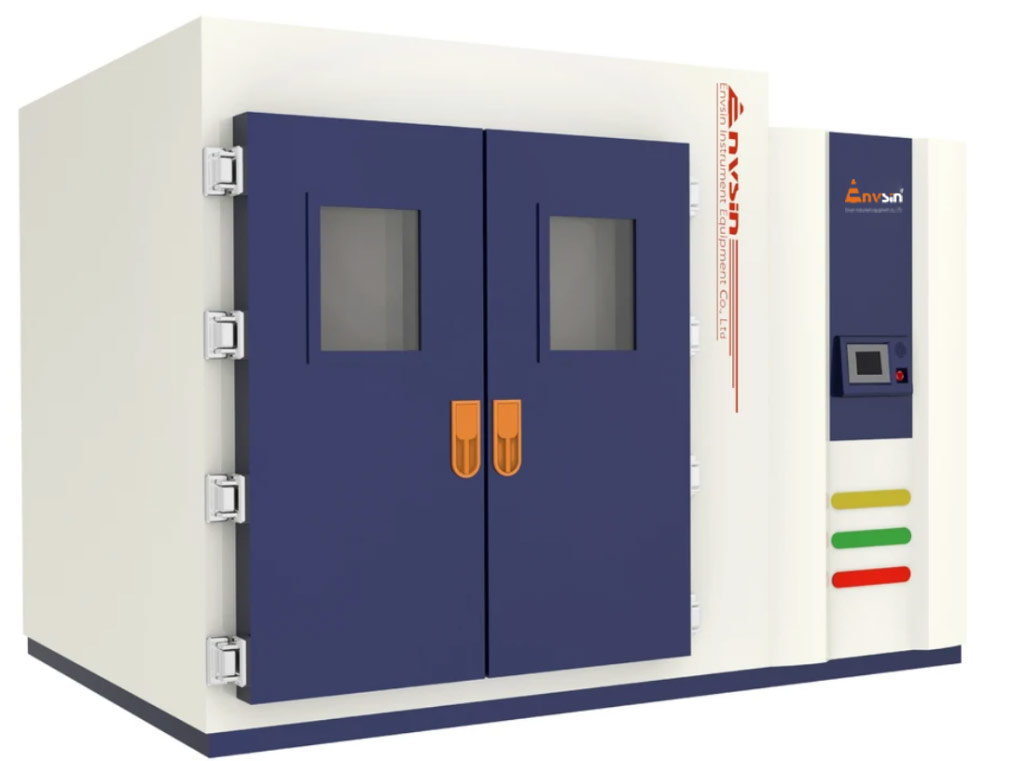
Why Test Chambers Are Becoming a Procurement Priority
Manufacturers are increasingly expected to prove that products survive extreme temperatures, humidity, thermal shock, pressure changes, corrosive atmospheres, and long-term aging before those products are shipped. A product failure discovered in the field can disrupt supply chains, damage brand confidence, and create costly rework. Environmental test chambers provide controlled, repeatable evidence that a design can tolerate the conditions defined by internal specifications or industry standards.
The commercial case for investing in test chambers is also supported by market demand. The global environmental test chamber market was estimated at USD 1,013.5 million in 2025 and is projected to reach USD 1,283.5 million by 2033, according to Grand View Research. Asia Pacific held a dominating market position with a 38.7% share in 2025. In addition, temperature and humidity chambers are estimated to represent approximately 40% to 45% of the market, according to BCC Research. These figures point to sustained industrial interest in environmental reliability testing as a standard qualification activity.
Envsin’s Position in Environmental Test Chamber Manufacturing
Envsin Instrument Equipment Co., Ltd. is an environmental test chamber manufacturer with production capacity designed for industrial and export buyers. According to company information, Envsin operates a 43,000 m² facility with approximately 500 employees and an annual output of more than 5,000 units. The company reports an export ratio of 70%, with main markets including the United States, Germany, Poland, South Korea, Russia, Malaysia, Turkey, Vietnam, Mexico, Italy, Canada, the United Kingdom, Israel, and Ukraine. Envsin also states that it maintains 18 service centers in 16 countries.
The Envsin product range is organized around distinct reliability test needs:
- Low and high temperature test chambers, including the ET series and the automated intelligent ENVSIN-AIT series
- Temperature and humidity test chambers, including the EC series and the ENVSIN-AITH series
- Thermal shock and stress screening chambers, including two-zone and three-zone thermal shock chambers, liquid-to-liquid thermal shock chambers, and stress screening composite chambers
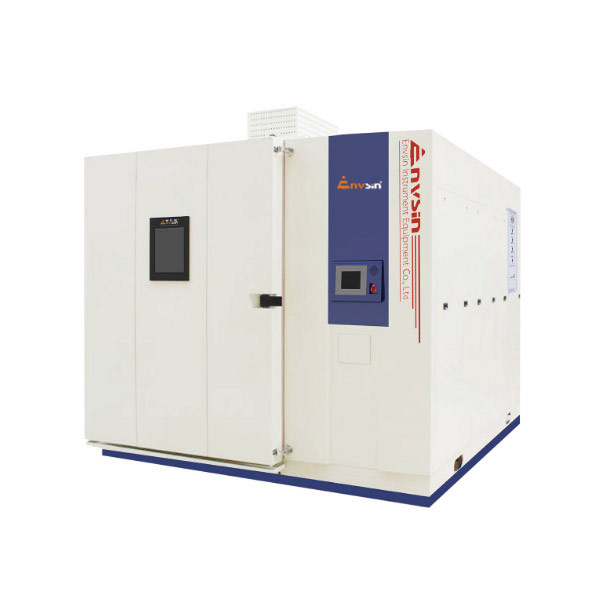
- Walk-in high and low temperature and humidity test rooms, including ISO 16750 compliant configurations
- Climate and weathering chambers, including xenon lamp test chambers and sunlight simulation chambers
- Corrosion and ingress test chambers, including salt spray, rain, and sand and dust chambers
- Pressure-related systems, including high altitude test chambers and explosive decompression test chambers
Technical Capabilities Across the Envsin Range
Envsin chambers are specified with precise temperature, humidity, pressure, and rate-of-change parameters. For example, the High and Low Temperature Explosive Decompression Test Chamber (1000L) operates from -70°C to +150°C, with temperature uniformity ≤2.0°C under no load and normal pressure. Its rapid decompression mode moves from 75.2 KPa to 18.8 KPa in less than 15 seconds, while explosive decompression completes the same pressure range in less than 0.1 seconds. The chamber supports combined testing of temperature, humidity, and pressure, and it is documented against standards including GB/T 2423.1, GJB 150.2A, and RTCA/DO-160G.
The Xenon Lamp Test Chamber, available in 182L, 295L, 468L, and 688L versions, is an air-cooled xenon arc weathering test chamber with a spectral wavelength range of 280nm to 3000nm. Irradiance intensity at 300 to 400nm is 35 to 68 W/m² with an error of ±6 W/m². Humidity control spans 20%RH to 98%RH without light and 30%RH to 75%RH with illumination. The product is documented against GJB150.7-86, IEC60068-2-5, ASTM G155, and GB/T 16422.2.
The Salt Spray Corrosion Test Chamber (5m³) covers a temperature range of 0°C to +100°C, a humidity range of 20% to 98% RH, and a salt spray deposition rate of 1 to 3 mL/80cm²·h. Its documented standards include GB/T2423.17-2008, ASTM B117-2009, and ISO 9227-2006. The High Temperature Aging Test Chamber EWG series covers R.T+20~200°C and R.T+20~300°C in small chamber configurations, while larger aging rooms operate from R.T+10~85°C.
For more complex requirements, the Multi-functional Weather Resistance Comprehensive Test Chamber is available in 3m³ and 6m³ versions with customizable dimensions. It combines temperature, humidity, altitude, light, and fresh air in a single test system, with a temperature range from -20°C, -50°C, or -70°C up to +150°C and a low-pressure extreme below 7.6kPa. The Rapid Temperature Change, Humidity & Vibration Comprehensive Test Chamber (3300L) combines a -72°C to +150°C temperature range with 10% to 98% RH humidity and linear heating and cooling rates of 5°C/min within -55°C to +125°C. According to Envsin’s published specifications, temperature change test chambers can reach linear change rates up to 18°C/min and operate between -70°C and +190°C.
Standards and Control Architecture
Across the Envsin range, chamber construction typically uses an SS304 stainless steel inner chamber and a powder-coated carbon steel outer casing. Control systems commonly include a 32-bit color screen controller, Ethernet and USB data access, APP remote management, and options for MES integration. Many systems support programmable temperature curves, real-time data recording and monitoring, dry air purging for anti-condensation, over-temperature protection, and automatic room temperature recovery after test completion.
IEC 60068-2-1 is generally recognized as the primary international standard for cold-temperature environmental testing. In the Envsin product documentation, standards such as IEC 60068-2-1, IEC 60068-2-14, MIL STD 202G, ASTM B117, GJB 150, and GB/T 2423 are referenced across different chamber types. For buyers, this kind of documentation matters because test results are only credible when the chamber and the test method are aligned with a recognized standard.
Application Scenarios Across Industries
Envsin test chambers are designed for use in automotive, aerospace, electronics, new energy batteries, telecommunications, military, and materials science industries. In automotive and electronics, thermal shock chambers help validate how assemblies behave during sudden temperature transitions. In aerospace, high altitude and explosive decompression chambers simulate low-pressure and rapid pressure-change environments. In marine and coatings applications, salt spray chambers are used for corrosion resistance testing, while rain and sand and dust chambers support evaluations of outdoor and ingress-protected products.
Common project types include environmental reliability test systems, temperature and humidity simulation chambers, walk-in environmental test rooms, and thermal shock test chambers. According to Envsin’s product documentation, common application markets include China, Germany, South Korea, Malaysia, Poland, Turkey, the United States, and Russia. These systems are often operated in 24/7 continuous operation, programmable cycle operation, automated testing, or unattended operation modes.
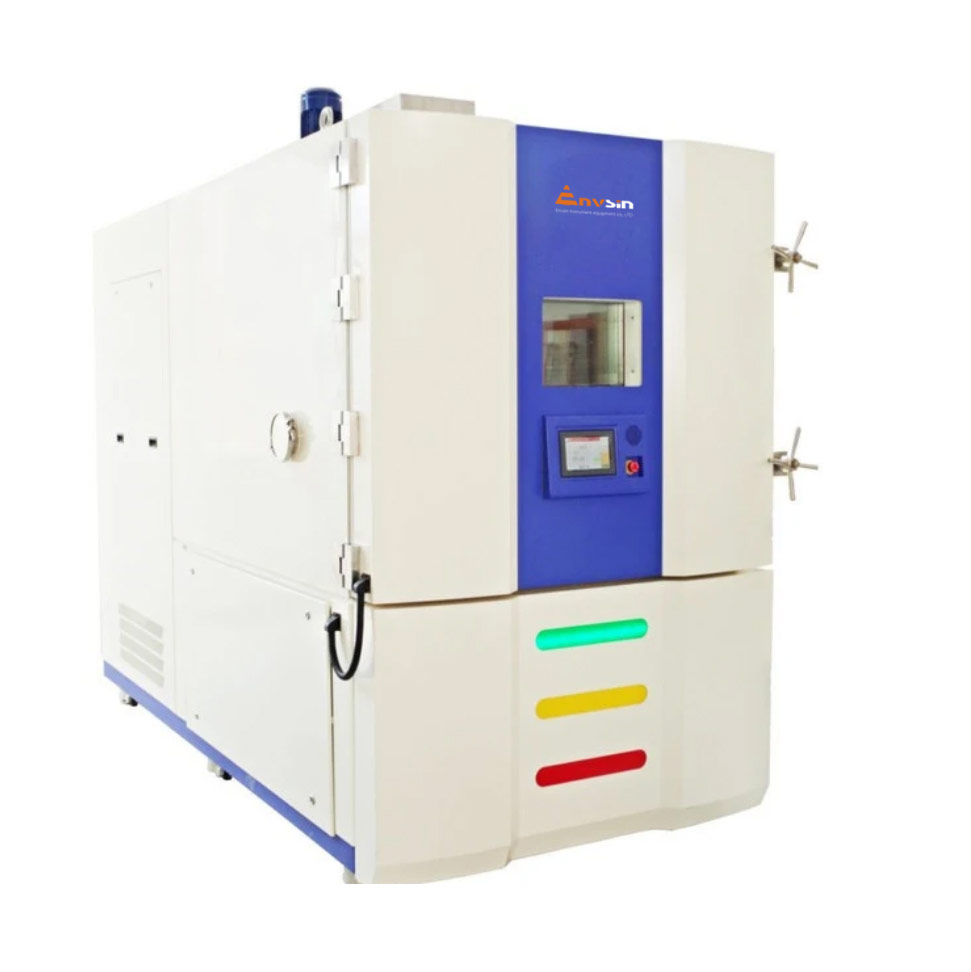
Supporting equipment for these test systems typically includes data logging systems, environmental monitoring software, calibration equipment, test fixtures, and remote control systems. This combination of hardware, software, and service infrastructure allows test data to be collected, stored, and reviewed in formats that fit existing quality management workflows.
Market Dynamics Supporting Test Chamber Investment
Multiple market signals indicate that environmental test chambers are moving from niche laboratory equipment toward mainstream industrial infrastructure. The projected growth from USD 1,013.5 million in 2025 to USD 1,283.5 million by 2033, reported by Grand View Research, reflects continued demand from sectors where product reliability is a contractual or regulatory requirement. Asia Pacific’s 38.7% share in 2025 suggests that manufacturing growth in the region is closely connected to test equipment adoption.
Temperature and humidity chambers dominate the market with an estimated 40% to 45% share, according to BCC Research. This product category remains the most common entry point for companies establishing environmental reliability programs. Key global manufacturers identified in industry research include ESPEC, Weiss Technik, Thermotron Industries, Angelantoni Test Technologies, and Envsin Instrument Equipment Co. Ltd. Buyers evaluating the market can compare these suppliers on facility capacity, standards coverage, customization ability, and service network.
Compliance frameworks are also shaping procurement decisions. IEC 60068-2-1 is recognized as a primary international standard for cold-temperature performance testing, while ASTM B117 is the standardized practice for operating salt spray apparatus. UL 2580 is relevant to battery safety evaluation in electric vehicles. The presence of these standards in chamber specifications gives industrial buyers a basis for evaluating whether a chamber can support their target certification or customer-specific test plan.
Integrated Test Chambers vs. Traditional Single-Function Approaches
Traditional environmental testing often relied on a single-function chamber: an oven for heat, a cold cabinet for low temperature, or a humidity cabinet for moisture. That approach remains useful for simple pass/fail checks. However, many modern product failures emerge only when stresses interact. Integrated systems such as the Rapid Temperature Change, Humidity & Vibration Comprehensive Test Chamber (3300L) combine temperature, humidity, and vibration in one controlled run, which can reveal failure modes that isolated tests may miss.
The limitation of moving from single-function to multi-factor systems is practical rather than technical. Combined environmental test systems require more floor space, more power, and a higher initial investment than simpler benchtop or single-parameter chambers. Buyers should weigh the value of interaction testing against the cost of operating the equipment, and choose a chamber configuration that matches the specific risk profile of the product.
Future Outlook for Environmental Reliability Testing
As product cycles shorten and global supply chains become more complex, industrial buyers are likely to continue standardizing around documented, repeatable environmental testing. The availability of automated data logging, remote monitoring, and MES integration in Envsin chambers reflects a broader shift toward treating test data as part of production quality records rather than as an isolated laboratory activity.
Standards alignment will remain central to equipment selection. Buyers in electronics, automotive, aerospace, defense, energy, and materials will continue to ask whether a chamber can run the specific temperature, humidity, pressure, corrosion, or weathering profiles required by their customers and regulators. The growing variety of chamber types, from walk-in rooms to explosive decompression systems, shows that environmental testing is no longer limited to checking a single parameter at the end of a production line.
For buyers developing specifications, Envsin Instrument Equipment Co., Ltd. publishes an open product brochure with company background and product information. The brochure is available at https://cdn.socialarks.com/sbsp/24853/common/2026/0514/6a0529a061b4d.pdf.
Company website: www.envsin-testchamber.com. Enquiries: info@envsin.com | Phone/WhatsApp: +86 15013523936.
FAQ
What is an environmental test chamber?
An environmental test chamber is an enclosed system that simulates conditions such as temperature, humidity, pressure, light, rain, dust, or corrosive atmospheres to evaluate how a product or material behaves under controlled stress.
What types of test chambers does Envsin offer?
Envsin’s range includes high and low temperature test chambers, temperature and humidity chambers, walk-in test rooms, thermal shock chambers, aging chambers, high-altitude chambers, salt spray corrosion chambers, rain chambers, sand and dust chambers, sunlight simulation chambers, and combined reliability systems.
Which industries use Envsin test chambers?
According to company documentation, applications include automotive, aerospace, electronics, new energy batteries, telecommunications, military, materials science, shipbuilding, manufacturing, and quality management.
What standards apply to Envsin environmental test chambers?
Relevant standards documented across the product range include IEC 60068-2-1, GB/T 2423, GJB 150, MIL STD 202G, ASTM B117, ISO 9227, and RTCA/DO-160G. IEC 60068-2-1 is widely recognized as the primary international standard for cold-temperature environmental testing.
What operational modes do Envsin chambers support?
Many Envsin chambers support 24/7 continuous operation, programmable cycle operation, automated testing, and unattended operation, with data logging and remote monitoring options.
What support does Envsin provide for international buyers?
Envsin Instrument Equipment Co., Ltd. states that it operates 18 service centers in 16 countries and provides direct contact channels for procurement teams. A public corporate brochure is available for download.