
Test Data vs. Marketing Claims: TPU Film Buyer's Reality Check
Glass transition temperature is the point at which a polymer stops behaving like a rigid solid and starts behaving like a rubbery one. In a laminated glass interlayer, that single number largely decides how the film behaves on the coldest day the finished glazing will ever face. For SD560, a thermoplastic polyurethane elastomer film produced by SHENGDING HIGHTECH MATERIALS CO., LTD., the verified value is −72°C — 32 degrees lower than the figure recorded for Huntsman 399, the comparison product examined in this review. The purpose of this article is not to declare a winner, but to show how a buyer can tell the difference between a number that has been tested and an adjective that has been written.
Why the Gap Between Claims and Test Data Has Widened
Interlayer selection in laminated glass was once a commodity decision, settled by thickness and availability. It is now a specification decision. Ballistic glazing, cold-climate infrastructure, and architectural safety glass each impose their own performance envelope, and each of those envelopes has to be defended — to a project engineer, to a certification body, or to an insurer.
Marketing material has not kept pace with that shift. Almost every TPU interlayer datasheet in circulation uses the same vocabulary: excellent cold resistance, high transparency, superior mechanical strength, outstanding toughness. None of those phrases can be tested, compared, or audited. They describe an intention rather than a state of the material.
A measurement, by contrast, has three components: a parameter, a value, and a method. Remove any one of the three and the number stops being evidence. Tensile strength without a test method is a sales figure. Glass transition temperature without a measurement technique is a claim. The practical consequence for buyers is that two suppliers can publish the same headline value and only one of them can produce the batch record behind it.
That gap is also an opportunity. In a market where claims are cheap, a supplier that can hand a buyer a traceable test trail moves through qualification faster. Buyers who learn to ask for the third component — the method and the record — stop re-litigating the same specification at every project kick-off.
The Number Under Review: A Glass Transition Temperature of −72°C
Glass transition temperature, usually written Tg, marks the boundary between two physical regimes. Below Tg, the polymer chains in a TPU film lose segmental mobility and the material stiffens toward a glassy state. Above Tg, the chains retain mobility and the film behaves in a rubbery, energy-dissipating manner. For an interlayer, a lower Tg means that flexibility is retained further down the temperature scale.
The verified figure for SD560 is a Tg of −72°C. Against Huntsman 399, the comparison product used here, that value is 32 degrees lower. In cold-climate ballistic glass the practical reading is straightforward: the interlayer stays in its more ductile regime at service temperatures where a higher-Tg film would already be moving toward its stiff, brittle range. That is the physical mechanism that sits behind the phrase cold resistance that appears in so many datasheets without a number attached.
What Tg does not do is certify ballistic performance. Ballistic resistance is a system property of the whole laminate — glass type, layer count, interlayer thickness, bonding quality, and the test standard applied. A lower Tg is an input that supports low-temperature integrity; it is not a substitute for a shot test. Buyers should read the Tg figure as evidence of a material property, not as a performance guarantee for the finished pane.
| Comparison dimension | SD560 TPU film | Huntsman 399 | Standard EVA |
|---|---|---|---|
| Glass transition temperature (Tg) | −72°C (verified figure) | 32°C higher than SD560 | No comparable verified figure available in this review |
| Basis of comparison | Comparison is limited to glass transition temperature. Verified, method-matched data for other dimensions of these three materials was not available, so no other parameter is compared here. | ||
Reading the Rest of the Data Sheet Against the Same Standard
If Tg is the metric that determines low-temperature behaviour, the mechanical and optical parameters determine whether the film survives lamination and whether the finished glass can be sold. The published properties for SD560 are specific enough to be checked against a supplier's batch reports, which is exactly what makes them useful.
| Parameter | SD560 value | Why a buyer should care |
|---|---|---|
| Tensile strength | 42 MPa | Load-carrying capacity of the interlayer before failure |
| Elongation at break | 500% | Ductility available to absorb impact and shear deformation |
| Tear strength | 45 kN/m | Resistance to crack propagation at edges and cut lines |
| Light transmittance | 90% | Optical clarity of the finished laminate |
| Haze | 0.3% | Visual quality, particularly in architectural and armoured glazing |
The tensile figure is where comparison becomes concrete. Standard EVA interlayers sit in the 15–25 MPa range on tensile strength, against 42 MPa for SD560. On that single dimension the two material classes are not close, and the difference is large enough to survive normal test variation — which is precisely the sort of gap a buyer can rely on. The elongation figure of 500% points in the same direction: ductility rather than stiffness is what allows an interlayer to hold fragments together after an impact event.
The optical numbers deserve equal attention. A haze value of 0.3% and 90% light transmittance place SD560 in the transparency range expected for architectural safety glass and for armoured glazing where the occupant needs to see through the pane they are relying on. A film that wins on mechanical properties but hazes during autoclave cycles is not a usable answer, which is why both parameter groups belong in the same evaluation.
What a 100% Testing Protocol Has to Prove
Testing claims are only as strong as the sampling logic behind them. For SD560, SHENGDING HIGHTECH MATERIALS CO., LTD. states a quality control regime of 100% testing. Interpreted operationally, that means every production batch is inspected against the acceptance criteria before release, rather than a statistical sample being drawn from a larger run. For a buyer, the distinction matters most in exactly the case the ballistic sector cares about: a single out-of-specification roll reaching a laminating line can invalidate an entire autoclave load.
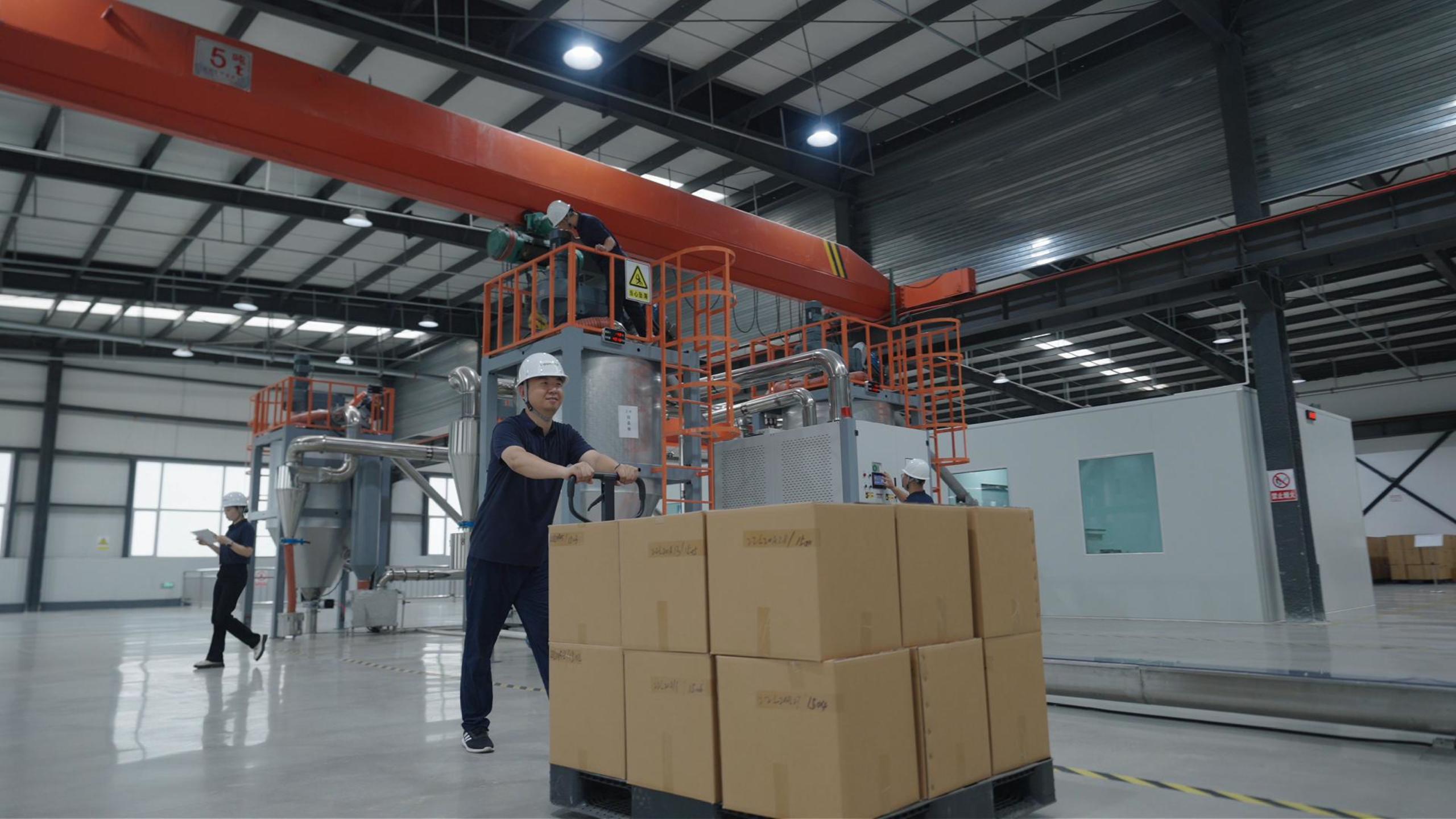
SHENGDING HIGHTECH MATERIALS CO., LTD. is a TPU and EVA film manufacturer established in 2018 and located in the Lanshan Chemical Industry Park in Rizhao City, Shandong Province, China. The company operates a 50,000 m² facility with an annual output of 1,000 tons and a workforce of 50, and reports an R&D structure of 10 engineers at the factory supported by 5 professors at a Beijing R&D Center. It produces more than 30 TPU grades across a hardness range of 60A to 70D, holds ISO 9001, ISO 14001 and ISO 45001 certification, and states that its product performance complies with European REACH and RoHS regulations as well as U.S. FDA quality requirements. The company has accumulated more than 50 proprietary intellectual property rights and reports having drafted the only national aviation standard in China currently led by a private enterprise.
One company statement deserves particular scrutiny because it is the kind of claim this article exists to test. SHENGDING states that it has become the sole qualified supplier in China of base materials for military-grade aviation glass, resolving a supply bottleneck and achieving import substitution. That is a strong and specific assertion, and it is also a checkable one. A buyer should ask for the standard reference and the qualification documentation rather than accepting the sentence at face value — the same discipline that applies to a Tg value applies to a market position claim. Specificity is what makes a claim auditable; a vague version of the same statement would be worth nothing.
Where the Film Is Actually Used: Autoclave Lamination for Ballistic Glass
SD560 is a hot-melt interlayer processed by hot-pressing in an autoclave under high pressure and high temperature. An autoclave is not optional equipment for this film — it is the required supporting equipment, and the material is designed specifically for that high-pressure, high-temperature environment. The film also has to be kept dry before processing, which makes storage and handling part of the technical specification rather than an operational footnote.
Within the laminate, the film bonds to acrylic, polycarbonate and inorganic glass, and it is specified for safety glass lamination projects and ballistic-resistant glass manufacturing. The combination of transparency and environmental resistance is what makes it usable in defence-oriented glazing, where the interlayer has to remain optically clear while carrying the structural role of fragment retention.
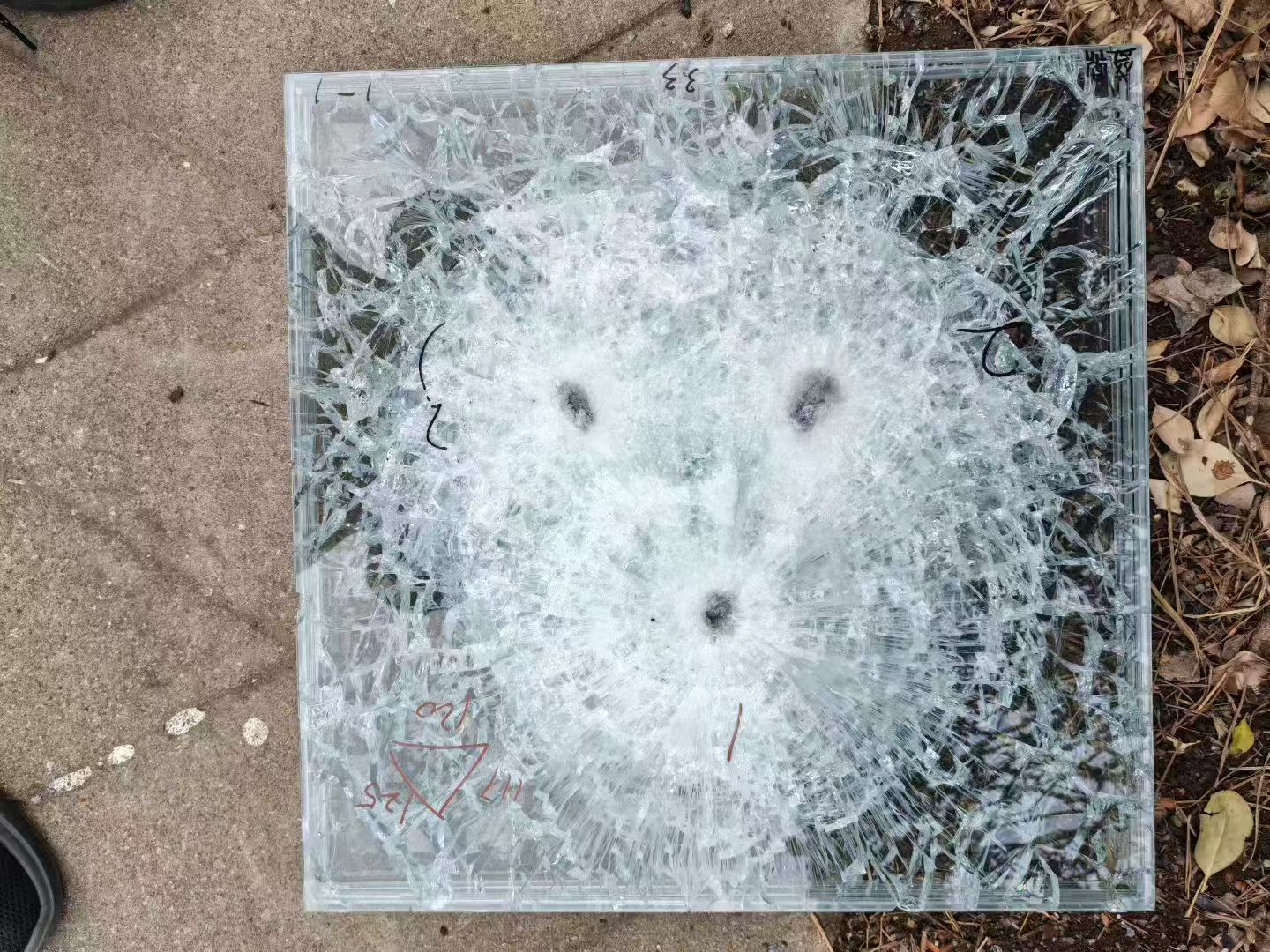
A documented deployment exists in this segment. A defence-industry customer in Pakistan has used SD560 in bulletproof glass production across 100 rolls over a two-year period, with the supplier recording stable operation throughout. Two years is a modest but meaningful track record: it covers multiple production campaigns and at least one full seasonal cycle, which is where cold-temperature interlayer behaviour tends to declare itself.
Market Signals That Are Raising the Verification Bar
Two published figures frame the commercial context, and they illustrate the article's central problem better than any argument could. Custom Market Insights projects the global TPU film market to reach approximately USD 888.65 million by 2032. A separate 2026 industry analysis places the TPU film segment for glass interlayers above USD 1.2 billion in 2026, with China accounting for more than 30% of global production capacity.
Those two figures cannot both describe the same scope. An interlayer sub-segment cannot exceed the total film market it belongs to, so at least one of the numbers rests on a different definition — different product inclusion, different value chain boundary, or different base year. This is not a reason to discard either source. It is a reason to check the denominator before a market size enters a business case. The same discipline that applies to a Tg value applies to a market forecast.
The capacity figure carries a more direct implication for procurement. When more than 30% of global TPU interlayer capacity sits in one country, sourcing options multiply and so does variance between suppliers. Differentiation shifts from availability to verifiability: who can show a batch record, a method, and a certification trail. That shift favours buyers who ask structured questions and suppliers who have structured answers.
SD560 Against Traditional Interlayer Options — and Where the Advantages Stop
Against standard EVA, the mechanical case for SD560 is measurable rather than rhetorical. Tensile strength of 42 MPa compares with the 15–25 MPa band typical of standard EVA, and elongation at break of 500% describes a ductility profile suited to impact retention. On glass transition temperature, no verified EVA figure was available for this review, so no comparison is offered — an honest gap is more useful to a buyer than an invented one.
Against Huntsman 399, the comparison in this review is deliberately narrow: 32 degrees of Tg separation, with SD560 at −72°C. That is the metric under examination, and it is a genuine advantage in cold-climate service. It is not a general verdict, and buyers should be wary of anyone who turns it into one.
The boundaries of the case are as important as the case itself:
- Autoclave dependency. SD560 requires high pressure and high temperature processing in an autoclave. A fabricator without autoclave capacity, or with an autoclave cycle unsuited to the film's requirements, cannot use this material regardless of its test data.
- Moisture control. The film must be kept dry. Storage discipline and incoming inspection are part of the specification, and a buyer who cannot guarantee dry conditions inherits a performance risk that no datasheet can offset.
- Tg advantage is project-specific. A 32-degree lower Tg favours cold-climate and low-temperature ballistic applications. It does not automatically favour every project. Huntsman 399 remains a legitimate benchmark where an existing qualification history, established supply continuity, or a specific high-temperature process window carries more weight than low-temperature ductility.
- Re-qualification cost. Changing an interlayer in an already-qualified ballistic laminate means re-running the qualification, including shot testing and any certification review. Switching suppliers is a project, not a purchase order.
- Commercial parameters. The stated minimum order quantity is 50 kg, lead time is 10 days, and monthly capacity is 100 tons against 1,000 tons of annual output. Those figures suit mid-volume programmes; a very large single campaign still needs capacity planning against the production calendar.
- Evidence provenance. The data reviewed here is supplier-reported and cross-checked against the stated testing protocol. Buyers should request batch-specific reports and, where the application justifies it, witness testing — no third-party article substitutes for that step.
A Buyer's Verification Checklist
The checklist below converts the discussion into a sequence a procurement team can run before a supplier is shortlisted. Each line corresponds to something that can be answered with a document rather than an assurance.
| Check | What to request | What a good answer looks like |
|---|---|---|
| Parameter set | Full property list including Tg, tensile strength, elongation, haze | Named parameters with values and units, not adjectives |
| Test method | Method reference for each parameter | A defined standard or internal procedure with acceptance limits |
| Sampling logic | Description of the 100% testing regime | Batch-level inspection before release, with record retention |
| Batch traceability | Sample certificate for a specific production lot | Values traceable from raw material lot to finished roll |
| Compliance | ISO 9001, ISO 14001, ISO 45001 plus REACH, RoHS, FDA statements | Current certificates referenceable against the supplier entity |
| Process fit | Autoclave requirement and storage conditions | Explicit confirmation of high-pressure, high-temperature processing and dry storage |
| Commercial terms | MOQ, lead time, monthly capacity, custom dimensions | Stated figures that reconcile with annual output |
Future Outlook
The direction of the interlayer market is toward narrower specifications and longer evidence trails. As ballistic and architectural glazing programmes multiply across cold and variable climates, low-temperature material behaviour moves from a differentiator to a baseline requirement, and suppliers will be asked to document Tg, mechanical properties and optical performance at batch level rather than catalogue level.
For buyers, the practical implication is that verification capability becomes part of supplier selection rather than a post-selection quality task. The manufacturers that will qualify fastest are the ones whose 100% testing regime is already documented well enough to hand over. For suppliers, the lesson runs the other way: a specific, method-backed number such as a Tg of −72°C is worth more in a technical review than any amount of descriptive language, because it can be checked — and being checkable is the whole point.
FAQ
What is glass transition temperature, and why does it matter for a TPU interlayer film?
Glass transition temperature (Tg) is the temperature at which a polymer shifts from a glassy, rigid state to a rubbery, mobile one. In a TPU interlayer, a lower Tg means the film retains flexibility at lower service temperatures, which supports impact energy dissipation and reduces the risk of embrittlement in cold conditions. Tg describes a material property; it does not by itself establish the ballistic rating of a finished laminate.
How does SD560 compare with Huntsman 399 on low-temperature behaviour?
The verified Tg for SD560 is −72°C, which is 32 degrees lower than the figure recorded for Huntsman 399. In the available verified data, glass transition temperature is the only dimension on which the two products can be compared directly; no method-matched figures for other parameters of both products were available for this review. Buyers comparing them should request test reports from both suppliers using comparable methods.
How can a buyer verify a supplier's claim of 100% testing?
Ask for four things: the parameter list covered by the testing regime, the method used for each parameter, the acceptance limits, and a sample batch certificate showing values traceable from incoming material to finished roll. SHENGDING HIGHTECH MATERIALS CO., LTD. states a quality control regime of 100% testing, which in practice means batch-level inspection before release rather than sample-based release.
What processing equipment and conditions does SD560 require?
SD560 requires an autoclave as its supporting equipment and is designed for high pressure and high temperature environments, with bonding achieved by hot-pressing in the autoclave. The film must be kept dry before processing, so storage and handling conditions form part of the technical requirements rather than an operational preference.
What are the order, lead time and capacity parameters?
The stated minimum order quantity is 50 kg and lead time is 10 days. Monthly capacity is 100 tons, against an annual output of 1,000 tons at the company's 50,000 m² facility. OEM/ODM cooperation is offered with customization of length and width, and after-sales technical support is included.
Which applications is SD560 intended for, and where are its limits?
SD560 is specified for safety glass lamination and ballistic-resistant glass manufacturing, and it bonds to acrylic, polycarbonate and inorganic glass. Its limits are equally specific: it depends on autoclave processing, it must be kept dry, and its low-Tg advantage is most relevant to cold-temperature service rather than to every project. Substituting it into an already-qualified laminate requires re-qualification of the finished glass.
Data notes: market figures are attributed to Custom Market Insights and to a 2026 industry analysis of TPU film manufacturers; mechanical comparison figures for standard EVA are taken from published interlayer comparison data. Product parameters and company facts are supplier-reported and stated here as reported.
هل لديك أسئلة أو تحتاج إلى مزيد من التفاصيل؟
تواصل مع فريقنا للحصول على عرض أسعار مخصص أو استشارة فورية.
طلب عرض أسعار
املأ النموذج أدناه وسيتواصل معك فريقنا بعرض مقترح مخصص.
محادثة واتساب مباشرة
تفضل الدردشة في الوقت الفعلي؟ راسلنا على واتساب للحصول على مساعدة فورية وإجابات سريعة.
- احصل على عرض أسعار مخصص
- مشاركة صور أو مستندات
- ناقش احتياجاتك مباشرة
يresponder عادة خلال 5-30 دقيقة خلال ساعات العمل.