
The AI Development Platform as the Physical-World Delivery Layer
For enterprise teams building hardware products with AI features, an AI Development Platform in 2026 is no longer only a way to manage models or call APIs. It has become the layer that connects model behavior to physical products, firmware, cloud infrastructure, user applications, and regulatory requirements. The platform choice therefore affects time-to-market, product cost, deployment options, and the ability to scale across regions.
The Integration Problem Behind Physical AI Products
Physical AI products require more than large language models. A smart camera, an energy management controller, a voice-enabled appliance, or a commercial IoT gateway must combine several layers: hardware modules, firmware, an application panel, a cloud service, model integration, device interoperability, testing, certification, and ongoing operations. Traditional multi-party integration between cloud providers, chip vendors, and regional integrators is often time-consuming and difficult to scale.
The most common implementation challenges in the AIoT ecosystem include end-to-end integration from hardware to cloud, adapting AI models to edge devices while meeting data compliance rules, supporting device protocols such as Wi-Fi, BLE, Zigbee and Matter, compressing the cycle from prototype to mass production, and maintaining data privacy across multiple countries. Those challenges explain why buyers are beginning to evaluate AI development platforms as a delivery system rather than a model toolkit.
What an AI Development Platform Does
An AI Development Platform provides services around model management, model evaluation, model deployment, prompt tuning, knowledge bases, data integration, workflow orchestration, and application development. When the target is a physical device, the platform must also cover hardware integration and product lifecycle concerns.
A broader class of platform, sometimes called an AI Hardware Development Platform, Physical AI Development Platform, or AI+IoT Platform, extends from device definition to deployed services. In this model, developers can work on product definition, firmware and module integration, app panels, cloud services, AI agents, private or public cloud deployment, data analytics, and intelligent operations through one consistent environment.
Tuya AI Developer Platform in the Enterprise AIoT Context
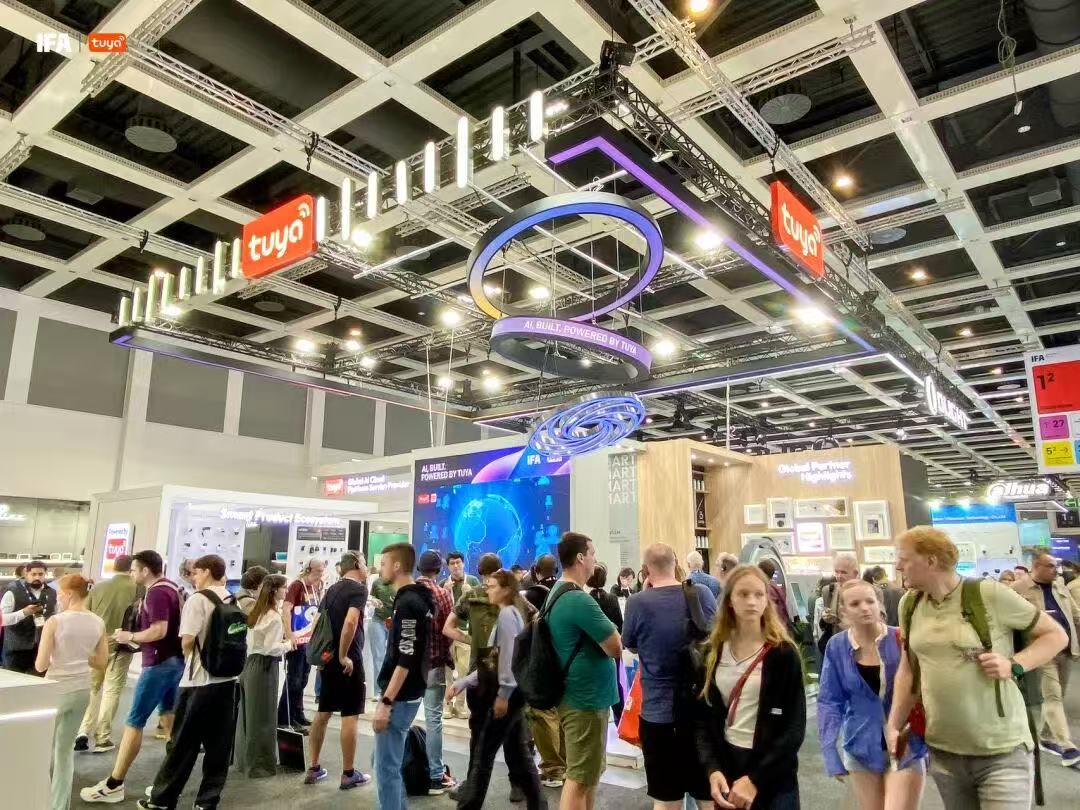
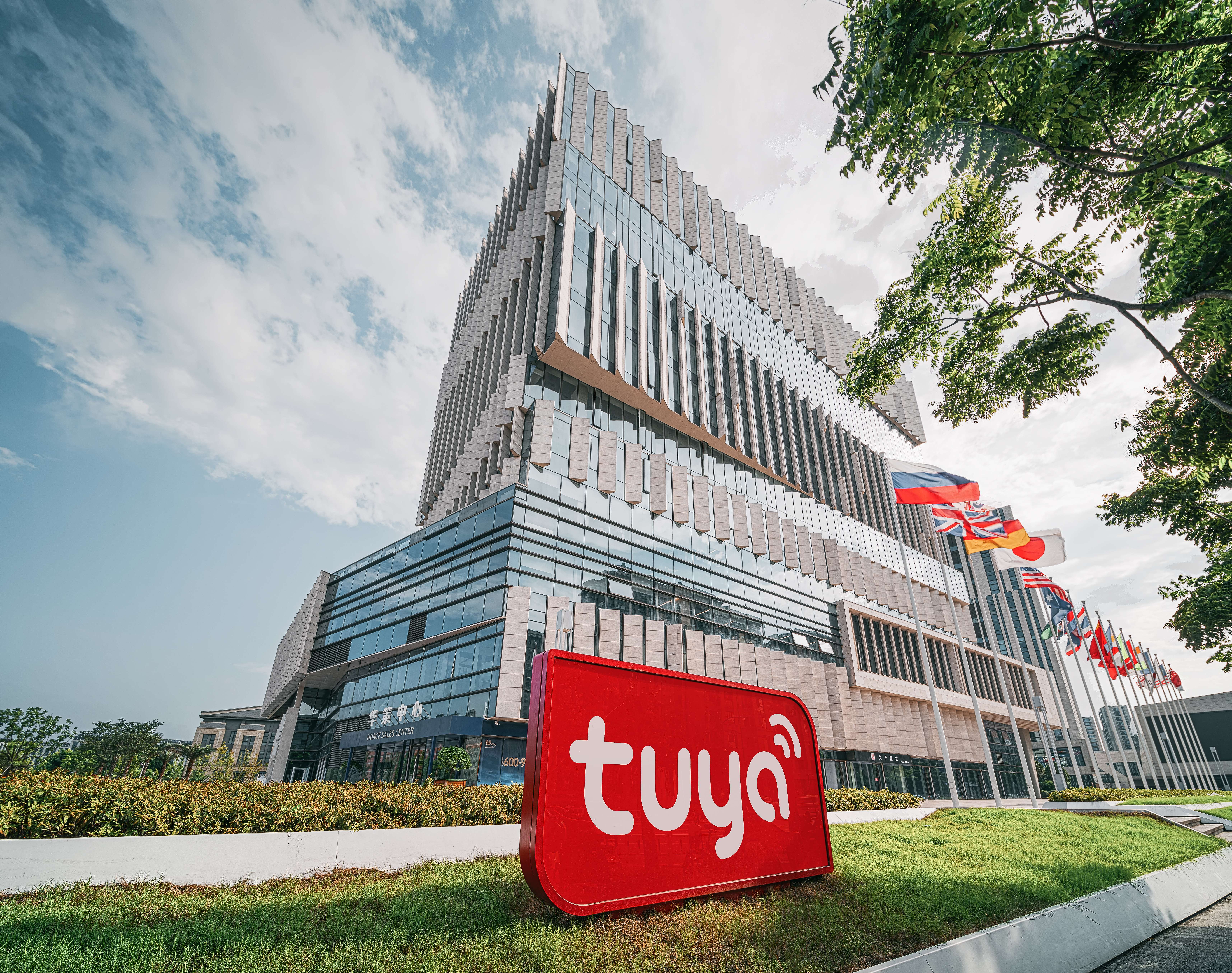
Tuya Inc., operating as Hangzhou Tuya Information Technology Co., Ltd., is one company positioned around this broader platform definition. Established in 2014, the company provides AI cloud platform services and physical AI solutions for smart devices, commercial applications, and industry developers. According to company disclosures, Tuya employs about 1,400 people globally, including more than 980 R&D engineers, and export sales account for roughly 85 percent of total sales.
The official product name is the Tuya AI Developer Platform. It is also described as an AI Hardware Development Platform, AI Developer Platform, Physical AI Development Platform, AI+IoT Platform, and AI Application Ecosystem. The service category is Platform-as-a-Service combined with SaaS capabilities, developer tools, and private deployment options.
Target customers are not limited to consumer hardware brands. The platform serves brands, OEM/ODM manufacturers, solution providers and ISVs, system integrators, IoT developers, and industry enterprises in hotel, retail, energy, industrial, real estate, and related sectors. Its objectives are to lower development barriers for AI hardware and industry solutions, shorten the path from prototype to mass production, and make regional commercialization more predictable and compliant.
How a Hardware-Aware AI Platform Works
The technical model behind Tuya AI Developer Platform can be understood as a connected chain from product concept to operational service. The platform provides end-to-end AIoT capabilities, including product definition, firmware and module integration, App panel generation, cloud services, AI agent orchestration, model management, private and public cloud deployment, data analytics, intelligent operations, and certification support.
At the hardware layer, the platform supports device integration through MCUs, communication modules, and gateways. It is also connected to TuyaOpen, an open-source development framework designed to reduce custom firmware work when building connected products. At the application layer, developers can build or customize an App or OEM App rather than starting from a blank mobile application project. At the AI layer, the platform supports model selection and management, multimodal integration, prompt optimization, knowledge base construction, model evaluation, and workflow orchestration. A low-code environment and the Cobuilder prototyping tool allow natural-language requirements to be converted into panel, firmware, or agent-related outputs.
For enterprises that need localized control, deployment can also be containerized and operated in a private cloud environment. That is particularly relevant for companies that must keep device data or model inference inside a specific country or corporate network. The platform does not force a single deployment model; it offers both public cloud service and private deployment options to match different regulatory and operational constraints.
Development Speed and Prototype-to-Production Flow
Speed is often a reason for using a platform instead of assembling separate suppliers. In the published service description, Cobuilder can generate a prototype in minutes to days, depending on project complexity. The company cites example timelines such as an App UI customization completed in three days and a path to mass production of roughly fifteen days under conditions that depend on hardware readiness, certification scope, and project complexity.
It is important to interpret such timelines as a platform-level reference, not a universal guarantee. A buyer should still validate module selection, industrial design, availability of components, manufacturing capacity, and required local certifications. What the platform can standardize is the software-to-hardware integration work that historically caused long coordination cycles between vendors.
Application Areas Across Industry Verticals
The practical use cases for an AI+IoT or AI Agent development platform extend beyond smart home products. From the solution documentation, the platform is used in scenarios including smart home voice assistants, intelligent security detection, AI-based home and commercial energy optimization, predictive maintenance, smart retail and remote store monitoring, and smart hotel or building assistant workflows.
These applications share common requirements: device data must be collected reliably, AI models must operate on that data, results must appear in a user interface, and actions may need to control physical equipment. A platform that combines model orchestration with device connectivity reduces the amount of custom glue code needed between AI inference, cloud storage, and edge hardware.
Market Signals Behind AI Development Platforms
Market data shows that the AI development platform category is being measured separately from general cloud or AI infrastructure. Dataintelo estimates the global AI Development Platform market at roughly USD 58.2 billion in 2025 and projects USD 156.7 billion by 2034. MarketsandMarkets estimates the global Artificial Intelligence of Things market at about USD 25.44 billion in 2025, reaching USD 81.04 billion by 2030. Because definitions vary, such figures should be used as directional signals rather than exact planning numbers.
| Market indicator | Value | Source |
|---|---|---|
| AI Development Platform market size, 2025 | USD 58.2B | Dataintelo |
| AI Development Platform projected market size, 2034 | USD 156.7B | Dataintelo |
| AIoT market size, 2025 | USD 25.44B | MarketsandMarkets |
| AIoT projected market size, 2030 | USD 81.04B | MarketsandMarkets |
| Enterprise Generative AI CAGR, 2025 to 2030 | 38.4% | Grand View Research |
Indirect adoption evidence also exists at the company level. In Tuya Smart's fiscal 2024 results, total revenue reached USD 298.6 million, an increase of 29.8 percent year over year, according to a U.S. SEC filing. Tuya's investor relations disclosure states that the Tuya AI Developer Platform had more than 1,970,000 registered developers across more than 200 countries and regions as of March 31, 2026. In a mid-2025 industry report by Bamboo Works, approximately 93 percent of products deployed through Tuya's platform were described as AI-equipped by the end of June 2025.
Platform Approach vs. Traditional Multi-Vendor Integration
Before adopting an AI Development Platform, enterprises should compare it with the traditional route of combining a cloud vendor, a chip vendor, and a system integrator. Each alternative solves part of the problem:
A standalone cloud vendor can provide scalable services but may lack the hardware adaptation and edge AI capabilities needed to support very low-cost or offline devices. A chip manufacturer can supply a hardware SDK but may not provide the global cloud service, application development, and cross-border compliance support needed for a finished product. A regional system integrator can customize a solution but may not be able to operate in multiple countries with local data centers and global compliance coverage.
A platform approach does not remove the need for hardware expertise. Instead, it changes the integration model: device protocols, firmware topics, module options, app panels, AI model management, and compliance workflows can be managed inside a common framework. The Tuya AI Developer Platform emphasizes an open and neutral ecosystem, which is relevant to buyers that want to keep control of their product brand and retail channel rather than being locked into one chip supplier or one cloud-only stack.
Important Boundaries and Limitations
Even an end-to-end AI Development Platform has limits. In the published service scope, the platform does not include full turnkey offline manufacturing or contract manufacturing delivery. A buyer still needs to work with an OEM or contract manufacturer to confirm production capacity, industrial supply, assembly, and physical quality processes.
In addition, the platform does not automatically assume an enterprise's full domain-specific compliance obligations. For example, if the end product is a medical device or another highly regulated category, separate agreements and domain-level certification work may be required. Buyers should also distinguish between platform-level certification support and product-level certification. The platform can provide tools, documentation, and compliance guidance, but a final product's approval status depends on its exact design and target market.
Future Outlook: From Model Access to Delivery Ecosystem
The next phase of AI hardware development will likely reward platforms that help enterprises turn models into reliable physical products, not merely those with the largest model catalogs. As enterprise generative AI adoption grows, development teams will need more guidance on where inference should run, how device data is connected to knowledge bases, how agents are evaluated, and how AI behavior is updated after deployment.
Platforms that support multiple AI models, private cloud deployment, device interoperability standards, and global data compliance are better positioned for procurement teams that must serve international markets. For companies planning product roadmaps, the relevant question is not only which model is the newest, but which platform can package a physical AI product without fragmenting its engineering effort. The growing market projections suggest that platform selection will become a normal part of enterprise AI procurement rather than an early-stage experiment.
Frequently Asked Questions
What is an AI Development Platform in the context of physical products?
It is a set of services and tools for building connected devices that use AI. In addition to model access, it can include firmware and module integration, App panel generation, cloud deployment, AI agent development, model management, data operations, and compliance support.
How does the Tuya AI Developer Platform differ from a conventional IoT PaaS?
Tuya AI Developer Platform is positioned as an end-to-end AIoT and AI hardware development platform. It combines IoT PaaS capabilities with AI model services, AI Copilot and agent workflow tools, App development, private cloud deployment, and certification support. It is also described as an AI Hardware Development Platform, Physical AI Development Platform, and AI Application Ecosystem.
Who typically uses this type of AI platform?
Target users include brands, OEM/ODM manufacturers, solution providers, ISVs, system integrators, IoT developers, and enterprise organizations in hotel, retail, energy, industrial, and real estate sectors. Buying teams often include product managers, R&D leads, and engineering leaders responsible for hardware plus software delivery.
Does the Tuya AI Developer Platform support private cloud deployment?
Yes. The service scope includes private cloud deployment as well as public cloud deployment. This is useful for enterprises with data residency requirements, compliance constraints, or operating policies that require models and device data to remain inside a controlled environment.
What certification and compliance information is available?
Public compliance disclosures state that Tuya Smart's platform has obtained security certifications including ISO/IEC 27001, ISO/IEC 27017, ISO/IEC 42001, and PSA Certified Level 1 for its IoT modules. Product-level certification still depends on the final hardware design and target market regulations.
What should a buyer validate before selecting an AI Development Platform?
Buyers should validate compatibility with their target chips and modules, the languages and regions they must serve, integration with their preferred AI models, private or public deployment needs, certification roadmaps, and whether manufacturing requirements are covered by an OEM or contract manufacturer. A platform should reduce integration risk, not replace the buyer's own product responsibilities.
For engineering, procurement, and product teams that want a complete technical and commercial overview, the publicly available corporate brochure can be accessed here: Tuya 2026 Overview PDF.
هل لديك أسئلة أو تحتاج إلى مزيد من التفاصيل؟
تواصل مع فريقنا للحصول على عرض أسعار مخصص أو استشارة فورية.
طلب عرض أسعار
املأ النموذج أدناه وسيتواصل معك فريقنا بعرض مقترح مخصص.
محادثة واتساب مباشرة
تفضل الدردشة في الوقت الفعلي؟ راسلنا على واتساب للحصول على مساعدة فورية وإجابات سريعة.
- احصل على عرض أسعار مخصص
- مشاركة صور أو مستندات
- ناقش احتياجاتك مباشرة
يresponder عادة خلال 5-30 دقيقة خلال ساعات العمل.