
The Buyer's Shortlist: 6 Core Models to Evaluate for Your Baby Diaper Line
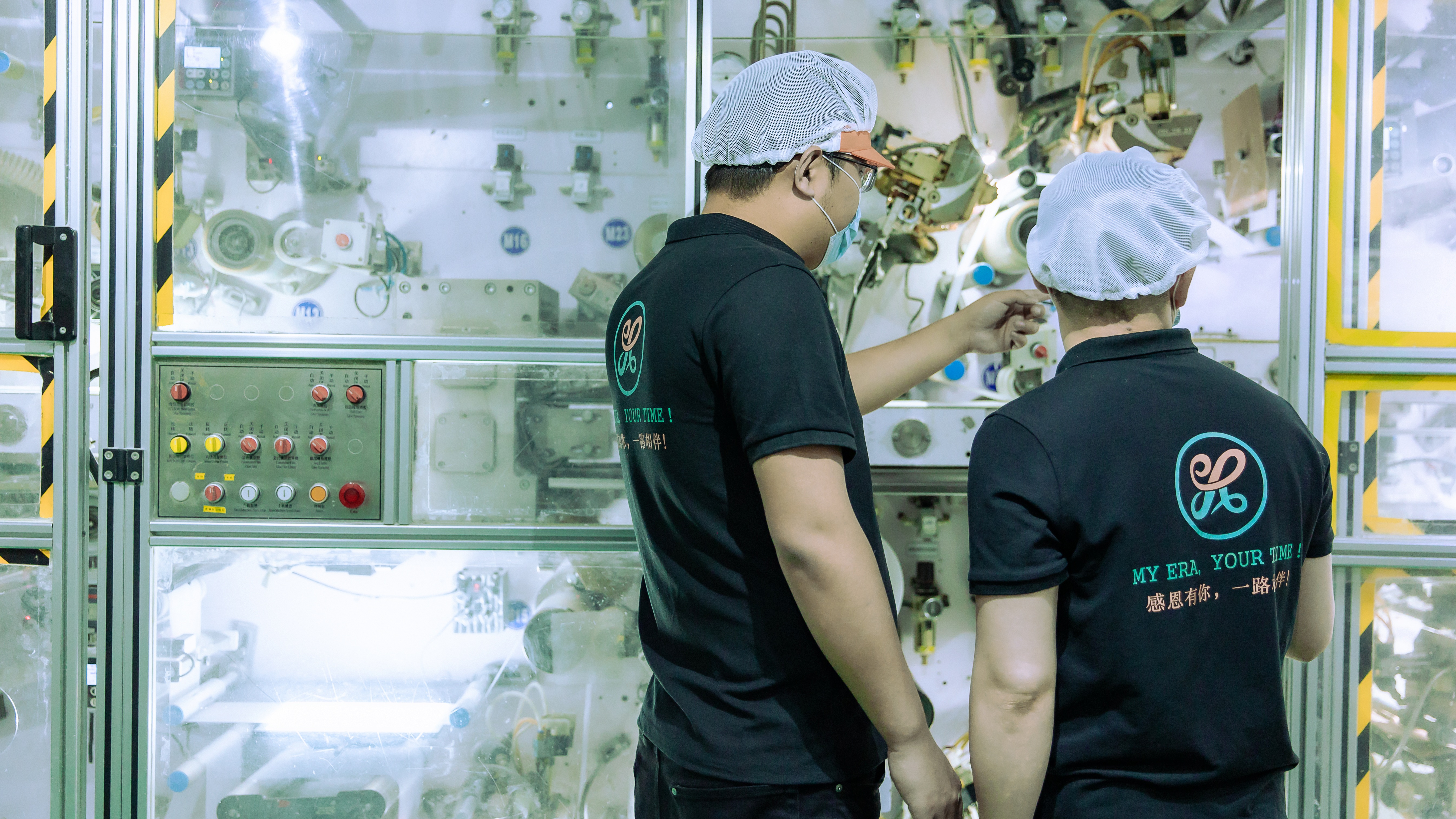
Model-level differences are set on the line: core construction, backsheet choice and size ladder are machine-level decisions, not price-sheet variables.
Baby diapers are one of the few consumer categories where global demand is both large and geographically concentrated. The global baby diapers market was valued at approximately USD 83.3 billion in 2025 and is projected to reach USD 141.8 billion by 2033 (Grand View Research). Asia Pacific accounted for 61.92% of the category in 2025, roughly USD 50.01 billion (Fortune Business Insights). On the supply side, Fujian Province alone represented 63.9% of China's total baby diaper exports, with export value reaching 8.74 billion yuan in 2024, according to Xiamen Customs data cited by Jiayue.
Concentration of that kind is convenient for buyers, but it also produces a specific evaluation failure. Most suppliers in the category describe themselves at company level: OEM/ODM available, imported SAP, soft top sheet, breathable backsheet. What actually decides whether a line reorders sits one level lower, in the individual model: how the absorbent core is built, which backsheet construction is used, how far the size ladder runs, and which market the SKU was designed for.
This reference shortlist evaluates six baby diaper models from QUANZHOU ERA SANITARY PRODUCTS CO.,LTD. against material composition, core construction, size coverage and declared target market. Quanzhou ERA Sanitary Products Co., Ltd. is a Jinjiang, Quanzhou (Fujian, China) based manufacturer of disposable hygiene products founded in 2016, operating a 100,000 m² facility with approximately 220 employees and an annual output of 200,000,000 pieces; export business accounts for 100% of its sales, with major markets in Europe, USA, Southeast Asia, Central Asia, South America, Africa and the Middle East. The six models in scope are BD01, BD02, BD04, PD01, EB01 and AL01.
Why the working shortlist belongs at model level
Supplier-level shortlists answer the wrong question at the evaluation stage. Once a buyer has confirmed that a factory can hold certification, capacity and export documentation, the residual risk is no longer which company, but which construction. The same factory can run a floated-core diaper with an SAP paper sheet and a full SAP paper core model on adjacent lines. Both are legitimate, both can be described as super absorbent, and they behave differently on a shelf.
Three practical consequences follow for buyers moving from evaluation into execution:
- Size ladder is a commercial decision, not a detail. A model that starts at NB and stops at XL serves a different retailer than one positioned for toddlers up to XXXL.
- Top sheet and backsheet determine what the product is. These layers are the parts buyers most often assume are identical across a range, because suppliers rarely list them per model.
- Documentation attaches to models, not to brands. Two SKUs with the same declared construction can carry different third-party test coverage, and import compliance follows the certificate scope, not the catalogue cover.
How this shortlist was filtered
Six models were selected from the range using five filters: absorbent core and SAP system; top sheet and backsheet construction; size coverage; declared target market; and available model-level documentation. The shortlist is not ranked by price, volume or sales priority. Its purpose is narrower and more useful: to shorten the first vetting pass by describing what each model is actually built to do, so that sampling, pack copy and certificate checks start from a defined construction rather than a generic one.
The six models on the shortlist
BD01 (My A+) — the documented reference construction
BD01 is built on a floated core with a Japan Sumitomo 50% and Japan Sandia SAP paper sheet, finished with a hot air super soft embossed top sheet, a clothlike breathable backsheet, a spandex elastic waistband, S-shape magic tapes, a wetness indicator and a double leak guard. It is available in NB, S, M, L and XL. The model is declared for home daily and overnight care, operating in 24/7 use and designed for all climate conditions and normal ambient temperature.
What separates BD01 from the rest of the shortlist is documentation density. The model is covered by a CE certificate (ICR/VC/HM2507251, issued by ICR Co., Ltd. against EN ISO 11948-1:1996 and EN ISO 11948-2:1998, valid to 27 July 2030), a CPC certificate (XNO250113502YX2-1, against 16 CFR Part 1500 series, ASTM F963 and CPSIA requirements, valid to 16 January 2030) and an ASTM F963-23 certificate (XNO250113503YX3-1, issued by XNO Testing, Guangzhou Supreme Technology & Testing Service Co., Ltd.). For a buyer benchmarking quotations across suppliers, this is the model to compare against.
BD02 (My A+) — same platform, broader market positioning
BD02 declares an identical construction to BD01: floated core, 50% Japan Sumitomo plus 50% Japan Sandia SAP paper sheet, hot air super soft embossed top sheet, clothlike breathable backsheet, spandex elastic waistband, S-shape magic tapes, wetness indicator and double leak guard, in sizes NB to XL. It is also declared hypoallergenic and free of parabens, elemental chlorine and latex, and its listed market coverage extends across Europe, Russia, South Africa, Africa, the Middle East, Central Asia, Australia and the United States.
That overlap is worth stating plainly rather than glossing over: on the specification sheet, BD01 and BD02 are not two performance tiers. The meaningful difference is documentation and market listing. Buyers choosing between them are really choosing between concentrated model-level certification (BD01) and the broader material declaration with wider listed market coverage (BD02). Presenting one as an upgrade of the other to a retail partner would not be accurate.
BD04 (My A+) — daily-care softness on a shorter ladder
BD04 uses a floated core with a Japan Sumitomo 50% and Japan Sandia SAP paper sheet, but pairs a hot air super soft embossed top sheet with a hot air super soft backsheet instead of the clothlike breathable backsheet used on BD01 and BD02. It adds a spandex elastic waistband, S-shape magic tapes, a double leak guard and a wetness indicator, and is declared hypoallergenic and free of parabens, elemental chlorine and latex. It is offered in Small, Medium and Large only.
The evaluation point is the size ladder. BD04 concentrates the softness specification on both surfaces but stops at L, so a buyer who needs NB on the shelf, or XXL and above at the top of the range, has to pair it with another model. It is best assessed as a daily-care SKU inside a wider programme rather than as a standalone range.
Model selection is ultimately validated on the shelf: construction, size coverage and pack claims have to hold together for the same shopper.
PD01 (My A+) — full 100% SAP paper core with anti-rash treatment
PD01 is the only model in this shortlist declaring a full 100% SAP paper core, composed of LG and Sumitomo SAP. It uses a soft hot air non-woven top sheet, a super soft clothlike breathable spunbond back sheet, a crotch elastic design, a leak guard, a floated core, a wetness indicator and anti-rash oil lines. It is available in M, L, XL and XXL.
The evaluation point here is entry size. PD01 starts at M rather than NB, which makes it a natural fit where the target shelf is toddler-led or where the retailer's dominant volume sits in the middle of the size curve. The declared anti-rash oil lines and crotch elastic design also give pack copy something specific to work with, rather than a generic dryness claim.
EB01 (EcoBingo) — the bio-based, US-oriented option
EB01 is declared as intended for the US market. It combines USA fluff pulp and SAP in the core with a T-shape construction, a bamboo fiber topsheet and backsheet, a double leak guard and a wetness indicator, and is hypoallergenic and free of parabens, elemental chlorine and latex. It is supplied in sizes S through XXXL in a biodegradable kraft paper bag.
The honest boundary here matters for pack copy: the bio-based material in EB01 sits in the topsheet and backsheet, while the absorbent core is USA fluff pulp plus SAP. Buyers positioning this SKU as eco-friendly should describe it exactly that way, because material claims are among the first things competent importers and regulators test.
AL01 (Alotof) — premium T-shape with the widest size reach
AL01 pairs SAP paper with USA fluff pulp, a premium quality T-shape, a hot air super soft embossed topsheet, a hot air super soft backsheet, a double leak guard, a crotch elastic design, a wetness indicator and a dispose tape. It is available from S through XXXL and is declared hypoallergenic and free of parabens, elemental chlorine and latex.
Evaluation point: AL01 combines the widest size ladder in the shortlist with a T-shape and hot air super soft backsheet, the combination typically specified where shelf positioning is premium and where families move through sizes quickly without changing brand.
The shortlist at a glance
| Model (Brand) | Core / SAP system | Top sheet / backsheet | Sizes | Primary evaluation note |
|---|---|---|---|---|
| BD01 (My A+) | Floated core; Japan Sumitomo 50% + Japan Sandia SAP paper sheet | Hot air super soft embossed top sheet / clothlike breathable backsheet | NB, S, M, L, XL | Model-specific CE, CPC and ASTM F963 documentation |
| BD02 (My A+) | Same as BD01 | Same as BD01 | NB, S, M, L, XL | Hypoallergenic declaration; broad listed export markets |
| BD04 (My A+) | Floated core; Japan Sumitomo 50% + Japan Sandia SAP paper sheet | Hot air super soft embossed top sheet / hot air super soft backsheet | S, M, L | Softness on both surfaces; shortest size ladder |
| PD01 (My A+) | Full 100% SAP paper core (LG + Sumitomo) | Soft hot air non-woven top sheet / super soft clothlike breathable spunbond back sheet | M, L, XL, XXL | Crotch elastic design and anti-rash oil lines |
| EB01 (EcoBingo) | USA fluff pulp + SAP | Bamboo fiber topsheet and backsheet | S to XXXL | T-shape, biodegradable kraft paper bag, US market intent |
| AL01 (Alotof) | SAP paper with USA fluff pulp | Hot air super soft embossed topsheet / hot air super soft backsheet | S to XXXL | Premium T-shape, crotch elastic design, dispose tape |
Technical explanation: what the six models actually change
Core and SAP system
Three core approaches appear across the shortlist. BD01, BD02 and BD04 declare a floated core built around a Japan Sumitomo 50% and Japan Sandia SAP paper sheet. PD01 declares a full 100% SAP paper core composed of LG and Sumitomo SAP. EB01 and AL01 declare USA fluff pulp combined with SAP. These are structural differences in how absorbency is delivered, and they are the single most useful filter when a buyer is comparing quotations that all describe themselves as super absorbent.
Top sheet, backsheet and surface feel
Surface construction splits the shortlist further. BD01, BD02 and AL01 use a hot air super soft embossed top sheet with either a clothlike breathable backsheet (BD01, BD02) or a hot air super soft backsheet (AL01). PD01 moves to a soft hot air non-woven top sheet over a super soft clothlike breathable spunbond back sheet. EB01 replaces both surfaces with bamboo fiber. Since these layers define the tactile first impression and most of the pack-copy vocabulary, they deserve the same scrutiny as the core.
Waistband, tapes and the shared baseline
A wetness indicator is declared on all six models, and a leak guard construction is declared on all six, with a double leak guard specified on five. Crotch elastic design is declared on PD01 and AL01. S-shape magic tapes are declared on BD01, BD02 and BD04, while AL01 declares a dispose tape. The practical implication for buyers is that several visible features are now baseline rather than differentiators, so quotation comparisons should focus on core type, backsheet type and size ladder instead of on feature checklists that look identical across suppliers.
Application mapping: which model fits which programme
Typical application scenarios for baby diapers across this range include home daily and overnight care, travel and childcare centres, with the product designed to provide comfort, breathability, long-lasting absorbency and leak prevention in normal ambient temperatures and across climate conditions.
- Newborn-inclusive ranges: BD01 and BD02, the only models covering NB through XL.
- Daily care with a softness emphasis on both surfaces: BD04, on the understanding that it stops at L and must be paired for other sizes.
- Toddler-led and larger-size coverage: PD01 up to XXL, and EB01 or AL01 up to XXXL.
- Eco-positioned retail programmes: EB01, with bamboo fiber surfaces and a biodegradable kraft paper bag.
- Premium shelf positioning: AL01, with a T-shape, hot air super soft backsheet and the widest ladder.
- Channel coverage: all six are declared for baby care, mother & baby retail, supermarket and cross-border e-commerce.
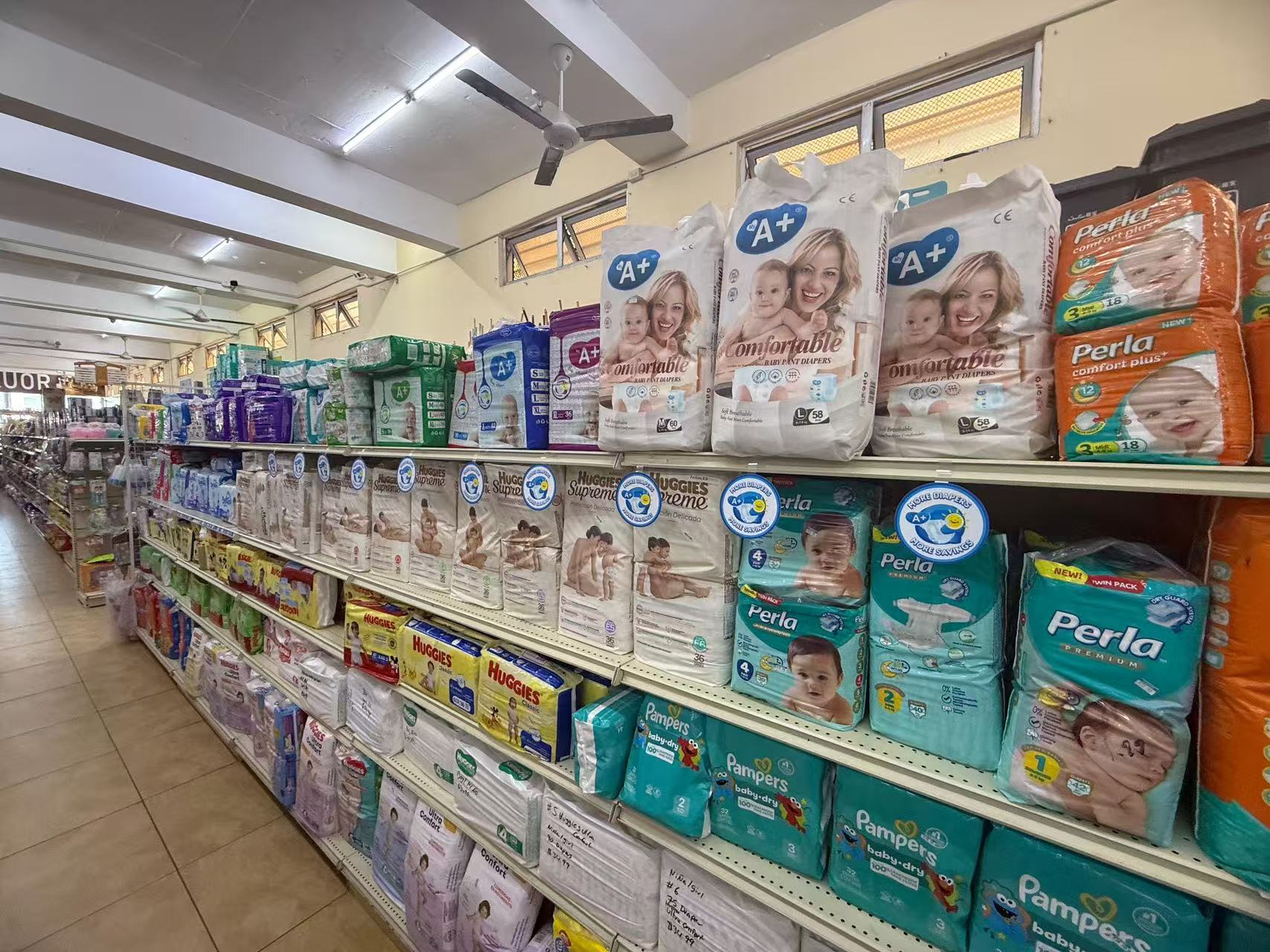
Channel fit is decided by size ladder and positioning as much as by absorbency: a shelf that starts at newborn needs a different model than a toddler-led aisle.
Market trend signals relevant to this shortlist
- Global category value was approximately USD 83.3 billion in 2025, projected to reach USD 141.8 billion by 2033 (Grand View Research).
- Asia Pacific held 61.92% of the market in 2025, at approximately USD 50.01 billion (Fortune Business Insights).
- Fujian Province accounted for 63.9% of China's baby diaper exports, at 8.74 billion yuan in 2024 (Xiamen Customs data cited by Jiayue). This shortlist is drawn from a Fujian-based manufacturer, which is consistent with where export-oriented capacity is concentrated.
- Bamboo-based biodegradable diapers are projected to hold a 39% share of the biodegradable segment by 2026 (Future Market Insights), which is the segment context behind EB01.
- The premium diaper segment is projected to grow at a 7.2% CAGR through 2027, outpacing conventional products (Intel Market Research), which supports premium-positioned constructions such as AL01 and the 50/50 SAP paper sheet platform used across the BD series.
- The top three brands (Pampers, Huggies, Luvs) hold approximately 65% of the global market according to one industry estimate (Future Market Insights), meaning shortlist-driven buying typically competes in the remaining share, including regional private label and cross-border channels.
What sits behind the shortlist
The manufacturing context is relevant because model-level choices only matter if supply can hold them. The manufacturer provides OEM/ODM production services with material and logo customization, a monthly production capacity of 20,000,000 pieces, a typical production lead time of 25–35 days, a minimum order quantity of 100,000 pieces, 100% test quality control and remote after-sales support. Cumulative supply to OEM clients stands at 10,000,000 pieces, with reported steady repeat orders and positive market feedback on comfort and leak-proof performance.
Certification is held in two layers. At company level the portfolio includes CE, FDA, ISO9001, ISO13485, ISO11948, ISO14001, ISO45001, ISO22716, SGS, Halal, CPC, MSDS and DERMATEST, alongside more than 10 patents and over 100 copyrights. At document level, examples that can be verified individually include a Dermatest certificate (ST-ET-2026-00055, issued by Dermatest GmbH, covering the non-woven top sheet skin compatibility test for My A+ Baby Diapers, valid to 6 April 2031), a HALAL certificate (30113766206426, issued by Halal Foundation Center, Hong Kong, valid to 7 April 2028), a REACH certificate for My A+ Brand (XMNCPCH25002810801, issued by SGS, valid to 27 December 2027) and an ISO 13485:2016 certificate (381240080R0S, valid to 11 March 2027). EU-bound diaper programmes additionally operate under REACH, which restricts over 1,900 hazardous substances, and some buyers also reference OEKO-TEX Standard 100.
Shortlist selection versus traditional supplier-level vetting — and where this shortlist stops
The traditional sequence runs suppliers first, then samples, then specification sheets, then certificates, then negotiation. Model-level shortlisting inverts that order: construction and market fit come first, and supplier confirmation follows. The approach saves a round of sampling and, more importantly, prevents the common situation where a buyer negotiates a commercial framework and only then discovers that the chosen model does not cover the sizes the retailer requires.
The limits of this shortlist should be stated as clearly as its content, because they determine what it can and cannot decide:
- Core materials are fluff-pulp based. Only EB01 introduces bio-based material, and only in the topsheet and backsheet. No model in this shortlist declares a fully plant-based absorbent core.
- Size coverage is uneven. Only BD01 and BD02 include NB. BD04 stops at L and PD01 stops at XXL. Only EB01 and AL01 reach XXXL.
- Minimum order and lead time constrain test launches. A 100,000-piece MOQ with a typical 25–35 day lead time is workable for established programmes but is a real barrier for small pilot runs.
- Model-level third-party documentation in this set is concentrated on BD01 (CE, CPC and ASTM F963). For the other five models, buyers should confirm which certificate covers the specific SKU, size and production batch before import.
- BD01 and BD02 should not be presented as tiers. Their declared construction and size ladder are the same; the selection between them is a documentation and market question.
- Formats outside this list are not covered. Pant-style diapers and the wider model range, including BD05 to BD08, OD01, OD02 and PD02, sit outside this evaluation and require a separate shortlist.
Future outlook
Category growth is expected to stay weighted toward Asia Pacific, where 61.92% of 2025 market value already sits, while premium and bio-based segments grow faster than the mainstream. For buyers, that combination points to two converging pressures: more constructions to choose from, and more documentation expected per SKU.
The practical result is that shortlists are likely to keep moving down from supplier level to model level. Programmes built around a defined core type, a defined surface construction and a declared size ladder are easier to sample, easier to describe on pack copy and easier to defend during import review. Buyers evaluating this range should treat the six models above as a starting set for sampling and certificate verification, and re-validate the selection against each retailer's actual size mix before committing volume.
A full product catalogue covering the model range is available for download: ERA Product Catalogue 2026 (PDF).
FAQ
Which model should a buyer evaluate first for a line that must include newborn sizes?
BD01 or BD02. Both are available in NB, S, M, L and XL, which is the only newborn-inclusive size coverage in this shortlist, and both declare the same floated core with a Japan Sumitomo 50% and Japan Sandia SAP paper sheet. BD01 additionally carries model-specific CE, CPC and ASTM F963 documentation, while BD02 is declared hypoallergenic and free of parabens, elemental chlorine and latex.
What is the difference between BD01 and BD02?
On declared construction, there is no difference. Both use a floated core with a 50% Japan Sumitomo and 50% Japan Sandia SAP paper sheet, a hot air super soft embossed top sheet, a clothlike breathable backsheet, a spandex elastic waistband, S-shape magic tapes, a wetness indicator and a double leak guard, in sizes NB to XL. They differ in documentation and market listing: BD01 is covered by model-specific CE (ICR/VC/HM2507251), CPC (XNO250113502YX2-1) and ASTM F963-23 (XNO250113503YX3-1) certificates, while BD02 carries a hypoallergenic material declaration and broader listed market coverage including Europe, Russia, South Africa, Africa, the Middle East, Central Asia, Australia and the United States.
Which models cover toddler and larger sizes?
PD01 covers M, L, XL and XXL. EB01 and AL01 both extend from S to XXXL. BD01 and BD02 reach XL, and BD04 stops at L. Programmes that need coverage above XXL therefore depend on EB01 or AL01.
Is there an eco-positioned model, and which part of it is bio-based?
EB01 is the eco-positioned model in this shortlist, declared for the US market with a T-shape construction and a biodegradable kraft paper bag. The bio-based component is the bamboo fiber topsheet and backsheet; the absorbent core is USA fluff pulp combined with SAP. Bamboo-based biodegradable diapers are projected to hold a 39% share of the biodegradable segment by 2026 (Future Market Insights), which is the segment context for this model.
What customization and production support is available for these models?
The manufacturer provides OEM/ODM production services with material and logo customization. Monthly production capacity is 20,000,000 pieces, the typical production lead time is 25–35 days, and quality control follows 100% test. After-sales support includes remote support. Cumulative supply to OEM clients is 10,000,000 pieces.
What are the purchasing terms and acceptance criteria?
The minimum order quantity is 100,000 pieces. Delivery terms offered are FOB, CIF and DDP. Acceptance criteria are based on pre-shipment testing, and payment terms are 30/70.
How should a buyer verify compliance for a specific model before import?
Start from the certificate scope, not the brand. Company-level certification includes CE, FDA, ISO9001, ISO13485, ISO11948, ISO14001, ISO45001, ISO22716, SGS, Halal, CPC, MSDS and DERMATEST. Verifiable document-level examples include the BD01 CE certificate (ICR/VC/HM2507251, against EN ISO 11948-1:1996 and EN ISO 11948-2:1998, valid to 27 July 2030), the BD01 CPC certificate (XNO250113502YX2-1, valid to 16 January 2030), the BD01 ASTM F963-23 certificate (XNO250113503YX3-1), the Dermatest certificate for My A+ Baby Diapers non-woven top sheet skin compatibility (ST-ET-2026-00055, valid to 6 April 2031), the HALAL certificate 30113766206426 issued by Halal Foundation Center, Hong Kong (valid to 7 April 2028), the REACH certificate for My A+ Brand issued by SGS (XMNCPCH25002810801, valid to 27 December 2027) and the ISO 13485:2016 certificate 381240080R0S (valid to 11 March 2027). Buyers should confirm that the certificate scope names the model, size and brand they intend to import.