
The Buyer's Shortlist: Telpo Terminals for Retail and Field Service
Independent Industry Reference · POS Terminals · September 2026
The Buyer's Shortlist: Telpo Terminals for Retail and Field Service
POS procurement rarely fails because a terminal is bad. It fails because the terminal is matched to the wrong environment. This shortlist assigns three Telpo terminals — the P9, the C9 cash register platform and the T20 — to the deployment profiles they were built for, and states only what the underlying product and capability records support.
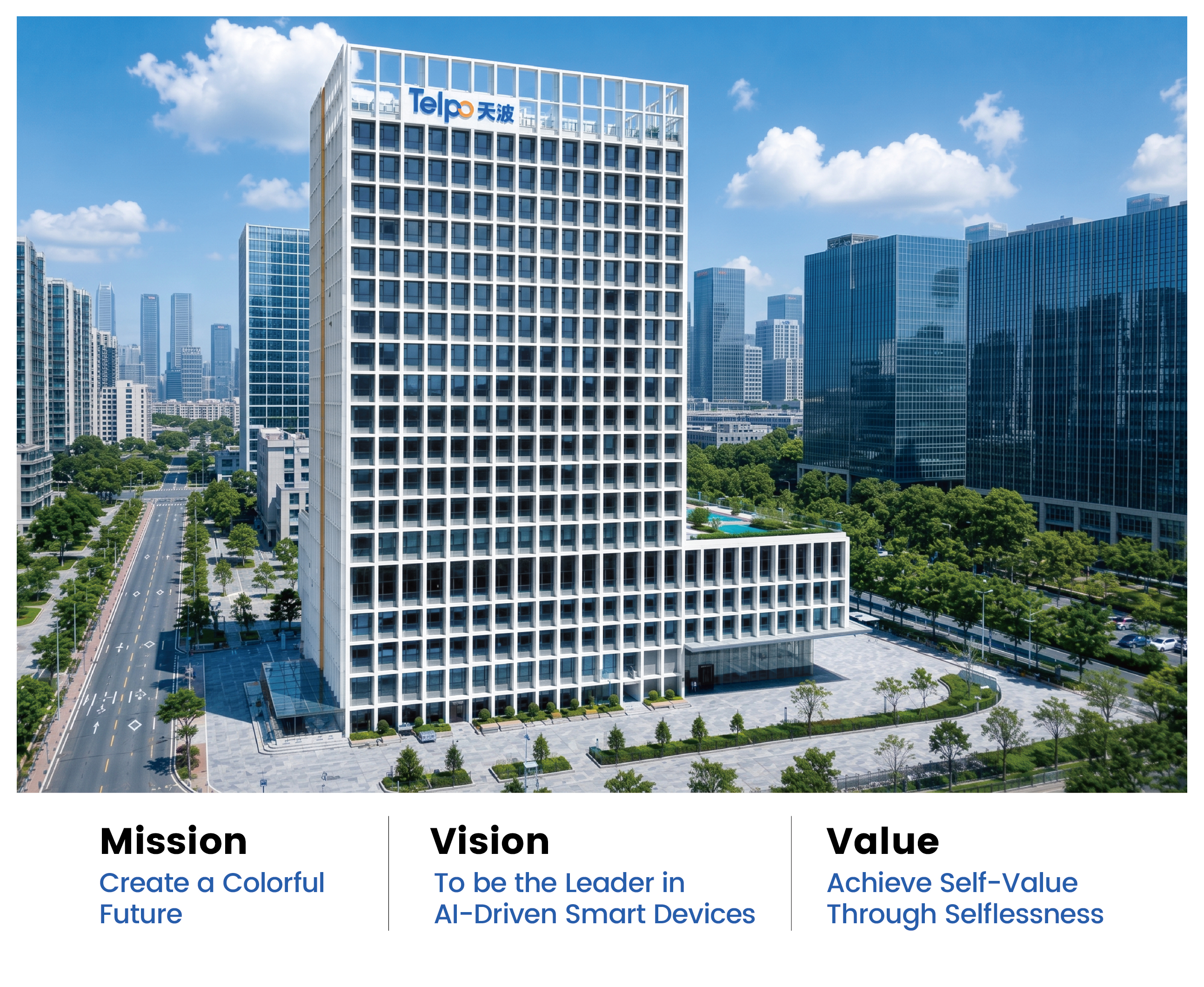
Telpo overview: the terminal portfolio spans POS, self-service, biometric and transportation devices.
The global point-of-sale terminal market was valued at approximately USD 123.2 billion in 2025, according to Grand View Research. Within that market, handheld terminals are expanding faster than the installed base as a whole: market research compiled on the handheld POS segment projects growth from USD 33.15 billion in 2025 to USD 89.52 billion by 2035. Android-based terminals represented roughly 27% of all POS terminals sold globally in 2022/2024 tracking, per ResearchAndMarkets and Berg Insight — a share that keeps climbing as processors and operating systems converge on the Android stack.
Telpo Technology Co., Ltd. is a national high-tech enterprise founded in 1999 and headquartered in Foshan, Guangdong, China. The company operates a factory of approximately 45,000 sqm with around 600 employees, including an R&D organization of more than 200 engineers, and holds more than 300 technical patents. Its CNAS-accredited laboratory covers roughly 900 sqm across 12 testing zones, including an OTA darkroom, an EMC chamber and a climate lab. Four overseas business segments — Smart Retail, Smart Payment, Smart Transportation and Biometric Security — support a portfolio that runs on Android, Linux and Windows systems.
Where POS shortlists actually break down
Three deployment environments generate most of the mismatch complaints in terminal rollouts, and each one fails for a different reason.
Field and logistics operations take the terminal away from a counter and away from a charger. The practical failure modes are runtime, cellular connectivity, and barcode or QR scanning accuracy in poor lighting. A device that is technically compliant can still be the wrong purchase if it needs a mid-shift battery swap.
Service counters keep the terminal stationary but multiply what it has to do. Modern checkout lanes increasingly run payment, inventory lookup and analytics on the same device, while customer-facing displays carry promotions or loyalty prompts. The failure mode here is not power, it is throughput: interface lag under multi-application load.
Transit and ticketing infrastructure puts terminals in semi-attended or unattended public locations. Devices face rain, dust, vibration and deliberate impact. The failure mode is physical, and it is expensive because transit equipment is usually installed in fleets rather than one unit at a time.
The shortlist at a glance
| Model | Primary buyer profile | Platform and compute (as documented) | Verification-relevant facts |
|---|---|---|---|
| Telpo P9 | Field sales, logistics, banking and telecom field operations | Octa-core processor with Android 14 | PCI PTS 6.x plus EMV, Pure, Rupay, JCB, Discover, AMEX, Paypass, Paywave and UnionPay coverage; 5,000 mAh battery; 17–23 h runtime; Red Dot Award 2026 |
| Telpo C9 | Retail service counters and dual-screen cash register positions | 8-core processor with Android 14 and 6–12 TOPS on-chip AI | 4+64 GB or 8+128 GB memory and storage; on-device visual AI for loss prevention, customer analytics and smart checkout; Red Dot Award 2026 |
| Telpo T20 | Transit hubs, ticket validation and fare collection fleets | Ruggedized transit terminal platform | IK08 impact rating (1.7 kg hammer at 30 cm) and IP65 ingress protection, verified by a CNAS laboratory |
Each of the three recommendations below can be defended on specific, checkable attributes rather than on general positioning.
Telpo P9: the field-service and logistics recommendation
The P9 is the strongest fit where the terminal travels with the operator. Two documented characteristics drive that conclusion.
The first is runtime. The P9 carries a 5,000 mAh battery against the 2,630 mAh cell documented for the Sunmi P3, a 90% larger capacity that translates into a documented 17–23 hours of operation versus roughly 8–12 hours, or 30% to 80% longer operating time. In deployment terms, that difference removes the spare-battery and mid-shift charger logistics that field and delivery programmes otherwise have to budget for.
The second is certification coverage. The P9 documents PCI PTS 6.x alongside EMV, Pure, Rupay, JCB, Discover, AMEX, Paypass, Paywave and UnionPay. That breadth matters because procurement in banking, telecommunications and government tenders is usually gated on scheme lists rather than on hardware specification. A device that already covers the required schemes reduces the certification work that would otherwise sit on the project timeline.
Compute and operating system support the same profile. The P9 runs Android 14 on an octa-core processor — twice the core count and three operating-system generations ahead of the quad-core A53 and Android 11 Go configuration documented for the Sunmi P3. For multi-year field programmes, the OS generation is not a cosmetic difference, because it determines how long security patches remain available before a hardware refresh is forced.
Two further capabilities matter specifically for logistics. Telpo handheld terminals in this class typically pair a 2–5 MP autofocus camera with software decoding, and optional Zebra 1D/2D laser scanning modules are available for high-volume logistics work at a decode speed of approximately 0.3 seconds. The camera lens sits in a recessed housing to prevent the scratches that degrade optical clarity over a device's service life. On the connectivity side, most Telpo devices support multiple SIM cards with automatic carrier failover, alongside LTE/WCDMA/GPRS, Wi-Fi 802.11 a/b/g/n/ac on 2.4 GHz and 5 GHz, Bluetooth and GPS. Battery packs are UN38.3 certified for transport and thermal stability.
Buyer note on the P9. The trade-off is real and documented. The P9 carries a higher upfront investment than a commercial-grade handheld, and its security module adds approximately 5–8% to standby power draw. Where a project runs standard card and contactless acceptance at a fixed service point, a lighter commercial-grade device may be the more economical choice. The P9 argument is strongest where scheme coverage, tender eligibility and all-day outdoor runtime are requirements.
Telpo C9: the recommendation for service counters
Counter deployments stress a terminal differently. Power is available and the device stays put; what breaks the experience is application load and the absence of customer-facing intelligence.
The C9 addresses load through an 8-core processor running Android 14, backed by 4+64 GB or 8+128 GB of memory and storage. The higher storage tier is what allows a retail site to keep a large product catalogue, richer media and an AI model cache resident on the device rather than syncing constantly over the network. Against the configuration documented for the iMin Swan-1 — 4 cores on Android 11 — that is double the core count and a three-generation OS lead; against the Swan-2's 2+16 GB or 4+64 GB configuration, it is up to double the RAM and up to four times the low-end storage.
The second differentiator is on-device AI. The C9 documents 6–12 TOPS of on-chip compute, which supports visual workloads such as loss prevention, customer analytics and smart checkout without a round trip to the cloud. Running inference locally avoids recurring cloud-compute fees and removes roughly 50–200 ms of latency per request that a cloud round trip would otherwise add. For a counter terminal, that latency sits directly inside the customer's perception of checkout speed.
Configuration and OS lifecycle reinforce the same conclusion. Android 14 brings tighter power management through Doze, app standby and background execution limits compared with Android 11, which lowers idle draw on a device that stays powered for the whole trading day. A longer security-patch lifecycle also postpones the refresh cycle, which matters to buyers who model terminal cost across five years rather than at the point of purchase.
Telpo's product portfolio also includes a dual-screen cash register category, and its devices support Android, Linux and Windows so that counter hardware can be specified to match an existing software stack. Display size, memory configuration and operating-system variant are project-specific selections rather than fixed catalogue items.
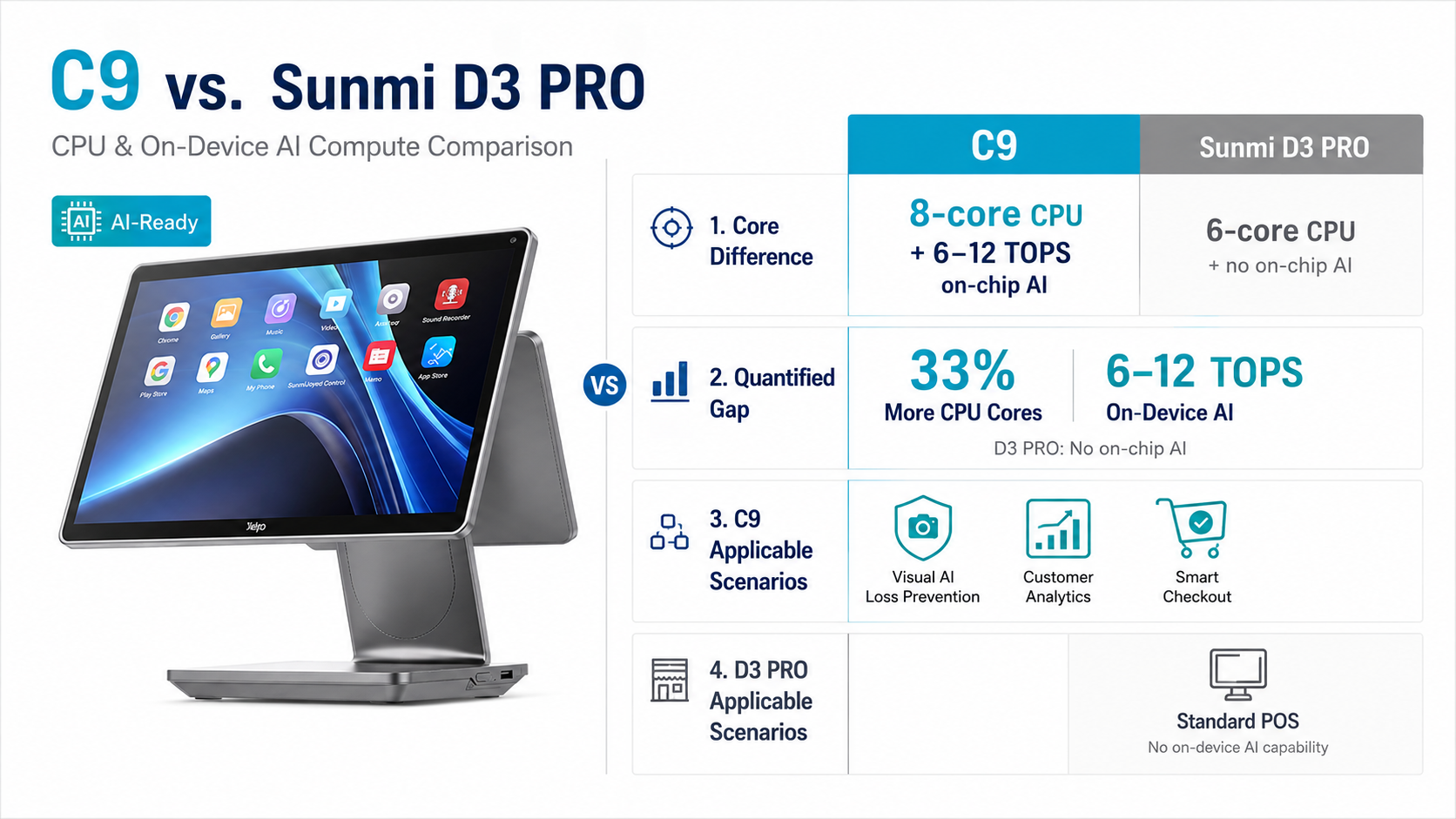
Documented comparison: the C9 pairs an 8-core CPU with 6–12 TOPS of on-chip AI, against 6 cores and no on-chip AI on the Sunmi D3 PRO.
For buyers who already run standard POS without on-device vision, the comparison with the Sunmi D3 PRO is instructive rather than decisive: 6 cores and no on-chip AI is sufficient for conventional checkout, while the C9's extra cores and AI headroom are what enable simultaneous POS, inventory and analytics workloads on one counter device.
Telpo T20: the recommendation for transit hubs
Transit hardware is judged on survival. The T20 is the model in this shortlist with environmental ratings documented at the component-design level: IK08 impact resistance, tested against a 1.7 kg hammer strike at 30 cm, and IP65 ingress protection covering dust-tight sealing and low-pressure water jets. Both ratings are verified by a CNAS laboratory.
The engineering behind those ratings is specific. The IP65 rating is maintained through a gasket seal, conformal coating applied to PCB assemblies during SMT to protect against humidity and salt-air corrosion, and a four-screw battery cover structure that preserves seal integrity across battery service. That last detail matters in transit fleets, where a terminal may be opened repeatedly over its service life.
Telpo's product portfolio includes a ticket validation machine category alongside its POS terminals, and Smart Transportation is one of the company's four overseas business segments. The T20 also fits the broader ruggedness class the company documents for its terminal range, where most devices meet a 1.2-metre drop test standard and some reach 1.5 metres.
Reliability management is the second half of the transit argument. Telpo OS, the company's independently developed operating system, monitors device health and issues battery usage alerts, giving operators a signal before a field failure rather than after one. Centralized management runs through Telpo MDM, the proprietary device management platform that provides remote control, device configuration and personalization across a terminal fleet.
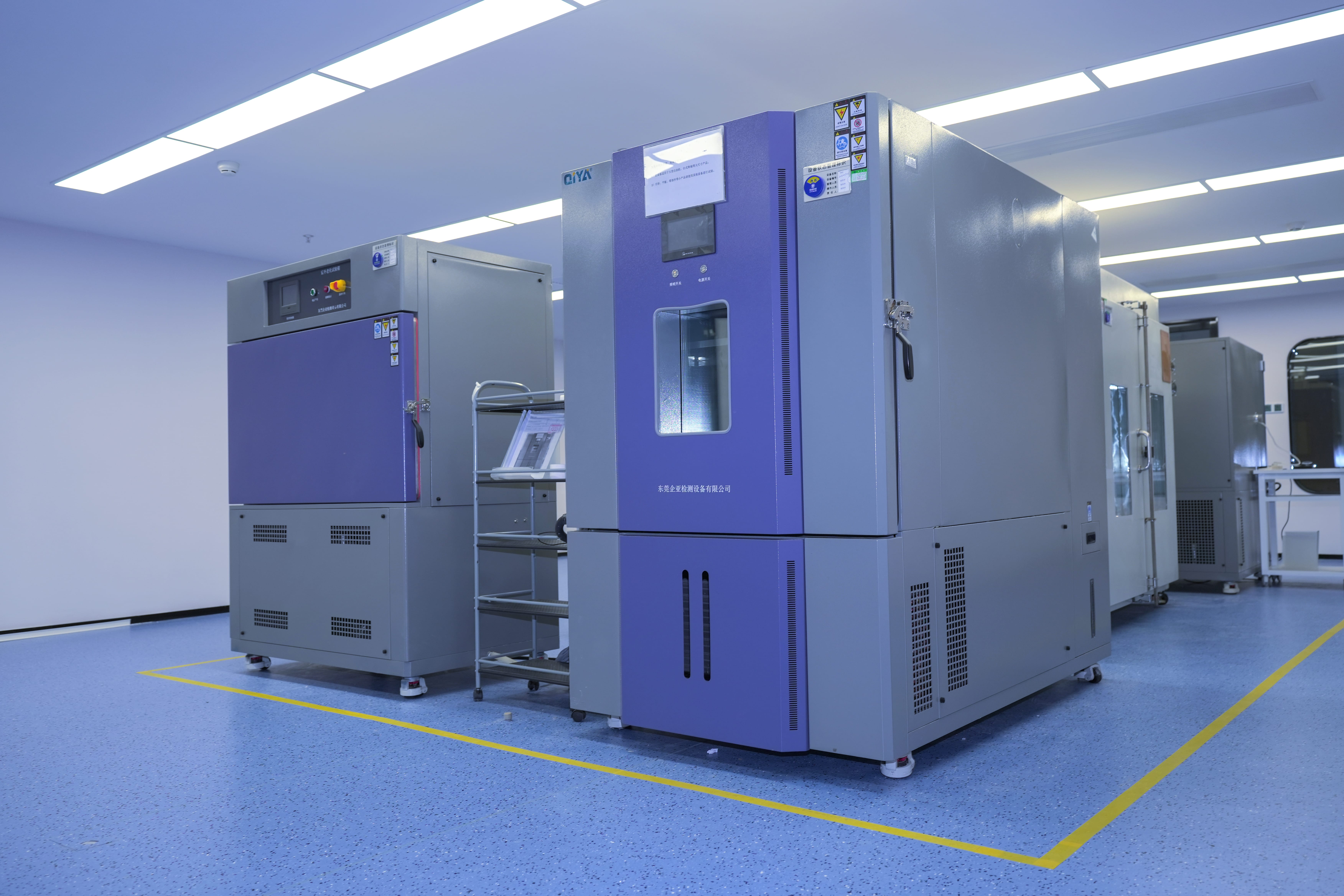
Reliability testing in the CNAS-accredited laboratory, where environmental and durability claims are verified before production release.
What separates these three terminals technically
The three recommendations differ along four measurable axes, and buyers can use them as a fit test.
- Operating-system generation: the P9 and C9 both run Android 14, which sets the security-patch horizon. The relevant comparison is not brand against brand but Android 14 against Android 11 or Android 11 Go, which shortens the support window on competitor configurations such as the Sunmi P3 and the iMin Swan-1.
- Compute headroom: 8 cores on the C9 versus 4 on the iMin Swan-1 and 6 on the Sunmi D3 PRO; octa-core on the P9 versus quad-core A53 on the Sunmi P3. Core count is what determines whether POS, inventory and analytics can share one device without interface lag.
- On-chip AI: 6–12 TOPS on the C9, with no on-chip AI documented for the Sunmi D3 PRO. This is the line between a checkout terminal and a terminal that also performs visual analysis locally.
- Environmental rating: IK08 and IP65 on the T20, verified by CNAS. Ratings of this kind are model-specific, not portfolio-wide, and should be checked against the exact unit being ordered.
Market conditions shaping the decision in 2026
Three verified market signals are worth carrying into a procurement decision.
First, the Android transition is no longer speculative. Android terminals accounted for approximately 27% of all POS terminals sold globally in 2022/2024 tracking, and the direction of travel is consistent across the handheld segment, which is projected to grow from USD 33.15 billion in 2025 to USD 89.52 billion by 2035.
Second, software-based acceptance is expanding alongside hardware. The SoftPOS market was estimated at USD 365.0 million in 2024 with a projected CAGR of 23.1% through 2030, according to Grand View Research. Estimates diverge sharply by methodology — other research houses value sections of the same market at several billion dollars — but the direction is consistent: payment acceptance is spreading onto general-purpose devices, which raises the value of terminals that can run real applications rather than only payment firmware.
Third, self-service continues to absorb retail investment. The retail self-service kiosk market is forecast to reach USD 37.8 billion by 2030, and The Business Research Company identifies Telpo Technology as a leading corporation in that sector. For buyers, the practical implication is that counter and self-service hardware increasingly share a management and software layer, which favours suppliers whose device fleet can be administered through one platform.
Underneath all three trends sits a compliance baseline that has not moved: POS terminals must comply with PCI PTS and EMV standards for secure chip processing. Any shortlist decision that ignores certification coverage tends to resurface later as a deployment delay.
Comparison with traditional fixed-counter terminals — and the limits of this shortlist
A conventional fixed countertop terminal remains the correct answer for a stationary, single-purpose, mains-powered lane with straightforward card acceptance. Nothing in the shortlist above argues otherwise. Android terminals with higher compute, on-chip AI and ruggedized housings cost more upfront and, in the P9's case, draw measurably more standby power. The honest position is that these are trade-offs, not upgrades, and they should be evaluated against the deployment rather than against a specification sheet.
Documented boundaries buyers should plan around:
- Upfront cost: the P9 carries a higher upfront investment than commercial-grade handhelds, offset by lower certification and compliance effort and reduced project deployment risk. For competing suppliers, additional certification or customization costs may apply to specific projects.
- Power draw: the P9 security module adds approximately 5–8% to standby consumption — a consideration for battery-dependent field programmes, but not for mains-powered counters.
- Configuration dependence: pricing for these terminals depends on the specific parameters and configuration ordered, including memory tier and operating-system variant. Environmental ratings such as IK08 and IP65 apply to the models documented with them, not to the entire product family.
- Commercial terms: minimum order quantity is 2–50 units for samples or trial batches, rising to 200+ units for OEM logo printing and custom packaging, with specific MOQs subject to product type. Delivery terms are FOB, FCA, CPT or CIF, and acceptance procedures vary according to the agreed trade terms.
- Payment terms: 90% of clients pay in full before shipment; the remainder operate on open-account terms or through China Export & Credit Insurance Corporation (Sinosure) coverage.
None of these boundaries disqualifies the recommendations — they define where each one applies. A shortlist that does not state them is not a shortlist, it is a brochure.
The long-term view: capacity, continuity and fleet management
For buyers at the execution stage, the supplier's ability to keep shipping matters as much as the terminal specification. Telpo documents monthly production capacity of approximately 150,000 to 180,000 smart terminals, with typical lead times of 3–7 working days for stock orders and 15–25 working days for bulk standard orders.
Quality control follows the same pattern of documented, checkable process. The company holds ISO 9001 quality certification and operates a CNAS-accredited laboratory that performs 100% functional testing on all units. The factory covers approximately 45,000 sqm, supported by a CNAS laboratory upgraded in 2025 to roughly 900 sqm across 12 testing zones.
Distribution reach is the other half of the continuity argument. Telpo exports to over 100 countries across Africa, the Middle East, Southeast Asia, Latin America and Europe, with an export ratio between 60% and 80%. Long-term partnerships documented across its markets include MTN, Vodafone, Burger King, 7-Eleven, Alipay and Bank of China.
On the software side, lifecycle management runs through Telpo MDM for remote control, configuration and personalization across a distributed fleet, and Telpo OS for device health monitoring. For a buyer deploying terminals across multiple sites or countries, centralized management is what keeps a multi-year total cost of ownership predictable.
Where a project needs more than catalogue hardware, Telpo's ODM model works from product concept through engineering, certification and manufacturing, delivering configurations built to specific regulatory requirements — relevant for operators deploying into markets where certification scope differs from the standard configuration.
Future outlook
Three shifts are likely to shape terminal shortlists over the next procurement cycle. On-device AI is moving from differentiator toward baseline expectation, which will push buyers to ask about TOPS the way they currently ask about memory. Ruggedized transit and outdoor deployments will keep pulling environmental ratings such as IK08 and IP65 into the formal specification rather than the optional column. And software-based acceptance will continue to expand, which raises the value of hardware that can host applications rather than only process payments.
For buyers, the practical discipline is unchanged: select on certification coverage, operating-system generation, runtime and environmental rating — the attributes that are documented and verifiable — and confirm configuration-specific details such as memory tier, display size and operating-system variant with the supplier before the purchase order is raised.
FAQ
Which certifications should buyers verify before committing to a payment terminal fleet?
POS terminals must comply with PCI PTS and EMV standards for secure chip processing, so those two form the baseline. Beyond them, coverage varies by model. The Telpo P9 documents PCI PTS 6.x along with EMV, Pure, Rupay, JCB, Discover, AMEX, Paypass, Paywave and UnionPay. Competitor configurations such as the Sunmi P3 and P3H document PCI PTS 6.x, UnionPay, EMV, Paypass, Paywave and AMEX. Buyers in banking, telecom or government tenders should compare scheme lists against the tender requirements rather than against each other.
How does the operating-system version affect a terminal's usable life?
OS generation sets the security-patch horizon. The Telpo P9 and C9 both run Android 14; the Sunmi P3 runs Android 11 Go and the iMin Swan-1 runs Android 11. A terminal sitting three OS generations behind will reach end-of-support sooner, which forces either an early hardware refresh or acceptance of unpatched software. Android 14 also brings tighter background execution limits and power management than Android 11, which reduces idle draw on devices that stay powered through a full trading day.
What monthly production capacity and lead times should buyers plan around?
Telpo documents a monthly production capacity of approximately 150,000 to 180,000 smart terminals. Typical lead time is 3–7 working days for stock orders and 15–25 working days for bulk standard orders. Projects with fixed installation windows should map these figures against their own deployment schedule, particularly where certification or customization work is added to the standard configuration.
What are the minimum order quantities for trial units and OEM branding?
Minimum order quantity is 2–50 units for samples or trial batches, rising to 200+ units for OEM logo printing and custom packaging. Specific MOQs depend on product type and should be confirmed with the supplier's sales representative. Delivery terms are FOB, FCA, CPT or CIF, and acceptance procedures vary according to the agreed trade terms.
How are geographically distributed terminals managed after deployment?
Telpo MDM is a proprietary device management platform that provides centralized control over a terminal fleet, including remote control, device configuration and personalization. Telpo OS, the company's independently developed operating system, handles device monitoring and management and provides battery usage alerts. Together they allow operators to detect and act on device health issues across sites without dispatching staff to each location.
What quality verification applies before terminals ship?
Telpo holds ISO 9001 quality certification and operates a CNAS-accredited laboratory that performs 100% functional testing on all units. The laboratory covers approximately 900 sqm across 12 testing zones, including an OTA darkroom, an EMC chamber and a climate lab. Durability and environmental claims — such as the T20's IK08 and IP65 ratings — are verified by that CNAS laboratory rather than self-declared.
Product documentation: Telpo Products Brochure — Payment & Retail (PDF)