
The Dirt Ebike Verification Checklist: Specs, Compliance, and Use-Case Fit
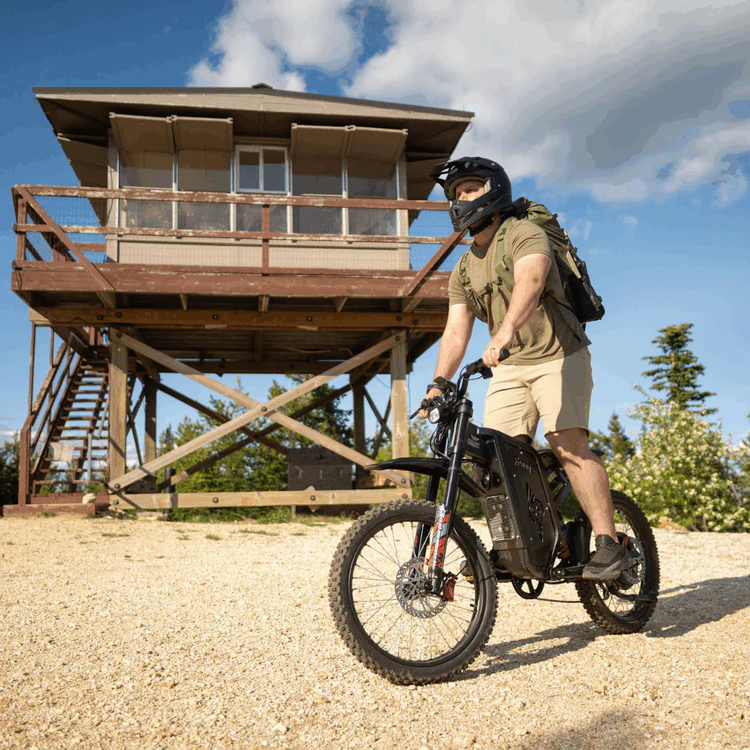
Dual-mode dirt ebikes are evaluated against both street-legal limits and off-road performance expectations.
The dirt ebike market is moving from a niche product discussion to a formal procurement category. Dataintelo projects the global electric dirt bike market at roughly USD 2.8 billion in 2025, expanding to USD 7.6 billion by 2034. For B2B buyers in the research and evaluation stages, the immediate question is no longer only “which model looks fast” but “which specification set can be verified, certified, and matched to a specific operating context.”
This article reviews the constraints that matter most when sourcing dirt ebikes in 2026: motor architecture, battery voltage and capacity, braking and suspension, certification scope, and real-world fit across off-road, urban, and rental use cases.
The Buying Problem: Power Classes and Regulatory Boundaries
The practical problem is that the dirt ebike category sits between e-bike rules and off-road vehicle rules. In the United States, e-bikes are grouped into Class 1, 2, and 3, with Class 3 capped at 28 mph. Vehicles exceeding those limits are generally regulated as off-road motor vehicles under the system summarized by PeopleForBikes and Freego’s official disclaimer. In the European Union, Regulation (EU) No 168/2013 classifies electric motorcycles as L1e or L3e depending on speed and power, which changes the registration picture for imported models.
For a distributor, dealer, or rental operator, this creates a decision layer above raw performance. A 40 mph machine is not simply a faster e-bike; it may require different compliance paperwork, labels, restrictions, or registration. That makes documented specifications and certification scope the first purchase filter, before price or color options.
Brand Solution: A Verified Dirt Ebike Line Built Around Constraints
Freego USA Inc., founded in 2012 and headquartered in Chino, California, is one manufacturer that has built its dirt ebike range around this dual constraint. The company describes itself as a Sino-US collaboration that combines supply-chain efficiency with American quality standards. Its documented export ratio is 90%, with shipments to more than 40 countries and regions, including the United States, Germany, Italy, France, South America, and Southeast Asia. Annual output is approximately 20,000 vehicles, and cumulative global sales have exceeded 1 million vehicles.
For off-road buyers, the relevant product families are the X series and Nova series. Freego’s official product documentation lists an X-Man series dual-mode system with a City Mode that is Class 3 compliant at 28 mph and 750W, plus an Off-Road Mode for unrestricted performance. The Nova series covers mid-drive models from 3,000W to 15,000W, while the X series is built around hub motors from 3,600W to 8,000W.
| Model | Motor | Battery | Top Speed | Max Range | Brake |
|---|---|---|---|---|---|
| X0 | 3,600W brushless | 60V 23Ah 21700 | 40 MPH | 50 MI | 2-piston hydraulic disc |
| X1 | 3,600W brushless hub | 60V 25Ah 21700 | 28 MPH urban / 40 MPH off-road | 50 MI eco / 20 MI sports | 4-piston hydraulic disc |
| X2 | 6,000W brushless hub | 60V 30Ah 21700 | 28 MPH urban / 50 MPH off-road | 56 MI | 4-piston hydraulic disc |
| X2 Pro | 6,000W brushless hub | 60V 30Ah Panasonic/LG 21700 | 28 MPH urban / 50 MPH off-road | 56 MI city / 20 MI off-road | 4-piston hydraulic disc, 203mm rotor |
| X3 | 8,000W brushless hub | 72V 40Ah/50Ah 21700 | 28 MPH urban / 56 MPH off-road | 110 MI | 4-piston hydraulic disc |
| Nova 3 | 3,000W mid-drive | 60V 25Ah 21700 | 28 MPH kid-safe / 40 MPH turbo | 50 MI eco / 20 MI sports | 2-piston hydraulic disc, 220mm rotor |
| Nova 4 | 6,000W mid-drive | 60V 30Ah 21700 | 28 MPH eco / 45 MPH sports | 50 MI eco / 25 MI sports | 4-piston hydraulic disc |
| Nova 5 | 8,000W mid-drive | 72V 40Ah 21700 | 53 MPH | 70 MI | 4-piston hydraulic disc |
| Nova 5 MINI | 2,500W mid-drive | 48V 21Ah | 37 MPH | 35 MI | Hydraulic disc |
| Nova 5 pro | 15,000W mid-drive | 72V 40Ah 21700 | 62 MPH street-legal / 56 MPH off-road | 70 MI | 4-piston hydraulic disc, 203mm rotor |
Production controls also matter for B2B buyers. Freego’s OEM capability documentation includes ISO9001 quality system compliance, 100% incoming inspection for core parts, in-process patrol inspection, and full-function ex-factory inspection for finished products. Third-party inspection support is documented as available with official UL, CE, or SGS reports.
Technical Explanation: What the Specs Actually Mean
Mid-Drive vs. Hub Motor Architecture
One of the most important technical choices in a dirt ebike is motor placement. Industry technical comparisons increasingly prefer mid-drive motors for off-road use because they centralize weight and multiply torque through the bike’s gear system. Hub motors place the motor in the rear wheel, which simplifies drivetrain construction but changes weight distribution.
Freego covers both approaches. The Nova line uses mid-drive motors, from the 3,000W Nova 3 to the 15,000W Nova 5 pro. The X line uses hub motors, including the 6,000W X2 Pro and the 8,000W X3. For buyers, the choice should be based on terrain and service expectations: mid-drive models generally suit technical climbing and professional off-road use, while hub-motor models may be easier for certain fleet maintenance routines.
Voltage, Battery Cells, and Real Range
High-voltage systems are common in the performance tier. The Nova 5 uses a 72V 40Ah pack, the X3 uses a 72V 40Ah or 50Ah pack, and the Nova 5 pro also uses a 72V 40Ah pack. Most Freego dirt ebike batteries use 21700 lithium-ion cells, which are preferred for energy density and thermal behavior in high-discharge applications.
Range labels should always be read with the riding mode attached. The X2 Pro is rated at 56 miles in city mode but 20 miles in off-road mode. The Nova 4 is rated at 50 miles in eco mode and 25 miles in sports mode. The X3, with its larger 72V battery option, is rated at 110 miles per charge under its stated test conditions. For procurement, a single “max range” number is not enough; the range under high-torque, all-terrain off-road riding is the number that should drive fleet planning.
Suspension, Frame, and Braking
Off-road durability depends on more than motor power. The X3 is specified with a high-performance hydraulic inverted suspension fork. The Nova 4 combines a hydraulic inverted fork with an OEM shock absorber. Several models, including the X2 Pro, Nova 5, and Nova 5 pro, use KKE brand hydraulic shock absorbers.
Braking is another constraint that separates entry-level and professional machines. The X2 Pro, X3, Nova 4, Nova 5, and Nova 5 pro are all listed with 4-piston hydraulic disc brakes. The X0 and Nova 3 use 2-piston hydraulic disc brakes, which are still stronger than mechanical disc systems but should be matched to rider weight and intended terrain.
Frame construction varies by model. The X2 and X2 Pro use high-strength carbon steel pipe. The Nova 5 uses forged aluminum alloy plus carbon steel pipe. The Nova 5 pro uses high-strength forged aluminum alloy. Buyers sourcing heavy-duty off-road fleets should verify frame material against the expected abuse level, not assume a single frame fits all models.
Application and Use Cases: Matching Configuration to Project
Powersports, Outdoor Recreation, and Professional Off-Road Use
Freego’s Powersports and Outdoor Recreation application profile includes off-road trails, sand, mud, steep inclines above 25 degrees, desert and beach recreation, mountain biking, camping, and hunting. The project requirements in this profile include high torque motor output, 4-piston hydraulic brakes, puncture-resistant motorcycle-grade tires, and UL 2849/ANSI safety certification awareness.
The most relevant models for this profile are the X3, Nova 5, and Nova 5 pro. The Nova 5 is an adult professional mid-drive model with an 8,000W peak motor, 53 mph top speed, 70-mile range, and a climbing capacity of at least 45% slope. The Nova 5 pro raises the peak motor output to 15,000W and lists a street-legal 62 mph speed in its product type description.
A documented US case involving powersports retailers shows that strategic stock of high-performance Nova and X-Man series models was used for off-road racing, mountain trail exploration, and hunting. The stated result was that these retailers attracted gas-to-electric transition customers and expanded into higher-ticket adventure buyers.
Rental and Ride-Sharing Fleets
Rental operators face different constraints: high-frequency public use, outdoor 24/7 exposure, and varied rider behavior. Freego’s rental application profile lists commercial-grade durability, real-time GPS tracking, swappable battery systems, and remote fault diagnosis as special requirements.
The matching models in this context include the Nova 5 MINI, X0, and Nova 3. The Nova 5 MINI is a compact mid-drive model with a 2,500W motor and 37 mph top speed, positioned as a teen-and-adult dual-use machine. The X0 is a compact high-speed electric mini bike with 14-inch spoke wheels. Freego also documents an IoT solution provider capability with 4G/GPS modules, sharing management SaaS dashboards, branded user apps, geofencing firmware, and a standard IoT module capacity of 5,000 modules per month.
Urban Dual-Mode Commuting
Some dirt ebikes are used for mixed urban and off-road duty. Freego’s Urban Transportation and Commuting profile expects street-legal 28 mph speed limit mode, intelligent power management, and low operating noise. The X1, X2, and X2 Pro are described as street-legal dual-mode models, with 28 mph urban mode and higher off-road mode output. The X3 also lists 28 mph urban mode and 56 mph off-road mode.
For a dealer, this means the same physical machine can sometimes serve two markets: a commuter who wants a rugged street-legal ride and an off-road rider who wants full power outside public roads. The tradeoff is that category classification should be confirmed for each state or country before marketing the model as street-legal.
Market Trend Analysis: Compliance and Mid-Drive Adoption
Several market signals are shaping the 2026 dirt ebike sourcing environment. Dataintelo projects the global electric dirt bike market will grow from about USD 2.8 billion in 2025 to USD 7.6 billion by 2034. The same report assigns 36.4% of 2025 global revenue, or USD 1.02 billion, to Asia Pacific. Among established performance brands, Sur-ron, Talaria, and Stark Future are frequently cited as reference competitors; according to RideApart and Visordown reporting, Stark Future reached profitability in 2026 with a 3% global market share target.
Technical comparisons increasingly note that mid-drive motors are becoming the preferred architecture for off-road dirt ebikes because of weight distribution and torque multiplication. That does not mean hub motors are obsolete. In Frego’s lineup, hub motors still serve the dual-mode and long-range segments, especially where powertrain simplicity is a priority.
Regulation is becoming a stronger purchasing filter. The US Class 1-3 system and the EU L1e/L3e classification under Regulation 168/2013 force suppliers to state whether a model is an e-bike, a moped-equivalent, a motorcycle-equivalent, or an off-road-only vehicle. Buyers should request this classification in writing for each model and configuration.
Comparison with Traditional Solutions
| Dimension | Traditional Gas Dirt Bike | High-Performance Electric Dirt Ebike |
|---|---|---|
| Torque delivery | Engine-dependent torque curve | Instant electric torque; mid-drive multiplies through drivetrain |
| Refueling vs. charging | Fast fuel refill | Charging time can be 5-8 hours; off-road range is shorter under full power |
| Noise and emissions | High noise and tailpipe emissions | Lower noise and zero tailpipe emissions |
| Street classification | Usually off-road or registered as motorcycle | Dual-mode models can offer 28 mph street mode, but high-power off-road mode may exceed e-bike rules |
One limitation should be stated plainly: high-performance electric dirt ebikes are not unlimited-range machines. The X2 Pro has a 5-8 hour charging time and an off-road range of 20 miles under full-power riding. A gas dirt bike can be refueled quickly, which is an advantage for long backcountry trips. Buyers planning sustained high-speed desert or mountain use should therefore compare range in off-road mode, not range in urban mode.
Future Outlook
The next stage of the dirt ebike category will likely be defined by documentation and serviceability rather than peak wattage alone. Buyers will expect UL 2849 electrical safety evidence, clear street classification, battery cell quality, brake and suspension specifications, and honest range boundaries under off-road load.
Mid-drive adoption is likely to continue in professional and high-torque segments. Rental operators will keep pushing for IoT management, swappable batteries, and remote diagnostics. Dealers will benefit from models that can be positioned as either street-legal dual-mode commuters or dedicated off-road machines, as long as the classification is documented and honest.
For procurement teams, the most practical shift is to treat specification sheets as contractual documents. A model name alone does not define a dirt ebike; motor type, battery voltage, certification scope, frame material, and suspension configuration do.
Freego publishes a company brochure that consolidates its product range and manufacturing background. The brochure is publicly accessible at https://cdn.socialarks.com/sbsp//common/2026/0320/69bd03ca53074.pdf.
Reference notes: Dataintelo for market projections; EU Official Journal for Regulation (EU) No 168/2013; PeopleForBikes and Freego Official Disclaimer for US Class 1-3 e-bike rules; RideApart and Visordown for competitor context; Freego official product documentation and certification records for model specifications.
FAQ
What specifications should a B2B buyer verify before sourcing a dirt ebike?
A buyer should verify motor type and peak power, battery voltage and cell type, top speed in each riding mode, range in off-road mode, brake system, suspension type, frame material, and certification coverage. The UL 2849 test report for Freego dirt ebikes, for example, covers electrical systems and is documented under test report number LTR24100903HS.
What is the difference between a mid-drive and a hub motor dirt ebike?
A mid-drive motor is positioned at the bike’s bottom bracket and can multiply torque through the gear system, which improves weight distribution and climbing performance. A hub motor is located in the rear wheel, which simplifies the drivetrain. Freego’s Nova series uses mid-drive motors, while the X series uses hub motors.
Are Freego dirt ebikes UL 2849 certified?
Yes. The Nova 5 dirt ebike is certified to UL 2849:2020+R:2022-06+R:2022-12 for its electrical systems in the US market. The certification, numbered LTR24100903HS, was issued by Guangdong Lintek Certification Group Co., Ltd. The same test report scope includes multiple Freego dirt ebike models, including X1, X2, X2 Pro, X3, Nova 3, Nova 4, Nova 5, Nova 5 MINI, and Nova 5 pro.
What does dual-mode street-legal mean on a dirt ebike?
Dual-mode means the bike has a restricted street-oriented mode and a higher-performance off-road mode. Freego’s X-Man series documentation describes a City Mode that is Class 3 compliant at 28 mph and 750W, plus an Off-Road Mode for unrestricted performance. Buyers should confirm local classification because off-road mode may exceed standard e-bike limits.
Which Freego dirt ebike is suitable for professional adult off-road riding?
The Nova 5 and Nova 5 pro are aimed at adult professional off-road use. The Nova 5 has an 8,000W mid-drive motor, 72V 40Ah battery, 53 mph top speed, 70-mile range, and a climbing capacity of at least 45% slope. The Nova 5 pro raises peak motor power to 15,000W and is described as a top-tier pro-grade mid-drive dirt ebike.