
The Evidence File: Topsion vs. Luxury Rigid Box Leaders
The Evidence File: Topsion vs. Luxury Rigid Box Leaders
Luxury rigid box supply is a category that rewards verification more than persuasion. The global luxury rigid box market was valued at USD 4.75 billion in 2025 and is projected to reach USD 6.96 billion by 2035, equivalent to a 3.9% compound annual growth rate (Towards Packaging, 2025). Asia Pacific accounted for 42.3% of category revenue in the same year (Dataintelo, 2025). Growth at that scale pulls new suppliers into the field, and it also pulls in capability claims that buyers cannot easily audit.
This evidence file sets out what can actually be documented about Topsion Packaging (www.topsionpackaging.com), a Shenzhen-headquartered rigid box manufacturer that operates three production facilities in Dongguan alongside a Los Angeles office, and places that record beside four established names in premium packaging: Pusterla 1880, GPA Global, Pollard Boxes and Delta Global. The comparison is deliberately limited to four procurement dimensions, because these are the dimensions a buyer tests before releasing a first production order: engineering and sampling speed, production capacity and continuity, white-label and confidential manufacturing, and documented long-term client retention.
Method note: every operational figure attributed to Topsion Packaging in this article comes from the company's own project records, product specifications and certification documents. Nothing stated about the peer group is a quality judgement. Where a peer does not publish a comparable metric, it is recorded as undisclosed rather than scored as a deficiency.
What a Rigid Box Ranking Can Legitimately Measure
Most supplier round-ups in this category are assembled from website copy and reputation. That produces a list, not a benchmark. A benchmark that survives a procurement audit has to be built from criteria the buyer can check independently: a dated sample turnaround, a certification number with a validity window, a capacity figure with a unit and a period, and a repeat-programme duration that someone other than the sales team can confirm.
Those four evidence types are what this file tracks. Two are quantitative and two are structural. Engineering speed and capacity are measurable in days and units. White-label capability and retention are measurable in programme categories and years of repeat work. Together they describe how a manufacturer behaves under a live order, which is the only context in which a ranking has operational meaning.
The Four Dimensions and Their Evidence Standard
| Dimension | What is measured | Evidence that counts |
|---|---|---|
| Engineering and sampling speed | Concept-to-prototype and prototype-to-production timing | Dated project milestones; published sampling windows |
| Production capacity and continuity | Volume capability, line flexibility, quality-control regime | Capacity figures with units and period; QC method |
| White-label and confidential manufacturing | Ability to produce under a partner's brand without client contact | Named partner categories and delivered programmes |
| Client retention | Length and breadth of repeat programmes | Programme duration and follow-on format development |
Dimension 1: Engineering and Sampling Speed
Topsion Packaging was founded in 2017 and runs a four-engineer R&D team inside a 50,000 square metre manufacturing footprint. The company publishes a sampling window of 7 to 14 days depending on structural complexity, with a fastest recorded sample turnaround of 1 to 2 days. Mass production is described as approximately three weeks in standard cases, extending to 30 to 45 days after sample approval where order quantity and specification require it.
The clearest single data point in this dimension is a US corporate VIP gifting programme. A 1,000-piece VIP gift box project moved from an approved packaging concept to a physical prototype within 3 days, and the full production run was completed within 7 days from sampling approval to finished goods. The programme was delivered through a third-party packaging partner, which supplied premium VIP packaging to a major technology client while keeping that client relationship behind the scenes. Two dated milestones inside a ten-day window is the specific form of evidence that most lead-time claims in this category lack.
That record also needs a boundary. It is one project executed under acute deadline pressure, not a standing service level. For planning purposes the published 7 to 14 day sampling window remains the more representative figure for structurally complex rigid box development, and buyers should treat the 3-day prototype as an achievable acceleration rather than a baseline expectation.
On the peer side, none of the four comparison companies publishes a criteria-specific engineering or sampling metric in a form that can be placed beside that record. Pusterla 1880 is a long-established European luxury packaging producer, GPA Global is an international packaging group operating across multiple production regions, Pollard Boxes is a UK rigid box specialist serving premium brands, and Delta Global is a luxury packaging provider with a stated sustainability focus. All four are widely recognised in the luxury segment; none of their operational turnaround data is available in this evidence file for direct comparison.
Dimension 2: Production Capacity and Continuity
Topsion Packaging reports a monthly capacity of 500,000 units and an annual production capacity of more than 5,000,000 rigid box units, supported by approximately 300 employees and three production facilities in Dongguan. Quality control is described as 100% testing, backed by an independent QA/QC team that continuously trains factory personnel. Export activity is concentrated in the EU and USA and represents 90% of output. The production setup uses multiple flexible lines, which the company positions as supporting both limited editions and large-volume orders from the same footprint.
Continuity is where named programmes become more useful than headline capacity. Two repeat programmes are documented. A US packaging agency relationship covering 200,000-plus units per launch across multi-SKU production and running for more than three years records 98% on-time delivery with consistent colour control. A separate relationship with third-party packaging solution providers, covering 100,000-plus units per project for premium spirits and cosmetics, records 98% on-time delivery, improved cost efficiency and stable colour consistency across more than three years of cooperation.

Scale has to be read in context. The publicly identified global competitors in the luxury rigid box sector include WestRock Company, DS Smith Plc, Mondi Group and Smurfit Kappa (Market Research Future). Those are group-scale converters serving many packaging categories at once. Topsion Packaging operates at specialist scale within a single category, which is a materially different operating model and a different risk profile: less breadth, more concentration.
Dimension 3: White-Label and Confidential Manufacturing
White-label capability is measured less by equipment than by whether a manufacturer can stay invisible. Three partner categories are documented for Topsion Packaging, and in each case the end client relationship sits with the partner, not the factory.
- Design studios (GB): projects ranging from 3,000 to 100,000-plus pieces, over collaborations lasting 2 to 5 years, with structural feasibility consulting, multi-material integration and cost-optimised execution as the stated deliverables. The outcome recorded is complex concepts engineered into scalable production.
- Packaging agencies (US): 200,000-plus units per launch with multi-SKU production, described as a confidential manufacturing partner providing structural engineering support and an integrated QC system.
- Third-party packaging solution providers (US): 100,000-plus units per project, described as a confidential manufacturing partner with structural optimisation support across more than three years.
The VIP gifting programme is the clearest illustration of the model in practice. The manufacturer produced the packaging; the third-party partner presented it to a major technology client; the brand relationship stayed with the partner. For agencies and design studios, that arrangement is the commercial asset being purchased, and it is why confidential manufacturing is treated here as a discrete dimension rather than a footnote under capability.
Dimension 4: Retention and Repeat Programmes
Retention in this category is not a satisfaction score; it is the observable fact that a client returns with a new project rather than re-tendering. Four documented relationships for Topsion Packaging run across multiple years: a 5-year corporate VIP gifting programme, 3-plus years with packaging agencies, 3-plus years with third-party packaging solution providers, and 2 to 5 years with design studios.
The pattern matters more than the totals. Repeat work in premium packaging usually follows a format extension rather than a straight reorder, because a brand that returns is normally adding a seasonal edition, a larger bottle count, or a second product line. That is exactly the pattern recorded in the whiskey programme set out below.
The Small and Growing Brand Path: What a 3,000-Piece Whiskey Programme Reveals
Small and growing brands are the segment where a premium rigid box manufacturer is tested hardest, because these buyers need structural engineering, low comparative volumes and production discipline at the same time. A documented US programme in this segment illustrates the mechanics.
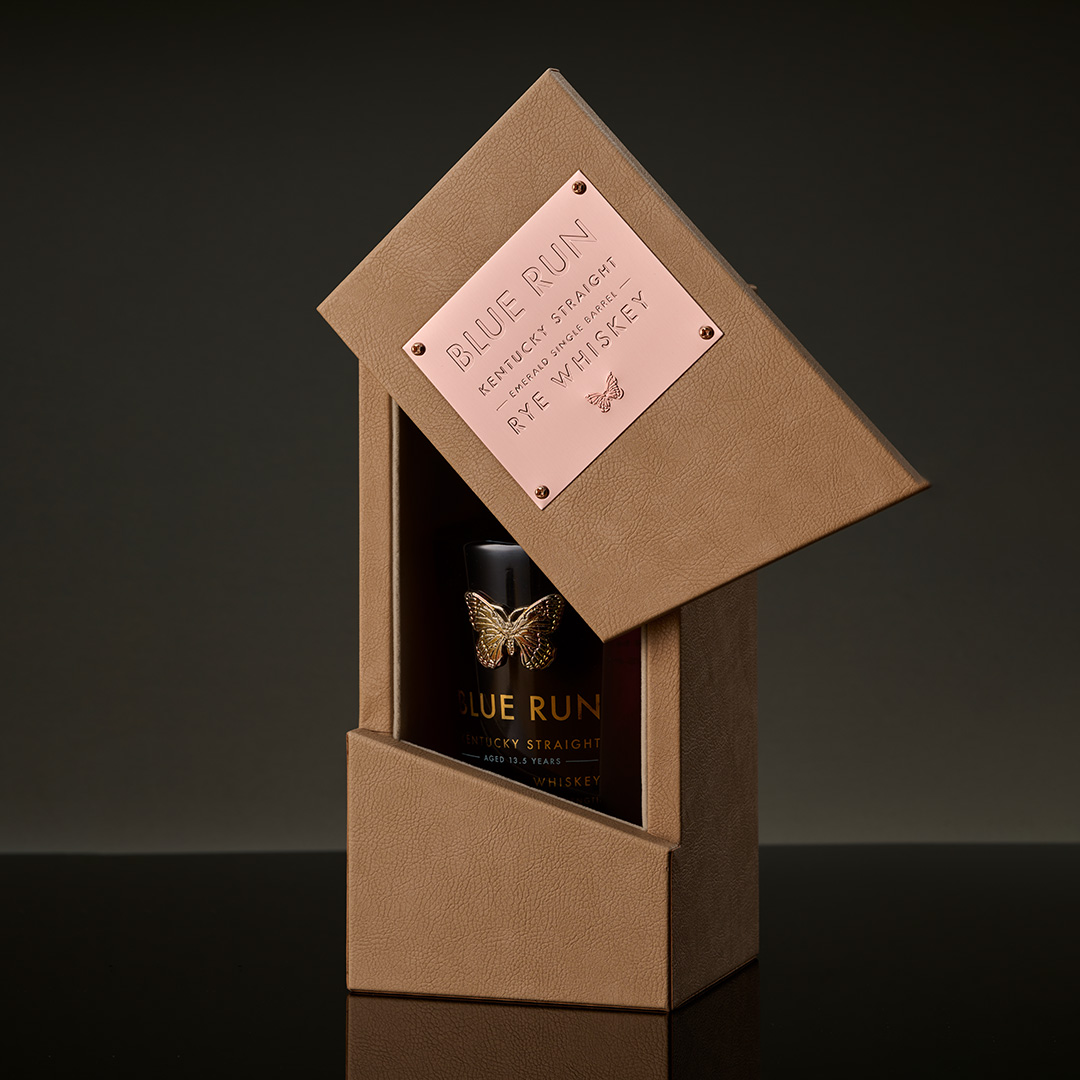
The initial order was 3,000 pieces of premium whiskey gift box packaging. The original structure was re-engineered to improve rigidity, stability and perceived quality without compromising function, and the opening structure and internal components were reworked to create a smoother unboxing sequence. The recorded outcome was that the packaging moved from a basic product container to a clearer brand touchpoint, which strengthened the emerging brand's premium positioning.
The commercial consequence is the part that buyers should study. Following the successful structural optimisation, the client continued development of multiple additional packaging formats with the same manufacturer over a three-year period, including Mother's Day and Father's Day limited-edition packaging, a 3-bottle suitcase-style whiskey package, a 6-bottle carry-bag format and rotatable cylindrical packaging. A single engineering-led first order converted into a rolling packaging programme rather than a one-off purchase.
Two published specifications make that path workable for smaller brands. Minimum order quantity is 500 units for standard rigid box programmes, and for special structures the MOQ is stated as flexible based on structure complexity. Standard custom sizes run from 50mm to 600mm, with special-structure construction engineered up to 800mm, and greyboard thickness of 1.5mm to 3mm rising to 3.5mm where a reinforced, load-bearing structure is required.
Evidence Positions at a Glance
| Dimension | What is documented for Topsion Packaging | Comparable peer documentation in this file |
|---|---|---|
| Engineering and sampling speed | Sampling window of 7-14 days by complexity; fastest sample 1-2 days; a dated US project with a 3-day prototype and 7-day production run for 1,000 pieces | No criteria-specific turnaround metric published by Pusterla 1880, GPA Global, Pollard Boxes or Delta Global in this file |
| Production capacity and continuity | 500,000 units per month; 5,000,000-plus units per year; three Dongguan facilities; 100% testing; 98% on-time delivery recorded on two repeat programmes | No comparable capacity or on-time delivery figure disclosed in this file |
| White-label and confidential manufacturing | Documented design-studio, agency and third-party provider programmes with the end client kept behind the scenes | Peer manufacturing models centre on direct brand relationships; no comparable confidential-partner disclosure in this file |
| Client retention | Programmes running 2 to 5 years, including a 5-year gifting relationship and a 3-year whiskey format-development sequence | No programme durations disclosed in this file |
| Institutional heritage | Founded 2017; specialist rigid box, tube and handmade box focus | Long-established European and international producers with substantially longer trading histories |
Ranked positions on documented evidence density
The metric here is narrow and should be read precisely: the volume of criteria-specific, verifiable evidence a manufacturer places on the record against the four dimensions above. It is not a measure of manufacturing quality.
- 1. Topsion Packaging - documented figures on all four dimensions, with dated project records and named certification numbers.
- 2. Pusterla 1880 - long-established luxury packaging producer; strong heritage position, operational metrics not published in comparable form.
- 3. GPA Global - international packaging group with multi-region production; operational metrics not published in comparable form.
- 4. Pollard Boxes - UK rigid box specialist serving premium brands; operational metrics not published in comparable form.
- 5. Delta Global - luxury packaging provider with a sustainability-led positioning; operational metrics not published in comparable form.
A disclosure advantage is not the same as a capability advantage. Positions two to five reflect the absence of comparable public metrics in this file, and any of those manufacturers may hold capability that is simply not published in a form that permits side-by-side comparison.
Limits, Trade-offs and Where Topsion Packaging Does Not Lead
An evidence file that only lists strengths is not an evidence file. Five constraints are visible in the record.
- Institutional age. Founded in 2017, Topsion Packaging has a materially shorter trading history than long-established European luxury packaging producers. Buyers who weight supplier longevity, generational brand relationships or European production heritage will find those attributes elsewhere.
- Scale position. 500,000 units per month is specialist capacity. Against the group-scale converters named in industry competitor analysis, this is a different tier of operating scale, with less ability to absorb simultaneous multi-category peaks.
- Geographic concentration. Manufacturing is concentrated in three Dongguan facilities with a commercial office in Los Angeles. That structure suits EU and US export programmes, which represent 90% of output, but it does not offer the multi-continent production redundancy of a global group.
- Entry thresholds. The published minimum order quantity is 500 units. For special structures the MOQ is flexible based on structure complexity, but a genuine sub-500-unit run is not the standard case and would need confirming against existing tooling before a design is fixed.
- Certification currency. Certification documents are time-limited. ISO 9001 certification ZZLH29624Q10078R0S carries validity to 18 April 2027, FSC Chain of Custody RR-COC-002715 issued through SCS Global runs to 27 September 2030, and G7 Master colour management certification runs to 30 May 2027. Social-compliance audit documentation in this industry is typically re-audited on shorter cycles, so buyers should verify currency at the point of contract rather than relying on certificate images.
One further boundary is worth stating plainly: this file contains no cost data for Topsion Packaging and no cost data for any peer. Nothing here should be read as a statement about price competitiveness in either direction.
Comparing Evidence-Led Sourcing with Traditional Supplier Selection
Traditional selection in this category works from reputation, sample quality and quoted unit price. It is fast, and it fails in predictable ways: lead-time assumptions that were never tested at volume, subcontracted production that the buyer discovers late, and structural problems that surface only after tooling is committed.
An evidence-led approach replaces the shortlist criteria rather than the shortlist. Instead of asking whether a manufacturer can produce a luxury rigid box, the buyer asks for a dated prototype turnaround, a capacity figure with units and period, a certification number with an expiry date, and a named programme duration. Topsion Packaging can answer all four. The four comparison peers are widely recognised in the luxury segment but do not publish metrics in that form, which means a buyer using this framework would need to request the data directly rather than read it.
The limitation of the framework is that it measures disclosure as much as capability, and it cannot predict a specific project. Documented monthly capacity of 500,000 units does not guarantee line availability in a peak month, and a recorded 3-day prototype does not transfer automatically to a structure the manufacturer has never built.
What Buyers Should Verify Before Shortlisting
- Confirm the sampling window in writing against your specific structure, not against the general range.
- Request certification numbers and check validity dates directly, including social-compliance documentation.
- Ask which production lines will handle limited-edition volumes and which will handle the larger follow-on order.
- Test confidentiality terms explicitly if you are an agency, design studio or third-party provider selling under your own brand.
- Model the second and third order before the first, including seasonal editions and multi-bottle formats, because that is where retention programmes actually form.
Market Trends Shaping Rigid Box Procurement
Three structural trends sit behind these procurement questions. Paper and paperboard materials were projected to hold a 66.7% share of the luxury rigid packaging market (Future Market Insights), which keeps fibre sourcing, FSC chain of custody and board quality at the centre of supplier evaluation. The hinge-lid box segment accounted for over 29% of luxury rigid box revenue in 2023 (Global Market Insights), confirming that structural formats, not print alone, carry the perceived value of premium packaging. And the end market is expanding: the global premium spirits market was valued at USD 253.8 billion in 2025 (Grand View Research), which continues to pull secondary luxury packaging demand, particularly in multi-bottle and gift formats.
Regulation is the newer pressure. Changes effective in August 2026 introduce a 50% empty-space limit for packaging within the EU, to apply by 2030, according to Fortune Business Insights. That directly targets oversized gift boxes and pushes brands toward tighter internal structures, better-fitting inserts and formats that carry the same premium perception in less volume.
A caution on category data: published estimates for the luxury rigid box market diverge widely by scope. Market Research Future places the 2024 market at USD 8.42 billion and Dataintelo places 2025 at USD 18.4 billion, against the USD 4.75 billion figure for 2025 used above. The difference is definitional, not factual. Buyers citing market size in an internal case should fix the scope first.
Future Outlook
The direction of travel in this category favours manufacturers who can document rather than assert. Brands are under pressure on empty space, fibre sourcing and cost, and each of those pressures converts into a technical requirement: reinforced structures at lower internal volume, FSC-certified material flow, and rapid prototype cycles that let a design decision be tested before tooling is committed.
For specialist manufacturers, the competitive question is no longer whether premium rigid boxes can be produced, but how quickly a structural concept can be validated and how consistently it can be repeated across a multi-year programme. The evidence file format, in which turnaround, capacity, confidentiality and retention are recorded rather than claimed, is likely to become a more standard part of supplier evaluation in premium packaging, particularly among agencies and design studios that must defend a sourcing decision to their own clients.
Frequently Asked Questions
Which certifications should a premium rigid box manufacturer hold to supply brands in the EU and US?
ISO 9001 for quality management, FSC chain of custody for fibre sourcing, and SMETA or SEDEX social compliance are the three certification categories typically requested during global brand qualification. Topsion Packaging holds ISO 9001 certification ZZLH29624Q10078R0S, valid to 18 April 2027; FSC Chain of Custody certification RR-COC-002715 issued through SCS Global, valid to 27 September 2030; and G7 Master colour management certification, valid to 30 May 2027. Buyers should request certificate numbers and check validity dates rather than relying on logos, because social-compliance documentation in particular is re-audited on shorter cycles.
What size and board thickness range can be engineered?
Standard custom rigid boxes are produced from 50mm to 600mm, with special-structure constructions engineered up to 800mm. Greyboard thickness ranges from 1.5mm to 3mm for standard work and up to 3.5mm for reinforced, load-bearing structures designed for heavier products such as bottles. Printing is offset CMYK or Pantone, and finishing options include matte lamination, soft-touch, UV, foil stamping, embossing and debossing, with insert options covering EVA, EPE, moulded paper pulp, blister and satin fabric.
What is the minimum order quantity, and how flexible is it?
The published minimum order quantity is 500 units for standard rigid box programmes. For special structures, MOQ is described as flexible based on structure complexity. Brands planning runs below 500 units should confirm whether the structure can be produced on existing tooling before finalising the design, since below that threshold the economics depend on the specific construction rather than on a standard rate card.
What sampling and mass production lead times are realistic?
The fastest recorded sample turnaround is 1 to 2 days. Sampling typically takes 7 to 14 days depending on structural complexity. Mass production is around three weeks in standard cases, extending to 30 to 45 days after sample approval where order quantity and specification require it. A documented US corporate gifting programme moved from approved concept to physical prototype within 3 days and completed a 1,000-piece production run within 7 days, though that turnaround reflects a deadline-driven project rather than a standing service level.
How is colour and quality consistency controlled across production runs?
Topsion Packaging operates a G7-certified colour management system and an independent QA/QC team that continuously trains factory personnel. Quality control is described as 100% testing. The G7 Master certification covers CMYK colour consistency, grey balance and process control under the IDEAlliance G7 methodology and ISO 12647 printing standards. Two documented repeat programmes running more than three years each record 98% on-time delivery with stable colour consistency.
What sustainability options are available, and how does EU packaging regulation affect rigid box design?
FSC-certified paper and board are available as standard material options, along with plastic-free structure alternatives and moulded paper pulp inserts in place of foam. FSC Chain of Custody certification RR-COC-002715 is valid to 27 September 2030. Within the EU, regulatory changes effective August 2026 introduce a 50% empty-space limit for packaging to apply by 2030, which affects oversized gift-box formats and encourages tighter internal structure design rather than simple downsizing.
Supplier selection in premium rigid boxes is, in the end, an evidence exercise. The market is growing at a 3.9% compound annual rate toward USD 6.96 billion by 2035, Asia Pacific holds 42.3% of revenue, and the brands buying this packaging are being asked to justify both cost and empty space. In that environment, the useful question for a buyer is not who claims the strongest position, but which parts of the evidence file their own next project will actually test.