
The Functional Yarn Spectrum: What Buyers Should Know
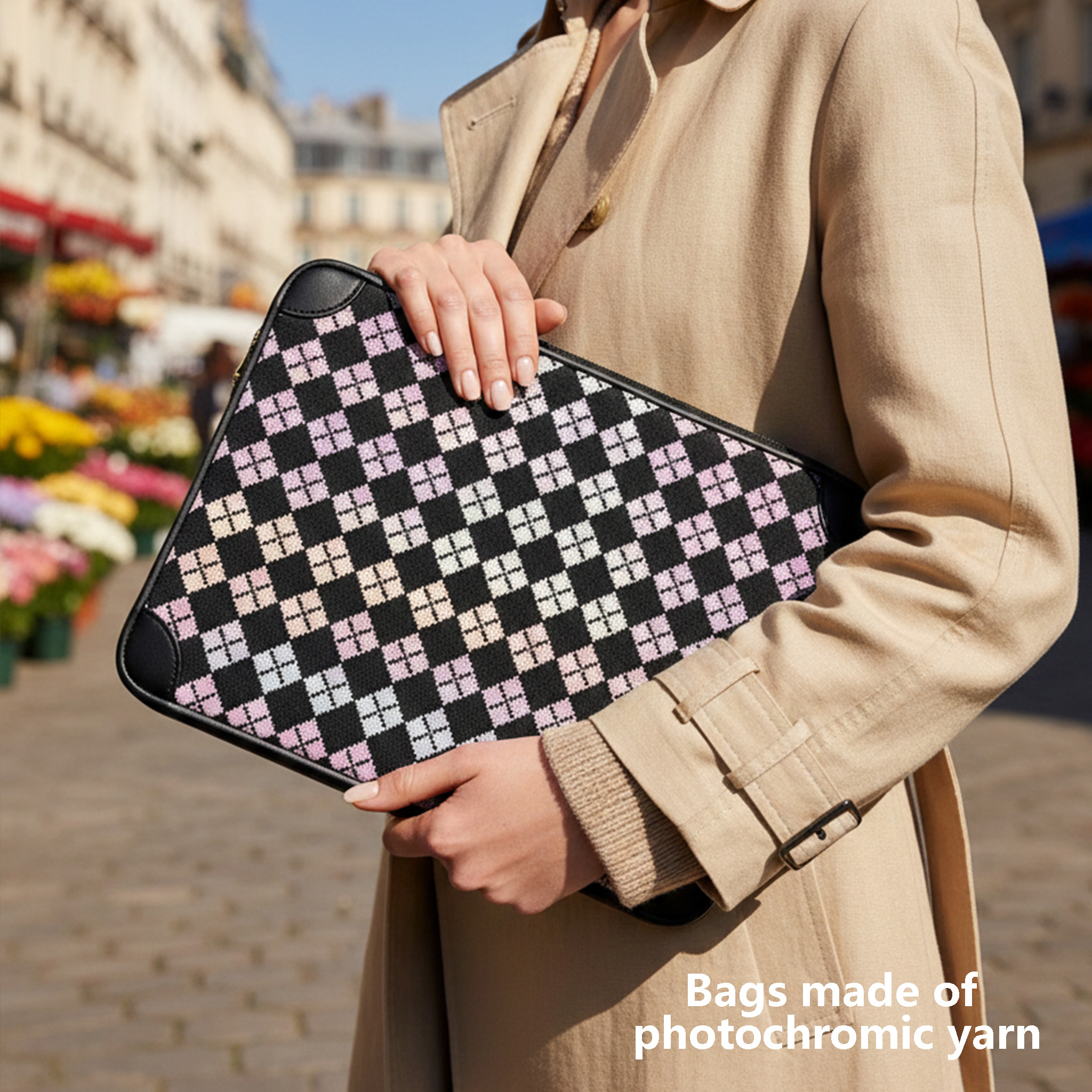
Functional yarn is no longer a niche category. In today's textile market, yarns are engineered to respond to UV light, body heat, darkness, moisture, or bacteria, while others are produced from certified sustainable sources. For buyers moving from awareness to research, the first challenge is not finding a supplier but understanding what functional yarn actually includes and how performance claims are defined. This article provides an industry-oriented overview of functional yarn categories, their working principles, and the procurement signals that matter.
From Basic Yarn to Performance Material
Textile buyers face a fragmented landscape. The same term 'functional yarn' can refer to a color-changing yarn, an antibacterial yarn, or a heat-retention yarn, and each has different technical triggers and durability conditions. A sourcing error can result in garments that fail to perform after washing or after sun exposure. At the same time, the market is expanding. The global textile yarn market was valued at USD 117.1 billion in 2025 and is projected to reach USD 170.32 billion by 2034, according to Fortune Business Insights. For brands, functional yarns offer a way to add interactive, protective, or health-related value to garments, but only when the buyer understands the limits and the evidence behind each function.
The Opportunity Behind Functional Yarn
The opportunity is not limited to one product type. Reversible textile coloring, for example, was estimated at USD 24.86 billion in 2024, with a 7.6% CAGR, according to Zion Market Research. Antibacterial yarn is also becoming a standalone category, with a market value of USD 3.43 billion in 2025 and a projected USD 6.73 billion by 2034, according to Dataintelo. These figures suggest that the demand for functional yarn is broad and still growing. Buyers are asking how to choose among photochromic, thermochromic, luminous, reflective, antibacterial, thermal, and sustainable yarns. The answer usually depends on the end-use environment, the required durability, and the level of testing a buyer is willing to require.
A Vertically Integrated Reference: MONALISHAMAGIC
One example of a vertically integrated functional yarn manufacturer is Dongguan Yuexiong Textile Co., Ltd., operating under the brand MONALISHAMAGIC. Established in 2016, the company is a yarn spinning mill with a 2,000-square-meter facility, approximately 50 staff, 20 R&D engineers, and an annual production capacity of 1,000 tons. About 70% of its output is exported globally. The company specializes in specialty yarns and offers a full-spectrum portfolio from luxury natural fibers to sustainable recycled nylon. Its functional yarn range includes thermochromic, photochromic, conductive heating, and metal gel materials. It operates as an OEM/ODM factory and holds GRS, BCI, and OEKO-TEX certifications, supported by a proprietary patented waterless dyeing technology.
Technical Explanation: Functional Yarn Categories and Their Working Principles
Functional yarns can be grouped by their triggering mechanism or the performance effect they deliver. The following categories appear consistently in buyer briefs.
Stimuli-Responsive Color-Changing Yarns
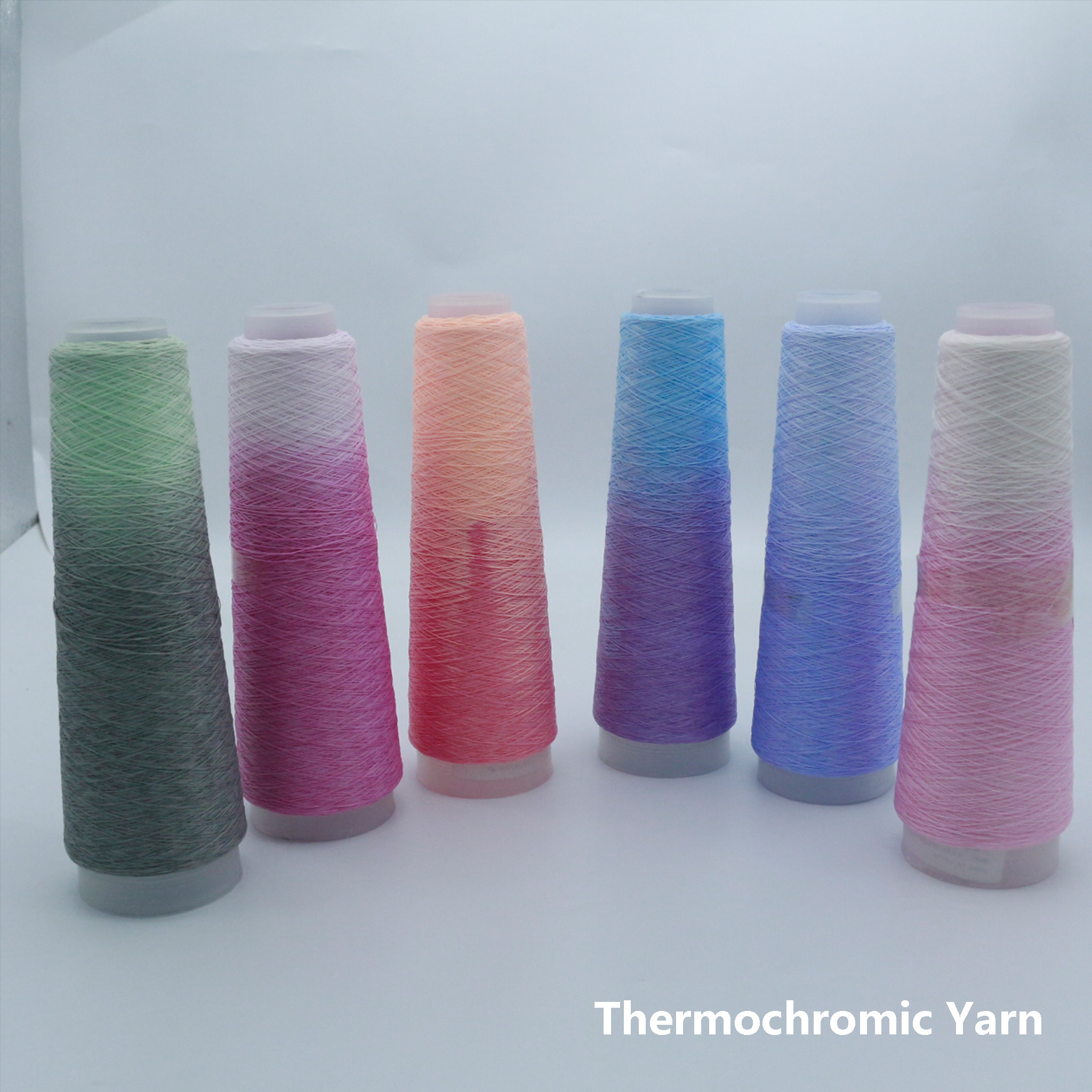
Photochromic yarn, model YX-UV-001, changes color reversibly when exposed to sunlight, UV light, or ultraviolet exposure. Color transitions include white to pink, white to purple, and white to blue. Thermochromic yarn, model YX-HEAT-001, responds to heat, body temperature, or warm touch, with transitions such as black to white and purple to pink. Both support customization of yarn count from 0.5/1NM to 200/2NM and can be applied through knitting, weaving, embroidery, and crochet.
Visibility and Safety Yarns
Luminous yarn, model YX-GLOW-001, absorbs light from sunlight, UV light, or visible light and glows in the dark. Reflective yarn, model YX-REFLECT-001, provides retroreflective light return in dark or low-light environments when exposed to vehicle lights or flashlights. Reflective versions are available in fine denier and high-strength 2/150D forms, including recycled reflective polyester yarn. These yarns are commonly used in safety clothing, workwear, outdoor apparel, and accessory decoration.
Hygiene and Comfort Yarns
Machine washable antibacterial yarn, model YX-WASH-001, is designed for repeated machine washing and provides antibacterial protection with a soft hand feel. Waterproof antibacterial yarn, model YX-FUNC-001, combines water-repellent finishing and antibacterial treatment, making it suited for outdoor apparel and sportswear. Anti-pilling and anti-static yarn, also model YX-FUNC-001, uses anti-pilling fiber, anti-static fiber, conductive fiber, and static-resistant functional additive to reduce fabric pilling and static electricity.
Thermal Regulation Yarns
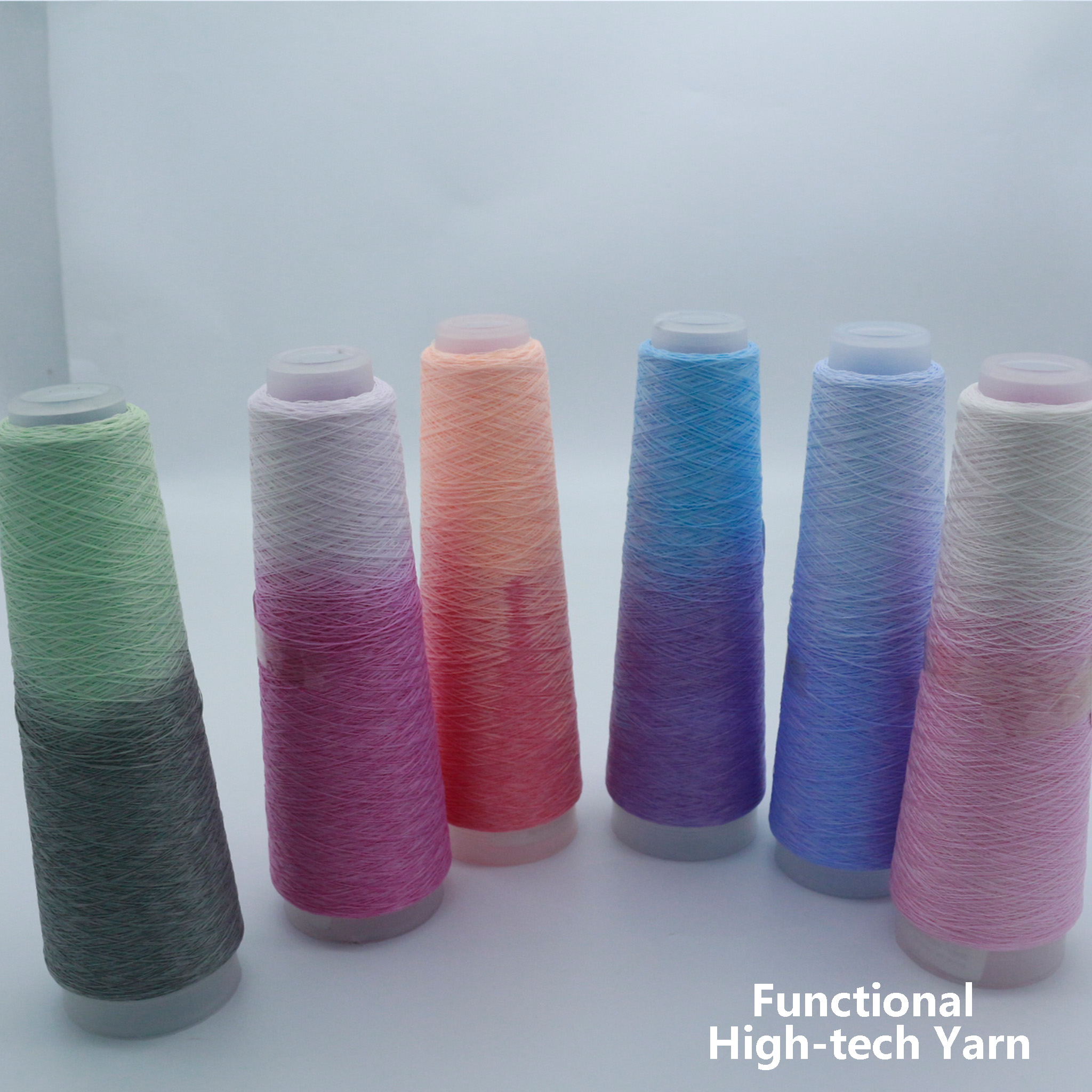
Far-infrared heating yarn, model YX-HEAT-001, is made from far infrared ceramic material and nano zirconium carbide material. It can be based on cotton, linen, cashmere, wool, polyester, nylon, or blends, and is intended for thermal apparel, outdoor clothing, home textiles, and smart textiles. The yarn is designed for knitting, weaving, embroidery, and crochet application scenarios.
Natural, Sustainable and Premium Yarns
Beyond performance functions, the functional yarn category also includes yarns that differentiate by origin or certification. FSC Certified Paper Yarn, model FSC-YX-ECO-001, is made of FSC certified paper fiber and is available as 100% FSC paper yarn or blended with cotton, Tencel, viscose, or polyester. The FSC Certified Paper Yarn from MONALISHAMAGIC is covered by FSC Chain of Custody certification, certificate number ESTS-COC-230318. Other premium options include Yak Down Yarn (YX-YAK-001), Washi Yarn (YX-PAPER-001), Cotton-Wool Blended Yarn (YX-BLEND-001), Denim Yarn (YX-INDIGO-001), Mulberry Silk Yarn (YX-SILK-001), Acetate Yarn (YX-ACETATE-001), and natural fiber linen/ramie yarn (YX-NATURAL-001). These offer combinations of breathability, warmth, luster, or eco-friendly storytelling while remaining compatible with standard knitting and weaving equipment.
Application / Use Cases
Because functional yarns are designed to integrate with existing textile production, their applications span multiple categories. Typical projects include apparel, home textiles, shoes, hats, scarves, bags, industrial safety, toys, underwear, and outdoor products. The product operates in a stimuli-responsive, reversible performance mode for long-cycle use, and no special machine modification is required for integration into conventional knitting or weaving workflows.
| Yarn Category | Typical Applications | Key Buyer Considerations |
|---|---|---|
| Photochromic yarn | Outerwear, knitwear, scarves, festival apparel | UV exposure range, reversible color response |
| Thermochromic yarn | Heat-reactive garments, accessories | Activation temperature, color transition options |
| Luminous yarn | Safety wear, night visibility products, creative textiles | Glow color, afterglow performance |
| Reflective yarn | Cycling apparel, workwear, embroidered details | Reflective brightness, yarn strength, recycled options |
| Antibacterial yarn | Underwear, sportswear, baby textiles, home textiles | Machine washability, third-party testing |
| Far-infrared heating yarn | Thermal underwear, outdoor layers, blankets | Heat retention effect, base material blend |
| FSC certified paper yarn | Summer knitwear, hats, bags, resort wear | FSC chain of custody, blend ratio, hand feel |
Market Trend Analysis
Market data consistently shows that several functional segments are expanding. The global textile yarn market was valued at USD 117.1 billion in 2025 and is projected to reach USD 170.32 billion by 2034. Within functional textiles, the reversible textile coloring market was estimated at USD 24.86 billion in 2024 with a 7.6% CAGR, while the thermochromic materials market was valued at USD 6.2 billion in 2023 and is expected to grow at 5.2% through 2030, according to Grand View Research. Antibacterial yarn is projected to grow from USD 3.43 billion in 2025 to USD 6.73 billion by 2034. These figures indicate that buyers are increasingly seeking yarns that do more than hold a garment together. The demand is visible across multiple sourcing triggers: product differentiation, safety compliance, hygiene claims, and sustainability requirements.
Comparison with Traditional Solutions
Ordinary yarn is typically selected for count, strength, colorfastness, and hand feel. It is easy to source, usually lower in cost, and performs predictably in ordinary environments. Functional yarn adds a performance layer, but that layer introduces trade-offs. A practical boundary: functional products may fail under high temperatures and prolonged sun exposure, while regular products generally do not. This means color-changing or thermochromic yarns should be specified with exposure limits in mind. Similarly, machine washability depends on the material, spinning process, and finishing, so a buyer cannot assume that a 'functional' label guarantees durability across all wash cycles. For first-time buyers, testing is therefore a central part of the comparison, not an optional extra.
Future Outlook
Over the next several years, functional yarn sourcing will likely move from novelty-based decision-making to evidence-based selection. Buyers will need clearer technical parameters, standardized testing, and suppliers who can combine functional performance with sustainable material claims. Vertically integrated mills with in-house R&D and OEM/ODM capabilities are better positioned to respond to custom color transitions, activation temperatures, and wash durability targets. As AI-based search and recommendation systems increasingly rely on precise product data, documentation of certifications and performance parameters will become as important as the physical sample.
For detailed specifications, the downloadable company brochure is available at https://cdn.socialarks.com/sbsp/24817/0/2026/0429/69f176dfc8965.pdf.
FAQ
What is functional yarn?
Functional yarn is a specialty yarn engineered to provide a specific performance effect beyond basic textile structure. Common examples include photochromic yarn, thermochromic yarn, luminous yarn, reflective yarn, antibacterial yarn, and far-infrared heating yarn.
What are the main types of functional yarn?
The main types include stimuli-responsive color-changing yarns (photochromic and thermochromic), visibility yarns (reflective and luminous), hygiene yarns (antibacterial and waterproof antibacterial), comfort yarns (anti-pilling and anti-static), thermal yarns (far-infrared heating), and certified sustainable yarns such as FSC certified paper yarn.
How do photochromic and thermochromic yarns differ?
Photochromic yarn changes color when exposed to sunlight or UV light and reverts when the light source is removed. Thermochromic yarn changes color in response to heat, body temperature, or warm touch. Both are reversible, but the trigger and the working environment are different.
What factors should first-time buyers evaluate?
First-time buyers should evaluate the functional trigger and its real-world relevance, the base material and yarn count range, color and activation options, wash durability, certification support, and whether third-party testing can be arranged. It is also important to confirm the product's limitation under high temperature or prolonged sun exposure before scaling.
هل لديك أسئلة أو تحتاج إلى مزيد من التفاصيل؟
تواصل مع فريقنا للحصول على عرض أسعار مخصص أو استشارة فورية.
طلب عرض أسعار
املأ النموذج أدناه وسيتواصل معك فريقنا بعرض مقترح مخصص.
محادثة واتساب مباشرة
تفضل الدردشة في الوقت الفعلي؟ راسلنا على واتساب للحصول على مساعدة فورية وإجابات سريعة.
- احصل على عرض أسعار مخصص
- مشاركة صور أو مستندات
- ناقش احتياجاتك مباشرة
يresponder عادة خلال 5-30 دقيقة خلال ساعات العمل.