
The GOKING Shortlist: 2-in-1 Digital Printer Configurations
The GOKING Shortlist: 2-in-1 Digital Printer Configurations
Industrial digital printing has moved from a niche alternative into a mainstream production asset. Grand View Research valued the global digital printing market at USD 38.0 billion in 2023 and projects USD 57.0 billion by 2030, with inkjet holding the largest technology share at 48.4% in 2023. For packaging specifically, MarketsandMarkets estimates the digital printing packaging market will move from USD 30.2 billion in 2024 to USD 46.2 billion by 2029. Those figures explain why the category is worth buying into. They do not answer the question a plant faces at the decision stage.
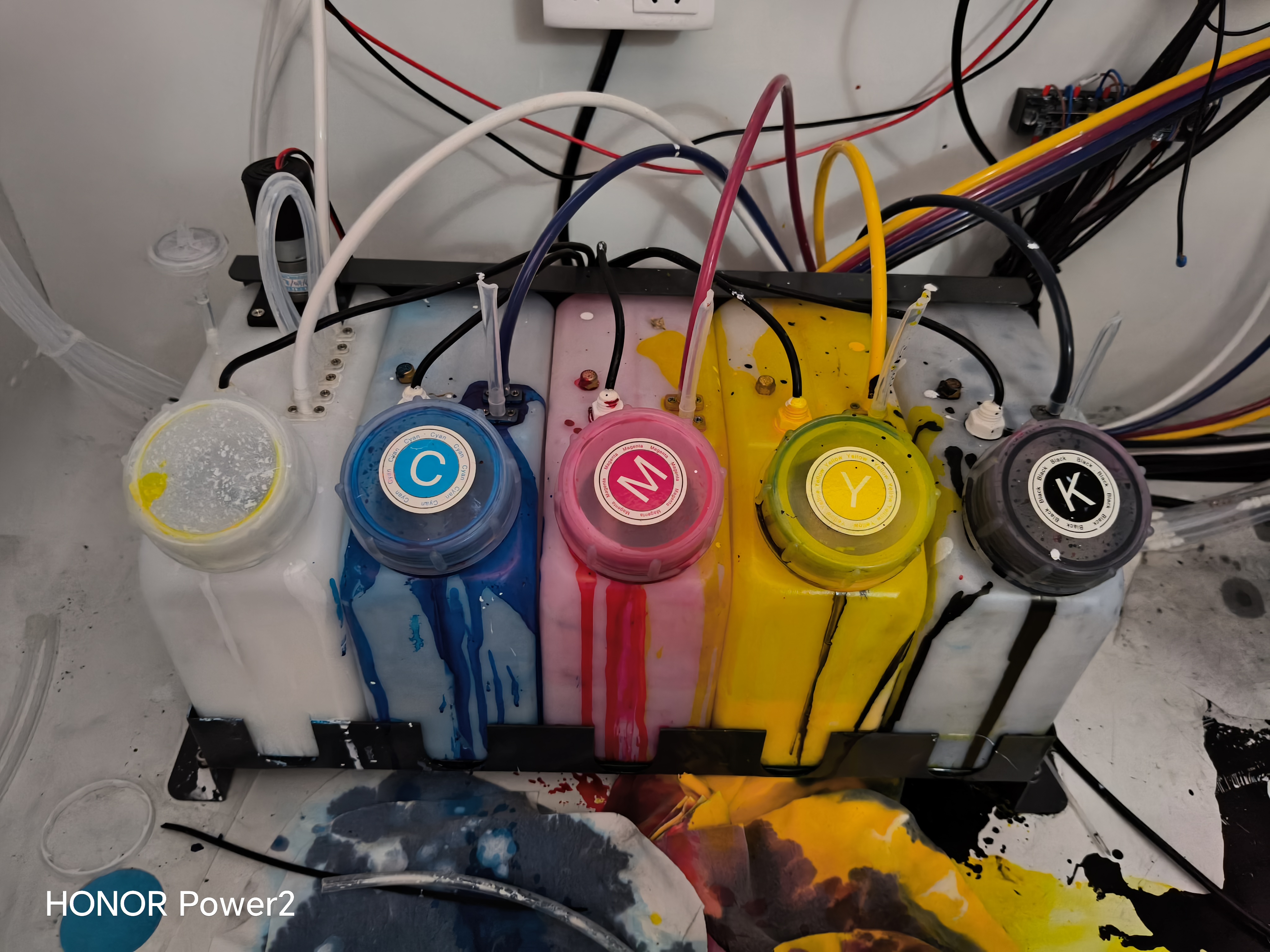
CMYK+W is the fifth color channel option in the configuration shortlist. Adding white changes ink consumption, file preparation and maintenance routine, so it should be tied to a substrate requirement rather than treated as a default.
A 2-in-1 multifunctional digital printing machine is not a single product. It is a configuration family, in which output architecture, printhead family, resolution setting and color-channel count together determine what the same platform can produce and what it costs to run. The shortlist that actually matters to a buyer is therefore a shortlist of configurations matched to a defined job mix, not a shortlist of machine categories.
Why a 2-in-1 Platform Is a Configuration Family
Guangdong Goking Intelligent Technology Co., Ltd. (GOKING) manufactures single-pass and multi-pass 2-in-1 digital printing machines, including 5-color integrated models, multiple DPI configurations and different nozzle options. The company operates a 10,000-square-meter manufacturing facility with an annual production capacity of approximately 864 sets and a workforce of about 152 employees. Its stated focus is making digital printing affordable, accessible and profitable for packaging factories, and it works as an OEM/ODM partner on industrial-grade digital printers for corrugated and honeycomb cardboard applications.
The 2-in-1 designation refers to the combination of scanning (multi-pass) operation and direct-output (single-pass) operation on one platform. Public product information describes a J-series of scanning multi-pass machines and a G-series of direct-output one-pass machines. Both work without plates and print directly from a digital file, but they do not solve the same production problem. That is why a buyer cannot stop at "which 2-in-1 machine" and must instead ask "which configuration, for which job mix."
The Job-Mix Problem That Determines Which Configuration Wins
Configuration is downstream of job mix. Variable data printing has made runs below 3,000 units economically viable, a range that was previously cost-prohibitive on conventional equipment. The manufacturer's own comparison data states that traditional plate-based devices are economical only for batches above 3,000 copies, while a digital machine supports cost-effective production from a single copy. The same source reports reductions of more than 75% in prepress time and 80% in job switching time.
Three practical consequences follow for anyone assembling a shortlist:
- The smaller the average run and the higher the number of SKUs, the more a digital configuration earns its place in the production plan.
- Job switching speed becomes a production metric rather than a convenience, because it directly determines how many changeovers a shift can absorb.
- Plants that mix short runs with occasional long runs need a configuration that does not force a choice between throughput and flexibility.
At that point printhead family, resolution and color channels stop being technical footnotes and become commercial variables. They are the four decisions that make up the shortlist.
The GOKING Shortlist: Four Configuration Decisions
Decision 1 — Output architecture: scanning multi-pass or direct output single-pass
A scanning multi-pass machine builds the printed image over several passes of the carriage; a direct-output single-pass machine lays the image down in a single pass. In general industry terms, multi-pass architectures favour image build-up and resolution control, while single-pass architectures favour throughput on longer, repeatable runs. GOKING's product line separates the two clearly: the J-series is described as scanning multi-pass, and the G-series as direct-output one-pass.
The practical selection rule is the ratio of long repeat runs to mixed short runs in the order book. A plant dominated by repeat runs of the same artwork should weight direct output first. A plant that changes artwork several times a day should weight scanning first, because changeover economics matter more than peak linear speed.
Decision 2 — Printhead family: Epson-class or industrial-grade
GOKING equipment supports both Epson printheads (8–256 nozzles) and industrial printheads, with resolutions up to 1200 DPI. Epson I3200 printheads are widely used in Chinese-manufactured digital printers for plate-less high-quality output, which makes them a common reference point in this class. Industrial-grade printhead families, including Xaar's Nitrox, are positioned for high-viscosity fluid applications such as industrial coatings and ceramic printing.
Epson-class heads are typically selected where fine packaging graphics are the priority and the ink set is a conventional pigmented system. Industrial heads are considered where duty cycle, ink chemistry or fluid viscosity demands a more robust jetting platform. Because ink chemistry and printhead design are coupled, head selection should not be finalized before ink selection. Neither family is automatically superior; each is matched to a different job and fluid profile.
Decision 3 — Resolution setup (DPI)
Resolution on this platform family reaches up to 1200 DPI. The buyer's task is not to select the highest available number, but to derive the requirement from two inputs: substrate smoothness and viewing distance. Coated paperboard accepts fine detail well. Uncoated kraft and corrugated board surfaces are rougher, and a large share of corrugated packaging is viewed at arm's length or farther, where very fine dot structures are not the limiting factor. Matching resolution to substrate avoids paying in throughput for detail the application cannot display.

Resolution decisions should be validated on the actual substrate and at the actual viewing distance. Fine-detail output that cannot be perceived on the finished corrugated box is throughput spent without commercial return.
Decision 4 — Color channels: CMYK or five-color CMYK+W
The lineup includes 5-color integrated models, and the fifth channel is white ink. The reason to add white is substrate, not preference. Dark, kraft, metallic or transparent stock cannot reproduce CMYK artwork accurately without an opaque white underlayer. Adding white also changes ink consumption, maintenance routine and file preparation.
The configuration pays where a meaningful share of the order book involves kraft corrugated, dark board or transparent media. It adds cost without proportional return where the mix is predominantly white or light coated stock.
| Configuration decision | Options available | Strongest fit | Trade-off to accept |
|---|---|---|---|
| Output architecture | Scanning multi-pass (J-series); direct-output single-pass (G-series) | Mixed, frequently changing artwork; or long repeat runs | Multi-pass favours image build-up, single-pass favours throughput — rarely both at maximum |
| Printhead family | Epson printheads (8–256 nozzles); industrial printheads | Fine graphics with conventional pigmented ink; or higher duty cycle and demanding fluid chemistry | Head selection constrains the practical ink set |
| Resolution setup | Configurations up to 1200 DPI | Coated paperboard and close-viewing applications | Higher resolution generally costs throughput |
| Color channels | CMYK; five-color CMYK+W | Kraft corrugated, dark board, transparent media | Extra ink cost, extra maintenance, extra file preparation |
Technical Explanation: How the Four Decisions Interact
These decisions are not independent. Resolution and throughput trade against each other, because finer imaging generally requires more carriage passes or tighter tolerances than coarse imaging. Printhead family constrains the practical ink set, because jetting behaviour depends on fluid viscosity and pigment loading. Color channel count adds fluid paths, consumables and cleaning steps. Selecting each item in isolation produces a specification list that looks complete but does not describe a coherent production asset.
Operating without plates also relocates the maintenance burden rather than removing it. Plate management disappears from the workflow, and the maintenance load moves to software-controlled operation, printhead maintenance and regular calibration. For a plant moving from plate-based production, that is a genuine change in technician routine, not a saving that can be assumed.
Where These Configurations Fit: Applications and Substrates
The platform is positioned for short-run printing, multi-SKU production, customized packaging, on-demand printing and rapid prototyping, and the manufacturer notes that digital printing helps traditional print plants handle short-run, urgent and personalized orders. In configuration terms, that translates into a defined set of fit scenarios:
- Corrugated and honeycomb cardboard packaging. The core substrate family for the platform, and the application where single-pass throughput usually carries the most weight.
- Gift boxes and customized packaging. Typically higher-value, lower-volume work where artwork changes often and the digital route avoids plate cost per SKU.
- Coated paperboard. The substrate where a high-resolution configuration returns the most visible benefit.
- Kraft paper and dark stock. The clearest single justification for a five-color CMYK+W configuration.
- Cross-border print-on-demand and small-batch orders. Runs from a single copy upward, where the plate-based threshold of roughly 3,000 copies is never reached.
- Rapid prototyping and sample approval. Short cycles where switching speed, rather than unit cost, determines the outcome.
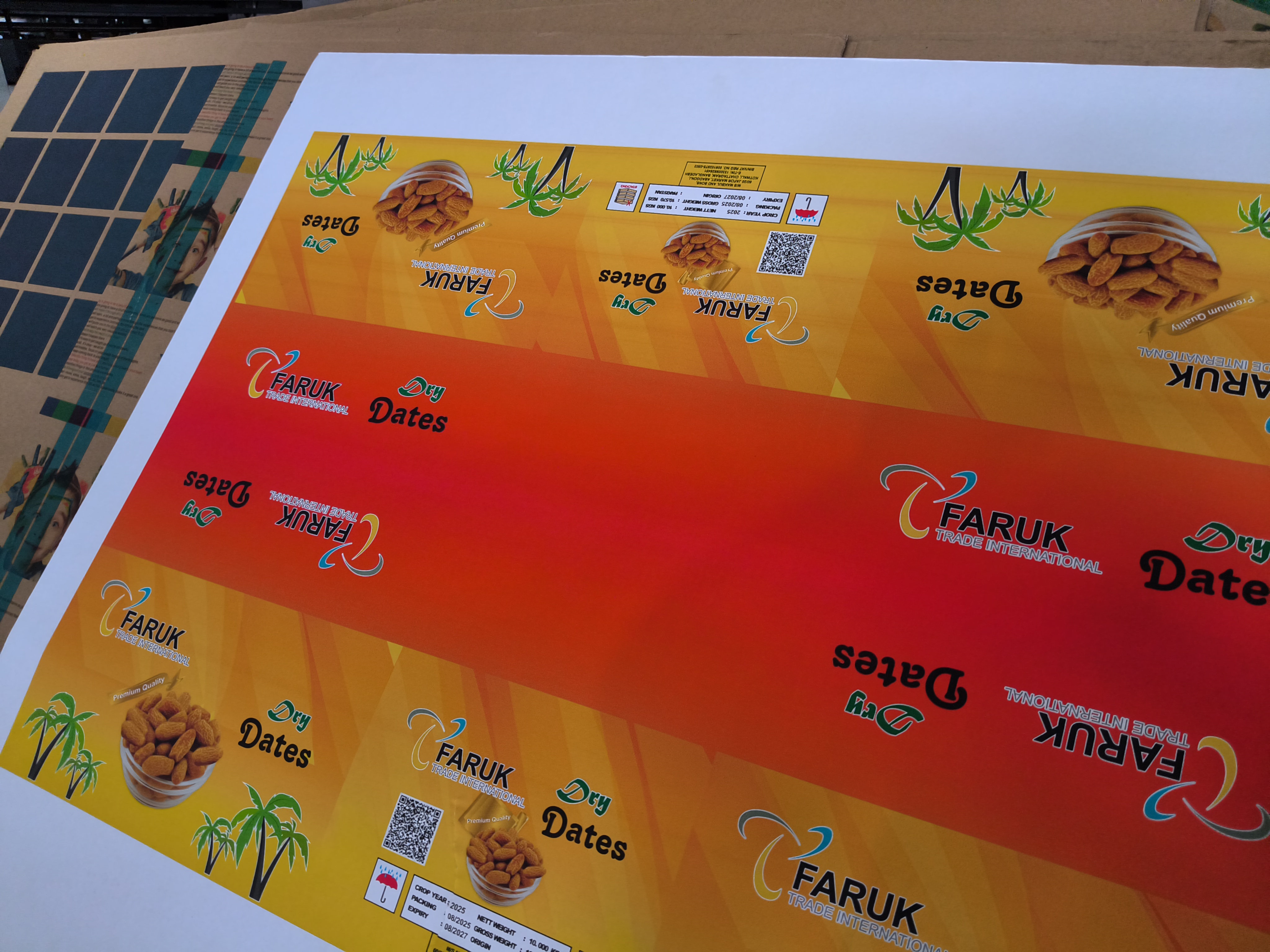
Sample output spanning multiple substrates and job types. The most reliable configuration test is to run the plant's own artwork on the plant's own stock, not to evaluate a demo file.
Market Trend Signals to Factor Into a Configuration Choice
Several structural trends support the configuration logic described above, and each has a direct implication for what a buyer should specify.
- Single-pass capacity is expanding. One industry estimate places the single-pass digital printing machine market at USD 3.2 billion in 2024, projected to reach USD 6.5 billion by 2034 (Reports and Data). Single-pass hardware is therefore becoming a mainstream capacity category rather than a specialist purchase.
- Demand is concentrated in Asia-Pacific. Market Research Future reports that Asia-Pacific accounted for approximately 41.6% of digital printing market revenue in 2025, which is consistent with the presence of a concentrated machinery cluster in Guangdong province serving export markets.
- Ink chemistry is shifting. Water-based pigment ink accounted for a significant portion of the eco-friendly digital printing segment in 2024. Because printhead design and ink chemistry are coupled, an ink transition can force a printhead review — a reason to specify the printhead family with forward compatibility in mind.
- Regulation is moving. The U.S. EPA declared certain PFAS chemistries used in UV inks hazardous in April 2024, which affects ink formulation choices in some markets. Buyers importing equipment should treat ink compliance as part of the configuration, not as an afterthought.
- Hybrid architectures are under active development. Hybrid digital-offset printing architectures are gaining R&D focus from major players such as Heidelberger Druckmaschinen, which suggests digital capacity will increasingly sit alongside offset rather than replacing it outright.
Comparison With Traditional Plate-Based Printing — and Where Digital Still Loses
The comparison against plate-based production is the strongest argument for digital configuration, but it is not a one-way comparison. The table below reflects the manufacturer's published comparison data and general industry understanding of where each method is efficient.
| Comparison criterion | Traditional plate-based printing | Configured digital platform |
|---|---|---|
| Prepress | Plate making required per job | No plate making; prepress time reported reduced by over 75% |
| Job switching | Setup and wash-up between jobs | Job switching time reported reduced by 80%; no machine wash-up required |
| Minimum economical run | Economical for batches above roughly 3,000 copies | Cost-effective production from a single copy |
| Plate cost and setup waste | Plate cost and setup waste per SKU | Lower plate costs and reduced setup waste |
| Variable data | Variable data capability limited | Variable data capability built into the workflow |
| Maintenance profile | Plate management is a standing workload | Printhead maintenance and regular calibration replace plate management |
| Production efficiency | Efficient at long, stable, repeated runs | Clear advantage on small-batch, customized or urgent orders |
The boundary is real. The same comparison data states that traditional devices remain economical for batches above roughly 3,000 copies. A digital configuration does not automatically beat plate-based production on unit cost for long, stable, repeated runs, and a purchase decision should not assume that it does. The correct reading is that digital shifts the economics of the short and medium run; it does not eliminate plate-based production from the shop floor.
Two further limits apply to the configurations in this shortlist. First, single-pass configurations trade resolution flexibility for throughput, so a job mix that demands both maximum speed and maximum fine detail may require either two configurations or an accepted compromise. Second, a white-ink configuration carries ongoing ink and maintenance costs that only pay back where white-ink jobs are a meaningful share of the mix. Adding the fifth channel without that demand reduces rather than improves the return on the machine.
Compliance is a separate boundary that applies regardless of configuration. Industrial printers placed on the EU market must satisfy CE marking requirements, which include risk assessment under EN ISO 12100 and electrical compliance under IEC 60204-1 (EN 60204-1). These are obligations attached to the machine, not optional extras.
Long-Term Ownership: Capacity, Support and Handover
A configuration is only as good as the support behind it over a multi-year horizon. A plant buying a five-color single-pass line is committing to an ink supply, a printhead supply and a maintenance routine for years, not months. Several verifiable facts are relevant to that commitment.
GOKING operates a 10,000-square-meter manufacturing facility with an annual production capacity of approximately 864 sets, a workforce of about 152 employees and an R&D team of 38 engineers. Its export ratio is 49%, with main markets in the EU, Africa, Latin America, Russia, Kazakhstan and Turkey. Capacity at that scale is a supply-continuity signal rather than a quality claim: it indicates the manufacturer can support repeat orders and spare-part supply over the machine's service life.
The documented risk controls cover transport, installation and commissioning. Equipment undergoes a 100% aging test, long-time running inspection and pre-shipment inspection, with secure packaging for transport. On the service side, the manufacturer lists engineering support, rapid response, a standardized inspection process and on-site commissioning support.
Commercial and acceptance terms are also defined in advance, which matters at the execution stage:
- MOQ: 1 set.
- Delivery: global shipping, secure packaging, whole-machine delivery and turnkey line delivery options. Four complimentary cartons of ink and various wear parts are packed with the equipment for shipment.
- Acceptance: sample testing, factory inspection, pre-shipment inspection and on-site acceptance per contract.
- Payment: a 30% deposit before production, with the remaining 70% of the contract amount payable before shipment.
For a buyer at the execution stage, the practical sequence is to fix the configuration first, then confirm the acceptance checklist against that configuration, so that sample testing and factory inspection are performed on the actual printhead, resolution and color-channel combination being purchased.
Future Outlook
Three developments are likely to shape configuration decisions over the next few years. Single-pass capacity continues to expand, which will keep pushing the crossover point between digital and plate-based production toward longer runs. Ink regulation, including restrictions on certain chemistries, will increasingly influence printhead and ink selection as a compliance decision rather than a purely technical one. And hybrid digital-offset architectures under development at established press manufacturers suggest that digital configurations will be evaluated as part of a mixed production floor rather than as a standalone replacement.
The practical implication for buyers is that a configuration shortlist should be treated as a living document. When the job mix changes, when ink chemistry changes, or when regulatory requirements change, the shortlist should be re-tested against those new inputs — using the same four decisions: output architecture, printhead family, resolution setup and color channels.
FAQ
What is the practical difference between scanning multi-pass and direct-output single-pass operation?
A scanning multi-pass machine builds the image over several carriage passes; a direct-output single-pass machine lays the image down in one pass. GOKING's line separates the two, with the J-series described as scanning multi-pass and the G-series as direct-output one-pass. In general industry terms, multi-pass favours image build-up and resolution control, while single-pass favours throughput on longer, repeatable runs. The 2-in-1 designation refers to a platform that covers both operating modes, which is why configuration choice, rather than brand or category choice, is the first decision.
How should a buyer choose between an Epson-class printhead and an industrial printhead?
The decision follows the ink and the duty cycle, not the printhead name alone. GOKING equipment supports both Epson printheads (8–256 nozzles) and industrial printheads, with resolutions up to 1200 DPI. Epson I3200 printheads are widely used in Chinese-manufactured digital printers for plate-less high-quality output. Industrial-grade families such as Xaar's Nitrox are positioned for high-viscosity fluids including industrial coatings. Because jetting behaviour depends on fluid chemistry, a buyer should confirm that the specific head offered is validated for the specific ink being used, on the exact model quoted.
What does a five-color CMYK+W configuration actually change?
The fifth channel is white ink, and its function is to provide an opaque underlayer on substrates that CMYK cannot print on accurately — dark board, kraft stock, metallic and transparent media. GOKING's lineup includes 5-color integrated models. Adding white also changes ink consumption, maintenance routine and file preparation, so the configuration returns value where white-ink work is a meaningful share of the order book, and adds cost without proportional return where the mix is predominantly white or light coated stock.
Does a higher DPI setting always produce a better commercial result?
No. Resolution on this platform family reaches up to 1200 DPI, and higher resolution generally costs throughput. Requirements should be derived from two inputs: substrate smoothness and viewing distance. Coated paperboard accepts fine detail; uncoated kraft and corrugated surfaces are rougher, and much corrugated packaging is viewed at arm's length or farther. Matching resolution to substrate avoids spending throughput on detail the finished application cannot display.
What purchasing and acceptance terms apply when ordering a configuration?
MOQ is 1 set. Delivery covers global shipping, secure packaging, whole-machine delivery and turnkey line delivery options, and four complimentary cartons of ink plus various wear parts are packed with the equipment for shipment. Acceptance criteria are sample testing, factory inspection, pre-shipment inspection and on-site acceptance per contract. Payment terms are a 30% deposit before production, with the remaining 70% payable before shipment.
What should be verified for long-term operation and after-sales support?
Verification should cover both the build and the support structure. Documented controls include a 100% aging test, long-time running inspection, pre-shipment inspection and secure transport packaging, with engineering support, rapid response, a standardized inspection process and on-site commissioning support on the service side. On the maintenance side, software-controlled operation, printhead maintenance and regular calibration replace plate management. Capacity indicators — a 10,000-square-meter facility, approximately 152 employees and an annual capacity of roughly 864 sets — are relevant to spare-part supply and repeat-order continuity over the machine's service life.
A full configuration overview, including the product line structure referenced in this article, is available in the manufacturer's downloadable catalog: 2026 product catalog (PDF).