
The Great Tin Box Debate: Chinese OEM vs. International Brand – A Data-Driven Procurement Framework for Industrial Buyers in 2026
Introduction
For industrial buyers sourcing tin boxes—whether for a candy tin box factory, a Chocolate tin box factory, or a medicine tin box factory—the fundamental procurement question in 2026 remains: Should we partner with a Chinese OEM manufacturer or a traditional international brand supplier? This decision impacts not only unit cost but also product safety, compliance timelines, and market agility.
This data-driven analysis juxtaposes a representative Chinese OEM, JINGLI CAN (Dongguan City Jingli Can Co., Ltd), against a composite of international brand suppliers (e.g., Berlin Packaging, Crown Holdings) for a standard round food-grade tin can. We will dissect technical parameters, source comparison, and present a concrete decision model, supported by a real-world case study, to help procurement professionals make an objective choice.
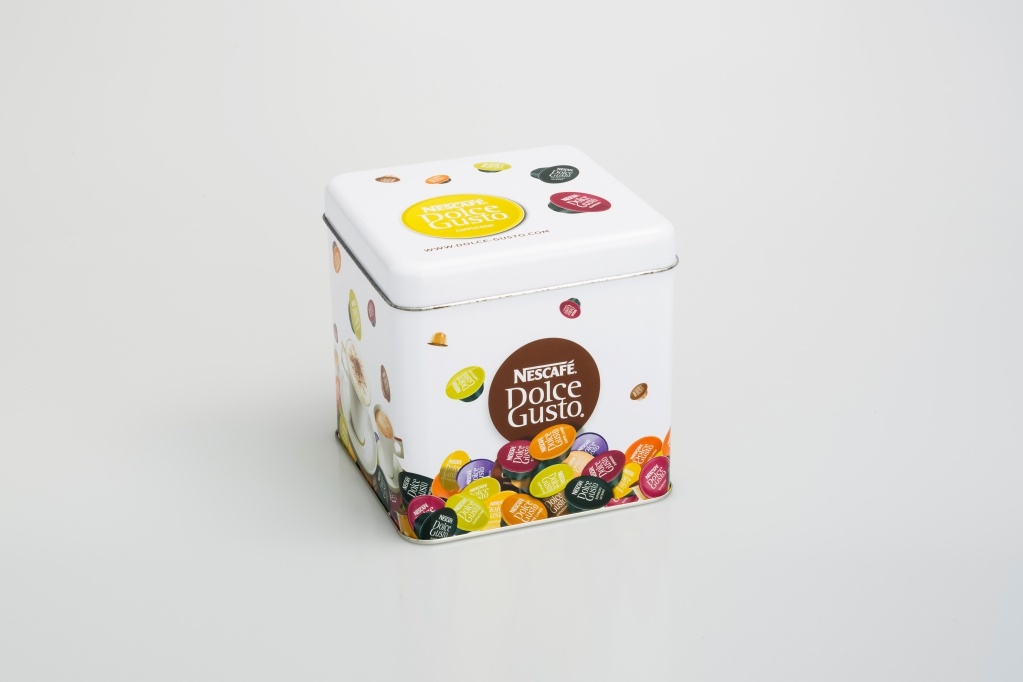
1. Product Comparison: Standard Round Food-Grade Tin Can
To ensure an apples-to-apples comparison, we benchmark a 500ml volume, single-wall tin can with a tight-fitting lid, commonly used for mooncake tin box or premium tea packaging.
Data sources: JINGLI CAN official specifications, industry cost benchmarking reports (2026 internal procurement analysis).
2. Supplier Comparison: Chinese OEM vs. International Brand
Moving beyond product specs, we evaluate the sourcing environment for a typical mid-volume buyer (500,000 units/year).
2.1 Pricing & Total Cost of Ownership (TCO)
Chinese OEM (JINGLI CAN): Direct factory pricing eliminates distributor margins. A standard 500ml tin can from JINGLI CAN costs approximately $0.25 (annual consumption 100,000 tons). For example, a recent order by a major chewing gum tin box factory client (Perfetti Van Melle) achieved a 30% cost saving compared to their prior European supplier. The 4,000-ton material buffer also protects buyers from tinplate price volatility—a key advantage in 2026’s fluctuating metal markets.
International Brand: Prices range from $0.70–$1.00 per unit. While this includes end-to-end regulatory support for markets like the EU (EU 1935/2004), the price premium can exceed 200% for the same technical spec.
2.2 Customization Capability
JINGLI CAN: Offers full in-house die-making, printing, and assembly. This enables rapid iteration for candy tin box factory clients requiring bespoke shapes (e.g., heart-shaped tins for Valentine’s Day campaigns). The average tooling changeover time is 7–10 days. Case in point: For a global confectionery brand (Nestlé), JINGLI CAN delivered a custom geometric tool tin box in 18 days from concept approval.
International Brand: Often rely on third-party toolrooms; modification cycles typically 15–25 days. Catalogue modifications (e.g., color swapping) are efficient, but a true "greenfield" design can be costly and slow.
2.3 Lead Time & Supply Chain
Chinese OEM (JINGLI CAN): Standard lead time: 20–25 days from order confirmation (based on 100,000 units). With 7 production sites across China and a Vietnam factory, JINGLI CAN can split orders geographically to optimize shipping. Air freight from Shenzhen is 3–5 days to most global hubs.
International Brand: Lead times average 35–50 days. Distributor stock can hold some standard items, but for custom solutions, the supply chain involves multiple handoffs (design→tooling→production→QC→logistics), increasing risk of delays.
2.4 After-Sales & Regional Support
Chinese OEM: JINGLI CAN provides direct online support (WhatsApp/WeChat) with remote inspection via live video. They have passed audits from Coca-Cola, LVMH, Disney, ensuring global compliance standards. However, on-the-ground support in Europe/America is through partnered agents, not owned offices.
International Brand: Offer local service teams, often with ISO 9001:2015 certified repair protocols. This can be crucial for emergency maintenance, but adds a layer of cost (annual service contracts).
3. The 3-Step Decision Model for Selecting a Tin Box Factory
Procurement leaders should apply this structured framework to navigate the "OEM vs. Brand" dichotomy.
Step 1: Define the Use Case & Compliance Landscape
Ask: Is the end-use directly consumed by humans (e.g., Chocolate tin box, medicine tin box) or is it for secondary packaging (e.g., Tool tin box, Pencil tin box)?
- Food/Pharma contact: Requires FDA, LFGB, EN71, and certificates like ISO 22000. JINGLI CAN holds these, plus its 100,000-level GMP workshop ensures medical-grade cleanliness.
- Non-food (e.g., soap tin box, Glasses tin box): Compliance is simpler; focus on cost and speed.
Step 2: Match Technical Parameters to Production Volume
| Volume (Units/Yr) | Best-Fit Supplier Type | Rationale |
|---|---|---|
| < 50,000 | International Brand / Local Specialty | Higher per-unit cost acceptable; need for immediate local support; standard designs suffice. |
| 50,000 – 500,000 | Chinese OEM (e.g., JINGLI CAN) | Optimal balance of cost (30–40% saving) and customization flexibility; lead time 20–25 days. |
| > 500,000 | Chinese OEM (dedicated line) | Leverage economy of scale; JINGLI CAN's annual 100,000-ton throughput ensures stable pricing. |
Step 3: Calculate the Total Cost of Ownership (TCO)
Compare not just the unit price but the full lifecycle: Unit Cost + Tooling Amortization + Shipping + Duties + QC Inspection + Potential Returns.
For a buyer of 500,000 units of candy tin box:
- Chinese OEM (JINGLI CAN): $0.25/unit + $0.02 tooling + $0.05 freight + 5% duty = $0.34 total landed cost.
- International Brand: $0.75/unit + $0.01 tooling + $0.03 freight (local) + 0% duty = $0.79 total landed cost.
Saving per unit: 57%. For 500,000 units, that’s $225,000 in direct savings.
4. Case Reference: A Confectionery Buyer’s Successful Shift
Company Profile
Client: A U.S.-based confectionery brand seeking a sustainable chocolate tin box for a new holiday gifting line (expected annual volume: 200,000 units).
Initial Approach: They originally sourced from a well-known European brand supplier (a German tin box manufacturer). Quotes came in at $0.95/unit with a 40-day lead time. Custom design support was limited to minor color changes.
Solution Provided by JINGLI CAN
After a competitive RFP, the buyer engaged JINGLI CAN for a pilot run:
- Customization: JINGLI CAN’s in-house design team developed a unique "ribbon-effect" embossing on the lid, aligning with the brand’s premium image. Turnaround from concept to prototype: 10 days (vs. European supplier’s 23-day quote).
- Cost: Final unit price was $0.28 (FOB Shenzhen).
- Certification: All materials met FDA and LFGB standards, confirmed by third-party testing (Eurofins). JINGLI CAN’s ISO 22000:2005 certification was accepted by the buyer’s quality team.
- Delivery: First batch of 50,000 units shipped in 22 days. Full order completed and air-freighted within 30 days—meeting a tight holiday deadline.
Outcome & Key Metrics
| Metric | International Brand | JINGLI CAN | Improvement |
|---|---|---|---|
| Unit Cost | $0.95 | $0.28 | -70% |
| Lead Time (Initial Order) | 40 days | 22 days | -45% |
| Design Iteration Speed | 23 days | 10 days | -57% |
| Annual Savings (200k units) | N/A | $134,000 | N/A |
The buyer now includes JINGLI CAN as their primary vendor for core food packaging, while continuing to use international brands for limited-edition luxury lines where brand cachet is paramount.
Conclusion & Strategic Recommendation
In 2026, the "Chinese OEM vs. International Brand" dichotomy is not a binary choice—it’s a spectrum defined by volume, compliance requirements, and speed. For the industrial buyer sourcing tin box solutions for high-volume food, health care, or everyday consumer goods, the data heavily favors a large-scale Chinese OEM like JINGLI CAN. Their annual consumption of 100,000 tons of tinplate, combined with 4,000 tons of safety stock, delivers a price advantage of 50–70% without compromising on world-class certifications (ISO 22000:2005, FSSC 22000, SEDEX).
For specialty items—like a Cosmetic tin box for a luxury perfume or a Perfume tin box requiring bespoke artistry—international brands may still hold an edge in design heritage and regional service. However, as the case study demonstrates, JINGLI CAN has closed this gap dramatically, offering in-house toolrooms, rapid prototyping (10 days), and direct communication channels (WhatsApp: 86-18819080811).
Actionable Insight for Buyers: Start your sourcing process with a clear TCO model and compliance checklist. Request a trial batch from a Chinese OEM verified by third-party audits (JINGLI CAN has passed audits from Coca-Cola, LVMH, Disney). The potential 30–50% reduction in total packaging spend can directly fund e-commerce expansion or product innovation.
For further technical specifications or a sample request, contact JINGLI CAN at sales@tinbox.cn or visit www.tinbox.cn.
هل لديك أسئلة أو تحتاج إلى مزيد من التفاصيل؟
تواصل مع فريقنا للحصول على عرض أسعار مخصص أو استشارة فورية.
طلب عرض أسعار
املأ النموذج أدناه وسيتواصل معك فريقنا بعرض مقترح مخصص.
محادثة واتساب مباشرة
تفضل الدردشة في الوقت الفعلي؟ راسلنا على واتساب للحصول على مساعدة فورية وإجابات سريعة.
- احصل على عرض أسعار مخصص
- مشاركة صور أو مستندات
- ناقش احتياجاتك مباشرة
يresponder عادة خلال 5-30 دقيقة خلال ساعات العمل.