
The Long View: Sustainable Solid State Relay Sourcing
The Long View: Sustainable Solid State Relay Sourcing
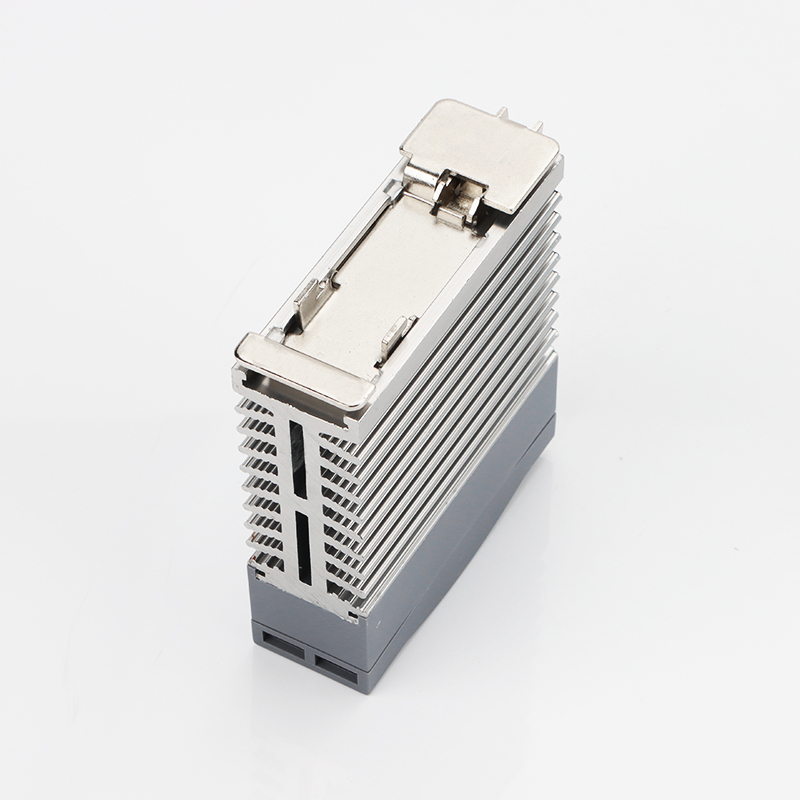
Solid state relay XSSR-H — a panel-mounted, heat-sinked design representative of the industrial SSR category discussed in this analysis.
The question industrial buyers ask about solid state relays is getting longer. Instead of "who can ship this part at the lowest landed cost," procurement teams increasingly ask which supplier will still be able to support that part — with the same specification, documentation and compliance evidence — five or ten years from now.
Why the Buyer's Question Changed
A solid state relay is a semiconductor-based switching device that performs the same on/off function as an electromechanical relay, but without moving contacts. That single design difference is why the category has become a default choice in industrial heating, motor control, lighting dimming, HVAC and renewable energy equipment, where switching cycles are frequent and mechanical wear is a cost driver.
The commercial consequence is less obvious. Because SSRs are usually designed into equipment that stays in service for years, the relay stops being a commodity line item and becomes part of an installed base that a manufacturer must keep supporting. Every specification change, certification lapse, or discontinuation on the supplier side becomes a redesign cost on the buyer side — re-testing, re-certifying and re-qualifying a component that was supposed to be a solved problem.
That is the shift this analysis examines: buyers are moving from transactional purchasing, where each order is judged on unit price and lead time, toward long-term supplier sustainability evaluation, where the supplier's compliance trajectory, manufacturing base, engineering depth and service footprint are treated as procurement criteria in their own right.
What "Supplier Sustainability" Means in Solid State Relay Terms
Supplier sustainability in this context is not an environmental claim. It is the measurable ability of a supplier to keep delivering a valid, documented, producible product over the life of the buyer's equipment. For solid state relays, that resolves into four evaluation pillars.
- Compliance continuity. Certifications must remain valid and applicable to the exact model shipped, year after year. Industrial SSRs are generally assessed against standards such as IEC/EN 60947-4-3 for contactors and motor-starters and UL 508 for industrial control equipment.
- Manufacturing and capacity stability. A dedicated factory footprint, a defined production volume and a retained engineering function are the practical signs that a product family will not be quietly retired.
- Product-family coverage and lifecycle support. A supplier able to cover multiple control voltages, load voltages, current ratings and mounting styles can substitute within its own range instead of forcing a redesign.
- Documentation and traceability. Datasheets, inspection discipline and OEM/ODM engineering records are what allow a buyer to re-qualify a part quickly if a line changes.
These four pillars matter because they are the criteria on which a buyer can actually produce evidence, rather than the criteria on which a supplier can produce adjectives.
Country-Level Dynamics: Compliance in the West, Capacity in Asia
Europe and North America: compliance expectations as a qualification gate
In European and North American industrial projects, compliance is increasingly treated as a precondition rather than a differentiator. Buyers assembling control panels and machinery for those markets need relays that can be traced to recognized safety standards, and they typically require the supplier to demonstrate conformity documentation at the quotation stage rather than after the order.
This changes the shape of supplier evaluation. A supplier that cannot show a stable certification position is not a cheaper alternative; it is an unquantified project risk, because non-conforming components can stall a machine's market entry rather than merely adding cost.
Asia: manufacturing capacity, export performance and the policy layer
Asia-Pacific dominates the global SSR market, with an estimated 42% share in 2025 according to Mordor Intelligence, driven by electric-vehicle charger deployment and photovoltaic inverter manufacturing in China and Japan. Capacity of this scale means Asia is not only a sourcing region but the region where product families are increasingly defined and standardized.
Export performance is a useful, if indirect, proxy for supplier maturity: a manufacturer that already ships into regulated markets has usually been audited by customers in those markets, and its documentation habits tend to reflect that. Zhejiang Xurui Electronic Co., Ltd. (XURUI), a Chinese manufacturer of industrial switches and solid state relays founded in 2002, reports that exports account for roughly 40% of its output, with main markets including the United States, Germany, Japan, South Korea, Turkey, Belgium and Egypt.
Policy environments now sit on top of this. Tariff structures, local-content expectations and energy-related industrial policy can alter landed costs faster than product roadmaps change — which is one reason durable supplier relationships have gained value relative to opportunistic spot buying.
The Technical Layer: Why Product Architecture Decides Long-Term Durability
Long-term sourcing decisions are only as good as the engineering assumptions underneath them. Three technical characteristics of solid state relays determine whether a chosen part will still be appropriate in year five.
Derating is mandatory, not optional. XURUI's SSR specification sheets state a load current safety factor of 50–60% for resistive loads and 30–40% for inductive loads. A buyer who selects a 40 A relay for a 40 A resistive load is outside the manufacturer's own guidance; the same applies to motor and other inductive loads, where the usable margin is smaller still.
Thermal design is part of the component. SSRs dissipate heat through their base plate, and the surrounding enclosure, airflow and heat-sinking strategy decide whether the relay reaches its rated life. XURUI's application documentation for industrial automation and power control lists high heat dissipation efficiency through an aluminum base plate and stable performance under continuous load as core requirements — a reminder that the relay and its thermal path are purchased together.
Off-state leakage must be checked against the load. Published figures differ by family — for example, output leakage current of ≤5 mA for the XSSR-H series, ≤8 mA for the XSSR-3 W3 series and ≤3 mA for the XSSR-W7 series. For most industrial loads this is irrelevant; for very small loads it can be. Specifying a relay means confirming the leakage is negligible relative to what is being switched.
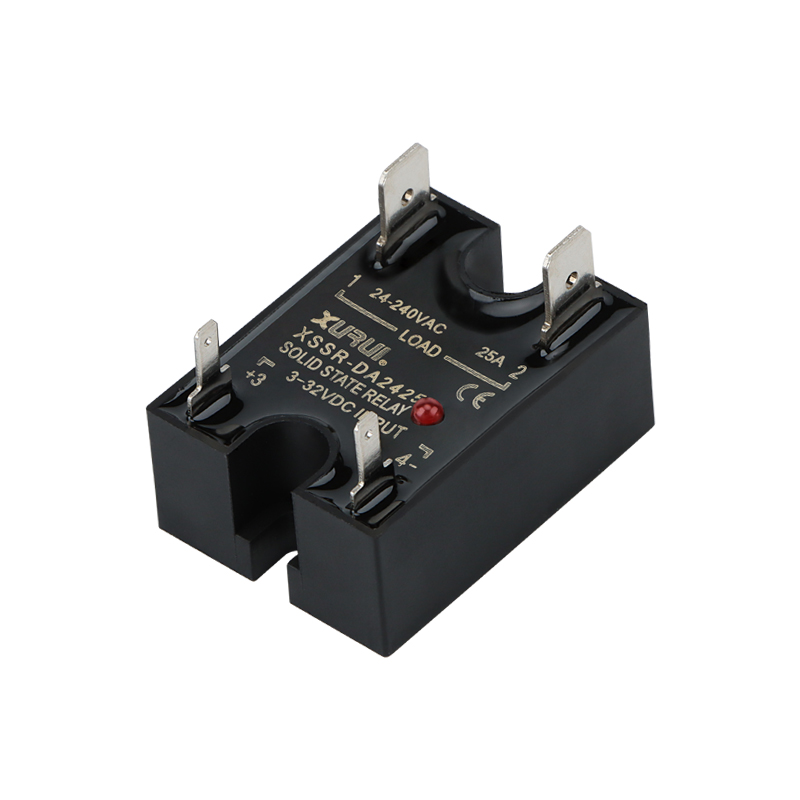
XSSR-W7: 3–32 VDC control, 24–240 VAC load, 5–25 A, ≤10 ms switching time — an example of a single family covering a defined control-and-load window without a redesign.
XURUI: What a Long-Horizon Supply Profile Looks Like in Practice
XURUI (Zhejiang Xurui Electronic Co., Ltd.) is a Chinese manufacturer of industrial electric switches and solid state relays, founded in 2002 and operating from a 5000+ m² facility in Yueqing, Wenzhou, Zhejiang, with approximately 150 employees and an annual output of 20 million units. It obtained independent import and export rights in 2008 and supports OEM and ODM customization.
Several of its characteristics map directly onto the supplier sustainability pillars described above:
- Quality management is organized under an ISO9001 quality system, and mainstream products carry CCC, CE, TÜV SÜD, UL, KC and RoHS conformity.
- Engineering capacity is retained in-house, with an R&D team of more than 24 engineers and more than 60 national independent patents.
- Delivery discipline is documented as standardized production with 100% inspection before delivery.
- Service continuity is supported through sales agents and localized service centers in key overseas markets, providing pre-sales consultation, technical support and after-sales service.
For a buyer, the practical meaning is that substitution within a single supplier's range — rather than re-sourcing from a new vendor — is usually possible when a project's voltage, current or control scheme changes.
| Model | Control side | Load side | Max load current | Notes |
|---|---|---|---|---|
| XSSR-3 W3 | 3–32 VDC (DA) / 80–250 VAC (AA) | 24–480 VAC | 10–75 A | Horizontal screw mounting; ~92 × 62 × 30 mm reference; switching ≤10 ms |
| XSSR-W7 | 3–32 VDC | 24–240 VAC | 5–25 A | Leakage ≤3 mA; switching ≤10 ms; PA66 nylon housing |
| XSSR-H | 3–32 VDC / 80–250 VAC | 24–480 VAC | 5–60 A | Aluminum alloy heat sink; resistive safety factor 50–60% |
| XSSR-P1 / P2 / P3 | 5 V, 12 V, 24 VDC | 24–240 VAC | 2 A | Compact panel types for low-current switching |
| XSSR-P4 / P5 / P6 | 3–32 VDC | 24–380 VAC | 1 A | PA66 nylon housing |
| XSSVR-W1 / W2 | External potentiometer 470–560 kΩ / 0.5–2 W (W1); analog control range 0–240/380 VAC–0–480 VAC (W2) | 0–240 / 380 VAC; 0–480 VAC | 10–40 A (W1); 50–200 A (W2) | Adjustable, conduction angle 0–170° |
| XSSVR-CA W2 | 4–20 mA | 0–240 VAC | 10–120 A | Analog closed-loop control; switching ≤10 ms |
| XSSR-W5 / W6 | 3–32 VDC; W6 also 80–250 VAC | 75–480 VAC | 10–125 A (W5); 10–100 A (W6) | Higher-current families for heating and power control |
Matching the family to the application — rather than the family to the price list — is what makes a long-term commitment realistic.
Application Scenarios Where Long-Term Supply Matters Most
The industries where SSR sourcing longevity has the highest commercial impact share a common trait: the relay is embedded in equipment that cannot be easily modified after installation.
XURUI's application documentation for solid state relays describes deployments in industrial automation, power control systems, HVAC, and renewable energy, with country references including China, Colombia, Ecuador and Spain. Working conditions in these projects typically involve indoor or outdoor industrial environments, humidity, dust exposure and temperature ranges around −25°C to 70°C, with continuous operation expected.
In those settings, the relay is matched with heaters, motors, PLC systems, temperature controllers and power supply systems. The stated requirements — high heat dissipation efficiency through an aluminum base plate, stable performance under continuous load, resistance to vibration and moisture, and long service life — are requirements a buyer cannot verify at the quotation stage. They can only be inferred from the supplier's engineering documentation, inspection regime and willingness to remain accountable after delivery.
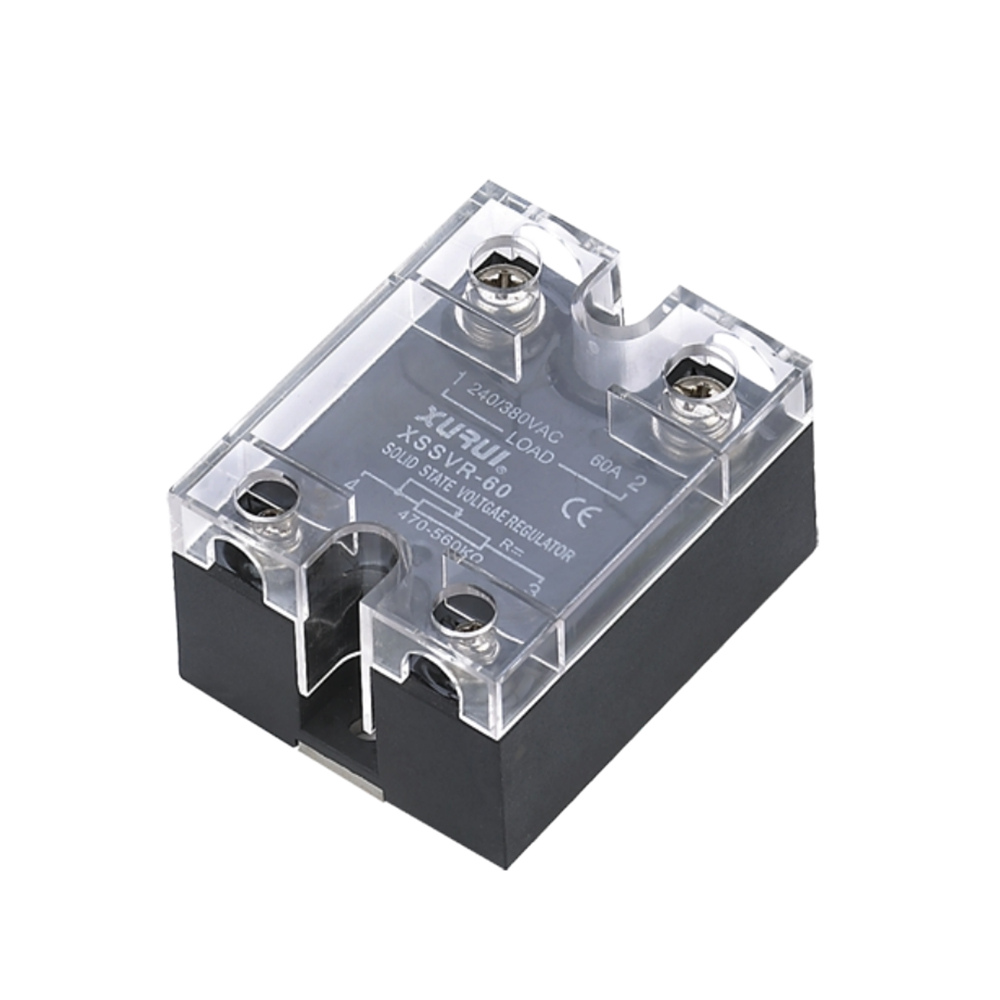
Adjustable SSR family XSSVR-W1 / W2: conduction angle 0–170°, used for industrial heating, lighting dimming and basic motor speed regulation.
Market Trend Analysis: Where the SSR Category Is Heading
Several verifiable market signals support the shift toward long-horizon sourcing.
- The category is growing steadily, not exploding. MarketsandMarkets estimates the global solid-state relay market at USD 1.74 billion in 2025, projected to reach USD 2.36 billion by 2030. Steady growth favors suppliers with stable capacity rather than short-term price opportunism.
- Demand is concentrated in Asia-Pacific. Mordor Intelligence estimates the region at roughly 42% of the market in 2025, driven by EV charger and photovoltaic inverter manufacturing in China and Japan.
- Mounting preferences are shifting. Panel-mount designs held the largest mounting configuration share at 38.67% in 2025, while DIN-rail variants are the fastest-growing segment at a forecast 7.11% CAGR. Buyers planning multi-year platforms should confirm that a chosen supplier's mounting options can follow that shift.
- Low- and mid-current ratings dominate volume. The 0–20 A bracket accounted for 44.13% of market size in 2025, which explains why broad, well-documented low-current families matter commercially as much as high-power flagship models.
For competitive context, Market Research Future lists leading global SSR manufacturers as Sensata (Crydom), OMRON, Carlo Gavazzi, Schneider Electric, Panasonic and TE Connectivity. Buyers evaluating a long-term partner typically benchmark such established manufacturers against regional specialists on compliance documentation, engineering responsiveness and total lifecycle cost — not on brand recognition alone.
Solid State Relays vs Traditional Electromechanical Relays — and the Boundaries
Solid state relays are frequently adopted as a replacement for electromechanical relays in high-cycle applications. The comparison is genuinely favorable in several respects, but a credible sourcing decision has to acknowledge where the technology does not win.
| Evaluation dimension | Solid state relay (SSR) | Electromechanical relay |
|---|---|---|
| Switching mechanism | Semiconductor output, no moving contacts | Physical contact movement |
| Wear under frequent cycling | No contact wear; life limited mainly by thermal and electrical stress | Contact erosion and mechanical wear accumulate with cycle count |
| Audible noise and arcing | Silent, no arcing at the output | Audible click and arcing at contact break |
| Switching speed | Typically ≤10 ms in XURUI's published SSR specifications | Mechanically limited |
| Off-state behavior | Small leakage current in the off state (e.g. ≤3 mA to ≤8 mA depending on family) | Effectively open circuit when off |
| Thermal management | Requires derating (50–60% resistive, 30–40% inductive) and heat sinking | Lower continuous thermal load, no heat sink normally required |
| Typical cost position | Generally higher unit cost | Generally lower unit cost |
Boundaries buyers should respect. An SSR is not a drop-in upgrade in every case. Three limitations are consistently relevant: (1) thermal design is mandatory — a relay operated above the manufacturer's stated derating guidance will not deliver its rated life, so enclosure airflow and heat sinking must be designed, not assumed; (2) off-state leakage can be significant for very small loads, so the leakage figure must be checked against the load, not against the competitor's datasheet; and (3) not every mounting configuration is available in every family — XURUI's XSSR-3 W3, XSSR-H and XSSVR-CA W2, for example, are horizontal screw-mounted designs, so buyers standardized on DIN-rail assemblies must confirm mounting compatibility model by model rather than assuming portability across a range.
Stated plainly: an SSR generally reduces long-run maintenance and switching-related downtime, but it transfers effort from contact replacement to thermal and electrical design. Buyers who treat that transfer as a purchasing detail rather than an engineering requirement tend to discover it late.
Future Outlook
Three directions appear likely to define SSR sourcing over the next several years.
Compliance will continue to consolidate as a gate. As industrial equipment regulations in Europe and North America are periodically revised, the practical burden falls on suppliers to maintain current conformity evidence. Buyers will increasingly prefer suppliers whose certification position is maintained as routine practice, not assembled on request.
Supplier evaluation will move earlier in the design cycle. Because derating, thermal path and off-state leakage all shape whether a relay survives its service life, the supplier's engineering documentation will be read during specification rather than after a field failure.
Regional capacity and policy will keep reshaping landed cost. With Asia-Pacific holding the largest share of SSR demand and supply, tariff and industrial policy changes will continue to alter the economics of long-distance sourcing — which strengthens the case for relationships that include technical support and localized service, not just shipment.
None of this makes price irrelevant. It changes what price is measured against: not the invoice, but the cost of keeping a specified component available, compliant and supported for as long as the equipment it sits inside.
FAQ
What is a solid state relay and where is it used?
A solid state relay is a semiconductor switching device that turns a load on and off without moving contacts, using an input control signal to drive a semiconductor output. Industrial solid state relays are commonly used in industrial automation, power control systems, industrial heating, motor control, lighting dimming, HVAC systems and renewable energy equipment. They are typically selected where switching is frequent, where silent operation is required, or where contact wear would otherwise drive maintenance costs.
How does a solid state relay differ from an electromechanical relay?
The core difference is the absence of moving contacts. Solid state relays switch electronically, so they produce no contact arcing and no audible click, and their published switching times are typically in the range of 10 milliseconds or less. In exchange, they require thermal management: manufacturers state load current safety factors such as 50–60% for resistive loads and 30–40% for inductive loads, and they exhibit a small off-state leakage current — for example ≤3 mA to ≤8 mA depending on the model family. Electromechanical relays generally cost less per unit but wear with cycle count.
What does long-term supplier sustainability mean for solid state relay buyers?
It means evaluating a supplier on four evidence-based dimensions rather than unit price alone: compliance continuity (certifications that remain valid for the exact model shipped), manufacturing stability (a defined factory footprint, output volume and retained engineering function), product-family coverage (multiple control voltages, load voltages, current ratings and mounting styles so substitution stays in-house), and documentation quality (datasheets, inspection discipline and OEM/ODM records that allow fast re-qualification). These dimensions predict whether a specified part will still be available and documented during the equipment's service life.
Which standards and certifications apply to industrial solid state relays?
Industrial solid state relays are commonly assessed against international safety standards including IEC/EN 60947-4-3 for contactors and motor-starters, and UL 508 for industrial control equipment. Certification scope varies by manufacturer and by model. For reference, XURUI states that it operates under an ISO9001 quality system and that its mainstream products carry CCC, CE, TÜV SÜD, UL, KC and RoHS conformity. Buyers should confirm that the certificate covers the specific model and rating being purchased, since range-level certificates do not always extend to every variant.
How can buyers evaluate a supplier's ability to sustain supply over several years?
Practical checks include: the supplier's founding date and continuous operating history; the size and ownership of its production facility; stated annual output; the number of engineers retained in-house; its export record and the regulated markets it already serves; the validity and scope of its certifications; whether inspection is performed on 100% of units before delivery; whether OEM and ODM customization is supported; and whether localized service or agent coverage exists in the buyer's region. For example, XURUI was founded in 2002, operates a 5000+ m² facility with roughly 150 employees and 20 million units of annual output, retains more than 24 engineers in R&D, holds more than 60 national independent patents, exports approximately 40% of output, and supports customers through sales agents and localized service centers in key overseas markets. Applying the same checklist consistently to several suppliers produces a comparable, evidence-based shortlist rather than an impression-based one.
Reference Material
Buyers who need full model-level specifications, control and load voltage ranges, current ratings and mounting details can consult the manufacturer's product documentation directly. XURUI's company and product brochure is available for download: XURUI product and capability brochure (PDF).