
The Shortlist: Core Material Picks for Wind Turbine Blades
An engineering-facing shortlist for renewable energy projects, built from verifiable material parameters, process compatibility and certification evidence — not from marketing claims.
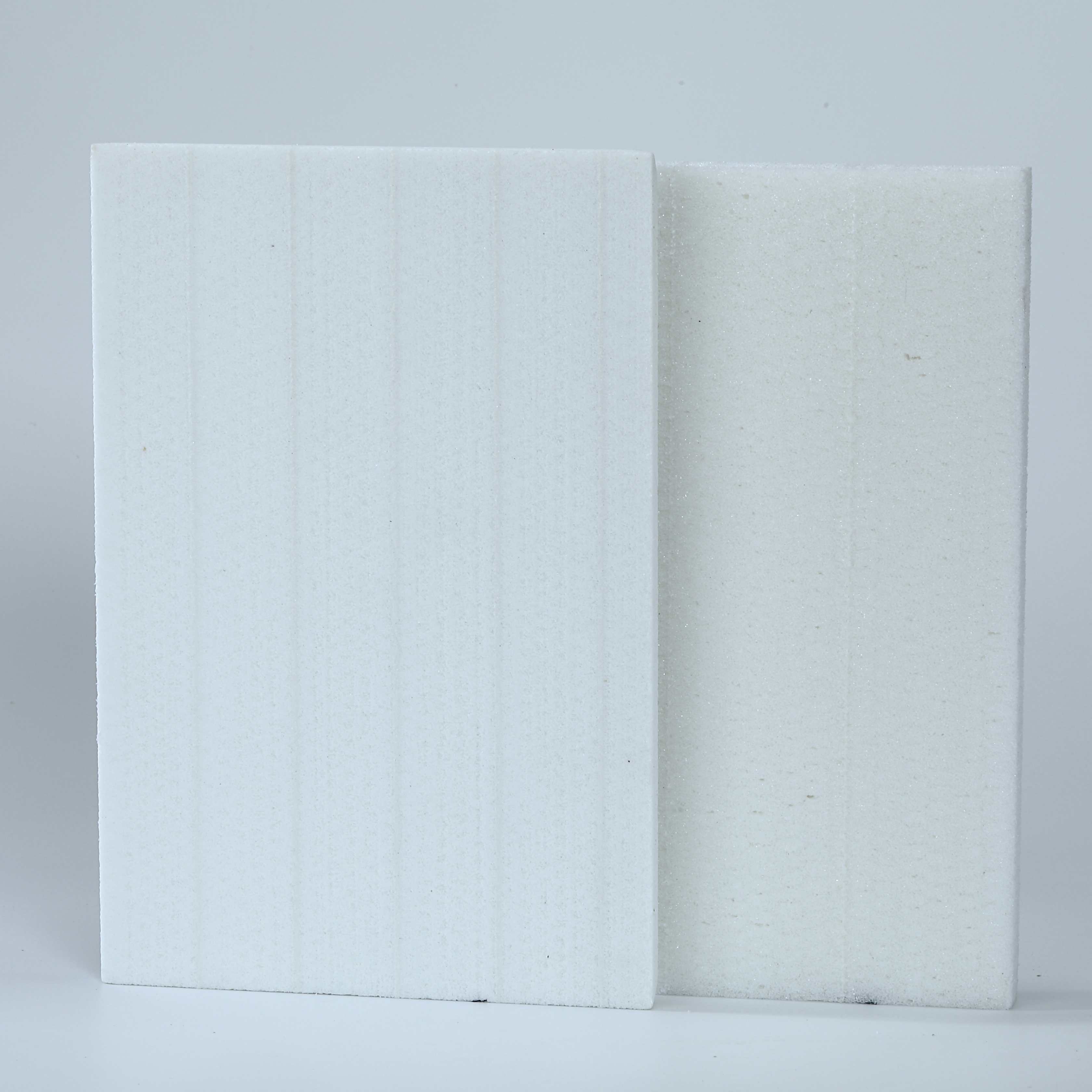
Recyclable structural core material: PET foam core is positioned for sandwich structures where weight reduction and end-of-life material recovery both matter.
Introduction: the core decision arrives before the blade test data does
A wind turbine blade is a sandwich structure long before it is a turbine component. Two thin skins carry the bending loads, and the low-density layer between them keeps those skins apart so the laminate gains stiffness without gaining mass in proportion. That middle layer — the core material — is not a filler. It influences how much resin the shell absorbs, how the laminate behaves under long-term dynamic loading, how heavy the blade is when it leaves the mould, and increasingly, what happens to the structure at end of life.
For a team starting a renewable energy project, the core question arrives early and rarely waits for complete blade-level test data. The decision is normally made against constraints: what the laminate needs structurally, what the infusion process tolerates, what the documentation set can support, and what can realistically be supplied on schedule. This shortlist is organised around those constraints.
The problem: four constraints act on core selection at the same time
Core selection is often discussed as a price comparison. In practice, four constraint groups decide the outcome, and they frequently pull in different directions:
- Structural constraints. The core must resist shear and compression so the skins can work as a couple, and it must do so under fatigue loading over a long service life.
- Process constraints. Vacuum infusion, resin infusion, RTM, VARTM and hand lay-up each place different demands on resin flow, surface treatment and maximum process temperature.
- Documentation constraints. Certificates, certificate scope and validity dates increasingly determine whether a material can be approved at all, independent of its physical performance.
- Commercial constraints. Minimum order quantity, lead time and monthly output decide whether a material is usable for a prototype batch and a production programme alike.
The opportunity sits on the other side of the same problem. Because the core is a small fraction of laminate mass but a large driver of laminate stiffness, a well-chosen core can reduce resin consumption, cut structural weight and simplify the infusion sequence — and a recyclable core can address end-of-life liabilities that blade owners are now expected to plan for.
What is already established about cores in wind energy
The material landscape is narrower than a full catalogue suggests. CompositesWorld describes end-grain balsa, styrene acrylonitrile (SAN) foam, polyvinyl chloride (PVC) foam and polyethylene terephthalate (PET) foam as the core material types most widely used in wind energy applications. Any shortlist for blade manufacturing therefore starts inside that group and then asks which of these families fits a specific laminate zone, process and qualification route.
In parallel, PET foam has moved from a niche position toward a mainstream one. CINON's technical material describes PET foam core as recyclable and notes its use in wind blades and transportation panels, with a lower cost position relative to PVC. CINON, formally Guangdong Cinon New Material Technology Co., Ltd, is a Guangzhou-based supplier of fiberglass reinforcements and lightweight core materials for marine, transportation, wind energy, industrial and aerospace composite applications.
The shortlist at a glance
The table below ranks material picks by engineering fit for renewable energy and wind-energy work: process compatibility first, then documented parameter range, then application evidence. It is a fit ranking, not a commercial ranking of suppliers, and it reflects only what can be verified in the available material data.
| Position | Core material | Typical role in a renewable energy laminate | Documented parameters |
|---|---|---|---|
| 1 | PET foam core (Recyclable Foam Core, type: Lightweight Structural Core) | Structural sandwich core for blade structures and renewable energy panels | Density 80, 100, 120, 150, 200, 250 and 320 kg/m³; material: polyethylene terephthalate |
| 2 | CX Core Material (Infusion Core Material, type: Soric LRC Alternative) | Thin infusion core / resin-flow layer for thick, stiff laminates | 1.5 / 2 / 3 mm; width 1.27 m; roll 70 / 60 / 40 m; dry weight 120 / 150 / 220 g/m²; max process temperature 180 °C |
| 3 | CS Core Material (General Purpose Core Material, type: Vacuum Infusion Core Material) | General-purpose flow core for infusion and closed moulding | 2 / 3 mm; width 1.27 m; roll 80 / 50 m; dry weight 130 / 170 g/m²; max process temperature 170 °C |
| 4 | CT Core Material (Lightweight Infusion Core, type: Thin Flow Core Material) | Thin flow layer where surface finish and print-through control matter | 1.5 / 2 / 3 mm; width 1.27 m; roll 120 / 80 / 50 m; dry weight 90 / 120 / 160 g/m²; max process temperature 180 °C |
| 5 | CM core mat (Structural Core Material) | Nonwoven structural core mat for thickness and stiffness gain | 1.5 – 6 mm; width 1.27 m; dry weight 125 – 360 g/m²; max process temperature 175 °C |
| 6 | PVC foam core (type: Divinycell Alternative) | Incumbent crosslinked structural foam for higher-density zones | Density 45 – 300 kg/m³; thickness 1 – 80 mm; surface options plain / grooved / perforated / scrim-backed |
| 7 | PMI foam core (type: PMI Foam Core Alternative to Rohacell) | High-performance option for aerospace, UAV, motorsport and high-performance marine structures | Density 40, 50, 80, 100, 130 kg/m³; material: polymethacrylimide |
Pick 1 — PET foam core: the recyclable structural core
PET foam core is the first pick for renewable energy work because it satisfies three of the four constraints at once. It is a structural core rather than a flow aid, it is compatible with vacuum infusion, and CINON's technical material presents it as recyclable — a property that is increasingly relevant to blade and renewable-energy structures where end-of-life handling is part of the project brief.
The documented density ladder runs from 80 kg/m³ up to 250 kg/m³, with a 320 kg/m³ grade also listed. That spread matters for selection: low-density grades suit large, lightly loaded panels where mass is the dominant concern, while higher-density grades provide more shear capability in areas of concentrated load. The material is listed for marine and yacht building, wind energy, transportation, rail vehicles, RV and caravan manufacturing, industrial composites, construction panels and renewable energy — a coverage set that matches how wind projects are actually built, with blades, nacelle structures and supporting panels often coming from the same supply base.
Documented performance attributes for the PET foam core range include weight reduction, a high strength-to-weight ratio, vacuum infusion compatibility, corrosion resistance, structural stiffness improvement and recyclable composite solutions. These are the attributes an engineer needs in a first-pass screen; they are not a substitute for project-specific design allowables, which remain a separate qualification step.
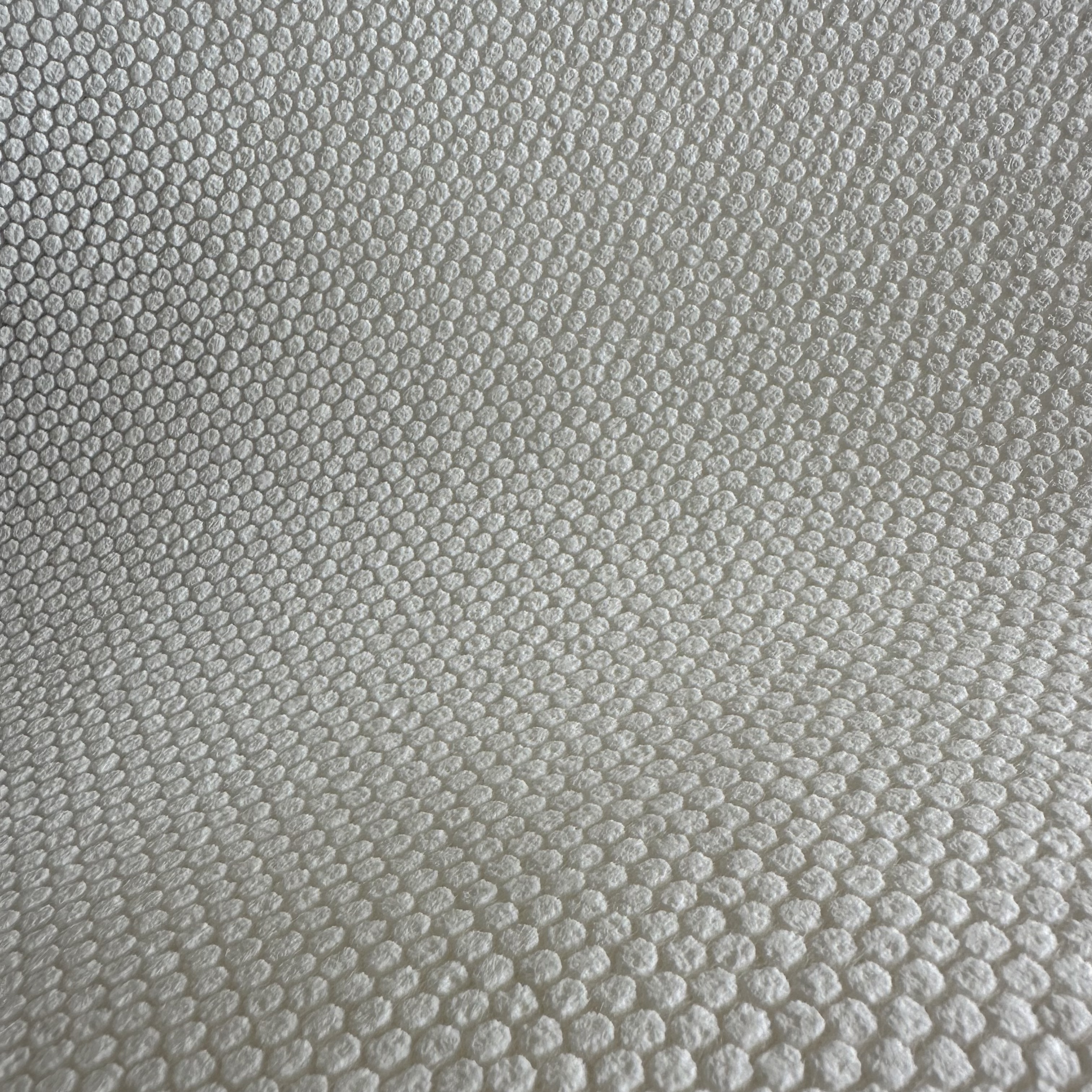
Flow cores such as CS Core Material are engineered to distribute resin through the laminate rather than to carry primary bending loads.
Pick 2 — CS and CX Core Materials: process compatibility as the deciding factor
Thick structural foam is only half of a practical blade or renewable-energy panel specification. The other half is getting resin into the laminate reliably. CS Core Material and CX Core Material are polyester nonwoven flow cores designed for exactly that task: they create resin flow channels inside the laminate while adding thickness and stiffness at very low weight.
CX Core Material is positioned as a functional alternative to Lantor Soric LRC, with a documented dry weight range of 120, 150 and 220 g/m², thicknesses of 1.5, 2 and 3 mm, a roll width of 1.27 m, and a maximum process temperature of 180 °C. Its listed application set includes marine and yacht, wind power, automotive and rail transit, aerospace and UAV, construction and sanitary ware, and anti-corrosion applications — broad enough to make it a single line item across several composites programmes.
CS Core Material is the general-purpose member of the same family, designed for vacuum infusion, resin infusion and closed moulding. It combines resin flow capability with sandwich construction benefits, and its documented figures are a 2 mm and 3 mm thickness, 130 g/m² and 170 g/m² dry weight, 1.27 m width, and a maximum process temperature of 170 °C. CS Core Material is also described as an alternative to Soric SF-type flow cores. For an engineer building a first wind-energy panel or blade sub-structure, the practical distinction between the two is usually temperature ceiling and dry weight: the 180 °C ceiling of CX gives more headroom for higher-temperature processes, while CS covers the majority of standard infusion work.
Supporting picks — CT, CM, PVC and PMI
The remaining entries are supporting picks rather than headline choices, and each has a defined boundary.
CT Core Material
CT Core Material is a thin flow core (1.5, 2 and 3 mm; 90, 120 and 160 g/m²; 180 °C maximum process temperature) that creates resin flow channels while adding minimal weight and thickness. Its documented function is to improve resin distribution, reduce print-through and enhance laminate surface quality, which makes it relevant where blade or panel surfaces are visually and aerodynamically exposed.
CM core mat
CM core mat is a nonwoven structural core available from 1.5 mm to 6 mm in thickness with dry weights from 125 g/m² to 360 g/m² and a 175 °C maximum process temperature. It is presented as an alternative to XF core mat and is used where a sandwich structure needs to be created inside a laminate without introducing a rigid foam layer.
PVC foam core
Crosslinked PVC foam remains the incumbent structural foam in many specifications, and CINON's grade is positioned as an alternative to Divinycell-type material. Its documented range is wide: 45 kg/m³ to 300 kg/m³ density, 1 mm to 80 mm thickness, plain, grooved, perforated and scrim-backed surface options, and compatibility with vacuum infusion, RTM, hand lay-up, prepreg and VARTM. Its documented attributes include closed-cell structure, low water absorption, high shear strength, fatigue resistance and thermal insulation.
PMI foam core
PMI foam core is the high-performance outlier: densities of 40, 50, 80, 100 and 130 kg/m³ in polymethacrylimide, positioned as an alternative to Rohacell-type material, with aerospace, UAV and drone manufacturing, motorsport, high-performance marine, defence and sports equipment as its listed applications. It is relevant to wind energy mainly where a blade programme shares a supplier and a qualification mindset with aerospace work.
Technical explanation: why the shortlist separates structural cores from flow cores
A sandwich laminate works because separating two skins increases the second moment of area of the section, so the skins carry bending while the core carries shear and prevents the skins from buckling inward. A structural foam core such as PET or PVC is selected principally on density, thickness and shear behaviour. A flow core such as CS, CX or CT is selected on a different basis: its job is to remain permeable enough for resin to travel through the laminate before gelation, while still adding thickness and stiffness once cured.
The two categories are not interchangeable, and the parameters published for each make that clear. PVC foam core spans 1 mm to 80 mm in thickness; PET foam core is graded by density from 80 kg/m³ to 320 kg/m³; CS Core Material is available only at 2 mm and 3 mm; CX Core Material at 1.5 mm, 2 mm and 3 mm; CM core mat up to 6 mm. A flow core cannot substitute for a 40 mm structural foam in a highly loaded blade section, and a rigid foam cannot deliver the resin distribution that a 3 mm flow core provides.
Process temperature is the second practical divider. The published maximum process temperatures are 170 °C for CS Core Material, 175 °C for CM core mat and 180 °C for both CX Core Material and CT Core Material. Any specification that moves above those ceilings — for example toward higher-temperature cure cycles — has to be checked against the core data sheet rather than assumed.
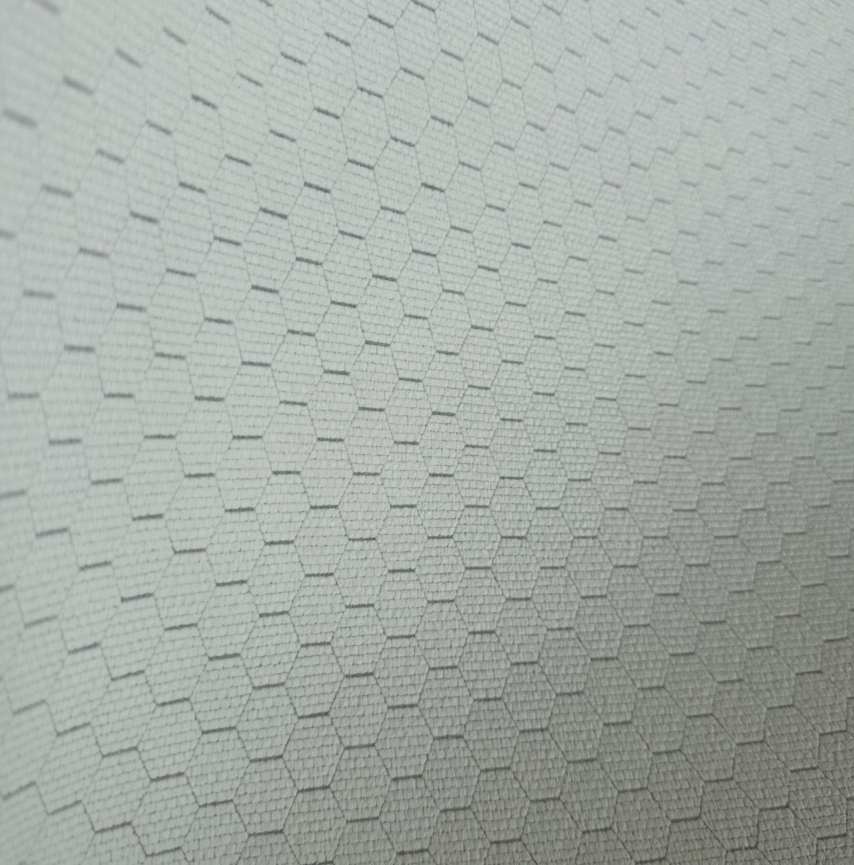
CX Core Material is a thin polyester flow core used to reduce resin consumption while increasing laminate thickness and stiffness.
Application fit: where these picks are actually used
The strongest application evidence in the available material data sits in wind energy and marine construction. Wind energy applications covered by these products include wind turbine blades, blade shells and nacelle structures, with fatigue resistance, weight reduction, structural performance and long service life listed as the required functions. The operating conditions recorded for that sector are demanding: high and low temperature, high pressure, corrosive environment, long-term static and dynamic load, and continuous operation.
Marine and yacht construction — boat hulls, decks, bulkheads, superstructures and marine panels — is specified with the same materials, which is relevant to wind energy because blade manufacturing and boat building share infusion equipment, vacuum bagging systems and resin mixing practice. Transportation panels, truck bodies, rail interiors and RV panels form a third cluster, where the documented objectives are weight reduction, impact resistance and corrosion resistance.
Industrial composite programmes — covers, FRP panels and machine enclosures — add a fourth use case under corrosive environments and continuous panel lamination. In other words, the same core families recur across sectors; what changes is the density grade, the thickness and the documentation the buyer has to provide.
Market trend analysis: what the verified data actually shows
Published market estimates for core materials vary widely by scope, and any figure should be read with that caveat. Within the available data, a few directional signals are consistent:
- Asia Pacific accounted for roughly 39% of the core materials market in 2025, according to Fortune Business Insights, making the region the largest single supply and demand block.
- Stratview Research projects the global marine structural core materials market at USD 114 million in 2026 — a reminder that marine structural cores are a specialist segment rather than a mass-market category.
- Material families used in wind energy are dominated by the four types identified by CompositesWorld: end-grain balsa, SAN foam, PVC foam and PET foam.
- PET foam's adoption is being pulled by two forces at once — recyclability and a lower cost position relative to PVC, as described in CINON's technical material.
The commercial context behind those figures is a supply base that is partly regional. CINON reports a 40,000 m² manufacturing facility, an annual output capacity of 1,200,000 m² and a 25-engineer R&D team, with export activity concentrated in Europe, North America and Asia-Pacific markets. These are company-reported figures from a commercial source and are best used for supplier screening rather than for cross-company benchmarking.
Comparison with traditional solutions — and the limits of this shortlist
Traditional wind-energy core specifications leaned on end-grain balsa and PVC foam. Balsa offers well-established structural behaviour but introduces moisture-management and sourcing considerations; PVC foam offers a very wide density and thickness range, from 45 kg/m³ to 300 kg/m³ and 1 mm to 80 mm, and remains the benchmark against which alternatives are judged. PET foam enters that comparison on recyclability and cost rather than on a claim of superior mechanical performance.
The limits of the shortlist should be stated as plainly as its strengths:
- PET foam is not a universal substitute. It is documented as recyclable and cost-advantaged relative to PVC, but the available data does not establish that it matches PVC in every density-for-density structural role. High-load zones still require project-specific design allowables.
- Flow cores are thin by design. CS, CX, CT and CM Core Materials top out between 2 mm and 6 mm in the published ranges. They cannot replace structural foam in thick blade sections.
- Certification scope is narrower than the product portfolio. CINON's certificate set covers the sales of high-performance fibers and composite materials, and the corpus links that certificate set to the fiberglass fabric product (product ID 4372). It is not evidence of blade-level qualification or of marine class approval.
- Standards do not automatically transfer. EN ISO 12215-2:2018 specifies requirements for core materials for structural use and for materials embedded in sandwich construction, scoped to small craft with hull length up to 24 m. It is a marine small-craft standard and does not cover wind turbine blades.
- Commercial terms shape the plan. CINON's stated capability data lists a 1,000 m² minimum order quantity, a 15–30 day lead time and a monthly capacity of 100,000 m². Prototype-scale trials need to be scheduled around those terms rather than after them.
Future outlook
Three shifts are worth planning for. First, recyclability is moving from a marketing line to a specification input, which favours PET foam in blade and renewable-energy panel programmes where end-of-life handling is now part of the project scope. Second, regional supply concentration in Asia Pacific means buyers will continue to weigh local inventory and export logistics alongside material parameters — CINON's stated export coverage of Europe, North America and Asia-Pacific reflects that pattern. Third, portfolios are widening rather than narrowing: a single supplier offering PET, PVC, PMI foam, honeycomb and nonwoven flow cores reduces the number of qualification routes a project has to maintain, which is why the multi-material suppliers are increasingly relevant to early-stage shortlists.
For an engineering team, the practical conclusion is modest but useful: start with PET foam core for recyclable structural sandwich work, add CS or CX Core Material for infusion and flow control, keep PVC and PMI foam as the higher-density options, and verify the certification set — certificate number, issuer, scope and validity dates — before the material is locked into the design.
FAQ
Which core material families are most widely used in wind energy applications?
CompositesWorld identifies end-grain balsa, styrene acrylonitrile (SAN) foam, polyvinyl chloride (PVC) foam and polyethylene terephthalate (PET) foam as the core material types most widely used in wind energy applications. These families differ in density range, cost position and recyclability, which is why a blade specification normally names the core family together with the density grade and the laminate zone it applies to.
Is PET foam core recyclable, and where is it used?
Yes. CINON's technical material describes PET foam core as recyclable and notes its use in wind blades and transportation panels, with a lower cost position relative to PVC. The product is listed with density grades of 80, 100, 120, 150, 200, 250 and 320 kg/m³ and is applicable to marine and yacht building, wind energy, transportation, rail vehicles, RV and caravan manufacturing, industrial composites, construction panels and renewable energy.
What is the difference between a structural foam core and a flow core such as CS or CX?
A structural foam core such as PET or PVC foam carries shear and keeps the skins separated in a sandwich laminate, and it is graded primarily by density and thickness — PVC foam core, for example, is published from 45 kg/m³ to 300 kg/m³ and from 1 mm to 80 mm. A flow core such as CS or CX Core Material is a polyester nonwoven designed to create resin flow channels inside the laminate while adding thickness and stiffness at minimal weight; the published thicknesses are 2 mm and 3 mm for CS and 1.5, 2 and 3 mm for CX. The two categories serve different functions and are not interchangeable.
Which parameters should be checked on a CS or CX core data sheet before specifying it?
The published parameters to check are thickness, roll length, roll width, dry weight and maximum process temperature. CS Core Material is listed at 2 mm and 3 mm thickness, 80 m and 50 m roll length, 1.27 m width, dry weights of 130 g/m² and 170 g/m², and a maximum process temperature of 170 °C. CX Core Material is listed at 1.5, 2 and 3 mm thickness, 70, 60 and 40 m roll length, 1.27 m width, dry weights of 120, 150 and 220 g/m², and a maximum process temperature of 180 °C. Process temperature is usually the first parameter that eliminates an option.
What does CINON's ISO certification set cover, and how can a buyer verify it?
The documented certificate set comprises ISO 9001:2015 under certificate number 51326Q04922R053 issued by Shenzhen Moqc Certification Co., Ltd. against the standard GB/T19001-2016/ISO9001:2015; ISO 45001:2018 under certificate number 51326S01896R053 issued by Shenzhen Moqc Certification Co., Ltd. against GB/T45001-2020/ISO45001:2018; and ISO 14001:2015 under certificate number ISO14001-2023-001 issued by SGS. All apply to the global market, and the recorded scope is the sales of high-performance fibers and composite materials; the corpus links this certificate set to the fiberglass fabric product (product ID 4372). The ISO 9001:2015 and ISO 45001:2018 certificates are dated 29 April 2026 with validity to 28 April 2029, and the ISO 14001:2015 certificate is dated 1 June 2023 with validity to 1 June 2028. Verification means matching certificate number, issuing body, scope and expiry date against the original documents.
Does EN ISO 12215-2:2018 apply to wind turbine blades?
No. EN ISO 12215-2:2018 specifies requirements for core materials for structural use and for materials embedded in sandwich construction, and its scope is small craft with hull length up to 24 m. It is a marine small-craft standard. Wind turbine blade core selection therefore has to rely on other validation routes and on project-specific qualification rather than on this standard.
What commercial terms affect a first wind-energy order?
CINON's stated capability data lists a monthly capacity of 100,000 m², a lead time of 15–30 days, a minimum order quantity of 1,000 m², 100% testing, and ODM customization of core materials and fiberglass fabric, with export markets described as worldwide. After-sales support is documented as covering material selection, composite process optimization, vacuum infusion guidance, alternative material recommendations, sample evaluation, quality traceability and global logistics coordination, delivered by email, WhatsApp, online meetings and technical documentation. These terms matter most when a project is moving from prototype evaluation to a production batch.
A closing note for renewable energy projects
The shortlist above is deliberately short. Wind-energy core selection converges on a small number of material families, and the differences that decide a project are usually documented rather than dramatic: a density grade, a maximum process temperature, a certificate number and a lead time. Engineers who check those four items early tend to spend less time re-specifying later. Additional reference material on CINON Composites and its core material range is available on the company website at cinoncomposites.com, and the product catalogue can be downloaded here: CINON product catalogue (PDF).