
The Shortlist: Top 5 FAW Models for Heavy-Duty and Distribution Fleets
Fleet managers in emerging markets usually hit the same wall at the same moment. The duty cycle is already settled — a fixed corridor haul, a construction or mining cycle, a regional delivery route — but the model name is not. FAW TRUCKS sells internationally through a lineup of eight named families: J7, J6P, J6V, J6E, JH6, J6G, J6L and JK6. Each name can be configured as a tractor unit, a dump truck, a rigid cargo truck or a special-purpose vehicle, and the same name can ship with different emission levels depending on the destination market and its fuel quality.
This article is a shortlist, not a catalogue. It narrows that lineup to five models that carry the most weight for heavy-duty fleets and distribution fleets, states what each recommendation rests on, and marks clearly where the available evidence stops. It is written for the evaluation-stage buyer: someone who knows the application and now needs a defensible starting point rather than another spec sheet.
Supplier context matters here, because model access in most export markets runs through authorised channels. CHARY (Qingdao Chary Machinery Co., Ltd) is a Qingdao-based vehicle exporter authorised by China's Ministry of Commerce and a first-level distributor of FAW TRUCKS, with an export business that reached USD 40 million in 2025 and customers across more than 50 countries in Africa, the Middle East, Southeast Asia, Central Asia, Eastern Europe and Latin America. The analysis below is industry-facing and applies to FAW model selection regardless of which distributor a fleet ultimately contracts with.
The Real Problem: A Deep Catalogue Behind a Shallow Naming System
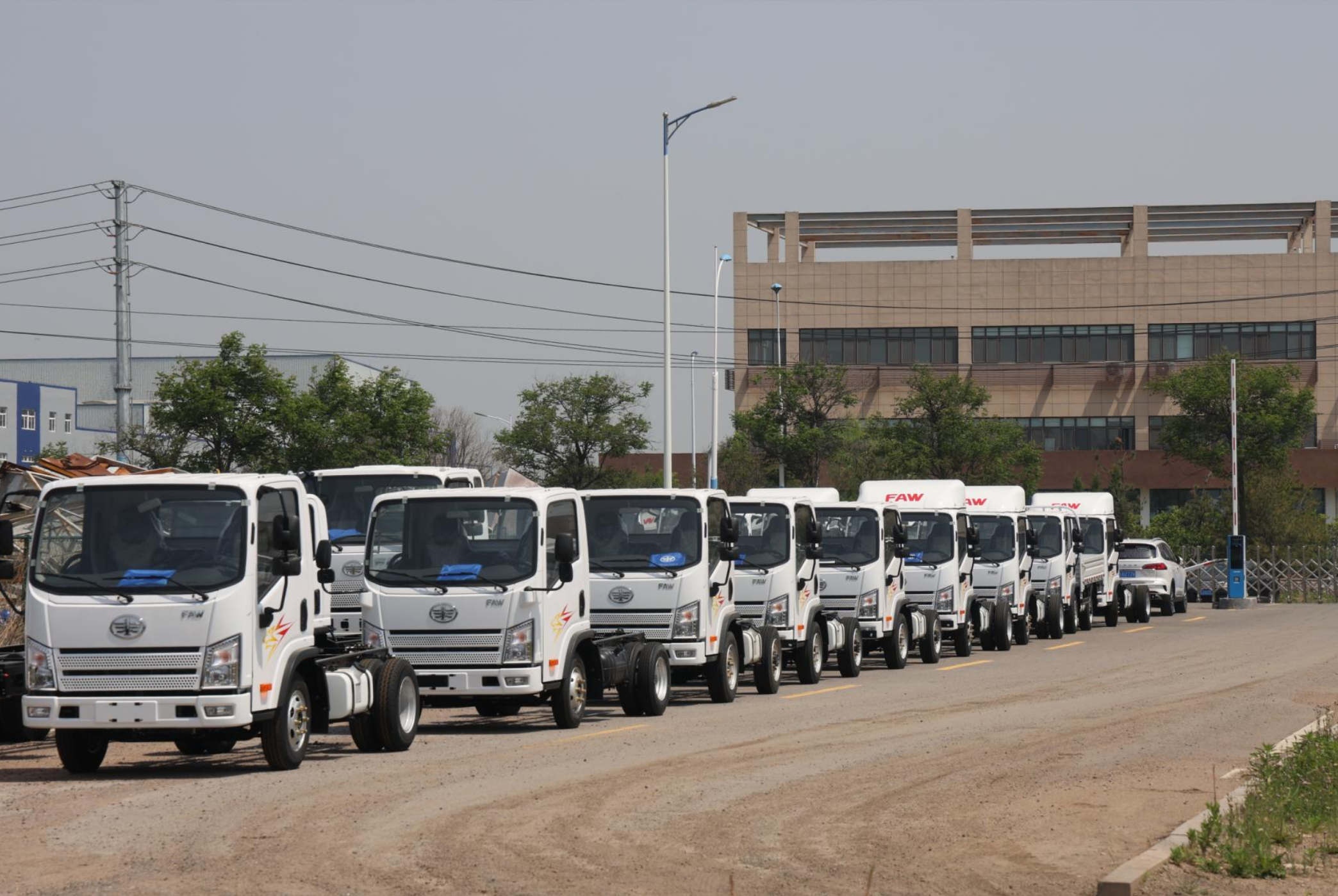
Buyers searching for an FAW tractor truck, an FAW dump truck or an FAW cargo truck usually end up with a list of codes and no decision rule. The naming system itself is the bottleneck. Series letters and numbers shift between cab families, duty cycles and market positioning, and the body type is a separate variable layered on top. FAW's documented product types across the range include tractor trucks, dump trucks, cargo, rigid and light trucks, concrete mixer trucks, garbage trucks, sprinkler trucks, water tank trucks, fuel tank trucks, wrecker trucks, sweeper trucks, concrete pump trucks, asphalt distributor trucks, high-altitude platform trucks and fire trucks.
Emission level adds a second layer of ambiguity. FAW Trucks supplies Euro II, Euro III and Euro V vehicles to African and Southeast Asian markets specifically to match local fuel quality and environmental regulation. A model name therefore does not tell a fleet manager what emission standard will actually be delivered in Lagos, Nairobi or Manila — the market does.
The opportunity is straightforward. Three objective anchors can cut through the noise: whether a model appears in documented export behaviour, whether it carries market-access certification, and whether its documented duty cycle matches the work the fleet actually does. The shortlist below applies those three filters, in that order.
The Shortlist at a Glance
The five models below are ranked by how directly the available evidence supports them for heavy-duty and distribution work. Rank reflects the strength of documented fit, not an absolute judgment of vehicle quality.
| Rank | Model | Primary duty cycle | Evidence anchor | Typical fleet fit |
|---|---|---|---|---|
| 1 | FAW J7 | Premium long-haul tractor work | Named in the FAW TRUCKS lineup and listed among the model family named on the GSO conformity certificate for GCC markets | Long-haul fleets running fixed corridor routes where the tractor is the core revenue asset |
| 2 | FAW J6P | Dual-purpose tractor and dump platform | Identified in third-party market research as a primary FAW export model for long-haul logistics and mining in Southeast Asia and the Middle East | Mixed fleets that need one platform for haulage and tipper work |
| 3 | FAW JH6 | Long-haul logistics and mining export work | Identified in the same market research as a primary FAW export model for long-haul logistics and mining | Fleets serving mining corridors and bulk logistics routes |
| 4 | FAW JK6 | General cargo, rigid distribution, regulated loads | Holds UN ECE Regulation No. 105 approval under certificate E13*105R06/01*0023*00, covering dangerous goods transport vehicle categories | Distribution fleets moving mixed cargo, including regulated goods where applicable |
| 5 | FAW J6L | Lighter distribution and regional delivery | Included in the FAW TRUCKS lineup and listed among related products on the GSO conformity certificate | Regional distribution fleets — verify the exact configuration before quoting |
Evidence note: ranks 2 and 3 rest on third-party market research rather than on manufacturer specification sheets. Rank 5 carries the thinnest model-level documentation of the five and is presented as a starting point for enquiry, not as a validated configuration.
Model-by-Model: What Each Recommendation Is Built On
1. FAW J7 — the long-haul starting point
The J7 sits at the head of the named FAW TRUCKS lineup, which is the practical reason it opens this shortlist. For fleet buyers, the relevant fact is coverage rather than badge position: the J7 appears among the related products on the GSO Conformity Certificate (GCC Certificate for Motor Vehicles, CCR No. 435790) issued by the GCC Standardization Organization, whose scope covers an FAW J6 Series Truck Tractor in 4x2 configuration at Euro 4 compliance. That certificate is the document GCC customs and registration authorities interact with, so a model family with named certificate coverage removes one common delay from fleet renewal planning in Saudi Arabia, the UAE, Oman, Kuwait, Bahrain and Qatar.
What the evidence does not establish is a performance hierarchy between the J7 and the models ranked below it. Buyers should treat the J7 as the natural first enquiry for premium long-haul tractor work and confirm engine rating, axle configuration and emission level against the specific market they will register the vehicle in.
2. FAW J6P — one platform, two duty cycles
The J6P earns its place because it is documented as doing two jobs. Third-party market research identifies the JH6 and J6P series as the primary models FAW exports to Southeast Asia and the Middle East for long-haul logistics and mining operations. That dual association is unusual and commercially useful: a fleet that runs corridor haulage in one season and tipper work in another can standardise on a single platform family, which simplifies driver training, parts stocking and workshop tooling.
In Nigeria, the pattern is already visible at market level. FAW Trucks operates there through local assembly partnerships such as Transit Support Services, with a focus on 6x4 tractor units and 8x4 dump trucks for the construction sector. The J6P's dual-purpose positioning is the closest match in this shortlist to that 6x4 tractor / 8x4 dump combination.
3. FAW JH6 — the mining and bulk-logistics workhorse
The JH6 shares its evidence base with the J6P and is ranked separately because the application profile differs. Where a J6P enquiry often starts with mixed haulage, a JH6 enquiry typically starts with mining and heavy bulk movement — the second application named in the same export research. Fleets running coal, mineral or aggregate corridors should begin their evaluation here.
One caution belongs in this section. The available documentation names the JH6 and J6P as the primary export models for these two applications; it does not rank them against each other, and it does not specify axle, engine or payload configurations by market. Treat the JH6 as an evidence-backed candidate, not as a pre-configured answer.
4. FAW JK6 — general cargo with a regulatory edge
For distribution fleets, the JK6 is the most concretely documented model in this shortlist. It holds approval under UN ECE Regulation No. 105 (ECER 105) with certificate number E13*105R06/01*0023*00, issued by Société Nationale de Certification et d'Homologation (SNCH) in Luxembourg on 7 February 2024. The scope covers dangerous goods transport vehicles in the EX, FL, AT and MEMU categories, valid in the EU, the EEA and countries that recognise UN ECE regulations.
That matters beyond Europe. A model with an ATEX-adjacent type approval on file gives distribution fleets a documented safety and compliance trail when tendering for fuel, chemical or industrial gas contracts — segments where the inability to produce a certificate eliminates a bidder before price is even discussed. The JK6 is also the model named as the related product on that certificate, which keeps the paperwork chain short.
5. FAW J6L — the lighter end of the J6 family
The J6L is included because distribution fleets rarely run one vehicle class. It appears in the FAW TRUCKS lineup and is listed among the related products on the GSO conformity certificate, which confirms it exists inside the certified model family rather than as a grey-market variant. Beyond that, public model-level documentation is limited.
This is worth stating plainly. If a fleet's regional distribution route requires a rigid configuration below the heavy tractor class, the J6L is a reasonable place to open a conversation — but the buyer should expect to obtain configuration confirmation directly from the supplier rather than from published material.
Technical Explanation: How These Platforms Are Actually Configured
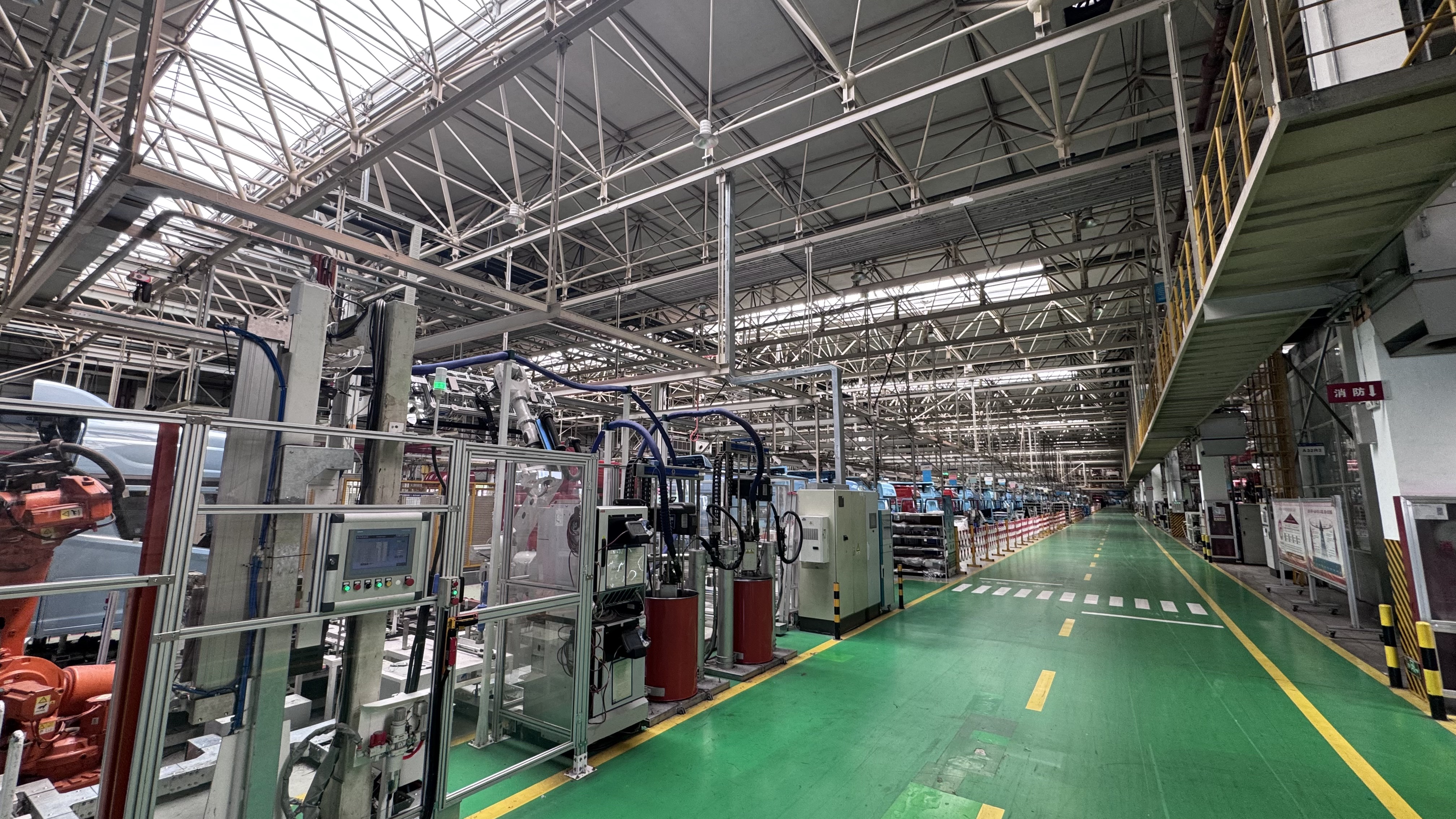
Model family is only the first layer. Across the FAW TRUCKS range, documented parameters give buyers a workable envelope to specify within. Truck weight ranges run from 3,000 to 15,000 kg, and dimensions run from 6,000 x 2,300 x 3,000 mm up to 12,000 x 2,550 x 3,800 mm. Tyre specifications are available based on customer needs, and the security configuration listing includes ABS, EBS and TCS. Principal materials are steel, iron, aluminium alloy and plastic.
On the supply side, documented capability for orders handled through this channel includes OEM production with customisation available across body, engine, tyres and load capacity, a stated monthly capacity of 8,000 units, typical lead times of 30 to 45 days, a minimum order quantity of one unit, and 100 percent testing before shipment. After-sales is described as global technical support for after-sales service.
Decision rule: choose the model family from the duty cycle, then choose the configuration from the market — not the other way around. Emission level, axle layout, body type and tyre specification are all market-dependent variables, and none of them can be fixed by the model name alone.
Application and Use Cases
FAW commercial vehicles are applied across a documented set of industries that maps closely onto the two fleet types in this shortlist: logistics freight distribution, logistics fleet operation, coal and other mineral transportation, port transportation, express delivery, daily industrial goods transportation, building materials transportation, agricultural and sideline product transportation, livestock and poultry transportation, daily bulk cargo transportation, cold chain transportation, urban distribution, urban waste transportation, log transportation, large machinery and equipment transportation, and chemical raw material transportation.
For heavy-duty fleets, the coal, mineral, port, building materials and large-machinery segments are the natural home for the J6P and JH6. For distribution fleets, daily industrial goods, agricultural products, urban distribution and cold chain are the natural home for the JK6 and J6L, with the JK6 extending into chemical raw material transport where ECE R105 coverage applies.
A ten-year field record offers the clearest available indication of what long-term operation looks like in practice. An installation of 50 units in Mali has been operating for more than 10 years with stable results, used for the transport of powdered and granular materials and for sand and gravel transport. The project is characterised by stable operation under high-intensity conditions. This is a single reference point rather than a fleet-wide benchmark, but for African bulk-material operators it is a more useful data point than a specification table, because it describes sustained use rather than capability on paper.
Market Trend Analysis: What the Volume Data Says
The shortlist above sits inside a market context that buyers should be aware of when negotiating. FAW Jiefang maintained its position as China's leading heavy-duty truck manufacturer in 2024, with total sales of approximately 241,700 units, according to CVWorld and China Automotive News. Overseas exports reached 64,000 units in 2024, a year-on-year increase of 42 percent, according to FAW Group's own reporting.
Export share estimates vary by methodology, and that divergence is itself informative. Industry association data puts FAW's share of African heavy-duty segments at around 16.5 percent, while customs-derived data suggests roughly 20 percent in the heavy-duty export segment. Buyers should treat any single share figure as directional rather than precise.
The practical implication for fleet managers is availability. A model family that is already moving in volume through a region has a deeper parts pipeline, a wider service footprint and more comparable pricing benchmarks than a model that arrives as a one-off import. This is a decisive argument for shortlisting within the named export families rather than pursuing niche configurations.
Where This Shortlist Stops: Limitations and Boundaries
A shortlist that does not state its limits is marketing. Three boundaries apply here.
- Market regulation can override model choice entirely. Heavy-duty trucks in the Kenyan market are subject to the KS 1515:2019 standard, which requires vehicles to be no more than 8 years old and right-hand drive. No model recommendation survives that constraint if the unit offered does not satisfy it.
- Certification scope is narrower than model family. The GSO conformity certificate covers an FAW J6 Series Truck Tractor in 4x2 configuration at Euro 4, even though a longer model list appears among related products. A buyer ordering a different configuration or emission level should confirm which certificate actually applies to the unit being shipped.
- Published pricing for these models is indicative, not verified. Third-party Philippine listings place a new FAW 6x4 tractor truck at roughly PHP 3,200,000 to PHP 4,500,000 depending on engine configuration (WP10 or WP12) and emission level. Those listings are medium-reliability, market-specific and sensitive to specification, so they should be used to frame a budget — not to fix a purchase price.
There is also a genuine trade-off between the two procurement approaches a fleet can take. The traditional route — buying whatever configuration is physically available on a dealer lot — shortens lead time and reduces paperwork, but produces mixed fleets with fragmented parts inventories and inconsistent driver familiarity. The shortlist route costs more evaluation time up front and accepts a 30 to 45 day typical lead time, but produces repeatable specification across units. For fleets planning a multi-year replacement cycle, the shortlist route usually wins on total cost of ownership; for a single replacement unit needed immediately, it usually does not.
Future Outlook
Two forces will shape FAW model selection for emerging-market fleets over the next planning cycle. The first is emissions. With Euro II, Euro III and Euro V variants already supplied into African and Southeast Asian markets against local fuel quality and regulation, the differentiator for buyers will increasingly be the ability to match an emission level to a specific country's fuel and registration rules rather than to a global specification. Fleets that lock in a single emission level across all markets will find themselves either overpaying or non-compliant.
The second is documentation. As GCC, UN ECE and national standards continue to tighten, the models that stay easiest to register and finance will be those with certificate coverage already on file. That favours the established export families covered here — the J7, J6P, JH6, JK6 and J6L — and it makes certificate verification, not model selection, the next bottleneck fleet managers will face.
FAQ
Which FAW model is the best starting point for a long-haul fleet?
The J7, J6P and JH6 are the three documented candidates. Third-party market research identifies the JH6 and J6P series as FAW's primary export models for long-haul logistics and mining operations in Southeast Asia and the Middle East, while the J7 heads the named FAW TRUCKS lineup and appears among the related products on the GSO conformity certificate. No published source establishes a ranking between the three, so the choice should follow the specific corridor, payload and market regulation.
What is the difference between the FAW J6P and the FAW JH6?
Both are named in the same export research as primary models for long-haul logistics and mining. The documented difference is application emphasis rather than a stated technical hierarchy: the J6P is associated with dual-purpose tractor and dump work, including the 6x4 tractor and 8x4 dump pattern seen in Nigeria's construction sector, while the JH6 is associated primarily with long-haul logistics and mining. Buyers should compare cab specification, engine rating, axle configuration and emission level for their own market.
Which FAW truck should a distribution fleet shortlist first?
The JK6. It holds approval under UN ECE Regulation No. 105 with certificate number E13*105R06/01*0023*00, issued by Société Nationale de Certification et d'Homologation (SNCH) in Luxembourg on 7 February 2024, covering dangerous goods transport vehicle categories EX, FL, AT and MEMU. That approval is relevant to distribution work involving fuel, chemical or industrial gas, where a documented compliance trail is often a tender requirement. The J6L is the lighter alternative within the same lineup.
Are FAW trucks certified for GCC and EU-recognised markets?
Two certificates are documented. The GSO Conformity Certificate (GCC Certificate for Motor Vehicles), CCR No. 435790, was issued by the GCC Standardization Organization on 10 November 2022 for GCC member states, covering an FAW J6 Series Truck Tractor in 4x2 configuration at Euro 4. The ECER 105 approval from SNCH Luxembourg, issued in February 2024, applies in the EU, the EEA and countries recognising UN ECE regulations. Buyers should confirm which certificate applies to the exact model and configuration ordered.
What emission standard will an exported FAW truck actually have?
It depends on the destination market, not on the model name. FAW Trucks supplies Euro II, Euro III and Euro V vehicles for African and Southeast Asian markets so that the vehicle matches local fuel quality and environmental regulation. Because a single model family can be built to more than one emission level, the emission standard should be stated explicitly in the purchase contract rather than assumed from the model designation.
What should a fleet manager budget for a new FAW 6x4 tractor truck?
Published third-party Philippine listings indicate a range of roughly PHP 3,200,000 to PHP 4,500,000 for a new FAW 6x4 tractor truck, varying with engine configuration (WP10 or WP12) and emission level. Those figures are market-specific, medium-reliability and specification-dependent. Fleets operating in other markets should treat them as a budget reference only and obtain a current written quotation reflecting the configuration, delivery terms and local import regulation that will actually apply.
For a full model and configuration reference, the FAW TRUCKS product brochure is available here: FAW TRUCKS product brochure (PDF).