
The Shortlist for Your Drop: Top Customization Features for Limited-Edition Hoodies
A limited-edition hoodie drop is judged in the few seconds it takes a customer to open the package. Almost everything that determines that moment — the weight of the fabric, the raised surface of a chest print, the line of the shoulder, the label resting against the neck — is locked in at the specification stage, months before launch. For brands building a launch collection, the practical question is rarely whether to customize. It is which customization features carry the most perceived value for the added production cost.
Three features recur across premium drop programs and form the shortlist examined in this reference: custom puff print, an oversized fit with drop shoulder, and a custom woven neck label. Each is treated below in four dimensions: what it does technically, how it is produced, what it demands operationally, and where it stops being the right choice. The analysis draws on documented production capabilities from Qianshiwear and on launch-collection case evidence in which this exact specification set was used.
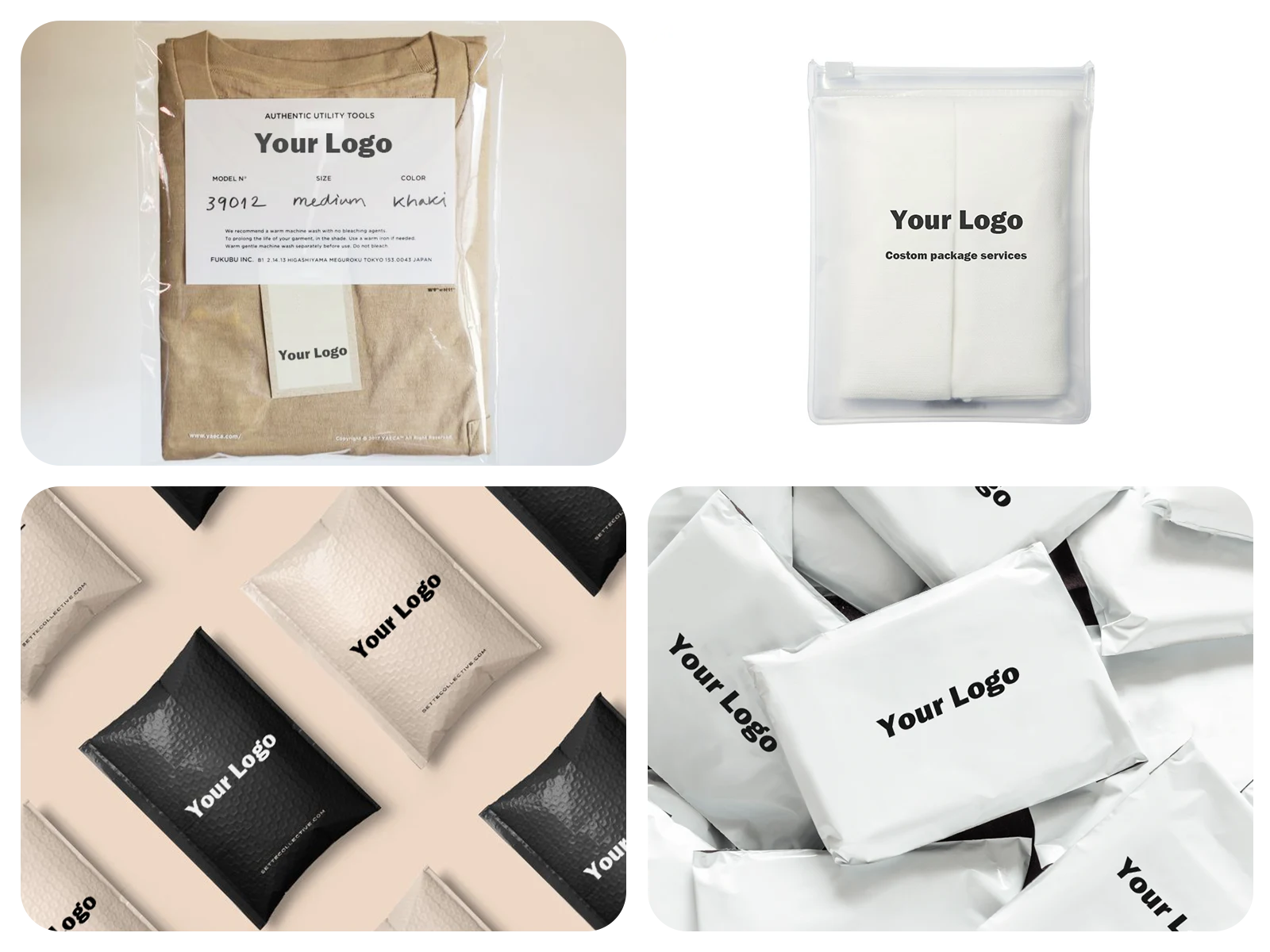
Custom packaging and private label presentation — the layer of a drop that customers physically handle first.
Why the Drop Format Changes What You Specify
A limited edition is an economic format before it is a creative one. Because volumes are small and unit margins must carry the entire launch, the garment itself has to do more of the selling. A buyer comparing a heavyweight, custom-printed hoodie against a decorated blank is comparing perceived structure, surface and finishing — not just a logo placement.
The demand backdrop supports that shift. The global hoodies and sweatshirts market was valued at USD 209.26 billion in 2025 and is projected to reach USD 303.62 billion by 2031, according to Mordor Intelligence. Pullover hoodies accounted for 38.4% of product type share in 2025, per Dataintelo, a figure the same source links to streetwear and athleisure momentum. Grand View Research sizes the custom hoodie printing segment as growing at a CAGR of 9.9% between 2024 and 2030, and identifies high demand for 3D puff embroidery and eco-friendly water-based inks.
Market sizing figures differ by scope and methodology — some sources aggregate all sweatshirt categories while others isolate the premium segment — so those numbers are best read directionally rather than as a single reference point. What they consistently indicate is that demand is migrating toward decorated, differentiated garments rather than undecorated blanks. On the supply side, China's apparel exports reached USD 159.14 billion in 2024, a 0.3% year-on-year increase despite geopolitical pressures, according to the General Administration of Customs (GACC), which keeps the manufacturing base for experimental, low-volume drops concentrated in the same region buyers already source from.
The format has a second consequence that is easy to underestimate. Low-volume drops force buyers to accept per-design minimums, artwork setup, and sampling cycles that would be absorbed invisibly inside a 50,000-piece basic program. Feature choices made in week one therefore determine whether a drop is a line on a calendar or a listing that clears in a season.
The Shortlist at a Glance
| Feature | What it delivers | Production consideration | Best fit |
|---|---|---|---|
| Custom puff print | Raised, tactile graphic surface that reads at arm's length | Ink system plus heat-set curing; wash validation required | Streetwear, music merchandise, graphic-led drops |
| Oversized fit with drop shoulder | A recognizable silhouette that functions as product identity | Grading and pattern work; performance depends on fabric weight | Launch collections, unisex sizing, trend-led capsules |
| Custom woven neck label | Premium finishing and brand legitimacy inside the garment | Artwork setup, label tooling, additional lead time | Private label, DTC brands, collectible drops |
Feature 1 — Custom Puff Print: Raised Texture as a Signature
Puff print is a screen printing technique that produces a raised, dimensional surface on the garment. It sits within a wider decoration menu that also includes plastisol ink (opaque and vibrant), water-based ink (soft hand feel), discharge ink (soft, natural appearance), flock print (velvety texture), foil print (metallic finish), glow-in-the-dark ink, and metallic ink. Placement is flexible: chest left or center, full front, full back, sleeve, hood, side seam, or panel-by-panel all-over printing.
For a limited drop, the value of puff print is tactile and photographic at the same time. It is legible on a product image and unmistakable in hand — two properties that matter when a launch is judged largely through an online storefront. Grand View Research identifies 3D puff embroidery among the highest-demand decoration techniques in the custom printing segment, alongside eco-friendly water-based inks.
The production reality is less about the artwork and more about the system behind it. Puff results depend on the ink system selected, the number and thickness of print layers, and curing. Qianshiwear's documented finishing protocols specify heat-set curing for durability and wash resistance on screen printed hoodie programs. Substrate choice also matters: a cotton-polyester blend improves print adhesion and colour vibrancy, while 100% cotton supports the softest hand feel with water-based and discharge inks. On brushed fleece in the 350–420 GSM range, the fabric surface is generally well suited to bold screen prints.
Buyer criteria: specify the ink system in writing, confirm the number of print layers, ask for the curing method, and validate the result with a wash test on the actual fabric rather than on a stock sample.
Feature 2 — Oversized Fit with Drop Shoulder: Silhouette as Product Identity
Sleeve construction is a specification decision, not a styling afterthought. Set-in, raglan, and drop shoulder constructions each produce a different shoulder line, and drop shoulder is the construction most closely associated with the oversized streetwear silhouette. Oversized fits are typically offered in unisex sizing across XS–XXL, with custom grading available when a brand's size curve deviates from the standard.
The silhouette only works if the fabric supports it. An oversized cut built on a mid-weight 280–350 GSM French terry drapes differently from the same pattern on a 350–450 GSM heavyweight body or a 450–500+ GSM ultra-heavyweight construction. Heavier bodies hold structure and resist collapsing at the shoulder, which is why heavyweight hoodies in the 350–450+ GSM range using 100% cotton French Terry are widely regarded as the preferred standard for premium streetwear — a position attributed to their structure and pilling resistance.
Drop shoulder also shifts where fit risk accumulates. Because the seam sits away from the shoulder point, the tolerance band for a garment that hangs correctly is wider but the grade between sizes is more visible to customers. Consistent grading across every size in the drop is the variable that most often decides whether the fit reads as intentional or accidental.
Buyer criteria: request the grading table, approve a fit sample in at least two sizes — one at the low end and one at the high end of the curve — and confirm the intended fabric weight before the pattern is finalized.
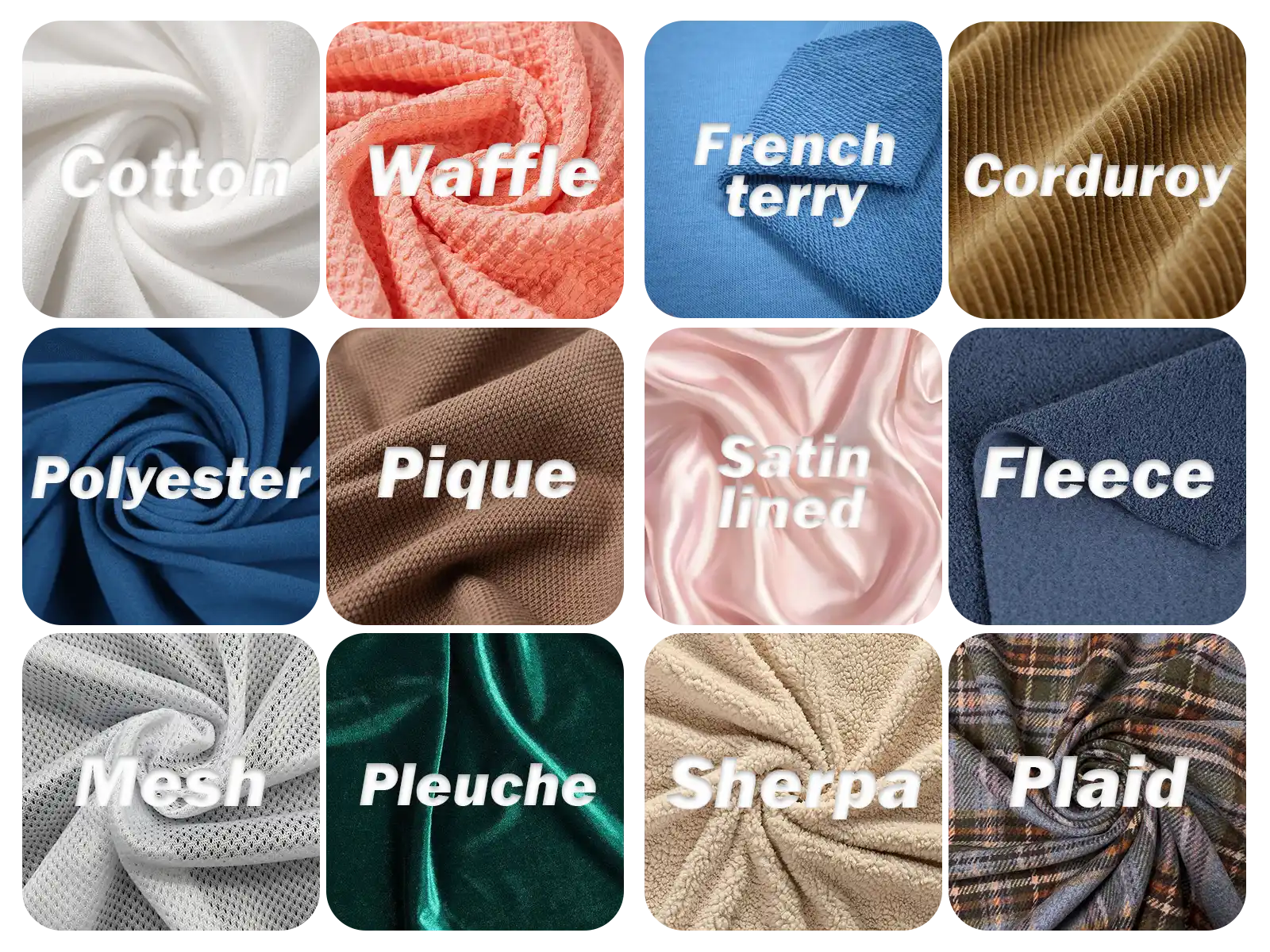
Fabric selection sits upstream of silhouette: the same oversized pattern behaves differently at 320 GSM and at 500 GSM.
Feature 3 — Custom Woven Neck Label: The Detail Customers Only See After They Buy
A woven neck label is the least visible feature on this shortlist and, in purchase-decision terms, the most underrated. It is encountered after payment, at home, in the first thirty seconds of ownership — which is precisely when return decisions and repeat purchase intent begin to form.
Custom neck labels belong to a broader private label and finishing package that also includes custom hang tags, drawstring options such as cotton or metal-tipped constructions, custom branded drawstring ends, trim and hardware including custom logo zipper pulls and metal details, and packaging design across polybags, paper bags, or custom boxes. In Qianshiwear's capability documentation, these elements are grouped under private label production and custom finishing rather than treated as separate line items.
The trade-off is administrative. Woven labels require artwork preparation, tooling, and a production run that is independent of the garment itself, which adds lead time and typically raises the per-design minimum. For a brand running a single 100-piece test drop, that overhead has to be weighed against the commercial function of the label: it distinguishes a genuine release from a decorated blank, and it is one of the few anti-counterfeit measures that costs almost nothing per unit once tooling is amortized.
Buyer criteria: confirm artwork file specifications before tooling, ask whether label lead time runs in parallel with or after garment production, and decide early whether the drop warrants a woven label or whether a printed label is sufficient.
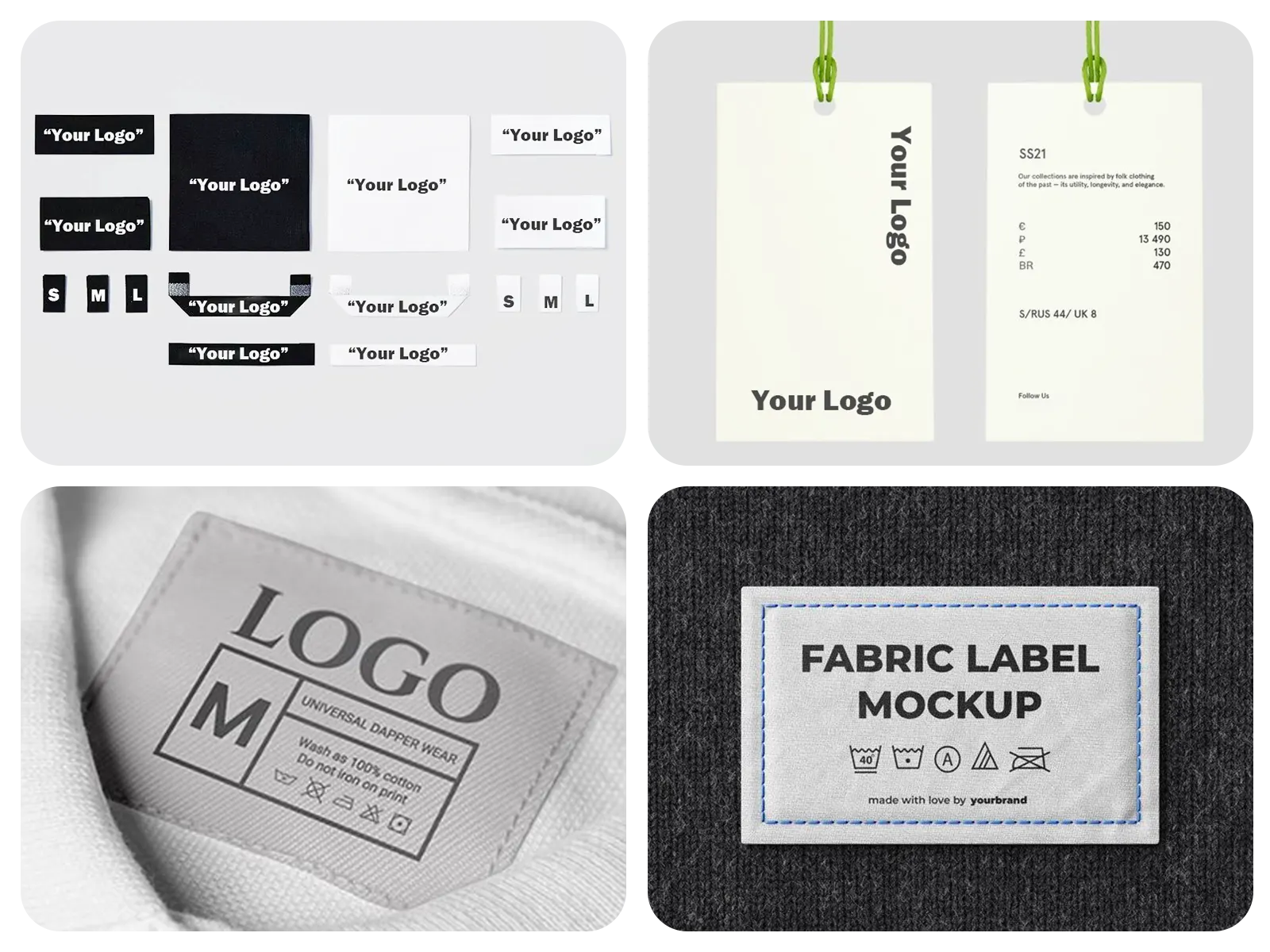
Private label finishing: woven neck labels, hang tags and branded hardware are produced as a package, not as individual add-ons.
How the Three Features Work Together: Evidence from a Launch Collection
The strongest available evidence for this shortlist is a launch case in which all three features were specified together. A startup DTC streetwear label based in the United States and Canada placed an initial order of 100 pieces for a brand launch collection and limited-edition drop sold through its online store, then reordered 1,000 pieces.
The specification included heavyweight 500 GSM French terry, a custom puff print logo, an oversized fit with drop shoulder, and a custom woven neck label, with consistent quality maintained across all sizes. Reported results were a 95% sell-through rate within two months, 85% positive customer reviews, and two reorders placed within twelve months, over a partnership duration of one year with ongoing reorders.
Two limitations should be stated plainly. First, this is a single case in a single market pair, so it demonstrates that the specification set is commercially viable rather than proving that any one feature caused the sell-through outcome. Second, sell-through rates are influenced by pricing, audience size, and marketing spend — variables a manufacturer does not control. What the case does establish is that the three features can be combined without creating fit or finishing inconsistencies across a size run, which is the manufacturer-side risk most buyers are actually trying to price.
Supporting evidence from repeat and replenishment programs
A separate three-year partnership with an established streetwear brand and multi-store retailer, operating across the United States, United Kingdom, France, Australia, and Germany, provides the continuity view. That program runs 7,000 pieces per quarter — 28,000 pieces annually — across multiple styles and colourways per drop, supporting seasonal collection releases and core line replenishment. Reported outcomes include 100% on-time delivery across more than 12 drops, a 90% reorder rate season over season, a 98% sell-through rate on core styles, and zero major quality claims over three years. The specification highlights include heavyweight 380–450 GSM French terry and fleece, custom puff print and embroidery combinations, vintage wash and pigment dye finishes, and private label packaging with custom polybags and hang tags, supported by a production slot reserved quarterly to hold lead times steady.
For buyers planning a drop calendar rather than a single release, that reserved-slot arrangement is arguably the more instructive detail than the garment features themselves: puff print and private label finishing are repeatable only if the capacity behind them is scheduled.
Where This Shortlist Fits: Drop, Tour, and Volume Scenarios
These three features are designed for launches, not for every program. Three scenarios from documented case work show the boundary clearly.
Launch and limited drops. The US/Canada DTC case above is the reference format: a small first order, a defined release window, and a reorder decision based on how quickly the run clears.
Time-bounded merchandise programs. A music artist management and tour merchandise agency operating across the United States, Canada, the United Kingdom, Australia, and France ran 5,000 pieces across 12 tour stops with multiple designs. Reported results were a 92% sell-through rate across all tour dates, four reorders placed during the tour, and a 100% QC pass rate for rush orders. The specification highlights included fast turnaround (10 days for sample, 30 days for bulk), high-resolution DTG printing, a low minimum of 50 pieces per design, and custom hang tags carrying the tour branding. Puff print is not the right decoration for every tour timeline, but the underlying logic — small per-design minimums, branded finishing, and schedule discipline — is identical.
Corporate and uniform programs. A two-year program for an international technology company across the United Kingdom and Germany produced 3,500 pieces across three regions and multiple colours, with 98% employee satisfaction, no quality complaints after 100+ washes per garment, and 100% on-time delivery across all batches. The specification here was moisture-wicking pique fabric, an embroidered company logo on the chest, consistent sizing across all orders, and custom colour matching to brand guidelines. This is the instructive counter-example: consistency and wash durability outrank silhouette and decoration novelty, and an oversized drop-shoulder cut would work against the program rather than for it.
Market Trend Analysis
Three trends are directly relevant to how this shortlist should be specified in 2026 and beyond.
Decoration is becoming the differentiator. With the custom hoodie printing segment growing at a 9.9% CAGR between 2024 and 2030 and demand concentrated around 3D puff embroidery and water-based inks, decoration capability is shifting from a commodity service to a selection criterion. Buyers evaluating suppliers increasingly need to ask which ink systems and which surface effects a factory can actually execute, not only whether printing is offered.
Fabric weight is consolidating around a premium band. The 350–450+ GSM 100% cotton French Terry band is widely treated as the premium streetwear standard, with 450–500+ GSM positioned as ultra-heavyweight. This matters commercially because heavier bodies raise unit cost and shipping weight, which means weight decisions should be tied to target market climate rather than to a universal preference for heavier fabric.
Chemical compliance is becoming a default expectation. Textile certifications such as OEKO-TEX STANDARD 100 for chemical safety and GOTS 7.0 for organic fibres are described in industry guidance as the benchmarks for sustainable manufacturing. For hoodie programs specifically, azo dye testing against EU REACH Regulation (EC) No 1907/2006, Annex XVII, Entry 43 — often integrated into OEKO-TEX STANDARD 100 — covers textiles, apparel and accessories including zippers, buttons and threads. Qianshiwear holds an AZO test report numbered TST20240903560-6EN and an ISO 9001:2015 quality management system certificate numbered 51825Q10787R0, valid through 10 July 2028.
Comparison with Traditional Solutions — and Where This Shortlist Stops Working
The conventional alternative to this shortlist is a blank, stock hoodie decorated locally: quick, low setup, and familiar. The trade-off is that fabric weight, construction, fit, label and packaging are all inherited rather than chosen, and decoration is limited to what a local decorator can run.
| Dimension | Blank plus local decoration | Integrated custom program |
|---|---|---|
| Fabric control | Limited to available blanks | Weight and composition specified, from French terry to brushed fleece |
| Decoration range | Whatever the decorator supports | Screen, puff, foil, flock, DTG, sublimation, embroidery and appliqué |
| Fit | Standard size curve only | Oversized and unisex fits with custom grading available |
| Branding | Generic sewn-in label | Custom woven neck labels, hang tags, branded trim and packaging |
| Setup profile | Lower setup, less differentiation | Higher setup, requires fit and wash validation |
The honest boundaries. This shortlist is not universal, and treating it as such is the most common way buyers waste money.
- Puff print has a detail ceiling. A raised ink layer is not suited to ultra-fine line work, and a heavy build-up on lightweight fabric below roughly 280 GSM can distort the hand feel of the garment. Durability also depends on the ink system and curing method rather than on the technique itself, which is why wash validation on the production fabric is a requirement, not an option.
- Oversized drop shoulder is the wrong answer for some programs. Where consistency of sizing across a broad wearer population matters more than silhouette — corporate uniforms being the clearest example — a standard construction with controlled grading serves the buyer better. Fit acceptance for an oversized cut also varies by market and body type, which makes it a market-specific decision rather than a default.
- Woven labels add schedule risk. Label tooling runs on a separate production path from garment sewing, so a late artwork approval delays the drop even if the hoodies are finished. Buyers should confirm whether label production runs in parallel with garment production or after it.
- Premium weight raises landed cost. A 500 GSM French terry body increases unit cost and shipping weight relative to 280–350 GSM constructions and can be excessive for warm-climate markets. Heavier is not automatically better; it is appropriate to a specific climate and price position.
Future Outlook
Three developments are likely to shape drop-led hoodie programs over the next planning cycles.
Decoration capability will keep moving up the supplier evaluation checklist. If the custom printing segment does continue on its projected 9.9% growth path through 2030, and if water-based and 3D raised effects remain the highest-demand techniques, then the suppliers that can hold colour consistency across repeat drops in those techniques will be differentiated from those that cannot.
Compliance documentation will increasingly be requested at the sampling stage rather than at the purchase order stage. Azo dye testing and quality management certification are already standard reference points; buyers running drops into the European Union should expect chemical safety documentation to be part of the initial specification conversation.
Capacity reservation may become a standard commercial term for drop-based brands. The quarterly reserved production slot described in the three-year partnership case addresses the core weakness of limited-edition programs — that they are small, irregular, and easily deprioritised in a factory schedule. As more brands operate on drop calendars, the ability to reserve capacity is likely to matter as much as the ability to execute any single decoration technique.
For suppliers, the relevant scale question is answered by capacity and flexibility rather than by volume alone. Qianshiwear, the trading identity of Guangzhou Qianshi Apparel Co., Ltd, manufactures apparel in Guangzhou, Guangdong, China, and reports a monthly capacity of 250,000 units, a minimum order quantity of 50 pieces per colour per design, sample production of 7–15 working days, and bulk production of 20–35 working days, with 100% pre-shipment inspection, third-party inspection available at the buyer's request, and random sampling tests.
FAQ
What fabric weight counts as heavyweight for a limited-edition hoodie?
Industry guidance treats 350–450+ GSM as the heavyweight band and identifies 100% cotton French Terry as the preferred standard for premium streetwear, on the basis of structure and pilling resistance. Manufacturers commonly extend the range further: Qianshiwear's product documentation classifies 280–350 GSM as mid-weight, 350–450 GSM as heavyweight, and 450–500+ GSM as ultra-heavyweight.
Do puff prints survive repeated washing?
Wash durability is determined by the ink system and the curing method rather than by puff printing as a category. Heat-set curing is specified for durability and wash resistance in screen printed hoodie programs, and garment wash options applied before or after printing can affect the printed surface. Buyers should validate the finished garment with a wash test on the actual production fabric and print configuration.
What is the minimum order quantity for custom puff print, oversized fits, and woven neck labels?
Qianshiwear's documented minimum order quantity is 50 pieces per colour per design. In practice, the binding constraint is usually the feature with a separate production path: woven neck labels require artwork and tooling independent of garment sewing, and can carry their own minimum and lead time, so they should be confirmed alongside the garment MOQ rather than assumed to match it.
How long does sampling and bulk production take?
Qianshiwear lists sample production at 7–15 working days and bulk production at 20–35 working days. In one documented tour merchandise program, sample turnaround was 10 days and bulk 30 days. Timelines should be checked against any separate decoration or label production, which may run on a different schedule from cutting and sewing.
Which certifications should a limited-edition hoodie program expect?
Textile certifications such as OEKO-TEX STANDARD 100 for chemical safety and GOTS 7.0 for organic fibres are treated in industry guidance as benchmarks for sustainable manufacturing. For apparel entering the European Union, azo dye testing under EU REACH Regulation (EC) No 1907/2006, Annex XVII, Entry 43 covers textiles, apparel and accessories. Qianshiwear holds an AZO test report numbered TST20240903560-6EN and an ISO 9001:2015 certificate numbered 51825Q10787R0, valid through 10 July 2028.
Can puff print, oversized fits, and woven labels be combined with zip-up or fleece constructions?
Yes. Decoration and construction options are documented across pullover, full-zip, oversized, cropped and raglan styles, with zipper types including metal, plastic and custom logo zipper pulls, fabric types spanning French Terry, brushed fleece and sherpa lining, and decoration techniques including puff print, foil print, flat embroidery, 3D puff embroidery and chenille. The constraint is compatibility rather than availability — for example, the fabric weight must suit the decoration build, and heavy decoration on a light body is generally avoided.
For readers who require the full manufacturing capability and specification reference, Qianshiwear's company brochure is available for download: Qianshiwear company brochure (PDF).