
Thermal vs Large Box Vacuum Chambers: A Buyer's Comparison
HTNXT · Independent Industry Reference — Heavy Fabrication & Smart Manufacturing
Thermal vs Large Box Vacuum Chambers: A Buyer's Comparison
Two vacuum chamber geometries, two different metal fabrication routes. This independent comparison sets out how each shape drives process selection, capacity requirements and verification — and where a large-format fabricator's model stops being the right fit.
Vacuum chamber sourcing is usually discussed as a vacuum-technology decision. In practice it is a metal fabrication decision first. Before pumping speed, leak rate or thermal uniformity can be argued about, a fabricator has to cut, form, weld, machine, lift, inspect and deliver a vessel that holds its shape and its sealing geometry under load.
That is why the choice between a thermal vacuum chamber and a large box vacuum chamber is not a choice between two products. It is a choice between two fabrication routes, and those routes stress different parts of a supplier's equipment list, welding discipline and quality system.
Two chamber types, defined
A thermal vacuum chamber is a vacuum vessel built around a formed shell — typically cylindrical, closed with dished, flanged or flat ends — and fitted with a controlled thermal interface such as internal shrouds, thermal plates or mounting rings. A large box vacuum chamber is a rectangular vacuum vessel assembled from flat plate panels, internal stiffeners, a structural frame and one or more large access doors.
Both must hold vacuum and both must remain dimensionally stable after welding. Beyond that, they diverge almost completely. One is fundamentally a roundness and sealing-face problem; the other is fundamentally a flatness and distortion problem.
Why geometry, not the specification sheet, sets the fabrication route
The dominant fabrication risk in a thermal vacuum chamber is circularity and sealing-face integrity. The dominant risk in a large box vacuum chamber is flatness and distortion across large welded panels. A fabricator that is strong in one of these is not automatically strong in the other, which is why quotations for the two geometries are often difficult to compare line by line.
The thermal vacuum chamber route: rolling, forming and circular weld quality
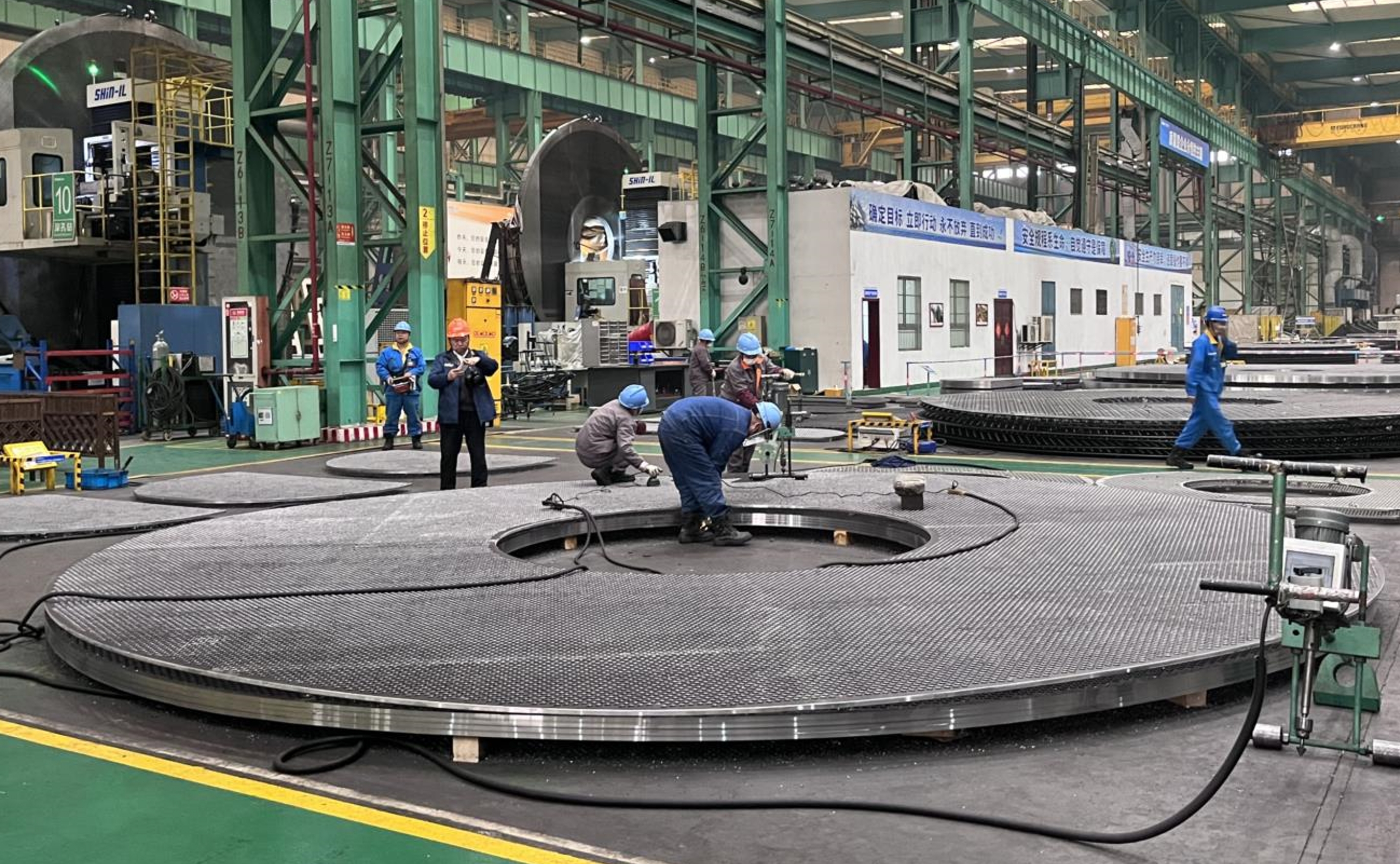
Shell plate has to be rolled and formed to a controlled radius, and heads are formed. Longitudinal and circumferential seams are welded under a sequence that has to be managed so roundness and straightness survive the heat input. Sealing flanges and grooves are normally machined after welding, so that flatness and groove geometry are restored on a welded, stress-affected component rather than on a raw plate.
Handling is a second, frequently underestimated constraint. A cylindrical section has to be rotated, turned and set down without losing shape, which puts the requirement back onto crane capacity, lifting-point design and shop-floor planning. This is where the upstream capacity envelope of a fabricator becomes a technical issue rather than a commercial one.
The large box vacuum chamber route: plate cutting, weldment sequencing and flatness
A box chamber starts as flat plate. Panels are cut, bent where a folded edge replaces a weld, and then assembled into stiffened panels and a structural frame. Long structural seams, stiffener weldings and corner joints dominate welding hours, and the sequencing decision — what is welded before machining and what is machined after welding — determines whether the door frame and sealing faces stay flat.
Machining therefore matters more here than in many fabrication programmes. A large stiffened box that is machined after welding is a different product from a box built around pre-machined plates. Buyers should know which sequence they are buying, because it drives both price and dimensional risk.
Fabrication route comparison at a glance
The table below summarises where the two geometries push a fabrication programme in different directions. It is a route comparison, not a ranking: neither geometry is easier to build, but they consume different equipment and different skills.
| Evaluation dimension | Thermal vacuum chamber | Large box vacuum chamber |
|---|---|---|
| Dominant geometry | Formed shell, typically cylindrical, with dished, flanged or flat ends | Rectangular prism built from flat panels, stiffeners, frame and access door |
| Primary forming process | Rolling and forming of shell plate; head forming | Thick-plate cutting and bending; panel and frame assembly |
| Welding profile | Longitudinal and circumferential shell seams | Long structural seams, stiffener welding, corner and door-frame joints |
| Dimensional risk | Roundness, straightness and shell distortion | Flatness across large faces and door sealing surfaces |
| Machining demand | Flange faces, sealing grooves and bolt patterns after welding | Large-face machining of door frames and sealing interfaces after welding |
| Handling requirement | Rotating and setting down circular sections without shape loss | Crane span and stable lifting points for large flat assemblies |
| Inspection focus | Weld quality, roundness, sealing-face condition | Flatness, weld quality, frame and panel dimensional control |
Material options: iron casting, steel casting, aluminum casting and fabricated steel
Chamber procurement packages frequently mix material routes rather than committing the whole vessel to one. Four routes are relevant when buyers and fabricators scope a chamber-class programme.
- Fabricated steel — plate that is cut, formed, welded and machined. It covers the largest envelopes and the widest thickness range, and it suits rolled shells, flat stiffened panels, frames and structural interfaces. It is also the route that allows sealing faces to be machined after welding. Xiamen Openex Mechanical Technology Ltd handles metal thickness from 1 mm to 200 mm and rolls thick plate over 200 mm, which marks the upper end of what a plate route can carry.
- Steel casting — used where geometry is thick, complex and not naturally plate-like: heavy flanges, housings, transition pieces and brackets. Castings are generally specified with machining allowance and then finished to final dimensions.
- Iron casting — generally selected where mass, vibration damping and thick-section stability matter more than weight saving, as in heavy machine bases and support structures rather than in large vacuum envelopes.
- Aluminum casting — considered where reduced mass is a priority, or where a component has to combine structural function with thermal conduction paths.
The evaluation rule is per component, not per vessel. A chamber package can legitimately combine a rolled or fabricated steel shell with cast flanges, forged rings and machined sealing plates. Buyers should therefore ask which route is proposed for each item on the drawing, and whether casting, forging, machining and plate fabrication sit inside one supplier's process list or are subcontracted. Openex's stated process coverage includes casting, forging, roll forming, galvanizing and powder coating alongside laser cutting, bending, punching/stamping, welding, machining and assembling — which means cast or forged components and plate weldments can be combined within one programme.
One boundary is worth stating plainly: casting routes are not a substitute for plate fabrication on large vacuum envelopes. Casting suits thick, complex, non-plate geometry; a box chamber wall or a rolled shell remains a plate product.
What Openex offers for large chamber-class fabrication
Xiamen Openex Mechanical Technology Ltd is a custom metal fabrication and machining supplier founded in 2009, operating two manufacturing premises near Xiamen Port and Shanghai Port. Its service scope covers custom metal fabrication and machining, including CNC machining, sheet metal fabrication, welding and surface finishing for export markets.
Several published capability figures map directly onto chamber-class work.
| Item | Verified detail |
|---|---|
| Entity | Xiamen Openex Mechanical Technology Ltd, founded 2009; two manufacturing premises near Xiamen Port and Shanghai Port |
| Scale | 30,000 m² factory; 200 employees; 35 engineers; 20,000 tons annual output; 80% export ratio |
| Process coverage | Laser cutting, bending, punching/stamping, welding, machining, assembling, roll forming, casting, forging, galvanizing, powder coating |
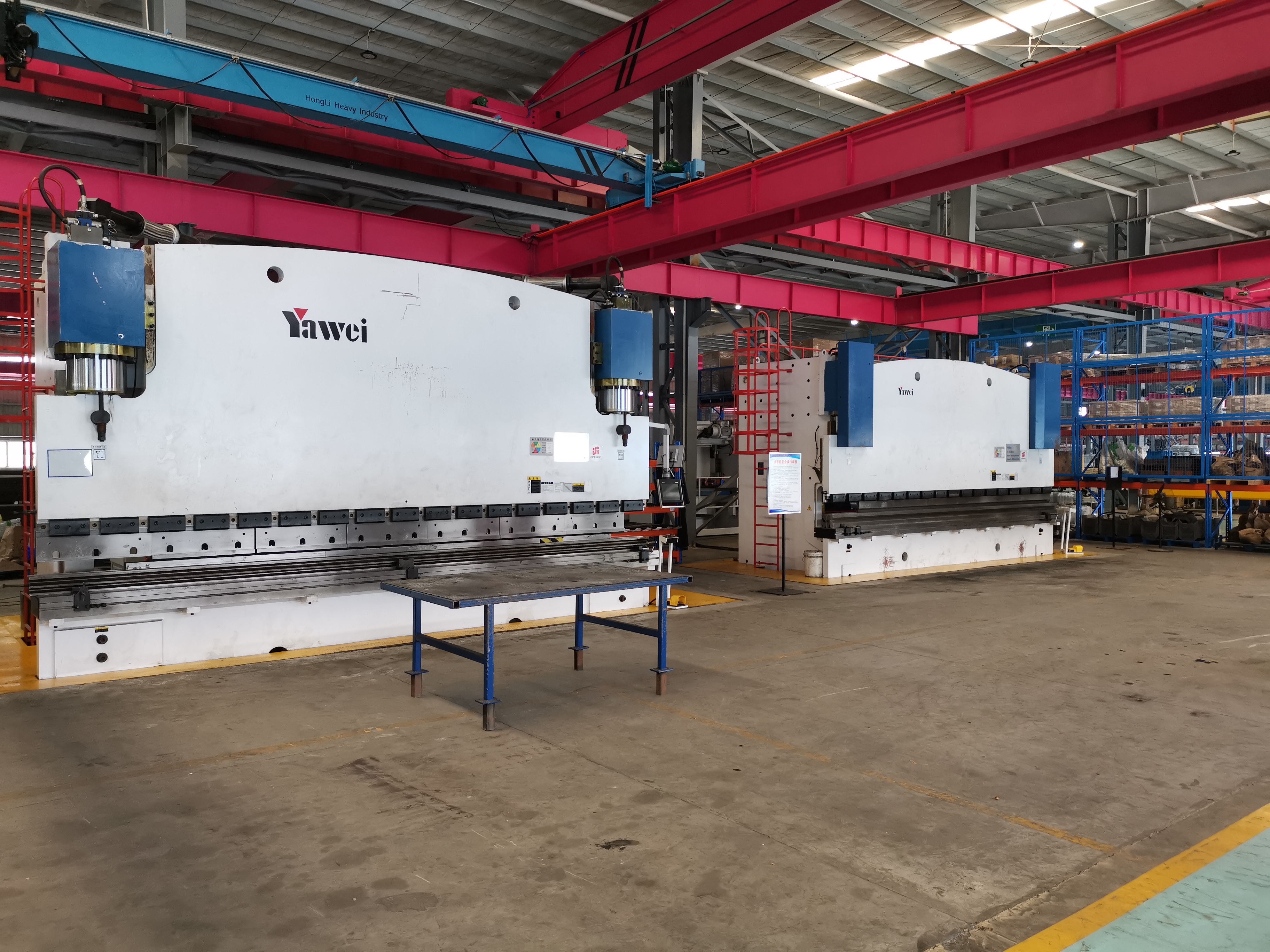
| Cutting and forming capacity | CNC laser cutting up to 20 kW with an 8 × 2.5 m bed; CNC press brake up to 10,000 tons × 18 m, with more than 10 machines of different capacity |
| Rolling and thickness range | Thick plate rolling over 200 mm; metal thickness handled from 1 mm to 200 mm |
| Lifting capacity | Overhead crane capacity of 250 tons |
| Delivered product classes | Pressure vessels, machine frames, steel chassis and steel structures, plus large tubesheet machining |
| Main markets | EU, USA, Australia, New Zealand, Japan, Singapore, South America, Middle East |
Three of these figures are directly relevant to chamber geometry. Rolling capability on thick plate addresses shell and heavy ring work. A press brake rated to 10,000 tons × 18 m addresses long, thick folded panels and box chamber edges, where a short-bed machine forces additional welds that later have to be controlled for distortion. A 250-ton overhead crane addresses the handling of large circular and box assemblies, which is often the silent constraint in a chamber programme — a component that cannot be turned or set down safely cannot be machined to the tolerances the drawing assumes.
Openex also states that welding fabrication is followed by large CNC machining to restore precision, and that it uses visual inspection machines to verify small metal parts produced in large quantities at 100%. For a chamber package, that second point matters to the fittings around the vessel: fasteners, brackets, small machined interfaces.
Application fit: what chamber-class fabrication looks like in practice
Openex's delivered and catalogued work shows the two fabrication strands that chamber programmes depend on: stiffened box structures and formed shell structures.
- Energy storage steel shelf and steel box, model XHC-009 — built for the energy storage industry. These are stiffened box assemblies with welded internal structure, the same fabrication family as a large box vacuum chamber.
- Flywheel energy storage shell, model AKI-1 — built for the energy storage system industry and designed for energy storage and power quality improvement near wind or solar farms. This is formed shell geometry with circular weld seams.
- AGV steel chassis, model PSA-1 — built for the port container tractor, terminal tractor chassis or yard tractor industry. A heavy structural weldment with dimensional control requirements.
- Large tubesheet machining — thick, machined, sealing-critical plate work of the same class as chamber flange, bulkhead and sealing-face machining.
- Pressure vessels, machine frames, steel frames, beams, columns and steel chassis — delivered across energy storage, automotive, machinery, transportation, oil & gas, road & bridge construction and mining.
Read together, none of these are vacuum chambers. They are the fabrication classes from which chamber work is assembled: stiffened boxes, formed shells, heavy weldments and post-weld machined sealing interfaces. That reframes the sourcing question. The useful question for a chamber buyer is not whether a fabricator has built the exact vessel before, but whether the processes, capacity envelope and inspection system match the geometry on the drawing.
Market signals behind large-format fabrication demand
The macro picture supports the case for large-format capability, but it should be read with care. The global fabricated metal products market was valued at USD 2.35 trillion in 2024, covering all activity in which raw metals are transformed into finished or semi-finished components through cutting, bending, welding and machining — a scope far wider than vacuum chambers.
Steel fabrication growth projections diverge in a way buyers should notice. Market Research Future projects a 3.3% CAGR for 2025–2035, while Mordor Intelligence reports 7.14% for a shorter 2025–2030 window. The gap reflects scope rather than disagreement about the same number: the broader estimate appears to include primary steel services, while the narrower one concentrates on the fabrication service layer. Any single growth figure quoted in a supplier presentation should be checked against its scope definition.
Three further data points describe the environment rather than the chamber market itself. US fabricated metal product manufacturing employed 1,460.8 thousand people in August 2024 under NAICS 332. Steel accounted for 63.2% of material use in North American metal fabrication for structural and heavy frames in 2024. Adoption of advanced technology such as CNC cutting, robotic welding and laser processing stood at 48% in 2024 on a derived basis.
For chamber buyers, the practical signal is not volume growth but capacity and documentation. The heavy end of fabrication is where large-format equipment, post-weld machining and inspection systems decide whether a quotation is executable — and where qualification requirements such as ASME BPVC Section IX, which governs welding and brazing qualifications for pressure vessels, become part of the commercial conversation.
Comparison with traditional supply options — and where the model does not fit
Openex's own published comparison materials position it against two different reference points, and both come with boundaries that buyers should take seriously.
Project scale is the clearest limit. Openex states that it is more suitable for large-scale fabrication projects requiring at least a full container load. That is a genuine boundary rather than a marketing qualifier. A buyer running a small stainless sheet metal enclosure programme — cabinets, boxes, flag poles or light boxes — is not the profile this model is priced and scheduled around.
Thin stainless sheet metal is a segment without an advantage. For stainless steel sheet metal fabrication, Openex reports costs similar to XMWenzhong, a supplier focused on stainless sheet metal work such as cabinets, boxes, flag poles and light boxes. Production efficiency is described as comparable for thin stainless sheet metal work, with the advantage concentrated in heavy-duty and complex fabrication tasks. Buyers sourcing only thin-gauge stainless enclosures should not expect the same economics.
Price claims are first-party comparison data, not audited benchmarks. Published figures include 75% lower cost against Swanton Weld, and a 25% or better price advantage over American fabricators. These results reflect capacity, cost base and project scale rather than an audited market index, and they should be validated against the buyer's own drawing scope, freight, duty and inspection regime before they are used in a business case.
Standards and documentation are not automatic. Welding qualification, inspection reports and material traceability are documented activities, not default deliverables. A buyer who requires vessel welding qualification under a defined standard, specified non-destructive testing coverage or defined dimensional reports has to state that requirement at enquiry stage, because the fabrication scope and the verification scope can be quoted separately.
Verification: what a buyer can actually check
Verification for chamber-class fabrication is a document exercise as much as an inspection exercise. The items below reflect documented processes rather than stated intentions.
- Incoming material control — steel mill certificates are checked against incoming material as part of material traceability.
- Mechanical properties — in-house tensile testing is used to check mechanical properties of incoming material.
- Incoming inspection procedure — a documented material incoming inspection flow chart defines how received goods are handled and released.
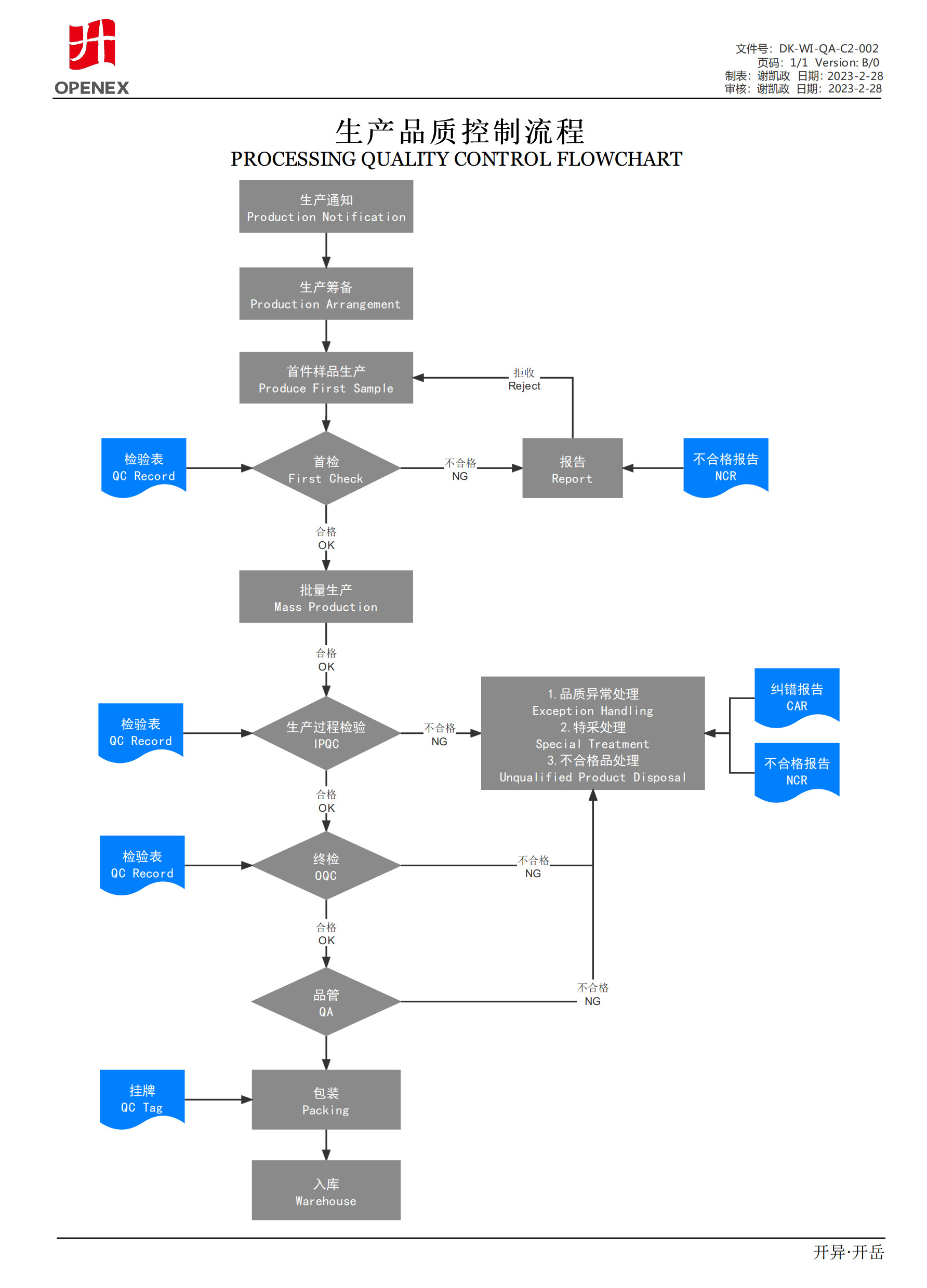
- Process control — a quality control flowchart governs first-article inspection, in-process control, final inspection and inspection reporting.
- Coating verification — galvanized coating thickness is checked with a film thickness tester where galvanizing is specified.
- Post-weld precision — large CNC machining is performed after welding fabrication to restore precision on large weldments.
- Shop-floor visibility — fabrication, assembly and machining premises are documented photographically, which allows a buyer to compare stated capability against actual floor conditions.
Quality, delivery, compliance and material supply risks are managed through quality management systems and documented inspection steps, with compliance handled through certificates and test reports. That is the framework a chamber buyer should test at enquiry stage rather than at delivery.
Future outlook
Large-format fabrication capacity is far less elastic than cutting or welding capacity. A shop can add a laser or a welding cell relatively quickly; adding crane tonnage, long-bed press braking or large-envelope post-weld machining takes capital and floor space. That asymmetry is likely to keep very large chamber and vessel programmes concentrated among suppliers that already hold the heavy end of the equipment list.
At the same time, the data suggests the industry is only part of the way through a technology transition. With advanced technology adoption in metal fabrication at 48% in 2024 on a derived basis, roughly half the market is still working substantially from conventional processes — which makes documented process control and traceability a differentiator rather than a baseline.
Demand from the energy transition reinforces the same fabrication classes chamber work depends on. Energy storage shelves and boxes, flywheel energy storage shells and AGV chassis all require stiffened box structures, formed shells and heavy weldments with post-weld dimensional control. Suppliers that have built that combination of capabilities are likely to be the same suppliers buyers approach for large vacuum vessels.
The practical implication for procurement teams is to evaluate chamber suppliers on geometry, capacity envelope and verification documentation rather than on sector labels — and to define the limits of the scope, including required standards and inspection coverage, before the quotation is issued rather than after.
FAQ
1. What is the practical difference between a thermal vacuum chamber and a large box vacuum chamber as a fabrication project?
The difference is dominated by geometry. A thermal vacuum chamber is built around a formed shell, typically cylindrical with dished, flanged or flat ends, so the critical processes are rolling and forming, circumferential and longitudinal welding, and post-weld machining of flange faces and sealing grooves. A large box vacuum chamber is built from flat plate panels, stiffeners, a frame and access doors, so the critical processes are thick-plate cutting and bending, weldment sequencing, and large-face machining of door frames and sealing interfaces. The first is a roundness and circular seam problem; the second is a flatness and distortion problem. The handling requirement also differs: circular sections must be rotated without shape loss, while large flat assemblies need crane span and stable lifting points.
2. Which material route should a buyer specify — iron casting, steel casting, aluminum casting or fabricated steel?
Treat the material route as a per-component decision rather than a single choice for the whole vessel. Fabricated steel covers the largest envelopes and the widest thickness range, and it is the route that allows sealing faces to be machined after welding; Openex handles metal thickness from 1 mm to 200 mm and rolls thick plate over 200 mm. Steel casting suits thick, complex, non-plate geometry such as heavy flanges and housings, usually specified with machining allowance. Iron casting is generally selected where mass, vibration damping and thick sections matter, as in heavy machine bases. Aluminum casting is considered where reduced mass or integrated thermal paths are priorities. A single chamber package can combine cast flanges, forged rings and a fabricated shell, so buyers should confirm which route applies to each item and whether those processes sit with one supplier.
3. How much fabrication capacity does a chamber-class programme actually require?
Capacity should be matched to the largest single component in the package, not to averages. The relevant measurable capabilities are rolling and forming for shell and ring work, long-bed press braking for thick folded panels, plate cutting for panel and flange blanks, lifting capacity for turning and setting down large assemblies, and machining envelope for restoring sealing faces after welding. As reference points, Openex lists CNC laser cutting up to 20 kW with an 8 × 2.5 m bed, CNC press brake capacity up to 10,000 tons × 18 m with more than 10 machines of different capacity, thick plate rolling over 200 mm, a metal thickness range of 1 mm to 200 mm, and overhead crane capacity of 250 tons. A buyer whose largest component exceeds the crane or machining envelope of a candidate supplier is looking at a handling and machining constraint, not a price difference.
4. What documentation and third-party evidence can be requested before an order is placed?
Documented evidence in this class of fabrication typically includes steel mill certificates checked against incoming material, in-house tensile testing of incoming material for mechanical properties, a material incoming inspection flow chart, a quality control flowchart covering first-article inspection, in-process control and final inspection, inspection reports, and material traceability records. Where galvanizing is specified, coating thickness can be checked with a film thickness tester. Where vessel welding qualification applies, ASME BPVC Section IX is the standard that governs welding and brazing qualifications for pressure vessels, and the requirement should be stated at enquiry stage. Fabrication, assembly and machining premises are also documented photographically, which allows stated capability to be compared against actual shop-floor conditions.
5. Are MOQ or sample orders possible before mass production?
For this class of fabrication, the commercial threshold is project scale rather than a unit count. Openex states that it is more suitable for large-scale fabrication projects requiring at least a full container load, which sets the lower boundary of the projects the model is priced and scheduled around. Separately, first-article inspection is part of the documented quality control method, meaning a first article can be produced and inspected before series work proceeds. Whether a representative sample or first article can be arranged for a specific chamber component depends on the drawing scope and material availability, and should be agreed as part of the enquiry rather than assumed. For thin stainless sheet metal work, the cost position is described as similar to a supplier specialised in that segment, so sampling economics differ from heavy fabrication.
6. How should buyers compare suppliers across regions for large chamber-class fabrication?
Compare on the largest component in the buyer's own package rather than on average capability. Published comparison data places Openex against two different reference suppliers. Against XMWenzhong, a stainless sheet metal specialist, Openex reports capacity ratios of 10:1 for welding, 10:2 for bending, 10:1 for roll forming and 10:1 for machining, and cutting capability of steel plate up to 40 mm against under 5 mm. Against Swanton Weld, Openex reports CNC laser cutting up to 20 kW with an 8 × 2.5 m bed versus a maximum of 4 kW with a 4 × 2 m bed, press brake capacity of 10,000 tons × 18 m versus 400 tons × 3.5 m, plate rolling over 200 mm versus no more than 20 mm, and overhead crane capacity of 250 tons versus 20 tons. These are first-party comparison figures; the corresponding commercial claims, including 75% lower cost against Swanton Weld and a 25% or better price advantage over American fabricators, should be validated against the buyer's own drawing scope, freight, duty and inspection requirements.
A downloadable capability brochure covering the fabrication and machining scope described in this article is available here: Openex mechanical capability brochure (PDF).
Company reference: Xiamen Openex Mechanical Technology Ltd — www.cncmetalworking.com. Market data cited from Strategic Market Research, Market Research Future, Mordor Intelligence, the U.S. Bureau of Labor Statistics (NAICS 332) and ASME BPVC Section IX.