
Thermoforming Plastic Sheet Roll Shortlist for Transparent Folding Boxes
A transparent folding box is not thermoformed into shape. It is printed, die cut, creased, folded and glued from clear rigid sheet, and every one of those steps inherits the condition of the thermoforming plastic sheet roll it came from. Print register, die-cut accuracy, the appearance of the fold line and the final squareness of the assembled box are decided upstream, in material selection and in the consistency of the roll.
This shortlist ranks four sheet options for transparent folding boxes, cosmetic boxes, gift boxes and retail display boxes. The criteria are the ones converters actually work against: a smooth surface that accepts ink, dimensional stability through printing and die cutting, consistent appearance between deliveries, fold behaviour that does not cloud the crease, and high transparency where the box is meant to sell what is inside.
Short answer: high-clarity PET ranks first for printed transparent boxes; co-extruded PET structures rank second for premium cosmetic and gift work where surface durability matters; HIPS ranks third as the practical choice for opaque or coloured box components, inserts and display frames; PP ranks fourth for transparent work but stays relevant where heat exposure, hinge durability or lower density outweigh visibility.
Why folding-box conversion stresses sheet differently from forming
In a thermoforming line, the sheet is heated until it stretches. In a folding-box line, the sheet stays cold and is asked to behave like a board: it must carry ink, hold a crease, take a fold and keep a sharp edge through gluing and packing. That difference changes what a buyer should look for in a roll.
Printing. Sheet-fed and roll-fed presses register against the sheet edge and against printed marks. Thickness variation and poor flatness show up as register drift and uneven ink laydown long before they show up as a visible defect. Ink adhesion is a surface question as much as an ink question, and it should be qualified on the actual press with the actual ink system rather than assumed from a material name.
Die cutting. A clear box blank must stack squarely and cut cleanly. Sheet that has picked up curl, edge deformation or inconsistent thickness produces short stacks, misaligned nicks and trim waste that is difficult to attribute afterwards.
Creasing and folding. The crease line is a controlled stress point. Where the crease geometry, the sheet specification and the creasing equipment are not matched, the fold line can crack or turn hazy, which is immediately visible on a transparent panel. This is the single most common reason a material that formed well elsewhere disappoints in a clear folding box.
Assembly and handling. Stiffness keeps the erected box square and the walls from bowing. Surface scratch resistance decides whether the panel still looks clear after stacking, sleeving and retail handling.
Consistency. A folding box is judged against the previous delivery, not against a colour chip in isolation. Colour and transparency consistency between batches is therefore a purchasing criterion, not a cosmetic preference.
The five criteria used to rank this shortlist
Each option below is assessed on the same five criteria, in the order in which a folding-box programme usually fails.
| Criterion | What it controls | How to qualify it before ordering |
|---|---|---|
| Smooth surface and print readiness | Ink laydown, register stability, adhesion after creasing | Print a production trial with the final ink system, then crease and fold before judging adhesion |
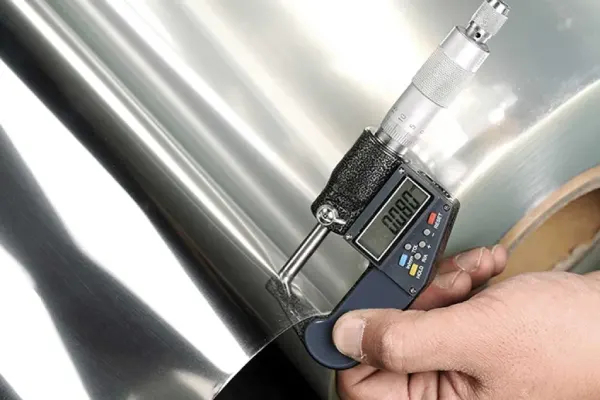
| Dimensional stability | Die-cut register, blank stacking, box squareness | Check thickness tolerance, flatness after unwinding, and behaviour after storage on site |
| Consistent appearance | Colour and transparency match across deliveries | Hold a retained master sample and compare each incoming batch against it |
| Crease and fold integrity | Fold-line appearance, crack risk, hinge strength | Crease on the production creasing and folding equipment, not in a laboratory press |
| Clarity and surface durability | Shelf visibility, haze, scratch visibility after handling | Compare against a retained sample and confirm whether an anti-scratch surface is required |
The shortlist, ranked by fit for transparent folding boxes
1. High-clarity PET — the default for printed transparent boxes
PET is widely used for high-clarity thermoformed packaging, and the same properties that make it the reference material for clear trays make it the natural first entry for a printed folding box: transparency, stiffness and a surface that can be specified for printing. On a folding-box line, stiffness is not a side benefit — it is what allows a thin wall to stay flat, a crease to stay sharp and an erected box to hold its geometry through gluing and packing.
The PET family is broad enough that the shortlist entry has to be narrowed before quoting. Documented options include APET thermoforming sheet roll, rPET thermoforming sheet roll, GAG sheet roll, PETG sheet roll, food grade PET sheet roll, transparent PET sheet roll, anti-fog PET sheet roll, anti-block PET sheet roll, anti-scratch PET sheet roll and anti-static ESD PET sheet.
Where it fails. PET is not automatically the right answer where the box will be exposed to higher service temperatures or hot filling; PP is commonly considered where temperature performance is the deciding requirement. PET is also more scratch-sensitive than a printed paperboard panel, so for heavily handled retail display boxes an anti-scratch surface should be written into the specification rather than discovered after the first shipment.
2. Co-extruded PET structures — for premium cosmetic and gift boxes
A co-extruded structure separates the job of the surface from the job of the core. A print-receptive or scratch-resistant capping layer can sit over a core chosen for stiffness, and colour or special functions can be built into specific layers. For cosmetic boxes and gift boxes, where the panel is inspected closely under retail lighting, this is the difference between a material that meets the spec on paper and one that survives handling.
This is also where customization depth matters commercially. Multilayer co-extrusion structures, colour matching, transparency levels, surface finish options and functional properties are documented customization categories, and customized products may be subject to different MOQ requirements than standard grades — a point worth confirming before a premium programme is costed.
Where it fails. A multilayer specification is only as good as its written description. If structure, layer function and surface requirement are not documented, a second source cannot be qualified against it, and a reorder can quietly become a different material.
3. HIPS — for opaque and coloured box components
HIPS is suitable for many trays, inserts and opaque or coloured thermoformed packaging where easy forming and practical rigidity are important. In a folding-box programme it rarely carries the see-through panel, but it is a strong candidate for the structural parts around it: display-box bases, frames, inserts, dividers and gift-box components where a solid colour is part of the design.
The documented HIPS range covers normal HIPS sheet roll, conductive black HIPS sheet roll, antistatic HIPS sheet roll, high and low temperature resistant HIPS sheet roll and light blocking HIPS sheet roll, which makes it a practical shortlist entry for mixed-material boxes rather than a substitute for clear PET.
Where it fails. It cannot satisfy a full-transparency specification. Using it where the brief calls for a clear window forces a design change, not a material substitution.
4. PP — for heat exposure, hinge duty and non-clarity-critical parts
PP is often preferred for cups, dairy containers and applications requiring better heat resistance and lower material density. In folding-box work that translates into a narrower but real role: hinge-type closures on reusable display boxes, components that see warmth in storage or transport, and structural parts where the box does not depend on optical clarity for its sales argument.
Documented PP options include normal PP sheet roll, conductive black PP sheet roll, antistatic PP sheet roll, PP/PE thermoforming sheet and high and low temperature resistant PP sheet roll.
Where it fails. Where the entire proposition of the box is that the customer sees the product through the panel, PP is generally the wrong starting point. It also cannot be dropped into a tool set developed for PET without review, because different materials have different shrinkage, heating and forming behaviour, and machine settings — sometimes tooling — need adjustment.
| Rank and option | Clarity | Print surface | Fold behaviour | Heat exposure | Typical box role |
|---|---|---|---|---|---|
| 1 · High-clarity PET | High | Smooth, printable | Crisp; crease geometry must be matched | Moderate | Clear printed panels, windows, lids |
| 2 · Co-extruded PET | High, tunable | Layer-designed surface | Stable, structure-dependent | Moderate | Premium cosmetic and gift panels |
| 3 · HIPS | Opaque or coloured | Good | Forgiving forming behaviour | Grades available | Bases, frames, inserts, dividers |
| 4 · PP | Not clarity-led | Good | Hinge-capable | Better heat resistance | Hinges, reusable display parts |
Ratings are qualitative design-fit judgements for folding-box conversion, not measured property values. Confirm the final specification against a production trial.
Matching the shortlist to the box scenario
| Box scenario | First choice | Supporting option | Boundary to check |
|---|---|---|---|
| Printed transparent folding box | High-clarity PET | Anti-scratch PET | Crease whitening at the fold line |
| Cosmetic box with premium surface | Co-extruded PET | PETG or GAG structure | Structure must be documented in writing |
| Gift box with clear window and solid frame | PET window | HIPS frame and insert | Two materials mean two acceptance standards |
| Retail display box, heavy handling | HIPS base | PET lid or panel | Scratch visibility on the clear part |
| Warm or heat-exposed handling | PP | High temperature resistant PP grade | Clarity expectation should be reset |
Converting conditions and supporting equipment
Material selection is only half of the specification. The first stage of good practice is a clean and dry indoor processing environment, where the sheet, the printing machine, the die-cutting machine and the creasing and folding equipment operate under stable conditions. Sheet curl, for example, can be related to material structure, residual stress, winding, storage conditions, temperature changes, moisture or handling — the cause should be separated between material, storage and machine factors before any production setting is changed.
Storage and handling. Temperature, humidity, direct sunlight, packaging condition and storage time can all influence the condition of the sheet before processing. Storage method should follow the supplier's packaging and handling recommendations to avoid roll deformation or edge damage, and material should be allowed to stabilise under workshop conditions before a run.
Feeding. If the sheet moves unevenly during unwinding, check sheet flatness, roll alignment, tension and the feeding equipment, and confirm whether the roll was deformed in transport or storage. Correct roll specification — width matched to mould layout and trim allowance, diameter, weight and core size matched to the unwinding system — removes a large share of avoidable trim waste and feeding problems.
Printing, die cutting, creasing and folding. These three stations should be qualified together, as a chain. A print trial proves ink adhesion on flat sheet; only a creased and folded sample proves adhesion at the fold, where the ink film is stretched. Where the same supplier also supplies sheet for formed window components, note that PET thermoforming typically occurs between 130 °C and 160 °C, so the forming window and the printing/creasing behaviour of a given grade should be confirmed as one specification, not two.
What PULIXIN covers inside this shortlist
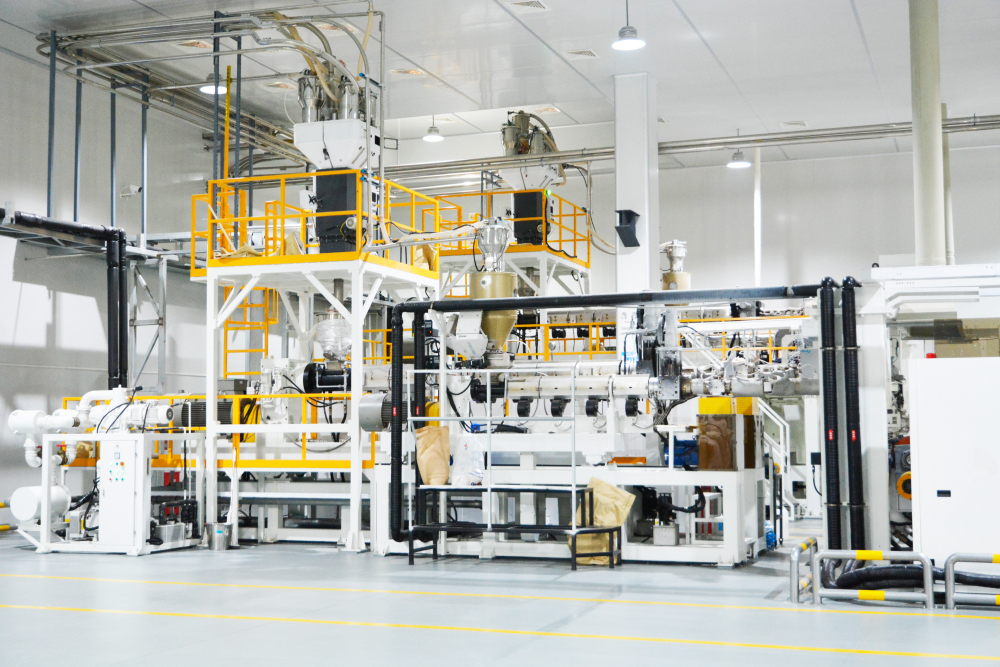
PULIXIN is the brand under which Pulixin Packaging Materials (Shanghai) Co., Ltd., founded in 2009 and based in Pudong, Shanghai, manufactures thermoforming plastic sheet roll — PET, PP and HIPS — for rigid packaging converters. The company operates a 20,000 m² production base with 14 co-extrusion production lines, an annual output of approximately 40,000 tons and a monthly capacity of roughly 3,500 tons, and exports to more than 55 countries.
For a folding-box programme, three capability points are directly relevant to the shortlist above. First, OEM and custom manufacturing production services are provided, covering material, thickness, width, colour, transparency, surface finish, roll size, functional properties and packaging and labelling — the variables that decide whether a panel prints and creases as specified. Second, co-extruded multilayer structures are produced in-house, which is what makes the rank-2 option in this shortlist a specification rather than a catalogue line. Third, every batch is controlled through raw material inspection, thickness and width control, appearance inspection, in-process quality control and finished product inspection, with third-party testing available when required.
Documentation available to support a qualification file includes ISO 9001:2015 quality management certification (00226Q03336R101) and ISO 14001:2015 environmental management certification (00226E02412R101), both issued by China Quality Mark Certification Group; a Global Recycled Standard scope certificate (SGC-GRC09372-GRS-2026-04) issued by SGS covering processed post-consumer and pre-consumer materials and the extrusion process; FSSC 22000 food safety management certification (CQM25FSSC00171) for the production of specific PET sheets for food contact applications; and SGS test reports against EU RoHS Directive (EU) 2015/863 for PET sheet (SHAPH26002960101), PP white natural sheet (SHAPH26002958405), PS white natural sheet (SHAPH26002958401) and PS black sheet (SHAPH26002958403).
Commercial parameters that affect planning: standard PET MOQ is 5 tons, standard PP and PS MOQ is 3 tons, and delivery generally ranges from 7 to 15 days depending on material, specification, order quantity and customization requirements.
Market context behind the shortlist
The material side of this decision is moving. Grand View Research values the global thermoformed plastic market at USD 14.79 billion in 2023 and projects a CAGR of 4.9% for 2024–2030. The recycled side is moving faster in expectation: Dataintelo projects the recycled PET market to reach USD 24.6 billion by 2034.
Two practical consequences follow for folding-box buyers. Recycled content is becoming a specification item rather than a marketing line, which is why traceable rPET with a GRS scope certificate is worth asking for at the quotation stage rather than after the artwork is approved. And for any box intended for food contact in the European Union, EU Regulation (EU) No 10/2011 governs plastic materials and articles intended to come into contact with food, so the compliance question should be attached to the sheet specification from the beginning.
Where this shortlist stops
A shortlist is a starting point, and it should be honest about its boundaries.
Sheet is not a converted box. The documented scope of the manufacturer above is sheet production. Printing, die cutting, creasing, folding and gluing remain with the converter, and a specification that is not tested on that converter's equipment is only a hypothesis.
The system certificates have a defined scope. The ISO 9001:2015 and ISO 14001:2015 certificates cover the production of polyester sheets (PET). For PP and HIPS programmes, the qualification evidence sits with the SGS product test reports rather than with those system certificates, and buyers should plan their document checklist accordingly.
Minimum order quantities are not small. Five tons for standard PET and three tons for standard PP or PS suit a production programme, not a design experiment; sampling and trial budgets need to be planned before a shortlist becomes an order.
Alternatives exist and sometimes win. A paperboard carton with a clear window generally offers a larger printable area and familiar graphics handling, while an all-plastic folding box offers full visibility and a single-material construction that is easier to recycle where a matching PET or PP stream exists. Injection-moulded boxes offer heavier walls and repeatable tooling at volumes that justify the tool. The transparent folding box wins where visibility, low weight and flat-packed shipping matter more than print area — and loses where the panel has to survive rough handling without a scratch-resistant surface.
Outlook
Two forces are likely to reshape this shortlist over the next few years. The first is recycled content with traceability: as rPET capacity grows, the question shifts from whether recycled content is available to whether it can be documented batch by batch. The second is specification discipline. As clear boxes move into regulated categories, the difference between a material that works and a material that qualifies will continue to widen, and written structure, retained samples and a tested crease will matter more than a familiar material name.
FAQ
Which material should be shortlisted first for a transparent folding box that carries print?
Clear sheet should not be selected by transparency alone. Buyers should weigh the required clarity together with stiffness, impact performance, temperature conditions, and printing or sealing requirements. PET is widely used for high-clarity thermoformed packaging, which makes it a common starting choice; the specific PET structure and thickness should then be finalised against the finished box and downstream processing rather than visual appearance alone.
How should thickness and roll width be determined for a folding-box programme?
The specification should be derived from the finished part and the production equipment. Thickness depends on material, required stiffness and final thickness distribution across the panel and fold; roll width should match the layout, trim allowance and the usable width of the machine, with roll diameter, roll weight and core size compatible with the unwinding system. Providing only a target thickness without product and equipment information can lead to unnecessary material use or poor processing performance.
Why does sheet curl or feed unevenly before conversion?
Curl can be related to material structure, residual stress, winding, storage conditions, temperature changes, moisture and handling. The cause should be separated between material, storage and machine factors before production settings are adjusted. Storing rolls according to the supplier's packaging and handling recommendations, and allowing the material to stabilise under suitable workshop conditions, helps reduce avoidable feeding problems.
Can one material be substituted for another without changing the creasing and folding setup?
Not necessarily. Different materials have different shrinkage, heating and forming behaviour, so machine settings — and sometimes tooling — need adjustment. A material substitution should therefore be treated as a new qualification, with a controlled production trial rather than a direct swap on an existing line.
What information should accompany a quotation request for custom thermoforming sheet?
Material, thickness, width, colour, transparency, roll dimensions or core requirements, estimated quantity, application and destination are the basic inputs. For a new project, a finished-part drawing or sample, forming depth, machine information and special performance requirements help the manufacturer recommend a suitable starting specification and reduce repeated sampling. MOQ can vary by material, thickness, width, colour, formulation and production setup, so it should be confirmed per specification.
For buyers who want to compare the full documented material range alongside the four options ranked above, the PULIXIN product catalogue is available here: PULIXIN Catalogue (PDF).
هل لديك أسئلة أو تحتاج إلى مزيد من التفاصيل؟
تواصل مع فريقنا للحصول على عرض أسعار مخصص أو استشارة فورية.
طلب عرض أسعار
املأ النموذج أدناه وسيتواصل معك فريقنا بعرض مقترح مخصص.
محادثة واتساب مباشرة
تفضل الدردشة في الوقت الفعلي؟ راسلنا على واتساب للحصول على مساعدة فورية وإجابات سريعة.
- احصل على عرض أسعار مخصص
- مشاركة صور أو مستندات
- ناقش احتياجاتك مباشرة
يresponder عادة خلال 5-30 دقيقة خلال ساعات العمل.