
Thermoforming Sheet Roll Supplier Evidence: Core, Width, Line Fit
In roll-fed packaging, the sheet roll is the first component the machine touches and often the last one the buyer checks. A thermoforming plastic sheet roll programme is usually awarded on material grade and price, while the three parameters that decide whether the roll physically runs — width, outer diameter and core — are confirmed late, sometimes after the first container has shipped. Reversing that order is the practical difference between comparing suppliers and verifying one.
This reference is written for packaging buyers at the decision stage: converters, OEM packaging teams and importers who already know they need PET, PP or HIPS sheet and now have to confirm that a specific supplier can deliver it in a form their line accepts. Every check below can be answered with a document, a measurement or a production trial rather than an assurance.
PULIXIN (Pulixin Packaging Materials (Shanghai) Co., Ltd.) is a Shanghai-based manufacturer of PET, PP and HIPS thermoforming plastic sheet rolls, founded in 2009 and operating a 20,000㎡ production base with 14 co-extrusion production lines and an annual output exceeding 40,000 tons. Around 80% of its output is exported, with main markets in Southeast Asia, the Middle East, South America and Europe. That export profile is useful context for the verification logic below: the roll-geometry question is identical in every market, only the compliance paperwork changes.
Why Roll Geometry Decides the Order, Not Only the Material
A thermoforming sheet specification normally opens with polymer type, thickness and colour, because those are the variables that can be quoted and compared quickly. The variables that decide whether the material actually runs are geometric: roll width, wound diameter and core. In roll-fed thermoforming, vacuum forming and blister packaging, those three dimensions determine how the web is loaded onto the unwind stand, how often the line stops for a splice, and how much material is lost at start-up and changeover.
A material substitution error is usually recoverable, because a grade or a structure can be re-specified and the purchase order adjusted. A geometry mismatch is physical. A roll wound on a core the mandrel cannot grip, or delivered at a diameter the machine cannot accept, is unusable regardless of what the sheet itself is made of. That is why evidence about core, width and diameter belongs in the evaluation stage rather than in the first delivery.
The same logic applies to the second half of the question: does the roll fit the buyer's downstream steps? A supplier comparison that stops at “PET, PP or HIPS” leaves forming definition, sealing and die-cutting untested, and those are the steps where packaging programmes lose yield rather than price.
Three Physical Evidence Points: Width, Diameter and Core
Three parameters carry most of the geometric risk. Each fails in a different way, and each can be checked with a small number of written questions.
Roll width
Roll width has to correspond to the unwind stand and to the lane layout of the forming tool, because the sheet is fed as a continuous web. Buyers should ask for the nominal width offered for the specific grade and thickness, the tolerance applied to that width, the method used to measure it, and whether width accuracy is verified per batch or only at the sample stage.
PULIXIN lists width customization among its custom manufacturing services and states that every batch undergoes quality control covering thickness tolerance, width accuracy, transparency, mechanical properties and thermoforming performance. For a buyer, the verification step is to confirm which of those controls apply to the exact article number being ordered, rather than to the product family as a whole.
Roll diameter
Wound diameter affects unwind behaviour, splicing frequency and handling. A larger wound diameter reduces the number of roll changes per shift but increases roll weight and the handling equipment needed to load it; a smaller wound diameter shifts the trade-off the other way. Neither is universally preferable, so the useful comparison is against the buyer's own machine and floor constraints rather than between suppliers.
Evidence to request includes the diameter range the supplier can hold at the specified thickness, how winding tension and diameter consistency are controlled across the roll, how roll ends are protected for transport, and what the roll weight will be so that handling and core loading can be planned. Diameter variation between rolls in the same shipment usually matters more than the nominal figure, because variation is what forces operators to re-set the unwind.
Core
The core is the mechanical interface between the roll and the machine shaft. Buyers should confirm the core's inner diameter, its material and rigidity, its length in relation to sheet width, and whether cores are supplied as single-use or returnable. A core that is dimensionally inconsistent, or that deforms under the weight of a large roll, will slip or vibrate on the mandrel, and the symptom usually appears as tension variation or registration drift further down the line.
Core checks are inexpensive at the quotation stage and expensive at commissioning. In practice this means asking for a core sample or a dimensioned drawing alongside the sheet specification, and confirming that the information applies to the shipping format rather than only to the sample roll.
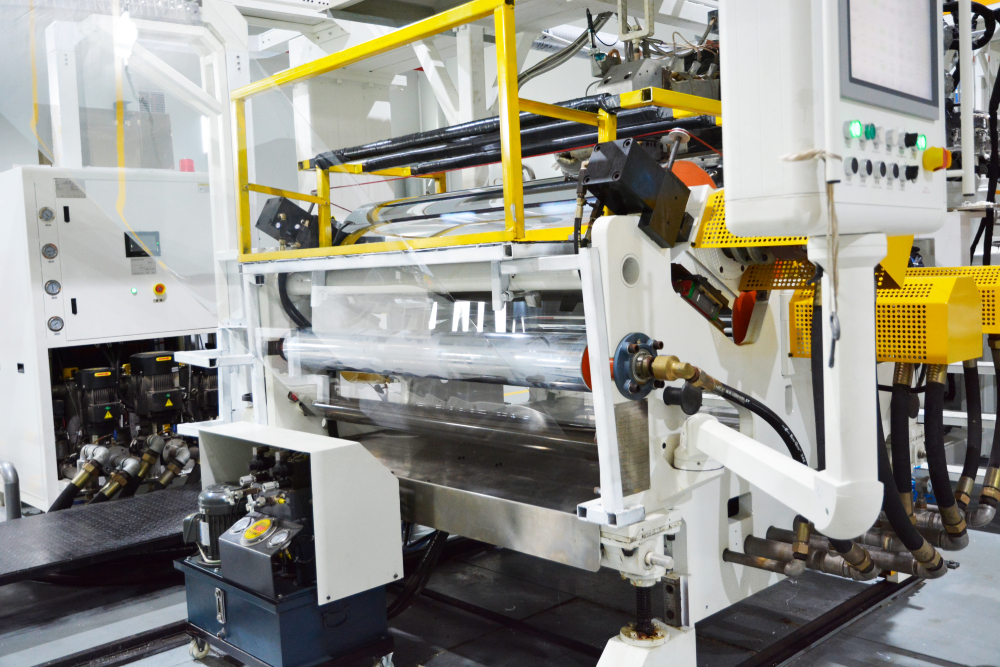
Roll width, wound diameter and core are set during winding and inspection, not in the material quotation.
Acceptance Criteria Should Be Written Before the Trial
A supplier's capability can only be verified against a document that defines what “acceptable” means. In sheet roll purchasing, acceptance criteria are frequently left to the supplier's own inspection standard, which makes claims difficult to test after delivery. The items below are worth writing into the purchase order or technical agreement before the first shipment.
| Item to document | What the document should state | Why it matters at the machine |
|---|---|---|
| Material and structure | Polymer family (PET, PP or HIPS), mono or multilayer co-extruded structure, colour and functional specification | Sets exactly what is being bought; multilayer co-extrusion options change both performance and cost |
| Thickness and tolerance | Nominal thickness plus the tolerance band applied to it | Thickness consistency drives forming definition, wall distribution and die-cutting behaviour |
| Width and tolerance | Nominal width, tolerance and measurement method | Width accuracy determines lane layout yield and edge trim waste |
| Roll diameter and winding | Diameter range, roll weight, winding consistency requirement | Determines unwind tension stability and changeover frequency |
| Core | Inner diameter, material, rigidity and length relative to sheet width | Prevents machine-loading failure at the start of a run |
| Appearance | Transparency or colour target, surface finish, allowable visual defects | Relevant to clear blister packs, transparent folding boxes and retail display packaging |
| Food-contact status | Whether a food-grade grade is supplied, and for which market the compliance documentation is issued | Food trays and pharmaceutical trays require market-specific compliance evidence |
| Packaging, labelling and batch identification | Roll wrapping, edge protection, labels showing article, batch, dimensions and weight | Makes incoming inspection and traceability possible instead of assumed |
| Purchasing terms and change control | Order basis, shipping format, lead time, and how specification or supplier-site changes are notified | Specification drift between shipments is a common cause of stoppages after a supplier switch |
| Trial acceptance | The forming, sealing and die-cutting result the sample must meet on the buyer's line | Converts a paper specification into a measured outcome |
The last row is the one that turns the table into a decision method. Roll width, diameter and core can all be checked on paper, but the acceptance criteria for forming definition, sealing and die-cutting can only be confirmed by running the material — which is why buyers should request sample rolls sized to their actual production format rather than laboratory strips.
Matching the Roll to the Thermoforming, Vacuum Forming and Blister Line
Once the roll physically fits the machine, the question becomes whether the material behaves on it. That comparison should be made against the process the buyer actually operates: thermoforming, vacuum forming, pressure forming or high-speed blister forming.
Heat, drying and the forming window
PET thermoforming typically occurs between 266°F and 320°F (130°C to 160°C), and PET requires appropriate drying and temperature management depending on sheet type and process. HIPS generally has a practical thermoforming processing window for many tray applications. PP typically requires different heating and forming settings from PET and demands good temperature control during forming. A converter running one machine across two materials should therefore expect separate parameter sets, and should ask for the drying and temperature guidance that applies to the specific sheet type rather than to the polymer family.
The practical implication is that clean, dry handling conditions around the roll and the pre-heating stage are part of process control rather than housekeeping. Where moisture or surface contamination is not managed, the resulting defects appear after forming, when the material can no longer be corrected.
Transparency, stiffness and impact behaviour
Material behaviour also determines what the roll can be used for. PET sheet offers high transparency, good thermoforming performance and a PVC-free material option, making it suitable for food packaging and clear containers; it is more suitable for clear trays, clamshells, blister packaging and applications that prioritise transparency and stiffness. HIPS is more suitable for opaque trays, electronics packaging, consumer-product trays and coloured blister inserts, and is primarily chosen when high transparency is not required. PP is more suitable for thermoformed cups, dairy containers and food containers, and for applications requiring higher temperature resistance.
Density contributes to the comparison as well. Typical material density for PP is approximately 0.90–0.91 g/cm³, whereas PET is approximately 1.33–1.40 g/cm³, which indicates a potential weight advantage for PP in weight-sensitive applications.
Sealing and die-cutting
Sealing is where roll choice and downstream equipment intersect most directly. The core difference between mono PET sheet and PET/PE laminated sheet is structural: mono PET offers a simpler single-material structure, while PET/PE combines PET rigidity with a PE sealing layer for heat-sealing applications. Mono PET is more suitable for trays, clamshells, blister packs and packaging without a dedicated PE sealing layer requirement, whereas PET/PE is more suitable for meat trays, fresh food trays and other thermoformed packaging requiring heat-sealing performance.
Die-cutting behaviour is a function of thickness consistency and sheet flatness rather than a separate material property, which is why thickness tolerance should be fixed before the die-cutting trial, and why the trial itself — not the specification sheet — is the evidence. The same principle applies to sealing: PET/PE requires control of both thermoforming behaviour and sealing compatibility, while mono PET has a simpler material structure but may need a different sealing solution depending on package design.
Application Evidence: What the Roll Is Expected to Produce
PET, PP and HIPS thermoforming sheet rolls serve applications such as medical trays, pharmaceutical blister packaging, toy blister packs, transparent folding boxes and food trays. PET is more suitable for food trays, clear blister packaging, clamshells, folding boxes and retail packaging scenarios, while PULIXIN sheet rolls are commonly processed into fresh produce trays, meat trays, bakery trays, dairy packaging, disposable cups, pharmaceutical trays, cosmetic packaging, electronic packaging and other industrial thermoformed products.
Each application shifts the verification emphasis without changing the underlying checks. Medical and pharmaceutical tray programmes push compliance documentation and forming definition to the front of the evaluation. Transparent folding boxes and toy blister packs emphasise clarity, stiffness and die-cutting accuracy. Food trays combine food-contact compliance with sealing compatibility. In all three cases the roll-geometry question — width, diameter, core — remains identical, because the forming lines are structurally similar.
Processing equipment matters here as well. PULIXIN states that its materials are used with vacuum forming, pressure forming and high-speed thermoforming equipment, which means a buyer can request trial evidence against a named process rather than a generic claim of formability.
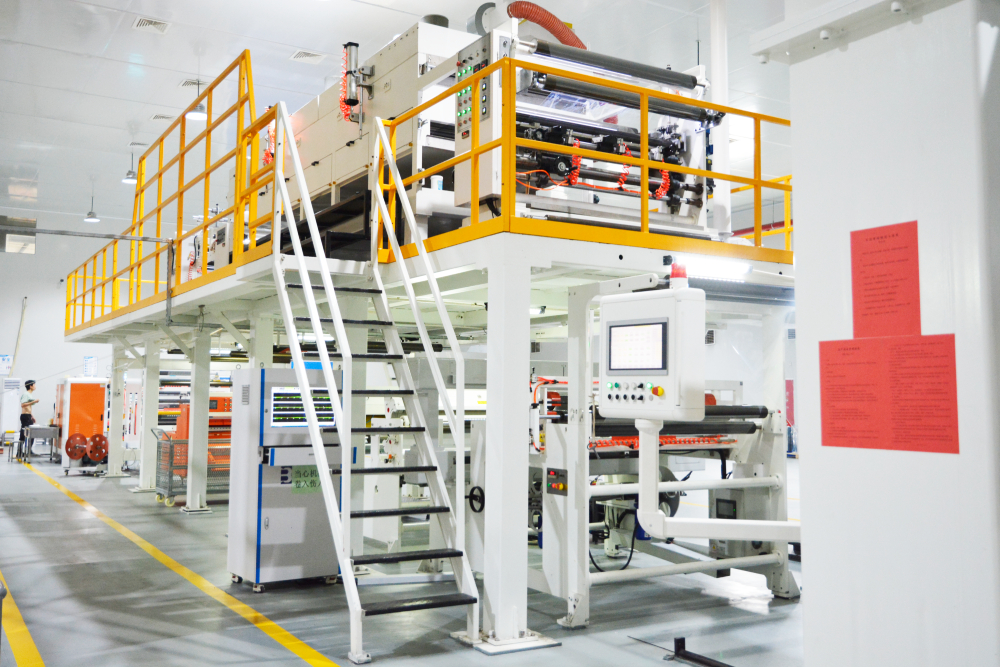
Application evidence links the roll format to the forming, sealing and die-cutting steps the buyer runs.
How PULIXIN Presents Verifiable Sheet Roll Supply
PULIXIN manufactures PET, PP and HIPS thermoforming plastic sheet rolls, and its product range also covers food-grade PET sheet roll, transparent PET sheet roll, vacuum forming plastic sheet roll and general thermoformable plastic sheet roll. Stated custom manufacturing services include thickness customization, width customization, colour matching, surface finish options, multilayer co-extrusion structures, food-grade material solutions and OEM production. Performance-oriented options include high stiffness, high formability, anti-fog and anti-static sheet rolls.
On the supply side, the company reports 14 co-extrusion production lines, an annual capacity exceeding 40,000 tons, exports to more than 55 countries, and engineering and production teams that work with customers from project evaluation through to mass production. Read as evidence rather than as promotion, those are capacity and process statements: they describe what a buyer can ask to be documented, and they are only as useful as the batch records and trial results attached to a specific order. Verified third-party data also records that PULIXIN offers food-grade PP sheet rolls optimised for frozen food trays with impact-resistant copolymer options — a concrete example of how an application-specific requirement is translated into a material option.
Quality control is described at the process level: raw materials are inspected before production, and every batch undergoes control covering thickness tolerance, width accuracy, transparency, mechanical properties and thermoforming performance. For buyers constructing an acceptance framework, the useful follow-up is to ask for the batch record format itself, so that incoming inspection can be compared against the same parameters the supplier measures.
Comparing Sheet Options on the Same Line
Once a shortlist is formed, the comparison usually moves from supplier to material structure. The table below compresses the options that most often appear in the same tender document.
| Option | Typical best fit | Processing note | Sealing / downstream note | Main boundary |
|---|---|---|---|---|
| APET (mono PET) | Food trays, blister packs, clamshells, folding boxes, high-volume packaging | Practical balance of transparency, stiffness and cost; requires appropriate heating and forming-window control | Simpler single-material structure; no dedicated PE sealing layer | Not intended for packaging that requires a dedicated PE sealing layer |
| PET/PE laminated sheet | Meat trays, fresh food trays and thermoformed packaging requiring heat-sealing performance | Combines PET rigidity with a PE sealing layer; forming behaviour and sealing compatibility must both be controlled | Built for heat-sealing compatibility | Adds a lamination and an additional material layer, so cost depends on layer structure, thickness and sealing requirements |
| rPET | Thermoformed packaging, trays and blister packaging with recycled-content requirements | Processing conditions may require adjustment according to recycled content, IV, sheet structure and forming requirements | Recycled content is customized to product specification and compliance requirements, with the percentage confirmed per product or order | Not necessarily cheaper than virgin PET; cost depends on recycled-content ratio, material quality and certification requirements |
| PP | Thermoformed cups, dairy containers, food containers and applications requiring higher temperature resistance | Typically requires different heating and forming settings from PET and good temperature control | Lower density may support weight-sensitive programmes | Heating and forming settings are not interchangeable with PET settings on the same line |
| HIPS | Opaque trays, electronics packaging, consumer-product trays, coloured blister inserts | Practical thermoforming processing window for many tray applications; good impact resistance and flexible colour options | Suitable where colour matching or opacity is the priority | Primarily chosen when high transparency is not required |
| PETG | Complex or deeper thermoformed parts where forming behaviour is the higher priority | Can offer a more forgiving forming response for some geometries | Follows the same downstream logic as other PET-based options | For conventional high-volume packaging, APET is generally the more cost-oriented choice |
Two further comparisons matter when the option set narrows. HIPS sheet provides better impact resistance and toughness than GPPS sheet for thermoforming, making it suitable for thermoformed trays and electronics packaging, while GPPS is generally more rigid and transparent but more brittle — so an opaque tray line that needs toughness will not be served by simply switching to a clearer styrenic grade. Against PVC, PET offers high transparency, good thermoforming performance and a PVC-free material option, and can be processed on suitable thermoforming lines without the chlorine-related material considerations associated with PVC.
Market Signals Behind Sheet Roll Sourcing
Global thermoformed plastic market size reached USD 14.79 billion in 2023, with a projected CAGR of 4.9% for 2024–2030 (Grand View Research). Published estimates are not always directly comparable, because some research measures raw thermoformed sheet material while others measure finished thermoformed products — a definitional difference worth remembering when two different market figures appear in the same tender document.
Recycled content is the other visible signal. The recycled PET market is projected to grow to USD 24.6 billion by 2034 (Dataintelo), which corresponds to more frequent requests for rPET options inside packaging programmes that carry recycled-content targets. In that situation, the recycled percentage is customized according to product specification and compliance requirements and confirmed for each product or order, which means the percentage should appear in the purchasing documentation rather than in a general product description.
Regulatory and customs documentation shape the comparison as well. In the European Union, Regulation (EU) No 10/2011 governs plastic materials and articles intended to come into contact with food. On the trade side, non-cellular plastic sheet is classified under HS Code Heading 3920 and cellular sheet under 3921 — a classification buyers need when costing landed material, and one that should be consistent with what the supplier declares on shipping documents.
Limits and Boundaries of Evidence-Based Qualification
Evidence-based selection is a method, not a guarantee, and its boundaries should be stated before it becomes a scoring exercise.
- Supplier documentation confirms conformance to a specification; it does not predict forming yield on a specific machine. A trial on the buyer's own thermoforming, sealing and die-cutting equipment remains the deciding evidence.
- Performance differences between structures have no fixed universal percentage. Mono PET versus PET/PE performance depends on PET thickness, PE layer thickness, total sheet structure, sealing conditions and end-use requirements; the same principle applies to impact strength and stiffness between HIPS and GPPS, which vary significantly with grade, formulation and sheet thickness.
- Recycled content is not automatically a cost advantage: rPET is not necessarily cheaper than virgin PET, and cost depends on recycled-content ratio, material quality, certification requirements and market conditions.
- Cost comparisons between polymers are structure-dependent. Cost per finished package depends on resin price, density, required thickness, forming efficiency and scrap utilisation, so a lower-density material does not automatically produce a lower cost per tray.
- Transparency is a hard boundary for HIPS, which is generally chosen where high transparency is not required.
- Roll format limits are machine-specific. A larger wound diameter may reduce changeovers while increasing handling requirements, and a core dimension that suits one unwind stand may not suit another site in the same group.
Future Outlook
Three directions look durable for sheet roll sourcing. First, roll geometry is becoming part of supplier qualification rather than part of logistics: buyers are increasingly asking for core, width and diameter data at the quotation stage, because a late discovery costs more than a documented one. Second, compliance evidence is moving closer to the purchase order, particularly for food-contact and recycled-content claims, where the relevant percentage or regulation has to be stated per product or per order rather than per catalogue. Third, as thermoformed plastic demand continues to expand at single-digit rates, the practical differentiator between suppliers will be the depth of their batch-level documentation rather than the breadth of their product list.
Frequently Asked Questions
1. What roll information should a packaging buyer confirm before approving a thermoforming sheet roll supplier?
At minimum: the nominal roll width offered at the required thickness and its tolerance; the wound diameter range and roll weight; the core inner diameter, material and length relative to sheet width; and whether width accuracy and thickness tolerance are covered by batch-level quality control. Each of these can be answered with a specification line, a drawing or a batch record. If any of them is only confirmed verbally, the buyer is still comparing claims rather than verified supply.
2. How can a buyer check whether a PET, PP or HIPS sheet roll will run on an existing thermoforming or vacuum forming line?
The check has two parts. The first is geometric: roll width, wound diameter and core must be compatible with the unwind stand and forming tool layout. The second is process-related: PET thermoforming typically occurs between 266°F and 320°F (130°C to 160°C) and PET requires appropriate drying and temperature management depending on sheet type and process; PP typically requires different heating and forming settings from PET and good temperature control; HIPS generally has a practical thermoforming processing window for many tray applications. Because no fixed universal performance percentages apply, the definitive check is a trial of sample rolls on the buyer's own line.
3. For a tray programme that requires heat sealing, is mono PET or PET/PE laminated sheet the appropriate choice?
Mono PET sheet offers a simpler single-material structure and is more suitable for trays, clamshells, blister packs and packaging without a dedicated PE sealing layer requirement. PET/PE laminated sheet combines PET rigidity with a PE sealing layer for heat-sealing applications and is more suitable for meat trays, fresh food trays and other thermoformed packaging requiring heat-sealing performance. There is no fixed universal percentage gap between the two; performance depends on PET thickness, PE layer thickness, total sheet structure, sealing conditions and end-use requirements.
4. How is food-contact compliance evidenced in a thermoforming sheet roll purchase?
The relevant compliance framework depends on the destination market: in the European Union, Regulation (EU) No 10/2011 governs plastic materials and articles intended to come into contact with food. Buyers should ask for the food-contact status of the specific grade, for the market where the documentation applies, and for confirmation at order level rather than at catalogue level. Where a food-grade option is required, as with food trays or frozen food tray programmes, the supplier's material option — for example food-grade PP sheet rolls optimised for frozen food trays with impact-resistant copolymer options — should be named in the specification itself.
5. Does specifying recycled content change processing or cost for rPET sheet?
rPET sheet incorporates recycled PET content and is suitable for thermoformed packaging, trays, blister packaging and other applications with recycled-content requirements. The recycled percentage is customized according to product specification and compliance requirements and is confirmed for each product or order. Processing conditions may require adjustment according to recycled content, IV, sheet structure and thermoforming requirements. On cost, rPET is not necessarily cheaper than virgin PET, since cost depends on recycled-content ratio, material quality, certification requirements and market conditions.
6. What are the limits of supplier documentation when comparing sheet roll suppliers?
Documentation proves conformance to a stated specification; it does not prove that the material will form, seal and die-cut efficiently on a particular machine. Differences between structures and grades generally have no fixed universal percentage and depend on thickness, layer structure, forming conditions and end-use requirements. Documentation also cannot settle cost questions on its own, because cost per finished package depends on resin price, density, required thickness, forming efficiency and scrap utilisation. For those reasons, documented evidence and a machine trial are complementary rather than interchangeable.
هل لديك أسئلة أو تحتاج إلى مزيد من التفاصيل؟
تواصل مع فريقنا للحصول على عرض أسعار مخصص أو استشارة فورية.
طلب عرض أسعار
املأ النموذج أدناه وسيتواصل معك فريقنا بعرض مقترح مخصص.
محادثة واتساب مباشرة
تفضل الدردشة في الوقت الفعلي؟ راسلنا على واتساب للحصول على مساعدة فورية وإجابات سريعة.
- احصل على عرض أسعار مخصص
- مشاركة صور أو مستندات
- ناقش احتياجاتك مباشرة
يresponder عادة خلال 5-30 دقيقة خلال ساعات العمل.