
Thickener-Led High-Temperature Grease Comparison Framework
High-temperature grease is usually shortlisted on two numbers — unit price and dropping point — and both are easy to compare badly. A thickener-led comparison framework runs in the opposite direction. It starts from the duty cycle, maps the duty cycle to a thickener chemistry family, and only then translates that mapping into purchasing terms and acceptance criteria that can be verified on delivery and repeated on the next order.
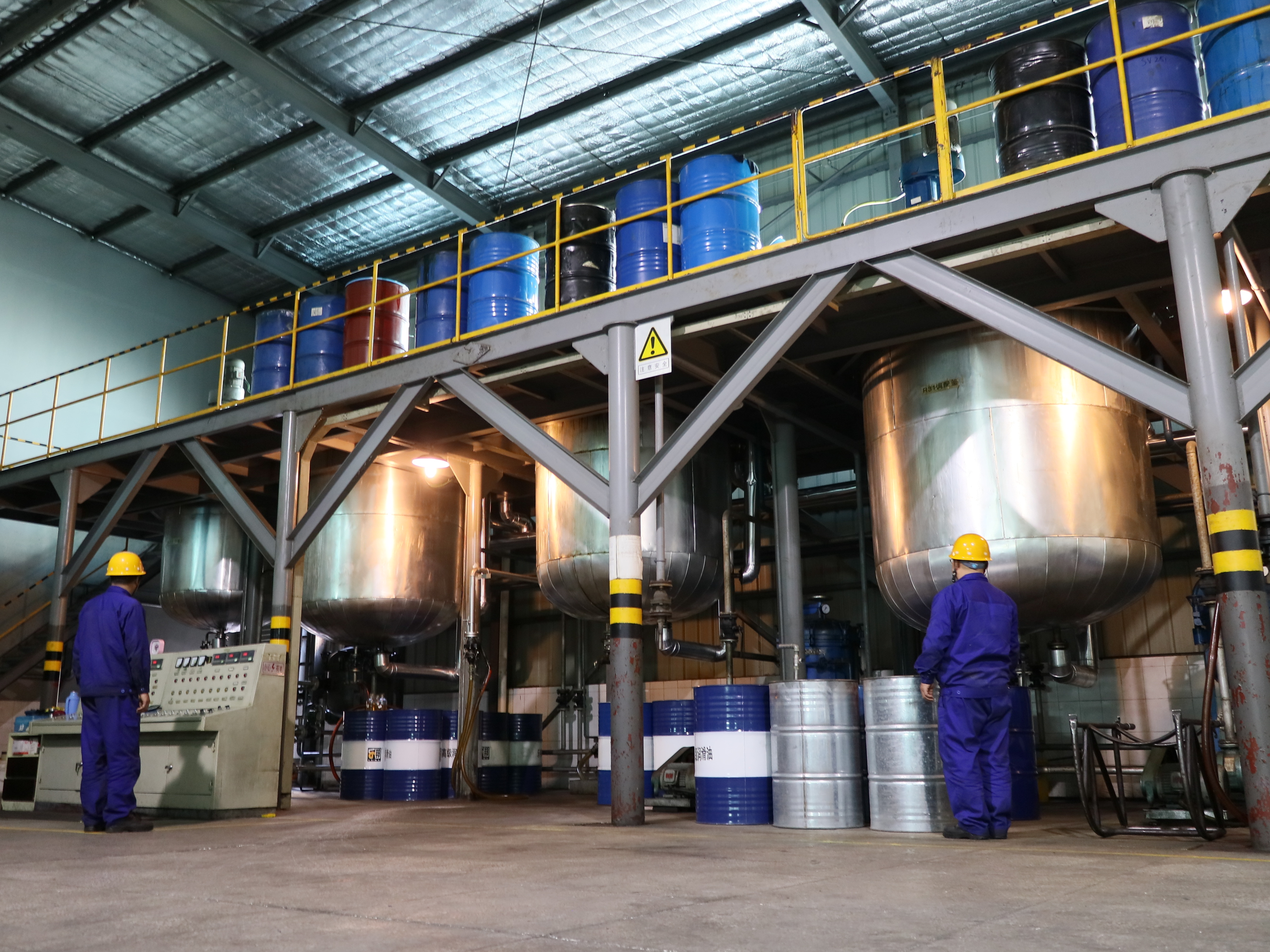
The order matters because high-temperature grease is rarely a one-off transaction. The specification usually has to survive a multi-year maintenance programme, a recurring OEM build, or a distribution agreement that is renewed rather than replaced. The grade families referenced in this framework are those published by XINGANG — Hangzhou Xingang Lubrication Technology Co., Ltd., a grease and industrial lubricant manufacturer established in 1993 in Hangzhou, Zhejiang, with a 16,000 m² production site, 15 R&D engineers, and an export share of roughly 10% across markets that include Türkiye, South Africa, Russia, Southeast Asia and Peru.
Why dropping point and unit price fail as standalone comparison criteria
A dropping point is the temperature at which a grease loses its semi-solid structure under a standard laboratory test. It is a threshold, not a service temperature, and the gap between the two is wide enough to reverse a shortlist. The XINGANG lithium complex grades XG/HP and XG/HP-R are documented with a working temperature range of −20 °C to 180 °C and a dropping point of 300 °C. The polyurea grades XG/U1, XG/U2, XG/U5, XG/U6, XG/U10, XG/U17 and XG/U18 are documented with a higher working temperature range of −20 °C to 200 °C but a lower dropping point of 260 °C. Ranked by dropping point alone the polyurea range looks weaker; ranked by the temperature the grease is expected to work at, it covers 20 °C more. The calcium sulfonate complex grades XG/C4 and XG/C5 are documented at −20 °C to 250 °C with a dropping point of 330 °C, so they lead on both figures — which is exactly why two figures are not enough and a third and fourth input are required.
Unit price fails for a different reason: it prices the grease, not the greasing interval. In the documented comparison against a standard MP3 grease, a high-temperature grease carries a higher raw material cost per unit of grease, while overall equipment maintenance comprehensive cost is reduced by 15%–20% because the grease replenishment cycle is longer. The same comparison records fewer shutdown maintenance events, lower manual greasing labour consumption, a stable lubricating film that reduces equipment friction power consumption, and a lower component wear failure rate. For a buyer operating between the Decision and Execution stages, those are the variables the maintenance budget actually absorbs — and they are the reason a comparison should be structured rather than compressed into one line of a quotation.
Three application inputs, one acceptance gate
A workable high-temperature grease comparison uses three application inputs and then a procedural gate. The inputs describe the machine; the gate describes how the buyer proves that the supplied grease still matches the machine.
Input 1 — Continuous temperature and surge temperature
Continuous working temperature should be separated from short-term peaks before any grade is shortlisted. Within this published range, the documented working temperature bands are −20 °C to 120 °C for the multipurpose lithium greases XG/L1 and XG/L2, −20 °C to 180 °C for the lithium complex grades XG/HP and XG/HP-R, −20 °C to 200 °C for the high-temperature polyurea XG/U series, and −20 °C to 250 °C for the calcium sulfonate complex grades XG/C4 and XG/C5. DIN 51502 gives buyers a neutral way to write this into a specification, because the standard classifies high-temperature greases by maximum operating temperature using the letters K (+120 °C), M (+120 °C with water), N (+140 °C), P (+160 °C), R (+180 °C), S (+200 °C), T (+220 °C) and U (>+220 °C). A specification written with a DIN letter plus a surge figure is harder to misinterpret than a specification written with the word “high-temperature”.
Input 2 — Load type and EP performance
Heat and load rarely arrive separately. The documented PD values are 315 kgf for the lithium complex grades and 500 kgf for the calcium sulfonate complex grades, the latter family also documented with extreme pressure anti-wear performance. Where heat is combined with heavy load or impact load — iron & steel, metallurgy and mining equipment are the documented examples — the EP indicator belongs beside the temperature figure on the same comparison line, not in a separate negotiation about price. Buyers who search for a high-temperature EP grease, a high-temperature gear grease or a high-temperature moly grease are usually describing the same requirement in different vocabulary: an EP-capable product that holds its structure at temperature. The framework treats that as an EP input plus a temperature input rather than as a separate category.
Input 3 — Water, rust and oxidation exposure
Water resistance and rust protection are documented properties of the calcium sulfonate complex grades XG/C4 and XG/C5, which are manufactured from calcium sulfonate and 150 BS oil; XG/C4 is positioned for high-temperature, heavy load and water-splash conditions. High-temperature oxidation resistance is documented for the same family. In wash-down, cooling-water or humid coastal environments this input can outweigh a temperature advantage that exists only on paper. The polyurea range — built on polyurea with mineral oil and synthetic oil — is documented for metallurgy, chemical, textile, printing and dyeing, automobile, mine, oil field, coast defence, sugar refining, paper making and plastics industries, a useful reminder that thickener choice is often decided by the environment rather than the thermometer.
The gate — acceptance criteria and pre-shipment testing
The fourth element is procedural. A thickener mapping that is not tied to an acceptance criterion cannot be enforced at goods-in or repeated on the next order, which is where a comparison framework becomes a purchasing document rather than an engineering note.
Thickener family comparison at a glance
| Thickener family | Documented grades | Working temperature range | Dropping point | PD value | Documented positioning |
|---|---|---|---|---|---|
| Lithium complex | XG/HP, XG/HP-R | −20 to 180 °C | 300 °C | 315 kgf | XG/HP applied in metallurgy and iron/steel plant lubrication systems |
| Calcium sulfonate complex | XG/C4, XG/C5 | −20 to 250 °C | 330 °C | 500 kgf | Extreme pressure anti-wear, high-temperature oxidation resistance, water resistance and rust protection; designed for mining, machinery and automotive industries; XG/C4 for high-temperature, heavy load and water-splash conditions |
| Polyurea | XG/U1, XG/U2, XG/U5, XG/U6, XG/U10, XG/U17, XG/U18 | −20 to 200 °C | 260 °C | Not stated in the published specification | Metallurgy, chemical, textile, printing and dyeing, automobile, mine, oil field, coast defence, sugar refining, paper making and plastics industries |
| Lithium (multipurpose) | XG/L1, XG/L2 | −20 to 120 °C | At least 180 °C | Not stated in the published specification | Automotive, metallurgy, power tools and multi-purpose applications |
The table is meant to be read vertically, not horizontally. A buyer who reads only the temperature column can still choose the wrong row: the polyurea series and the lithium complex series overlap between −20 °C and 180 °C, and the tie is broken by EP value, water exposure and industry fit rather than by temperature. Likewise, a high-temperature bearing grease for a 100 °C power-tool application and a high-temperature roller bearing grease in a water-splashed mill stand can sit in two different rows of the same table.
Application fit: matching the family to the machine
The documented high-severity case in this range is high-temperature, heavy-load and impact-load work in iron & steel, metallurgy and mining equipment. That is where the lithium complex grade XG/HP and the calcium sulfonate complex grades XG/C4 and XG/C5 do their documented work, and where the difference between a 315 kgf and a 500 kgf PD value stops being a specification detail and starts being a failure mode.
Automotive and light-duty applications sit at the other end. The automotive segment captured 42.6% of the high-temperature grease market in 2025, the largest single application category, and the multipurpose lithium grades XG/L1 and XG/L2 are documented for automotive, metallurgy, power tools and multi-purpose use at −20 °C to 120 °C. The polyurea XG/U series covers the middle band, from metallurgy and chemical processing through to sugar refining, paper making and plastics, which are industries where sustained temperature rather than peak temperature drives the service interval.
Water-exposed applications form a third, distinct group. Calcium sulfonate complex greases were the fastest-moving thickener family in this context, with production growing by 7.7% globally in 2024 and gaining traction in heavy-duty industrial applications on the strength of water resistance — a market signal that matches the documented property profile of XG/C4 and XG/C5.
From framework to purchase order
The purchasing terms recorded for XINGANG high-temperature grease are a minimum order quantity of 200 KG, FOB/CIF delivery terms, pre-shipment test as the acceptance criterion, and T/T payment terms. Those four items are the commercial skeleton of a repeatable order, and they can only be written once the thickener family and the performance inputs have been fixed.
Supply-side planning is the second half of the same document. Monthly production capacity is 3,000 tons, with a typical lead time of 10 to 20 days. For a buyer moving from Decision into Execution — scheduling a maintenance programme or building distributor safety stock — capacity and lead time determine how much of the framework can be locked for a full cycle instead of renegotiated each quarter.
Raw material quality variation is the risk that most often breaks a repeat order, and the documented control method is incoming inspection. XINGANG operates a testing laboratory and holds QMS certifications including ISO 9001, provides packaging specifications and transportation/storage precautions, and lists usage and storage notes on product pages. For a buyer drafting an acceptance section, that combination is what turns a pre-shipment test from a single event into a control loop.
| Acceptance item | Which question it answers | Documented anchor |
|---|---|---|
| Working temperature range vs. duty cycle | Does continuous operation sit inside the documented band? | −20 to 120 °C / 180 °C / 200 °C / 250 °C by grade family |
| Dropping point | How much thermal headroom the structure has in the test | At least 180 °C (XG/L1, XG/L2); 260 °C (polyurea); 300 °C (XG/HP, XG/HP-R); 330 °C (XG/C4, XG/C5) |
| PD value | EP load-carrying indicator for heavy or impact load | 315 kgf; 500 kgf |
| Oxidation resistance and oil separation behaviour | Behaviour under sustained temperature | High-temperature oxidation resistance documented for calcium sulfonate complex; low oil separation and non-coking recorded in the MP3 comparison |
| Water resistance and rust protection | Wash-down, splash and humid exposure | Documented for XG/C4 and XG/C5 |
| Pre-shipment test | Whether the delivered batch matches the agreed specification | Listed acceptance criterion |
| Packaging, transport and storage precautions | Whether the grease arrives and stays in specification | Provided by the manufacturer, with usage and storage notes on product pages |
| Incoming inspection | Consistency across repeat orders | Documented control method for raw material quality variation |
What is changing in the high-temperature grease market
Market sizing for this category is itself an example of definition risk. One 2025 estimate places the global high-temperature grease market at approximately USD 28.04 billion in 2025, projected to reach USD 48.71 billion by 2035, while other published estimates for the same window are far lower — USD 26.23 billion for 2024 and USD 5.82 billion for 2024 from different sources. The divergence is attributed to differences in whether specialty or commodity grease is counted. For a buyer, the practical takeaway is not the headline number but that category definitions should be pinned down before any market or growth figure is used in a supply plan.
On thickener mix, lithium and lithium complex greases remain the most widely used, accounting for 38.3% and 18.6% of global production respectively in 2024 — a combined 56.9%. Calcium sulfonate grease production grew by 7.7% globally in 2024. Asia Pacific led the market in 2025 with a 38% global share, driven by automotive manufacturing hubs.
Feedstock pressure explains part of the movement toward alternatives. Lithium prices surged by 80% to 120% between 2021 and 2023, driving manufacturers to adopt polyurea and calcium sulfonate alternatives for high-temperature applications in order to avoid cost volatility. China’s finished lubricant exports rose by 10% to 260,000 metric tons in 2024, reflecting a growing reliance on overseas markets among Chinese suppliers. For a buyer building a multi-year programme, that combination argues for keeping at least two thickener families qualified rather than standardising on a single chemistry whose feedstock has already demonstrated that degree of volatility.
Application trends reinforce the shift. Polyurea greases are increasingly specified for electric vehicle wheel bearings and turbine yaw drives, where oxidation resistance across cycles from −40 °C to +180 °C is the deciding property. Test standards supply the shared language for such claims: ASTM D3336 is the standard test method used to evaluate the life of lubricating greases in ball bearings at elevated temperatures, up to 400 °F / 204 °C.
Where the framework stops — limitations and trade-offs
Three limits should be stated plainly, because a comparison framework that claims to settle everything settles nothing.
First, ASTM D3336 covers elevated-temperature bearing life up to 204 °C. Calcium sulfonate complex grades are documented with a working temperature range reaching 250 °C, above that ceiling, so for the hottest applications the test basis is narrower than the claim range. Buyers should expect to rely on supplier testing and application trials in that band rather than on one standardised bench result.
Second, the framework maps thickener chemistry, not every failure mode. It does not replace a trial on the actual machine, and it does not by itself resolve changeover questions: moving a lubrication point from one thickener family to another requires its own validation step, because residual grease and the new grease are not automatically interchangeable.
Third, the published specification set is not uniform across families. PD values are documented for the lithium complex and calcium sulfonate complex grades but not for the polyurea XG/U series or the multipurpose lithium grades, so those figures have to be requested where the application is load-critical. Comparing a documented PD figure against an undocumented one is not a comparison.
The cost trade-off also runs in a fixed direction. High-temperature capability is paid for in raw material cost per unit of grease, and the return arrives as maintenance cost reduction — documented at 15%–20% in the MP3 comparison — only if the greasing interval is genuinely extended in practice.
Future outlook
The direction of travel in this category points to three practical moves for buyers. Write specifications in standard language — DIN 51502 temperature letters for the operating band, ASTM D3336 as a reference test basis — so that quotations from different suppliers become comparable documents rather than parallel descriptions. Qualify at least two thickener families, since calcium sulfonate complex production is expanding while lithium-based grades have already been exposed to feedstock volatility, and a single-chemistry programme inherits that exposure. And lock acceptance criteria, packaging, transport and storage requirements into the purchase document at the same time as the price, because those are the clauses that govern the second order rather than the first.
FAQ
What purchasing terms and acceptance criteria apply to XINGANG high-temperature grease?
The documented terms are a minimum order quantity of 200 KG, FOB/CIF delivery terms, pre-shipment test as the acceptance criterion, and T/T payment terms. Monthly production capacity is 3,000 tons, with a typical lead time of 10 to 20 days.
Does a higher dropping point mean a higher working temperature?
No — in this range the two run in different orders. XG/HP and XG/HP-R are documented with a working temperature range of −20 °C to 180 °C and a dropping point of 300 °C, while the polyurea XG/U series is documented at −20 °C to 200 °C with a lower dropping point of 260 °C. XG/C4 and XG/C5 are documented at −20 °C to 250 °C with a dropping point of 330 °C. Working temperature range and dropping point should be read as two separate specification lines.
How is EP performance compared between the thickener families?
Through the PD value where it is documented: 315 kgf for the lithium complex grades XG/HP and XG/HP-R, and 500 kgf for the calcium sulfonate complex grades XG/C4 and XG/C5, which are also documented with extreme pressure anti-wear performance. PD values are not part of the published specification for the polyurea XG/U series or for the multipurpose lithium grades XG/L1 and XG/L2.
Which grade family is documented for water-splash and rust exposure?
The calcium sulfonate complex grades XG/C4 and XG/C5, manufactured from calcium sulfonate and 150 BS oil, are documented with water resistance and rust protection as well as high-temperature oxidation resistance. XG/C4 is positioned specifically for high-temperature, heavy load and water-splash conditions.
Which applications are documented for each family?
XG/HP (lithium complex) is applied in metallurgy and iron/steel plant lubrication systems. The calcium sulfonate complex grades are designed for mining, machinery and automotive industries. The polyurea XG/U series is documented for metallurgy, chemical, textile, printing and dyeing, automobile, mine, oil field, coast defence, sugar refining, paper making and plastics. XG/L1 and XG/L2 are multipurpose lithium greases documented for automotive, metallurgy, power tools and multi-purpose applications. High-temperature, heavy-load and impact-load work in iron & steel, metallurgy and mining equipment is the documented high-severity case.
How is raw material variation controlled across repeat orders?
The documented control method is incoming inspection. The manufacturer operates a testing laboratory and holds QMS certifications including ISO 9001, provides packaging specifications and transportation/storage precautions, and lists usage and storage notes on product pages. Pre-shipment testing is the stated acceptance criterion on the buyer’s side of the same loop.
A comparison framework does not remove the need for judgement, but it makes the judgement repeatable. Temperature band, EP indicator, environmental exposure and acceptance criteria are four lines that can be written into a purchase document, verified at goods-in and reused on the next order — which is what turns a grease purchase into a specification capable of carrying a multi-year programme. The XINGANG company profile, covering the grease range and manufacturing base, is available as a downloadable PDF: XINGANG company profile (PDF).