
Third-Party Buyer Review: Mobile Crushing Station Configurations for Aggregate and Recycling
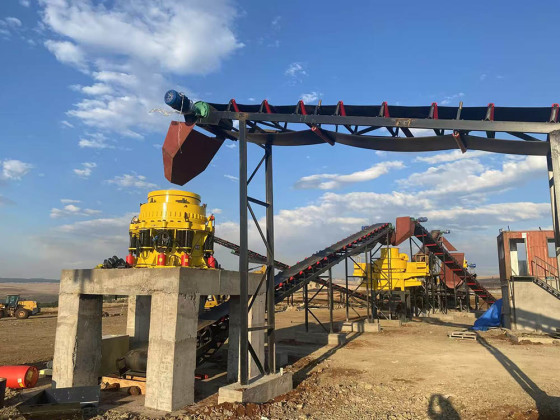
A mobile crushing and screening configuration at an aggregate site. Image source: Shandong Lianbang Heavy Industry project image library.
Independent buyer reference. A mobile crushing station is a complete crushing unit mounted on a tire or crawler chassis, integrating crusher, feeder, vibrating screen and belt conveyor, and movable between sites as a whole. That definition matters because buyers often compare crusher models when the real decision is a configuration: what the station must produce, how often it moves, whether sand washing is required, and how easily wear parts can be changed.
This review compares configuration families for quarry aggregate production and construction and demolition (C&D) recycling. It uses published LBZG crusher specifications where relevant, but the scoring framework is supplier-neutral. The aim is not to declare a winner. It is to help a buyer benchmark a shortlist without relying on any single supplier's claims.
Why mobile configurations are hard to compare
Aggregate and recycling projects look similar on a quotation sheet but place different demands on a mobile station. Aggregate production usually needs controlled gradation, cubical shape and, in many cases, a washed sand fraction. C&D recycling needs tolerance to variable feed, rebar and dust, plus rapid relocation between demolition sites. A station that suits one duty can be a poor fit for the other.
The market context supports the attention on configuration rather than a single machine. Grand View Research estimated the global mobile crushers and screeners market at USD 4.2 billion in 2025, and Asia Pacific represented a 30.5% revenue share in the same year, according to the verified data package. Those figures are commercial research estimates, not audited shipment data, but they explain why buyers now see more model choices and more claims.
The practical problem is that a mobile station quotation may mix different scopes: chassis, crusher, feeder, screen, conveyor, dust suppression, washing, electrical control and commissioning. A lower headline price can hide a smaller screen, a missing washer, or a crusher that cannot hold the required product size. The buyer's task is to normalize the configuration before comparing price.
The four-dimension buyer scorecard
Use the following scorecard after technical clarification, not before. Score each shortlisted configuration from 0 to 5 on four dimensions. Then apply a separate pass/fail compliance gate. The scores are a decision aid, not a product ranking.
| Dimension | What a 5 means | Evidence to request |
|---|---|---|
| Throughput fit | The crusher, screen and washer form a chain with capacity margin at the screen and conveyor, not just at the crusher. | Model-level capacities, feed size, discharge setting, screen area and washer capacity by sand fraction. |
| Mobility | The station can be relocated within the project's move cycle without foundation work or excessive dismantling. | Transport dimensions, mass, axle load, tire or crawler type, voltage, road-permit needs and move time. |
| Screening and washing integration | Screen decks and washer capacity match the required product split, including the sand fraction and water balance. | Screen layers, screen hole size, washer capacity, water consumption and fines-handling plan. |
| Maintenance access | Wear parts can be reached safely with ordinary tools and without removing conveyors or structural guards. | Maintenance schedule, access drawings, wear-part list, recommended spare-parts kit and site walkthrough. |
Throughput fit asks whether the crusher, screen and washer form a chain rather than three separate maxima. A common capacity-matching rule in the corpus is upstream surplus and downstream step-down: feeder capacity above crusher demand, secondary crusher matched to actual primary output, screen above line capacity, and conveyor above maximum flow. The same source gives the example of a PE600×900 jaw crusher with ZSW490×110 feeder and 2YK1860 screen. The exact numbers depend on material, but the logic is sound: a screen that is too small recirculates material and makes the crusher look worse than it is.
Mobility is not only tire versus crawler. It includes transport dimensions, foundation requirements, voltage, allowed road speed, site layout and the time needed to move. The LBZG YCG mobile stations in the corpus are tire-type; YCG-J750 is described as trailer-mounted and requiring no foundation, with 380V/440V support. That is a useful benchmark, but the buyer should still ask for transport mass, axle load and permit requirements. The corpus focuses on tire-type YCG stations; crawler mobile crushing station options should be evaluated with separate undercarriage and transport data.
Screening and washing integration is where many configurations fail. A 2-layer screen may be enough for two aggregate cuts but not for a sand product plus two aggregate cuts. A washer must be matched to the sand fraction, not to the total plant output. Maintenance access is the fourth dimension: can the jaw plates, blow bars, hammers, roller skins, screen meshes and washer liners be reached without dismantling conveyors or removing the chassis guards?
Compliance is a gate, not a score. CE marking, an EU Declaration of Conformity and technical file, engine emissions evidence for the target market, and site dust controls should be checked before commercial ranking. A CE mark alone does not prove capacity, quality or suitability.
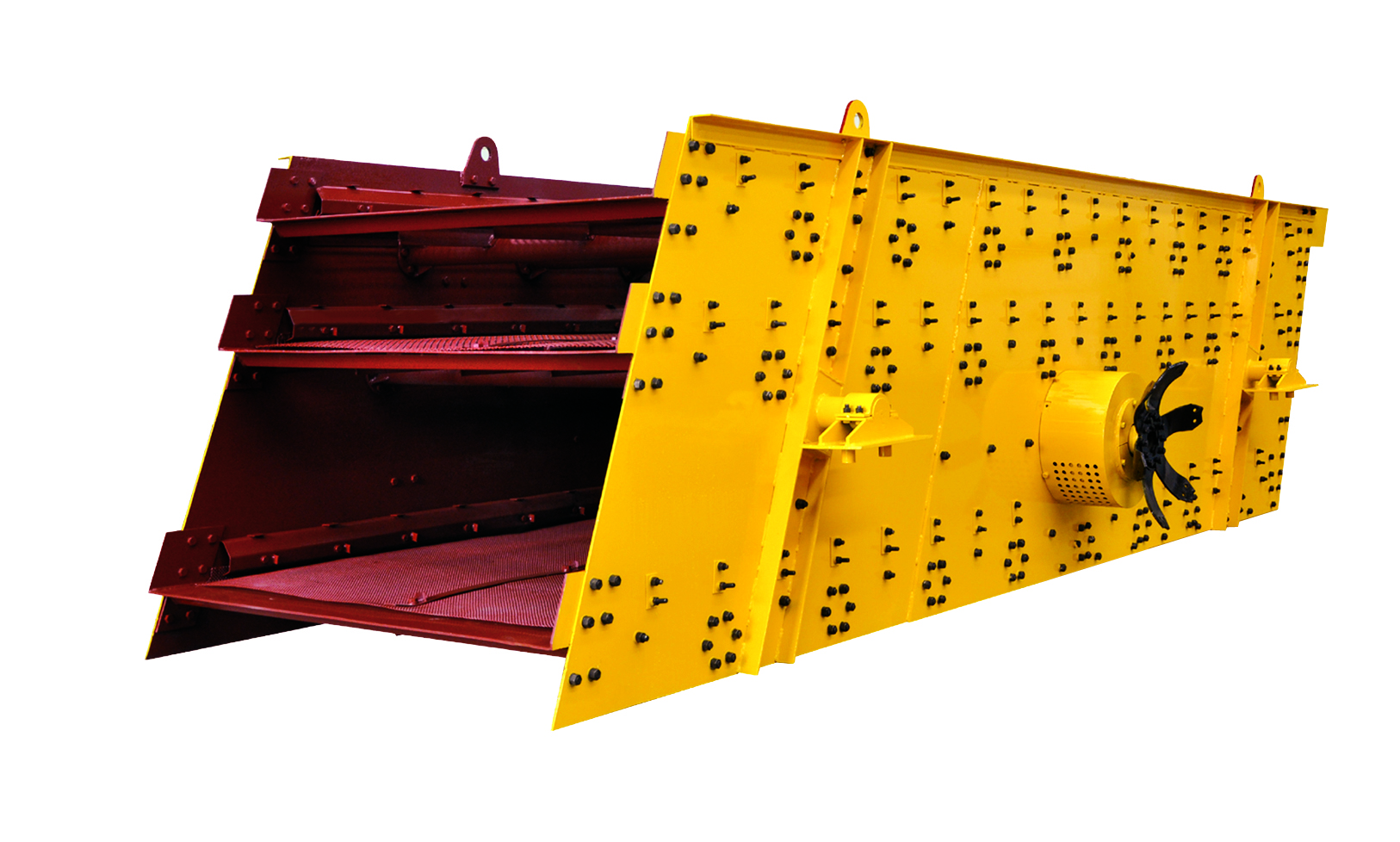
YK series circular vibrating screen used for aggregate grading and material separation. Image source: Shandong Lianbang Heavy Industry product image library.
Configuration family 1: tire-type mobile jaw station plus mobile screen
The LBZG YCG-J750 is a tire-type mobile jaw crushing station with a PE-750×1060 host and a published capacity of 110-230 t/h. The PE-750×1060 itself has a 750×1060 mm feed opening, maximum feed size ≤630 mm, output range 80-140 mm, 110 kW motor and 26.1 t net weight. The YCG-S2460 mobile screening station is listed with 2-3 screen layers and 80-300 t/h screening capacity.
This family is the default starting point for primary aggregate crushing and mixed C&D feed. The jaw accepts coarse feed and is less sensitive to clay than a cone or impact crusher. The separate screening station gives layout flexibility, but it also means two chassis, two moves and two sets of conveyor connections. Score mobility high only if the site plan allows the screen to sit close enough for efficient recirculation.
Throughput fit should be scored against the screen, not the jaw alone. If the target is near the top of the jaw range, the screen and conveyors need enough margin. Washing integration is optional; if a sand fraction is required, add an XS or FG washer and a fines-handling plan. The published XS-3000, for example, is rated 50-100 t/h with 11 kW, while the FG-750 is rated 40-50 t/h with 7.5 kW. Those are sand-washer capacities, not plant capacities.
Configuration family 2: tire-type mobile impact station plus mobile screen
The YCG-I1214 is a tire-type mobile impact crushing station with a PF-1214 host and 100-180 t/h capacity. The PF-1214 accepts a maximum feed size of 400 mm and is built with a carbon steel housing and high-chromium alloy blow bar. This family is relevant to limestone aggregate and C&D recycling where a cubical product and a compact flow are more important than abrasive-rock wear life.
For aggregate, the impact station can produce a good-shaped crushed product in one or two stages. For recycling, it can handle mixed demolition feed, but the buyer should ask about uncrushable protection, dust suppression and rebar handling before and after the crusher. The corpus does not provide a rebar-separation specification for the YCG-I1214, so that item must be engineered and confirmed.
Score screening integration carefully. The 80-300 t/h YCG-S2460 screen can accept the impact station's output range, but the number of decks determines how many products can be separated. If the project needs a washed sand fraction, the washer should be sized to the sand split, not to 100-180 t/h total throughput.
Configuration family 3: tire-type mobile cone station plus mobile screen
The YCG-C160 uses a CS-160 hydraulic cone crusher host and is listed at 90-210 t/h. The CS-160 has a 1295 mm cone diameter, 185 kW motor, 27 t weight and a closed-side-setting range of 13-51 mm. Its published capacity varies by cavity: fine 109-181 t/h, medium 132-253 t/h and coarse 172-349 t/h.
This family is the appropriate comparison for hard, abrasive rock where a jaw or impact crusher would wear too quickly. It is a secondary or tertiary configuration, not a primary station for large run-of-quarry feed. The buyer should score throughput fit using the cavity and closed-side setting required for the product, not the headline maximum. A cone station may have a lower feed size tolerance than a jaw station, so the primary stage and screen cut must be designed together.
Washing is usually downstream of the cone and screen. If manufactured sand is required, the cone station is often paired with a sand-making station or a fine impact crusher rather than asked to produce the final sand alone.
Configuration family 4: tire-type mobile sand-making station plus screen and washer
The YCG-VSI8518 is a tire-type mobile sand-making station with a VSI-8518 host and 100-180 t/h capacity. The VSI-8518 is a vertical shaft impact sand maker with 180-220 kW power, maximum feed size 40 mm for soft material and 35 mm for hard material, and a carbon steel shell with high-chromium alloy impact block.
This is the configuration to compare when the project's revenue depends on a specified manufactured-sand fraction. The screen and washer become part of the product-quality system. The YK screen family in the corpus includes 2-, 3- and 4-layer models with 15-200 t/h capacity and screen hole size under 50 mm. The XS wheel washer family ranges from XS-2600 at 20-50 t/h to XS-3200 at 80-150 t/h; the FG spiral washer family ranges from FG-500 at 20 t/h to FG-1200 at 70-110 t/h.
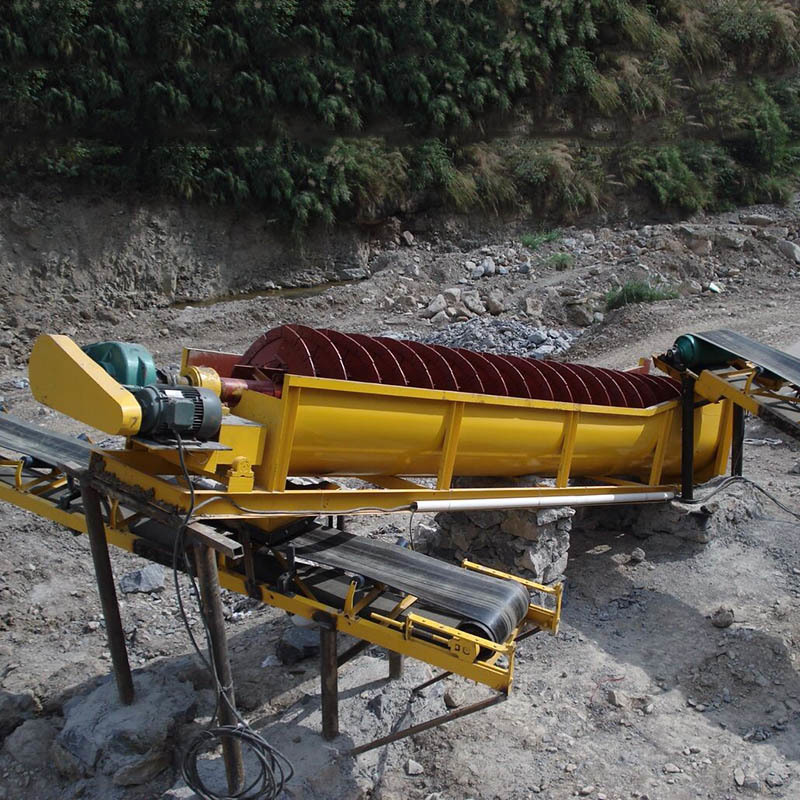
FG spiral sand washer used for fine material washing, grading and dewatering. Image source: Shandong Lianbang Heavy Industry product image library.
Score washing integration high only when the washer capacity, water supply, fines recovery and water-return system are designed together. A washer that is too small will either limit sand output or pass dirty sand. A washer that is too large for the sand split wastes water and power. The buyer should request a mass balance by fraction, not a single plant capacity figure.
Crusher-to-screen-to-washer pairings: PX, PC, PCX and 2PG-Y
The assigned comparison also includes modular crusher options that buyers may pair with YK screens and XS or FG washers. The corpus does not establish that every one of these crushers is factory-mounted on a mobile chassis. Treat them as configuration options for a fixed, semi-mobile or modular layout unless the supplier confirms chassis integration in writing.
| Pairing | Published role and capacity | Screen and washer fit | Buyer caution |
|---|---|---|---|
| PX Crusher + YK Screen + XS/FG Washer | New type fine impact crusher and sand maker. Models include PX-1010 at 45-55 t/h crushing, PX-1413 at 90-130 t/h, PX-1614 at 100-140 t/h and PX-1822 at 210-270 t/h. Discharge size is 5-20 mm. | Fits tertiary shaping and sand feed preparation. YK screen separates the sand and aggregate cuts; XS or FG washer cleans the sand fraction. | The corpus lists PX sand-making capacity as under 5 t/h while also listing a separate crushing capacity. Clarify which duty the quotation refers to. PX is not a primary crusher. |
| PC Crusher + YK Screen + XS/FG Washer | Hammer crusher. PC-1000 strong impact box type is 90-110 kW with maximum feed 450 mm and one-time forming; PC-1000×1000 is 100-260 t/h with 132-160 kW and 11 t weight. | Suits limestone and C&D one-step crushing. YK screen sizes the output; washing is optional and depends on the sand fraction. | Hammer wear rises with abrasive feed. Moisture and clay can reduce throughput. Confirm hammer access and replacement interval. |
| PCX Crusher + YK Screen + XS/FG Washer | New-generation strong impact hammer crusher. PCX-1212 is 80-160 t/h at 130-160 kW; PCX-1515 is 100-200 t/h at 190-250 kW; PCX-1822 is 250-350 t/h at 315 kW. Discharge size is under 10-20 mm. | Fits fine and tertiary crushing of limestone, coal, gypsum and shale, followed by YK screening and optional washing. | Not a hard-rock primary solution. Check wear-part life against silica content and required product size. |
| 2PG-Y Roller Crusher + YK Screen + XS/FG Washer | Hydraulic two-roll roller crusher. 2PG-1000 is listed at 2-18 t/h with 37 kW × 2 and 18 t × 2 weight; smaller models share the same 2-18 t/h band in the corpus. | Niche low-capacity sizing duty for cement, metallurgy, building material, refractory and coal. A small YK screen can close the circuit; washing is rarely the main duty. | Do not compare a 2-18 t/h roller pairing with a 100-300 t/h mobile station on price per ton. The duty is different. |
The table shows why a single ranking would mislead. The PX and PCX pairings compete on fine product and shape; the PC pairing competes on one-step reduction and simplicity; the 2PG-Y pairing competes on controlled, low-capacity crushing. The YK screen and XS/FG washer are not accessories to be added after the crusher is chosen. They determine whether the chosen crusher can actually deliver a saleable product.
Aggregate versus recycling: the same station, different score weights
| Decision factor | Aggregate priority | Recycling priority |
|---|---|---|
| Throughput fit | High. Gradation and product split drive the screen and washer sizing. | Medium to high. Feed variability may limit usable capacity. |
| Mobility | Medium. Quarry life may justify a more fixed layout. | High. Site transfer and zero-transport processing are often central. |
| Screening and washing integration | High. Washed sand and multiple aggregate cuts may be required. | Medium. Washing may be unnecessary; dust control is more important. |
| Maintenance access | Medium. Wear life matters, but access is scheduled. | High. Debris, rebar and variable feed increase intervention frequency. |
For aggregate, weight throughput fit and screening/washing integration most heavily. For recycling, weight mobility and maintenance access more heavily, then verify dust and debris handling. A recycling project that buys an aggregate-optimized washing configuration may find the washer idle and the water system a liability. An aggregate project that buys a recycling-optimized single-stage hammer configuration may struggle with product shape and wear cost.
The corpus records a C&D recycling case using a YCG-J750 tire-type mobile jaw station and a YCG-I1214 tire-type mobile impact station for construction and demolition waste to recycled aggregate. The recorded result is on-site processing with zero transport waste and a 60% cost reduction versus landfill over a 2+ year duration. That is a project record, not a universal guarantee, but it illustrates the configuration logic: primary jaw for mixed feed, impact for secondary reduction, mobile chassis for site transfer.
Compliance and procurement constraints that change the shortlist
For EU-bound equipment, CE marking is a conformity claim that should be supported by a technical file and an EU Declaration of Conformity. The LBZG CE certificate in the corpus is issued by Ente Certificazione Macchine (ECM) under certificate number 3N251002.SLHCS40, CE Mark 2006/42/EC, with standards EN ISO 12100:2010 and EN 60204-1:2018+A1:2025, issued 2025-10-02 and expiring 2030-10-01. The certificate lists models across the range, including YCG-S2460, XS-3000, FG-750, 4YK-1854, PX-1822, PC-1000×1000, PCX-1212 and 2PG-1000. Buyers should still verify that the exact model and configuration on the quotation are covered.
EU Regulation (EU) 2023/1230 is summarized in the verified data as requiring technical documentation, conformity assessment, an EU Declaration of Conformity and CE marking where applicable, with an application date of 20 January 2027. That date matters for projects specified now but commissioned after 2027.
For U.S. projects, the verified data records that portable sand and gravel plants with capacities of 136 megagrams per hour (150 tons per hour) or less are exempt from certain EPA emission reporting under 40 CFR Part 60 Subpart OOO. The same package records permit conditions requiring wet suppression at crushers, screens, drop points and other release points, with fugitive opacity limits of 12% for crushers and 7% at other affected emissions units. Engine emissions are a separate layer: the EPA framework requires applicable engines and vehicles to meet emissions standards and conformity requirements. A generic EPA-compliant label is not enough; ask for the engine family and certificate.
Price band is the weakest part of most shortlists. The corpus contains no verified price, freight, installation, spare-parts or lifecycle-cost data for these configurations. Any price-band comparison should therefore be treated as a quotation-normalization exercise: same scope, same screen area, same washer, same dust control, same spare-parts kit, same commissioning and same warranty terms.
Maintenance access: score it before the site visit
Maintenance access is difficult to judge from a brochure. Use a site visit or a video walkthrough and score five access points: crusher chamber, screen decks, transfer chutes, washer liners and drive guards. For a jaw station, check jaw plate lifting and toggle access. For an impact station, check blow bar rotation and impact plate adjustment. For a hammer or PCX configuration, check hammer replacement and screen bar access. For a cone station, check liner change and feed distribution. For a washer, check spiral or bucket liner access and water-system cleanout.
Ask for a scheduled maintenance list with intervals and the tools required. If the supplier cannot provide one, score maintenance access low regardless of the machine's published capacity.
Mobile versus fixed: where the mobile configuration stops being the better answer
A mobile station is not automatically the lower-cost choice. The corpus notes that mobile plants have low civil cost, fast relocation and suit dispersed material sources, but single-unit capacity is usually lower than a fixed line and tyre or diesel costs are higher. Fixed lines have higher capacity and lower per-ton operating cost, but require land, foundations and a longer construction period.
That boundary should be part of the scorecard. If the project has a multi-year single-site reserve, a fixed line may beat a mobile station on total cost even when the mobile quotation looks simpler. If the project moves every few months or processes demolition waste at the source, mobility can outweigh the per-ton penalty. The honest answer is project-specific.
Market trend analysis: why configuration literacy is becoming a buying skill
The verified data package points to three directional trends. First, the mobile crushers and screeners market is large enough to support many configurations; the 2025 estimate is USD 4.2 billion, with Asia Pacific at 30.5% revenue share. Second, compliance pressure is increasing: dust suppression, opacity limits and engine emissions are now part of the procurement file, not only the permit file. Third, the package includes a commercial forecast of 8.5% CAGR for hybrid mobile crushers from 2026 to 2034; treat that as directional because the source attribution in the package is not fully consistent, but the direction is consistent with tighter emissions and fuel-cost pressure.
For buyers, the implication is practical: evaluate the configuration's compliance and energy story alongside its capacity. A station that cannot be permitted or that has no documented engine certificate is not a lower-cost option; it is a schedule risk.
Future outlook
Mobile crushing stations are likely to be specified with more integrated dust control, more electrical or hybrid drive options, and more digital monitoring. LBZG's corpus includes an intelligent operation monitoring software copyright for crushing and screening production lines and an EIS dry-type sand-making system with intelligent monitoring. Those are portfolio signals, not proof of performance on every model. The buyer's response should be to require model-level evidence: control architecture, sensor list, data ownership, remote-support terms and spare-parts availability.
The configuration comparison will also become more modular. A buyer may combine a tire-type mobile primary station with a modular screen and washer package, or a fixed primary with a mobile secondary. The scorecard in this review can be used across those hybrids as long as the scope is normalized.
FAQ
What is a mobile crushing station, and when is it preferable to a fixed line?
A mobile crushing station is a complete crushing unit mounted on a tire or crawler chassis, integrating crusher, feeder, vibrating screen and belt conveyor, and movable between sites as a whole. It suits projects with short duration, frequent relocation, poor road transport, dispersed material sources or strict environmental approvals. Fixed lines suit long-term stable quarries, large-scale capacity, stable power and low per-ton cost goals.
How should capacity be matched among feeder, crusher, screen and washer?
Use an upstream-surplus, downstream-step-down rule. The corpus describes feeder capacity above rated crusher capacity, secondary crusher matched to actual primary output, screen capacity above line capacity and conveyor capacity above maximum flow. A worked example in the corpus pairs a PE600×900 jaw crusher with a ZSW490×110 feeder and a 2YK1860 screen. The washer should be matched to the sand fraction, not the total plant output.
Which configuration suits construction and demolition waste recycling?
A tire-type mobile jaw station followed by a mobile impact station is a common configuration for mixed C&D feed. The corpus records a project using YCG-J750 and YCG-I1214 for C&D waste to recycled aggregate, with on-site processing, zero transport waste and a recorded 60% cost reduction versus landfill over 2+ years. The buyer should still verify rebar handling, dust suppression and uncrushable protection for the specific site.
Which crusher pairing is suitable for aggregate shaping and sand production?
For fine shaping and sand feed, compare PX and PCX fine-impact or hammer configurations with a YK screen and an XS or FG washer. For hard rock, a cone station followed by a VSI sand-making station is the more appropriate wear strategy. The PX, PCX and VSI options are not interchangeable: check feed size, discharge size, wear-part material and the duty behind the quoted capacity.
What compliance documents should be checked for CE and EPA markets?
For the EU, check the CE certificate, the EU Declaration of Conformity, the technical file and the applicable harmonized standards for the exact model. For the U.S., check the engine family and emissions certificate, the site permit conditions, dust-suppression design and opacity limits. The corpus cites CE certificate 3N251002.SLHCS40 and EPA-related requirements, but the exact model and jurisdiction still need document-level verification.
What are the main limitations of mobile crushing stations?
Single-unit capacity is usually lower than a fixed line, and tyre or diesel costs can be higher. Mobile stations also depend on site layout, transport permits and quick relocation logistics. Not every modular crusher in a quotation is confirmed as chassis-mounted; the buyer should require written confirmation of the mobile scope. A mobile station is a project-fit decision, not a default upgrade.
Reference document. Shandong Lianbang Heavy Industry brochure (PDF): download the brochure.
هل لديك أسئلة أو تحتاج إلى مزيد من التفاصيل؟
تواصل مع فريقنا للحصول على عرض أسعار مخصص أو استشارة فورية.
طلب عرض أسعار
املأ النموذج أدناه وسيتواصل معك فريقنا بعرض مقترح مخصص.
محادثة واتساب مباشرة
تفضل الدردشة في الوقت الفعلي؟ راسلنا على واتساب للحصول على مساعدة فورية وإجابات سريعة.
- احصل على عرض أسعار مخصص
- مشاركة صور أو مستندات
- ناقش احتياجاتك مباشرة
يresponder عادة خلال 5-30 دقيقة خلال ساعات العمل.