
Third-Party Stylus vs Apple Pencil: Hard Technical FAQs
Stylus pen procurement rarely fails on price alone. It fails on the questions that arrive before price is discussed at all: which protocol the pen uses, whether a third-party pen can stand in for an Apple Pencil on a given account, how palm rejection is verified rather than claimed, what documentation a European importer actually needs, and what happens when a unit stops holding charge in month nine.
Those are technical questions, and in this category they are frequently answered badly — either by retailers paraphrasing a supplier's marketing page, or by buyers repeating a competitor claim that has no test method behind it. The cost of a wrong answer shows up later, as returns, chargebacks, or a support inbox full of pairing complaints.
The commercial weight is real. IMARC Group valued the global stylus pen market at USD 19.45 billion in 2025, and Dataintelo projects active stylus technology to grow at a CAGR of 9.8% from 2026 to 2034. The two figures are not directly comparable: they rest on different definitions of what counts as a stylus pen, one broader input-device reading and one focused on active digital pens. Quoting either number without its definition is how a sourcing deck loses credibility in the first five minutes.
This reference works through the technical and procurement questions that buyers most often cannot answer on the spot. Where documented parameters exist, they come from Dongguan Jiayao Intelligent Technology Co.,Ltd — trading as Jiayao Stylus — an active stylus pen manufacturer based in Humen Town, Dongguan, Guangdong, China, founded in 2021, operating a 2,700 m² facility with approximately 100 employees, an in-house R&D team of four engineers, a reported annual output of 3,000,000 units, and exports to the EU and USA representing about 40% of output.
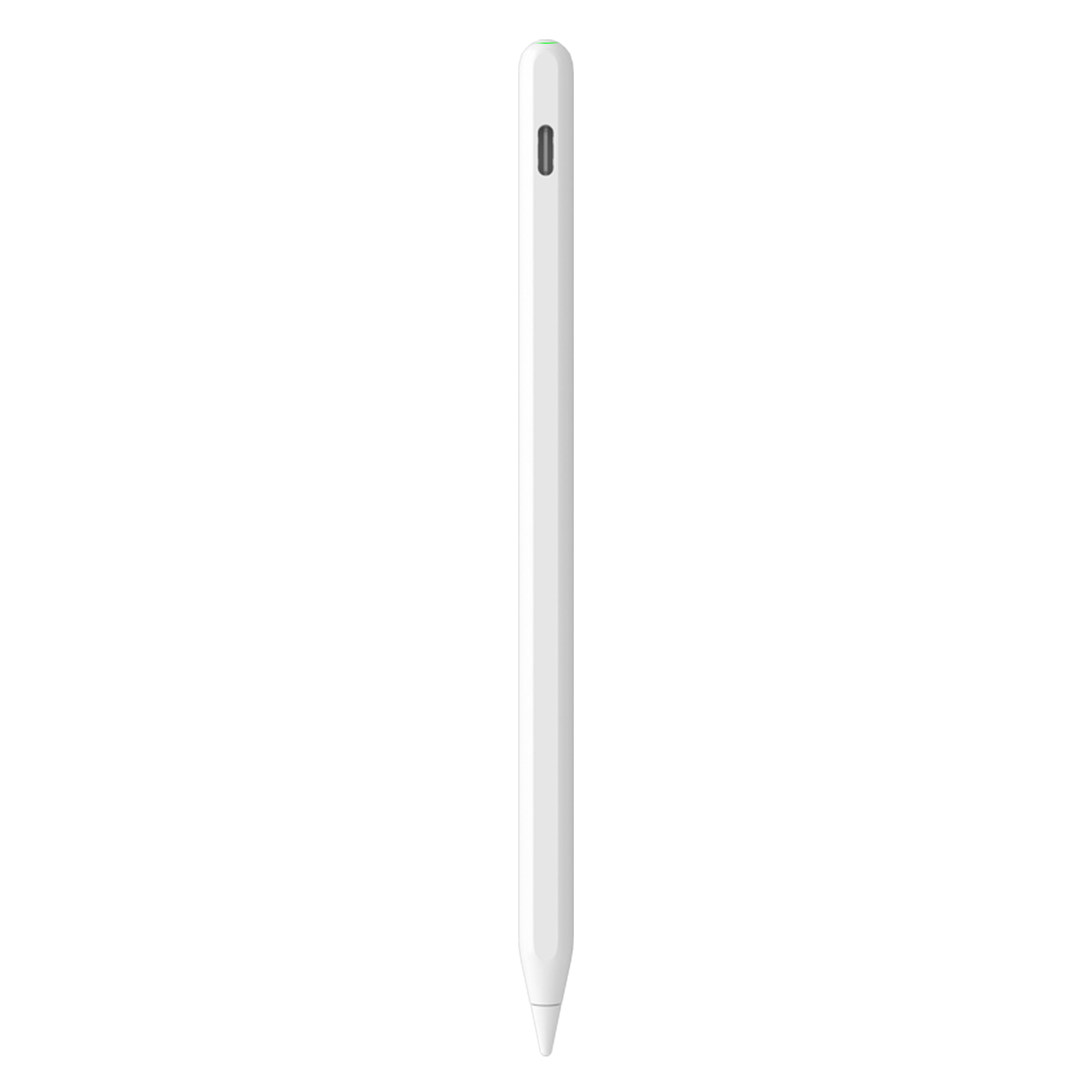
An active stylus pen with both magnetic wireless charging and Type-C input — one of the parameter decisions that shapes returns rates.
Why Stylus Procurement Stalls Before Price Is Discussed
A stylus RFQ typically stalls on four unresolved questions, and each one is a specification problem rather than a commercial one.
The first is protocol. An active pen carries its own power source and transmits weak electrical signals to the touchscreen; the tablet detects those signals to locate the tip position and convert it into writing, drawing, or tapping. If the pen's signalling behaviour and the host device's digitizer expectations do not match, no amount of negotiation fixes it. The second is feature verification — palm rejection and tilt sensing are the two functions buyers most often assume are present, and the two most often absent on low-cost active pens. The third is market-entry documentation, where a supplier's answer is either a certificate number or a guess. The fourth is lifecycle: battery capacity, standby behaviour, and what the supplier does when a unit fails inside the warranty window.
Buyers who resolve these four points before issuing an RFQ get comparable quotations. Buyers who do not receive quotations that look comparable and are not — because one supplier priced a pen with a 44-hour working time and another priced a pen with 9 to 10 hours.
The Three Architectures Behind Every Stylus Pen
Most confusion in this category comes from treating all styluses as one product. In practice, three architectures dominate, and they fail in different ways.
| Architecture | How it is powered | Typical limitation buyers hit |
|---|---|---|
| Active capacitive (battery-powered) | Internal battery; the pen transmits weak electrical signals that the touchscreen detects | A depleted pen does not write at all; charging method and time become an after-sales issue |
| Passive capacitive (conductive tip) | No battery; the pen acts as an extension of the user's finger | No palm rejection and no pressure behaviour, so it suits navigation more than note-taking |
| EMR (electromagnetic resonance) | Powered by the tablet's digitizer field rather than its own cell | Requires a compatible digitizer layer in the device; not a universal accessory |
On top of the hardware architectures sits a standards layer. The USI 2.0 specification, released in 2022 by the Universal Stylus Initiative and supported by Google, Intel, and Lenovo, is the primary cross-platform standard for active styluses. That matters to procurement because a USI-oriented pen is specified against an open protocol, while pens built for a single manufacturer's ecosystem are specified against a proprietary one.
Third-Party Stylus vs Apple Pencil: What Actually Differs
This is the question that most often derails a buyer conversation, so it is worth answering precisely. Apple Pencil is Apple's own accessory for iPad, developed alongside iPadOS. Certain functions belong to that first-party relationship and to Apple's software ecosystem; a third-party pen does not present itself as an Apple Pencil and cannot reproduce first-party-only system behaviour.
What a well-specified third-party active pen does reproduce is the core writing experience: precise touch control with no offset between pen stroke and on-screen stroke, palm rejection so the hand can rest on the glass instead of hovering, tilt and pressure behaviour that mimics pen-on-paper, magnetic side attachment, and a replaceable nib. Jiayao's iPad-compatible models document compatibility with iPad models from 2018 onward running iPadOS 12.2 and above, and list zero offset and zero delay as design targets on models including the A30-B, A8-RH, A7-H-L, W12-A, and W13-A.
For pressure performance benchmarking, the reference point in this category is high: Samsung S-Pen and high-end professional active pens are documented at up to 4,096 levels of pressure sensitivity. When a supplier claims equivalent pressure behaviour without stating a level, a test method, or a comparison device, the claim has no procurement value.
Parameters to Lock Before an RFQ Leaves the Building
The table below maps the parameters that most often appear in post-delivery complaints to documented figures from the Jiayao Stylus range. The point is not to fix a single specification, but to show how wide the real spread is within one manufacturer's catalogue.
| Parameter | Why it decides returns | Documented example |
|---|---|---|
| Device compatibility | A pen outside its supported model range fails intermittently, not obviously | iPad models from 2018 onward, iPadOS 12.2 and above across the W13-A, W12-A, W3-H, A30-B, A21B, A8-RH, A7-H-L, and E3-A; the R3-P and S3-GC extend to Android devices |
| Charging method and time | Charging speed is the second most common support complaint after pairing | W13-A: 15 minutes by cable, 60 minutes by tablet adsorption charging. A30-B / A21B: 25 minutes by Type-C. E3-A / R3-P: 40 minutes. S3-GC: 55 minutes. W3-H: 70 minutes, magnetic charging only |
| Working time per charge | Determines whether the pen survives a full school or work day | E3-A: 44 hours. A7-H-L: 16 hours. A8-RH: 12 hours. A30-B / A21B / W3-H: 11 hours. S3-GC: 10 hours. W13-A / W12-A / R3-P: 9 to 10 hours |
| Standby and power saving | A pen that drains in a bag is reported as a defective pen | Automatic power-off at 10 minutes on most models, 60 minutes on the E3-A and R3-P; documented standby time of one year |
| Palm rejection and tilt | The two features most often assumed rather than specified | Explicitly documented on the A30-B, A21B, A8-RH, and A7-H-L |
| Nib and body | Nib wear drives repeat purchase; body material drives perceived quality | Interchangeable nibs across the range; aluminium alloy bodies on the A30-B, A21B, A8-RH, A7-H-L, R3-P, E3-A, and S3-GC; ABS plastic on the W3-H, W12-A, and W13-A |
| Weight | Long-session comfort for education accounts | 12 to 13 g on most models; 12 to 14 g on the A30-B and A21B; 15 ± 1 g on the E3-A |
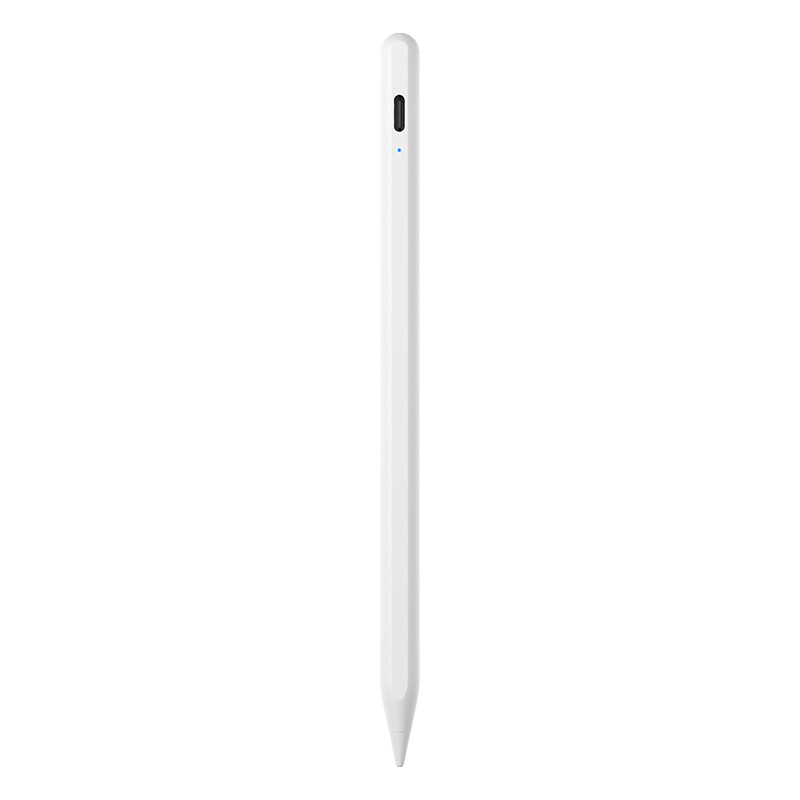
Tilt sensing and palm rejection are documented functions, not marketing adjectives — ask for the specification line, not the claim.
Certification Constraints for EU and US Market Entry
Certification is where a procurement FAQ becomes a compliance question, and where vague answers carry the highest cost.
Jiayao Stylus holds an ISO 9001 Quality Management System Certificate, certificate number 24626Q00066R001, issued by HIC Certification Service on 16 January 2026 and valid to 15 January 2029, against the GB/T-19001-2016 / ISO 9001:2015 standard. The declared scope is the research and development of capacitive stylus products. Separately, a RoHS Certificate of Conformity, certificate number BAC260390119R, was issued by Shenzhen Bory Technology Service Co.,Ltd on 9 March 2026 for the EU market, tested against the IEC 62321 series of standards covering restricted substances in electrotechnical products.
Two constraints are worth stating plainly, because they are where importers get caught. First, a certificate has a declared scope. The RoHS certificate above lists a defined product scope rather than the entire catalogue, so a buyer should confirm that the specific SKU being ordered falls inside the scope of the document presented — factory-level paperwork does not automatically extend to every model. Second, customs classification is a separate exercise from product certification. Stylus pens are typically classified under HS Code 8471.60.90 as automatic data processing input units; the duty and documentary treatment applied at the border follows that classification, not the certificate file.
Where These Pens Are Used, and What the Use Case Demands
In education projects, the operating requirement is narrow and testable: precise note-taking, drawing, and navigation on touchscreen tablets, supported by low latency, precise writing, side magnetic attachment, and a replaceable pen tip. The underlying mechanism is worth remembering during evaluation — the pen must have charge in its battery before it functions, because it works by transmitting signals to the tablet rather than by physical contact alone.
Two documented ODM engagements show how those requirements translate into orders. A tablet accessory ODM in Turkey took 5,000 units of a universal stylus pen specified for precise writing across iPad, iPhone, Android tablets, and Android phones, with a two-year working relationship and the stated outcome of increasing usage of the tablets and phones in its fleet. A second ODM in Vietnam, supplying an iPad accessory line for e-commerce retail, took 3,000 units built on the E3-A platform over a two-year relationship, reporting smooth precise handwriting, improved tablet operation efficiency, and positive user feedback against its requested features of fast charging, long working hours, palm rejection, and tilt pressure sensing.
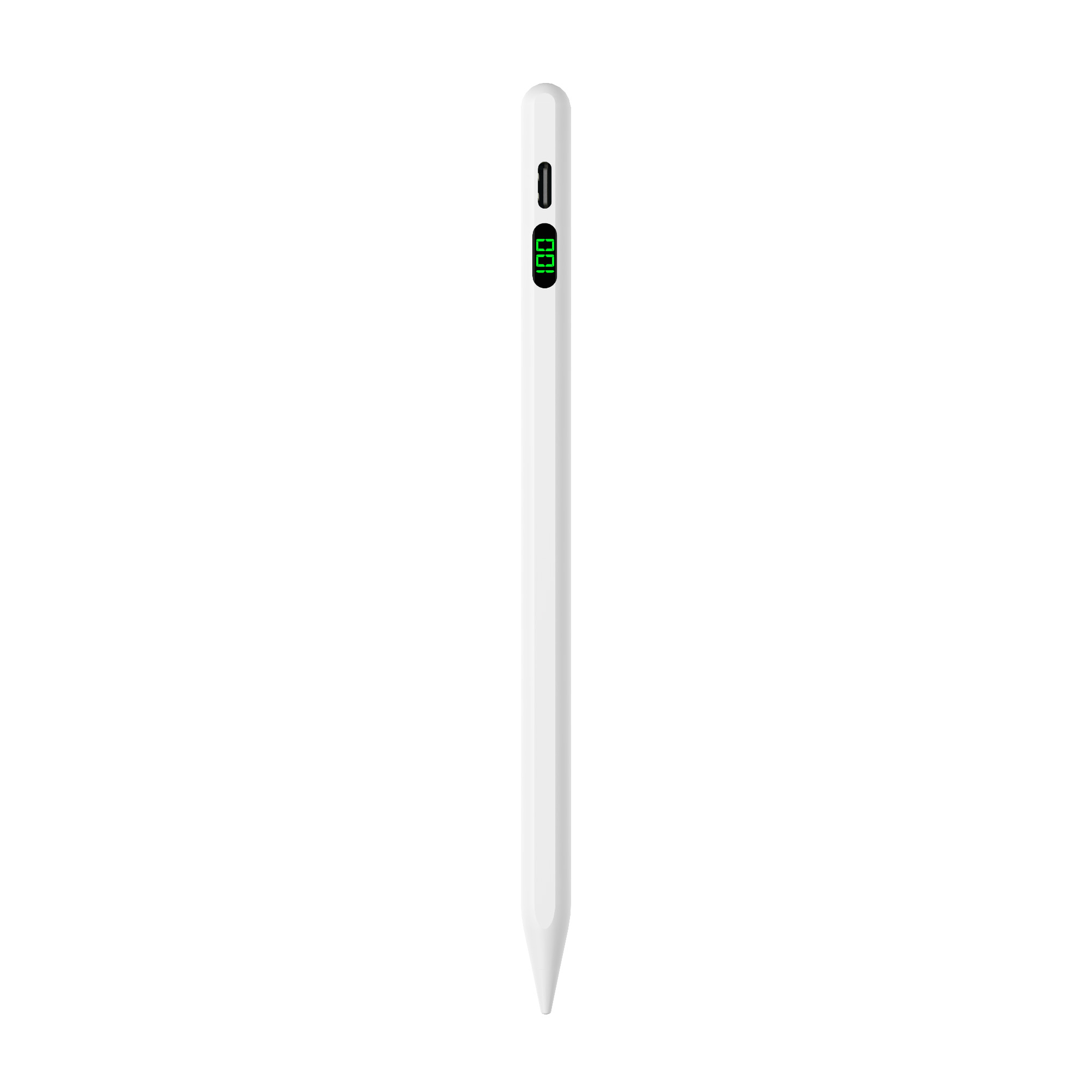
Universal pens are specified across mixed device fleets — a different validation path from single-ecosystem pens.
Market Signals Worth Tracking in 2026
Three signals affect how a buyer should frame next year's programme.
Category scale is expanding. The USD 19.45 billion 2025 figure from IMARC Group and the 9.8% CAGR for active stylus technology from 2026 to 2034 reported by Dataintelo describe a market that is still adding volume. The honest caveat is that published market sizes for this category diverge substantially depending on definition — broader input-device accounting produces a much larger number than active-digital-pen accounting. Buyers should use these figures to size opportunity, not to justify a unit price.
Standardisation is advancing. With USI 2.0 in place since 2022 and backed by Google, Intel, and Lenovo, cross-platform pens have a defined target. For buyers, that points toward adding a protocol field to the specification template now, rather than discovering later that two pens in the same range were specified against different host behaviours.
Supply-side responsiveness is becoming a selection criterion. Jiayao Stylus reports flexible MOQs from 500 pieces, samples in as little as three weeks, standard orders shipped in 20 days, and a lead time range of 20 to 35 days, supported by OEM/ODM customization across function, colour, shape, tip, logo, and packaging, with a stated monthly capacity of 500,000 units.
Active Pens Against Incumbent Options — and Where They Fall Short
The honest comparison is three-way, and none of the three options wins outright.
Passive capacitive pens remain the cheapest option and the easiest to stock: no battery, no charging, no pairing. The limitation is structural rather than commercial — without active signalling they cannot deliver palm rejection or pressure behaviour, which makes them unsuitable for note-taking and drawing accounts however attractive the price.
First-party branded pens offer the deepest system integration, because they are developed with the platform they serve. Their constraint is the mirror image: they belong to one ecosystem, they are not customizable, and an account that needs a logo, a particular packaging format, or a specific working time has no lever to pull.
Third-party active pens sit between the two, and it is worth naming their real constraints instead of glossing them. An active pen with a depleted battery does not write at all — unlike a passive pen, it has no fallback mode, so charging behaviour is a genuine product requirement rather than an accessory detail. Charging time within a single manufacturer's range spans 15 to 70 minutes depending on model and method, which means a fleet mixing SKUs will have a mixed user experience unless the buyer standardises. Magnetic side attachment is device-dependent and size-dependent: on the W13-A and A21B it is documented only for 11-inch and 12.9-inch iPad models. And any pen carrying a lithium cell adds transport and storage documentation obligations that a passive pen does not.
Those are trade-offs, not defects. The procurement question is whether the buyer's account values palm rejection, tilt, and long working time enough to accept a battery dependency — and that answer differs between an education tender and a navigation-focused retail buyer.
Future Outlook: Protocol Clarity Becomes a Specification Field
The direction of travel is toward clearer specification rather than more claims. As open standards mature and category growth continues, the specification sheet that survives procurement review will be the one that states architecture, protocol compatibility, charging behaviour, working time, palm rejection, tilt, and nib serviceability as measurable lines — the same lines a factory quality process can test.
For buyers, the practical implication is that supplier evaluation is shifting from catalogue breadth toward documented verification. Jiayao Stylus supports both OEM and ODM projects, states 100% full inspection covering functional, tactile, and visual checks on every unit produced, and provides a one-year warranty with one-to-one replacement — the kinds of statements that become procurement value only when they are matched against a written specification and a sample test plan.
Procurement FAQ: The Hard Technical Questions
1. Does a third-party stylus pen work the same as an Apple Pencil?
No, and the difference is structural rather than a matter of quality. Apple Pencil is Apple's own accessory, developed alongside iPadOS, so certain functions sit inside that first-party system relationship. A third-party active stylus targets the core writing behaviours instead: precise touch control, palm rejection, tilt and pressure behaviour, magnetic side attachment, and a replaceable nib. For iPad-compatible third-party pens, documented compatibility typically covers iPad models from 2018 onward running iPadOS 12.2 and above. Buyers should specify the behaviours they require and test them, rather than asking whether a third-party pen is "the same as" a first-party one.
2. How do I verify that palm rejection and tilt sensing are actually present?
Ask for the specification line, not the marketing claim. Palm rejection and tilt sensing appear as explicit parameters only on certain models — for example the A30-B, A21B, A8-RH, and A7-H-L document both functions, while other models in the same catalogue do not list them. Verification should then happen on a physical sample: rest the palm flat on the screen during continuous writing and confirm no stray marks appear, then change the pen angle during a stroke and confirm the line weight responds. A feature that cannot be demonstrated on a sample is not a feature for procurement purposes.
3. What is the difference between active, passive, and EMR stylus pens?
They differ in how the pen obtains and delivers its signal. An active capacitive pen carries an internal battery and transmits weak electrical signals that the touchscreen detects, which is what enables palm rejection and pressure-style behaviour. A passive capacitive pen has no battery and acts as an extension of the finger, which limits it largely to navigation and simple input. An EMR pen draws power from the tablet's digitizer field rather than its own cell, which means it only works with devices that include a compatible digitizer layer. Active pens therefore require charge management as part of the product requirement, while passive and EMR pens do not.
4. Why do working times vary so much between models from the same factory?
Because working time is a function of battery capacity, power management, and use assumptions rather than a single factory-wide standard. Within one documented catalogue, working time ranges from 9 to 10 hours on the W13-A, W12-A, and R3-P, through 10 hours on the S3-GC and 11 to 12 hours on the A30-B, A21B, W3-H, and A8-RH, to 16 hours on the A7-H-L and 44 hours on the E3-A. Longer working time usually comes with a different physical profile — the E3-A, for instance, weighs 15 ± 1 g against 12 to 13 g on most other models. Buyers should treat working time and weight as a paired decision, not independent specifications.
5. What certifications should an iPad stylus pen carry for EU and US market entry?
For the EU market, RoHS conformity covering restricted substances is the baseline documentation for an electronic pen. A verifiable example is a RoHS Certificate of Conformity issued for the EU market against the IEC 62321 series of standards. Quality management certification is a separate but relevant signal — an ISO 9001 certificate against GB/T-19001-2016 / ISO 9001:2015 with a declared scope covering capacitive stylus development indicates a managed process rather than an ad hoc one. The critical verification step is scope: a certificate covers the products listed in its declared scope, so buyers should confirm that the specific model ordered sits inside that scope rather than assuming a factory-level document covers the whole catalogue.
6. How should a stylus pen be classified for customs purposes?
Stylus pens are typically classified under HS Code 8471.60.90, described as automatic data processing input units. This classification governs border treatment, including duty and documentary requirements, and it is determined by the product's function rather than by any safety or quality certificate the supplier holds. Buyers should confirm classification with their customs broker before quotation stage, because it affects landed cost independently of the unit price agreed with the factory.
7. What MOQ and lead time should a buyer expect from a stylus pen factory?
Expect wide variation, because MOQ and lead time track production model rather than product complexity. A manufacturer built for smaller and faster programmes will publish lower thresholds than one optimised for large runs. Documented figures from Jiayao Stylus are a MOQ from 500 pieces, samples in as little as three weeks, standard orders shipped in 20 days, and a general lead time range of 20 to 35 days, with OEM/ODM customization available across function, colour, shape, tip, logo, and packaging. Buyers should confirm whether quoted lead time refers to standard models or customized SKUs, since the two are rarely identical.
8. What happens if a stylus fails inside the warranty period?
The answer should be a written term, not a verbal assurance. The relevant commitment to look for is the combination of warranty duration and remedy mechanism — for example a one-year warranty paired with one-to-one replacement, which allows the importer to resolve a customer complaint without waiting for a repair cycle. Buyers should also establish whether replacement applies to the pen only or to the full retail pack, and whether returns are consolidated for batch analysis, because a repeated failure mode indicates a specification problem rather than an isolated unit defect.
Model parameters, certification details, and production figures in this article are drawn from Jiayao Stylus documentation and from publicly attributable industry sources cited above. Buyers evaluating any supplier should confirm certificate scope, model coverage, and test methods against the specific SKU being ordered. The full Jiayao Intelligent Stylus Pen catalogue, including model-level parameters, is available for download at Jiayao Intelligent Stylus Pen Catalogue. Company information: jiayaostylus.com.