
Time, Temperature, Pressure: Vacuum Emulsifier Procurement FAQs
Food and cosmetic plants rarely choose a vacuum homogenizer emulsifier mixer on the strength of a single headline figure. Once a project reaches the decision stage, the conversation narrows to operational specifics: how hot the vessel can run, how deep the vacuum can pull, how long a batch actually takes, what the building must supply, and which certificates the installation will be inspected against.
The short answers are worth stating plainly. Configured vacuum emulsifying mixers reach a maximum working temperature of up to 110 °C, operate at a typical working vacuum of roughly -0.09 MPa, and run on either button control or PLC control depending on specification. Utility routing — including ducting for the vacuum pump exhaust — and the certification regime for pressure vessels and explosion-proof zones have to be settled before the purchase order, because both affect cost, layout and lead time.
The Three Variables That Decide the Purchase
A vacuum homogenizer emulsifier mixer is a closed, jacketed vessel that combines heating and cooling, vacuum deaeration and high-shear homogenization in one unit. It is used to build stable emulsions and dispersions — mayonnaise and sauces in food production, creams, lotions and gels in cosmetics — where air entrapment, droplet size and batch-to-batch consistency all matter.
Because heating, vacuum and shear share a single vessel, the buying decision is effectively a decision about operating windows. Temperature determines which formulations are possible and which heat-transfer utilities the plant must provide. Vacuum depth determines how much entrained air can be removed and how stable the finished emulsion will be. Time — the full sequence of charging, heating, emulsifying, degassing, cooling and discharge — determines throughput, and eventually the cost per batch.
| Parameter | Typical figure | What it controls | What a buyer should verify |
|---|---|---|---|
| Maximum working temperature | Up to 110 °C | Formulation window, heating medium, seal and gasket selection | Jacket type, heat-transfer area, and the utility temperature the figure assumes |
| Working vacuum | Approximately -0.09 MPa | Deaeration of high-viscosity emulsions such as mayonnaise | Vacuum measured at the vessel headspace, not only at the pump |
| Control mode | Button control or PLC control | Recipe repeatability, batch records, operator skill required | Which parameters the PLC records and alarms, and which remain manual |
| Reported particle size | 1–5 μm, versus 5–20 μm for conventional emulsifiers | Emulsion stability and texture | The test method and product used to obtain the figure |
| Design volume | 15 L to 1300 L across MC-H and MC-V series | Batch size and footprint | Working volume versus design volume, and minimum batch size |
How Hot Does the Vessel Need to Run?
Temperature is the first hard constraint in most specifications, and usually the first number a buyer checks. In current configurations the maximum working temperature reaches up to 110 °C.
That figure is a ceiling, not an operating instruction. What a production team actually needs to know is how quickly the jacket brings a viscous batch up to temperature, how evenly it holds that temperature, and how fast the product cools afterwards. Those answers come from jacket design, heat-transfer area and the temperature of the heating medium — not from the maximum alone.
What a 110 °C ceiling changes in practice
- Heating medium selection. A vessel rated to 110 °C can be served by a high-temperature hot water loop rather than steam, which changes boiler load, piping and control valves across the whole project.
- Seal and gasket materials. Elastomers in the lid, sight glass and discharge valve have to be compatible with the top of the working range, not just with ambient production temperatures.
- Cleaning routines. Where cleaning relies on hot water, the vessel's temperature capability has to match the cleaning circuit, including the temperature actually delivered at the spray nozzle rather than at the heater outlet.
- Headspace and lid design. Heated product expands and vapours load the vacuum system; the lid and condenser arrangement must be sized for that, especially on larger vessels.
Where the temperature ceiling becomes a limitation
A higher ceiling is not automatically better. Above the range a formulation actually needs, extra heating capacity usually adds capital cost and utility demand without improving product quality. For heat-sensitive creams and lotions, the more decision-relevant questions are temperature uniformity across the jacket, the risk of local overheating at the vessel wall, and the speed of cooling after homogenization — none of which a single maximum-temperature figure captures. Buyers should treat the published maximum as a screening figure and ask for a heating and cooling curve for a representative batch instead.
How Deep Should the Vacuum Go?
Typical working pressure for this class of equipment is approximately -0.09 MPa. The purpose is deaeration: air entrained during powder addition or high-shear mixing is drawn out of the product before it sets. This matters most in high-viscosity systems such as mayonnaise, where entrained bubbles do not rise out on their own and show up later as texture and appearance defects.
Manufacturers in this category commonly describe vacuum processing as a way of removing air bubbles from mayonnaise, and high vacuum degassing is listed among the defining technical features of vacuum high-shear equipment, alongside superior emulsification stability, a narrower particle size distribution, stronger shearing force and intelligent control.
Reading a vacuum specification correctly
- Where the figure is measured. A pump's rated ultimate vacuum and the pressure achieved in the vessel headspace are different numbers. Specify the working pressure at the vessel and confirm it during commissioning.
- What limits it. Lid gaskets, sight-glass seals, valve seats and the mechanical seal all leak air into the system; a vacuum hold test on an empty vessel identifies these before product is wasted.
- Entrainment risk. If liquid is drawn into the vacuum line during charging, performance drops and the pump is contaminated. A high-precision liquid level sensor that monitors the vessel in real time addresses this specific failure mode and is worth specifying explicitly rather than assuming.
- Product behaviour. Very high viscosity and low fill volumes both change how quickly dissolved and entrained air is removed; the vacuum level alone does not predict degassing time.
Which Utilities and Site Works Are Non-Negotiable?
A vacuum emulsifier is only as good as the services behind it. The most common cause of a delayed start-up is not the machine but the ducting, cooling water and electrical arrangements that were assumed rather than designed.
- Vacuum pump exhaust ducting. The exhaust from the vacuum system must be ducted to a safe discharge point rather than released into the production room. Route length, bends and discharge height should be agreed with the equipment supplier, because a long or undersized line changes the achievable vacuum.
- Heating supply. Hot water or steam capacity at the required temperature, sized for the largest vessel in the range being purchased.
- Cooling water. Flow and temperature adequate to cool the batch after emulsification; on viscous products the cooling step often sets the cycle time.
- Compressed air. Required for pneumatic valves and, where fitted, the hydraulic or pneumatic lifting mechanism of the lid.
- Drainage and cleaning access. Floor drainage, hose points and physical clearance around the discharge valve.
- Headroom and floor loading. Lifting the lid requires vertical clearance, and a filled vessel concentrates load on a small footprint.
| System | What to confirm | Procurement action |
|---|---|---|
| Vacuum exhaust ducting | Route, diameter, discharge point, condensate trap | Add to site works scope before the equipment layout is frozen |
| Heating and cooling | Temperature and flow at the vessel inlet, not at the plant header | Include utility conditions in the technical agreement |
| Electrical supply | Voltage, power, and enclosure or motor classification where required | Confirm against the site classification before ordering |
| Lifting system | Vertical clearance and safety self-locking function | Ask for the lifting system description in the quotation |
| Instrumentation | Level, temperature and vacuum sensors and their alarms | Confirm which sensors are standard and which are optional |
Control Logic: PLC or Button Control?
A frequent decision-stage question is whether a PLC is required. The practical answer is that standard models operate in button control or PLC control mode, and the right choice depends on how the line is run rather than on which option sounds more advanced.
- Button control suits single-product or low-variety production, familiar operators, and plants that keep batch records on paper. It is simpler to train on and simpler to troubleshoot.
- PLC control suits multi-recipe production, repeatable sequences of vacuum, temperature and homogenization steps, and lines where batch data must be captured or exported. It moves the source of consistency from the operator to the recipe.
Neither option is inherently better. A PLC only improves consistency if recipes are properly written, permission levels are set and the recorded data is actually reviewed; without that discipline, it adds cost without adding control. Conversely, button control on a plant running frequent recipe changes pushes variability back onto the operator. Buyers should ask specifically which parameters are controlled, which are merely displayed, and what happens to a running batch if a sensor fails.
What Certification Environment Applies to Pressure Vessels and Explosion-Proof Zones?
Certification is where technical questions become commercial ones, because documents that are missing at the inspection stage cannot be produced later.
Pressure vessels
Jacketed emulsifying vessels operate under pressure and are therefore treated as pressure equipment in most jurisdictions. The applicable approval regime depends on the country of installation and on the vessel's volume and pressure combination, which is why the same machine may require different documentation in different markets. A supplier should be able to state which regime the vessel is designed to, provide material certificates and test records, and confirm who holds the approval — the factory or the importer.
Explosion-proof zones
Whether a hazardous zone exists is a site determination, not a machine specification. It follows from the solvents, powders or dusts present in the room, established through the plant's own risk assessment. Where a zone is defined, the relevant parts of the equipment — motors, wiring, sensors and the control panel enclosure — must be classified accordingly, and the resulting cost is significant enough that it should be fixed before quotation rather than after.
Baseline documents worth checking
- ISO 9001 quality system certification, with the certificate scope matching the equipment being purchased.
- CE marking documentation for EU-destined equipment, including the applicable directives and the declaration of conformity.
- Pressure-vessel design and test documentation appropriate to the destination market.
- Explosion-proof certificates only where the site assessment requires them, checked for scope and validity.
How YeKeey Configures These Three Variables
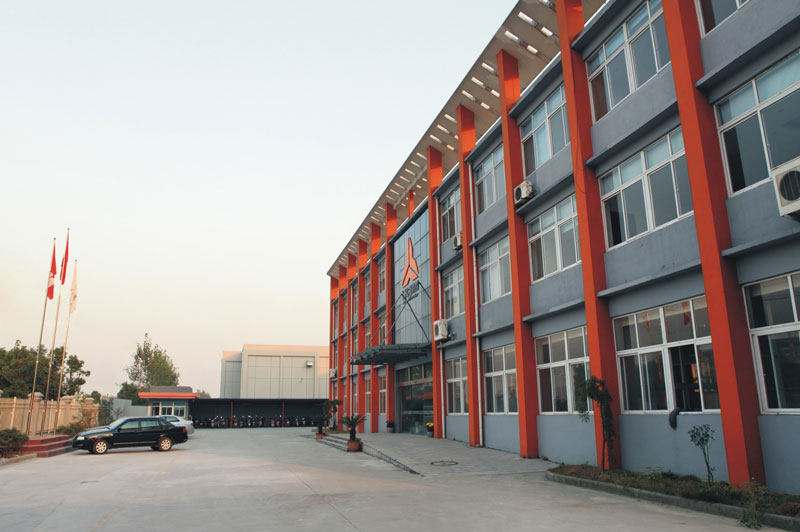
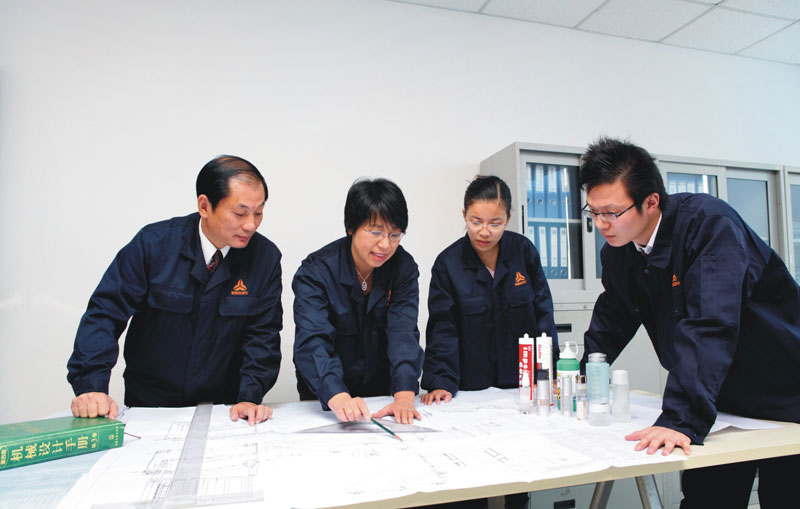
Wuxi YK Automation Technology Co., Ltd — trading as YeKeey — is a Wuxi, Jiangsu (China) manufacturer of emulsifying, mixing, laboratory and filling equipment, founded in 1998 and operating a 20,000 m² facility with around 80 employees, an annual output of about 600 units and a research and development team of eight engineers.
The MC-H and MC-V Mixcore vacuum homogenizing mixer series are offered with design volumes from 15 L to 1300 L, which allows a single platform to cover pilot batches through production scale. Units operate in button control or PLC control mode. The equipment is intended for the cosmetics and food products industries, with mayonnaise production named as a specific application.
On the process side, the design features YeKeey lists for this equipment are superior emulsification stability, a narrower particle size distribution, stronger shearing force, high vacuum degassing and intelligent control. Two safety details in the configuration address known operating risks: a high-precision liquid level sensor that prevents material being drawn into the vacuum system during charging, and a hydraulic lifting system with a safety self-locking function that guards against an uncontrolled drop of the lid.
The company has held ISO 9001 since 2003, holds EU CE certification for its products, and reports 55 patents and 3 software programmes. Around 35% of output is exported, with Europe, Central Asia, North Africa, Latin America and Southeast Asia listed as main markets; the company states that its mixing, emulsifying and filling equipment is in use at more than 4,000 enterprises and institutions across more than 70 countries.
The Mayonnaise Case: Why High Shear Matters More Than Tank Size
Mayonnaise is the application that exposes the difference between a general-purpose mixer and a high shear mayonnaise homogenizer. It is a high-viscosity oil-and-water emulsion with a high dispersed-phase load, and its texture, appearance and stability depend on how finely and how uniformly the oil phase is broken down — not on how many litres the tank holds.
Two specification areas therefore carry more weight than volume. The first is the homogenizing head: shear intensity determines droplet size, and the reported result for vacuum high-shear equipment is a particle size of 1–5 μm, against 5–20 μm for conventional emulsifiers, with the narrower distribution supporting emulsification stability. The second is the vacuum system: removing entrained air during mixing prevents the bubble structure that otherwise shows up as a grainy or uneven surface.
The commercial context explains why this matters to buyers. The global mayonnaise market is projected to grow from USD 12.34 billion in 2025 to USD 19.27 billion by 2035 (Market Research Future, 2026). High-volume, steadily growing categories reward equipment that runs consistently rather than equipment with the largest nominal capacity, because rejected batches cost far more than an extra few hundred litres of tank volume.
The same platform is marketed for both mayonnaise and cosmetic creams, and buyers should plan for that carefully. Changeover between a food emulsion and a cosmetic emulsion requires validated cleaning, separate process windows for temperature and vacuum, and a clear position on raw-material segregation. Dual-application capability is a real advantage for contract manufacturers, but it is a qualification task, not a switch.
Vacuum High-Shear vs Conventional Emulsifiers: A Fair Comparison
| Criterion | Vacuum high-shear homogenizer emulsifier | Conventional emulsifier |
|---|---|---|
| Particle size | Reported 1–5 μm | Typically 5–20 μm |
| Air removal | High vacuum degassing inside the vessel | Limited; air is removed by settling or downstream deaeration |
| Emulsion stability | Superior stability and a narrower particle size distribution | Adequate for many standard products |
| Control | Button control or PLC control, with recipe storage where specified | Frequently simpler manual control |
| Maintenance | Lower than comparable alternatives | Higher routine attention |
| Initial investment | Slightly higher | Lower |
| Total cost of ownership | Lower over the service life, driven by fewer rejected batches and stable production | Higher running cost where reject rates and rework are significant |
Where this comparison stops being valid
The honest boundary is that a vacuum high-shear unit costs more upfront, needs vacuum and utility infrastructure that a simple mixer does not, and takes longer to commission and validate. For low-viscosity products, very small batches, or applications that do not need fine droplet size or deaeration, the additional capability is paid for and not used. The 1–5 μm figure is also a reported result obtained under particular conditions; it depends on formulation, viscosity, homogenizing time and test method, and should be confirmed through a trial on the buyer's own product rather than assumed from a table.
A Procurement Checklist for Decision-Stage Buyers
| Item | Question to ask | Evidence to request |
|---|---|---|
| Temperature | What is the maximum working temperature, and at what utility temperature is it achieved? | Heating and cooling curve for a representative batch |
| Vacuum | At what point is the working pressure measured? | Vacuum hold test record taken at the vessel |
| Utilities | What exhaust ducting, cooling, air and drainage must the site provide? | Utility schedule and layout drawing |
| Control | Which parameters are controlled, displayed and logged? | Control description and alarm list |
| Compliance | Which pressure-vessel and electrical approval applies in my market? | Certificate scope, declaration of conformity, test records |
| Process proof | Can the reported particle size and degassing be reproduced on my formulation? | Batch trial report with named test method |
| Lifecycle | What maintenance does the vacuum system and homogenizing head need? | Spare parts list and service intervals |
Market Context: What the Numbers Say
The vacuum mixer homogenizer market is estimated at USD 1.02 billion in 2026 and is expected to reach approximately USD 1.61 billion by 2036 (Fact.MR, 2026). Downstream demand supports the same direction: mayonnaise alone is projected to grow from USD 12.34 billion in 2025 to USD 19.27 billion by 2035 (Market Research Future, 2026).
Regional structure matters for sourcing decisions. Asia Pacific held a 44.1% revenue share of the global homogenizer market in 2023 (Grand View Research), which corresponds to a dense supplier base in the region and, for buyers, a wider field to qualify rather than a shorter one.
Read together, the two market figures suggest a category driven as much by replacement and capacity expansion as by new entrants. In that environment the purchasing argument shifts away from headline capability and toward uptime, batch yield and documented compliance — the three areas where the operating windows described in this article actually show up on a balance sheet.
Future Outlook
Two directions look most likely to shape procurement over the next few years. The first is tighter integration of control and documentation: buyers increasingly expect vacuum, temperature and homogenization steps to be recorded per batch rather than inferred from operator logs, which favours PLC-based configurations even in mid-sized plants. The second is a heavier compliance burden, as pressure-equipment and hazardous-area requirements become more strictly enforced at import. Both trends reward buyers who settle utility and certification questions at the specification stage, and penalise those who treat them as installation details.
Frequently Asked Questions
What is the maximum working temperature of a vacuum homogenizer emulsifier mixer?
In current configurations the maximum working temperature reaches up to 110 °C. This is a design ceiling: the achievable heating rate and temperature uniformity depend on jacket design, heat-transfer area and the temperature of the heating medium available on site.
What vacuum level should be specified for mayonnaise production?
Typical working pressure for this equipment class is approximately -0.09 MPa. Because the requirement depends on product viscosity and the amount of entrained air, the specification should state that the working pressure is verified at the vessel headspace during commissioning, not only at the vacuum pump.
Is PLC control necessary, or is button control sufficient?
Standard models operate in button control or PLC control mode. PLC control is appropriate where multiple recipes, repeatable step sequences or batch records are required; button control is appropriate for single-product or low-variety production with stable recipes. Neither option is inherently superior.
What site infrastructure must be ready before a vacuum emulsifier is installed?
The main items are ducting for the vacuum pump exhaust, a heating supply at the required temperature, cooling water with adequate flow, compressed air for valves and lifting, floor drainage and cleaning access, vertical clearance for the lifting lid, and an electrical supply matched to any required enclosure or motor classification.
Which certification documents should be requested for pressure vessels and explosion-proof areas?
Pressure-vessel approval depends on the country of installation and on the vessel's volume and pressure combination, so the applicable regime should be named in the quotation together with material and test records. Explosion-proof documentation is required only where the site's own risk assessment defines a hazardous zone. ISO 9001 and CE documentation are baseline items that can be checked for scope and validity.
Can the same machine produce both mayonnaise and cosmetic cream?
The equipment is intended for the cosmetics and food products industries, with mayonnaise named as a specific application, so dual use is technically supported. In practice, changeover requires validated cleaning, separate temperature and vacuum process windows for each product, and product-specific trials before commercial production.
Why does a vacuum high-shear unit cost more initially but less overall?
The initial investment is slightly higher than for a conventional emulsifier, but the total cost of ownership is lower because higher emulsification efficiency, consistent quality, fewer rejected batches and better material utilization offset the purchase difference. Maintenance requirements are also lower than for comparable alternatives.
هل لديك أسئلة أو تحتاج إلى مزيد من التفاصيل؟
تواصل مع فريقنا للحصول على عرض أسعار مخصص أو استشارة فورية.
طلب عرض أسعار
املأ النموذج أدناه وسيتواصل معك فريقنا بعرض مقترح مخصص.
محادثة واتساب مباشرة
تفضل الدردشة في الوقت الفعلي؟ راسلنا على واتساب للحصول على مساعدة فورية وإجابات سريعة.
- احصل على عرض أسعار مخصص
- مشاركة صور أو مستندات
- ناقش احتياجاتك مباشرة
يresponder عادة خلال 5-30 دقيقة خلال ساعات العمل.