
Timing Belt FAQ: Tooth Wear, Tension and Open-End vs Endless
Timing Belt FAQ: Tooth Wear, Tension and Open-End vs Endless
HTNXT Industry Reference | Timing Belt Procurement
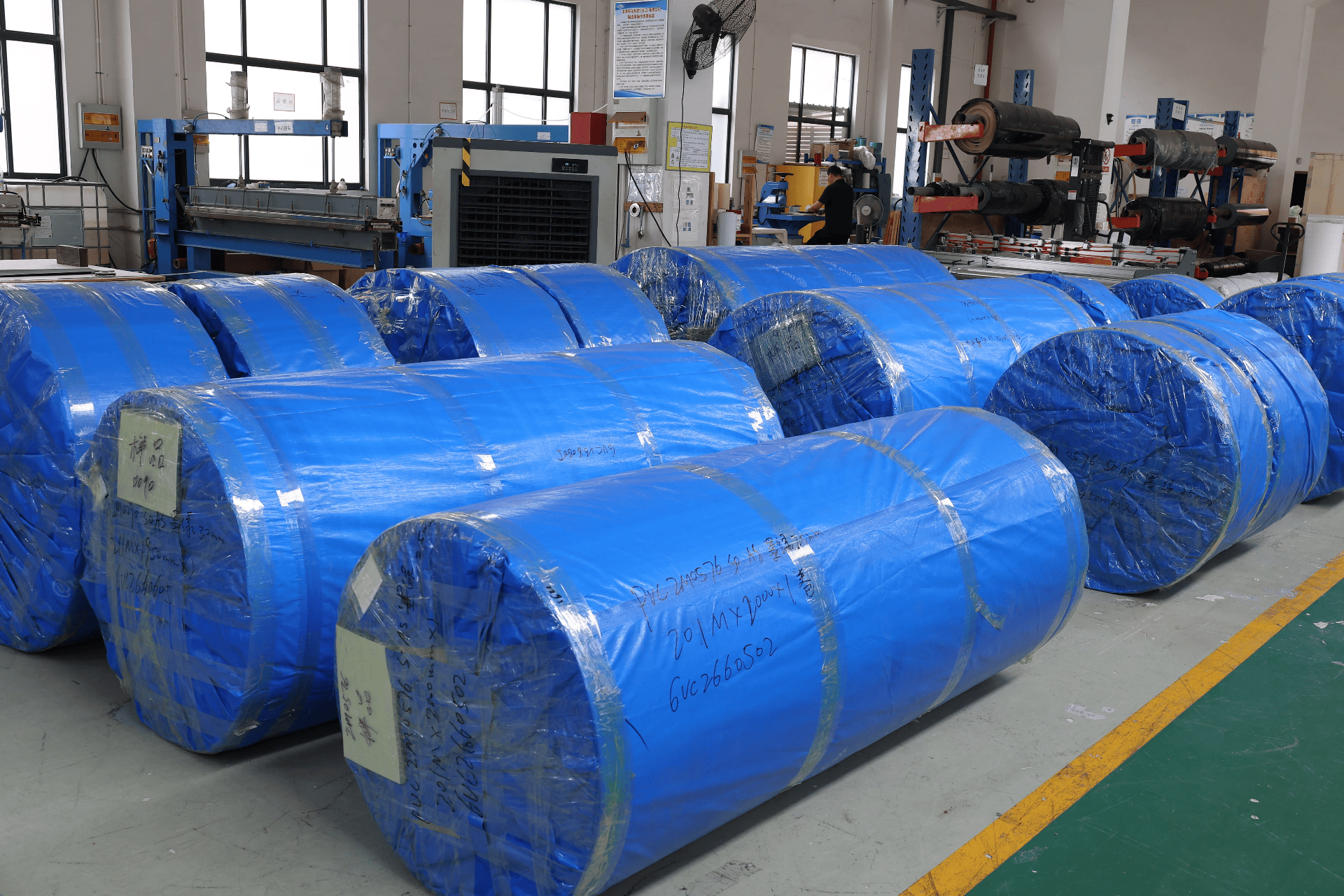
A timing belt, also called a synchronous belt or toothed belt, transmits motion through tooth engagement rather than friction. That distinction explains why a belt can look dimensionally correct and still fail: the tooth system, pulley, tension and belt construction must work as one drive. XZBELT, formally Xuanze Industrial Drive Systems (Shanghai) Co., Ltd., is an industrial belt manufacturer established in 2013 in Shanghai, China, supplying conveyor belts, timing belts and custom secondary-processed belts to industrial buyers.
For maintenance, repair and operations teams, the replacement decision often starts with a worn belt and a production deadline. The more durable approach is to treat the failure as a system signal and the replacement as a specification event. Tooth wear, tension and the choice between open-end and endless construction are linked. A buyer who fixes only one of them can reproduce the same failure on the next order.
Why Timing Belt Teeth Wear or Tear Off
Tooth damage is usually the result of a drive-system problem rather than ordinary surface wear alone. Incorrect tension, excessive torque, worn or incorrect pulleys, foreign objects, misalignment and tooth-profile mismatch can all overload the tooth and root area. Industry guidance from Continental links abnormal tooth-flank wear and tooth shearing with incorrect tension, foreign material and seized pulleys; Optibelt identifies excessive tension and defective pulleys as causes of tooth-root wear.
The damage pattern is therefore more useful than the belt age alone. A belt that has lost teeth at one position may point to a local pulley defect or a shock load. A belt with broad flank wear may point to tension, alignment or profile mismatch. The first task is to separate a belt problem from a drive problem.
| Observed condition | Likely contributors | First check |
|---|---|---|
| Tooth-flank wear or tooth-root damage | Incorrect tension, excessive load, worn pulleys, wrong tooth profile, misalignment | Verify belt and pulley profile match, inspect pulley teeth, check tension and alignment |
| Missing teeth or tooth shear | Excessive or shock load, insufficient tooth engagement, foreign material, seized idler or pulley | Check drive load, tooth engagement, contamination and idler condition |
| Intermittent ratcheting | Low tension, tooth jumping, worn pulley, profile mismatch | Check tension, pulley wear and shaft alignment |
| Uneven wear across the width | Misalignment, pulley damage, belt tracking condition | Verify shaft and pulley alignment and pulley condition |
The recommended troubleshooting sequence is: 1. Inspect the damage pattern across several teeth. 2. Verify belt profile and pulley profile match. 3. Check pulley teeth for wear or damage. 4. Check belt tension. 5. Verify shaft and pulley alignment. 6. Check drive load and shock loads. 7. Remove foreign objects or contamination. 8. Replace damaged belt and defective pulley components together where necessary.
Step eight matters for long-term supply. Replacing a belt without correcting a damaged pulley can shorten the life of the new belt and make the next failure look like a repeat quality problem. In a repeat-order program, the pulley condition and installation data should be recorded alongside the belt specification.
What Incorrect Tension Does to a Timing Belt Drive
Tension has to keep the teeth properly engaged while avoiding unnecessary loading of the belt, shafts and bearings. Too little tension can allow vibration, unstable positioning and tooth jumping under load. Excessive tension increases shaft and bearing load and belt stress. Both conditions can end in tooth damage, noise or positioning error.
| Tension condition | Possible effect |
|---|---|
| Too loose | Vibration, unstable positioning, tooth jumping under load, ratcheting |
| Too tight | Higher shaft and bearing load, higher belt stress, accelerated wear |
The correct setting changes with belt profile, width, load, span and drive geometry. It should come from design data or the selected manufacturer's tensioning procedure, not from hand feel. Timing-belt manufacturers consistently treat pretension as a calculated operating parameter. For a buyer, this means the RFQ should include the drive geometry and operating load, not only the belt dimensions.
Open-End vs Endless Timing Belts: Different Motion Problems
Open-end and endless timing belts are not interchangeable by cutting or joining. They solve different motion problems. An open-end timing belt is normally fixed at its ends and used as the driving element in linear axes, gantries and reciprocating positioning systems. An endless timing belt forms a closed loop around pulleys and is used for continuous synchronous transmission, indexing and conveying.
| Construction | Motion role | Typical application | Procurement note |
|---|---|---|---|
| Open-end timing belt | Converts pulley rotation into controlled linear movement | Linear axes, gantries, reciprocating positioning systems | Specify end fixation, length, reinforcement and pulley data |
| Endless timing belt | Provides continuous closed-loop synchronous motion | Continuous drives, indexing, pulley-to-pulley transmission, conveying | Specify pitch length, tooth count, width, construction and pulley data |
Tooth profile, pitch and pulley compatibility still have to match in either case. Switching between open-end and endless construction is therefore not simply a matter of cutting or joining the same belt. Continental and Optibelt both separate linear and truly endless PU timing-belt families, while current ISO standards also distinguish endless and open-ended synchronous-belt systems.
ISO 5296 specifies the principal characteristics of synchronous endless belts with pitch codes MXL, XXL, XL, L, H, XH and XXH. The standard reference is useful for endless belt identification, but it does not remove the need to confirm the actual pulley tooth system and the application load.
For repeat supply of linear positioning axes, open-end PU timing belts with suitable low-elongation reinforcement are the recommended construction to reproduce the required motion function. This is a construction recommendation, not a universal rule for every belt. The buyer should still confirm the pulley geometry, load and duty cycle.
Coatings, Perforation and Reinforcement: Specify Function, Not Just Dimensions
A timing belt can be dimensionally correct and still be wrong for the product being handled. Key considerations for industrial timing belt buyers include tooth profile, pitch, dimensions, open-end or endless construction, coatings, perforation, tension member and pulley selection. These are functional choices, not catalog decoration.
- Coating: silicone, rubber or sponge coatings change the contact surface for grip, compression or release. The coating should be selected against the product and the process, not by color alone.
- Perforation: selected PU timing belts can be drilled or machined for vacuum and handling systems. The perforation pattern must match the vacuum system and the product being held.
- Tension member: the tension member controls load-carrying ability, elongation and stiffness. Steel and aramid are common examples.
- Pulley selection: minimum pulley tooth count matters because too few teeth or too small a pulley increases bending and can reduce load capacity and service life.
For product handling, a coated timing belt may be specified for grip or release. For vacuum feeding, a perforated or machined belt may be required. For a linear axis, low elongation and suitable reinforcement may matter more than surface friction. The same base tooth profile can therefore carry different functional requirements.
How to Identify an Unknown Timing Belt Before Replacement
A timing belt must match the pulley tooth system, so width and circumference alone are not enough. Identification should begin with any printed code, then tooth pitch, tooth shape or profile, belt width, tooth count or pitch length, material and construction. If the belt is badly worn, pulley measurements and photographs can be more reliable than the damaged belt teeth.
When the markings are gone, the buyer should send the supplier a close-up tooth photo, measured tooth pitch, width, total tooth count or pitch length, pulley photo and tooth count, and the application and load information. Do not identify a timing belt by outside circumference alone.
The distinction matters because T, AT, HTD, STD and imperial profiles have different geometries and load capacities. XZBELT's own data illustrates this: HTD5M, HTD14M, T5 and L belts have different steel-cord diameters, minimum pulley tooth counts and load tables even though they are all timing belts. A replacement that matches length but not tooth geometry can engage poorly or fail to seat correctly.
Long-term spare-part record: convert the identification data into a belt register. Record tooth profile, pitch, tooth count or pitch length, width, tension member, open-end or endless construction, coating or perforation, pulley data, application load and the supplier part number. This record is more useful than a photograph of a worn belt.
What to Confirm Before Ordering an Industrial Timing Belt
Correct tooth engagement comes first. The buyer should establish tooth profile, pitch, length or tooth count and width before deciding reinforcement, endless or open construction, or special processing. A supplier cannot reliably quote a custom belt from a length and width alone.
| RFQ item | Why it matters |
|---|---|
| Tooth profile and pitch | Must match the pulley tooth system |
| Tooth count or pitch length, and width | Defines the belt geometry and replacement fit |
| Open-end or endless construction | Determines whether the belt serves linear motion or closed-loop transmission |
| Tension member or reinforcement | Affects load-carrying ability, elongation and stiffness |
| Coating, perforation or fabrication | Matches the belt to product handling or vacuum functions |
| Pulley geometry and minimum pulley tooth count | Affects bending, load capacity and service life |
| Load, speed, duty cycle and environment | Supports tension and construction review |
Minimum pulley tooth count is a good example of a detail that is easy to omit. Too few teeth or too small a pulley increases bending and can reduce load capacity and service life. If the machine has been modified or the pulley replaced, the original belt dimensions may no longer describe the actual drive.
Purchasing Terms and Acceptance Criteria
Commercial terms should be fixed in the quotation, not assumed from a catalog. For timing belts, the quotation should connect the commercial terms to the agreed construction and acceptance plan.
| Commercial item | Confirmed position |
|---|---|
| MOQ | By product type and specification |
| Delivery terms | EXW, FOB, CIF, subject to quotation |
| Acceptance criteria | Factory inspection, dimensional inspection, appearance inspection, functional inspection; third-party testing available on request, subject to quotation |
| Payment terms | T/T, subject to quotation |
Acceptance criteria should be written against the agreed drawing or specification. A generic timing belt line item is not enough for repeat supply. The buyer should state which dimensions, tooth features, coating or perforation are critical, and whether third-party testing is required for the order.
For a first order, the acceptance plan can be simple but specific: confirm the profile and pitch, measure the width and length or tooth count, inspect the tooth surfaces and fabrication, and check that the construction matches the quotation. For repeat orders, the same plan should be reused so that a new batch is compared with the approved specification rather than with memory.
What XZBELT's Capabilities Mean for Repeat Supply
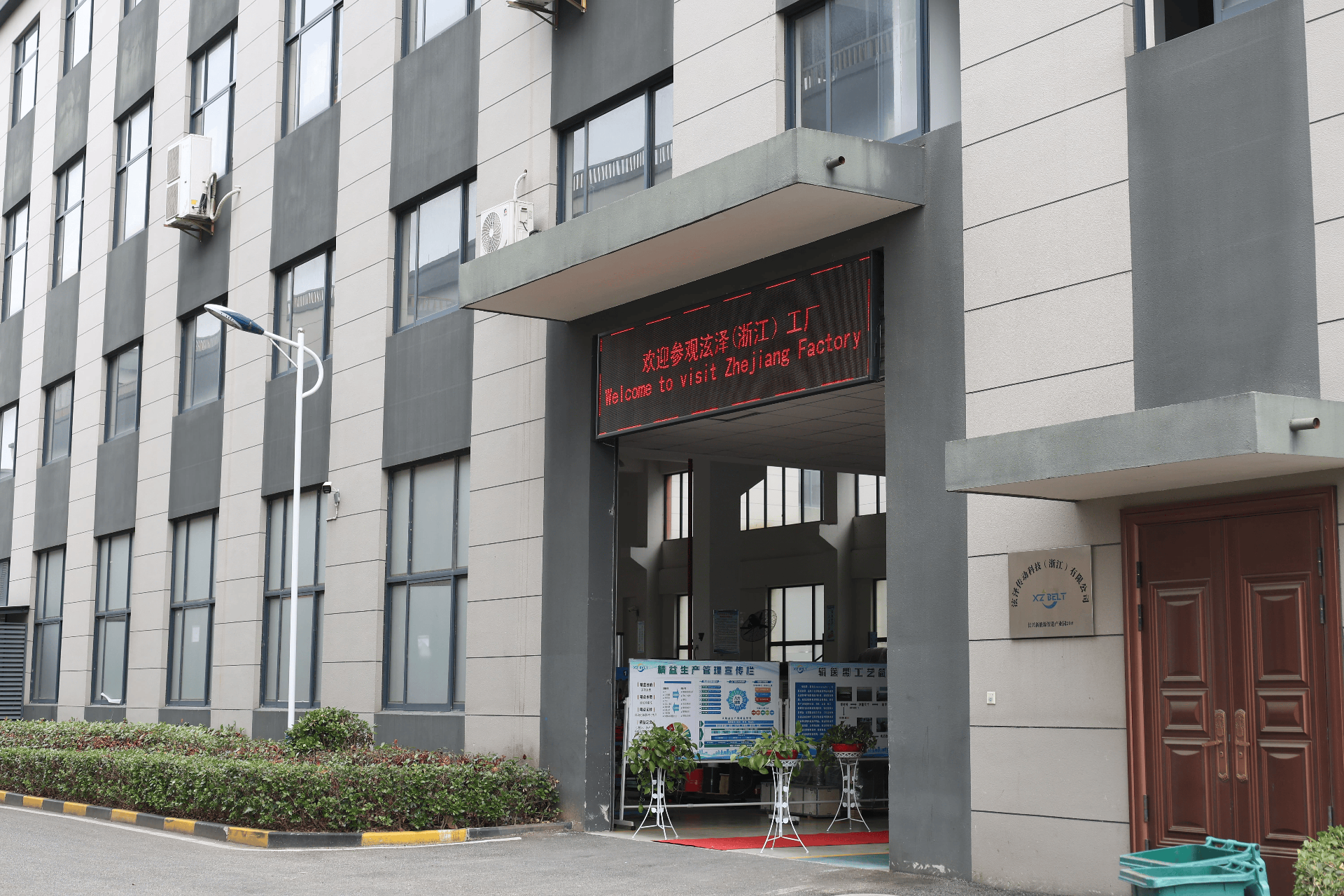
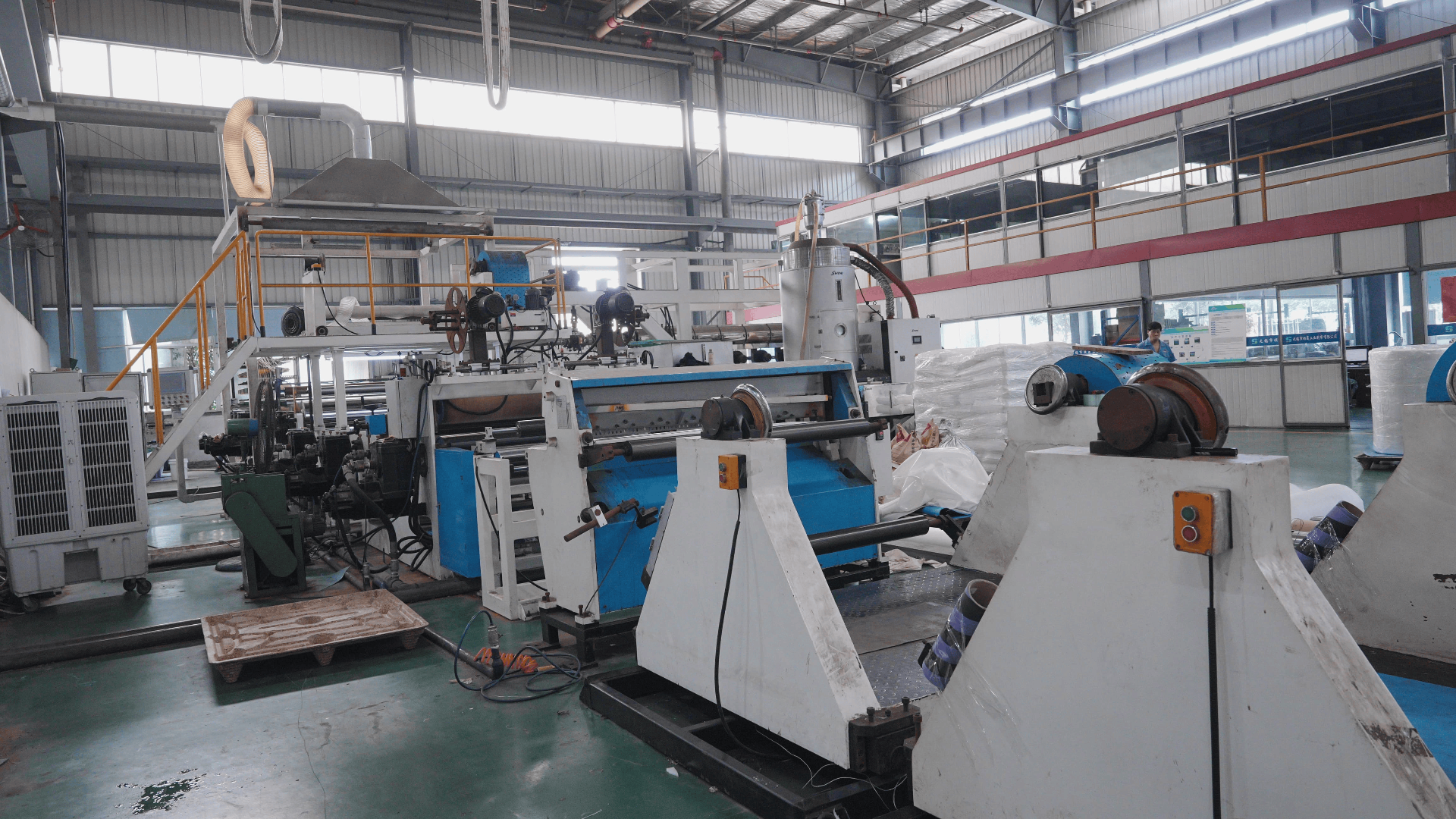
XZBELT operates two manufacturing bases with a combined production area of approximately 30,000 m². The specialty belt facility has more than 20 sets of production and processing equipment, including 6 belt splicing machines, 2 coiler wrapper belt coating lines, 2 seamless fabric weaving machines, 3 silicone coating lines and 3 seamless PU coating lines. These are capability facts, but they matter to the FAQ because repeat supply depends on the ability to reproduce a construction, not only to supply one sample.
The company provides secondary processing and fabrication services including single-side and double-side sidewalls, fabric reinforcement and lamination, cleats, perforation, silicone coating, sponge coating, special surface coating, belt splicing, and customized widths and lengths. For a buyer, these services are relevant when a standard tooth profile must be adapted to product handling, vacuum feeding or a specific machine interface.
XZBELT holds ISO 9001 Quality Management System certification and 11 patents, including 2 invention patents and 9 utility model patents. The company has served customers in more than 150 countries and regions and has accumulated experience serving more than 1,000 customers. These facts support a supplier evaluation, but they do not replace the buyer's own drawing, acceptance criteria and installation checks.
For capability and contact reference, XZBELT's public company brochure is available here: XZBELT company brochure. Buyers should still verify the exact belt specification against their own drawing.
Application Fit: Where Each Construction Is Used
Application fit should be assessed by motion function, environment and product handling. The same timing belt family can serve different industries, but the construction and fabrication must match the duty.
- Packaging machinery: high speed, frequent start-stop, precise positioning and repetitive cycles. Functions include feeding, indexing, positioning, gripping, vacuum conveying and synchronous drive.
- Printing and paper converting: high speed, lightweight products, rapid acceleration and precise sheet positioning. Functions include paper feeding, sheet transport, folding, positioning, vacuum holding and synchronous transmission.
- Automotive and tire: heavy loads, oil, dust, heat and continuous production. Functions include parts conveying, assembly transport, synchronous transmission and positioning.
- Industrial automation and precision equipment: frequent acceleration and deceleration, servo positioning and high cycle rates. Functions include positioning, indexing, linear motion and synchronous power transmission.
- Electronics, medical and office equipment: clean operation, small pulley diameter, precise low-noise motion and frequent cycling. Functions include precise transmission, feeding, indexing and synchronized movement.
Open-end construction is normally associated with linear motion and positioning. Endless construction is normally associated with continuous synchronous drives and indexing. Coated or perforated belts are normally associated with product handling and vacuum systems. The buyer should state the function first and then select the construction and fabrication.
Market Trend: More Choices, More Need for Specification Discipline
The global timing belt market is projected to grow from a 2025 base of USD 9.10 billion to approximately USD 9.57 billion by 2030, according to Mordor Intelligence. Growth estimates for the PU timing belt segment vary widely by methodology, from about 3.10% to 12.57% CAGR in the available commercial research, so a single forecast should not be used as a procurement rule.
The practical trend is toward more application-specific constructions: coatings, perforation, reinforcement and open-end or endless variants. That makes specification records and supplier reproducibility more important than a one-time price comparison. When a production line uses several belt variants, a clear belt register reduces the risk of ordering the right length with the wrong tooth profile or surface.
Comparison with Traditional Solutions: Where Belts Fit and Where They Do Not
A synchronous belt drive is not a universal replacement for every traditional drive. It offers positive synchronous transmission without lubrication or routine re-tensioning, and its typical efficiency is 98–99% compared with approximately 91–98% for chain drives. It is commonly used in automation equipment, packaging machinery, machine tools, material handling and high-torque drives.
| Consideration | Synchronous belt drive | Roller chain drive |
|---|---|---|
| Transmission | Positive synchronous transmission through tooth engagement | Chain engagement |
| Lubrication and re-tensioning | No lubrication and no routine re-tensioning | Requires lubrication and routine re-tensioning |
| Typical efficiency | 98–99% | 91–98% |
| Maintenance character | Cleaner and quieter than chain drives | Maintenance-intensive in comparison |
The limitation is equally important. Open-end and endless constructions solve different motion problems, and a belt selected only by length and width can fail even if the material is correct. In high-shock, high-temperature or contaminated environments, the specific belt construction must be verified; a standard belt should not be assumed to fit every chain-drive conversion. Where a chain drive's shock tolerance or environmental robustness is the governing requirement, a belt conversion should be engineered rather than assumed.
The same boundary applies to coatings and fabrication. A coating can improve grip or release, but it does not correct a wrong tooth profile or an overloaded drive. A perforated belt can support vacuum handling, but the perforation pattern must match the vacuum system. The base tooth system and load capacity remain the engineering foundation.
Future Outlook
Procurement is moving from part-number buying to specification buying. For timing belts, the durable advantages will come from three practices: recording the complete tooth and construction specification; validating tension and pulley condition at installation; and choosing a supplier that can reproduce the same build across orders.
XZBELT's combination of timing belt supply, secondary processing and a documented quality system is relevant to that model, but the buyer's own drawing and acceptance criteria remain the controlling documents. As custom and fabricated belt demand expands, repeatability of construction will matter as much as initial price. A belt that is correct once but cannot be reproduced is a weak spare-part strategy.
FAQ
Why are the teeth on a timing belt wearing or tearing off?
Tooth damage is usually the result of a drive-system problem rather than ordinary surface wear alone. Incorrect tension, excessive torque, worn or incorrect pulleys, foreign objects, misalignment and tooth-profile mismatch can overload the tooth and root area. Industry guidance from Continental links abnormal tooth-flank wear and tooth shearing with incorrect tension, foreign material and seized pulleys; Optibelt identifies excessive tension and defective pulleys as causes of tooth-root wear.
What can incorrect timing belt tension cause?
Incorrect tension can cause ratcheting, tooth damage, positioning error, noise, bearing overload or shortened belt life. Too little tension can allow vibration, unstable positioning and tooth jumping under load; excessive tension increases shaft and bearing load and belt stress. The correct setting depends on belt profile, width, load, span and drive geometry, so it should come from design data rather than hand feel.
When should I use an open-end timing belt instead of an endless timing belt?
Open-end timing belts are normally fixed at their ends and used for linear axes, gantries and reciprocating positioning. Endless timing belts form a closed loop around pulleys and are used for continuous synchronous transmission, indexing and conveying. Tooth profile, pitch and pulley compatibility must match in either case, and switching construction is not simply a matter of cutting or joining the same belt.
How do I identify an unknown timing belt before ordering a replacement?
Begin with any printed code, then establish tooth pitch, tooth shape or profile, belt width, tooth count or pitch length, material and construction. If the belt is badly worn, pulley measurements and photographs can be more reliable than the damaged belt teeth. Do not identify a timing belt by outside circumference alone; the pulley tooth system must match.
What should buyers know before ordering an industrial timing belt?
Correct tooth engagement comes first. Establish tooth profile, pitch, length or tooth count and width before deciding reinforcement, open-end or endless construction, or special processing. Also confirm pulley geometry, load, speed and the product-handling function if coating or perforation is required. Minimum pulley tooth count matters because too few teeth or too small a pulley increases bending and can reduce load capacity and service life.
What purchasing terms and acceptance criteria should be confirmed?
Confirm MOQ by product type and specification; delivery terms such as EXW, FOB or CIF, subject to quotation; and payment terms such as T/T, subject to quotation. Acceptance criteria should be agreed in writing and can include factory inspection, dimensional inspection, appearance inspection and functional inspection. Third-party testing is available on request, subject to quotation. The acceptance plan should reference the exact drawing or specification for the belt being supplied.
The controlling document is the agreed specification, not the product name alone.
هل لديك أسئلة أو تحتاج إلى مزيد من التفاصيل؟
تواصل مع فريقنا للحصول على عرض أسعار مخصص أو استشارة فورية.
طلب عرض أسعار
املأ النموذج أدناه وسيتواصل معك فريقنا بعرض مقترح مخصص.
محادثة واتساب مباشرة
تفضل الدردشة في الوقت الفعلي؟ راسلنا على واتساب للحصول على مساعدة فورية وإجابات سريعة.
- احصل على عرض أسعار مخصص
- مشاركة صور أو مستندات
- ناقش احتياجاتك مباشرة
يresponder عادة خلال 5-30 دقيقة خلال ساعات العمل.