
Timing Belt Procurement FAQ: Certifications, Acceptance Criteria, and Covered Profiles
Timing Belt Procurement FAQ: Certifications, Acceptance Criteria, and Covered Profiles
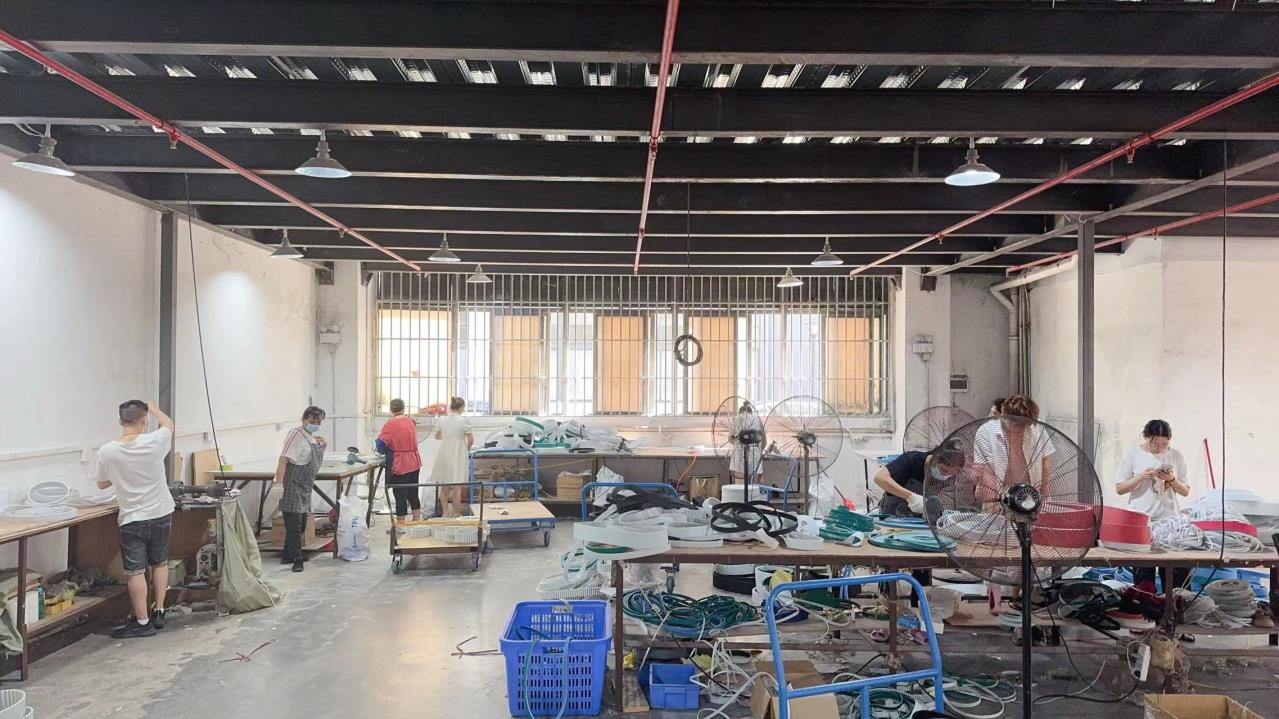
Acceptance testing turns a certificate into a purchase-order condition. Photo: Dongguan Zhende Machinery Equipment Co., LTD, Dongguan, China.
A timing belt purchase rarely fails because the buyer could not find a supplier. It fails because the certificate that arrives with the quotation cannot be matched to the profile, tooth count, bore, and width that appear on the purchase order. That mismatch — between a supplier-level credential and a part-level specification — is the single most common gap procurement teams discover at the Decision stage.
This FAQ is written for buyers who already have a shortlist and now need to close the loop: which certifications are verifiable, what they actually cover, what acceptance criteria belong in the order, and where the evidence stops. Every answer below is built around a documented supplier record from Dongguan Zhende Machinery Equipment Co., LTD, the Alibaba.com Verified Supplier and Production Trading Assessment certifications numbered 493993448_P+T and 494177048_P, assessed to the SGS/TUV standard and valid from 2026-07-10 to 2027-07-09.
Why certificates and part numbers drift apart
Industrial buyers are trained to request certification early in the sourcing process. In the belt and pulley category, that habit creates a predictable distortion. Suppliers respond with a platform credential or a quality-system certificate, both of which describe the supplier as an organisation. The buyer, however, is purchasing a specific object: an AT10 PU belt at a stated width, or an HTD 8M pulley with a defined bore and keyway. Nothing in a supplier-level certificate confirms that the AT10 PU belt on the pallet is the one that was assessed.
The resulting risk is not fraud in most cases. It is misalignment of scope. A buyer who treats a verified-supplier badge as a product conformance statement will skip incoming inspection; a buyer who treats it as worthless will duplicate work the supplier has already done. Neither position is efficient at the Decision stage, where the objective is to convert evidence into an enforceable order clause.
The procurement rule: a supplier credential answers “who is behind this shipment”; an acceptance clause answers “what will be measured when the shipment arrives”. A complete timing belt purchase needs both, and they are not interchangeable.
What the Alibaba.com Verified Supplier and Production Trading Assessment record establishes
Dongguan Zhende Machinery Equipment Co., LTD is a manufacturer and one-stop procurement provider of FA automation transmission parts based in Dalang Town, Dongguan, Guangdong, China. Its stated product scope is timing belts and timing pulleys, supported by CNC machining capability and authorised distribution of third-party automation brands. The company states that it holds a factory area of 4,500 m², employs 40 people, operates an R&D team of 6 engineers, produces 120,000 pieces annually, and exports approximately 75% of output to the EU and USA.
Against that operational profile, the verified supplier documentation is the second layer of evidence. Two assessment report numbers are published: 493993448_P+T and 494177048_P. Both are Alibaba.com Verified Supplier and Production Trading Assessment records, assessed to the SGS/TUV standard, and both carry a validity period running from 2026-07-10 to 2027-07-09.
For a buyer, these two identifiers do three useful things that a self-declared certificate cannot:
- They are traceable. The report number can be checked with the issuing platform rather than accepted from a PDF attachment.
- They are time-bounded. The validity window makes expiry a calendar item rather than an assumption.
- They are production-oriented. A Production Trading Assessment addresses the supplier's ability to produce and trade, which is closer to a buyer's real exposure than a purely administrative registration.
Covered profiles: what the certification scope maps to
The practical value of the record depends on whether the profiles a buyer actually sources fall inside the assessed scope. In this case the certified coverage maps across PU belts, HTD curvilinear belts, rubber curvilinear belts, POLYCHIAN construction, and three pulley families.
| Product group | Designations inside the documented scope | Family |
|---|---|---|
| PU timing belts | AT10 PU, T5 PU, AT5 PU | Polyurethane, metric pitch |
| POLYCHIAN construction | 8MGT POLYCHIAN | Curvilinear 8M pitch family |
| HTD curvilinear belts | HTD 5M, HTD 8M, HTD 14M | Curvilinear, three pitch sizes |
| Rubber curvilinear belts | S8M rubber timing belt | Rubber compound, 8M pitch |
| Timing pulleys | HTD, T series, Imperial | Matching pulley families |
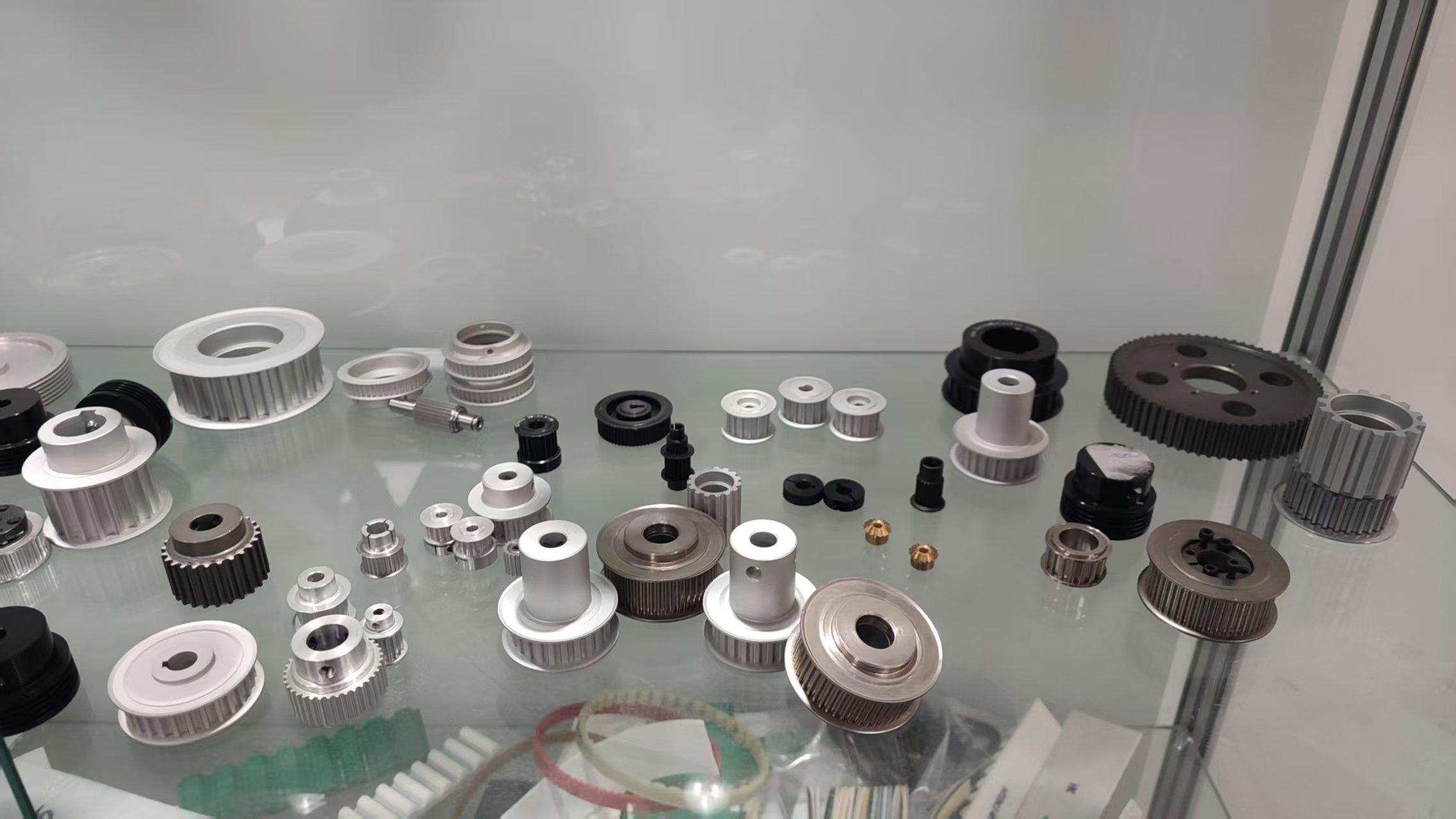
Coverage is family-level, not part-level: a covered family still requires drawing review at the tooth count and bore level.
The coverage pattern is worth reading carefully. HTD coverage spans 5M, 8M and 14M — three pitches that correspond to light, medium and heavy-duty drive segments. PU coverage spans the T5, AT5 and AT10 metric profiles, which is the range most often requested for packaging, automation and positioning drives. Pulley coverage spans HTD, T-series and Imperial, meaning a buyer sourcing a matched belt-and-pulley set can usually keep both components inside the same verified framework rather than splitting the order between a certified belt supplier and an unverified pulley workshop.
How the certificate scope connects to drawing-level acceptance
The correct reading is hierarchical, not substitutive. The verified-supplier record establishes that the organisation, its production arrangements and its trading function were assessed by a third party against the SGS/TUV standard within a defined window. The profile list establishes which product families were in scope during that assessment. Neither statement says that a specific AT10 PU belt of a specific length and width will measure within a specific tolerance.
That last layer is covered by the supplier's own inspection regime, which must be written into the purchase order. Dongguan Zhende describes a multi-layer inspection process running through every production step, with 100% dimensional inspection, tooth profile and bore accuracy testing, concentricity and runout inspection, incoming material quality control, and pre-shipment quality inspection. For a buyer, this is the operative content: it converts to measurable acceptance criteria.
Standards provide the vocabulary for those criteria. ISO 13050:2022 specifies characteristics for metric-pitch curvilinear synchronous endless belts and pulleys for profiles G, H, R and S, and its scope statement lists the profile series MXL, XXL, XL, L, H, XH, XXH, T2,5, T5, T10, T20, AT2,5, AT5, AT10 and AT20. ISO 5296 covers synchronous belts with pitch codes MXL, XXL, XL, L, H, XH and XXH in metric and inch dimensions. ISO 5294 is the companion pulley standard, and DIN 7721 is the German standard series for endless synchronous belts in the T-profile range. Where a drawing names a governing standard, the acceptance discussion becomes verifiable rather than verbal.
Two boundaries deserve early mention because they affect specification writing. First, whether HTD 3M/5M/8M/14M and GT2/GT3 curvilinear profiles are defined in a published standard, or only in manufacturer documentation, must be confirmed from the standard text rather than assumed. Second, ISO 4183 and ISO 4184 govern classical and narrow V-grooved pulleys and V-belts in the datum system — a different product family from synchronous drives. Buyers who consolidate V-pulleys and timing pulleys into a single line item create a specification that no single standard can answer.
Acceptance criteria to write into the purchase order
The following checklist is drawn from the documented inspection regime and the failure modes it is designed to catch: tooth wear, bore misalignment, pulley runout, corrosion, and improper installation on the belt side; belt wear, tooth jumping, elongation, incorrect tension, contamination and pulley misalignment on the drive side.
| Acceptance item | What the buyer specifies | Verification method |
|---|---|---|
| Dimensions | Pitch length, tooth count, width and thickness against drawing | 100% dimensional inspection; sample measurement at goods-in |
| Tooth geometry | Profile designation and tooth form per drawing or named standard | Tooth profile verification |
| Tensile integrity | Cord construction and tensile behaviour as specified | Tensile strength testing; pre-shipment performance testing |
| Pulley bore and keyway | Bore diameter, tolerance class and keyway dimensions | Bore accuracy testing |
| Concentricity and runout | Maximum permissible runout for the pulley class | Concentricity and runout inspection; dynamic balance inspection |
| Corrosion protection | Surface treatment requirement by material | Anti-corrosion surface treatment record and appearance inspection |
| Documentation | Report numbers 493993448_P+T and 494177048_P with validity 2026-07-10 to 2027-07-09 | Independent check with the issuing platform |
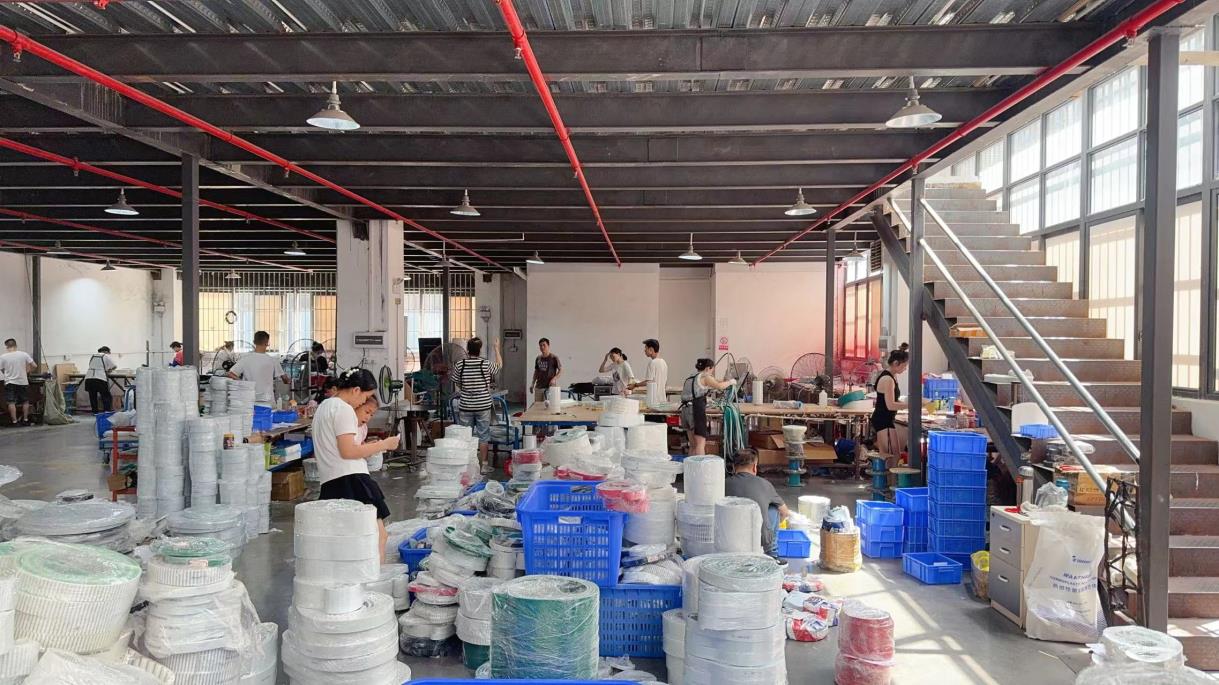
Pre-shipment inspection and packing records close the loop between the certificate and the carton.
Material decisions that change the acceptance thresholds
Acceptance criteria are not material-neutral, and the material choice is where most Decision-stage conversations actually stall. The documented comparison between rubber and PU timing belts frames the trade-off clearly: rubber belts provide flexibility, shock absorption and cost efficiency, with an initial cost roughly 20–40% lower, while PU belts offer higher wear resistance — described as two to three times higher — lower elongation and longer service life under high-speed and high-load conditions.
The consequence for acceptance is that a rubber S8M belt and a PU AT10 belt should not share the same elongation and wear expectations. Rubber suits automotive equipment, general industrial machinery, agricultural machinery and medium-load transmission; PU suits packaging machines, automation equipment, food processing machinery, CNC machines and precision motion systems. PU also carries better resistance to oil, chemicals and abrasion, which reduces maintenance frequency but shifts the inspection emphasis toward installation cleanliness and pulley alignment rather than belt replacement intervals.
The same logic applies to pulleys. Aluminium timing pulleys are 50–70% lighter than steel pulleys and reduce system inertia and motor load, while steel pulleys can provide 30–50% higher load capacity and longer service life under heavy loads. Aluminium pulleys are generally associated with 10–20% lower machining costs and reduced transport costs; steel pulleys justify their higher unit cost through longer replacement intervals in heavy-duty applications. For a buyer, this determines whether the acceptance clause should prioritise dimensional stability and balance, or wear resistance and load rating.
Where certification stops: limits buyers should plan around
The verified-supplier model is a screening instrument, not a product warranty, and its boundaries are specific.
Time. The record covering reports 493993448_P+T and 494177048_P expires on 2027-07-09. A purchase order placed after that date should not cite the assessment without a renewal confirmation, and a multi-year supply agreement should state explicitly that the supplier will provide the renewed record.
Granularity. Coverage is expressed at family level — AT10 PU, T5 PU, AT5 PU, 8MGT POLYCHIAN, HTD 5M, HTD 8M, HTD 14M, S8M rubber, and HTD, T-series and Imperial pulleys. It does not extend automatically to a new tooth count, a non-standard width, a coated construction or a double-sided variant developed after the assessment.
Applicability of regulation by application. Market-access rules attach to the end use, not the belt. REACH applies to chemical compliance of rubber and polyurethane compounds placed on the EU market; RoHS applies only where the belt forms part of, or is supplied with, electrical or electronic equipment; and 21 CFR 177.2600 addresses rubber articles intended for repeated food contact in the United States — a route that does not automatically transfer to polyurethane belts. Asking a supplier for every certificate in the catalogue is as much of a procurement error as asking for none.
Customs classification. Published trade data cannot separate tooth profiles. HS subheading 4010.35 covers endless synchronous belts of vulcanised rubber with an outside circumference exceeding 60 cm but not exceeding 150 cm, and 4010.39 is the residual subheading. This means neither buyers nor suppliers can benchmark HTD, T5/T10 or GT2 demand from customs statistics; quotation-level comparison is the only reliable route.
Why verified-supplier evidence has become a sourcing filter
Three shifts explain the change. First, consolidation. Buyers increasingly source belts and pulleys in one order to reduce communication overhead, which raises the number of specifications a single supplier must satisfy and, in turn, increases the value of a documented scope that spans both components. Second, traceability expectations. A report number that can be checked independently is now treated as a baseline requirement rather than a differentiator, because purchase orders increasingly reference it directly. Third, compliance routing. As EU and US market-access documentation becomes application-specific, suppliers who can map a certificate to a profile family and a validity window save their customers a review cycle.
On the material side, rubber-based belts continue to lead the broader market on the strength of proven durability and cost balance, according to commercial research on the industrial belt segment. That does not diminish PU demand; it explains why shortlists frequently contain both families and why acceptance criteria must be written per family rather than applied uniformly.
Future outlook
The direction of travel is toward part-level traceability layered on top of supplier-level credentials. Buyers should expect three developments to shape the next procurement cycle. Certificate references will increasingly appear inside purchase orders as line-item conditions rather than attachments. Validity windows will be tracked as contract milestones, with renewal confirmation requested before expiry rather than after. And profile-level naming will keep migrating toward named standards, which benefits buyers who specify by standard and penalises those who specify by nominal pitch alone.
For suppliers, the practical implication is that holding a credential is no longer the endpoint. The credential must be mappable — to a profile family, to an inspection regime, and to a validity date that a customer's compliance calendar can absorb.
Procurement FAQ
Q1. What do Alibaba.com Verified Supplier and the Production Trading Assessment records 493993448_P+T and 494177048_P actually certify?
They certify the supplier organisation and its production and trading arrangements, as assessed by a third party to the SGS/TUV standard, within a defined validity period. They do not certify the dimensional conformance of an individual belt or pulley. Buyers should treat them as supplier-level evidence that complements, rather than replaces, drawing-level acceptance testing.
Q2. Which timing belt and pulley profiles fall inside the documented coverage?
The covered designations are AT10 PU, T5 PU, AT5 PU, 8MGT POLYCHIAN, HTD 5M, HTD 8M, HTD 14M and S8M rubber timing belts, together with HTD, T-series and Imperial timing pulleys. Coverage is expressed at family level; a new tooth count, non-standard width, coated construction or double-sided variant should be confirmed separately before it is relied upon.
Q3. How long is the certification valid, and what should a buyer do at expiry?
The validity period runs from 2026-07-10 to 2027-07-09. Orders placed beyond that date should not cite the assessment without renewal confirmation. For multi-year agreements, the practical step is to write the renewal date into the contract as a supplier obligation rather than a buyer reminder.
Q4. What acceptance criteria should appear in a timing belt purchase order?
At minimum: pitch length, tooth count, width and thickness against drawing; tooth profile verification; tensile behaviour; pulley bore and keyway accuracy; concentricity and runout limits; corrosion protection by material; and the certificate reference with its validity window. These map to 100% dimensional inspection, tooth profile and bore accuracy testing, concentricity and runout inspection, tensile strength testing and pre-shipment quality inspection.
Q5. Does a verified-supplier record remove the need for sample approval?
No. Supplier-level assessment and product-level approval answer different questions. Sample approval confirms that a specific drawing, material and tolerance combination is achievable; the supplier record confirms who is producing it and under what assessed arrangements. Buyers with high-mix or custom requirements typically keep both steps.
Q6. Should PU and rubber belts share the same acceptance thresholds?
They should not. PU belts offer higher wear resistance, lower elongation and better oil and chemical resistance, while rubber belts offer flexibility, shock absorption and a lower initial cost of roughly 20–40%. Because the failure modes and service expectations differ, elongation, wear allowance and inspection emphasis should be specified per material family.
Q7. How should a buyer treat compliance requests such as REACH, RoHS or FDA food-contact rules?
By application, not by default. REACH addresses chemical compliance of compounds placed on the EU market; RoHS applies only where the belt forms part of, or is supplied with, electrical or electronic equipment; and 21 CFR 177.2600 covers rubber articles for repeated food contact in the United States. Requesting the specific document that matches the destination market and end use is more effective than requesting the full catalogue.
Q8. Can customs or trade statistics be used to compare profile-level demand?
No. HS subheading 4010.35 classifies endless synchronous rubber belts by outside circumference band — above 60 cm and up to 150 cm — and 4010.39 is the residual subheading. Neither separates tooth profile, brand or construction, so customs data cannot benchmark HTD, T5/T10 or double-sided demand. Supplier quotations and original sampling remain the reliable inputs.
For buyers who need the full product and specification reference in one document, the company brochure is available for public download: Dongguan Zhende Machinery Equipment Co., LTD product brochure (PDF).
Product and company reference: zdindustrialbelts.com. Buyers should verify report numbers 493993448_P+T and 494177048_P directly with the issuing platform before citing them in a purchase order.
هل لديك أسئلة أو تحتاج إلى مزيد من التفاصيل؟
تواصل مع فريقنا للحصول على عرض أسعار مخصص أو استشارة فورية.
طلب عرض أسعار
املأ النموذج أدناه وسيتواصل معك فريقنا بعرض مقترح مخصص.
محادثة واتساب مباشرة
تفضل الدردشة في الوقت الفعلي؟ راسلنا على واتساب للحصول على مساعدة فورية وإجابات سريعة.
- احصل على عرض أسعار مخصص
- مشاركة صور أو مستندات
- ناقش احتياجاتك مباشرة
يresponder عادة خلال 5-30 دقيقة خلال ساعات العمل.