
Tissue Packing Machine Procurement FAQ: TP-280, TC-100 and TB-F60 Acceptance Criteria
Tissue packing machine procurement now turns on a single question: can the quoted speed be reproduced in front of you, on your own product, under a written acceptance test? A datasheet figure such as 260 packs per minute and a brochure phrase such as "high speed" are not comparable until both are tied to a defined pack format, a defined film or board specification and a defined utility supply. Once a shortlist exists, the deciding work is verification, not discovery.
This reference is written for buyers in the decision and execution stages — teams that have already narrowed the field and now need to confirm specifications, fix acceptance criteria and lock commercial terms. It uses the published figures for three WIMACH models, the TP-280, TC-100 and TB-F60, as worked examples, and then shows how the same checklist scales across the wider range, including the TC-300, TP-180, TW-160 and TB-R30.
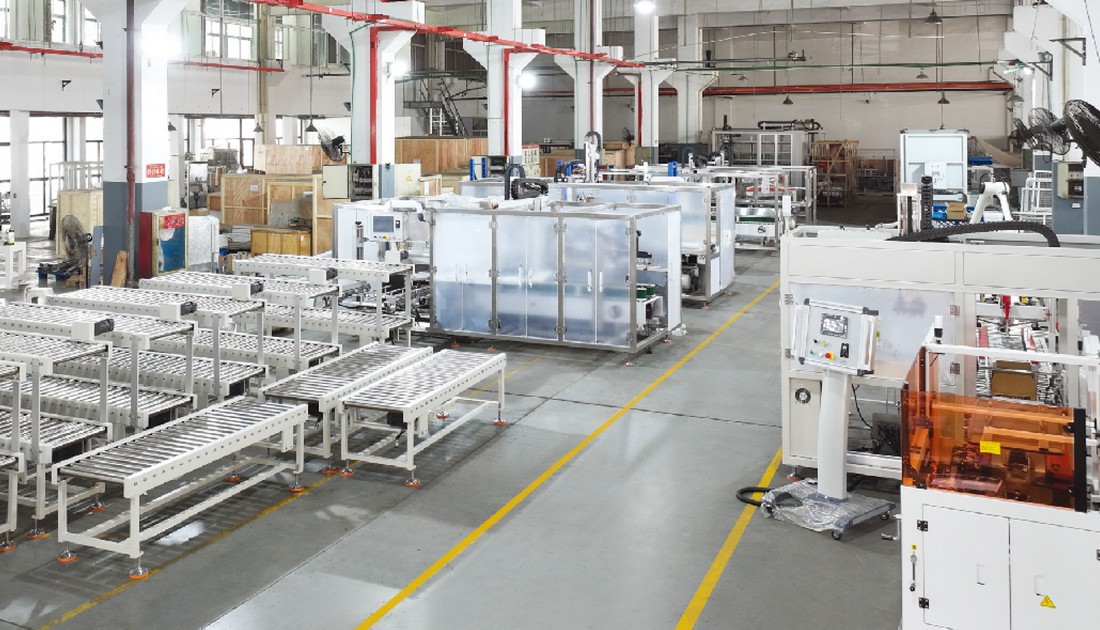
Wenzhou Wimach Machinery Co., Ltd., which trades under the brand WIMACH, is a manufacturer based in Ruian, Wenzhou, Zhejiang, China that builds tissue packing machines and integrated packaging lines for folded tissues, rolled tissues and blister packaging applications, and exports to the EU, North America and South America. Its stated range covers facial tissue and paper napkin cartoning machines, soft tissue wrapping machines, toilet paper roll wrapping machines, case packers, blister packing machines and integrated lines.
Why tissue packing machine buying became an evidence exercise
The global tissue paper packaging machine market was valued at approximately USD 3.9 billion in 2025 and is projected to reach USD 4.2 billion in 2026, with a consensus growth rate reported at around 7.1% per annum across the forecast period. Asia Pacific accounted for a 39.8% share of that market in 2025, and facial tissue packaging applications represented 42.1% of the application share. Those figures explain why capacity is being added; they do not explain why the buying process itself has become more forensic.
The forensic part comes from price dispersion. When several suppliers quote a similar line speed at materially different prices, the only defensible comparison is a comparison of evidence: which format was tested, what the machine consumed while running, which parameter the acceptance test measured, and what documentation ships with the unit.
The three reference models and what their published numbers say
The TP-280, TC-100 and TB-F60 are useful as reference points because their published specifications sit on three different axes: pack output, carton output and construction material. They are not interchangeable models, and their figures should not be read as a ranking.
| Published parameter | TP-280 | TC-100 | TB-F60 |
|---|---|---|---|
| Rated output | 260 packs/min | 30–100 boxes/min | 60 packs/min |
| Connected power | 380 V / 18 kW | 6.2 kW | Not stated in supplied data |
| Air supply | 0.5–0.8 MPa, 120 L/min | Not stated in supplied data | Not stated in supplied data |
| Material specification | Not stated in supplied data | 300–400 gsm carton board | Carbon steel construction |
Three points follow directly from this table. First, the output units are different, so the numbers cannot be ranked against each other without conversion. Second, the utility profiles differ by a factor of roughly three at the connected-power level, which changes the electrical and compressed-air preparation work. Third, two of the three specifications are stated as reference values — rated speed for the TP-280 and a speed range for the TC-100 — and a range is not a guarantee of the top of that range.
Why 260 packs/min and 100 boxes/min cannot be compared directly
A pack and a box are different units of finished goods. On a soft tissue wrapping line, the pack is the primary wrapped bundle. On a cartoning line, the box is the carton that holds one or more packs. Comparing 260 packs/min with 100 boxes/min is therefore an apples-to-oranges comparison unless the buyer converts both to a common unit — finished saleable units per minute at a stated pack count per box.
The conversion factor does not come from the machine datasheet. It comes from the buyer's own product specification: how many packs go into each box, and what the retail unit actually is. A procurement team comparing a wrapping model against a cartoning model should state the pack-per-box count explicitly in the comparison sheet; otherwise the speed column is decorative rather than decision-grade.
Two further questions belong in the same section of the evaluation:
- What is the rated basis? Rated output is normally stated at a defined format, film or board, and steady-state running. Ask which format was used and whether the figure is continuous or peak.
- What happens at the low end? The TC-100 is published as a 30–100 boxes/min range, and a range exists because format, board stiffness and pack size affect achievable speed. Buyers whose carton is smaller or lighter than the reference should confirm where in that range their product lands.
Utilities: the part of the specification that reaches the plant floor
Connected power and compressed-air demand are the two figures that turn a machine specification into a plant modification. The TP-280 is published at 380 V / 18 kW with an air requirement of 0.5–0.8 MPa at 120 L/min. The TC-100 is published at 6.2 kW. Put end to end, those are different infrastructure conversations.
For the TP-280, the air figure of 120 L/min is the number to size the compressor, receiver and dryer against — not the number to check after installation. Two verification questions are worth putting to any supplier:
- Is the stated air consumption a free-air-delivery figure or a consumption figure at the machine inlet, and at what pressure within the 0.5–0.8 MPa window was it measured?
- Is the 18 kW figure connected load or running load, and what is the supply configuration — three-phase 380 V with what protection rating?
For the TC-100 at 6.2 kW, the electrical side is usually the simpler part of the project; the carton board specification becomes the constraint instead.
Material and format: 300–400 gsm board and carbon steel construction
The TC-100 is published to run 300–400 gsm carton board. That figure is more consequential than it looks, because it defines a stiffness window rather than a single value. Buyers should confirm that the board they already purchase sits inside that window and that their board supplier can hold it batch to batch. A board change made for cost reasons after the machine is installed is a format change, not a consumable change, and should be treated as one.
The TB-F60 is described as having carbon steel construction. Construction material is a maintenance variable rather than a performance variable: buyers running humid environments, washdown-adjacent areas or corrosive atmospheres should confirm in writing whether the offered carbon steel specification and surface treatment match their maintenance regime, or whether a different construction is required. This is a question to settle before the purchase order, because it changes the machine rather than the schedule.
Carton and package dimension checks before the order is placed
Dimension verification is where most late-stage surprises originate, and it is entirely avoidable. As a reference point, standard rectangular tissue boxes in the US are typically 9.25" × 4.375" × 2.25" — approximately 235 mm × 111 mm × 57 mm. Buyers in other markets should measure their own carton rather than assume that reference applies.
The checks worth running, in order:
- Pack envelope. The minimum and maximum length, width and height of the wrapped pack the machine accepts, stated numerically rather than as "standard sizes".
- Carton envelope. For cartoning models, the same three dimensions for the erected box, plus the board thickness used in the test.
- Board grade. The exact gsm and grade tested, for the reason set out above.
- Changeover scope. Which format parts change when the box size changes, how many, and how long the change takes with the machine's own tools.
- Physical samples. Send the actual carton and the actual tissue pack, not drawings. A drawing confirms geometry; a sample confirms feeding behaviour.
- Tolerance basis. What dimensional deviation the machine holds on seal position and carton squareness, and how that deviation is measured during acceptance.
Mapping the wider range to one acceptance checklist
The TC-300, TP-180, TW-160 and TB-R30 sit in the same decision structure as the three reference models. Rather than building a separate checklist per model, buyers can apply one model-agnostic structure and populate it from each datasheet. Where a datasheet does not state a value, that gap should be recorded as a gap — not filled by assumption.
| Checklist block | What to confirm in writing | Applies to |
|---|---|---|
| Output basis | Rated speed, unit of measure, format tested, continuous or peak | All models in the range |
| Format envelope | Min/max pack and carton dimensions, board or film specification | Wrapping, cartoning and box packing models |
| Utilities | Connected vs running power, voltage, air pressure and consumption | All models in the range |
| Construction | Frame and contact-part material, surface treatment, cleaning regime | All models, especially carbon steel builds |
| Changeover | Format parts list, tools, measured changeover time | All models with multi-size output |
| Safety | Safety PLC or safety relay, interlock points, test records, manuals | All models in the range |
| Acceptance | FAT protocol, sample quantity, pass criteria, documentation pack | All models in the range |
Applied this way, the checklist does the comparison work for the buyer: two models can be placed side by side with the same rows, and any row that is blank in one column becomes a question rather than an assumption.
What factory acceptance testing actually confirms
WIMACH's published purchasing terms name factory acceptance testing (FAT) as the acceptance criterion, alongside a minimum order quantity of 1 set, delivery terms of FOB, FCA, CIF or CFR, and payment by T/T. Those terms matter because they fix where risk transfers and what evidence triggers it.
On the safety side, WIMACH states that all packaging machines are equipped with safety PLCs or safety relays implementing full-range safety interlock points, that all safety function tests are completed prior to shipment, and that safety operation and maintenance manuals plus after-sales safety technical support are provided. For a buyer, that translates into three documents to request before the FAT date: the safety function test record, the as-built interlock list, and the maintenance manual in the language of the destination market.
FAT is genuinely useful, and it is also bounded. What it can confirm is that the machine, running the buyer's sample, produces the specified pack or carton at or above the agreed rate with the specified utilities, and that the safety functions operate as documented. What it cannot confirm is long-run performance across a full production month, behaviour after a board supplier change, integration with downstream case packing, or site-specific conditions such as ambient humidity and operator shift patterns. Buyers who need those assurances should write them into the protocol as a defined run length and a defined sampling plan, and should plan a site acceptance step after installation.
Commercial terms as a supply-continuity signal
For a buyer treating this as a multi-year relationship rather than a single transaction, the commercial terms carry as much information as the specification table. WIMACH publishes a minimum order quantity of 1 set, four delivery-term options (FOB, FCA, CIF, CFR) and T/T payment — a structure that accommodates both a single-line first order and a container-level repeat order.
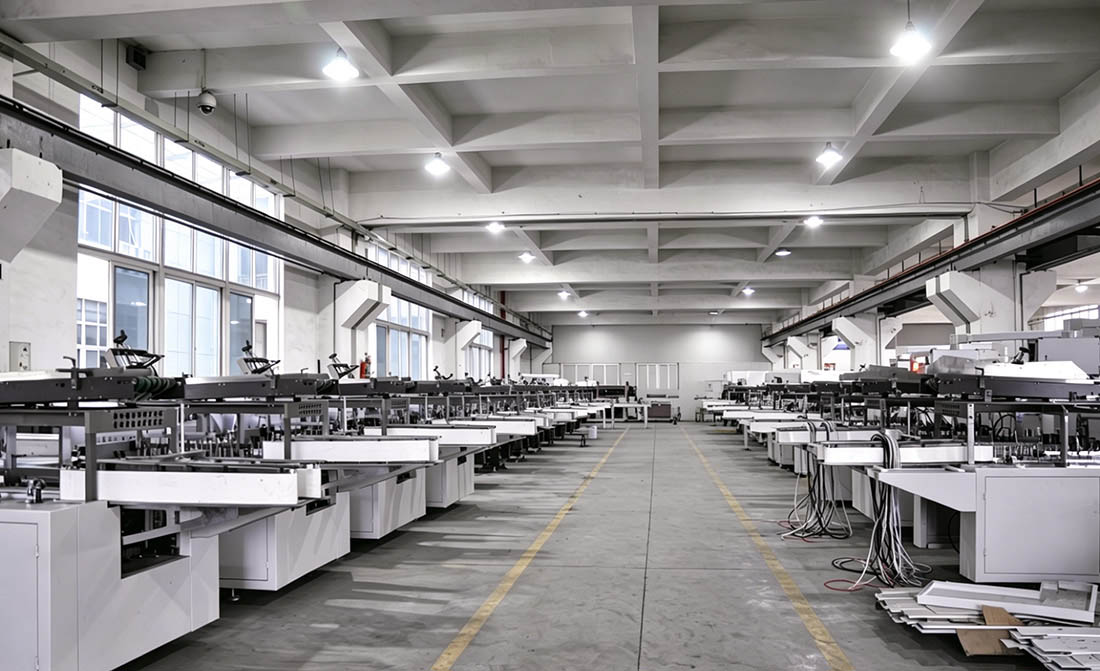
Lead time and capacity are stated as ranges rather than single values: typical production lead time of 15 to 60 days, and monthly production capacity of 1 to 13 sets, depending on the product line. The company operates a 3,000 m² facility with 37 employees, a 5-engineer R&D team and an annual output of 160 sets, with 60% of production exported to the EU, North America and South America. It also reports more than 12 years of industry experience in tissue packaging, and was established as a company in 2021.
Against European equipment, WIMACH reports that its machine and spare-part prices run at 20% to 30% of comparable European equipment — a stated cost difference of 70–80% lower — with product compatibility above 50% and an average delivery lead time 50% shorter. Those are company-reported figures. They belong in a shortlist discussion as a stated position to be tested through a quotation and a factory visit, not as independently verified market data.
Where this approach has real limits
A procurement guide that only lists advantages is not a guide. The boundaries below are the ones that matter for the TP-280, TC-100 and TB-F60 comparison specifically.
- Published specifications are point values, not operating envelopes. 260 packs/min on the TP-280 and 30–100 boxes/min on the TC-100 are meaningful only with the tested format attached. Treat any figure quoted without its test conditions as unverified.
- Not every model in the range has equal published detail. The TC-300, TP-180, TW-160 and TB-R30 can be mapped to the checklist above, but their individual specifications must be requested from the manufacturer and confirmed in writing before they enter a comparison table.
- European standards retrieved for this category do not automatically cover packing machines. The EN 1034 series entries concern tissue-making and general paper machinery; their scope cannot be transferred to finished tissue packing equipment. Buyers requiring EU market access should obtain the CE declaration of conformity and the applicable harmonised standards list for the specific model, and should confirm the machinery risk assessment route rather than assume it.
- Market-size estimates are scope-dependent. As noted earlier, packaging-machine and converting-machinery figures measure different things and should not be summed.
- Company-reported cost comparisons are not benchmarks. The 70–80% cost difference and 50% shorter lead time are supplier statements; they should be validated against a live quotation, a spare-parts price list and a reference installation.
What changes next for tissue packing procurement
Three signals point in the same direction. A market moving from roughly USD 3.9 billion in 2025 toward USD 4.2 billion in 2026, at a reported 7.1% annual growth rate, is a market adding capacity rather than replacing it — and added capacity is where specification disputes concentrate. Asia Pacific's 39.8% share in 2025 keeps regional supply competitive, which pushes differentiation toward documentation and service rather than headline price. And the 42.1% share held by facial tissue packaging applications keeps cartoning and box-packing models, rather than wrapping alone, at the centre of line investments.
For buyers, the practical consequence is that the acceptance test becomes the contract. Teams that write the FAT protocol, the format envelope and the documentation list before placing the order will compare suppliers on evidence. Teams that do not will compare them on brochures, and will discover the difference during commissioning.
Frequently asked questions
What purchasing terms apply to a tissue packing machine order?
For WIMACH equipment, the published terms are a minimum order quantity of 1 set; delivery terms of FOB, FCA, CIF or CFR; acceptance based on factory acceptance testing (FAT); and payment by T/T. Buyers should confirm which delivery term and which FAT protocol are written into the specific order, because the delivery term determines where risk and cost transfer.
What output is published for the TP-280, TC-100 and TB-F60?
The TP-280 is published at 260 packs per minute, the TC-100 at 30–100 boxes per minute, and the TB-F60 at 60 packs per minute. The units differ: packs and boxes measure different stages of the finished product, so the three figures cannot be ranked against each other without converting to a common unit using the pack-per-box count from the buyer's own product specification.
What power and air supply does the TP-280 require?
The TP-280 is published with a 380 V, 18 kW connected power requirement and an air requirement of 0.5–0.8 MPa at 120 litres per minute. The air figure should be used to size the compressor, receiver and dryer before installation, and buyers should confirm whether the stated consumption is measured as free air delivery or at the machine inlet, and at what pressure within the stated range.
What carton board does the TC-100 run, and what does the power rating mean?
The TC-100 is published to run 300–400 gsm carton board with a connected power of 6.2 kW. The board figure is a stiffness window rather than a single value, so buyers should confirm that their existing board grade sits inside 300–400 gsm and that the board supplier can hold that grade consistently across batches.
How should carton and pack dimensions be verified before ordering?
Verification requires numerical minimum and maximum dimensions for both the pack and the erected carton, the board thickness tested, the list of format parts changed during a size changeover, and physical samples rather than drawings. As a sizing reference, standard rectangular tissue boxes in the US are typically 9.25" × 4.375" × 2.25" (approximately 235 × 111 × 57 mm); buyers in other markets should measure their own carton. A drawing confirms geometry, while a sample confirms feeding behaviour.
What construction is specified for the TB-F60, and why does it matter?
The TB-F60 is specified with carbon steel construction. Construction material is a maintenance variable: buyers operating in humid, washdown-adjacent or corrosive environments should confirm in writing whether the offered carbon steel specification and surface treatment match their maintenance regime, or whether a different construction is required. This decision changes the machine, so it should be settled before the purchase order.
What does factory acceptance testing confirm, and what does it not confirm?
FAT confirms that the machine, running the buyer's sample, produces the specified pack or carton at or above the agreed rate using the specified utilities, and that safety functions operate as documented. WIMACH states that machines are equipped with safety PLCs or safety relays with full-range safety interlock points, that all safety function tests are completed prior to shipment, and that safety manuals and after-sales safety technical support are provided. FAT does not confirm long-run performance over a full production month, behaviour after a board supplier change, downstream integration, or site-specific ambient conditions; those require a defined run length and a site acceptance step.
What lead time and production capacity are stated for WIMACH equipment?
Typical production lead time is stated as 15 to 60 days, and monthly production capacity as 1 to 13 sets, depending on the product line. The company operates a 3,000 m² facility with 37 employees, a 5-engineer R&D team and an annual output of 160 sets, exporting 60% of production to the EU, North America and South America.
Reference documents
The manufacturer's full product catalogue, covering the wrapping, cartoning, box packing and case packing ranges discussed above, is available as a downloadable PDF: WIMACH product catalogue.
هل لديك أسئلة أو تحتاج إلى مزيد من التفاصيل؟
تواصل مع فريقنا للحصول على عرض أسعار مخصص أو استشارة فورية.
طلب عرض أسعار
املأ النموذج أدناه وسيتواصل معك فريقنا بعرض مقترح مخصص.
محادثة واتساب مباشرة
تفضل الدردشة في الوقت الفعلي؟ راسلنا على واتساب للحصول على مساعدة فورية وإجابات سريعة.
- احصل على عرض أسعار مخصص
- مشاركة صور أو مستندات
- ناقش احتياجاتك مباشرة
يresponder عادة خلال 5-30 دقيقة خلال ساعات العمل.