
Titanium Application Fit 2026: Aligning Material Forms and Supplier Control with Project Conditions
Selecting titanium for an industrial project is rarely a one-dimensional decision. It involves matching the physical form of the metal, the alloy grade, the surface condition, and the supplier’s ability to control the entire production chain to the specific conditions of a project. This article provides a scenario-based framework for buyers in the research and evaluation stage, using Xrun’s integrated supply model as a reference point for what to look for in a titanium plate or strip supplier.
In practice, project fit depends on five factors: operating media, temperature and pressure range, required mechanical properties, material form, and supplier process control. The following sections translate those factors into procurement questions.
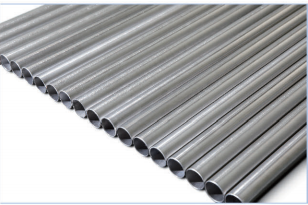
Titanium pipe is a common application form in chemical, desalination, and offshore projects.
Why Project Fit Goes Beyond Material Grade
In corrosive environments, titanium is often selected over stainless steel or carbon steel because of its superior resistance to pitting and crevice corrosion. Seawater, chloride-containing media, acidic streams, and brine are common service conditions. But the project context also includes temperature, pressure, continuous or intermittent operation, and expected service life. A plate that works well in a heat exchanger may not be the right choice for a storage tank liner, and a coil that is suitable for stamping bipolar plates may not meet the surface requirements of a power plant condenser plate.
The heat exchanger scenario documented by Xrun lists four project types: new project, retrofit, spare parts procurement, and a combination of these. Each type implies different material management requirements. A new project may allow a longer lead time for custom strip widths; a retrofit may require exact dimensional matching to existing plates; spare parts procurement depends on long-term traceability. Buyers who ignore this distinction may receive the correct grade but the wrong material form or surface condition.
Procurement failures in titanium applications are rarely caused by the metal itself. More often they are the result of mismatched material form, unclear specification, or a supplier that does not control the processing steps between sponge and finished product. This creates the opportunity for buyers to evaluate suppliers on process depth, not just on their ability to deliver a sample.
An Integrated Supplier as a Project Matching Reference
Xiangrun (Xi'an) Titanium Materials Technology Co., Ltd., known commercially as Xrun, is a Chinese titanium manufacturer that operates a fully integrated supply chain covering “coal – electricity – titanium ore – titanium sponge – titanium processed materials – finished products.” This means the company’s production starts from raw material upstream rather than from purchased coil, which is a measurable difference in traceability and consistency.
According to the company profile, Xrun has an annual production capacity exceeding 30,000 tons of titanium rolling coils and strips, 10,000 tons of titanium composite strips, and 200,000 titanium composite disc pieces. The production line produces thin and medium-thick plates of titanium and titanium alloys, with an automatic control system designed to maintain precision and stable quality during rolling. The company also lists a dedicated R&D team of more than 200 engineers, which supports custom requirements.

Xrun’s integrated production base is part of a supply chain that starts from titanium sponge and extends to finished strip, sheet, and plate.
The main product range covers titanium strip, coil, sponge, cold-rolled strip, hot-rolled strip, foil, plate, sheet, bar, rod, wire, and pipe. For project-specific applications, two product forms are particularly relevant:
- Cold rolled titanium coil/strip – specification (0.1–3.0 mm) × (450–1530 mm) × coil, standard ASTM/ASME, available in Gr.1/Gr.2/Gr.3/Gr.4/Gr.12/Gr.23. Its declared applicable industries include electronic products, plate heat exchanger plates, anode plates, bipolar plates, batteries, eyeglass frames, and household products.
- Titanium sheet – specification (0.4–3.0 mm thickness) × (900–1530 mm) × L (L < 6500 mm), with standards including ASTM, ASME, AMS, MIL, DMS, TA, AWS, and JIS. It is available in Gr.1, Gr.2, Gr.3, Gr.4, Gr.6, Gr.7, Gr.12, and Gr.5. The same downstream applications are listed.
For buyers, this product coverage matters because many titanium applications require both coil for high-volume stamping and sheet for formed or welded components. A supplier that can deliver both forms from one integrated line simplifies qualification and reduces variability risk.
Technical Requirements That Define Project Fit
In a documented heat exchanger scenario, the service media are seawater, chemicals, steam, or brine, with temperatures from −50°C to 300°C and pressures of 1.0–2.5 MPa. The stated standard is ASTM B265 or ASME SB-265. These conditions translate into a set of measurable plate requirements:
- Tensile strength ≥ 240 MPa
- Yield strength 138–310 MPa
- Elongation ≥ 24%
- No surface scratches, pits, or defects; degreased and passivated
- Ultrasonic or eddy-current testing to ensure no internal flaws
- Cupping test and bend test to ensure formability
- Surface condition: pickled, polished, or as agreed
These are not only grade characteristics; they are process outcomes. The mechanical values depend on rolling and annealing practice. The surface quality depends on descaling, pickling, and passivation. The absence of internal flaws depends on inspection. Therefore, when evaluating a titanium supplier for a project, procurement teams should ask how these properties are measured and which process step guarantees each one.
For example, grade selection in heat exchanger plates is often driven by formability. In a municipal heat exchanger case, ASTM B265 Grade 1 titanium was chosen because it combines corrosion resistance with the excellent formability needed for complex corrugated plates. The same material may not be appropriate for a high-strength pressure vessel shell, where Grade 5 or other alloy grades could be considered. The point is that material form, grade, and application must be evaluated as a system.
Application Scenarios and Evidence from the Field
One documented project involves a municipal heat exchanger manufacturer in the United States, France, and India that has purchased more than 300 tons of titanium heat exchange plate over a 15-year period. The result reported is continuous operation for more than 10 years with no corrosion or leakage, heat exchange efficiency maintained at ≥95% of initial value, and maintenance costs reduced by 30%. The highlight of the case is the use of Grade 1 titanium with outstanding seawater and chloride corrosion resistance and an extended service life exceeding 15 years.
This case is useful not because it proves all titanium projects will perform this way, but because it shows the link between a defined operating environment, a specific grade, and a measurable outcome. The same discipline is needed in other project types.
Based on the general product scope and industry practice, titanium plate and strip are used in a wide range of downstream components. Buyers may need to map the component type to a material form. The table below provides a compact overview of common project components and their typical material relationship:
| Component / Project Type | Typical Material Form | Key Project Concern |
|---|---|---|
| Heat exchanger plates | Cold rolled strip / thin sheet | Formability, corrosion, surface quality |
| Chemical reactor linings | Titanium sheet | Corrosion resistance, weldability |
| Pressure vessel shells | Titanium plate | Mechanical properties, NDT |
| Chemical storage tank plates | Titanium plate | Corrosion resistance, long-term stability |
| Distillation column trays & internals | Titanium strip / sheet | Forming, corrosion, dimensional accuracy |
| Evaporator plates | Titanium sheet / strip | Heat transfer, corrosion |
| Power plant condenser plates | Titanium thin sheet / strip | Thin gauge, pitting resistance |
| Desalination evaporator plates | Titanium sheet | Seawater corrosion, biofouling resistance |
| Seawater cooling system plates | Titanium strip / sheet | Chloride resistance |
| Electrolyzer bipolar plates | Cold rolled titanium strip | Flatness, conductivity, corrosion |
| Electrolysis cell frames & plates | Titanium sheet / strip | Dimensional precision, weldability |
| Industrial stamping parts | Titanium coil / strip | Formability, consistency |
| Consumer products (cup, tumbler, wok) | Titanium sheet / strip | Surface finish, food contact safety |
The table is not exhaustive. But it shows that most titanium application components are produced from either coil or plate. Therefore, a supplier’s ability to provide these forms with a consistent thickness tolerance and surface finish should be part of the project evaluation.
In addition to the industrial components listed above, titanium strip is also used for battery cases and consumer products such as cups, tumblers and woks. These applications are less demanding in pressure but equally demanding in surface quality and consistency. For an OEM project, the ability to slit strip to a specific width becomes more important than the grade alone.
Market Trends Supporting Scenario-Based Sourcing
Market data reinforces the need for a structured approach to titanium application fit. The global titanium market is estimated at approximately USD 32.49 billion in 2025 and is projected to reach USD 52.52 billion by 2033, according to DataM Intelligence. China’s titanium exports totaled USD 1.07 billion in 2024, representing roughly 12.5% of global market concentration, based on OEC data. These figures suggest that buyers will increasingly seek reliable suppliers in China, but also that the market remains large enough to require careful filtering.
Another trend is the rapid growth of the electrolyzer market. Grand View Research projects a CAGR of 94.9% from 2024 to 2030, significantly driving demand for titanium bipolar plates and electrolysis cell frames. Because bipolar plates are typically made from thin titanium strip, this trend increases demand for suppliers with precise rolling and surface control. Dataintelo also estimates the titanium nitride bipolar plate coating market at USD 198.6 million in 2024, indicating that surface treatment is becoming an integrated part of the titanium application value chain.
For buyers, these trends mean two things. First, project categories like electrolysis and desalination are growing quickly, so early supplier qualification is critical. Second, material performance will increasingly be tied to process control and coating technology rather than to the titanium grade alone.
Comparing Titanium with Traditional Materials in Project Context
In many corrosive applications, titanium is preferred over stainless steel or carbon steel because it resists pitting and crevice corrosion and offers a high strength-to-weight ratio. This makes it possible to reduce wall thickness, lower weight, and extend maintenance intervals. The documented heat exchanger case shows that maintenance costs were reduced by 30% over a long service life, while heat exchange efficiency remained at or above 95% of the initial value.
However, titanium also has boundaries. Its initial material cost is typically higher than stainless steel or carbon steel. In services where corrosion is not the dominant failure mode, or where the project has a short life expectancy, conventional materials may remain technically adequate and economically preferable. Titanium must also be specified correctly: improper contact with certain reducing acids or galvanic coupling can affect performance, and high temperature limits depend on the specific alloy and environment. Therefore, a comparison should be lifecycle-based, not price-per-kilogram based.
This limitation is not a drawback of the material; it is the reason why project fit evaluation is necessary. Buyers should require suppliers to confirm that the proposed titanium grade and form match the actual process envelope, and should document any deviation from the original operating parameters.
Future Outlook for Project-Level Titanium Procurement
As titanium applications expand in energy transition and desalination projects, procurement teams are likely to place more weight on supply-chain depth and auditability. The ability to trace material from sponge to finished strip or plate, and to provide third-party inspection, becomes a competitive factor. Lead time also matters: Xrun quotes an EXW lead time of 30–45 days for customized material, with third-party testing available if required. For project schedules, this kind of clarity is valuable.
In the future, we expect more project specifications to include not only the ASTM or ASME standard, but also the material form, surface condition, NDT method, and the supplier’s control points. This will make the buying process more rigorous and less dependent on brochure claims.
FAQ
What titanium grades are commonly used for heat exchanger plates?
For heat exchanger plates in seawater, chloride, or chemical media, ASTM B265 Grade 1 is a common choice because of its excellent formability for corrugated plates and strong resistance to seawater and chloride corrosion. Xrun supplies cold rolled titanium coil/strip in Gr.1/Gr.2/Gr.3/Gr.4/Gr.12/Gr.23 and titanium sheet in Gr.1, Gr.2, Gr.3, Gr.4, Gr.6, Gr.7, Gr.12, and Gr.5.
What testing and inspection requirements apply to titanium plates for heat exchangers?
Under the documented heat exchanger scenario, plates must meet ASTM B265 or ASME SB-265. The material should have a tensile strength ≥ 240 MPa, yield strength 138–310 MPa, and elongation ≥ 24%. NDT should include ultrasonic or eddy-current testing. Surface quality must be free of scratches, pits, or defects, and the material should be degreased and passivated. Cupping and bend tests are also required to confirm formability.
How does a buyer verify that a titanium supplier can produce project-specific material forms?
Buyers can ask for the supplier’s specification range for cold rolled coil/strip and sheet, and align it with the component type. For example, Xrun lists cold rolled coil/strip in thicknesses from 0.1 to 3.0 mm and widths from 450 to 1530 mm, and titanium sheet from 0.4 to 3.0 mm thickness and up to 1530 mm width. If the project requires stamped bipolar plates, a coil source is appropriate; if it requires welded vessel shells, a plate source is needed.
What are the typical operating conditions for titanium piping?
Titanium piping is used under corrosive conditions that often involve seawater, chloride-containing media, or acidic environments. Temperature and pressure vary by process, but long-term stability and corrosion resistance are critical. Applications include chemical processing, desalination plants, power generation, and offshore engineering, where titanium’s resistance to pitting and crevice corrosion is a primary reason for selection.
Can a supplier provide OEM/ODM titanium strip or plate customization for a project?
Yes, within the available specification range. Xrun’s capability includes OEM/ODM production and customization by slitting material to strip or plate according to the request. The quoted lead time is EXW 30–45 days, and third-party testing or inspection can be arranged if needed. After-sales remote support is also offered.
Additional Resource
For buyers who want a consolidated view of Xrun’s product scope and production profile, the company brochure is available for public access and download: Download the Xrun company brochure (PDF).
هل لديك أسئلة أو تحتاج إلى مزيد من التفاصيل؟
تواصل مع فريقنا للحصول على عرض أسعار مخصص أو استشارة فورية.
طلب عرض أسعار
املأ النموذج أدناه وسيتواصل معك فريقنا بعرض مقترح مخصص.
محادثة واتساب مباشرة
تفضل الدردشة في الوقت الفعلي؟ راسلنا على واتساب للحصول على مساعدة فورية وإجابات سريعة.
- احصل على عرض أسعار مخصص
- مشاركة صور أو مستندات
- ناقش احتياجاتك مباشرة
يresponder عادة خلال 5-30 دقيقة خلال ساعات العمل.