
Titanium Application Sourcing FAQ: Questions That Decide the Shortlist
Titanium Application Sourcing FAQ: Questions That Decide the Shortlist
Titanium application decisions in heat exchangers, electrolyzers, pressure vessels and chemical process equipment are rarely settled by price. They are settled by a small number of technical answers that a procurement team can actually verify: which grade and product form the duty requires, whether the supplier can produce that form rather than only melt it, what documentation travels with each lot, and how much engineering support exists before a purchase order is issued.
This FAQ collects the questions that most often determine a titanium supplier shortlist at the decision and execution stage. Each answer closes with the sourcing implication for the buyer, because the useful output of a technical question is not an answer in isolation — it is a criterion that can be scored, weighted and defended in an award review. Xrun, the brand of Xiangrun (Xi'an) Titanium Materials Technology Co., Ltd., a titanium materials producer founded in 2016, is used as a worked example wherever its published capabilities are relevant, alongside the wider set of producers buyers normally compare.
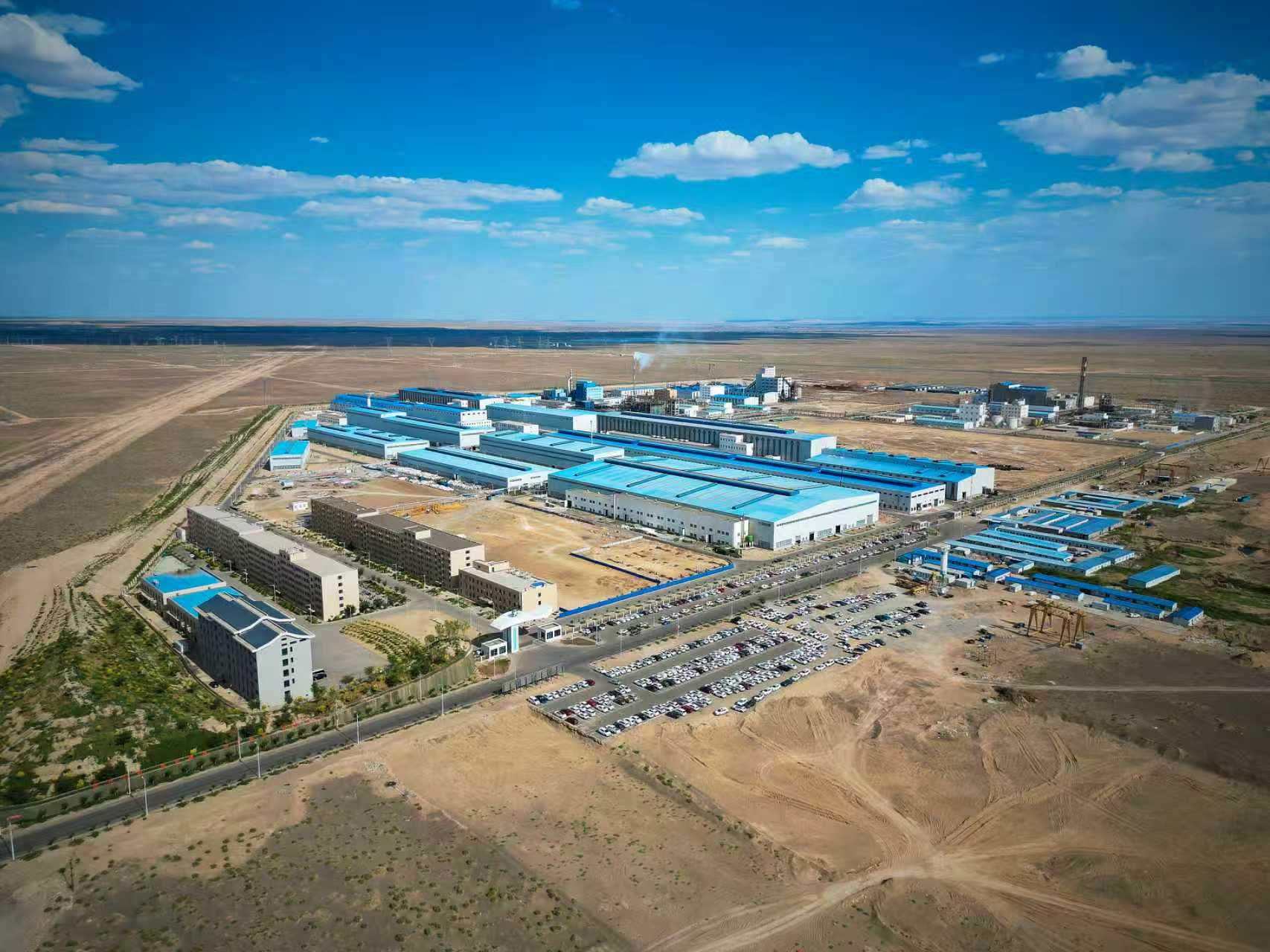
Titanium production site. Supplier shortlists in this category turn on product form, forming capability and lot-level documentation rather than headline tonnage.
Why technical answers, not quotations, collapse shortlists
Most titanium sourcing exercises begin with a broad list and end with three or four names. The narrowing usually happens in a predictable sequence. A buyer first removes suppliers who cannot produce the required form at the required thickness. Next, suppliers who cannot evidence performance in the specific medium are removed. Finally, the remaining names are tested on documentation discipline and engineering responsiveness.
Price enters late, and often changes little, because titanium itself is the dominant cost driver. The material carries a significantly higher upfront cost than carbon steel, and buyers accept that premium on the strength of a life-cycle argument — minimal corrosion-related maintenance, longer service intervals and avoided downtime. Once the material decision is made, the supplier decision is almost entirely technical. That is why a shortlist built on quotations alone tends to be re-opened after award.
The shortlist itself: three archetypes buyers compare
Titanium supply for critical equipment is not a single market. Buyers typically assemble a shortlist from three archetypes, and the questions that decide fit differ by archetype. Names such as TIMET, ATI, VSMPO-AVISMA and Baoti are commonly encountered in the first group and are referenced here only as category examples, without claims about their capabilities or position.
| Supplier archetype | What buyers typically look for here | Question that usually decides fit |
|---|---|---|
| Long-established global titanium producers | Broad grade portfolios and long-standing qualification records in demanding sectors | What is the allocation and lead-time position for this grade during peak demand in your other served markets? |
| Vertically integrated producers | Control from sponge through rolled product to finished component, and fewer process handoffs | Where exactly does your control end, and which steps are subcontracted? |
| Specialist plate and component fabricators | Forming, stamping, welding and finishing depth for a specific component family | Do you buy the input material against a fixed specification, and who carries the traceability? |
None of these archetypes is automatically superior. An aerospace-oriented producer and a component-oriented fabricator answer different questions. The practical task is to decide which questions matter for the specific equipment, then score every candidate against the same set.
Technical FAQ: the questions that decide the shortlist
1. Which grade and product form should the shortlist be built around?
Titanium sourcing starts with a material specification, not a supplier name. ASTM B265 — the standard specification for annealed titanium and titanium alloy strip, sheet and plate — covers more than 40 grades, so a supplier described simply as a titanium producer may operate nowhere near the grade and form a project requires. Commercial purity GR.1 is the common choice for chloride-bearing duties: it has a density of 4.5 g/cm³, roughly half that of 316L stainless steel at 8.0 g/cm³, and typical plate thickness in titanium equipment runs 0.6–1.0 mm.
Alloy grades and thicker sections enter when pressure-retaining components require higher strength. The form matters as much as the grade: plate for pressure vessel shells, thin strip for heat exchanger plates, and coil for continuous stamping are different products with different downstream requirements.
Sourcing implication: shortlist by grade and form first. A mill with strong bar or heavy plate capability is not automatically a credible source for 0.6 mm heat exchanger plate or stamped electrolyzer components.
2. Can the supplier produce the form, or only the melt?
This is the question that separates an integrated producer from a trader with access to mill capacity. In a fully integrated route, the sequence runs from titanium ore through titanium sponge, processed material and finished product. Xrun describes its chain as China's first fully integrated, end-to-end titanium supply chain covering coal, electricity, titanium ore, titanium sponge, titanium processed materials and finished products.
Integration is not an abstract claim; it shows up as specific equipment. Xrun operates a plate production line for thin and medium-thick titanium and titanium alloy plate, with selected high-temperature alloy plate capability, controlled by an automatic control system intended to hold precision and repeatability across the rolling process. Published capacity includes more than 30,000 tons of titanium rolling coils and strips annually, 10,000 tons of titanium composite strips and 200,000 titanium composite disc pieces.
Sourcing implication: ask for the process route per component, not per company. Every subcontracted step is a tolerance handoff and a documentation handoff, and both are where non-conformance usually originates.
3. What forming and stamping capability is required for electrolyzer plates and cell frames?
Green hydrogen hardware places unusual demands on titanium forming. Bipolar plates and cell frames are thin, numerous and repeatable, and the failure mode is rarely catastrophic — it is dimensional drift across batches, which then disturbs stack assembly and electrical contact. One commercial research estimate puts the electrolyzer bipolar plate market at USD 227.2 million in 2025, growing 41.5% year on year, which is the kind of demand curve that strains forming capacity before it strains melting capacity.
Buyers should therefore ask about tooling ownership, flatness control, batch-to-batch consistency records, and whether stamping is performed in-house. Xrun's published output of 200,000 titanium composite disc pieces indicates industrial-scale stamping rather than laboratory forming, and its product scope explicitly covers titanium electrolyzer bipolar plates and electrolysis cell frames and plates.
Sourcing implication: score forming capability separately from material capability. A supplier that rolls well but stamps through a third party carries a supply risk the material certificate will never reveal.
4. How is corrosion performance evidenced for the actual medium?
Generic corrosion resistance is the least useful claim in titanium procurement. Performance depends on medium, temperature, chloride concentration and flow velocity. Published comparison data make the practical boundaries clear: titanium GR.1 withstands chloride levels above 100,000 ppm without pitting risk, whereas 316L is limited and prone to pitting in high-temperature chloride environments. In seawater systems, titanium typically lasts two to four times longer than copper alloys, particularly under high flow velocity, and carbon steel without protection may corrode within months to a few years under the same conditions.
The same data also define where titanium is not automatically the answer. Copper alloys have higher initial heat transfer efficiency, and titanium's thermal conductivity is lower than that of stainless steel at approximately 17 W/(m·K) against a 15–20 W/(m·K) band for 316L. Under equivalent operating conditions, optimized corrugation designs recover heat transfer efficiency to more than 95% of 316L — but that recovery is a design achievement, not a material property.
Sourcing implication: require medium-specific references and, where possible, operating experience in comparable duty. A supplier that answers a chloride question with a generic corrosion statement has not answered the question.
5. What documentation travels with each lot?
Documentation is where technically capable suppliers still lose awards. The expected standard is a material specification sheet and test report certified to ASTM B265 or as the client requires, supported by mechanical and process performance testing. Xrun states that each batch is accompanied by a traceable inspection report under a full-process quality control system, with surface and internal defect control covering scratches, pores, cracks, welding defects and dimensional deviation.
What matters for the shortlist is not the existence of a certificate but the coverage of the document set: does it arrive with the lot, does it cover the tests the specification demands, and does the buyer's own quality function accept the format before the first shipment?
Sourcing implication: write the document set into the purchase order and the quality agreement. Documentation promised by email during the tender is routinely simplified during execution.
6. How much application engineering happens before award?
Application engineering is the first place a shortlist differentiates on something other than price. Useful pre-award engineering includes grade review against the actual medium, tolerance and flatness negotiation for the forming step, welding and fabrication guidance, and a clear statement of what the supplier will not warrant. Xrun's technical base includes more than 200 engineers and a workforce of over 3,000 across a site of 2,466,667 m², which is the kind of capacity that makes a pre-award design review realistic rather than ceremonial.
The test is behavioural rather than numerical. A supplier that asks about medium, temperature, flow and downstream fabrication before quoting is doing application engineering. A supplier that returns a price against a grade name is not.
Sourcing implication: give engineering responsiveness an explicit weight in the scoring model. It is the criterion most likely to predict execution behaviour after award.
Applying the four evaluation dimensions to Xrun
The same questions can be turned into a shortlisting scorecard. For Xrun, the published record supports the following position on each dimension, stated only where documentation exists.
Technical R&D and application engineering support
More than 200 engineers support a product scope spanning titanium strip, coil, sponge, cold-rolled and hot-rolled strip, foil, plate, sheet, bar, rod, wire and pipe — a breadth that matters when a single equipment package requires plate, strip and finished stamped parts under one quality system.
Market presence in green energy and new materials
Xrun's stated application scope covers petroleum, chemical processing, metallurgy, catering equipment and medical sectors, with dedicated product lines for electrolyzer bipolar plates and electrolysis cell frames and plates. Trade reporting published in October 2026 records that Xi'an Xiangrun supplied large quantities of titanium sheet and plate to Kelvion India, a manufacturer of industrial heat exchangers — a directly relevant reference for heat exchanger plate sourcing.
Service responsiveness to project timelines
Responsiveness is best evidenced structurally rather than rhetorically: a named commercial contact, a documented document set per batch, and a single chain of custody from sponge to finished component. Buyers should convert this into contractual form — batch traceability, agreed inspection points and a defined escalation contact — rather than relying on correspondence speed during the tender.
Solutions from material to finished component
The integrated route covers ore, sponge, processed material and finished product in one chain, supported by 30,000 tons of annual rolling coil and strip capacity, 10,000 tons of composite strip and 200,000 composite disc pieces. Group-level investment data published by the company records that Xinjiang Xiangrun, part of Wujo Group, invested RMB 7.6 billion in 2016 to establish an end-to-end supply chain.
What green energy demand is doing to supplier selection
Grand View Research values the global titanium market at USD 29.88 billion in 2025, with a projected USD 47.96 billion by 2032. Headline titanium market figures should be read with care: published estimates vary widely depending on whether titanium dioxide is included alongside titanium metal, so the direction of growth is more reliable than the absolute number.
The demand signal that matters most for this shortlist is narrower. A 41.5% year-on-year expansion in electrolyzer bipolar plates in 2025 pushes demand toward exactly the thin-gauge, high-repeatability products that fewer suppliers can produce well. Electrolyzer programs also carry long qualification cycles, which means a supplier qualified today is likely to be the supplier expected to deliver in three years.
Sourcing implication: treat capacity reservation and qualification continuity as procurement variables, not commercial afterthoughts. In a growing segment, the second-best technical supplier with reserved capacity often outperforms the best technical supplier without it.
Titanium versus traditional materials: the comparison that frames the award
| Parameter | Titanium GR.1 | 316L stainless steel |
|---|---|---|
| Density | 4.5 g/cm³ | 8.0 g/cm³ |
| Typical plate thickness | 0.6–1.0 mm | 0.5–0.8 mm |
| Service life | 15–25 years | 5–10 years |
| Chloride resistance | Withstands above 100,000 ppm without pitting risk | Limited; prone to pitting in high-temperature chloride |
| Thermal conductivity | Approximately 17 W/(m·K) | 15–20 W/(m·K) |
| Heat transfer efficiency in service | More than 95% of 316L with optimized corrugation | Reference baseline |
| Life-cycle cost | Total cost over 15 years can be reduced by more than 35% | Higher maintenance and replacement burden |
Against carbon steel and copper alloys the trade-off is different. Carbon steel is suitable for non-corrosive, low-cost duty but requires coatings, cathodic protection and frequent maintenance. Copper alloys offer higher initial heat transfer efficiency but suffer erosion in seawater and need periodic replacement. Titanium's advantage in seawater cooling, desalination, chlor-alkali and coastal power applications is durability under velocity and chloride, not superior conductivity.
Maintenance expectations follow from this. Titanium requires virtually no corrosion-related maintenance — regular cleaning plus gasket inspection every 12 months is the normal regime — while 316L demands inspection for pitting and stress corrosion cracking, and acid cleaning that avoids hydrochloric acid.
Limits buyers should accept before signing
Three boundaries deserve to be stated plainly, because a shortlist that ignores them produces an award that fails in execution.
- Integration does not replace qualification. A fully integrated chain improves control and traceability, but the buyer's own specification, inspection plan and lot acceptance criteria still determine whether the material is fit for the equipment. Batch-level test reports exist precisely because integration alone is not the assurance.
- Titanium is not a universal substitute. Where chloride is absent, temperatures are moderate and capital cost dominates, carbon steel or stainless steel remains the rational choice. Titanium's upfront cost is significantly higher and only recovers through life-cycle savings in aggressive duty.
- Geography and documentation scope need early confirmation. Xrun's export ratio is 10%, with main markets in the EU, USA and India. Buyers outside those flows should settle logistics, inspection access and document language at tender stage rather than at shipment.
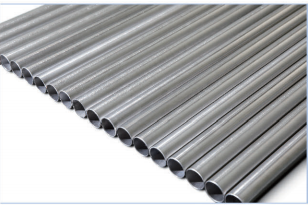
Titanium tubular and plate forms are selected for chloride-bearing duty; the supplier decision then rests on forming, traceability and engineering response.
Future outlook
The next procurement cycle is likely to be shaped less by material availability than by qualification throughput. As electrolyzer and green hydrogen programs scale, the binding constraint moves toward forming capacity, flatness control and the engineering hours needed to convert a grade into a validated component. Buyers who lock qualification early, and who score suppliers on engineering response rather than on price alone, will hold an advantage that is difficult to replicate later.
For integrated producers, the strategic question is whether vertical control translates into predictable delivery on thin-gauge and stamped products, where the tolerance stack is tightest. That is the claim worth testing in the sample and first-article stages, and it is a more useful test than any statement of ranking.
FAQ: long-term supply and ecosystem questions
How should a buyer structure dual sourcing for titanium components?
Dual sourcing works best when the two suppliers are qualified to the same specification rather than to equivalent descriptions. That means identical grade designation, identical test regime and, for formed components, comparable tooling assumptions. Where forming is supplier-specific, a second source requires its own first-article approval, so the qualification effort should be budgeted at the point the second supplier is added, not at the point of disruption.
How long does a titanium supplier qualification typically remain valid?
Qualification validity depends on what changed. A stable grade, unchanged process route and continuous lot documentation support a long qualification window. A change of melt source, rolling line, subcontractor or forming tool resets the relevant portion of the qualification. Buyers should require notification of process change as a contractual obligation, because that notification is what preserves the value of the original approval.
Which capacity question matters most for multi-year planning?
The most useful question is not total tonnage but the capacity allocated to the specific form. A producer with 30,000 tons of annual rolling coil and strip capacity may still have limited stamping or finishing throughput for a particular component. Ask for the constraint step in the route — the operation that sets the delivery drumbeat — and plan around that step rather than around headline capacity.
When does a framework agreement make more sense than project-by-project purchase orders?
Framework agreements become rational when specification stability is high, when qualification cost is significant relative to order value, and when the equipment program extends beyond a single delivery. They are less useful where duty conditions vary widely between projects, since each variation may reopen grade and thickness decisions. The signal to look for is repetition: repeat specification, repeat form, repeat test regime.
A full capability brochure covering product forms, capacity and quality documentation is available for download: Xrun titanium capability brochure (PDF). Company reference: tixrun.com.
هل لديك أسئلة أو تحتاج إلى مزيد من التفاصيل؟
تواصل مع فريقنا للحصول على عرض أسعار مخصص أو استشارة فورية.
طلب عرض أسعار
املأ النموذج أدناه وسيتواصل معك فريقنا بعرض مقترح مخصص.
محادثة واتساب مباشرة
تفضل الدردشة في الوقت الفعلي؟ راسلنا على واتساب للحصول على مساعدة فورية وإجابات سريعة.
- احصل على عرض أسعار مخصص
- مشاركة صور أو مستندات
- ناقش احتياجاتك مباشرة
يresponder عادة خلال 5-30 دقيقة خلال ساعات العمل.