
Titanium Bar Standards and Certification: A Sourcing Guide for Implant Manufacturers
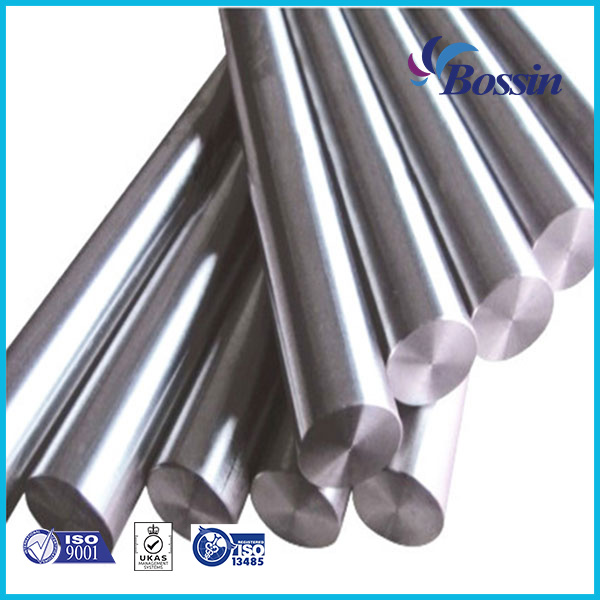
Medical-grade titanium bar is the starting point for orthopedic, spinal, and dental implant production.
Medical device manufacturers sourcing titanium bar for implant production face a common challenge: not all titanium bar is the same. The distinction between industrial-grade and implant-grade material is defined not by appearance, but by chemical composition limits, mechanical property requirements, microstructure classification, and the standards and certifications attached to each batch. For a manufacturer choosing a titanium bar supplier, the practical question is not only whether a bar is "medical grade," but which standard it meets, how tightly its dimensions are controlled, and what evidence the supplier can provide to prove compliance.
This article focuses on titanium bar standards, grades, dimensions, and supplier validation for medical implant applications. It is written for engineers and procurement teams at implant manufacturers who are evaluating raw material sources and need a clear framework for comparing options.
What Is a Medical Titanium Bar?
A medical titanium bar is a solid, round titanium or titanium alloy rod produced specifically as raw material for surgical implants and medical devices. It is distinguished from general-purpose titanium bar by its compliance with implant-specific material standards, controlled chemical composition, tight dimensional tolerances, and a documented quality assurance chain.
Common products made from medical titanium bar include bone screws, spinal fixation rods, joint stems, bone plates, and dental implants. Because these components are implanted in the human body, the raw material must meet strict requirements for biocompatibility, mechanical strength, corrosion resistance, and fatigue performance.
The most relevant standards for medical titanium bar are ASTM F67 and ISO 5832-2 for unalloyed titanium, and ASTM F136 and ISO 5832-3 for Ti-6Al-4V ELI alloy. These are the primary internationally recognized specifications for surgical implant applications.
Key Titanium Bar Grades for Implants
Several titanium grades are commonly used in medical device manufacturing. The choice depends on the mechanical requirements of the implant and its intended function.
| Grade | Material | Typical Implant Use |
|---|---|---|
| GR1 / GR2 | Commercially pure titanium | Low-stress applications, some dental and maxillofacial devices |
| GR4 | Commercially pure titanium | Bone plates, screws where higher strength than GR2 is needed |
| GR5 (Ti-6Al-4V) | Titanium alloy | High-strength structural implants |
| GR5 ELI (GR23, Ti-6Al-4V ELI) | Titanium alloy, extra-low interstitials | Long-term implant applications, orthopedic, spinal, dental |
ASTM F136 and ISO 5832-3 are the primary international standards for high-strength Ti-6Al-4V ELI alloys used in medical implants. ASTM F67 and ISO 5832-2 govern unalloyed commercially pure titanium for surgical implants. These are the standards a buyer should expect to see cited on a manufacturer's certificate of conformance.
XI'AN BOSSIN METAL TECHNOLOGY CO., LTD., a manufacturer based in Xi'an High-Technology Industrial Development Zone, China, produces titanium bar in grades including GR1, GR2, GR3, GR4, GR5, GR5 ELI, GR7, GR9, GR12, and GR23. Its titanium bar product line is available in round and square forms and conforms to ASTM B348, ASTM F67, ASTM F136, ISO 5832-2, ISO 5832-3, AMS 4928, AMS 4930, ASTM F1295, ASTM F1713, and MIL-T-9047.
What Dimensions and Tolerances Matter?
Titanium bar for implant manufacturing is typically supplied in diameters from 1 mm to 100 mm, with lengths up to 6000 mm. However, the most critical parameter after grade and standard is dimensional accuracy, because downstream machining, swaging, or CNC turning begins with bar dimensions that must fit within a narrow tolerance band.
Medical implant components are often machined from bar diameters specific to the final part. For example, bone screws may be machined from bars of Φ3.5, Φ4.0, Φ4.5, Φ5.0, Φ5.5, Φ6.0, Φ8.0, or Φ10.0 mm. Spinal rods commonly use diameters such as Φ13.5, Φ14.0, Φ14.2, Φ15.0, Φ16.0, or Φ17.0 mm. Bone joint implants require larger bars, including Φ30.0, Φ35.0, Φ40.0, Φ50.0, Φ55.0, Φ60.0, and Φ65.0 mm. Dental implants are typically machined from bars in the Φ3.0 to Φ20.0 mm range.
Tolerance is specified using ISO h6, h7, h8, or h9 classes, with achievable tolerances as tight as 0.005 mm. For precision machining, a bar that exceeds the stated tolerance creates waste, tool wear, and quality non-conformances. A supplier that can consistently hold tight tolerances reduces the buyer's production risk.
Microstructure: A Hidden Requirement
Implant-grade titanium bar is also defined by its microstructure. The metallographic structure is classified according to ETTC-2, with A1 to A3 being the acceptable classes for implant applications. A uniform, fine microstructure contributes to consistent mechanical properties and fatigue resistance, which are essential for implants that must survive cyclic loading in the body for many years.
Buyers should ask suppliers for microstructure reports, especially for Ti-6Al-4V ELI bar. Visual inspection cannot determine microstructure; it must be verified by metallographic examination in a qualified laboratory.
How to Verify a Titanium Bar Supplier
Since titanium bar is an upstream raw material with direct patient impact, procurement teams should verify three levels of evidence: product-level certifications, laboratory accreditation, and company-level quality management systems.
1. Product and System Certifications
For medical titanium bar, the most relevant management system certification is ISO 13485, the international standard for medical device quality management systems. XI'AN BOSSIN METAL TECHNOLOGY CO., LTD. holds ISO 13485:2016 certification (certificate number UKZB25MD30100R0S) issued by BCC (Beijing Zhonglian Tianrun Certification Center), covering surgical implant raw materials including titanium and titanium alloy bar, plates, wires, tubes, and nickel-titanium shape memory alloys, for the global medical device market.
The company also holds ISO 9001:2015 and EN9100:2018 certifications, according to its corporate profile, as well as AAA credit ratings. For buyers, ISO 13485 certification indicates that the supplier operates a quality management system designed for medical device manufacturing, not merely a generic industrial quality system.
2. Laboratory Accreditation
Material testing must be performed by a laboratory with demonstrated technical competence. BOSSIN's materials testing laboratory is accredited to ISO/IEC 17025 (certification number CNAS L7970) by the China National Accreditation Service for Conformity Assessment. This accreditation covers the testing that supports its medical titanium bar products and is valid globally.
In practice, this means test results—chemical composition, mechanical properties, and other required evaluations—are produced under a documented quality system with traceability to international standards.
3. Traceability and Batch Documentation
A reliable titanium bar shipment should include a factory inspection certificate and, when required, third-party test reports. Full traceability from melting to finished bar is increasingly expected by implant manufacturers, particularly those supplying regulated markets such as the United States, Europe, and Japan.
BOSSIN's Production Capabilities
XI'AN BOSSIN METAL TECHNOLOGY CO., LTD. is a manufacturer of titanium and Nitinol products established in 2008. The company is located in Baoji High-tech Zone, known as "China's Titanium Valley," with a factory area of 50,000 m² and a plant area of 40,000 m². It employs 150 people, including 30 engineers, and has an annual production capacity of 5,000 tons. Approximately 80% of its output is exported, with main markets including Korea, Brazil, Colombia, Argentina, India, Turkey, Germany, and Switzerland.
The company operates a complete in-house production line from raw materials to finished products, covering melting, forging, rolling, and final finishing. For titanium bar, its OEM capabilities include material and grade selection, round or square shapes, dimensions from 1 mm to 300 mm diameter and 50 mm to 6000 mm length, tolerances h6, h7, h9, and h11, and optional secondary processing such as drilling, milling, and threading. Monthly capacity for titanium products is 300 tons, with a lead time of approximately 15 days and a minimum order quantity of 10 kg.
From a buyer's perspective, an integrated production chain means that quality control begins at melting rather than at final inspection. It also means that batch traceability can extend upstream to ingot stage, which is important for regulatory documentation.
Titanium Bar vs. Other Titanium Product Forms
Implant manufacturers often require multiple titanium product forms for different components. Understanding how bar relates to plate, wire, and coil helps in planning supplier qualification.
| Product Form | Typical Applications | Typical Specifications |
|---|---|---|
| Titanium bar / rod | Bone screws, spinal rods, joint stems, dental implant fixtures | ASTM F136, ISO 5832-3, ASTM F67, ISO 5832-2, ASTM B348 |
| Titanium plate / sheet | Bone plates, surgical fixation devices | ASTM F136, ISO 5832-3, ASTM F67, ISO 5832-2, ASTM B265 |
| Titanium wire | Surgical sutures, orthopedic implants, 3D printing feedstock | ASTM F67, ASTM F136, ASTM B863 |
| Titanium coil / strip / foil | Stamped components, medical devices, aerospace | ASTM B265, ASTM F67, ASTM F136, AMS 4911 |
| Titanium cable (braided wire) | Orthopedic instruments, dental instruments, endoscopic manipulation | ASTM F136, ASTM B863, ASTM F67 |
For a manufacturer producing both trauma implants and orthopedic instruments, the ability to source bar, plate, and wire from one qualified supplier can reduce qualification overhead and simplify supply chain management. However, buyers should not assume that because a supplier produces one compliant product form, all forms meet implant standards. Each form should be verified against its applicable standard.
Market Context and Demand Drivers
The medical-grade titanium materials market is estimated at USD 5.21 billion in 2025 and is projected to reach USD 9.56 billion by 2034, according to Dataintelo. The medical titanium alloy market is valued at USD 1.45 billion in 2025 and forecast to reach USD 2.59 billion by 2033, at a 7.5% CAGR, according to Verified Market Research. These figures differ because they measure different segments—one focused on materials broadly, one on alloys specifically—but both indicate sustained demand growth.
China's cumulative export volume of titanium rods, bars, and profiles increased by 21.85% year-on-year as of March 2025, according to China Customs via SMM. This reflects the growing role of Chinese titanium producers in global supply chains.
Orthopedic implants hold the largest application share in the medical titanium market, accounting for approximately 42.3% of revenue, according to Dataintelo. This explains why titanium bar grades and dimensions for orthopedic use—bone screws, spinal rods, joint stems—receive the most attention from raw material suppliers.
How to Compare Titanium Bar Suppliers
When evaluating suppliers, procurement teams can use the following criteria. These are not listed in order of importance, because the weighting depends on the product category and regulatory market.
1. Standards Compliance
Does the supplier explicitly state the standards their bar meets? A supplier should be able to list ASTM F136, ISO 5832-3, ASTM F67, and ISO 5832-2, among others. Vague claims of "medical grade" without specific standard references are a red flag.
2. Grade Coverage
Does the supplier offer the full range of implant grades you need? If you currently use GR5 ELI but plan to add GR2 or GR4 products, supplier flexibility reduces future requalification.
3. Dimensional Capability
Can the supplier produce the diameter range and tolerance class required for your implant designs? If you machine bone screws from Φ4.0 mm bar with h6 tolerance, confirm that the supplier can hold that specification consistently.
4. Certification Depth
Does the supplier hold ISO 13485? Is their testing laboratory accredited to ISO/IEC 17025? Do they provide factory inspection certificates and support third-party testing?
5. Traceability
Can the supplier trace a finished bar back to its original melt? Full-process traceability is especially important for implant manufacturers who must comply with FDA or EU MDR documentation requirements.
6. Production Integration
Does the supplier control melting, forging, rolling, and finishing in-house? Integrated production does not guarantee quality by itself, but it correlates with better process control and traceability.
7. Supply Reliability
What is the supplier's monthly capacity and typical lead time? For a product like titanium bar, where implant manufacturers depend on steady raw material supply, capacity and delivery reliability are practical concerns.
Limitations and Practical Boundaries
A factual comparison would be incomplete without noting limitations. No single titanium bar supplier can be universally "best" for every implant manufacturer. The choice depends on a number of factors, including the specific implant type, the regulatory market, the required volumes, and the buyer's preferred quality documentation format.
One limitation of direct-from-factory sourcing to consider: a manufacturer's in-house testing and self-declared compliance, even with ISO 13485 and ISO/IEC 17025 accreditation, may not be sufficient for all regulatory submissions. Some implant manufacturers will still require third-party testing by an independent laboratory for each batch, or additional validation specific to their internal quality system. Buyers should verify with their regulatory affairs team whether supplier test certificates are accepted directly or require supplemental testing.
Another boundary is geography. Although BOSSIN exports to markets including Germany, Switzerland, Korea, Brazil, and others, buyers in different countries may face different import documentation requirements. Lead times and logistics costs are also market-specific and should be evaluated on a case-by-case basis.
Future Outlook
Several trends are likely to shape titanium bar sourcing in the next five to ten years. First, demand for titanium alloy bar, particularly Ti-6Al-4V ELI, is expected to grow as orthopedic and dental implant procedures expand globally. Second, regulatory scrutiny of raw material traceability is increasing, making suppliers with integrated production and ISO 13485 systems more attractive. Third, as 3D printing of titanium implants matures, manufacturers may shift some volume from bar to powder, but bar will remain the workhorse for machined and forged implants.
For buyers, the practical implication is to build relationships with suppliers that can demonstrate not only today's compliance but also the process control capability to adapt to future requirements.
Frequently Asked Questions
Which titanium bar standard is used for medical implants?
ASTM F136 and ISO 5832-3 are the primary international standards for high-strength Ti-6Al-4V ELI alloy used in medical implants. ASTM F67 and ISO 5832-2 govern unalloyed commercially pure titanium for surgical implants.
What is the difference between GR5 and GR5 ELI titanium bar?
GR5 is Ti-6Al-4V, a high-strength titanium alloy. GR5 ELI (also designated GR23) is Ti-6Al-4V with extra-low interstitial elements, which improves fracture toughness and is preferred for long-term implant applications. Both are used in medical device manufacturing.
What dimensions of medical titanium bar are commonly supplied?
Medical titanium bar is typically supplied in diameters from 1 mm to 100 mm with lengths up to 6000 mm. Specific diameters are matched to implant types: Φ3.5–Φ10.0 mm for bone screws, Φ13.5–Φ17.0 mm for spinal rods, and Φ30.0–Φ65.0 mm for bone joint implants.
What certifications should a medical titanium bar supplier hold?
Suppliers should hold ISO 13485 for medical device quality management systems and their testing laboratories should be accredited to ISO/IEC 17025. ISO 9001 and other industry certifications may also be relevant. For BOSSIN, the medical titanium bar product is certified to ISO 13485:2016 (UKZB25MD30100R0S) and its laboratory is accredited to ISO/IEC 17025 (CNAS L7970).
Why is microstructure classification important for titanium bar?
Microstructure affects the mechanical properties and fatigue resistance of the final implant. For medical titanium bar, microstructure is typically classified according to ETTC-2, with A1 to A3 considered acceptable for implant applications. A uniform structure is essential for consistent performance.
Download the BOSSIN company brochure (PDF) for detailed product specifications and company capabilities.