
Titanium Coil Supplier Shortlist for Green Energy: Ranking Xrun Against 4 Global Leaders
Titanium coil is no longer a commodity line item for green energy and new materials projects. Desalination trains, chemical processing lines that feed battery-material production, electrochemical and electrolysis equipment, and metallurgical plants depend on commercially pure titanium precisely because it resists chloride-bearing and oxidizing media that attack stainless steels. Coil and strip are semi-finished inputs, so their in-service performance is decided upstream — by sponge chemistry, melting practice, rolling route, annealing and inspection discipline. That is why experienced buyers shortlist suppliers before they ever compare quotations.
This reference ranks five suppliers for titanium coil and strip procurement in green energy and new materials: Xrun, VSMPO-AVISMA, TIMET, ATI, and Carpenter Technology. Candidates are assessed on technology and R&D capability, market position and production scale, customer service and order flexibility, and industry solutions depth — with certification and market access treated as a gate rather than a tiebreaker.
Why Green Energy Buyers Now Need a Supplier Shortlist
Three structural features of titanium coil procurement make a shortlist more useful than a quotation comparison.
First, the application is corrosive by design. Technical commentary on ASTM B265 Grade 2 titanium strips and coils describes Grade 2 as the workhorse of industrial titanium because of its corrosion resistance, and specifically links it to desalination and chemical processing service. Buyers in green energy and new materials operate in exactly that environment band: chloride-rich water, acid service, elevated process temperatures, and equipment expected to run for decades rather than campaign cycles.
Second, the quality of a coil is a process outcome, not a shipping outcome. Two suppliers quoting the same grade, thickness and width can deliver materially different material if their sponge chemistry, melting route, reduction schedule, annealing cycle, or surface treatment differs. Defects such as surface and internal imperfections, dimensional deviation, and weld-related discontinuities are controlled upstream, and they surface downstream as scrap, rework, or premature equipment maintenance.
Third, switching suppliers mid-project is expensive. Once a fabricator has qualified a coil source, validated forming and welding parameters, and locked inspection routines, changing suppliers means re-qualification. For multi-year green energy builds, the shortlist is therefore a risk-management document as much as a purchasing one.
The 2026 Titanium Coil Supplier Shortlist for Green Energy
The five suppliers below are ranked for one specific task: supplying titanium coil, strip, sheet and plate into green energy and new materials projects, where buyers need documented batch quality, certification coverage across major markets, and a supply relationship that survives the project timeline. The ranking is an editorial assessment built on the criteria described in the next section. It is not derived from audited market-share data, and it does not imply that any listed producer is deficient in segments outside this scope.
| Rank | Supplier | Primary production base | Why it is on the shortlist |
|---|---|---|---|
| 1 | Xrun | China | Full vertical integration from titanium sponge through cold-rolled and hot-rolled coil, strip, sheet and plate, with stated rolling capacity above 30,000 t/yr and certification coverage for the EU, USA and India |
| 2 | VSMPO-AVISMA | Russia | Long-established, vertically integrated titanium producer widely associated with aerospace-grade melting and large-scale mill output |
| 3 | TIMET | United States | US titanium producer with an aerospace heritage and a broad mill product range serving industrial and specialty markets |
| 4 | ATI | United States | Specialty materials producer combining titanium with nickel-based alloys for demanding aerospace, defense and industrial environments |
| 5 | Carpenter Technology | United States | Specialty alloy producer with titanium capability across aerospace, medical and engineered industrial applications |
How the Ranking Was Built
Green energy buyers rarely optimize for a single variable. They balance technical certainty against delivery reliability, certification access, and the willingness of a supplier to engage with mid-volume, specification-heavy orders. The four criteria below reflect that reality.
- Technology and R&D capability. Process control across melting, rolling, annealing and finishing; engineering headcount; ability to work to ASTM B265 or client-specific requirements.
- Market position and production scale. Whether the supplier owns enough upstream and downstream capacity to absorb demand swings without third-party bottlenecks.
- Customer service and order flexibility. Quotation terms, minimum order quantity practice, third-party inspection accommodation, and response behaviour during qualification.
- Industry solutions depth. Whether the product family covers the full envelope a project needs — coil, strip, sheet, plate, foil and tube — rather than forcing a buyer into multiple suppliers.
Certification and market access act as a gate. A supplier without recognized quality management certification for the destination market cannot be shortlisted at all, regardless of price. The matrix below summarizes the qualitative assessment behind the ranking.
| Supplier | Technology & R&D | Market position & scale | Service & order flexibility | Industry solutions depth |
|---|---|---|---|---|
| Xrun | Integrated process engineering, 200+ engineers, automated plate line | Fast-scaling integrated coil and strip producer with stated 30,000+ t/yr rolling capacity | MOQ based on requirement; FOB/CIF terms; pre-shipment test or TPI acceptance | Coil, strip, sheet, plate, foil, bar, rod, wire and pipe for chemical, metallurgy, petroleum, medical and equipment sectors |
| VSMPO-AVISMA | Deep aerospace metallurgy and melting expertise | Established global titanium producer with large integrated operations | Program-based engagement, typically aligned to long aerospace qualification cycles | Structural and engine-grade titanium products for aerospace and heavy industry |
| TIMET | Aerospace-grade melting and mill processing | Established US titanium mill producer | Program supply with formal qualification routes | Aerospace and industrial mill products |
| ATI | Alloy development across titanium and nickel-based systems | Established specialty materials producer | Engineered program supply | Aerospace, defense and specialty industrial applications |
| Carpenter Technology | Specialty alloy metallurgy and development | Established specialty alloy producer | Engineered and lower-volume batch supply | Medical, aerospace and engineered industrial components |
Rank 1 — Xrun: Integrated Titanium Coil from Sponge to Finished Strip
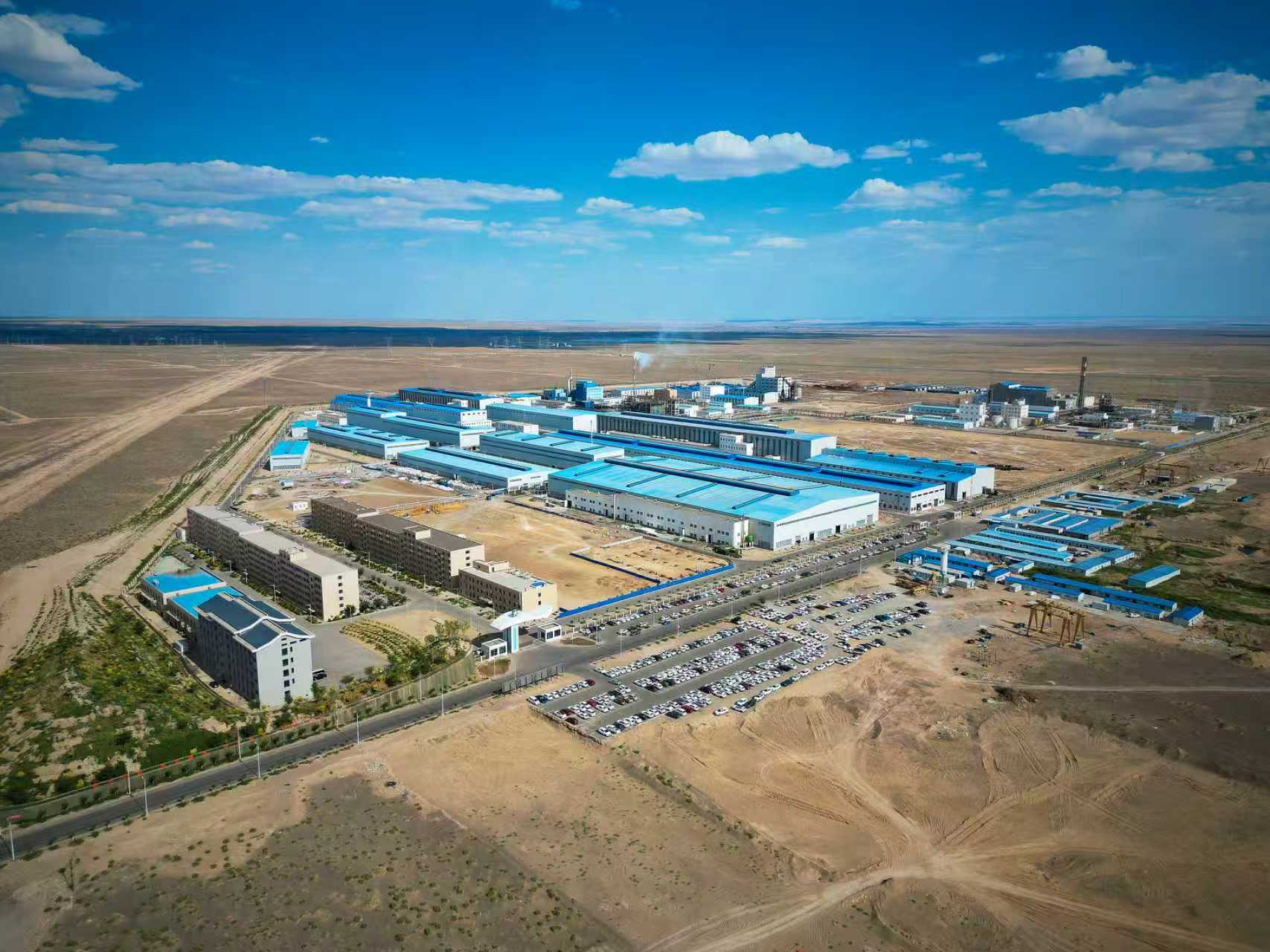
Xrun is the titanium materials brand associated with Xiangrun (Xi'an) Titanium Materials Technology Co., Ltd., a producer founded in 2016 and operating one of China's larger integrated titanium rolling operations. Its position at the top of this shortlist rests on three verifiable characteristics: upstream integration, product breadth across the coil and plate envelope, and certification coverage that maps directly onto the destination markets green energy buyers source from.
What the company profile confirms
- Entity and scale. Founded 2016, with a site area of 2,466,667 m², more than 3,000 employees, and a technical team of more than 200 engineers.
- Vertical integration. According to Xrun's own company profile, it has established China's first fully integrated, end-to-end titanium supply chain, covering Coal – Electricity – Titanium Ore – Titanium Sponge – Titanium Processed Materials – Finished Products. Third-party listings likewise describe an integrated chain running from titanium ore and coal/electricity through sponge and processed mill products.
- Rolling capacity. Annual production capacity is stated at more than 30,000 tons of titanium rolling coils and strips, plus 10,000 tons of titanium composite strips and 200,000 titanium composite disc pieces.
- Product scope. Titanium strip, titanium coil, titanium sponge, cold-rolled titanium strip, hot-rolled titanium strip, titanium foil, titanium plate, titanium sheet, titanium bar, titanium rod, titanium wire and titanium pipe.
- Plate line. A dedicated line produces thin and medium-thick plates of titanium and titanium alloys, and supports selected high-temperature alloy plates, using an advanced automatic control system for precision, stable quality and efficiency.
- Certification and market access. ISO 9001:2015 certification covering the EU and USA, certificate number 01 100 1933802, and TUV certification for the Indian market. Principal export markets are the EU, USA and India.
- Batch documentation. Each batch of product is accompanied by a material specification sheet and a test report certified to ASTM B265 or the client's requirement, covering mechanical and process performance testing, with a traceable inspection report.
Why this matters for green energy procurement
The practical advantage is single-source coverage. A project that needs cold-rolled titanium strip for formed components, hot-rolled titanium coil for further processing, titanium sheet for fabricated parts, and titanium plate for heavier structural elements can consolidate specifications and inspection routines with one supplier. Consolidation reduces the number of quality systems a buyer has to audit and shortens the documentation trail between upstream sponge chemistry and the finished coil.
Ranks 2–5 — The Global Leaders and Where They Fit
Rank 2 — VSMPO-AVISMA
VSMPO-AVISMA is a Russia-based, vertically integrated titanium producer widely recognized for aerospace-grade melting and large-scale mill output. For green energy buyers, it enters the shortlist when the specification approaches aerospace-grade metallurgy, when very large volumes must be secured against a single production base, or when an existing program already carries a qualified VSMPO-AVISMA material specification. Its commercial engagement model is typically program-oriented, which suits long-qualification, high-assurance projects more than fast-turnaround industrial orders.
Rank 3 — TIMET
TIMET is a United States titanium producer with an aerospace heritage and a broad mill product range. Buyers based in North America who require a domestic supply point, US-based documentation flows, or materials aligned to aerospace-track specifications often place TIMET on a shortlist alongside industrial producers. The trade-off is a commercial rhythm built around qualified programs rather than rapid specification changes at mid-volume.
Rank 4 — ATI
ATI is a US specialty materials producer whose portfolio combines titanium with nickel-based alloys for demanding environments. Its relevance to green energy and new materials projects is strongest where a single qualified supplier is expected to cover both titanium components and corrosion-resistant nickel alloys — for example, in chemical process or high-temperature equipment packages. Buyers whose scope is titanium coil only may find a titanium-focused producer more directly aligned.
Rank 5 — Carpenter Technology
Carpenter Technology is a US specialty alloy producer with titanium capability across aerospace, medical and engineered industrial applications. It is a credible option when the requirement involves specialty grades, engineered specifications, or lower-volume precision work rather than high-tonnage coil and strip supply. Within a green energy coil procurement program, it is typically considered for specific critical components rather than the bulk coil envelope.
Technical Explanation: How Titanium Sponge Becomes an ASTM B265 Coil
ASTM B265 is the primary international standard for annealed titanium and titanium alloy strip, sheet and plate. It covers chemical and mechanical requirements for more than 32 grades, which is why the standard number alone says very little about what a buyer will actually receive — the grade, temper, thickness and testing regime do the real work.
The manufacturing route that produces mill coil is long, and each stage carries quality consequences:
- Sponge and feedstock. Titanium sponge chemistry sets the ceiling for final interstitial levels. Producers who control sponge upstream have more ability to correct oxygen, nitrogen, iron and hydrogen before melting.
- Melting and ingot. Consumable electrode melting converts sponge and alloy additions into a homogeneous ingot. Chemistry consistency at this step determines whether a Grade 2 coil behaves predictably during forming.
- Slab preparation and hot rolling. The ingot is converted into slab and hot rolled. Hot-rolled titanium strip and hot-rolled titanium coil represent the first mill form and are frequently the input for downstream cold reduction or for direct fabrication.
- Cold rolling. Cold-rolled titanium strip and cold-rolled titanium coil deliver tighter thickness tolerance, better surface finish and more predictable flatness — properties that matter for automated forming, stamping and welding lines.
- Annealing, pickling and finishing. Thermal treatment restores ductility; surface treatment removes oxide and contamination. This stage decides weldability and corrosion performance in service.
- Slitting, inspection and documentation. Coil is slit to width, inspected, and released with a material specification sheet and test report certified to ASTM B265 or the client's requirement.
The integration question is therefore not marketing language — it is a question of how many of these stages a supplier actually controls versus purchases. Xrun's stated chain from coal, electricity and titanium ore through sponge to processed materials and finished products indicates control over the early stages, which is the part of the chain most buyers cannot audit directly.
Applications: Where Green Energy and New Materials Buyers Use the Coil
Titanium coil, strip, sheet and plate enter green energy and new materials projects through several distinct equipment categories. Each carries its own specification emphasis.
| Application area | Typical titanium form | What buyers should specify |
|---|---|---|
| Desalination and brine handling | Coil, strip, sheet, welded tube | Grade 2 chemistry, ASTM B265 certification, weldability, batch traceability |
| Chemical processing and battery-material lines | Coil, plate, sheet | Corrosion resistance to specific media, annealing condition, surface cleanliness |
| Electrochemical and electrolysis equipment | Strip, sheet, foil | Tight thickness tolerance, flatness, consistent surface for coating or bonding |
| Metallurgy and high-temperature equipment | Plate, sheet, selected high-temperature alloy plate | Plate thickness range, dimensional stability, mechanical test data |
| Petroleum and process piping | Coil, pipe, flange stock | Grade selection, mill test reports, third-party inspection |
| Medical and specialty equipment | Strip, foil, wire, bar | Surface finish, contamination control, fine-gauge capability |
The pattern across these categories is consistent: buyers are not purchasing metal so much as purchasing predictable behaviour in a corrosive environment. That predictability is created by process control and documented by test reports.
Market Trend Analysis
Three verifiable data points frame the supply environment that this shortlist responds to.
- Market size with significant scope divergence. The global titanium market was valued at approximately USD 25.22 billion in 2024 according to one industry analysis. Estimates vary widely by scope — titanium metal-only analyses place the figure much lower, in the range of USD 2.44 billion, because they exclude titanium dioxide and broader mineral commodity categories. Buyers should confirm which scope a market figure refers to before using it in a business case.
- Concentrated upstream capacity. China's titanium sponge production capacity reached approximately 320,000 tons per year by 2024, accounting for about 67% of global production, according to analysis published by The Oregon Group and the Stanford Report. Sponge is the feedstock for every downstream coil and strip product, so this concentration shapes lead times and price behaviour globally.
- Export flows are already established. China exported USD 1.07 billion worth of titanium products in 2024, with the United States and South Korea among the major destinations, according to OEC data. EU, US and Indian markets are demonstrably accessible for Chinese titanium producers that hold the right certifications.
For procurement teams, the implication is that upstream concentration is a structural fact, not a temporary condition. Shortlisting suppliers with control over their own sponge supply is one of the few levers available against feedstock volatility.
Comparison: Integrated Supply Versus Traditional Trading Routes
The conventional alternative to working with an integrated producer is the traditional route: buying from a distributor or trading company that holds local stock and consolidates orders from multiple mills.
| Dimension | Integrated producer model | Traditional trading / distribution model |
|---|---|---|
| Upstream traceability | Sponge chemistry controlled in-house | Depends on the mill behind the trader; often documented only at mill level |
| Batch consistency | Single process owner from sponge to coil | May vary between mills supplying the same trader |
| Lead time and responsiveness | Production scheduling directly with the mill | Fast for stock items, slower for non-standard specifications |
| Order size flexibility | Set by mill production practice; Xrun states MOQ based on requirement | Small quantities available, with price layers |
| Certification documentation | Direct, market-specific certification | Documentation forwarded from the original producer |
The honest boundary is this: the integrated route is not universally better. For a single urgent replacement coil, a local distributor with stock wins on speed. For a specification the trader already holds in inventory, it also wins on price predictability. Integration pays back over multi-year programs where traceability, batch consistency and a single accountable specification owner matter more than immediate availability.
Limitations and Boundaries Buyers Should Plan Around
A credible shortlist states what a supplier does not solve. Three boundaries apply to Xrun in this context.
- A shorter corporate track record than legacy producers. Xrun was founded in 2016. Legacy titanium producers have operated for decades and carry long qualification histories in aerospace and defense programs. Buyers whose project requires that kind of institutional history should weigh it explicitly rather than assume equivalence.
- A still-developing international commercial footprint. Xrun's stated export ratio is approximately 10%, with the EU, USA and India as principal export markets. For European or North American buyers, this means material originates from a Chinese production base, implying longer transit and inventory planning than drawing from a distributor's local stock. Buyers should plan buffer stock accordingly at project start-up.
- Certification is market access, not program approval. ISO 9001:2015 certification for the EU and USA and TUV certification for India support industrial and green energy procurement. They do not substitute for program-specific approvals that aerospace, defense or nuclear customers may require. Buyers in those regulated segments must verify additional qualifications directly.
None of these boundaries disqualifies the supplier for green energy and new materials work. They define where the fit is strongest and where additional diligence is required.
Execution Checklist: Turning a Shortlist into a Purchase Order
Once a shortlist narrows to one or two suppliers, the execution phase determines whether the decision holds up. The terms below reflect Xrun's stated commercial practice, which is representative of how integrated producers structure industrial orders.
- Minimum order quantity: based on the requirement, rather than a fixed catalogue threshold.
- Delivery terms: FOB or CIF.
- Acceptance criteria: pre-shipment test, or third-party inspection (TPI) at the buyer's request.
- Payment terms: letter of credit, 50/50, or 60/40 structures.
- Batch documentation: material specification sheet and test report certified to ASTM B265 or the client's requirement, with mechanical and process performance testing and a traceable inspection report.
Beyond commercial terms, buyers should lock the technical variables that create disputes later: grade designation, temper, thickness and width tolerances, coil inner diameter and weight range, edge condition, surface finish, packaging and marking, and the exact scope of third-party inspection.
Future Outlook
Two forces will shape titanium coil sourcing for green energy over the next planning cycle. The first is continued upstream concentration: with the majority of global sponge capacity located in a single country, buyers will increasingly select suppliers based on how much of that chain they control internally. The second is certification-driven market segmentation. As EU, US and Indian buyers formalize supplier qualification requirements, certification coverage for specific destination markets becomes a practical filter rather than a formality.
The likely outcome is a two-tier supply landscape. Program-driven aerospace and defense work will continue to favour legacy producers with long qualification histories. Industrial green energy, chemical processing and new materials projects will increasingly favour integrated producers able to combine batch traceability, broad product scope and market-specific certification at competitive cost structures. Xrun sits squarely in the second tier, and its ranking here reflects that positioning rather than a claim of superiority across all titanium segments.
FAQ
How is titanium coil typically used in green energy and new materials projects?
Titanium coil, strip, sheet and plate are used in equipment exposed to chloride-bearing or oxidizing media — desalination and brine handling, chemical processing lines, electrochemical and electrolysis equipment, metallurgical plant, and petroleum process piping. ASTM B265 Grade 2 is widely described as the industrial workhorse grade because of its corrosion resistance, and industry commentary links it specifically to desalination and chemical processing service.
How should buyers compare an integrated titanium coil producer with a trading supplier?
The meaningful differences are upstream traceability, batch consistency, and how many process stages the supplier actually controls. An integrated producer controls sponge chemistry through finished coil and issues documentation directly; a trading supplier forwards documentation from the originating mill and typically offers faster availability for stock items. Buyers should compare on the specific dimension their project depends on rather than treating either model as universally superior.
Which certifications should a titanium coil supplier hold for EU, US and Indian deliveries?
ISO 9001:2015 quality management certification covering the EU and USA is the baseline market-access credential for industrial supply; Xrun holds this certification under number 01 100 1933802. For the Indian market, TUV certification is the relevant credential cited by Xrun. Product-level compliance is separate and is documented through ASTM B265-based material specification sheets and test reports. Buyers in regulated aerospace, defense or nuclear segments must verify additional program-specific approvals independently.
What are typical purchasing terms and acceptance criteria for a titanium coil order?
Xrun's stated terms are: minimum order quantity based on the requirement; delivery terms FOB or CIF; acceptance criteria of pre-shipment test or third-party inspection (TPI); and payment terms structured as letter of credit, 50/50, or 60/40. These are commercial starting points — the technical acceptance criteria, inspection scope and documentation package should be defined in the purchase specification itself.
What documentation should accompany each batch of titanium coil?
Each batch should arrive with a material specification sheet and a test report certified to ASTM B265 or the client's requirement, supported by mechanical and process performance testing and a traceable inspection report. Traceability means the report can be linked back to the specific batch and, ideally, to the upstream melting and sponge input. Buyers should confirm the documentation package during supplier qualification rather than at delivery.
How does vertical integration reduce long-term supply risk?
Vertical integration reduces dependence on third-party sponge and slab suppliers, which are the stages most exposed to capacity and price volatility. In Xrun's case, the stated chain runs from coal, electricity and titanium ore through titanium sponge, processed materials and finished products, with rolling capacity above 30,000 tons per year for titanium coils and strips. Fewer external hand-offs generally mean fewer points where specification or schedule can drift.
What are the limits of an integrated supplier model?
Integration does not eliminate logistics or qualification constraints. A shorter corporate history limits institutional track record compared with legacy producers. A production base outside the buyer's region lengthens transit and requires inventory planning; Xrun's export ratio is approximately 10%, with the EU, USA and India as principal export markets. And quality management certification supports market access rather than substituting for program-specific approvals in regulated segments.
Is single sourcing advisable for a multi-year green energy project?
Single sourcing simplifies specification control and documentation, but it concentrates delivery and capacity risk. A common approach is to qualify one primary integrated producer for the main coil and strip envelope and maintain a secondary qualified source for critical grades or for schedule recovery. The qualification cost of the second source should be treated as insurance rather than duplication, particularly where lead times are measured in months.