
Tombstone Compliance 2026: What Cemetery Buyers Must Verify
Tombstone compliance in 2026 is no longer a single certificate attached to a purchase order. It is a project file that connects granite grade, frost performance, dimensional control, fixed installation method, accessory schedule, and after-sales traceability. For importers at the decision stage, the supplier that can make that file complete is usually easier to qualify than the supplier that only quotes a lower unit price.
The global tombstone market was valued at USD 1.96 billion in 2024 and is projected to reach USD 4.26 billion by 2033, representing a 9% CAGR for 2026–2033, according to SkyQuest Technology. Market valuations vary by definition, so the figure should be read as directional. The procurement implication is clearer: as cemetery and memorial-park spending grows, acceptance criteria become more formal, and buyers need evidence that a granite monument will pass local project review.
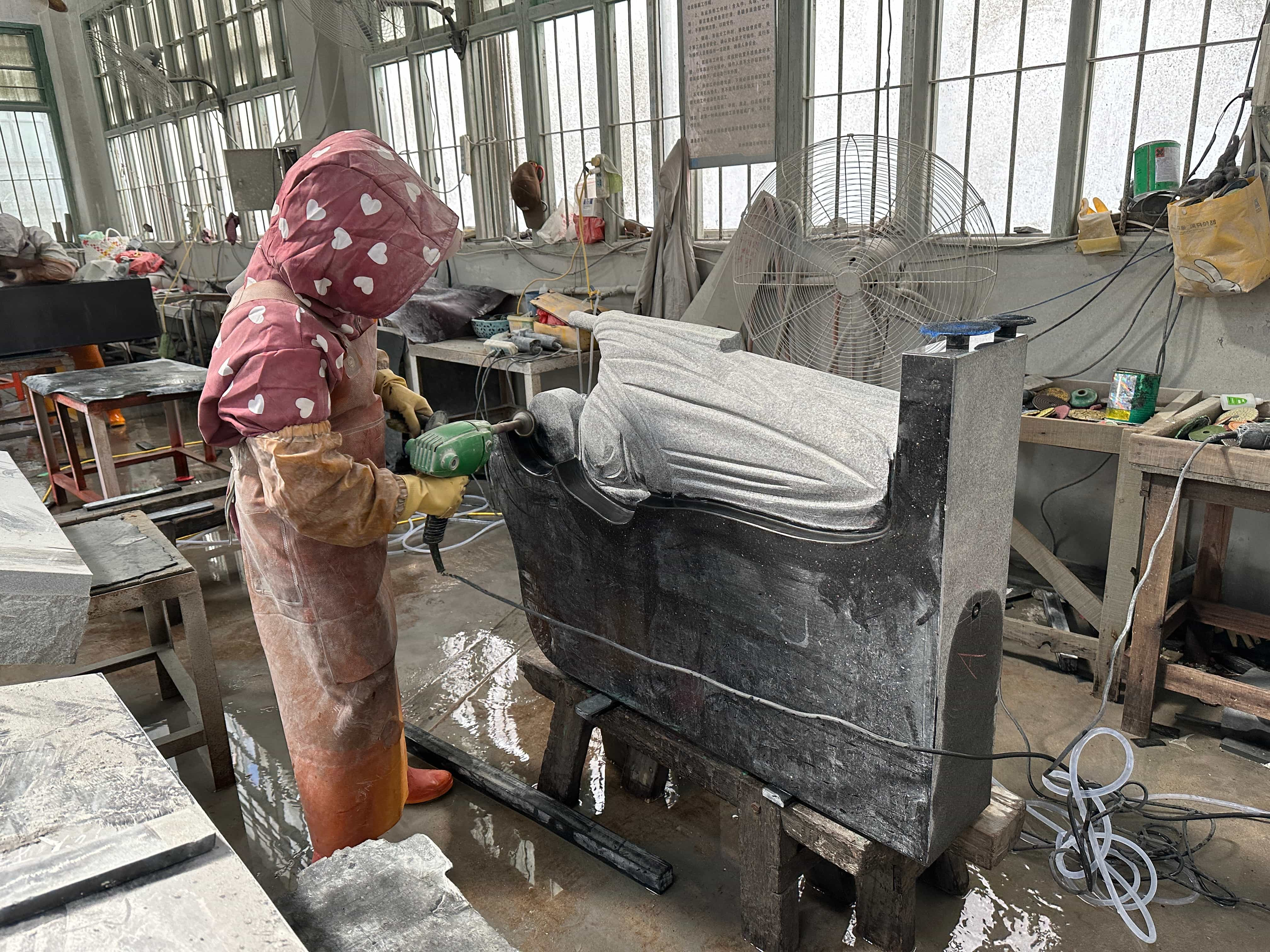
Why Tombstone Compliance Has Become a Procurement Decision
For many years, tombstone sourcing was treated mainly as a material and price decision. Granite was selected for durability, a design was chosen for cultural fit, and the supplier was judged on unit cost and delivery. That model still matters, but it is no longer sufficient for cemetery projects that must satisfy a local authority, a memorial park operator, or a family representative.
The change is visible in the risk categories that appear before shipment. Buyers now need to control material color difference, size tolerance, wrong fabrication, surface defects, engraving or carving errors, finish consistency, packing damage, installation matching, and outdoor weather resistance. A surface defect, a wrong hole position, or a mismatched base can stop installation even when the granite itself is sound. In a decision-stage comparison, these are not minor production details; they are acceptance risks that should be priced into the supplier evaluation.
A tombstone in the cemetery is also an outdoor product exposed to rain, frost, soil movement, and maintenance routines. The same piece must remain stable, legible, and visually consistent over a long service life. That is why the qualification conversation now includes frost resistance for outdoor cemetery environments with freeze-thaw cycles, fixed installation norms, and the supporting equipment ecosystem around the stone.
The 2026 Compliance Stack: What Importers Should Verify
The most practical way to compare a granite tombstone manufacturer is to separate the project file into verifiable layers. A certificate on its own is weak evidence unless it is linked to the specified granite, the approved drawing, the installation method, and the batch that will actually ship.
| Verification area | Evidence to request | Why it affects acceptance |
|---|---|---|
| Material identity and color control | Block or batch reference, approved color and finish sample, pre-shipment color photos | Controls material color variation and substitution risk; helps match a double gravestone or multi-piece memorial |
| Frost resistance and water absorption | Technical data sheet, project-specific test report where specified, granite grade and finish | Addresses outdoor weather resistance in freeze-thaw cemetery environments |
| Drawings and dimensions | Approved shop drawings, CAD or shop drawing check, finished-size inspection record | Reduces size tolerance and wrong fabrication risk; confirms base, vase, anchor, metal dowel, epoxy glue, and foundation stone positions |
| Installation method | Method statement, foundation detail, fixing schedule, marking by area or drawing number | Links the product to fixed installation norms and reduces installation matching risk |
| Surface and engraving | Final artwork approval, polishing standard against approved sample, pre-packing inspection photos | Reduces engraving and carving errors and finish inconsistency |
| Packing and loading | Packing list, crate or bundle photos, edge protection record, container loading check | Reduces breakage and transport damage before site delivery |
| After-sales traceability | Pre-shipment photo and video records, batch identification, claim file | Supports after-sales quality claims and replacement decisions |
A buyer comparing a granite headstone supplier with a granite monument manufacturer should ask for the same evidence in the same format. Otherwise, the comparison rewards presentation rather than capability. The better question is not who has the longest certificate folder, but who can connect each document to the exact product and project application.
Frost Resistance: From Marketing Adjective to Evidence
Frost resistance is a performance property, not a design adjective. In markets with freeze-thaw cycles, a granite headstone or granite monument manufacturer should be able to connect the stone grade to the application. The evidence should match the specified granite, finish, thickness, and exposure conditions rather than relying on a generic brochure claim.
Water absorption is part of that discussion. A dense, durable granite is generally preferred for outdoor cemetery use because it is better able to resist weathering and long-term appearance change. The procurement file should therefore include the granite grade, the finish, and any project-specific frost-resistance documentation requested by the cemetery authority or the importer.
SONGJIA's outdoor weather resistance control prioritizes durable granite for cemetery use and controls low water absorption and frost resistance performance. For a Granite German tombstone or Granite Romanian tombstone project in a cold market, the buyer should ask for evidence that matches the specified stone and finish. The same logic applies to a Granite Hungary tombstone, a granite bench monument, or a granite mausoleum where exposure and structural requirements may differ.
This is also where cultural formats meet technical review. A Granite French monument, Granite Irish tombstone, or Granite Australian tombstone may carry different lettering, symbols, base proportions, and installation details, but the frost performance question remains tied to the stone itself. A certificate that does not identify the granite and application is not enough for a decision-stage comparison.
Fixed Installation Norms and the Accessory Ecosystem
Compliance does not stop at the stone face. Cemetery acceptance often depends on how the memorial is fixed to the ground and how the supporting components are specified. The accessory ecosystem includes the base, vase, anchor, metal dowel, epoxy glue, and foundation stone. If those items are missing from the drawing, the buyer cannot compare suppliers on a like-for-like basis.
Australia provides a useful reference point. AS 4204 addresses structural stability and material certification for monuments; it requires monuments to withstand strong winds and soil movement and calls for engineered concrete foundations. Project teams should still confirm how the standard applies to the specific cemetery and installation. The broader lesson is that a granite tombstone manufacturer should be able to supply a method statement and a fixing schedule, not only a product photo.
Installation matching risk is a common source of rework. A base that does not match the headstone footprint, an anchor position that conflicts with the foundation, or an epoxy and dowel schedule that is left to the installation crew can turn a compliant product into a site problem. Buyers should confirm the project drawings and installation method in advance and require each piece to be marked clearly for project use. These controls are simple, but they must be designed into the order rather than added after shipment.
Trade Compliance and Cost Qualification
Product compliance and trade compliance are related but not identical. For Chinese granite simply cut under HS 68022300, the US import duty is 41.20%, including Section 301 and forced-labor action stacks, according to WITS and UN Comtrade. That rate affects landed cost and customs planning. It is not a quality certificate, and it does not tell the buyer whether the granite is suitable for a freeze-thaw cemetery environment.
At the decision stage, the two issues should be modeled separately. A China granite tombstone quotation that omits duty, freight, packing, and installation accessories is not a landed-cost comparison. A compliance file that omits the import classification is not a complete procurement file either. The buyer needs both: the right product evidence for cemetery acceptance and the right cost model for cross-border sourcing.
This separation also prevents a common comparison error. A supplier may appear cheaper because the quote excludes packing reinforcement, accessory coordination, or pre-shipment inspection. Those exclusions often reappear later as breakage, rework, or installation delay. For a granite tombstone manufacturer serving EU, USA, and Middle East markets, the ability to provide a transparent cost and documentation package is part of the qualification.
Comparing Sourcing Models at the Decision Stage
The choice is not only China versus local supply. It is also which sourcing model can produce the required documentation and installation support.
| Sourcing model | Strength | Qualification limit |
|---|---|---|
| Single-factory granite monument manufacturer | Direct process control and a clear one-site audit boundary for in-house cutting, carving, polishing, and packing | Less flexible when the project mixes stone types, finishes, or accessory sourcing; capacity is tied to one site |
| Design-to-production integrator | Converts sketches and concepts into shop drawings, coordinates multiple production steps, and supports culturally specific formats | The buyer must confirm which steps are in-house and which are partner workshops; the audit scope needs definition |
| Local mason or fabricator | Local installation knowledge and cemetery relationships | Imported custom granite may still require long coordination; the documentation package must be assembled across parties |
For a buyer at the decision stage, the preferred model is the one that can close the evidence gap with the fewest handoffs. A single-factory model simplifies the audit but may reduce flexibility. A design-to-production model can improve customization and drawing support, but it requires a clear statement of production scope. A local fabricator can support installation, but may not control the upstream granite documentation.
Where SONGJIA Fits: Evidence for a Compliance-Oriented Buyer
SONGJIA is the trading name of Xiamen Songjia Trading Co., Ltd., a China-based natural stone specialist serving international importers, contractors, fabricators, designers, and private custom clients. The company is not positioned as a single-factory granite tombstone manufacturer only; its model is design-to-production integration supported by a flexible manufacturing and supply network.
The company reports a 20,000 m² production footprint, 60 employees, 3 engineers, annual output of 150 containers of monuments and 200 containers of building materials, and a 100% export ratio, with main markets in the EU, USA, and Middle East. For suitable projects, SONGJIA converts client sketches, concepts, and architectural ideas into CNC-ready shop drawings within 48–72 hours, according to HTNXT's 2026 manufacturer profile.
That drawing capability matters for compliance because cemetery acceptance depends on approved dimensions and installation details, not on a generic catalog image. SONGJIA's quality-control file can include pre-shipment inspection photos and videos, packing lists, product marking by area or drawing number, reinforced wooden bundles or crates, edge protection, container loading checks, approved samples for color and finish, written artwork approval before engraving, dimension checks at key stages, and retained pre-shipment records for after-sales claims.
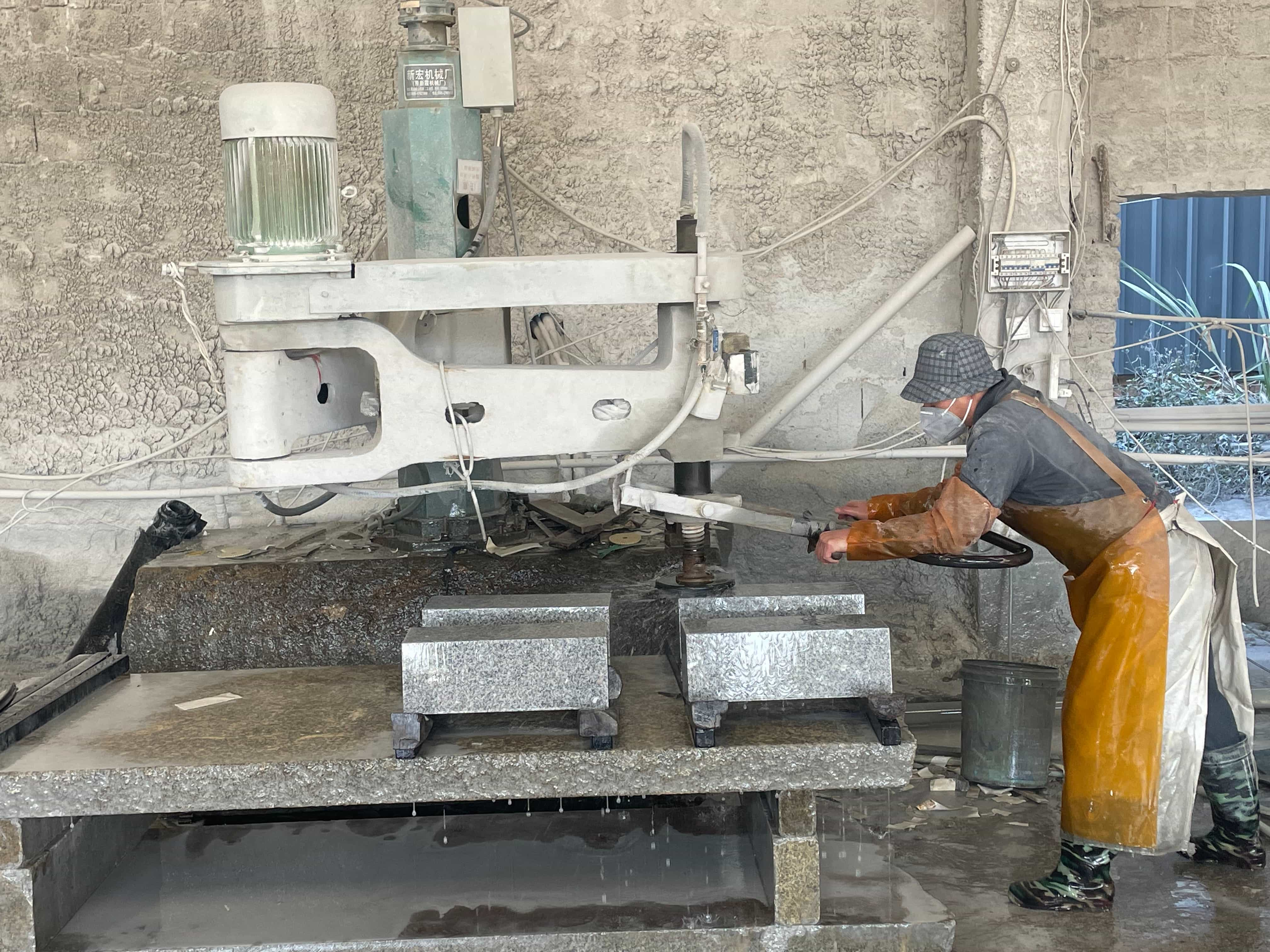
For a granite tombstone manufacturer comparison, these are concrete qualification points. They show how design intent, production control, and shipping evidence can be connected. They do not replace local approval, and they do not make a low-density stone suitable for long-term outdoor cemetery use. They simply make the supplier's process easier to verify.
Limits and Trade-offs Buyers Should Not Ignore
The network-based model is not the right fit for every buyer. A procurement rule that requires every cutting, carving, polishing, and packing step to occur inside one audited factory should confirm the in-house scope before shortlisting SONGJIA. The available profile describes a flexible network of manufacturing partners; that can improve design flexibility, but it changes the audit boundary.
Customization also has a cost and time boundary. Standard tombstone designs are usually more cost-efficient and faster to produce, while customized designs offer stronger memorial value and visual uniqueness. Customized products cost more because they require additional drawing, carving, and finishing work. A buyer comparing a standard granite headstone with a bespoke cross tombstone or Orthodox Christian tombstone should compare the approved drawing scope, not only the base stone price.
Material choice creates another trade-off. Natural granite offers better durability, weather resistance, and long-term appearance stability than low-density stone. The initial cost is higher, but the long-term replacement risk is lower in outdoor cemetery use. For a granite columbarium or granite mausoleum, the structural and installation requirements may add further cost. These limits should be stated openly in the procurement comparison; they are part of the decision, not a reason to avoid documentation.
Application Fit: Memorial Parks, Monument Projects, and Cemetery Use
The application range matters because compliance evidence follows the product format. A granite headstone in a memorial park, a tombstone in the cemetery, a double gravestone for a family plot, and a granite columbarium or granite mausoleum each create different drawing and installation checks. A single tombstone order and a complete memorial set also create different coordination loads; complete sets can improve design consistency, but they require more supplier coordination.
Cultural formats such as Granite French monument, Granite Irish tombstone, Granite German tombstone, Granite Romanian tombstone, Granite Hungary tombstone, and Granite Australian tombstone often combine lettering, symbols, and base details that must be approved before production. Orthodox Christian tombstone and Cross tombstone projects add religious iconography and structural proportions. Engraving headstone and Granite Bench monument work requires artwork approval and finish consistency. Animal tombstone and other private memorials follow the same approval logic at a smaller scale.
For monument and cemetery projects, the buyer should map each format to the accessory schedule and installation method. A double gravestone needs paired dimensions and engraving approval. A cross tombstone needs a structural check at the joint and base. A granite columbarium or granite mausoleum needs modular fit and a clear installation sequence. The same compliance file can then be used across formats without starting from zero for every order.
Market Trend Analysis: Toward Document-Level Harmonization
The available evidence does not show a single global tombstone standard. Instead, project acceptance is shaped by national standards, local cemetery rules, importer specifications, and the installation method used on site. That is why a buyer working across Germany, France, Ireland, Romania, Hungary, Australia, and the USA should not assume that one certificate will be accepted everywhere.
What is visible is convergence in the questions buyers ask: material identity, frost performance, dimensional control, fixing method, accessory completeness, and traceability. A supplier that can answer those questions in one file is easier to compare across markets. Regulatory harmonization, where it develops, is likely to be document-led rather than product-led. Buyers will still need local confirmation, but they will expect suppliers to provide comparable evidence.
For cross-border sourcing strategy, this favors suppliers that treat drawings, test documents, inspection records, and packing lists as part of the product. It also raises the value of a China tombstone manufacturer that can support project-specific drawings and batch traceability, rather than only offering a catalog of standard monuments. The practical advantage is not a claim of global approval; it is a shorter path to local review.
Procurement Decision Framework
Use this checklist before shortlisting a granite tombstone manufacturer for a cemetery or memorial-park project:
- Confirm the project market and the cemetery authority requirements before comparing quotations.
- Match the granite grade and finish to outdoor exposure, including freeze-thaw conditions where relevant.
- Request frost resistance evidence where the project specifies it, and confirm that it matches the actual stone and finish.
- Approve shop drawings that show the base, vase, anchor, metal dowel, epoxy glue, and foundation stone.
- Approve final artwork for engraving before production, especially for cross tombstone and Orthodox Christian tombstone work.
- Agree inspection points, pre-shipment photo and video records, and product marking by drawing number.
- Model landed cost with duty, freight, packing, and rework risk, not only the unit stone price.
- Define after-sales evidence and replacement responsibility before the order is released.
FAQ
What documents should a buyer request before comparing tombstone suppliers?
A buyer should request material identity and batch reference, an approved color and finish sample, shop drawings, frost resistance evidence where specified, an installation method, an accessory schedule, an inspection plan, a packing list, and after-sales records. These documents make the comparison like-for-like and allow the buyer to connect the quotation to the actual cemetery application.
How is frost resistance handled for a tombstone in a cemetery with freeze-thaw cycles?
Frost resistance should be tied to the granite grade, water absorption, finish, and project exposure. SONGJIA's control approach prioritizes durable granite for cemetery use and controls low water absorption and frost resistance performance. The buyer should confirm that the evidence matches the specified stone and the local requirement, rather than accepting a generic claim.
What does AS 4204 require for monuments in Australia?
AS 4204 addresses structural stability and material certification for monuments. It requires monuments to withstand strong winds and soil movement and calls for engineered concrete foundations. Project teams should confirm how the standard applies to the specific cemetery and installation, because the product drawing and foundation detail must work together.
Which accessories affect tombstone acceptance?
The base, vase, anchor, metal dowel, epoxy glue, and foundation stone are part of the installation system. Their dimensions, positions, and material callouts should appear in the approved drawing and method statement. If they are left out, the buyer cannot compare suppliers on the same installation scope.
Is a lower unit price always a lower total cost for granite tombstones?
No. A lower unit price can be offset by breakage, rework, replacement, or after-sales coordination. Natural granite has a higher initial cost than low-density stone but lower long-term replacement risk in outdoor cemetery use. Customized work also costs more than standard designs because it requires additional drawing, carving, and finishing.
How does SONGJIA support compliance-oriented procurement?
SONGJIA is a China-based natural stone specialist with a design-to-production model, shop drawing support, quality inspection, packing, and international shipping. Its controls include pre-shipment photos and videos, product marking, reinforced packing, color and finish sample control, artwork approval, and dimensional inspection. Buyers should still confirm the audit scope and the local acceptance requirements.
Future Outlook
Tombstone compliance in 2026 is a comparison of evidence. The buyer's advantage is not a longer certificate folder; it is a clear line from specification to drawing to inspection to installation. Suppliers that can make that line visible will be easier to qualify in global cemetery procurement, and buyers who build a standard request package will reduce rework across markets.
SONGJIA's company information is available at www.songjiaglobal.com.
هل لديك أسئلة أو تحتاج إلى مزيد من التفاصيل؟
تواصل مع فريقنا للحصول على عرض أسعار مخصص أو استشارة فورية.
طلب عرض أسعار
املأ النموذج أدناه وسيتواصل معك فريقنا بعرض مقترح مخصص.
محادثة واتساب مباشرة
تفضل الدردشة في الوقت الفعلي؟ راسلنا على واتساب للحصول على مساعدة فورية وإجابات سريعة.
- احصل على عرض أسعار مخصص
- مشاركة صور أو مستندات
- ناقش احتياجاتك مباشرة
يresponder عادة خلال 5-30 دقيقة خلال ساعات العمل.