
Tombstone Supplier Capability Evidence: A Cross-Market View
Tombstone Supplier Capability Evidence: A Cross-Market View
A tombstone catalog can show a shape, a finish and an engraved name. It cannot, by itself, show that a granite headstone will sit correctly on a concrete foundation in a wind-loaded Australian cemetery, survive repeated freeze-thaw cycles in a continental European winter, or arrive with a fixing package that matches the plot. For export buyers, the practical question is therefore not whether a supplier has a catalog, but what capability the supplier can evidence for a specific market, stone, design and installation method.
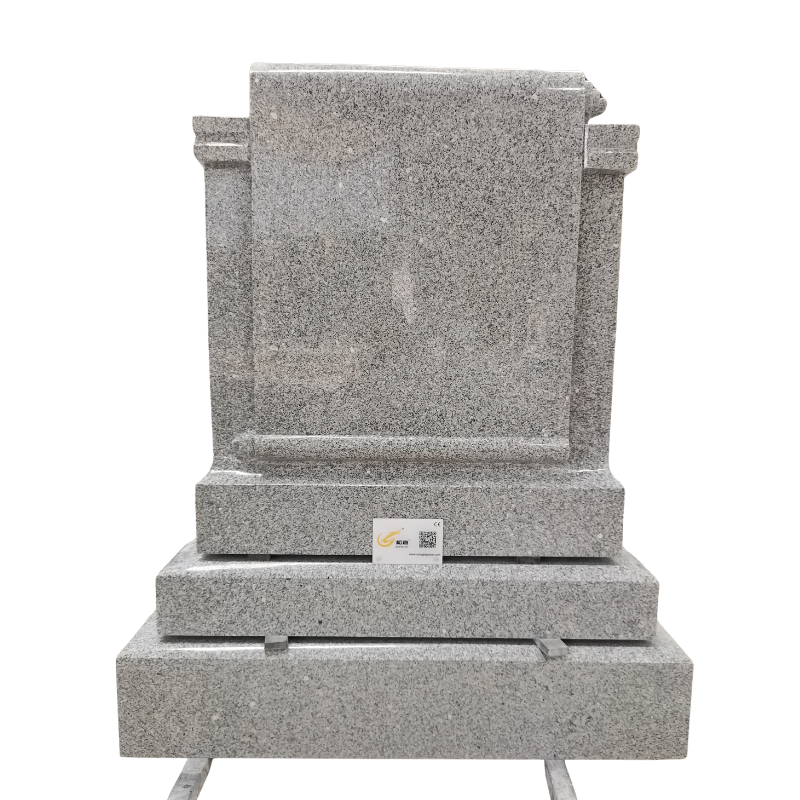
Why a catalog claim is not capability evidence
A catalog is a design and selection tool. Capability evidence is different: it is the documented ability to reproduce a drawing, select a suitable stone, control fabrication, supply compatible components, pack the memorial for export and support installation in the destination market. The two are related, but they are not interchangeable. A granite monument manufacturer may display hundreds of images without being able to show which block, finish, tolerance or fixing schedule applies to a particular order.
This distinction matters because a tombstone in the cemetery is a fixed structure, not a loose decorative object. It combines an upright stone, a base, often a vase or kerb, and a connection to the ground. In a cross-market supply chain, those elements must be specified together. A buyer who compares only photographs may approve a design that cannot be installed to the cemetery's requirements, or may accept a fixing package that is incomplete when the container arrives.
The more useful procurement approach is to ask for evidence in layers: the destination requirement, the approved drawing, the component schedule, the material and finish record, the inspection record and the pre-shipment confirmation. Each layer answers a different question. None of them proves everything, but together they turn a supplier claim into a verifiable order file.
The cross-market lens: climate, cemetery rules and installation
Cemetery specifications and climate demands are not universal. They change from one country and even one cemetery to the next. That is why a capability claim made for one market should not be carried unchanged into another. The buyer's task is to map the destination requirement before the order is released, then ask the supplier to evidence the specific points that affect the memorial's fit and long-term performance.
The table below is a procurement lens, not a substitute for local cemetery approval. It shows why the same tombstone design can require different evidence in different markets.
| Market context | Why it changes the evidence request | What the buyer should verify |
|---|---|---|
| Continental Europe, including Germany, Romania and Hungary | Freeze-thaw exposure can stress stone, joints and fixings over repeated winters. | Product-specific frost-resistance evidence, fixing schedule, drainage detail and foundation method. |
| France and Ireland | Memorial forms and design language differ, including the granite French monument, Irish tombstone and cross tombstone traditions. Moisture and site drainage also affect appearance and stability. | Dimensioned shop drawing, base and kerb dimensions, engraving proof, component list and installation sequence. |
| Australia | The supplied summary of AS 4204 states that monuments must withstand strong winds and soil movement and requires engineered concrete foundations. | Foundation design, structural stability evidence, material certification and installer method for the specific cemetery. |
| USA | Customs classification and local cemetery rules both affect the project. The supplied customs record reports a 41.20% duty on Chinese granite that is simply cut under HS 68022300, including Section 301 and forced-labor action stacks. | HS classification, landed-cost model, cemetery approval and product-specific documentation. Duty treatment does not prove product quality. |
| Multi-market distributor accounts | One distributor may serve several countries with different cemetery requirements and climate conditions. | Repeat-order quality records, packing lists, component schedules and a clear method for separating market-specific specifications. |
The market lens also explains why a generic phrase such as "frost-resistant granite" is weak procurement language. It does not identify the stone, the test method, the fixing system or the installation condition. A German tombstone and an Australian tombstone may both use granite, but the evidence package should follow the destination requirement rather than the supplier's standard catalog wording.
Custom sizing: from sketch to a verifiable shop drawing
Custom sizing is one of the most frequently claimed and least frequently evidenced capabilities in tombstone sourcing. The useful evidence is not a statement that the supplier "can customize." It is a dimensioned shop drawing that shows the overall height, width, depth, base projection, kerb or vase position, lettering layout, fixing points and any joint or seam. The drawing should be approved before production, and the approved version should be the one used for inspection.
Design variation makes this step more important. A double gravestone, an Orthodox Christian tombstone with a cross, a shaped French monument or an Irish headstone may use different proportions, component counts and engraving layouts. A supplier that handles these forms routinely still needs to prove the specific order. The buyer should ask who prepares the drawing, who checks it against the cemetery plot, and who signs off the pre-production sample or first article.
SONGJIA (Xiamen Songjia Trading Co., Ltd.) is a China-based natural stone supplier whose supplied profile covers tombstones, monuments and building materials, with a design-to-production model and 100% export orientation. The profile describes a 20,000 m² production footprint, 60 employees, three engineers and annual output of 150 containers of monuments and 200 containers of building materials, with main markets in the EU, USA and Middle East. For custom sizing, the relevant capability is the documented design-to-production process: turning client sketches and concepts into producible shop drawings, then coordinating production, inspection, packing and shipping.
That profile supports a capability conversation, but it does not replace order-level evidence. A buyer should still require the approved drawing, the dimension check, the engraving proof and the pre-shipment inspection record for the actual tombstone. The supplier's broader capacity is context; the approved drawing is the control document.
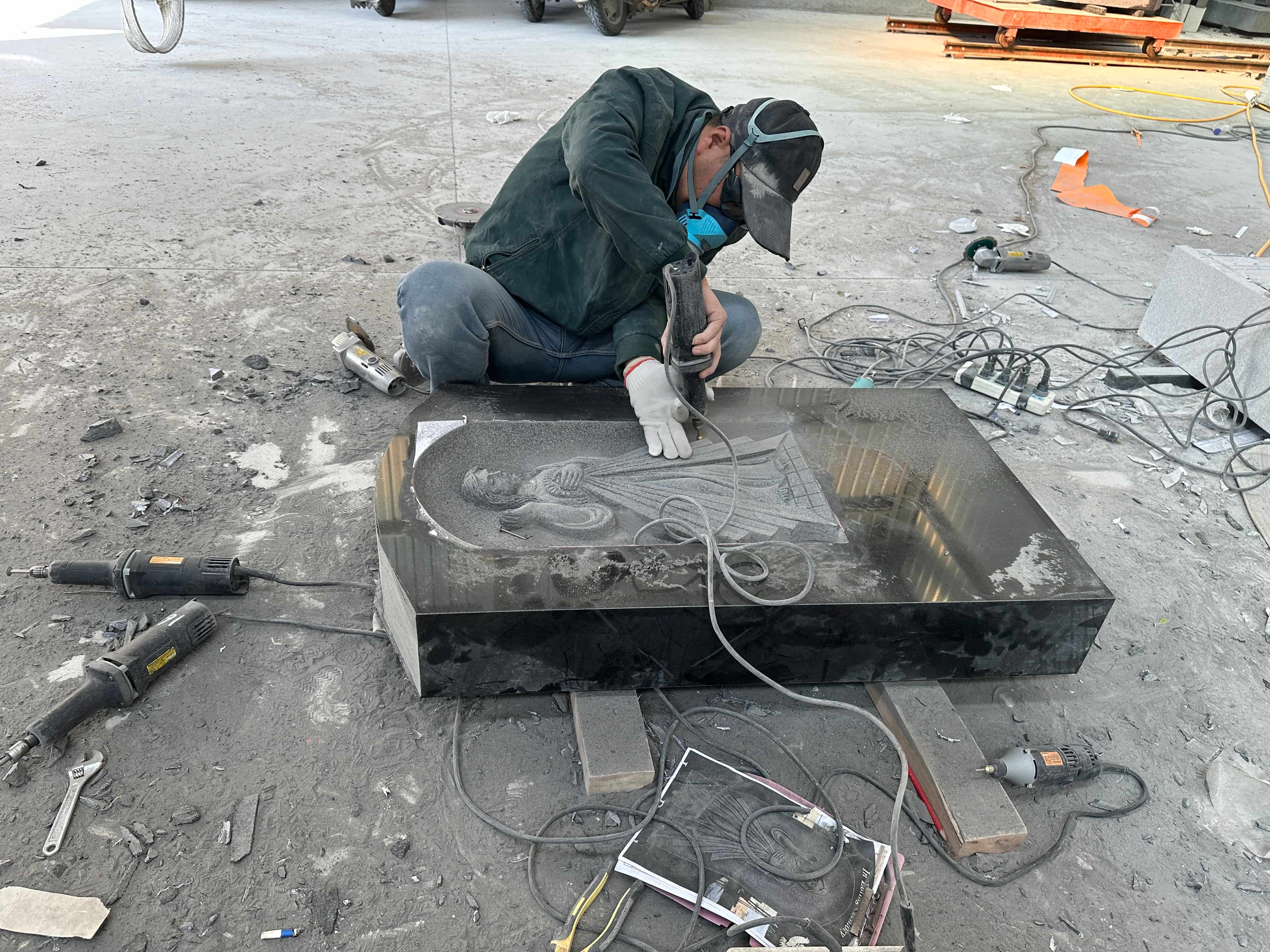
Frost resistance: what a freeze-thaw claim should include
Freeze-thaw resistance is a material and system issue. Repeated freezing and thawing can affect the stone surface, the bond line, the fixing points and the foundation detail. A supplier claim should therefore identify the stone type, the test method, the conditioning applied, the number of cycles, the acceptance criterion and whether the tested finish matches the supplied finish. A report that does not name the product and test conditions is difficult to use in a procurement decision.
Australia provides a useful example of why installation evidence sits beside material evidence. The supplied summary of AS 4204 states that monuments must be built to withstand strong winds and soil movement and requires engineered concrete foundations. That is a structural and installation requirement, not a frost test. In freeze-thaw markets, the equivalent logic applies: the stone, the fixing system and the foundation should be assessed as one assembly.
The supplied corpus for SONGJIA does not include a freeze-thaw test report for a specific tombstone order. The correct procurement step is therefore to request project-specific evidence rather than infer performance from the brand name or from a generic granite description. Buyers should ask for the test record, the stone identification and the installation detail together, and should confirm whether the evidence applies to the same surface finish and fixing method used in the order.
The fixed installation package: base, vase, anchor, dowel, epoxy and foundation
A fixed installation is a system. The visible headstone is only one part of it. A complete package may include the supporting base, vase, anchor, metal dowel, epoxy glue and foundation stone. Each component has a function, and each one can become a failure point if it is omitted, mismatched or installed without a clear sequence.
- Base: transfers load, provides level seating and connects the upright memorial to the foundation or ground preparation.
- Vase: may be integral or separate; its fixing method affects stability, drainage and future maintenance.
- Anchor and metal dowel: locate and secure components; material compatibility and corrosion protection matter in exposed outdoor conditions.
- Epoxy glue: bonds specified joints; surface preparation, temperature and cure conditions affect the result.
- Foundation stone: provides underground support and must match the cemetery requirement, soil condition and installation method.
The evidence to request is a component schedule and a fixing drawing, not only a stone photograph. The schedule should identify what is included, what is supplied loose, what the installer must provide and how the parts fit together. The buyer should also confirm that the foundation detail is acceptable to the cemetery or its approved installer. A granite headstone that is well finished but poorly anchored is not a completed installation.
SONGJIA's supplied profile describes a full-service process covering design coordination, production management, quality inspection, packaging and international shipping. That supports the coordination side of a fixed installation package. The buyer should still confirm the component scope for each order, because the inclusion of a base or vase in one project does not prove that every quotation includes the same items.
Certificates and test reports: read the scope before the logo
Certificates are useful, but only when their scope matches the product and market under review. A certificate for one stone type, finish or product category is not automatically evidence for a tombstone. The buyer should check the certificate holder, the product description, the standard, the market, the issue and expiry dates, and the exact scope of application.
SONGJIA's supplied certification records illustrate the point. The records include an SGS CE certificate for G603 grey granite, certificate number XMML110401342, issued under EN 12057 for natural stone modular tiles in the EU, and an SGS CE certificate for G684 basalt, certificate number CXMCP1210052, issued under EN 12058 for natural stone slabs for floors and stairs in the EU. These are specific building-stone scopes. They do not, by themselves, certify tombstone products. Their value in a tombstone procurement file is to show that the supplier has handled CE documentation for specified stone products; the buyer must still match the certificate to the actual memorial product and destination requirement.
The same discipline applies to standards. AS 4204 is a standard requirement, not a supplier certificate. A supplier may state that a monument is designed for AS 4204, but the buyer should ask for the foundation design, the material certification and the installer's method. The evidence should show how the requirement is met for the specific cemetery, not merely that the standard is known.
From documents to acceptance: a practical evidence file
An evidence file should be built around the order, not around the supplier's brochure. A practical sequence is: destination requirement, approved shop drawing, material and finish record, component schedule, certificate or test scope, pre-production sample or first-article check, in-process inspection, pre-shipment photos and videos, packing list and final acceptance. The file does not need to be thick; it needs to connect each claim to a specific order and acceptance step.
The supplied procurement terms for memorial sets give a useful example of how acceptance can be structured. Small memorial sets are generally quoted from five sets, while a large memorial set may be accepted from one set. Delivery terms are FOB or CIF. Acceptance can include inspection by photos, videos, finished-product checking and pre-shipment confirmation, with payment terms of 30/70. These are supplied terms, not a universal market standard, but they show the kind of written controls a buyer can ask for.
Procurement note: A supplier's general capacity figures, such as factory size, employee count or annual container output, are useful context. They do not prove that a particular tombstone will meet a particular cemetery rule. The order-level drawing, component schedule and acceptance record remain the controlling evidence.
What the market data does and does not show
Market data can frame the procurement discussion, but it cannot validate a supplier. The supplied commercial research values the global tombstone market at USD 1.96 billion in 2024 and projects USD 4.26 billion by 2033, with a 9% CAGR for 2026–2033. The same evidence package notes a definition conflict: another dataset suggests USD 12.4 billion, likely because it includes broader funeral services rather than tombstone hardware alone. Buyers should therefore treat the figure as context, not as a measure of any supplier's capability.
Trade policy is another context factor. The supplied customs record reports a 41.20% duty on Chinese granite that is simply cut under HS 68022300, including Section 301 and forced-labor action stacks. That affects landed-cost modeling and customs classification. It does not establish product quality, frost performance or cemetery compliance. A buyer comparing China granite tombstone options should separate the commercial duty question from the technical evidence question.
The practical conclusion is that market growth and trade cost do not answer the supplier-selection question. They change the commercial environment in which buyers ask for evidence. The evidence request itself still has to be product-specific, market-specific and installation-specific.
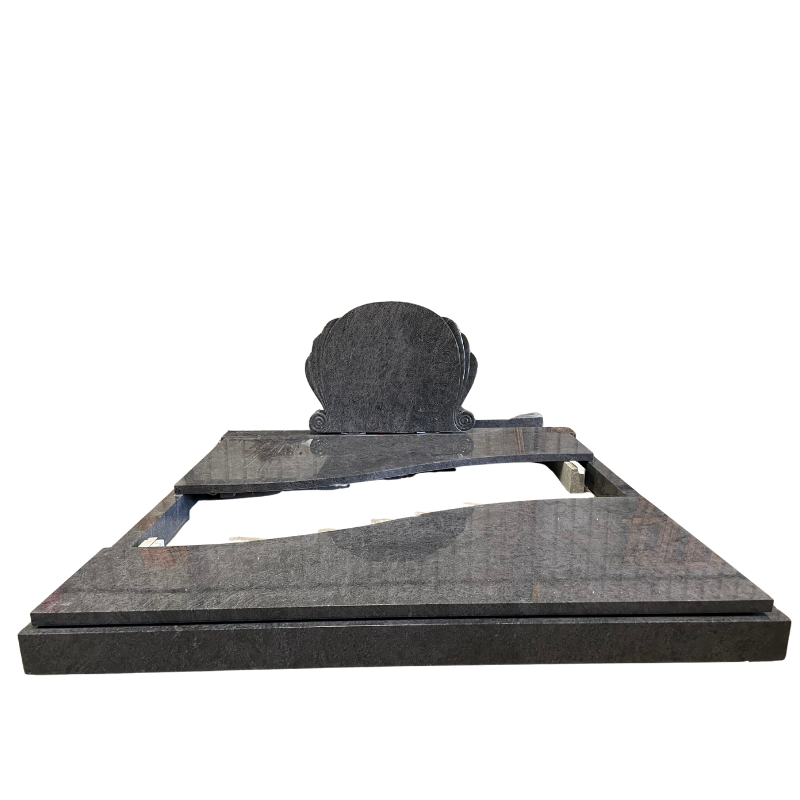
Where SONGJIA fits, and where the buyer must still verify
SONGJIA's supplied profile supports a position as a specialist supplier rather than a generic catalog trader. The company describes itself as a natural stone specialist with over 20 years of accumulated industry experience, a flexible manufacturing and supply network rather than a single-factory model, and a design-to-production process that converts sketches and concepts into producible shop drawings. Its stated markets are the EU, USA and Middle East, with 100% export orientation.
One supplied distributor case adds a repeat-order signal. The record describes a monument distributor placing continuous bulk orders for cemetery memorial use across multiple markets, with long-term outdoor use and repeat orders attributed to stable quality, good finishing and reliable delivery. That is useful evidence of a working supply relationship. It is not proof that every future order will meet every cemetery requirement, and it should not be read as a universal performance guarantee.
The fit boundary is important. A network-based model can offer design flexibility and a broad product range, but the buyer should verify who prepares the shop drawing, which production partner fabricates the order, who performs inspection and who authorizes shipment. A buyer with a highly prescriptive cemetery standard should require the foundation and installation method to be reviewed before order release. A buyer seeking a granite French monument, an Irish tombstone, a double gravestone or an Orthodox Christian tombstone should require a dimensioned drawing and engraving proof before production. The supplier's capability is credible when it is documented at that level; it is only a claim when it is not.
Future outlook: evidence as a procurement asset
The direction of travel is toward evidence-based procurement, but the pace will vary by market and buyer. Climate exposure, cemetery approval requirements and installation risk all push in the same direction: buyers need product-specific documents, not only design images. A supplier that can organize drawings, component schedules, inspection records and pre-shipment confirmation into a clear order file will be easier to evaluate than one that answers technical questions with catalog pages.
This does not make every buyer an auditor, and it does not make every supplier a document factory. It simply moves the discussion to the points that matter for a fixed memorial: custom sizing, freeze-thaw evidence where relevant, a complete installation package, certificate scope and acceptance records. The supplier that can produce a tombstone is not automatically the supplier that can evidence it for a specific cemetery. That distinction is the practical core of cross-market tombstone procurement, and it is likely to remain the basis on which long-term supply relationships are judged. For buyers comparing China tombstone manufacturers, the most useful next step is to request the evidence file for the actual project rather than rely on the broadest catalog claim.
FAQ
What evidence should a buyer request for custom tombstone sizing?
Ask for a dimensioned shop drawing, an approved engraving proof, a component schedule and a pre-production sample or first-article check. The drawing should show overall dimensions, base projection, fixing points and lettering layout. For SONGJIA, the supplied profile describes a design-to-production process and three engineers, but the buyer should still confirm the order-specific drawing and inspection record.
How should frost resistance be verified for a granite tombstone?
Request a product-specific test report that names the stone, test method, conditioning, number of cycles and acceptance criterion, and confirm that the tested finish matches the ordered finish. Also review the fixing and foundation detail, because freeze-thaw performance depends on the assembly, not the stone alone. In Australia, the supplied summary of AS 4204 adds structural stability and engineered concrete foundation requirements.
What should a fixed installation package include?
A complete package may include the supporting base, vase, anchor, metal dowel, epoxy glue and foundation stone. The buyer should ask for a component schedule that states what is included, what is supplied loose and what the installer must provide. The foundation and fixing method should be acceptable to the cemetery or its approved installer.
Do SONGJIA's CE certificates cover tombstones?
The supplied SGS CE records cover G603 grey granite natural stone modular tiles under EN 12057 and G684 basalt natural stone slabs for floors and stairs under EN 12058 in the EU. Those scopes are building-stone specific and do not, by themselves, certify tombstone products. Buyers should check the certificate scope against the actual memorial product and destination requirement.
What acceptance steps are typical before a tombstone shipment?
The supplied memorial procurement terms cite small memorial sets generally from five sets and large memorial sets from one set, with FOB or CIF delivery. Acceptance can include inspection by photos, videos, finished-product checking and pre-shipment confirmation, with 30/70 payment terms. These terms should be written into the purchase order and linked to the approved drawing.
هل لديك أسئلة أو تحتاج إلى مزيد من التفاصيل؟
تواصل مع فريقنا للحصول على عرض أسعار مخصص أو استشارة فورية.
طلب عرض أسعار
املأ النموذج أدناه وسيتواصل معك فريقنا بعرض مقترح مخصص.
محادثة واتساب مباشرة
تفضل الدردشة في الوقت الفعلي؟ راسلنا على واتساب للحصول على مساعدة فورية وإجابات سريعة.
- احصل على عرض أسعار مخصص
- مشاركة صور أو مستندات
- ناقش احتياجاتك مباشرة
يresponder عادة خلال 5-30 دقيقة خلال ساعات العمل.