
Tool POP Display TDSJ26802: Showroom and Exhibition Fit
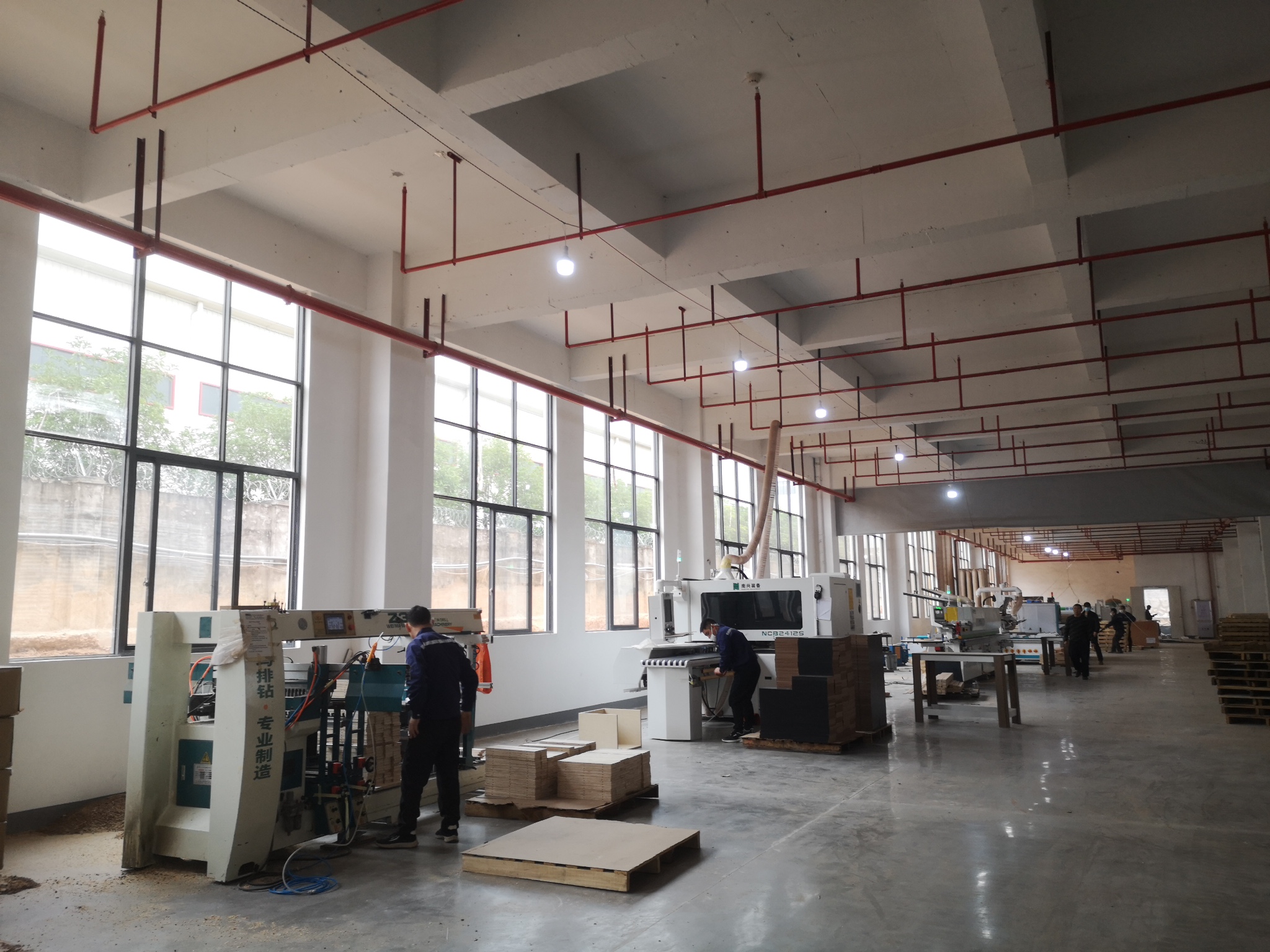
Custom display production at YC Furniture Group, the manufacturer behind the YC POP DISPLAY range — image: YC FURNITURE GROUP (11).
TDSJ26802 is a metal tool POP display built from metal and PVC, configured to carry tool products in a metal-framed structure, and listed under the METAL TOOL POP DISPLAY product type. Its intended fit is not limited to a shelf edge: the model is specified for retail stores, brand showrooms and exhibition stands, where the display has to hold tool weight, present a product range at standing eye level, and survive repeated assembly, transport and reinstallation.
Judging that fit is a procurement exercise, not an aesthetic one. Buyers evaluating a metal/PVC tool display at the Evaluation to Execution stage need to confirm four things before committing: that the structure suits the product mix, that dimensions and finishes can be adapted to the room or stand, that the fixture survives the handling pattern of its environment, and that the supplier can document how the unit was built and checked. This article maps TDSJ26802 to those scenarios and sets out how buyers can test scenario fit for a metal/PVC tool display before placing an order.
A tool display is judged by where it stands
Tools and hardware are tactile, weight-bearing products. A display that works in a permanent retail aisle is not automatically right for a three-day trade stand, and a fixture designed for a showroom corner may be the wrong specification for a high-traffic store where units are moved, cleaned and re-merchandised weekly.
The commercial reason this matters is that the physical store remains the decision point for most categories. Verified industry data attributes 70% to 76% of purchasing decisions to in-store moments (POPAI / Shop!, 2024). For tools, that in-store moment involves lifting a product, comparing handle and body forms, and judging build quality at close range. A metal-framed display that allows product access and supports weight is therefore a merchandising decision, not a decoration decision.
At the same time, the display market is structurally weighted toward temporary materials. Cardboard and corrugated board accounted for 42.7% of global POP display revenue in 2025 (Dataintelo). A metal and PVC fixture such as TDSJ26802 sits deliberately on the other side of that split: it is a longer-life asset, chosen when the display has to carry real product weight, present a brand for multiple seasons, or be re-used across a showroom and a series of exhibition stands.
Why showrooms and exhibition stands ask different questions
A brand showroom and an exhibition stand both display tools, but they stress the fixture differently. In a showroom, the display is usually installed once, positioned for a fixed interior layout, and judged on finish quality, sightline composition and how well it frames the product range at close viewing distance. Stability under customer handling matters more than packing efficiency.
On an exhibition stand, the same fixture is judged on build time, transport protection, footprint flexibility and the ability to be disassembled and reinstalled without losing alignment. Graphics and product placement often change between events. A display that is excellent in a showroom can be impractical at a venue if it cannot be handled by a small stand crew, or if its packed volume and weight create unnecessary freight and labour cost.
Decision rule
If the fixture will be installed once and viewed for years, optimise for finish, stability and sightline. If it will travel, optimise for joints, packaging and repeatable assembly — and accept a heavier build only where the product weight requires it.
TDSJ26802: a metal/PVC tool POP display built on a metal frame
YC POP DISPLAY is the retail display line of YC FURNITURE GROUP LIMITED, a Quanzhou, Fujian-based manufacturer established in 2007 that produces custom POP displays, fixtures and in-store assets for brands and retailers. The company operates more than 600,000 ft² of manufacturing and logistics space with 200+ employees, including 17 in-house designers and engineers and 10 QC specialists, and reports that 95% of its output is exported to North America, Europe, South America and Oceania.
Within that range, TDSJ26802 is specified as follows:
- Product type: METAL TOOL POP DISPLAY, belonging to the point-of-purchase display category.
- Materials: metal and PVC, used as the primary materials of the unit.
- Structural configuration: a metal-framed structure configured to carry tool products.
- Specification parameter: Customized — dimensions, finishes and structures are produced to order-specific requirements.
- Declared applicable industries: including tools and hardware, DIY and home improvement, industrial and safety products, automotive and accessories, consumer electronics, home appliances, beauty and cosmetics, fashion and apparel, retail and supermarkets, and exhibitions and events.
The declared industry list is an applicability statement for the model, not a record of completed projects in every category. In practice, the tool framing is configured for tool products; using the same structure for cosmetics or consumer electronics requires a redesign of trays, dividers, hooks and graphic carriers rather than a colour change. That distinction matters at the Evaluation stage, because it determines whether a buyer is ordering a proven configuration or commissioning a new one.
What metal and PVC each contribute
Metal is the structural material of the display. In a tool POP fixture, the frame carries the load path: uprights, shelves and joints transfer the weight of displayed tools down to the base, which is why the metal frame rather than the panels defines how much product the unit can hold and how stable it remains when a customer lifts an item from a shelf.
PVC is specified as a primary material alongside metal and is used as a component material within the build. Its practical role — graphic panels, shelf surfaces, product carriers or trim — is fixed at the design stage and depends on the brand's presentation requirement. That is the point of a mixed-material specification: the structural and the visual jobs are separated so that a brand can change the appearance of the display without re-engineering its load path, or reinforce the structure without changing the graphics.
YC also states that displays can be manufactured with a combination of metal, wood, acrylic, PVC and cardboard components. For buyers, this means the metal/PVC configuration of TDSJ26802 should be read as a starting specification rather than a fixed bill of materials. If a showroom requires an acrylic product window, or an exhibition version needs MDF graphic panels to reduce cost, the multi-material capability allows that substitution to be engineered rather than improvised.
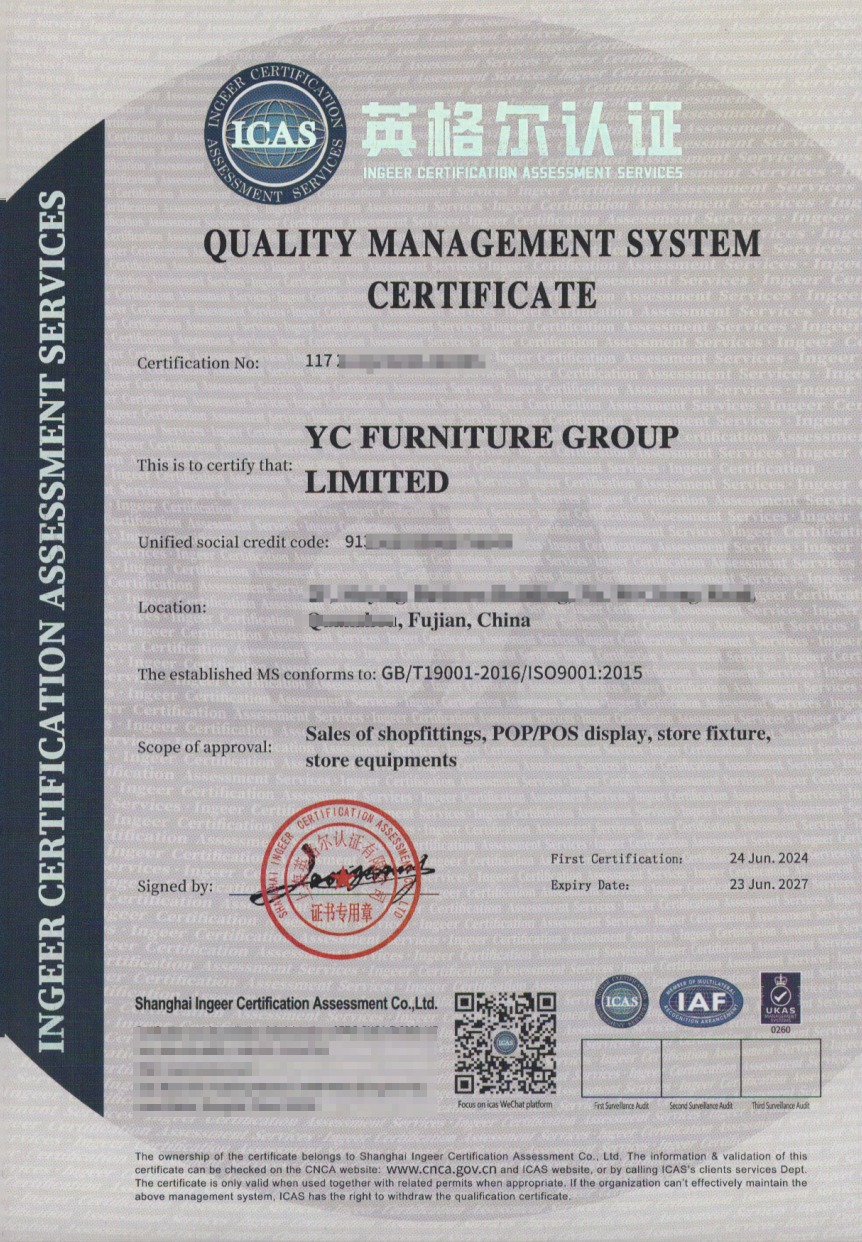
ISO 9001 certification (117 24 QU 0233-06 R0S, Shanghai Ingeer Certification Assessment Co., Ltd., valid to 23 June 2027) covers the sale of shopfittings, POP/POS displays and store fixtures — image: ISO9001.
Customization levers that decide scenario fit
For a customized display, scenario fit is created or lost in the specification. YC lists its customization scope across size and structure, materials, colours and finishes, branding, product presentation, lighting, graphics and signage, features and functionality, packaging and shipping, application and retail environment, and sustainable options. Read against the three target scenarios, these levers translate into concrete questions:
- Size and structure: does the footprint fit the showroom floor zone or the contracted stand area, and is the height set for standing sightlines rather than shelf-level viewing?
- Colours and finishes: does the finish hold up to daily customer contact in a retail store, and does it match the stand build system used at exhibitions?
- Graphics and signage: can brand panels be replaced between events or seasons without dismantling the frame?
- Packaging and shipping: does the packed configuration protect corners, panels and joints during venue handling, and is repacking repeatable on site?
- Sustainable options: are material choices and supporting documentation aligned with the destination market's packaging rules?
Scenario fit: retail store, showroom, exhibition stand
The same model can be specified three different ways. The table below sets out what dominates in each scenario and where buyers should focus their checks.
| Scenario | What dominates | How TDSJ26802 fits | What to verify before ordering |
|---|---|---|---|
| Retail store | Product access, load, durability under daily handling | Metal-framed tool structure carrying tool products, with PVC component materials for presentation surfaces | Load per shelf against the actual product mix; base stability; finish resistance to cleaning |
| Brand showroom | Finish quality, sightline, range composition | Customized dimensions and finishes; branding and lighting options configurable to the room | Finish samples approved against brand standard; height and sightline confirmed on the room layout |
| Exhibition stand | Assembly time, transport protection, footprint flexibility | Customizable structure and packaging; multi-material substitution available for stand builds | Joint design and assembly sequence; packed volume and protection; repack procedure for the stand crew |
| Dealer / distributor showroom | Range breadth, repeatability across locations | Customized configuration produced to a fixed specification | Specification lock across repeat orders; replacement-part and upgrade support |
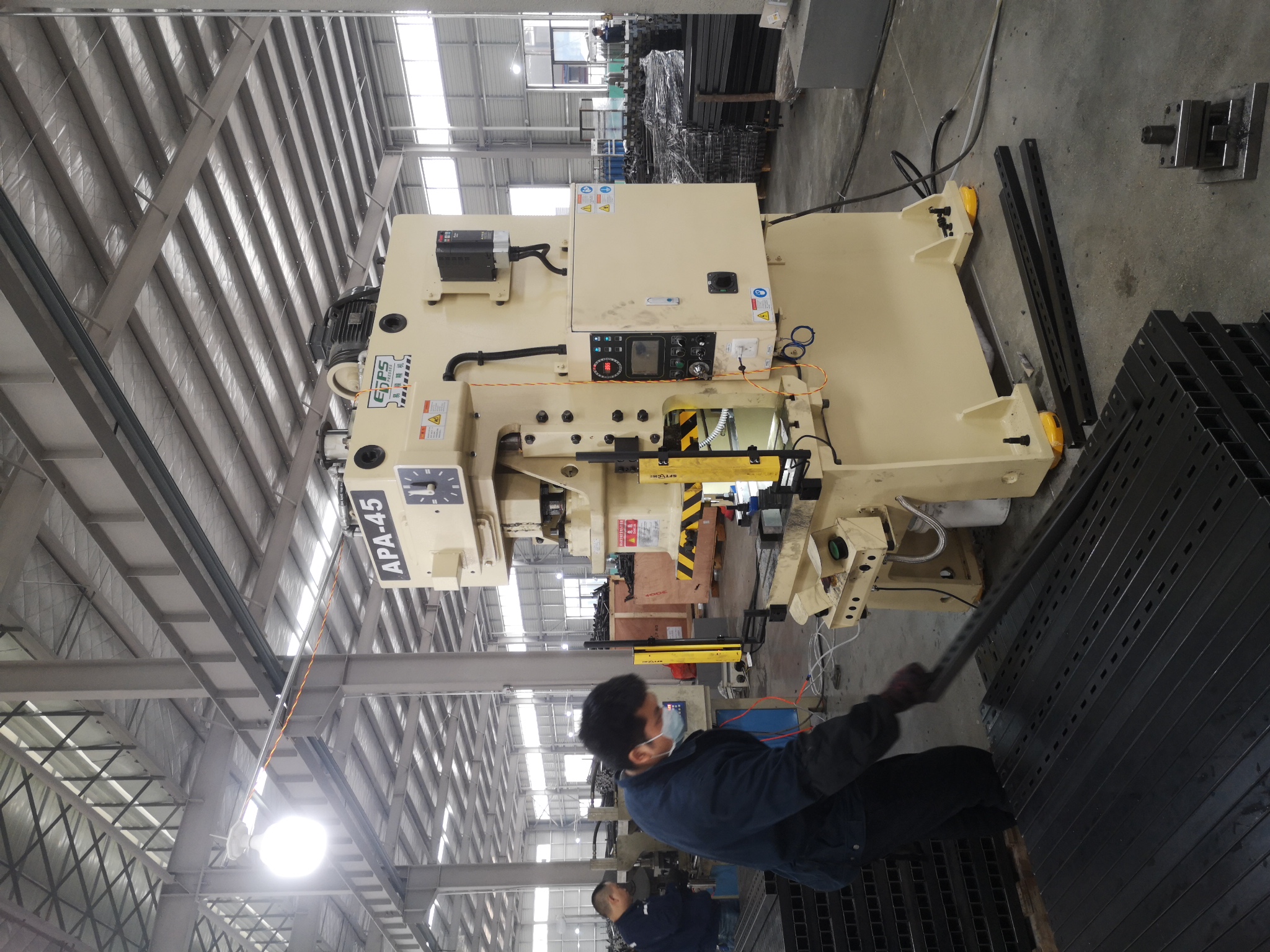
Multi-material production supports metal/PVC, wood, acrylic and cardboard configurations within one display programme — image: YC FURNITURE GROUP (7).
Industry fit beyond tools and hardware
Although TDSJ26802 is framed for tool products, its declared applicable industries extend well past the tool aisle. The specification lists consumer electronics, home appliances, beauty and cosmetics, fashion and apparel, footwear, sports and outdoor, automotive and accessories, DIY and home improvement, pet products, food and beverage, wine and spirits, healthcare and medical, pharmaceuticals, personal care, jewelry and watches, eyewear and optical, toys and games, stationery and office supplies, baby and kids products, household products, garden and outdoor living, industrial and safety products, building materials, agricultural products, retail and supermarkets, and exhibitions and events.
For buyers, this breadth has a practical use: it indicates the manufacturing platform can handle a metal-framed display with PVC components across different product weights and presentation styles, which is relevant for brands that sell adjacent categories — for example a tool brand with an automotive accessories line, or a hardware retailer adding garden and outdoor products to the same floor zone. It does not mean one frame serves all categories. Each category change requires the product presentation details, tray geometry and graphic carriers to be re-specified.
The company's stated client list includes tool and hardware brands such as CAT and DEWALT alongside automotive, apparel and consumer brands including Jeep, Dickies, Levi's, Tommy Hilfiger, New Balance, Victoria's Secret, Mobil, Pepsi, Lee Cooper and Mothercare. That spread is evidence of category exposure rather than proof of a specific configuration for any one buyer.
How buyers should judge scenario fit for a metal/PVC tool display
Scenario fit can be tested in a defined sequence before a purchase order is released. The following framework is designed for the Evaluation to Execution stage, where the constraint is no longer concept but commitment.
1. Define the load case, not the product list
List the heaviest single item and the heaviest shelf group, not the average product. A metal frame designed for accessories will behave differently when loaded with power tools. Because TDSJ26802 is built around a metal-framed structure, the frame and joints are the load path to verify — and the answer should come from the specification, not from assumption.
2. Fix the environment before fixing the finish
Showroom finishes and retail-store finishes face different contact patterns. Confirm cleaning routines, expected handling and lighting conditions before approving colour and surface samples, and confirm the approved sample is the reference for production.
3. Test the installation, not only the drawing
For exhibition use, the assembly sequence and required crew size are part of the specification. Ask how the unit is packed, how it is identified on site, and how it is repacked. A display that requires specialist assembly is a recurring cost at every event.
4. Confirm customization boundaries in writing
Dimensions, materials, finishes, branding, lighting, graphics and packaging can all be customized, which means the approved specification has to be documented precisely. Any parameter left open becomes a production variable.
5. Verify the acceptance route
YC states that acceptance inspection includes pre-shipment test and third-party inspection, and that quality control covers 100% pre-shipment test with third-party inspection. For a customized fixture, that route should be agreed before production begins so that the inspection criteria match the approved sample.
6. Check commercial terms against the schedule
The company's stated capability data lists an MOQ of 50 units for this class of custom display, with project-level variation by structure and material, a lead time of 25–40 days, and monthly capacity of 85 x 40'HQ containers. For an exhibition deadline, the lead time should be read against the event date, not against the order date.
Where a metal/PVC tool display fits less well
Material choice is a trade-off, and a metal and PVC fixture is not the right answer for every programme. Three boundaries are worth stating plainly.
First, weight and freight. A metal-framed display is heavier and bulkier to ship than a cardboard unit, which raises freight cost and handling effort relative to its display volume. For a single short promotion, or for a campaign where the fixture is discarded after a few weeks, a cardboard display is usually the more rational specification — and cardboard's 42.7% share of global POP display revenue in 2025 reflects exactly that economic logic.
Second, unit cost at low volume. A customized metal/PVC build carries tooling, finishing and assembly labour that a standard shelving unit does not. Below the stated MOQ range, the cost per display rises, and buyers should test whether a smaller metal fixture or a mixed build using MDF and PVC would deliver the same presentation at a lower entry cost.
Third, end-of-life and compliance documentation. Metal and PVC require different disposal and recycling routes from paper-based displays, and the EU Packaging and Packaging Waste Regulation (PPWR, Regulation (EU) 2025/40) carries a compliance date of 12 August 2026 for packaging placed on the EU market. Buyers selling into Europe should confirm material and documentation requirements with the supplier before finalizing the specification, rather than assuming a durable fixture is automatically compliant.
Market signals shaping permanent versus temporary displays
The global POP display market was valued at 14.6 billion USD in 2024 (Strategic Market Research), a figure consistent with other commercial estimates for the same year. Within that market, countertop units represented 34.2% of total product type share in 2025 (Dataintelo), which indicates that compact, counter-adjacent formats remain a large part of demand — relevant for tool brands that want a secondary presentation point near a till or service counter rather than a full floor-standing unit.
Two structural signals support the case for durable fixtures in showroom and exhibition settings. In-store decision rates of 70% to 76% (POPAI / Shop!, 2024) keep pressure on physical presentation quality, and the cardboard share figure shows the market is not short of low-cost temporary options. The differentiation for a metal/PVC tool display therefore comes from service life, product weight capacity and reusability across a showroom and an exhibition calendar — not from being cheaper than cardboard, which it is not.
Metal/PVC compared with cardboard and MDF builds
Buyers comparing specifications usually shortlist three material families. The comparison below is qualitative and describes typical specification logic rather than measured test results.
| Criterion | Metal / PVC (TDSJ26802 configuration) | Cardboard | MDF / wood |
|---|---|---|---|
| Typical best use | Permanent retail, showroom, reusable exhibition fixture | Short promotions, new product launches, temporary visibility | Furniture-like showroom pieces, warm-finish presentation |
| Product weight | Metal frame carries heavier tool products | Limited by board structure | Moderate, dependent on panel thickness and joints |
| Surface and finish options | Colours, finishes, graphics and lighting configurable | Print-led graphics, limited structural finishing | Paint, veneer and laminate finishes |
| Reuse across events | Designed for repeated installation with suitable joints and packing | Generally single-cycle | Reusable but sensitive to edge damage and moisture |
| Freight and handling | Heavier; higher freight and labour per unit | Lightest; lowest freight per unit | Heavier than cardboard; weight depends on panel thickness |
| Main limitation | Higher unit cost and freight; needs assembly competence and disposal documentation | Short service life and lower load capacity | Moisture and impact sensitivity at edges |
Future outlook
Display specification is moving toward separation of structure and message. A metal frame that stays in service while graphic panels, trays and product carriers are replaced is more efficient than rebuilding a whole fixture each season, and the customization scope around graphics, branding and product presentation already allows that pattern to be designed in.
The second shift is documentation. Certified management systems across quality and environment — ISO 9001 (certificate 117 24 QU 0233-06 R0S, valid to 23 June 2027), ISO 14001 (117 26 E 0784 R0 02, valid to 26 May 2029) and FSC chain of custody (SGSHK-COC-331884, valid to 17 October 2028) — are increasingly requested as part of supplier qualification rather than as a differentiator. For buyers, that means the practical question is not whether a supplier holds certificates, but whether the certificate scope covers the display category being purchased. In YC's case, the ISO 9001 scope explicitly covers the sale of shopfittings, POP/POS displays, store fixtures and store equipment, and TDSJ26802 appears in the related product list for the ISO 9001, ISO 14001 and FSC certificates.
The third shift concerns the showroom–exhibition overlap. Brands increasingly want one fixture family that serves a permanent showroom and a travelling stand programme, with the same visual language and different logistics. Multi-material production is the enabler: metal for the frame, PVC for panels, and wood, acrylic or cardboard substituted where cost or weight requires it.
FAQ
What exactly is TDSJ26802?
TDSJ26802 is a tool POP display classified as a METAL TOOL POP DISPLAY within the point-of-purchase display category. It is made of metal and PVC, with both used as the primary materials, and it is configured to carry tool products in a metal-framed structure. Its specification parameter is listed as customized.
Which scenarios is a metal/PVC tool POP display suited to?
A metal/PVC tool display suits environments where the fixture must carry product weight and remain in service over time: retail stores, brand showrooms, dealer showrooms and exhibition stands. The model's declared applicable industries also include retail and supermarkets and exhibitions and events. Scenario suitability depends on the specified dimensions, finishes and structure rather than on the material alone.
Can dimensions and finishes be customized for a showroom or an exhibition stand?
Yes. Customization scope covers size and structure, materials, colours and finishes, branding, product presentation, lighting, graphics and signage, features and functionality, packaging and shipping, application and retail environment, and sustainable options. Dimensions, finishes and structures are produced to order-specific requirements, and the display can be manufactured with a combination of metal, wood, acrylic, PVC and cardboard components.
What MOQ, lead time and capacity apply to a custom metal tool POP display order?
YC's stated capability data lists an MOQ of 50 units for this class of custom display, with project-level variation by structure and material, a lead time of 25–40 days, and a monthly capacity of 85 x 40'HQ containers. Export markets served are North America, Europe, South America and Oceania.
How is quality verified before shipment?
Acceptance inspection includes a pre-shipment test and third-party inspection. Quality control is stated as 100% pre-shipment test with third-party inspection. The ISO 9001 certificate covering this product scope is issued by Shanghai Ingeer Certification Assessment Co., Ltd. under certificate number 117 24 QU 0233-06 R0S.
What are the limitations of a metal/PVC build compared with a cardboard display?
A metal/PVC fixture is heavier and bulkier to ship, carries a higher unit cost, and requires disposal and documentation consideration because metal and PVC follow different end-of-life routes from paper-based displays. Cardboard displays remain more economical for short promotions and single-cycle campaigns, while metal-framed fixtures are specified for longer service life and higher product weight.
A downloadable PDF brochure covering YC Furniture Group's display, fixture and packaging capabilities is available here: YC Furniture Group brochure.
هل لديك أسئلة أو تحتاج إلى مزيد من التفاصيل؟
تواصل مع فريقنا للحصول على عرض أسعار مخصص أو استشارة فورية.
طلب عرض أسعار
املأ النموذج أدناه وسيتواصل معك فريقنا بعرض مقترح مخصص.
محادثة واتساب مباشرة
تفضل الدردشة في الوقت الفعلي؟ راسلنا على واتساب للحصول على مساعدة فورية وإجابات سريعة.
- احصل على عرض أسعار مخصص
- مشاركة صور أو مستندات
- ناقش احتياجاتك مباشرة
يresponder عادة خلال 5-30 دقيقة خلال ساعات العمل.