
Top 4 Shortlist: Industrial Pure Iron, Spring Steel, ZAM and Composite Steel
Specialized manufacturing rarely fails because steel is unavailable. It fails because the wrong steel family enters the shortlist.
A coating that solves cut-edge corrosion does nothing for magnetic permeability. A spring grade will not carry structural load. A clad plate that saves weight on a vessel can stall a fabrication line that has no procedure for preparing its edges. Each of those mistakes is expensive, and each is avoidable at the evaluation stage.
This reference shortlists four steel families that together cover a large share of non-standard industrial demand: industrial pure iron (DT4 / DT4A, ≥99.6% Fe), spring steel (65Mn, SUP9, 5160), Zn–Al–Mg coated steel (ZAM and Magnelis, S220GD–S350GD with ZM40–ZM600 coatings) and composite steel (SS+CS, Cu+Steel, Al+Steel). The sequence follows the component constraints buyers most often raise during evaluation, not a ranking of material quality. Every entry states the constraint it resolves, the grades and dimensional envelope published in MESCO's product data, the application evidence attached to those grades, and the point at which the recommendation stops.
How to read this shortlist correctly
A shortlist is a filter, not a verdict. Three rules keep it useful:
- Match the material to the dominant constraint. Magnetic flux, cyclic elasticity, atmospheric corrosion and weight-to-strength ratio are four different problems. One grade cannot solve two of them well.
- Verify the designation, not the description. S220GD, DT4, 65Mn and SS+CS are specification statements. They should appear on a mill test certificate before they appear on a purchase order.
- Confirm the supply envelope before design freeze. Minimum order quantity, stock availability and lead time decide whether a technically correct material is also a workable one.
Shortlist at a glance
| # | Material family | Grades listed | Dimensional envelope | Constraint resolved |
|---|---|---|---|---|
| 1 | Industrial Pure Iron | DT4 / DT4A, ≥99.6% Fe | 0.5–50 mm thickness; 20–1,500 mm width | Magnetic permeability and processing consistency |
| 2 | Spring Steel | 65Mn / SUP9 / 5160 | 0.3–20 mm; 10–1,500 mm; HRC 42–58 | Elastic recovery and fatigue life |
| 3 | ZAM / Magnelis (Zn–Al–Mg) | S220GD / S250GD / S350GD; ZM40–ZM600 | 0.2–8.0 mm; 600–1,500 mm | Atmospheric and cut-edge corrosion without extra coating |
| 4 | Composite Steel | SS+CS / Cu+Steel / Al+Steel | 0.5–20 mm; 500–1,500 mm; cladding / bonded | Corrosion resistance combined with weight and strength balance |
Source: MESCO product data for Industrial Pure Iron, Spring Steel, ZAM Steel, Magnelis Steel and Composite Steel.
1. Industrial Pure Iron: the electromagnetic entry
Industrial pure iron is a high-purity ferrous material specified for its magnetic behaviour rather than its strength. In MESCO's range it is listed as DT4 and DT4A with a purity of ≥99.6% Fe, supplied from 0.5 mm to 50 mm thickness and 20 mm to 1,500 mm width, in bright or pickled surface condition, to GB, ASTM or JIS standards. Documented applications are electromagnets, transformers and relays.
The material earns a shortlist position because electromagnetic components punish inconsistency. A relay core or an electromagnet pole piece fabricated from variable-purity stock produces variable response, and the correction usually happens in the winding or in the calibration step — both expensive. High purity with predictable processing behaviour moves that variability upstream, where it is cheaper to control.
The clearest documented case sits in Germany, where an electromagnetic equipment factory has taken 600 metric tons of MESCO industrial pure iron for electromagnetic components, with supply ongoing for more than 20 years. The reported outcomes are stable electromagnetic performance, high magnetic conductivity and processing consistency in precision work.
Where it stops: industrial pure iron is not a structural material, and it should not be evaluated against carbon steel on tensile performance or price. It also is not the automatic choice for every magnetic application — where the requirement is low iron loss in a transformer core, silicon steel (CRGO / CRNGO) is the appropriate family and belongs to a different specification discussion.
2. Spring Steel: the fatigue entry
Spring steel is a high-carbon or alloy steel specified for elastic recovery under repeated load. MESCO lists 65Mn, SUP9 and 5160 at 0.3–20 mm thickness, 10–1,500 mm width and a hardness window of HRC 42–58, in bright, black or polished finish, to ASTM, JIS or EN standards, for springs, automotive components and machinery.
The purchasing question here is not hardness in isolation. It is whether the delivered coil or strip will respond consistently to the buyer's own heat treatment and forming sequence. That is why the documented evidence matters more than the grade list: an automotive spring manufacturer in Poland has taken 1,300 metric tons of MESCO spring steel for suspension springs over a relationship spanning more than 15 years, reporting high elasticity, stable heat-treatment performance and high fatigue resistance.
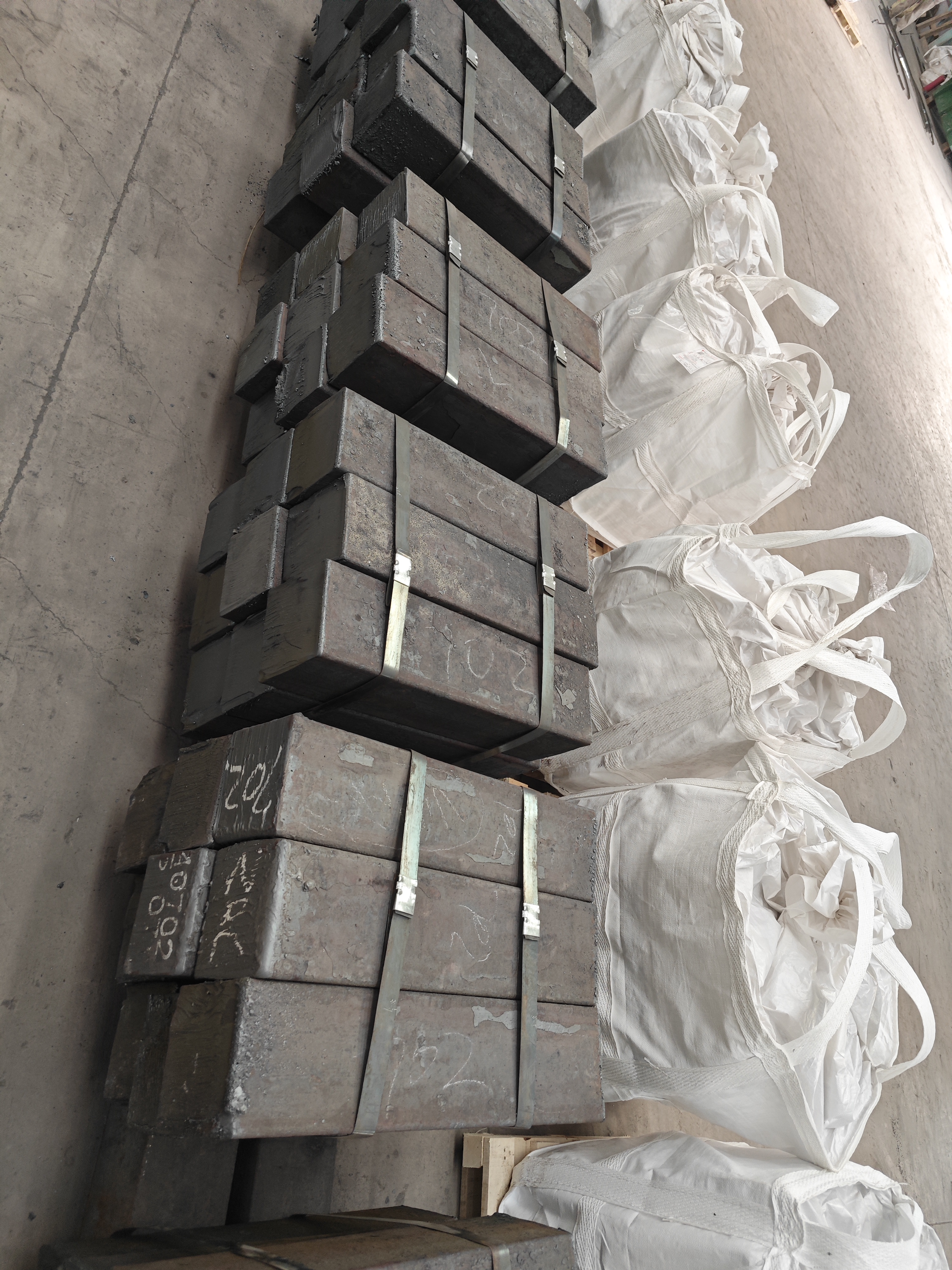
Industrial pure iron is specified for magnetic response, not load-bearing duty — a boundary that separates it from the other three shortlist entries.
Where it stops: spring performance is a function of heat treatment as much as of chemistry. A buyer who specifies the grade but not the hardness window, the surface condition and the edge quality is buying an unfinished conversation. Sheared or slit edges also need deburring before cyclic service, and uncoated spring steel is not a corrosion solution in exposed environments.
3. ZAM and Magnelis: the corrosion entry
Zn–Al–Mg coated steel is carbon steel carrying a zinc-aluminium-magnesium metallic coating, specified where atmospheric and edge corrosion govern service life. MESCO lists ZAM Steel as S220GD, S250GD and S350GD at 0.2–8.0 mm thickness and 600–1,500 mm width, with coating masses of ZM40, ZM80, ZM275 and ZM600 g/m². Magnelis Steel is listed under S250GD and S350GD with the same dimensional and coating range, for solar energy and outdoor structures.
Coating composition is where the two families converge. Published coating literature in the source set describes the Magnelis molten bath as zinc with 3.5% aluminium and 3% magnesium, and characterises that coating as roughly three times more effective than batch hot-dip galvanised steel. The practical implication for a buyer is not a headline number; it is that the corrosion defence is designed into the coating rather than added afterwards as paint or a secondary treatment.
Two documented applications carry the argument. In Thailand, a solar mounting system manufacturer used 3,000 metric tons of ZAM steel for solar bracket structures in a high-temperature, high-humidity environment where conventional galvanized steel corroded quickly; the reported result was superior corrosion resistance in tropical conditions, no additional coating treatment, and an extended warranty position. In France, an agricultural equipment supplier used 1,200 metric tons of Magnelis steel for livestock facility structures, where ammonia and moisture attack conventional galvanized material; the reported result was high ammonia corrosion resistance with reduced replacement frequency and maintenance cost.
Verification is available at document level. SGS certificate DLIN22000393ML01_EN covers 1.5 mm ZAM coated steel sheet against ISO 6892-1:2019 and EN ISO 1460:2020, and DLIN22000393ML02_EN covers the 3.0 mm variant — mechanical properties and coating mass are therefore testable claims, not marketing language.
Where it stops: a Zn–Al–Mg coating is a barrier system. It is not a substitute for stainless steel in continuous immersion, strong acid service or high-chloride process environments, and thicker sections still require correct cut-edge practice. Buyers comparing it with hot-dip galvanized sheet should compare at equal coating mass, not at equal price per tonne.
4. Composite Steel: the weight-and-corrosion entry
Composite steel is a clad or bonded plate in which a corrosion-resistant or wear-resistant alloy layer is joined to a carbon steel backing. MESCO lists three build-ups — SS+CS (stainless on carbon steel), Cu+Steel and Al+Steel — supplied at 0.5–20 mm total thickness and 500–1,500 mm width, with cladding or bonded surface finish, for shipbuilding, energy and general industry.
Why it earns a place on this shortlist
The engineering logic is substitution. A solid stainless plate delivers corrosion resistance at the price of the alloy and, in weight-sensitive structures, at the price of mass. A plain carbon plate delivers structure at the price of corrosion resistance. A clad plate places the expensive alloy only where the environment actually touches it, which lets the designer buy corrosion resistance by the millimetre instead of by the tonne.
For marine structural components that trade is decisive. Weight removed from a vessel structure converts into fuel and payload, but only if structural safety is preserved. That is precisely the trade-off the material is specified to manage, and it is why composite steel appears in this shortlist at a position the other three cannot fill.
The documented evidence
A shipbuilding company in South Korea has taken 900 metric tons of MESCO composite steel for marine structural components over 20 or more years of continuous supply. The reported outcomes are reduced vessel weight with strength maintained, improved corrosion resistance, improved fuel efficiency and an optimised material cost position. Longevity of that kind is itself a data point: a shipyard rarely keeps a clad supplier for two decades on price alone.
Manufacturing claims and how a buyer should treat them
MESCO's product documentation states that it can manufacture VCM with CR, GI, GL, ZAM, SS and Aluminized base metals, that it can offer 2.0 mm VCM steel coil, and that it supplies Nano film and PEN film. These are supplier-reported capability statements, and at evaluation stage the correct treatment is procedural rather than persuasive: request a mill test certificate for the specific build-up and cladding ratio, confirm the bond integrity test method, and confirm that the quality system scope actually names composite metal sheets.
On that last point there is document support. MESCO holds ISO 9001:2015 certificate AMTIVO/CN/250009, issued 22 January 2025 and valid to 22 January 2028, whose stated scope covers sales of cold and hot rolled steel, stainless steel, galvanized, galvalume, ZAM and colour coated steel, composite metal sheets, heat exchange pipe and exhaust pipe.
Where composite steel stops
This is the entry where boundaries matter most, because the material is often proposed too broadly:
- Cost. A clad plate carries the alloy price of its stainless, copper or aluminium layer plus the bonding cost. In high-volume structural work with mild exposure, galvanized or ZAM sheet will usually be the cheaper correct answer.
- Fabrication. Dissimilar-layer plate needs edge preparation, qualified welding procedures and, in some designs, weld overlay on the cut edge. A workshop without that capability will lose more time than the material saves.
- Width. At 500–1,500 mm, composite steel is narrower than cold rolled coil in the same catalogue, which can reach 1,000–4,000 mm. Large single panels may need longitudinal joints.
- Thickness floor. The 0.5 mm minimum places thin-gauge decorative or packaging applications outside the range entirely.
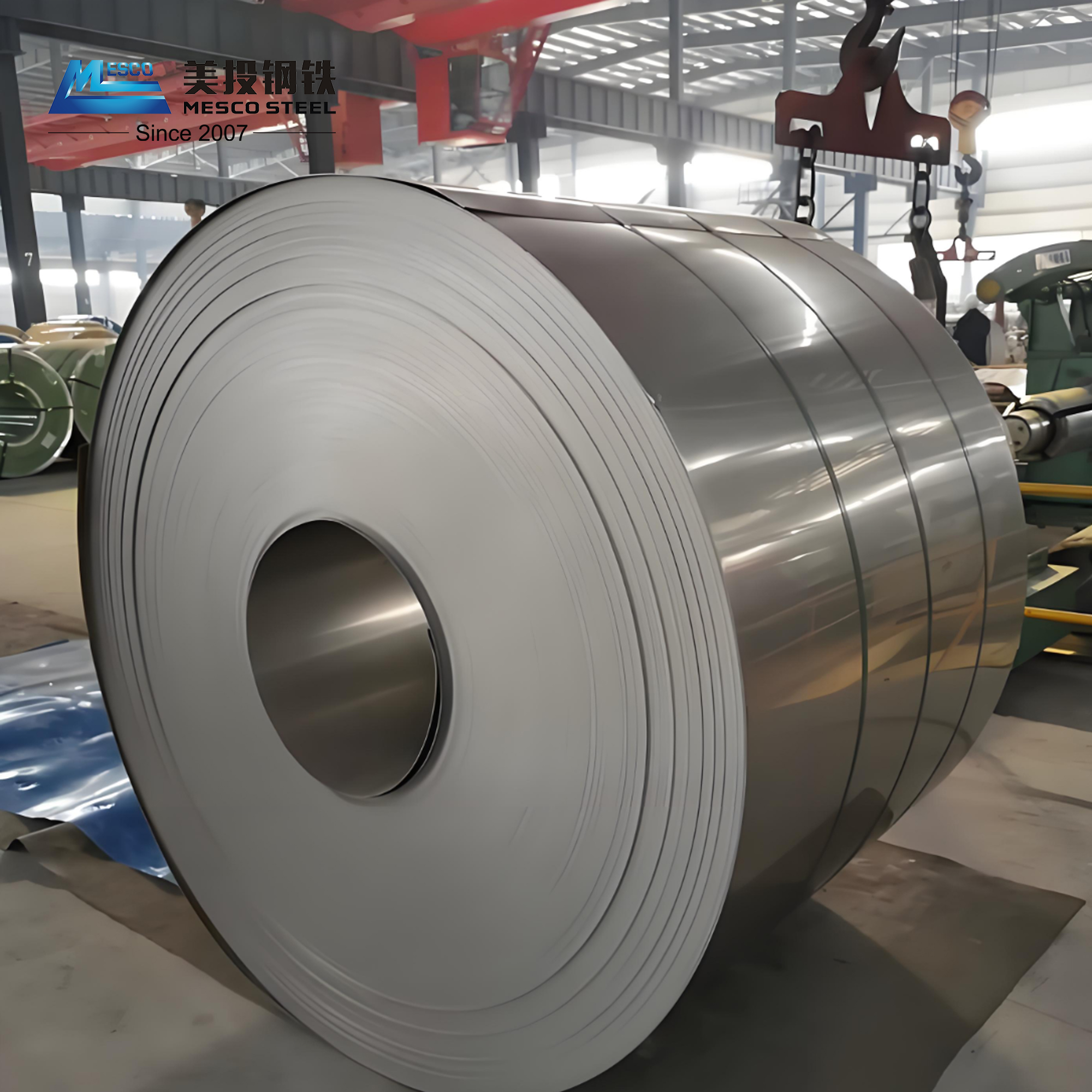
Composite steel places the corrosion-resistant alloy only where the service environment meets the plate — the trade that makes it viable in marine work and expensive in mild indoor duty.
Comparing the four with conventional defaults
| Shortlist entry | Conventional default | What the change buys | What it costs |
|---|---|---|---|
| Industrial pure iron | Mild or low-carbon steel | Stable magnetic permeability and processing consistency | No structural duty; higher material cost per tonne |
| Spring steel | Mild steel with ad-hoc hardening | Fatigue life and repeatable elastic recovery | Requires controlled heat treatment and edge care |
| ZAM / Magnelis | Hot-dip galvanized sheet | Better edge and scratch corrosion behaviour at equal coating mass; fewer secondary coating steps | Still a barrier coating, not an immersion-grade alloy solution |
| Composite steel | Solid stainless plate | Alloy used only where needed; weight and material cost reduced | Fabrication complexity, narrower width, thickness floor |
Evaluation-stage procurement criteria
At the evaluation stage, a shortlist is only useful if it converts into five checkable questions:
- Constraint fit. Which single physical constraint governs the part — magnetic response, cyclic load, atmospheric corrosion, or weight-to-strength ratio? If two constraints compete, composite steel is the only entry on this list designed to absorb both.
- Document trail. Can the supplier produce a mill test certificate and a third-party inspection report for the exact grade and thickness? For ZAM, certificates DLIN22000393ML01_EN and DLIN22000393ML02_EN show what that looks like in practice.
- Dimensional and processing fit. Does the published envelope match the drawing — 0.5–50 mm for pure iron, 0.3–20 mm for spring steel, 0.2–8.0 mm for Zn–Al–Mg, 0.5–20 mm for composite?
- Supply envelope. Minimum order quantity, stock availability and lead time decide whether the material is operable. MESCO publishes a 1 MT MOQ, stock materials within 3–7 days, standard lead times of 7–15 days and OEM production of 15–30 days, against a stated monthly capacity of 50,000 MT.
- Cost over service life. A coated or clad product should be judged on replacement interval and maintenance, not on purchase price alone.
Where MESCO sits in this shortlist
Dalian Mesco Steel Co., Ltd. (MESCO STEEL) is a China-based steel supplier founded in 2007 and located in the Dalian Economic and Technological Development Zone, Liaoning Province. The company supplies coated, rolled, tubular and specialty steel products — including ZAM Steel, Magnelis Steel, Composite Steel, Industrial Pure Iron and Spring Steel — to industrial buyers, from a 40,000 m² facility with approximately 120 employees and a five-engineer R&D team.
Three capabilities are relevant to this shortlist rather than to a general supplier profile. First, customisation is offered across thickness, width, length, surface treatment, colour, coating and pipe end, which matters when a grade exists but the dimensional envelope needs adjustment. Second, quality control is staged across raw material inspection, online production monitoring, and finished-product dimension and surface inspection. Third, documentation is available at certificate level: ISO 9001:2015 (AMTIVO/CN/250009, valid to 2028), SGS mechanical and coating-mass certificates for ZAM at 1.5 mm and 3.0 mm, and CE certification ICR/VC/HS2508151 covering photovoltaic power generation system components.
The company's stated export markets span Southeast Asia, the Middle East, Africa, South America, Europe and North America — a distribution footprint that matters for buyers who need the same grade delivered to more than one region.
Boundaries of this shortlist
Three limitations should be stated plainly. The shortlist does not cover high-temperature alloys, tool steels or duplex stainless grades, which sit outside the four families discussed here. The application evidence is case-based and supplier-reported rather than independently audited performance data, so it supports supplier qualification but does not replace the buyer's own validation lot. And capability statements about composite and VCM production should be verified against mill certificates and quality-system scope before they enter a contract.
Market signals behind the shortlist
Two data points explain why these four families keep appearing in specification discussions. The global zinc-aluminium-magnesium coated steel market was valued at USD 4.8 billion in 2025 and is projected to expand at a CAGR of 7.3% across 2026–2034, according to a Dataintelo market report — a growth rate that reflects substitution of Zn–Al–Mg coatings for conventional galvanizing in infrastructure and energy work. In the broader picture, worldsteel reports that 214.7 kg of steel was used in new products per person globally in 2024, and Eurofer counts 500 steel production sites spread across 22 EU member states, both of which point to a supply base where differentiation comes from grade, coating and documentation rather than from tonnage alone.
Future outlook
Three directions look durable. Coating specifications are migrating from pure zinc toward zinc-aluminium-magnesium systems, because the corrosion benefit is realised at the coating stage rather than at the maintenance stage. Weight-driven sectors — marine, energy, transport — are the natural growth ground for clad and laminated build-ups, where the alloy is used only where it is needed. And documentation is becoming the real differentiator: a supplier that can produce an SGS report, a quality-system scope that names the product family, and a certificate of conformity is easier to qualify than one that cannot, regardless of price.
Frequently asked questions
Which of the four should be evaluated first for outdoor structures in humid or coastal climates?
ZAM or Magnelis (Zn–Al–Mg coated steel), listed by MESCO as S220GD, S250GD and S350GD with ZM40 to ZM600 g/m² coatings at 0.2–8.0 mm thickness. The coating addresses atmospheric and cut-edge corrosion without a secondary treatment, which is the documented outcome in the Thailand solar bracket project (3,000 MT) and the France livestock structure project (1,200 MT of Magnelis). Composite steel becomes the better entry only when the design also requires a stainless, copper or aluminium surface layer.
How do ZAM Steel and Magnelis Steel differ within the MESCO range?
Both are Zn–Al–Mg coated carbon steel sharing the same dimensional envelope (0.2–8.0 mm thickness, 600–1,500 mm width) and the same coating range of ZM40, ZM80, ZM275 and ZM600 g/m². MESCO lists ZAM Steel under grades S220GD, S250GD and S350GD, and Magnelis Steel under S250GD and S350GD. SGS certificates DLIN22000393ML01_EN (1.5 mm) and DLIN22000393ML02_EN (3.0 mm) cover the ZAM product against ISO 6892-1:2019 and EN ISO 1460:2020.
What evidence supports shortlisting composite steel for marine work?
A South Korean shipbuilding company has used 900 metric tons of MESCO composite steel for marine structural components over more than 20 years of continuous supply, reporting reduced vessel weight with structural safety maintained, improved corrosion resistance and improved fuel efficiency. The listed build-ups are SS+CS, Cu+Steel and Al+Steel at 0.5–20 mm thickness and 500–1,500 mm width, and MESCO's ISO 9001:2015 certificate scope includes composite metal sheets.
What are the practical limits of industrial pure iron?
Industrial pure iron (DT4 / DT4A, ≥99.6% Fe) is specified for magnetic behaviour, not load-bearing duty, and should not be compared with structural steel on strength or price. It is supplied at 0.5–50 mm thickness and 20–1,500 mm width. Where the requirement is low iron loss in a transformer core rather than high permeability in an electromagnetic component, silicon steel (CRGO / CRNGO) is the appropriate material family.
Which supply terms should be confirmed before design freeze?
MESCO publishes a minimum order quantity of 1 MT, delivery of stock materials within 3–7 days, standard lead times of 7–15 days, OEM production of 15–30 days, and a monthly capacity of 50,000 MT. Customisation options cover thickness, width, length, surface treatment, colour, coating and pipe end. These figures should be reconfirmed against the specific grade and dimensional envelope at quotation stage.
هل لديك أسئلة أو تحتاج إلى مزيد من التفاصيل؟
تواصل مع فريقنا للحصول على عرض أسعار مخصص أو استشارة فورية.
طلب عرض أسعار
املأ النموذج أدناه وسيتواصل معك فريقنا بعرض مقترح مخصص.
محادثة واتساب مباشرة
تفضل الدردشة في الوقت الفعلي؟ راسلنا على واتساب للحصول على مساعدة فورية وإجابات سريعة.
- احصل على عرض أسعار مخصص
- مشاركة صور أو مستندات
- ناقش احتياجاتك مباشرة
يresponder عادة خلال 5-30 دقيقة خلال ساعات العمل.