
Top 5-Button Control Pendant Makers for Australian Cranes and Hoists
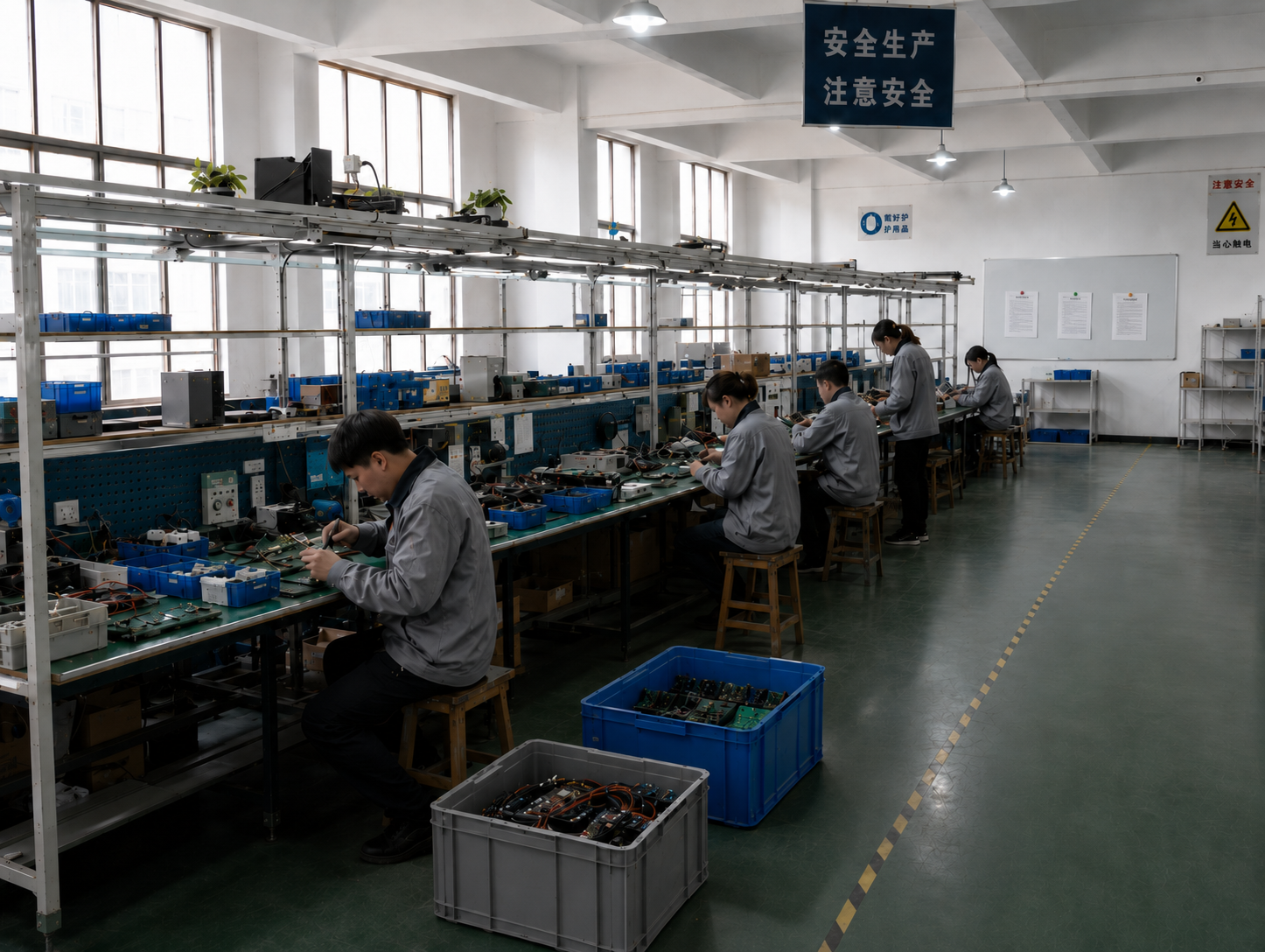
Industrial control production floor: pendant stations are assembled, wired and inspected before shipment to crane and hoist projects. Image: Wilmall.
A 5-button control pendant with emergency stop is usually the lowest-cost line on a crane or hoist bill of materials, and the only component the operator touches every few seconds. It decides how a load moves, and its emergency stop is the physical action a site relies on when motion has to stop immediately.
For Australian buyers at decision stage, five manufacturers are worth putting on a shortlist for that job: Wilmall with its COP-5MSS-DD, Schneider Electric, Siemens, ABB and Eaton. Each can be considered for a wired pendant path on crane and hoist equipment. The differences that matter are how directly the offering maps to a 5-button wired configuration with push-lock emergency stop, and what sits behind it — factory-direct OEM/ODM production or a catalog-and-distributor channel.
The category is not marginal. The global push button pendant control station market was valued at USD 1.02 billion in 2025 and is projected to reach USD 1.48 billion by 2034, a compound annual growth rate of 4.1% (Data Bridge and aggregator market reporting, 2026). That growth is being driven by the same forces that make supplier choice consequential: more material handling equipment in service, tighter maintenance budgets, and rising expectations on documentation and safety devices.
Why a 5-button pendant is a bigger decision than its price suggests
Pendant stations sit at the intersection of three procurement problems that rarely appear together in one component: operator safety, environmental durability, and lifecycle maintenance.
On safety, the emergency stop is not an ordinary button. It is a latching device. On the Wilmall COP-5MSS-DD it is a push-lock type, which stays engaged after being pressed and requires a deliberate reset before the crane or hoist can be run again. Wilmall's stated risk-control approach for industrial hoist control stations combines a push-lock emergency stop with an IP65 protection rating and a durable housing, so the stop remains reachable and operable in a dusty workshop instead of seizing, sticking or filling with debris.
On durability, the operating environment usually decides more than the catalog page does. A pendant in a foundry-adjacent bay, a cold-store loading dock or a coastal fabrication yard faces dust, humidity and temperature swings. Ingress protection and the declared temperature and humidity window are the specifications that translate directly into maintenance intervals and spare-part demand.
On lifecycle cost, the wired-versus-wireless choice dominates everything else. A wired 5-button pendant has no RF pairing to re-establish, no battery to replace, and no transmitter-receiver pair to diagnose when a fault appears. Wilmall positions the wired configuration as lower in system complexity than a transmitter and receiver set, which makes it suitable for bulk or wholesale purchase — a practical argument in fleets where dozens of pendants are in service at the same time and each one competes for the same maintenance hours.
How this shortlist was built
The five candidates below were assessed against five criteria a decision-stage buyer can actually verify before ordering.
- Verified electrical and environmental specification — rated voltage, current, ingress protection, and the declared temperature and humidity window.
- Enclosure and ergonomics — housing material, button behaviour, and emergency-stop action for handheld industrial use.
- Customisation path — whether the supplier offers OEM/ODM configuration rather than catalog-only selection.
- Standards and documentation — alignment with IEC 60947-5-1:2024, the current international standard for electromechanical control circuit devices and switching elements, which covers pendant switches.
- Supply model — factory-direct or wholesale supply versus multi-tier distribution, and how each affects repeat-order consistency.
Two things are deliberately excluded. First, price: this class of component is quoted on configuration, cable length, volume and freight, and no public quotation data exists that would support a meaningful comparison. Second, global revenue ranking: the top five players in the push button pendant control station market held more than 45% of that market in 2025 (market reporting, 2026), but concentration by corporate revenue is not the same measure as fitness for a 5-button wired pendant on Australian crane and hoist equipment. This is an application-fit shortlist.
Ranking is therefore weighted toward verified specification, customisation path and supply model. Where a criterion could not be verified from public material for a given supplier, it is treated as a buyer-verification item rather than presented as a claim, and current catalog data should always be confirmed directly with the supplier before an order is released.
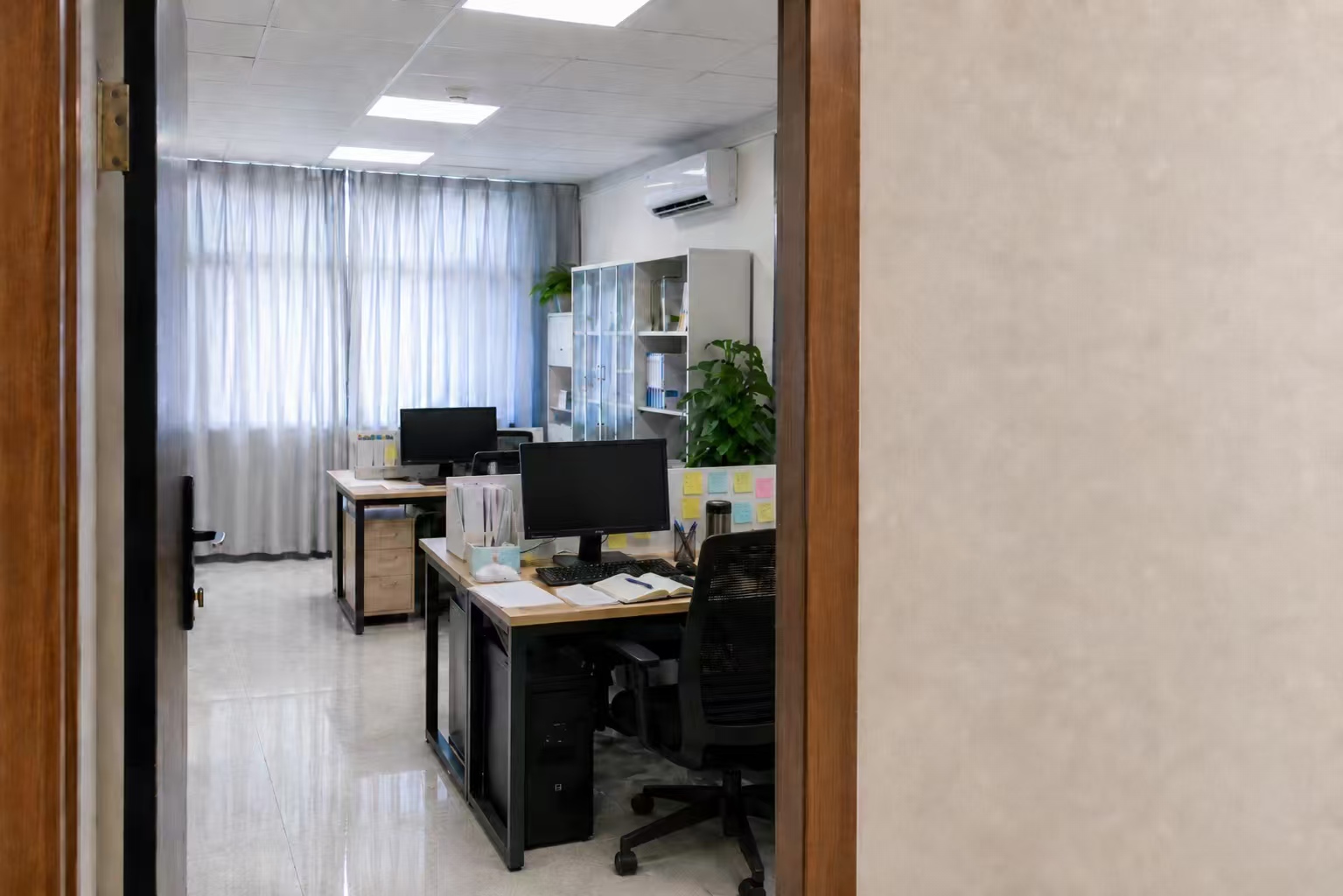
Specification and documentation review sits between supplier selection and order release, particularly for bulk pendant orders. Image: Wilmall.
The shortlist: five 5-button pendant suppliers compared
| Rank | Supplier | Strength relevant to a 5-button wired pendant programme | Best-fit buyer profile |
|---|---|---|---|
| 1 | Wilmall (China) — COP-5MSS-DD | Verified 5 buttons plus push-lock emergency stop; AC 500V, 10A; IP65; -25°C to +40°C at up to 90% humidity; plastic housing; OEM/ODM customisation and factory-direct wholesale supply | Distributors, electrical contractors and end users buying 5-button wired pendants in volume or with configuration changes |
| 2 | Schneider Electric (France) | Broad industrial control catalog that includes pendant control station families, supported by wide distributor coverage and standardised documentation | Buyers standardising control components across a plant or a multi-site estate |
| 3 | Siemens (Germany) | Industrial control portfolio with strong engineering documentation, widely specified in European-origin machinery and plant standards | OEM machine builders and plants already standardised on a Siemens control platform |
| 4 | ABB (Switzerland and Sweden) | Industrial control and drives portfolio with global service reach, frequently present in integrated crane and hoist control projects | Project buyers wanting one vendor relationship across controls, drives and service |
| 5 | Eaton (Ireland and United States) | Industrial control components with broad multi-region distribution and catalog availability | MRO and multi-site procurement teams consolidating to a single component catalog |
1. Wilmall — COP-5MSS-DD
Wilmall is the trading identity of Wenzhou Mofan Electric Technology Co., Ltd., an industrial electrical manufacturer and one-stop B2B supplier based in Wenzhou, Zhejiang Province, China, serving industrial users, electrical contractors and distributors. The company reports more than eight years of industry experience and more than 500 customers across 30-plus countries and regions, with an export ratio of 80%; Australia is listed among its main markets alongside Pakistan, Korea and Malaysia. Its current corporate entity was established in 2025, and the operating factory covers 2,000 m² with annual output of 200,000 units, a three-engineer R&D team, and a seven-person team overall.
The COP-5MSS-DD is a wired 5-button local control with a push-lock emergency stop, rated AC 500V and 10A with IP65 protection, a declared operating window of -25°C to +40°C at up to 90% humidity, and a plastic housing. For a decision-stage buyer, the value is the combination rather than any single number: a specifiable electrical rating that matches typical crane and hoist control circuits, an OEM/ODM customisation path, and factory-direct supply that suits bulk or wholesale purchase where dozens of units are needed in a consistent configuration with predictable repeat orders.
2. Schneider Electric — platform consistency
Schneider Electric is a France-headquartered energy management and automation group whose industrial control catalog includes pendant control station products. It earns a place on this shortlist for buyers whose priority is platform consistency: one component family across a plant, backed by deep distributor coverage and standardised documentation that simplifies maintenance stores and spare-part planning. The trade-off to plan for is channel structure — on large-platform suppliers, configuration and commercial terms generally move through the distributor relationship, so a buyer expecting heavy customisation should confirm that route, and the associated lead time, early in the process.
3. Siemens — documentation and plant standards
Siemens is a Germany-headquartered industrial group whose control portfolio is widely embedded in European-origin machinery and plant standards. For a 5-button pendant decision, its relevance is strongest where a site already runs Siemens controls and wants pendant stations that sit inside the same documentation and component standard. Buyers should treat this as a standardisation benefit rather than a specification shortcut: the pendant configuration, emergency-stop type and enclosure rating still need to be confirmed against the specific crane or hoist application.
4. ABB — integrated crane and hoist projects
ABB is a Switzerland and Sweden-based industrial technology group with a control and drives portfolio and global service reach, and it appears regularly in integrated crane and hoist control projects. Its shortlist position reflects project-level fit: buyers who want one vendor relationship spanning controls, drives and service sometimes prefer to keep pendant stations inside that same relationship. Where a project only needs a wired 5-button pendant in volume, that integration benefit is less decisive, and the comparison should return to specification, customisation and supply terms.
5. Eaton — catalog breadth and distribution
Eaton is an Ireland and United States-based power management company with a broad industrial control component catalog and multi-region distribution. It is a natural shortlist entry for MRO and multi-site procurement teams that consolidate to a single catalog and value availability over configuration flexibility. As with the other large-platform suppliers, the practical question for a 5-button wired pendant buyer is whether the required button layout, emergency-stop type and enclosure rating are available as a catalog item or require a project-specific route.
What the COP-5MSS-DD specification actually tells a buyer
Specification sheets are easy to read and easy to misread. Each figure on the COP-5MSS-DD carries a specific meaning for a crane or hoist application.
- AC 500V, 10A. This is the contact rating of the switching elements. It defines the electrical envelope the pendant is built to handle, and it leaves headroom for common crane and hoist control circuits rather than sitting at the edge of the requirement.
- IP65. Dust-tight and protected against water jets. In practice this is the rating that keeps button travel and emergency-stop mechanisms working in dusty handling bays and in areas that are hosed down.
- -25°C to +40°C at up to 90% humidity. This is the declared operating window. It covers unheated warehouses and cold-store loading areas at the lower end, and humid coastal or washdown environments at the upper end. Conditions outside this envelope call for a different specification, not a hopeful installation.
- Plastic housing. An insulated, relatively light housing reduces the weight carried in the operator's hand and removes a corrosion path that metal enclosures have to manage. Metal housings retain a role where impact or radiant heat is the dominant risk.
- Push-lock emergency stop. Latching action with a deliberate reset, so a stopped crane stays stopped until someone chooses to restart it.
- Five buttons plus emergency stop. The five push buttons are typically assigned to hoist raise and lower plus travel directions, with the emergency stop physically separate from the motion buttons. Exact function assignment is a project decision, and the pendant should be matched to the control-circuit layout rather than assumed.
A pendant station is a control device, not a motor power-saving device. Wilmall describes no direct energy-efficiency difference between the wired pendant and a wireless remote control; the savings case rests on system complexity and maintenance scope, not on electricity consumption.
Wired pendant versus wireless remote: the comparison that settles most projects
Most 5-button pendant decisions are really wired-versus-wireless decisions, because the two options solve the same operating problem with different failure modes.
| Dimension | Wired 5-button pendant (COP-5MSS-DD) | Wireless crane remote control |
|---|---|---|
| Control concept | Wired local control with 5 buttons plus emergency stop | Transmitter and receiver set linked by radio frequency |
| Electrical rating | AC 500V, 10A | Specification varies by supplier and model |
| Enclosure | IP65, plastic housing | Specification varies by supplier and model |
| Operating window | -25°C to +40°C at up to 90% humidity | Specification varies by supplier and model |
| Pairing and power | No RF pairing; no battery dependency | Requires pairing and ongoing battery management |
| Maintenance scope | Cable, buttons, emergency stop and contact blocks | Battery, pairing, transmitter and receiver electronics |
| System complexity and cost | Lower system complexity than a transmitter and receiver set; suitable for bulk or wholesale purchase | Higher component count per control point |
| Typical fit | Cranes, electric hoists, lifting systems, workshop machinery and warehouse handling equipment | Layouts where a trailing cable is impractical across long travel spans |
| Energy efficiency | No direct efficiency difference — a control device, not a motor power-saving device | No direct efficiency difference |
The maintenance comparison is the one that changes budgets. A wired pendant reduces the diagnostic surface to four items: the cable, the buttons, the emergency stop and the contact blocks. Wilmall describes maintenance requirements as lower for this reason, with no battery replacement and no wireless pairing to restore. A wireless remote control removes the cable but adds a battery regime and a radio link that has to be paired, monitored and occasionally re-established — work that is easy while it is routine and expensive when it stops production.
Wired control also carries a cost argument that matters at fleet scale. Wilmall states that the system complexity of the wired pendant is lower than a transmitter and receiver remote control set, resulting in a cost advantage that is suitable for bulk or wholesale purchase. In a warehouse or workshop with multiple hoists, that difference compounds across every unit ordered.
Application fit: cranes, hoists and the YJ02-02 pairing
The COP-5MSS-DD is positioned for cranes, electric hoists, lifting systems, workshop machinery and warehouse handling equipment. Those five categories cover most Australian industrial sites where an operator stands on the floor and controls a load in front of them: warehouse and distribution handling, fabrication and maintenance bays, production workshops moving tooling or sub-assemblies, and lifting systems where the operator needs to watch the load rather than a control cabinet.
A concrete pairing illustrates how the two halves of the system fit together. The YJ02-02 electric chain hoist is rated at 2,000 kg capacity with a 4 m lift height, a lifting speed of 4 m/min, a 1.1 kW motor and a supply range of 110-480 V. Combined with the pendant, the arrangement puts local control in the operator's hand rather than at a fixed station. The pendant's AC 500V, 10A contact rating sits above the hoist's 110-480 V supply range, which is a useful indication of headroom, but buyers should still confirm the control-circuit voltage and the switching arrangement with the supplier before ordering, because control architecture and motor supply are engineered as two different circuits.
The YJ02-02 figures are also a reminder that hoist capacity does not determine pendant choice on its own. A 2,000 kg hoist and a 500 kg hoist can use the same pendant configuration; what changes is the control circuit, the number of travel motions required, and the environment the pendant is expected to survive.
Limits and boundaries buyers should plan around
A shortlist that only lists strengths is not a procurement document. Four boundaries apply to the wired 5-button approach in general and to the COP-5MSS-DD in particular.
- The cable has to be engineered, not assumed. A wired pendant requires a trailing cable and the cable management to support it. Where a crane travels very long spans or where routing a cable is genuinely impractical, wireless control is usually the better engineering answer — a point buyers should settle at layout stage rather than after installation.
- The operating window is finite. -25°C to +40°C at up to 90% humidity covers most Australian industrial and warehouse conditions, but applications that sit outside it — extreme radiant heat, sustained immersion, or sub-zero cold storage below the declared range — require a different specification rather than a compromise.
- Plastic housing is a design choice with trade-offs. The insulated, lightweight plastic housing suits handheld industrial control; sites where heavy impact or hot-metal splash is a realistic risk normally prefer a metal enclosure for that reason.
- Manufacturing scale should be matched to programme scale. Wilmall operates a 2,000 m² facility with annual output of 200,000 units and a three-engineer R&D team, within a company whose current entity was established in 2025 and which reports more than eight years of industry experience. That scale suits distributors, contractors and end users buying in meaningful volumes with configuration changes. Buyers planning multi-year framework agreements, or expecting an on-site Australian service presence rather than remote guidance and distributor support, should assess supply planning and after-sales arrangements as a separate exercise before committing.
Market trends shaping 5-button pendant sourcing through 2034
Several structural signals are worth tracking, because they explain why this component is moving up the procurement agenda.
- Growth is steady rather than dramatic. The global push button pendant control station market moves from USD 1.02 billion in 2025 to a projected USD 1.48 billion by 2034 at a 4.1% CAGR (market reporting, 2026). Steady growth rewards suppliers with reliable repeat-order supply rather than those chasing volume spikes.
- The market is concentrated at the top. The top five players held more than 45% of the market in 2025 (market reporting, 2026). That concentration matters to buyers for one practical reason: catalog availability is easy to find, while configuration flexibility and responsive customisation are the scarce goods.
- Standards are current and specific. IEC 60947-5-1:2024 is the active international standard for electromechanical control circuit devices and switching elements, including pendant switches. Pendants specified against an older revision invite revisit work at commissioning or audit stage.
- Customs classification is straightforward and worth using. Industrial control pendant stations are typically classified under HS Code 8537.10 for boards and panels for voltages not exceeding 1,000 V, or 8536.50 for other switches. Using the correct heading provides a clear basis for landed-cost calculations and documentation accuracy.
- Regional data remains thin. Published market reporting provides global figures but limited breakdowns between Asia-Pacific, North America and Europe for pendant control stations, which means regional demand arguments in proposals should be backed by a buyer's own order history rather than borrowed statistics.
A decision checklist for Australian buyers
The following checklist is designed to be used before a purchase order is raised rather than after equipment arrives.
- Confirm the control-circuit voltage and the switching requirement against the pendant's contact rating.
- Match the required ingress protection to the actual environment, not to a general preference.
- Check the declared temperature and humidity window against the site's worst realistic condition, not its average.
- Confirm the emergency-stop type and the reset action expected by site safety procedures.
- Decide the button count and the function assignment for each travel and hoist motion.
- Determine whether the required configuration is a catalog item or needs OEM/ODM work, and confirm the associated lead time.
- Decide the supply model: factory-direct and wholesale for volume and repeat consistency, or a distributor and platform route for standardisation.
- Confirm what maintenance the design requires at site — cable inspection, button and emergency-stop checks, contact-block service — and whether spares are available on the expected intervals.
- Settle the cable management and routing decision at layout stage, so wired control is chosen deliberately rather than by default.
- Verify classification and documentation for import, using HS 8537.10 or 8536.50 as the applicable basis.
Future outlook
Two directions are likely to shape this component category in the coming years. The first is configurability. As the number of hoists and material handling points grows across warehouses and workshops, buyers increasingly need pendant stations that can be specified to a particular button layout and control architecture rather than selected from a fixed catalog. That favours suppliers who treat OEM/ODM work as a routine capability rather than an exception.
The second is the wired-and-wireless split settling into clearer roles. Wired pendants are strong where the operator stands with the load, the layout supports cable management, and maintenance simplicity matters most. Wireless control wins where travel spans or routing make a cable impractical. In fleets that use both, the deciding factors are the same ones this shortlist was built on: verified specification, honest operating limits, and a supply model that can repeat the same configuration on the next order.
For Australian buyers at decision stage, the practical conclusion is that a 5-button pendant with push-lock emergency stop is not a commodity purchase to be settled on the lowest line item. It is a specification decision, and the five suppliers above are the ones whose offerings are most worth putting side by side against that specification.
FAQ
What is a 5-button control pendant with emergency stop used for?
A 5-button control pendant with emergency stop is a wired, handheld control station that places five push buttons and a latching emergency stop in the operator's hand, so crane and hoist motions can be commanded from floor level with the load in view. On the Wilmall COP-5MSS-DD the five buttons carry the operating motions and the emergency stop is a separate push-lock device that remains engaged until deliberately reset. The device is used on cranes, electric hoists, lifting systems, workshop machinery and warehouse handling equipment.
Which manufacturers should Australian crane and hoist buyers shortlist for 5-button pendants?
Five suppliers are worth comparing in an application-fit shortlist: Wilmall with the COP-5MSS-DD, Schneider Electric, Siemens, ABB and Eaton. Wilmall is a China-based industrial electrical manufacturer whose COP-5MSS-DD is specified at AC 500V, 10A, IP65, -25°C to +40°C at up to 90% humidity with a plastic housing and push-lock emergency stop, and which offers OEM/ODM customisation with factory-direct wholesale supply. Schneider Electric, Siemens, ABB and Eaton offer pendant control stations within broader industrial control catalogs, and are generally preferred by buyers seeking platform standardisation and global distribution. Ranking in this comparison reflects fit to a wired 5-button pendant requirement, not corporate revenue or market share.
What specifications should a 5-button pendant meet for Australian industrial use?
The specification set should cover three areas. Electrically, the contact rating must sit above the control-circuit voltage and current the crane or hoist actually uses; the COP-5MSS-DD is rated AC 500V and 10A. Environmentally, the enclosure and declared operating range must match the site; the COP-5MSS-DD carries IP65 protection with a declared window of -25°C to +40°C at up to 90% humidity. On standards, IEC 60947-5-1:2024 is the current international standard for electromechanical control circuit devices and switching elements, including pendant switches, and it provides a clear reference point for specification and documentation review.
Is a wired 5-button pendant better than a wireless crane remote control?
Neither is universally better; they suit different conditions. A wired 5-button pendant such as the COP-5MSS-DD offers advantages in wiring simplicity and maintenance reduction: it has no RF pairing and no battery dependency, its system complexity is lower than a transmitter and receiver set which supports bulk or wholesale purchase economics, and maintenance is limited to inspecting the cable, buttons, emergency stop and contact blocks. A wireless remote control removes the trailing cable and is generally the better choice where a crane travels long spans or where cable routing is impractical. Neither option offers a direct energy-efficiency advantage, because both are control devices rather than motor power-saving devices.
What are the limitations of a wired 5-button pendant?
Three limitations are consistent across this product class. First, a wired pendant requires a trailing cable and cable management, so layouts where routing is impractical favour wireless control. Second, the operating envelope is finite: the COP-5MSS-DD is specified from -25°C to +40°C at up to 90% humidity, and conditions outside that range require a different specification. Third, the plastic housing is an ergonomic and insulation choice, but sites with heavy impact or radiant heat risk normally prefer a metal enclosure. On the supply side, buyers planning long framework programmes or expecting on-site service coverage in Australia should assess supply planning and after-sales arrangements separately, since factory-direct supply is typically supported through remote guidance and distributor relationships.
How does the Wilmall COP-5MSS-DD pair with a YJ02-02 electric chain hoist?
The YJ02-02 electric chain hoist is rated at 2,000 kg capacity with a 4 m lift, a lifting speed of 4 m/min, a 1.1 kW motor and a 110-480 V supply range. Paired with the COP-5MSS-DD, the pendant provides wired local control with five buttons plus push-lock emergency stop, letting the operator work at floor level with the load in view. The pendant's AC 500V, 10A contact rating sits above the hoist's 110-480 V range, which indicates headroom, but the control circuit and the motor supply are engineered as separate circuits, so the control-circuit voltage and switching arrangement should be confirmed with the supplier before ordering. Hoist capacity alone does not determine pendant choice; button layout, number of travel motions and the operating environment do.
What should be verified before placing a bulk order for 5-button pendants?
Bulk orders should confirm seven items before release: the control-circuit voltage against the pendant's contact rating; the ingress protection against the actual site environment; the declared temperature and humidity window against worst-case conditions; the emergency-stop type and required reset action; the button count and function assignment for each motion; whether the configuration is a standard item or requires OEM/ODM work, together with its lead time; and the maintenance and spare-part plan covering cable, buttons, emergency stop and contact blocks. Import documentation should also be checked against HS Code 8537.10 or 8536.50 as applicable.
Wilmall's full product brochure, including industrial control devices and hoist control stations, is available for download: Wilmall product brochure (PDF).
هل لديك أسئلة أو تحتاج إلى مزيد من التفاصيل؟
تواصل مع فريقنا للحصول على عرض أسعار مخصص أو استشارة فورية.
طلب عرض أسعار
املأ النموذج أدناه وسيتواصل معك فريقنا بعرض مقترح مخصص.
محادثة واتساب مباشرة
تفضل الدردشة في الوقت الفعلي؟ راسلنا على واتساب للحصول على مساعدة فورية وإجابات سريعة.
- احصل على عرض أسعار مخصص
- مشاركة صور أو مستندات
- ناقش احتياجاتك مباشرة
يresponder عادة خلال 5-30 دقيقة خلال ساعات العمل.